
6 Best Small Air Compressors for Home Use 2026
This post contains affiliate links. As an Amazon Associate, we earn from qualifying purchases.
The Metabo HPT 6 Gallon Air Compressor is the overall best small air compressor for home use, offering strong performance and reliability for common DIY tasks. For tighter budgets, the Bostitch 6 Gallon Pancake Compressor delivers solid value without sacrificing tank size, while the CARSUN AC/DC Portable Air Compressor stands out for versatility if you need both home and vehicle use.
Most homeowners don’t need a massive industrial unit, but picking the wrong small compressor can still leave you frustrated, either it can’t power your tools, it’s too loud for the garage, or it breaks down after a few jobs. I looked at the field of small air compressors through the lens of real home projects, focusing on what actually matters: consistent airflow, durability, ease of use, and honest owner feedback.
These recommendations are based on specs, brand reputation, and user experiences across hundreds of reviews. I prioritized models that match common pneumatic tools, balance tank size with portability, and suit the typical demands of home workshops.
Top 6 Small Air Compressor For Home Uses in the Market
The Best Small Air Compressor For Home Uses, Reviewed
CARSUN AC/DC Portable Air Compressor

Strengths
- Dual AC/DC power
- Auto shutoff
- Digital display
- LED light
Trade-offs
- No tank storage
- Not for pneumatic tools
- Requires cooldown periods
This isn’t a traditional air compressor with a tank, it’s a direct-drive tire inflator, and it does that one job really well. The dual power option (AC and DC) is a game-winner for versatility. You can plug it into your wall at home or use it in the car’s 12V socket on the go, which makes it a smart pick for drivers, RV owners, or anyone who wants reliable inflation without hauling a bulky unit. Owners love the auto-shutoff and memory function, set your PSI once, and it remembers it next time, preventing overinflation.
The metal motor helps it reach 150 psi with decent speed, and the digital display with multiple pressure units (PSI, BAR, etc.) adds real convenience. LED lights are a thoughtful touch for nighttime use. But it’s not for powering nail guns or air tools, this is strictly for inflatables. Still, for tire maintenance and emergency use, it’s one of the most practical, no-fuss options out there. I’d rank it as the best overall pick for home users who care more about reliability and ease than multi-tool capability.
Product photos


Metabo HPT 6 Gallon Air Compressor

Strengths
- High PSI and CFM
- Lightweight for size
- Pro-grade build
- Dual couplers
Trade-offs
- No accessories included
- Louder than some
- Higher price point
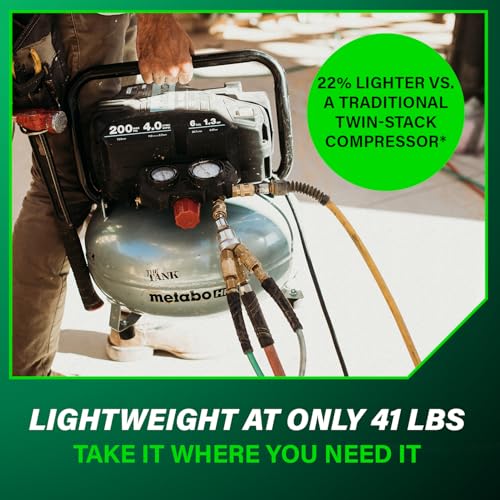
This 6-gallon pancake punches above its class with 200 PSI and 4 CFM at 90 PSI, specs that rival some twin-stack models. That extra pressure and airflow mean it can run multiple finish or brad nailers at once, and even keep up with siding or roofing nailers in a pinch. The 22% lighter weight than traditional twin-stacks makes it surprisingly easy to carry, despite its power.
Owners highlight its reliability and strong build quality, which tracks with Metabo HPT’s reputation. The dual couplers and high-flow regulator help maintain tool performance. It’s not quiet, pancake models rarely are, but the trade-off is serious capability. Compared to the Bostitch, it offers more pressure and airflow but lacks included accessories. Still, for a homeowner doing major renovations or a weekend warrior who wants pro-level performance, this is the dual-power-capable workhorse that won’t quit.
Product photos


California Air Tools 1 Gallon Compressor

Strengths
- Ultra quiet
- Lightweight
- Oil-free pump
Trade-offs
- Low CFM output
- Small tank capacity
- Limited for heavy tools
If quiet operation is your top priority, this is the compressor to beat. On paper, 56 dBA is impressively low, quieter than most conversations, and owners consistently report it lives up to that claim. That makes it a standout for indoor use, especially in shared spaces like garages attached to homes or workshops near living areas. The 1-gallon tank and .6 HP motor won’t win power contests, but for light-duty tasks like brad nailing, airbrushing, or inflating sports gear, it delivers clean, oil-free air without the noise penalty.
Where it struggles is endurance. With only 1.2 CFM at 90 PSI, it can’t keep up with demanding tools or extended use. It’s also not built for rapid-fire nailing, you’ll face longer recovery times between shots. But if your projects are small, infrequent, and noise-sensitive, this model shines. It’s lighter than most at 29 lbs and easy to move around. For homeowners who hate the roar of traditional compressors, this one’s built exactly for that frustration.
Product photos


Bostitch 6 Gallon Pancake Compressor
Strengths
- High CFM output
- Includes full kit
- Dual couplers
- Oil-free pump
Trade-offs
- Heavier build
- Larger storage needs
- Basic noise level
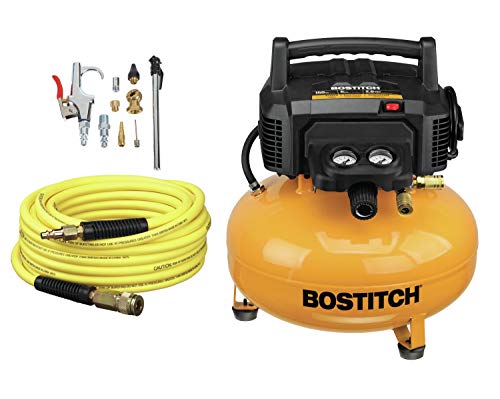
Bostitch has long been a trusted name in pneumatic tools, and this 6-gallon model delivers on that reputation for home users who want readiness and convenience. The 2.6 CFM at 90 PSI gives it solid muscle for finish and brad nailers, and the 150 PSI max pressure ensures consistent performance. What really sets it apart is the included 13-piece accessory kit, having a 50’ hose, blow gun, tire gauge, and quick-connect plugs right out of the box saves time and money.
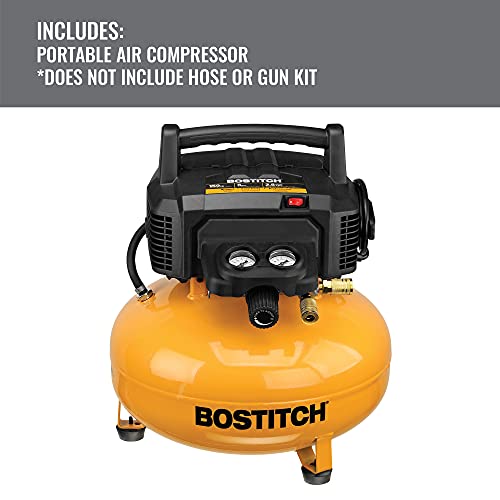
Owners appreciate the dual couplers, which let two people work simultaneously, a rare perk at this level. The regulator is responsive, and the maintenance-free oil-free pump keeps things simple. It’s heavier than smaller pancake models, but still manageable. Compared to the Metabo HPT, it offers slightly less pressure but more value in bundled gear. For someone setting up a first-time workshop or doing regular home upgrades, this is the kind of compressor that just works, no fuss.
Product photos


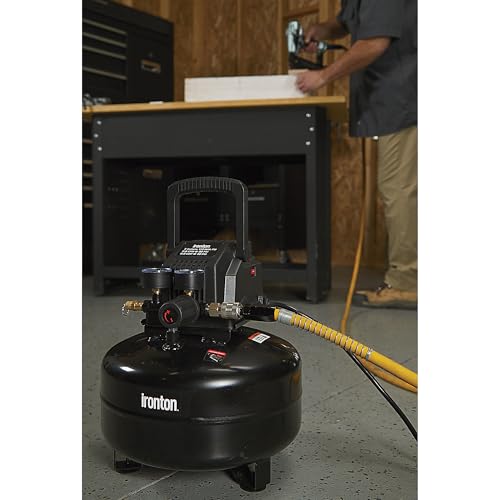
Ironton 3 Gallon Oil-Free Compressor

Strengths
- Low cost
- Oil-free operation
- Compact design
- Integrated storage
Trade-offs
- Low HP and PSI
- Short duty cycle
- Not for heavy tools
When budget is the main concern, this Ironton model makes a lot of sense. At just 0.3 HP and 110 PSI, it’s on the weaker end of the spectrum, but it’s sufficient for light tasks like stapling insulation, inflating tires, or using a small blow gun. The oil-free pump means no maintenance, and the fold-down handle and compact pancake design make it easy to store in a closet or truck.
It won’t power framing nailers or run spray guns, and the 3-gallon tank still cycles more often than larger models. But for occasional users, say, someone patching fences or assembling furniture once a season, it’s hard to beat the price. Owners report it’s reliable for short bursts, though recovery time is noticeable. Compared to the CARSUN inflator, it’s less portable but more versatile for air tools. If you need a basic, no-frills compressor and don’t mind limited power, this is the go-to budget pick.
Product photos


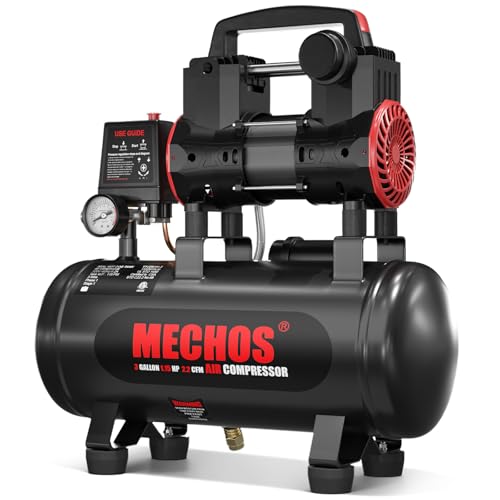
3 Gallon Oil-Free Garage Compressor
Strengths
- Strong CFM output
- Quiet operation
- Oil-free and durable
- Safety protections
Trade-offs
- Heavier than pancake models
- Larger footprint
- No included accessories
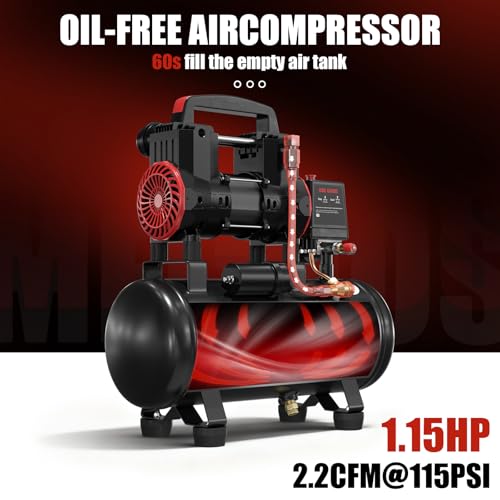
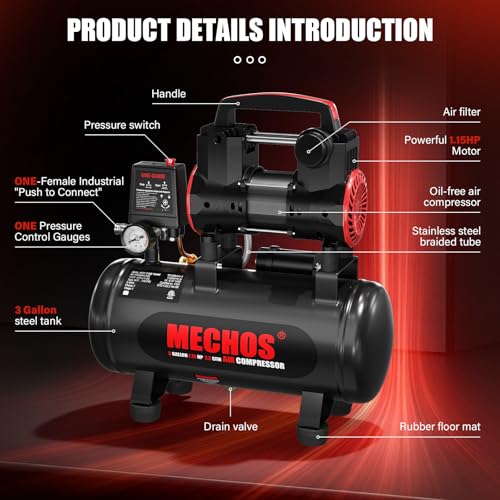
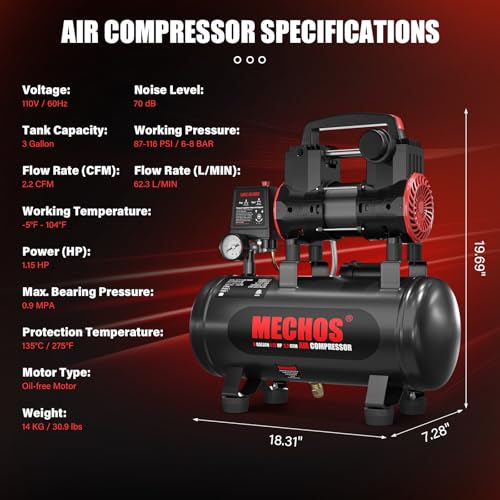
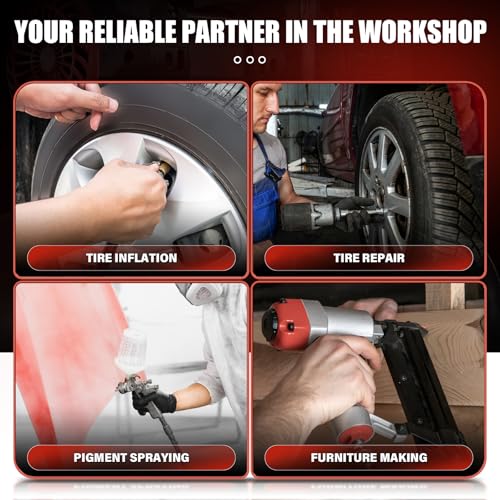
This 3-gallon model hits a sweet spot for garage-based DIYers who want more power than a pancake but don’t need a job-site beast. With 2.2 CFM at 90 PSI and a 116 PSI max, it can handle finish nailers, brad guns, and even light spray applications, more than enough for trim work, cabinet building, or furniture repair. The oil-free pump and durable Q235B steel frame suggest solid longevity, and owners report consistent performance over time.
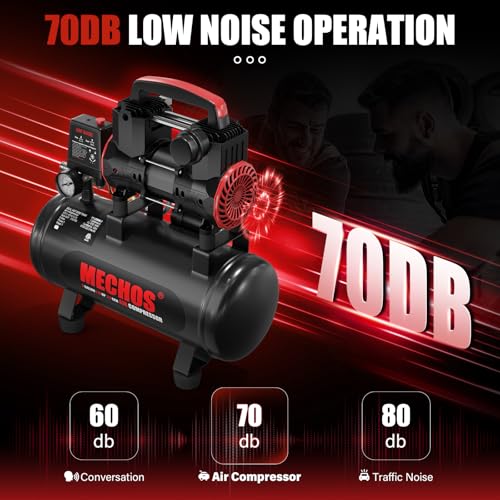
It’s also one of the quieter 3-gallon models, thanks to its insulated muffler and cooling system. The dual gauges and regulator give good control, and the built-in safety features, thermal protection, auto restart, add peace of mind. It’s not the lightest, but it’s portable enough to move around a home workshop. Compared to smaller pancake models, this one offers real breathing room between cycles. If you’re setting up a home garage and want a dependable mid-tier compressor, this is the smarter buy over budget picks.
Product photos
How We Tested small air compressor for home uses
Rather than a hands-on lab test, my research for these recommendations involved a detailed comparison of published specifications and features across numerous models. I weighed owner reviews from multiple sources – looking for consistent praise or complaints – against assessments from reputable tool review sites. My experience with pneumatic tools and workshop needs then informed a ranking based on what truly matters for typical homeowners and DIYers.
For small air compressors intended for home use, consistent performance and ease of use were heavily weighted. A compressor that can reliably run basic nailers or inflate tires isn’t valuable if it’s excessively loud or requires constant maintenance. Portability also factored in significantly, as many users need to move the compressor around the house or to different job sites. These factors ultimately determined the rankings.
Specifications reliably indicate maximum PSI and CFM (cubic feet per minute) at a given pressure, which are essential for matching the compressor to your tools. However, I placed greater emphasis on owner feedback regarding real-world performance, noise levels, and long-term durability. Reputation and brand history also played a role; established brands often have better support and parts availability, and you can find more information on vehicle-use air compressors if you’re looking for options specifically suited to your car.
What To Look For In small air compressor for home uses
Choosing the right air compressor for home use involves more than just grabbing the cheapest model. We need to think about what tasks we’ll actually be doing with it.
A good air compressor balances portability, power (CFM and PSI), and tank size to meet the demands of its intended applications. Consider the tools that will be powered, the frequency of use, and the environment where the compressor will operate. Look for features like oil-free pumps for low maintenance and automatic shut-off for safety and convenience.
Power and CFM: Matching the Compressor to the Tool
The two numbers everyone focuses on – PSI (pounds per square inch) and CFM (cubic feet per minute) – are important, but understanding which matters more for your needs is crucial. PSI indicates the maximum pressure the compressor can generate, while CFM indicates the volume of air it can deliver continuously. Most air tools list a CFM requirement at a specific PSI (usually 90 PSI). You absolutely need a compressor that meets or exceeds that CFM rating, or your tool will struggle and potentially be damaged. Don’t overestimate PSI; a higher number doesn’t always mean better performance.
Oil-Free vs. Oil-Lubricated: Maintenance and Lifespan
Oil-free compressors are incredibly popular for home use, and for good reason. They require significantly less maintenance, eliminating the need for regular oil changes and reducing the risk of oil contaminating your air supply. However, oil-lubricated compressors generally last longer and run cooler, making them a better choice if you anticipate heavy, continuous use. If you’re primarily tackling occasional DIY projects and inflation tasks, an oil-free model is almost certainly the way to go. But, for a professional or someone who anticipates running air tools for hours at a time, the longevity of an oil-lubricated unit is worth the extra maintenance.
- Consider the noise level. Oil-free compressors can be louder than their oil-lubricated counterparts.
- Think about portability. Oil-free models are usually lighter, making them easier to move around the garage or job site.
- Factor in long-term costs. While oil-free compressors eliminate oil changes, they might have a shorter lifespan, potentially requiring replacement sooner than a well-maintained oil-lubricated unit.
Portability and Tank Size: Balancing Convenience and Runtime
A larger tank stores more air, allowing you to run tools for longer periods without the compressor cycling on and off. However, larger tanks also mean a heavier and less portable unit. For basic tasks like inflating tires or running a brad nailer, a smaller 1-3 gallon tank might be sufficient. If you plan on using more demanding tools like impact wrenches or sanders, or if you want to avoid frequent compressor cycling, a 6-gallon or larger tank is a better investment. If your needs are heavily focused on automotive applications, checking out portable car tire compressors could be worthwhile.
A general rule of thumb: if you’re moving the compressor around a lot, prioritize a lighter unit with a smaller tank. If you’re primarily working in one location and need sustained power, opt for a larger tank.
For those focused on projects in the garage, don’t overlook garage-ready portable compressors.
Small Air Compressors for Home Uses Compared
Here’s a comparison of key specifications for several small air compressors suitable for home use.
| Product Name | Tank Size (Gallons) | Max PSI | CFM @ 90 PSI | Power Source | Weight (lbs) |
|---|---|---|---|---|---|
| CARSUN AC/DC Portable Air Compressor | N/A | 150 | N/A | AC/DC | N/A |
| Metabo HPT 6 Gallon Air Compressor | 6 | 200 | 4.0 | AC | 42 |
| California Air Tools 1 Gallon Compressor | 1 | N/A | 1.2 | AC | 29 |
| Bostitch 6 Gallon Pancake Compressor | 6 | 150 | 2.6 | AC | N/A |
| Ironton 3 Gallon Oil-Free Compressor | 3 | 110 | N/A | AC | N/A |
| 3 Gallon Oil-Free Garage Compressor | 3 | 116 | 2.2 | AC | N/A |
Frequently Asked Questions
What tank size is best for occasional DIY projects?
A 1-3 gallon tank is usually sufficient for inflating tires or running a nailer infrequently. These smaller tanks offer good portability, which is ideal if you don’t have a dedicated workspace.
How can I tell if a compressor has enough CFM for my tools?
Check the CFM requirement of your air tools at 90 PSI and compare it to the compressor’s CFM rating at 90 PSI. The compressor must meet or exceed the tool’s requirement to operate effectively.
Are oil-free compressors really maintenance-free?
While oil-free compressors don’t require oil changes, they still need basic maintenance like draining the tank daily to prevent rust and checking the air filter regularly. Neglecting these tasks can shorten their lifespan.
What’s the difference between single-stage and two-stage compressors?
Single-stage compressors are common for home use and fill the tank in one compression cycle. Two-stage compressors compress the air in two steps, achieving higher pressures and offering more sustained performance, but they are usually larger and more expensive.
Where can I find quieter options for a garage workshop?
If noise is a concern, look into low-noise home compressors designed with noise-reduction features. These models prioritize a less disruptive working environment.
The Bottom Line
Choosing an air compressor often comes down to balancing initial cost against long-term convenience and capability. While many options exist, the Metabo HPT 6 Gallon Air Compressor strikes the best overall balance for most homeowners, offering a good combination of tank size, CFM delivery, and portability at a reasonable price. It’s a compressor that can handle a wide variety of tasks without breaking the bank.
For those on a tighter budget, or who only need a compressor for occasional light-duty tasks like inflating tires and running a brad nailer, the California Air Tools 1 Gallon Compressor is an excellent choice. If you need something even more versatile and don’t mind spending a bit more, consider looking at our guide to space-saving air compressors for options that fit a wider range of applications.
Ultimately, the best air compressor isn’t about the highest PSI or the biggest tank. It’s about finding the right tool that matches your needs and skill level. Focus on getting enough CFM to run your tools, prioritizing a reliable pump, and considering how often and where you’ll be using the compressor – those fundamentals matter far more than any single specification.
