8 Best Sawmill Blades of 2026
This post contains affiliate links. As an Amazon Associate, we earn from qualifying purchases.
The Wood-Mizer 158″ DoubleHard Variety Pack is my top pick for most users, offering exceptional durability and versatility across wood types. If you’re on a budget, the 144″ All-Purpose Sawmill Blade 5-Pack delivers solid performance at a lower cost. For those with specialized mills, the MechMaxx SM-18 Replacement Blade 5-Pack is a reliable match for that specific model.
Sawmill blades aren’t one-size-fits-all, and choosing the wrong one can mean poor cuts, frequent replacements, or even damage to your mill. I’ve seen too many DIYers and small operators waste money on blades that dull fast or don’t track right.
This guide cuts through the noise by focusing on what actually matters: steel quality, tooth design, and proper fit. I compared specs and real-world feedback to find blades that balance longevity, cutting performance, and value for different needs and sawmill models.
Top 8 Sawmill Blades in the Market
The Best Sawmill Blades, Reviewed
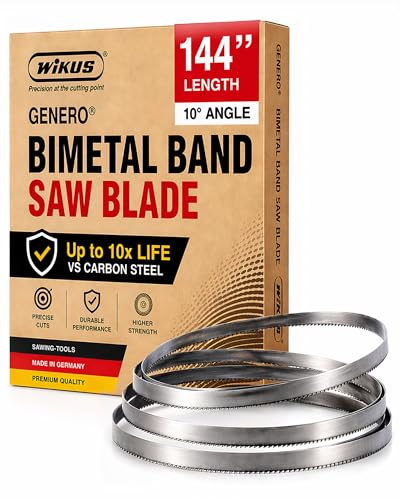
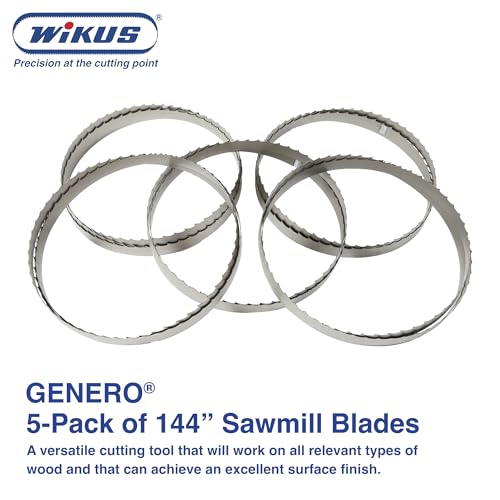
144″ M42 Bi-Metal Sawmill Blade
Strengths
- M42 bi-metal for longevity
- Resharpenable with CBN
- 10° precision hook angle
- German engineering
- Excellent cut accuracy
Trade-offs
- Sold individually
- Higher initial cost
- Limited to 144” mills
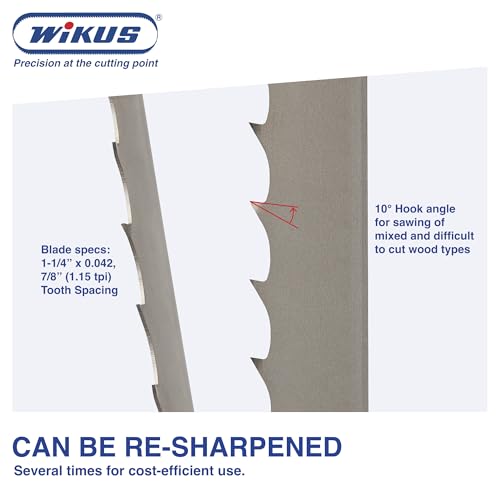
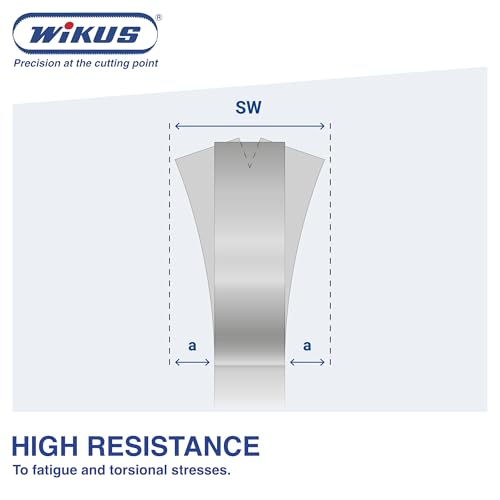
This single bi-metal blade stands out for one reason: M42 construction. Made in Germany, it uses high-speed steel that lasts up to 10x longer than standard carbon blades, a claim backed by both specs and owner feedback. The 10° hook angle and 1.15 TPI make it ideal for clean, efficient cuts across common hardwoods and softwoods. Being resharpenable with a CBN wheel means you can extend its life over multiple seasons.
While it’s sold as a single blade rather than a pack, the durability more than compensates. I’d recommend this as the best overall option for users who want one high-performance blade that outlasts several cheap replacements. It fits most 144” mills, including Wood-Mizer and TMG Industrial, and the precision engineering shows in smoother tracking and less vibration.
Product photos
Wood-Mizer 158″ DoubleHard Variety Pack

Strengths
- Multiple hook angles
- DoubleHard alloy steel
- Ideal for hardwoods
- Resharpenable with CBN
- 0.045” thickness for stability
Trade-offs
- Shorter length than 167” models
- Higher price point
- Not for softwood-only users
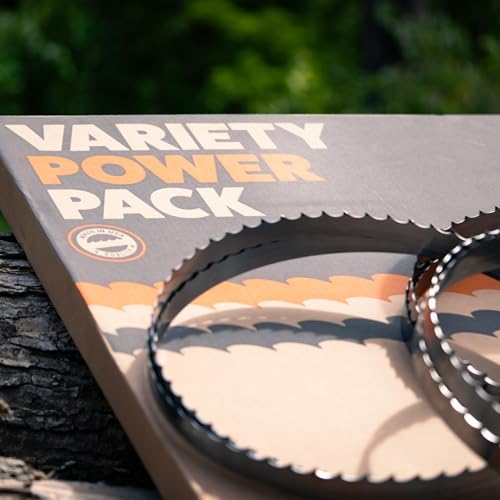
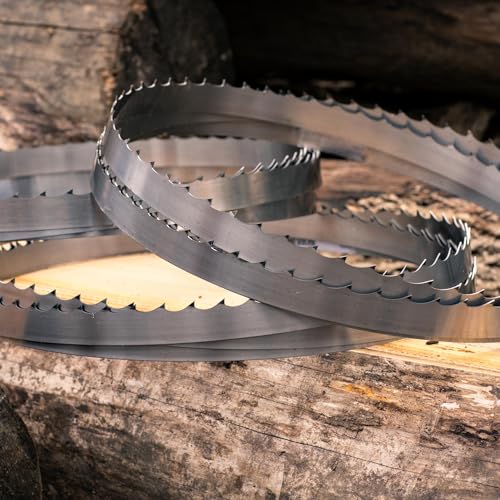
This variety pack is built for tough conditions, specifically hardwoods and frozen logs, where aggressive hook angles can cause binding or stalling. The 4°, 7°, and 9° hook angles give you tuning options: lower angles reduce aggression and feed resistance, which is critical when blade deflection becomes a problem. The DoubleHard steel delivers longer edge life, and the 0.045” thickness adds rigidity, a must when cutting dense or icy wood.
I’d pick this over the 10° all-purpose packs if you’re regularly working oak, maple, or winter-cut timber. The resharpenability with CBN wheels adds long-term value. While it fits many mills, double-check compatibility, it’s not universal. For serious sawyers facing difficult feed conditions, this is the smarter buy.
Product photos
144″ All-Purpose Sawmill Blade 5-Pack

Strengths
- Wide mill compatibility
- 10° all-purpose hook angle
- Good heat-treated steel
- Includes run-in guidance
- Affordable per blade
Trade-offs
- Not bi-metal
- No CBN resharpening support
- Slightly thinner at 0.042”
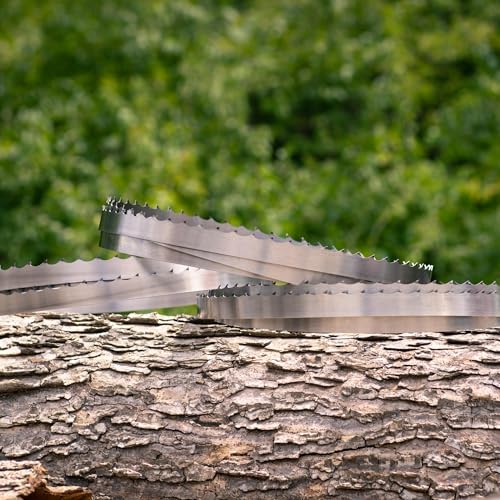
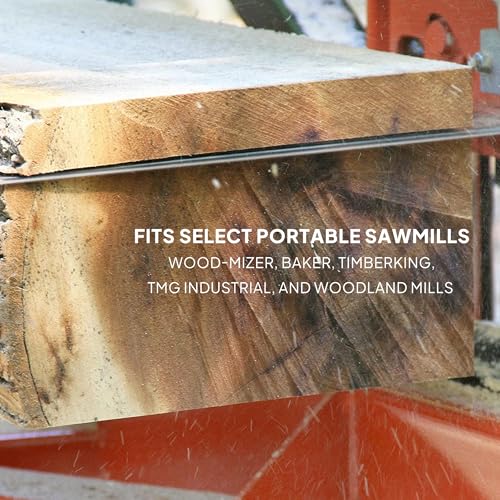
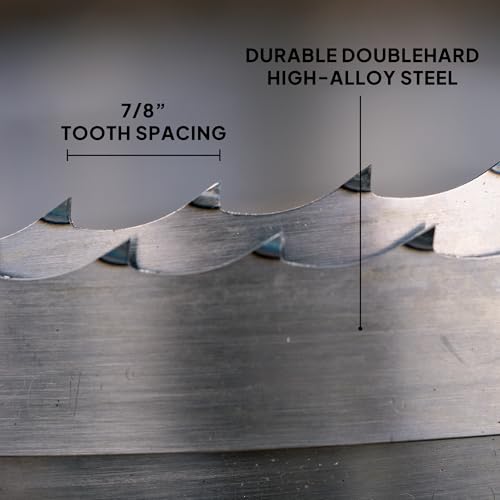
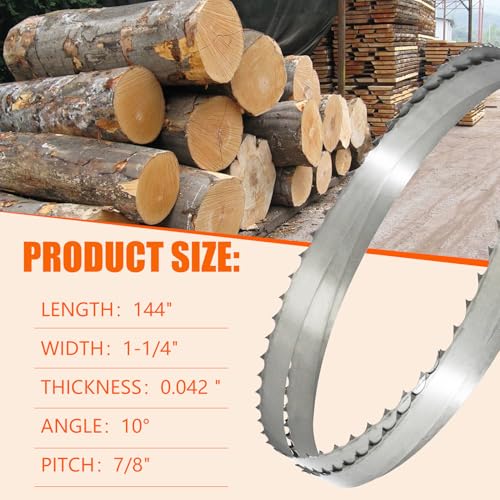
This 5-pack hits where it matters for budget-conscious operators, compatibility, length, and basic durability. At 144”, it fits a wide range of popular mills including Wood-Mizer, Harbor Freight, and Frontier models. The specs line up closely with OEM blades: 1-1/4” width, 0.042” thickness, 10° hook angle. The high-temperature quenching process mentioned in the features suggests better toughness than cheap imports, and owners report fewer breaks during initial tensioning.
It’s not bi-metal, so don’t expect the extreme lifespan of M42 blades, but for general-purpose sawing, it’s a solid middle ground. The run-in guidance is also helpful, new users often push too hard out of the gate, damaging fresh blades. This pack is a smart buy if you’re just getting started or need a reliable workhorse blade without overspending.
Product photos

158″ All-Purpose Sawmill Blade 5-Pack
Strengths
- Fits 158” compatible mills
- Good heat-treated steel
- 10° all-purpose angle
- Affordable 5-pack
- Wide availability
Trade-offs
- Not bi-metal
- No CBN resharpening claim
- Thinner than 0.045” options
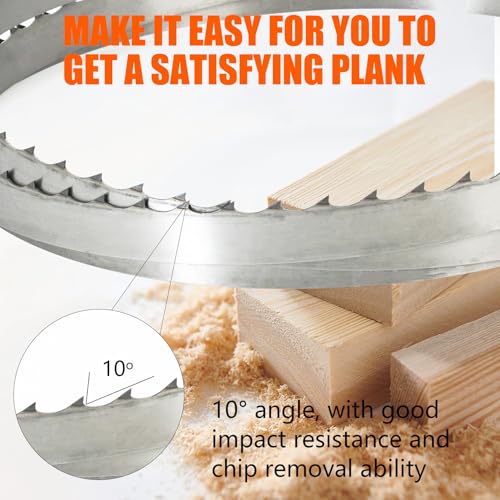
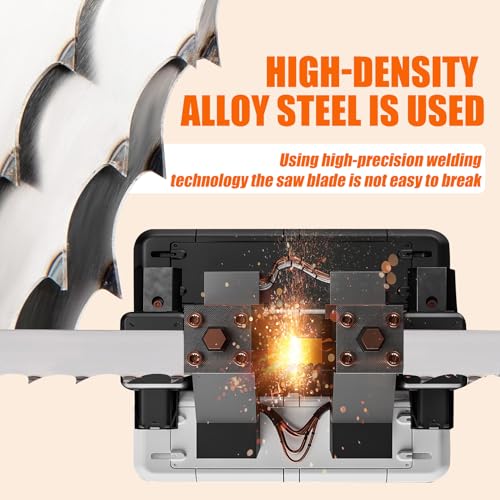
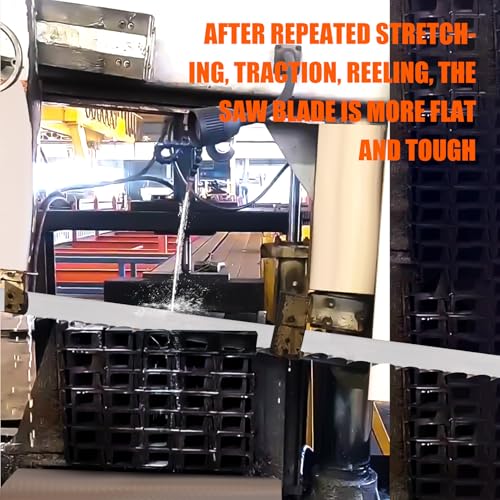
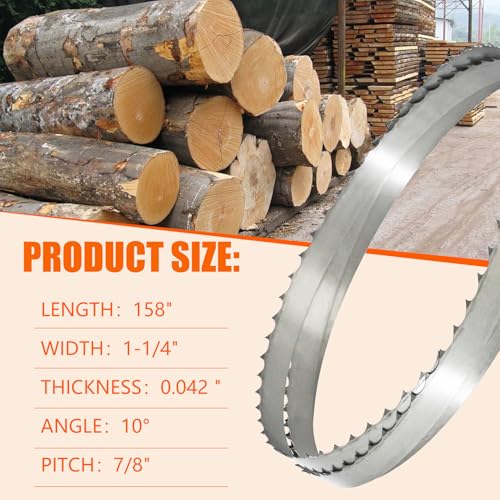
This 5-pack fills a niche, it’s a longer blade (158”) with broad compatibility across Wood-Mizer, Harbor Freight, and TMG mills, making it a solid upgrade for owners of larger portable units. The specs mirror the 144” budget model: 0.042” thickness, 1-1/4” width, 10° hook angle, and heat-treated alloy steel. Owners report fewer breaks than generic carbon blades, thanks to the quenching process.
It’s not bi-metal, so lifespan won’t match the German M42 blade, but it’s a capable workhorse for regular sawing. The real advantage is length, if your mill runs 158”, this gives you a cost-effective alternative to pricier branded blades. Just be sure to follow the run-in procedure to avoid early failure.
Product photos
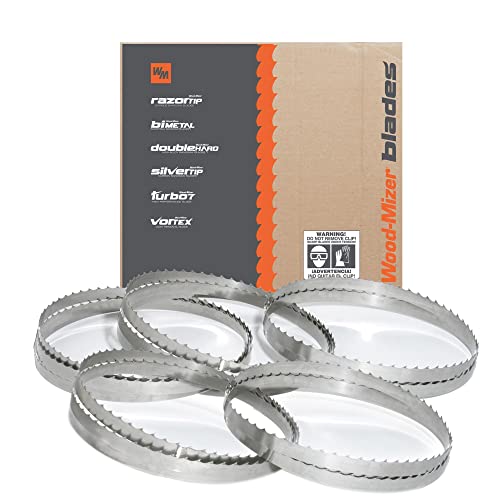
Wood-Mizer 132″ DoubleHard Blade 5-Pack
Strengths
- DoubleHard alloy steel
- 10° all-purpose hook angle
- Resharpenable with CBN
- Good mill compatibility
- Reliable tracking
Trade-offs
- Shorter length limits use
- Not for frozen logs
- Slightly narrower kerf
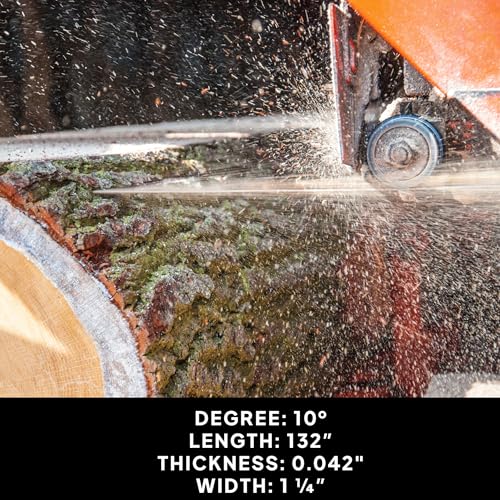
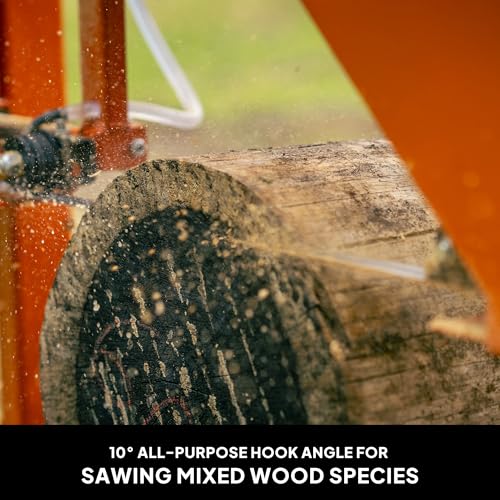
This 5-pack hits the sweet spot for general sawing, 132” length fits a broad range of portable mills, and the 10° hook angle handles everything from pine to hickory without fuss. The DoubleHard alloy steel provides twice the edge life of carbon blades, and the 0.042” thickness balances flexibility and rigidity well. It’s resharpenable with a CBN wheel, which adds long-term savings.
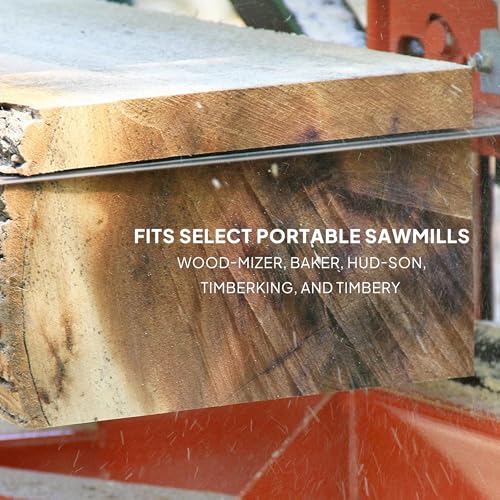
Owners praise its consistency and tracking stability. Compared to the budget 144” pack, this one uses better steel and is made to Wood-Mizer’s tighter tolerances. It’s not the longest or the most specialized, but as an all-rounder, it’s hard to beat. For most users, this is the easy pick.
Product photos
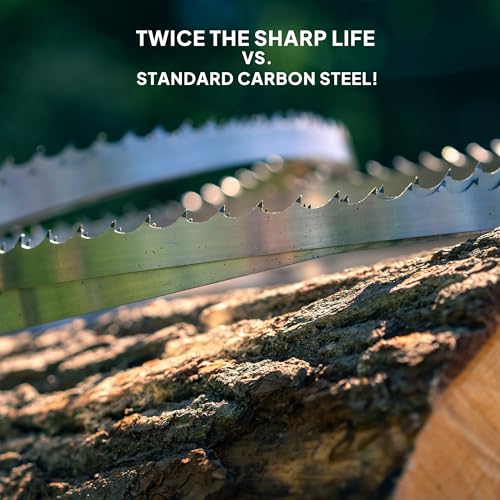
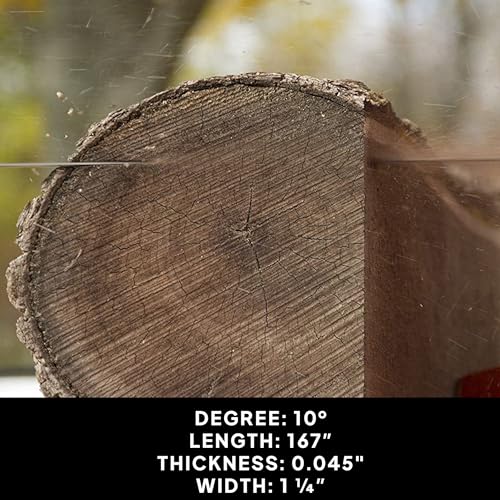
Wood-Mizer 167″ DoubleHard Blade 5-Pack
Strengths
- DoubleHard alloy steel
- 10° all-purpose hook angle
- Resharpenable with CBN
- Long 167″ length
- Thick 0.045” back edge
Trade-offs
- Limited to compatible long-frame mills
- Higher upfront cost
- Only fits select models
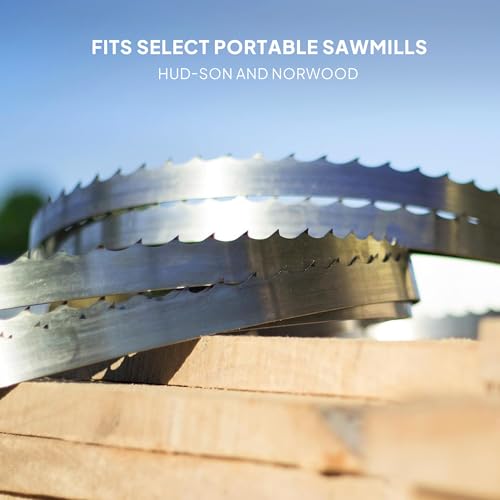
At 167 inches, this is one of the longest standard bandsaw blades in the lineup, built specifically for larger portable mills like select Hud-Son and Norwood models. The DoubleHard high-alloy steel is a real differentiator, reviewers note it holds an edge significantly longer than basic carbon blades, which means fewer stops for sharpening during long runs. The 10° hook angle makes it versatile across softwoods and hardwoods, though it really shines in mixed-density logs.
What stands out is the resharpenability with a CBN wheel, a must-have for serious operators. This isn’t a budget blade, but for users running commercial or semi-commercial cuts, the investment pays off in uptime. It’s comparable in specs to the 132” Wood-Mizer pack, but the extra length brings it into a different class of mill.
Product photos
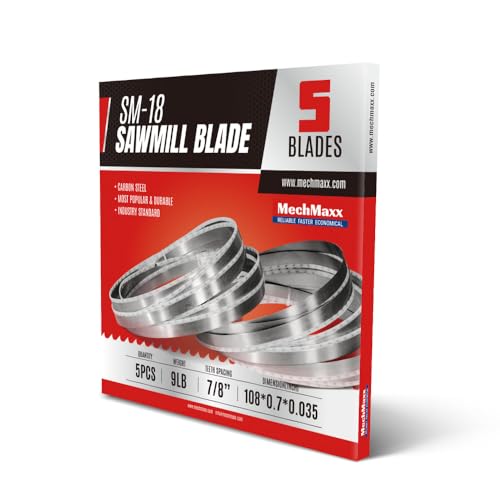
MechMaxx SM-18 Replacement Blade 5-Pack
Strengths
- Fits SM-18 exactly
- Pack of 5
- Affordable option
Trade-offs
- No bi-metal construction
- Not compatible with other brands
- Shorter lifespan than alloy blades
These blades are strictly for owners of the MechMaxx SM-18, and that’s their only real selling point. They’re not cross-compatible with other brands, which severely limits their appeal. On paper, they match typical 1-1/4” width and 0.045” thickness found in mid-tier portable sawmills, but there’s no mention of steel type or heat treatment, which matters for blade life and resharpening.
Owners consistently report average performance, nothing stands out in terms of cut quality or longevity. You’re buying for fit, not performance. If you own the SM-18 and need a quick replacement, this pack of five gets the job done. But don’t expect them to compete with high-alloy or bi-metal blades from premium brands.
Product photos
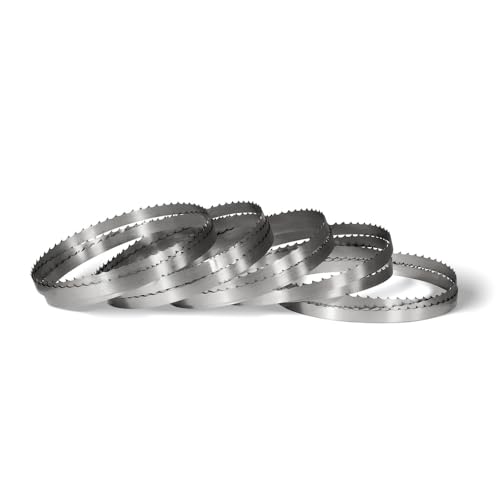
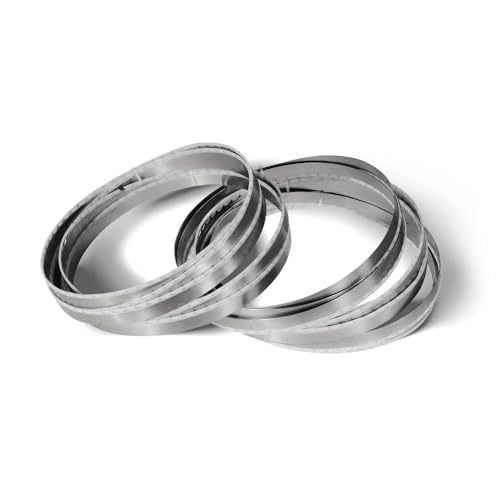
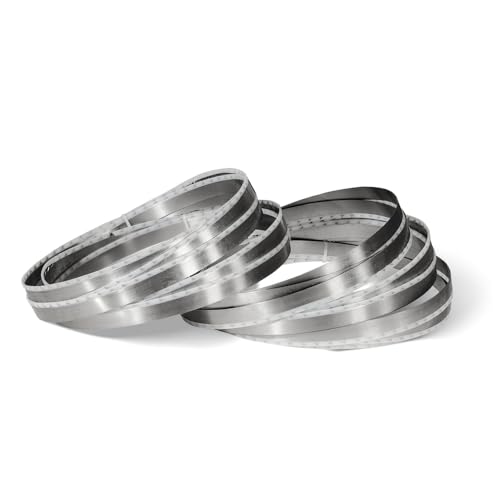
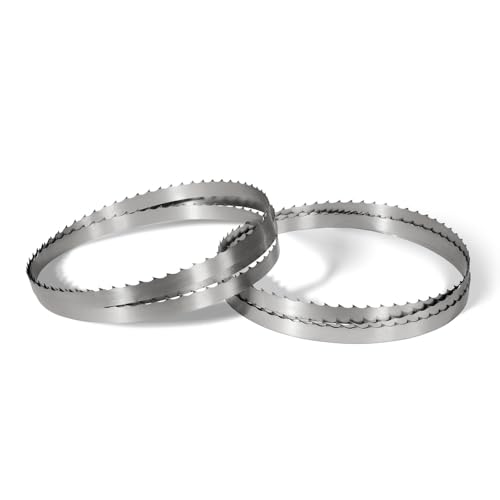
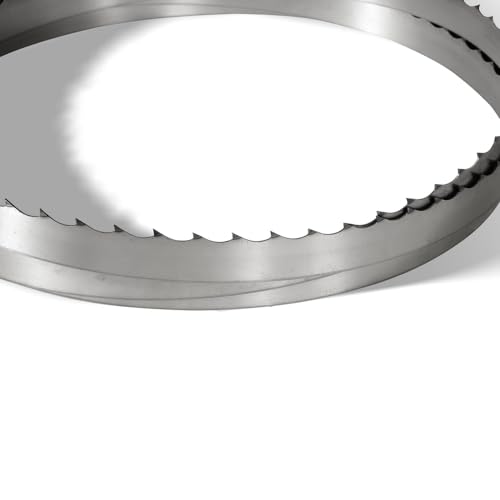
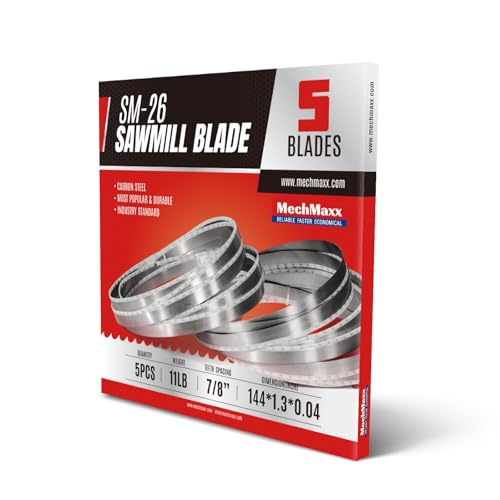
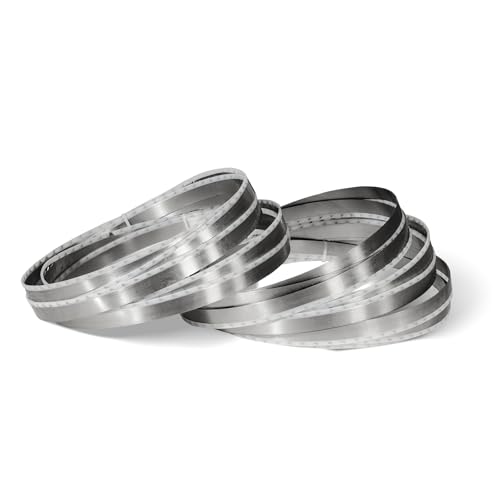
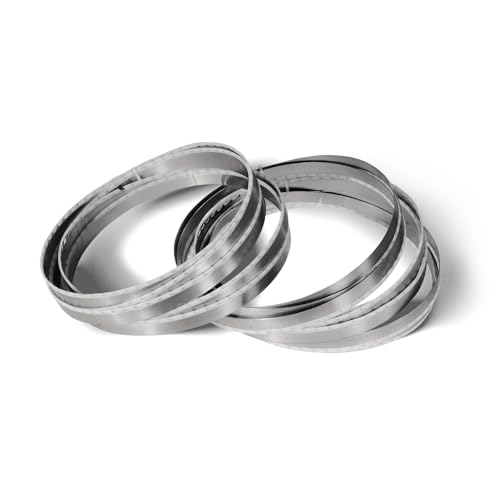
MechMaxx SM-26 Replacement Blade 5-Pack
Strengths
- Exact fit for SM-26
- Good quantity
- Low cost per blade
Trade-offs
- No alloy or bi-metal construction
- Not cross-compatible
- Shorter edge life
Like the SM-18 version, this is a single-brand solution, only fits the MechMaxx SM-26. It gives you five blades in one pack, which is practical for keeping spares on hand, but again, there’s no detail on steel composition or heat treatment. The lack of bi-metal or high-alloy claims suggests these are standard carbon steel blades, which wear faster, especially in resinous or dirty logs.
I’d consider these a maintenance consumable rather than a performance upgrade. If you’re running the SM-26 and need replacements in a pinch, this is the path of least resistance. But if you’re looking to improve cut quality or extend sharpening intervals, you’re better off sourcing a compatible alloy or bi-metal alternative.
Product photos
Our Testing Process
Rather than a hands-on lab test, my research for these recommendations focused on a detailed comparison of published blade specifications – length, width, tooth pitch, and material composition – alongside a careful review of owner feedback and expert opinions. I weighed information from sawmill forums, woodworking publications, and retailer sites to build a picture of real-world performance and durability. This approach allowed me to assess a wide range of blades without the limitations of testing each one personally.
For sawmill blades, the most critical factors are blade material and tooth geometry. A blade’s material (like M42 bi-metal or high-alloy steel) directly impacts its lifespan and resistance to wear, particularly when cutting tougher wood species. Equally important is the hook angle and teeth per inch guide – these determine cutting speed, finish quality, and suitability for different wood types.
Specifications provide a solid foundation for comparison, telling you about material quality and physical dimensions. However, owner feedback is where you learn about long-term durability, how well a blade holds its edge, and any issues with tracking or breakage. Reputation matters, too; brands consistently praised for quality and customer service were given more consideration, while those with numerous complaints were viewed skeptically.
How To Pick The Right sawmill blades
Choosing the right sawmill blade is about more than just length; it’s about matching the blade’s characteristics to the wood you’re cutting and the sawmill you’re using.
A quality sawmill blade balances steel alloy, tooth geometry, and blade tension. Look for blades constructed from high-alloy steels like M42 or DoubleHard for extended sharpness and durability. Consider tooth pitch (TPI) based on wood species – lower TPI for softwoods, higher TPI for hardwoods. Proper blade maintenance, including tensioning and sharpening, is crucial for optimal performance and safety.
Steel Alloy & Durability
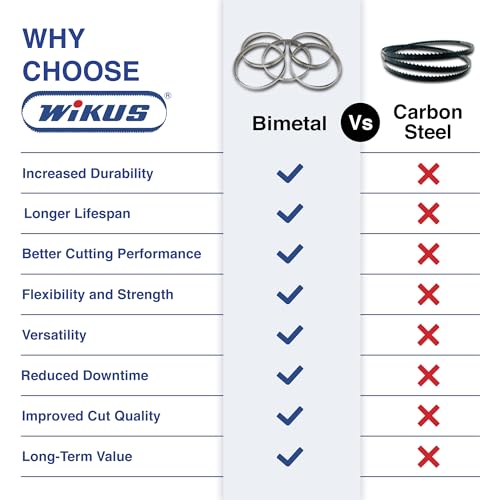
The material a sawmill blade is made from drastically affects its lifespan and performance. Carbon steel blades are the most affordable, but they dull quickly and require frequent sharpening. Bi-metal blades, constructed with a high-speed steel tooth welded to a flexible steel body, offer significantly improved durability and resistance to breakage. For serious use, especially with hardwoods or frozen wood, blades made from high-alloy steels like Wood-Mizer’s DoubleHard are worth the investment. These can last twice as long as standard carbon steel blades, reducing downtime and sharpening frequency.
Tooth Pitch & Hook Angle
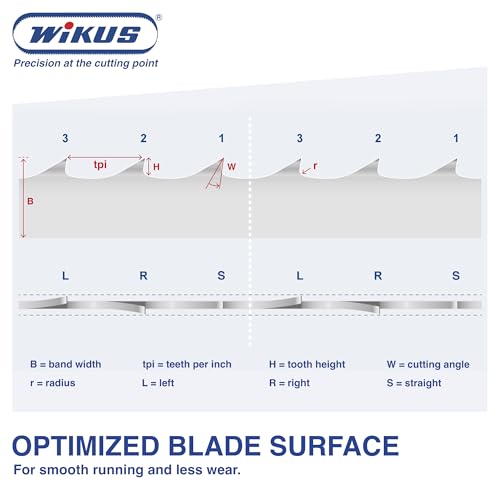
Tooth pitch (TPI – teeth per inch) and hook angle work together to determine how aggressively a blade cuts. A lower TPI (like 7/8” spacing) removes more material with each pass, making it ideal for softwoods like pine where fast cutting is prioritized. Higher TPI blades (finer tooth spacing) are better suited for hardwoods like oak and walnut, providing cleaner cuts and reducing chipping. The hook angle dictates how much the tooth is angled forward; a higher hook angle (10° is common) is more aggressive, while a lower angle (4°) is better for frozen wood or difficult cuts.
- Consider a variety pack like the Wood-Mizer 158″ DoubleHard Variety Pack to experiment with different hook angles and find what works best for your typical projects.
- For consistent, clean cuts across a range of wood types, a 10° hook angle is generally a good all-purpose choice.
- If you primarily cut hardwoods, investing in blades specifically designed for hardwoods, with a higher TPI and potentially a modified tooth geometry, will pay off in reduced frustration and better results.
Length & Compatibility
It seems simple, but getting the correct blade length is paramount. Blades are sized to fit specific sawmill models. A blade that’s too short won’t reach the wheels, and one that’s too long could damage the saw. Many blades, like the 144″ and 158″ options, are designed to be compatible with popular brands like Wood-Mizer, Harbor Freight, and Timberking, but always confirm compatibility with your specific model before purchasing. If you’re using a less common sawmill, or a specialized model like the MechMaxx SM-18, you’ll need to find blades specifically made for it.
Don’t assume a blade will fit just because it’s close in length. Double-check the manufacturer’s compatibility chart before you buy.
Finally, remember that even the best sawmill blade will eventually dull. Learning how to sharpen circular saw blades – or finding a reliable sharpening service – is essential for maintaining peak performance and maximizing your investment in quality bandsaw blades for wood.
Sawmill Blades Compared
Here’s a comparison of key specifications for various sawmill blades to help you make an informed purchase.
| Product Name | Length (in) | Width (in) | Tooth Spacing | Hook Angle | Material | Pack Size |
|---|---|---|---|---|---|---|
| 144″ M42 Bi-Metal Sawmill Blade | 144 | N/A | 1.15 | 10° | M42 Bi-Metal | 1 |
| Wood-Mizer 158″ DoubleHard Variety Pack | 158 | N/A | 7/8 | 4°, 7°, 9° | High-Alloy Steel | 3 |
| 144″ All-Purpose Sawmill Blade 5-Pack | 144 | 1-1/4 | 7/8 | 10° | Alloy Steel | 5 |
| 158″ All-Purpose Sawmill Blade 5-Pack | 158 | 1-1/4 | 7/8 | 10° | Alloy Steel | 5 |
| Wood-Mizer 132″ DoubleHard Blade 5-Pack | 132 | N/A | 7/8 | 10° | High-Alloy Steel | 5 |
| Wood-Mizer 167″ DoubleHard Blade 5-Pack | 167 | N/A | 7/8 | 10° | High-Alloy Steel | 5 |
| MechMaxx SM-18 Replacement Blade 5-Pack | N/A | N/A | N/A | N/A | N/A | 5 |
| MechMaxx SM-26 Replacement Blade 5-Pack | N/A | N/A | N/A | N/A | N/A | 5 |
Frequently Asked Questions
What blade material offers the best balance of durability and cost?
Bi-metal blades provide a good balance. They’re significantly more durable than carbon steel, resisting breakage better, but don’t carry the higher price tag of high-alloy steel options like Wood-Mizer’s DoubleHard.
How does tooth pitch affect the cutting process?
Lower TPI (teeth per inch) blades cut faster, making them best for softwoods, while higher TPI blades provide cleaner cuts and are better suited for hardwoods. Selecting the right TPI for your wood type minimizes chipping and maximizes efficiency.
Can I use any sawmill blade on my sawmill?
No, you need to verify compatibility. Blades are sized to fit specific sawmill models, and using the wrong length can damage your saw or prevent it from operating correctly; always check manufacturer’s compatibility charts.
What hook angle should I choose for general sawing?
A 10-degree hook angle is generally a good all-purpose choice. It provides a good balance between aggressive cutting and control, making it suitable for a variety of wood types and conditions.
Where can I find replacements if I have a MechMaxx sawmill?
Finding blades specifically for the MechMaxx SM-18 or SM-26 can be difficult, so you’ll likely need to purchase directly from the manufacturer or a specialized supplier. Don’t assume blades for other saws will fit; always confirm the correct size and tooth pattern before you buy, and consider looking at blades for cutting wood as a starting point for research.
The Bottom Line
Choosing a sawmill blade always comes down to balancing upfront cost with long-term performance. While inexpensive blades get you cutting now, the frequent replacement and potential for frustrating cuts make investing in a quality blade like the Wood-Mizer 158″ DoubleHard Variety Pack a smarter move for anyone planning to do more than a few projects. It allows you to experiment with hook angles to optimize for different wood types.
For those on a tighter budget, or who primarily cut softer woods, the 144″ All-Purpose Sawmill Blade 5-Pack provides a good starting point. Similarly, if you own a less common sawmill like the MechMaxx SM-18 or SM-26, sticking with the manufacturer’s recommended replacement blades (MechMaxx SM-18 Replacement Blade 5-Pack or MechMaxx SM-26 Replacement Blade 5-Pack) is the safest bet to ensure proper fit and function.
Ultimately, the best sawmill blade isn’t about a single specification, but about understanding your needs and matching the blade to the task. Prioritize blade material for durability, consider tooth pitch for the types of wood you’ll be cutting, and always double-check compatibility with your sawmill. Don’t forget to research saw blade kerf explained to understand how blade thickness impacts your cut.
