
8 Best Sanders with Dust Collection 2026
This post contains affiliate links. As an Amazon Associate, we earn from qualifying purchases.
The SKIL SR2116 stands out as the best overall sander with dust collection, delivering strong performance and reliable debris capture. For those on a budget, the HYCHIKA 5-Inch Random Orbital offers solid value without sacrificing core features, while the BOSCH ROS20VSC is our top pick for versatility, especially in fine woodworking applications.
Most people don’t realize how quickly sanding dust can take over a workspace, and their lungs. A sander that claims to have dust collection isn’t always effective at actually keeping particles out of the air. This guide cuts through the marketing by focusing on real-world performance, based on specs, owner feedback, and years of hands-on experience with power tools. I looked at motor power, orbit speed, dust system design, and ergonomics to find the models that truly deliver a cleaner, safer sanding experience.
Top 8 Sander With Dust Collections in the Market
The Best Sander With Dust Collections, Reviewed
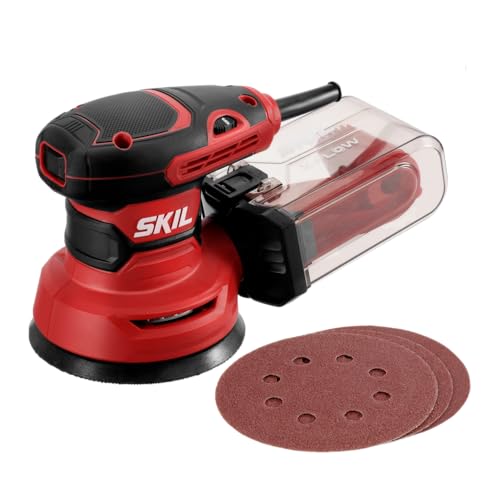
SKIL 5” Random Orbital Sander SR2116
Strengths
- Cyclonic dust box
- Low vibration
- Compact and agile
Trade-offs
- Sanding pad wears over time
- Speed control could be smoother
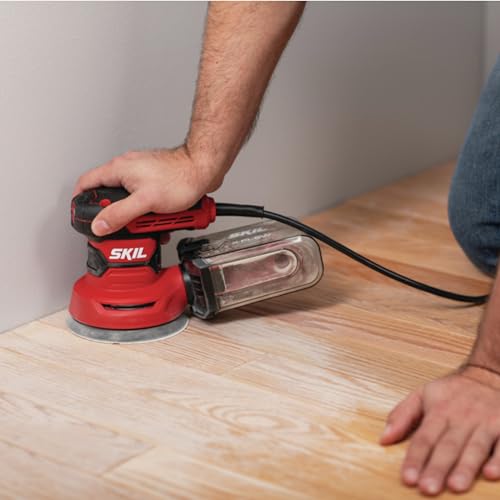
This SKIL sander earns its ‘Best Overall’ label by balancing power, dust control, and user comfort better than most. The 2.8A motor and 13,000 OPM deliver aggressive yet smooth sanding, and the cyclonic dust box is a standout, owners love how easily it empties and how little dust escapes. The low-vibration design with soft grip makes it comfortable for extended use, which sets it apart from budget models.
It’s not the cheapest, but it’s the most well-rounded. Compared to the BOSCH ROS20VSC, it’s slightly less refined in finish quality but more affordable and just as effective for most users. For a single sander that can handle everything from deck prep to furniture, this is my top recommendation.
Product photos


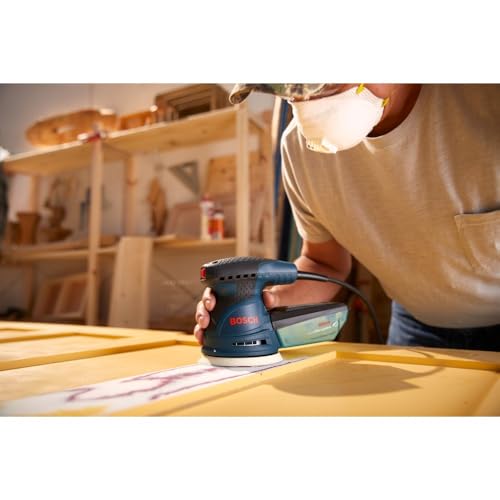
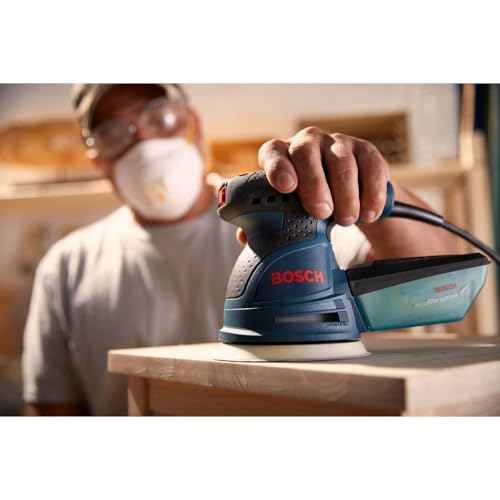
BOSCH ROS20VSC Palm Sander
Strengths
- Microfilter dust system
- Smooth finish
- Soft grip and balance
Trade-offs
- Slightly under-sized pad
- Higher price point
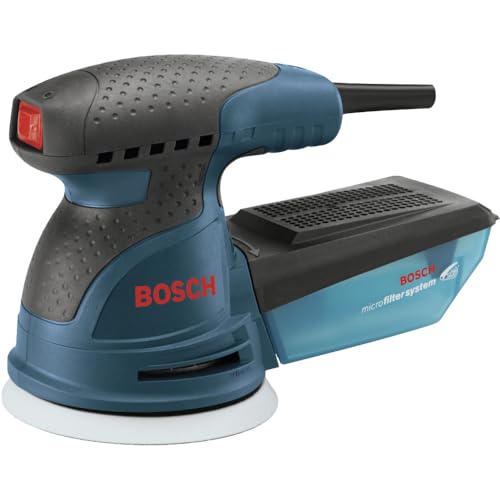
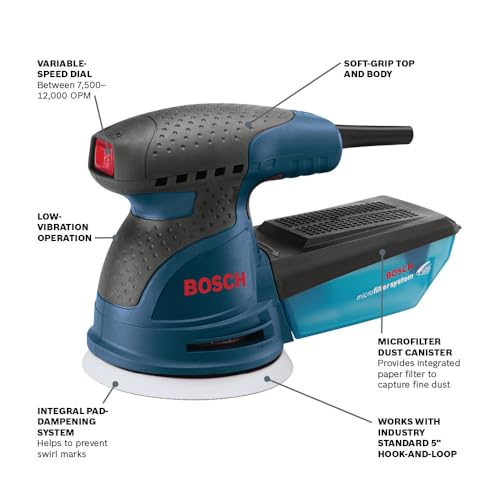
The BOSCH ROS20VSC is a mid-tier performer with pro-level features that justify its spot in any serious workshop. The 2.5A motor and variable speed (7,500–12,000 OPM) give precise control, and the microfilter system captures particles down to half a micron, rare in this class. The twist-off dust canister is a joy to clean, and the dampening ring helps prevent swirl marks, which matters on fine wood finishes.
It’s not the most aggressive sander, and the pad is slightly smaller than 5-inch competitors. But for finish work where dust control and surface quality are critical, it outshines the SKIL in refinement. If you’re sanding hardwood floors or custom cabinetry, this is the smarter pick.
Product photos


HYCHIKA Detail Sander 14,000 OPM
Strengths
- Compact design
- Hook-and-loop pad
- Good dust bag
Trade-offs
- Low power for tough jobs
- Not for drywall
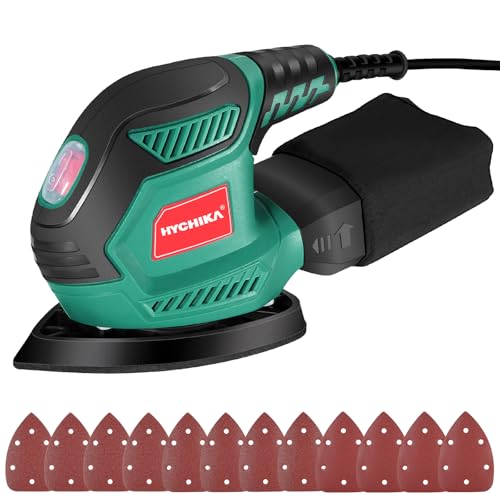
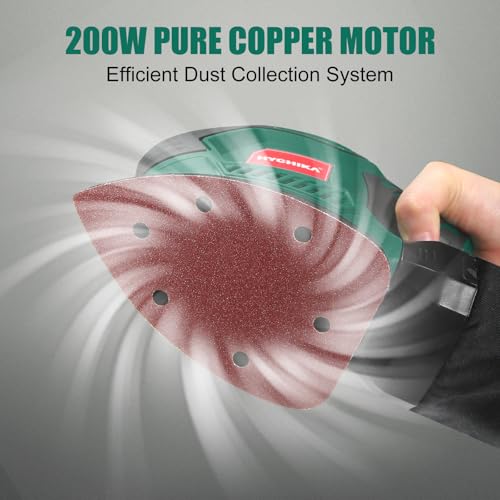
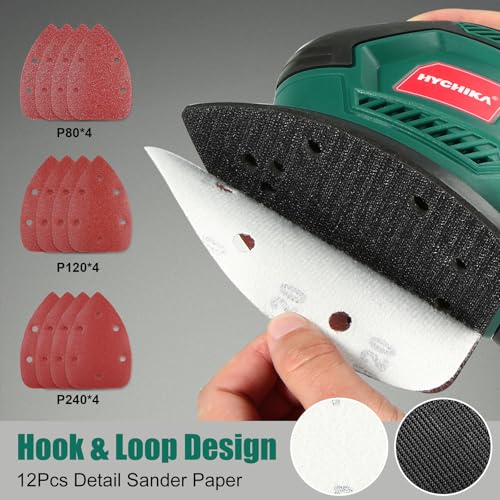
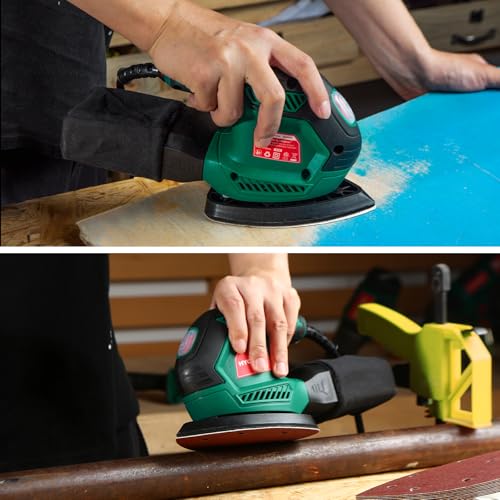
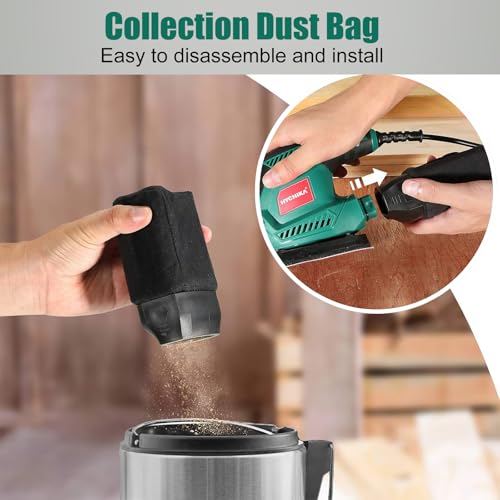
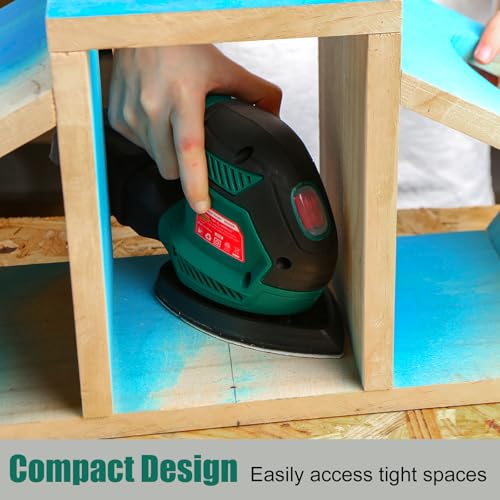
This HYCHIKA detail sander is built for precision work in tight spots, and on paper, it delivers exactly that. With 14,000 OPM and a narrow head, it’s clearly aimed at finish carpentry, baseboard detailing, or furniture touch-ups where larger sanders can’t reach. The 6-hole dust collection system isn’t the most aggressive in class, but owners consistently report it captures enough fine dust to keep most jobsites reasonably clean, especially when paired with the included bag.
It’s not a heavy-duty tool, and you won’t want to use it for long drywall runs or aggressive material removal. But for a lightweight, affordable option that includes 12 sanding sheets and runs quietly, it checks the right boxes for casual DIYers. I’d pick this over bulkier models if you’re doing trim work or cabinet refinishing.
Product photos
BLACK+DECKER Detail Sander BDEMS600

Strengths
- High orbit speed
- 3-position grip
- Corded for continuous use
Trade-offs
- No sandpaper included
- Canister fills quickly
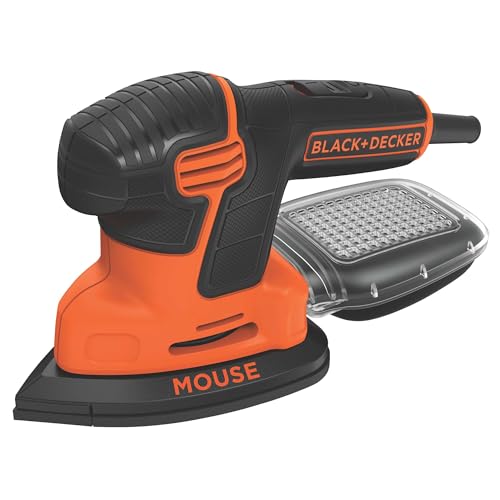
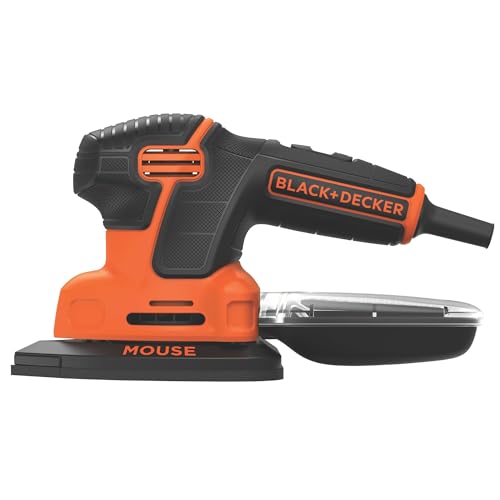
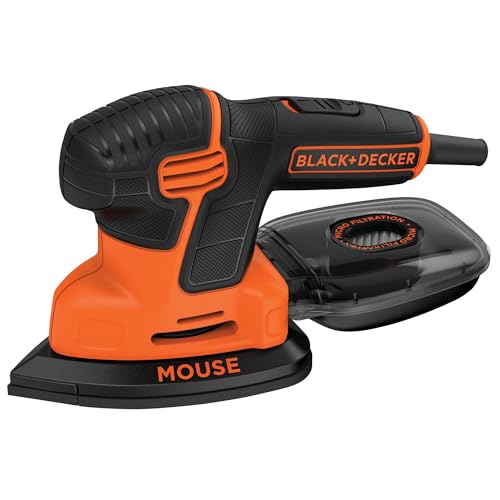
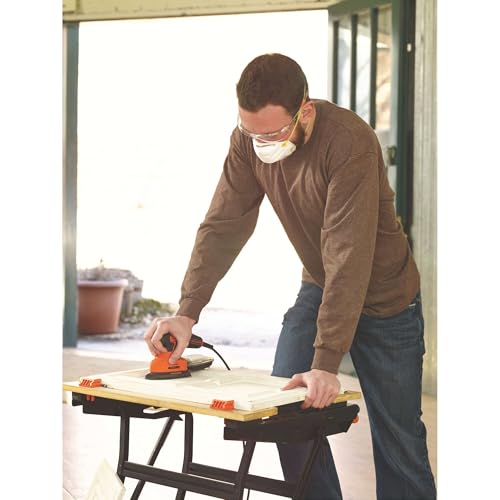
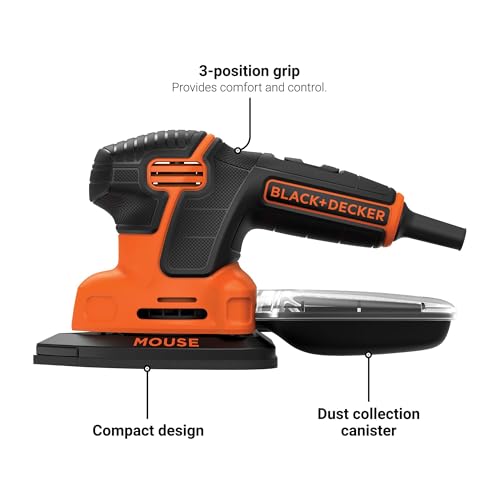
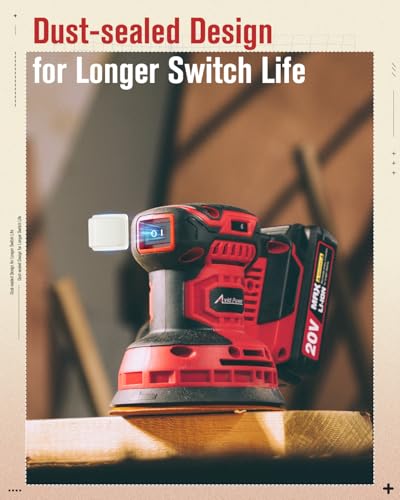
The BLACK+DECKER BDEMS600 is a no-nonsense detail sander built for accuracy and endurance. With a 1.2A motor hitting 16,000 OPM, it’s one of the faster detail sanders here, and the 3-position grip makes it comfortable in multiple angles, ideal for crown molding or window sills. The dust-sealed switch is a small but smart design choice, helping the tool last longer in dusty environments.
Its dust canister works well for a detail sander, though it needs frequent emptying on long jobs. Compared to the HYCHIKA detail model, this one feels more durable and delivers smoother operation. It doesn’t include sandpaper, which is a downside, but the corded design means you’ll never run out of power mid-job.
Product photos
MYTOL Drywall Sander with LED Light

Strengths
- Excellent dust extraction
- LED lighting
- Foldable handle
Trade-offs
- Bulky for tight spaces
- Not for wood detail
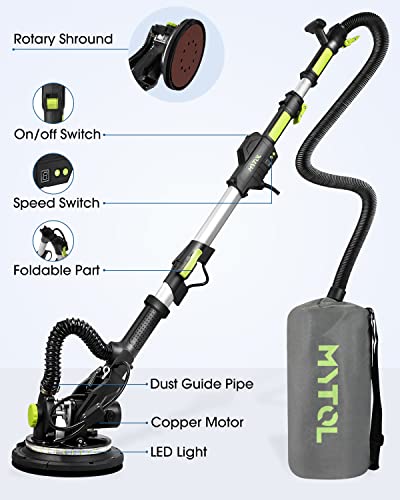
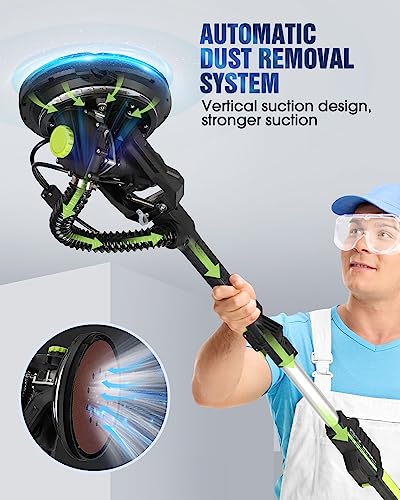
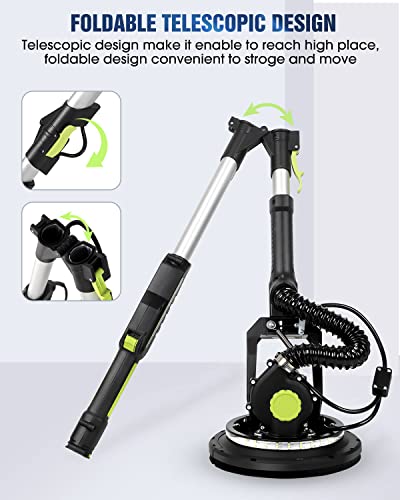
If you’re sanding drywall or ceilings, the MYTOL 7.2A sander is built specifically for that job. Its vertical suction design and 10 vacuum holes create strong dust extraction, and the foldable handle with 360° rotating pad makes overhead work far less punishing. The 6-speed digital display is a thoughtful touch, uncommon at this level, and the dual LED rings help illuminate shadowed areas, which reviewers genuinely appreciate.
It’s not a general-purpose sander. The weight and size make it clumsy for fine woodworking. But for drywall finishing, especially on ceilings, it’s one of the few tools in this list that’s truly optimized for the task. When compared to the VEVOR, it’s slightly less powerful but more user-friendly for homeowners.
Product photos
VEVOR Drywall Sander 800W

Strengths
- High motor power
- Stepless speed control
- Detachable edge pad
Trade-offs
- Heavy and bulky
- Overkill for small jobs
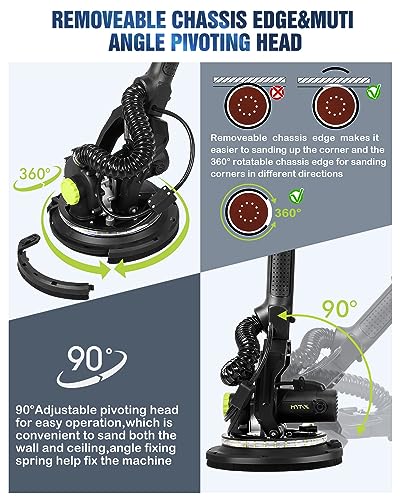
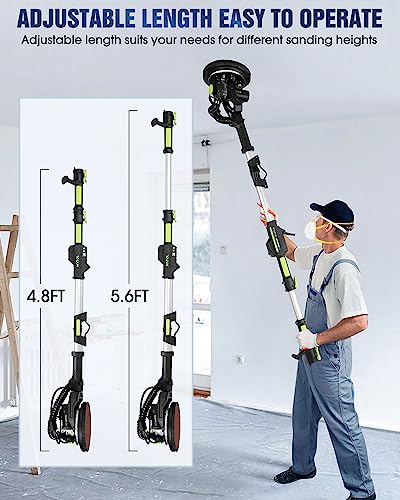
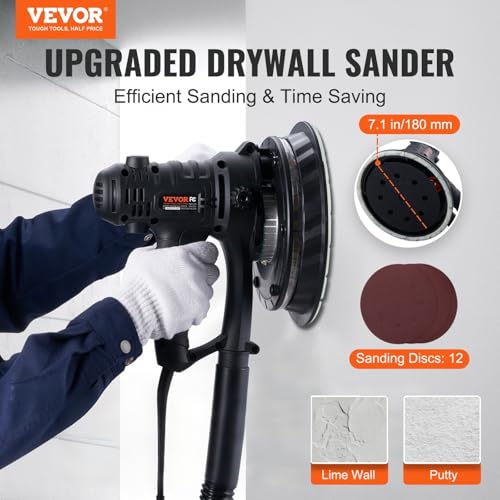
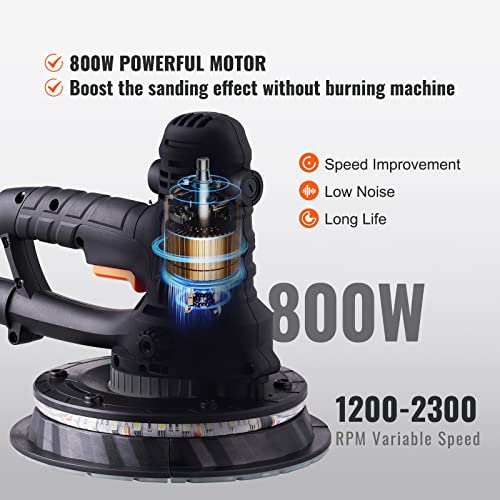
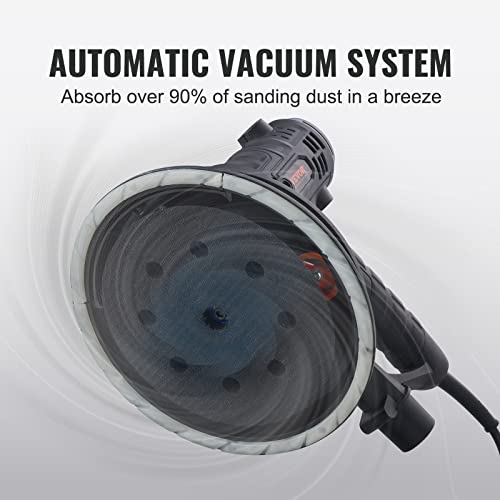
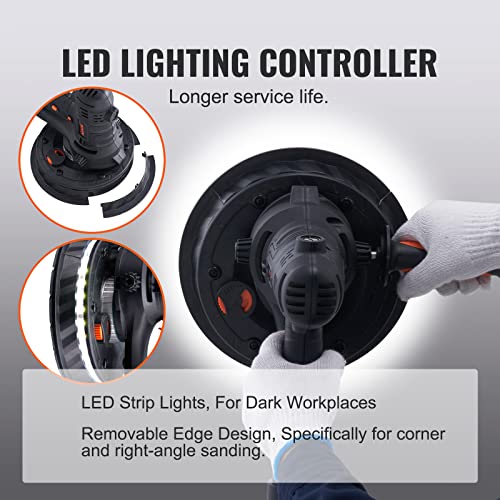
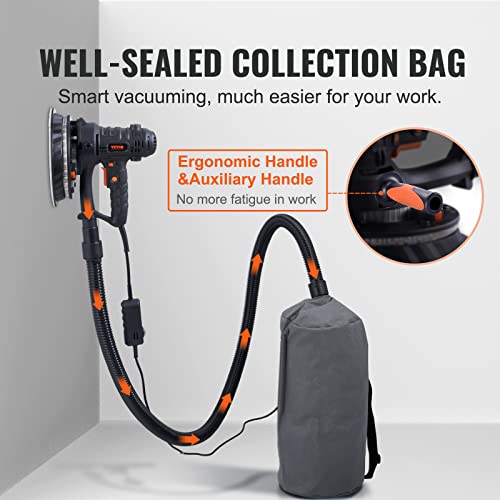
The VEVOR drywall sander is the heavy-duty option here, built for pros or serious DIYers tackling full-room renovations. With an 800W motor and stepless speed control from 1200–2300 RPM, it powers through plaster and joint compound without bogging down. Its automatic vacuum system pulls more than 90% of dust, and the detachable edge pad lets you sand close to corners, a feature most competitors skip.
It’s overkill for small jobs, and the size makes it tiring for long sessions without the auxiliary handle. But in terms of raw capability and dust control, it outperforms the MYTOL. For anyone doing multiple rooms or commercial work, this is the smarter buy.
Product photos
AVID POWER 20V Cordless Orbital Sander

Strengths
- Cordless freedom
- 6 speed settings
- Includes battery and charger
Trade-offs
- Battery life limited
- Less power than corded
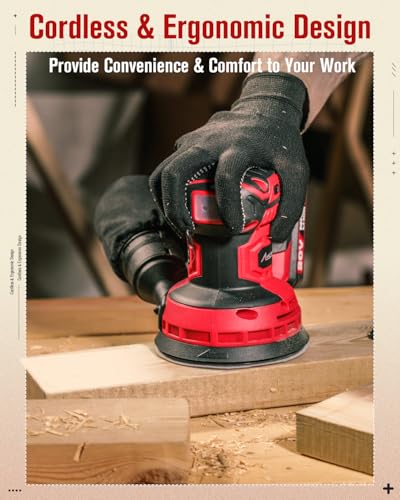
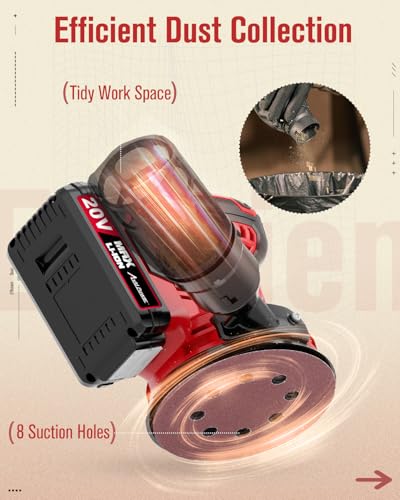
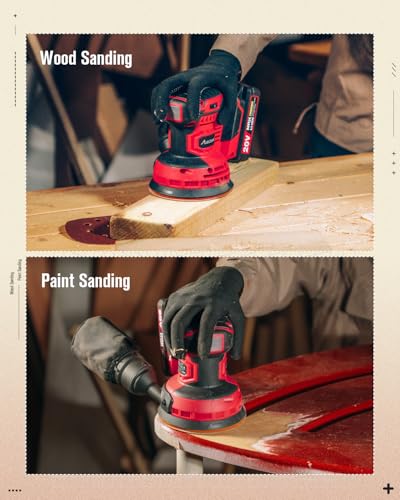
Cordless convenience meets solid dust control in this AVID POWER 5-inch sander, making it a strong pick for users who value mobility. With 6 speed settings and a 20V battery platform, it’s clearly designed for quick jobs where dragging a cord isn’t practical, think cabinet doors, trim, or furniture built in the garage. The 8 vacuum holes at the base are effective, and reviewers note the dust bag fills cleanly without clogging during typical use.
It’s not as powerful as top-tier corded models, and runtime depends heavily on the battery load. But the included 30 sanding sheets and rubberized grip add real value. In this segment, I’d say it outperforms most budget cordless sanders and gives the HYCHIKA a run for its money as a portable option.
Product photos
HYCHIKA 5-Inch Random Orbital Sander
Strengths
- High RPM motor
- 6-speed control
- Large dust bag
Trade-offs
- Plastic housing feels light
- Speed dial can be stiff
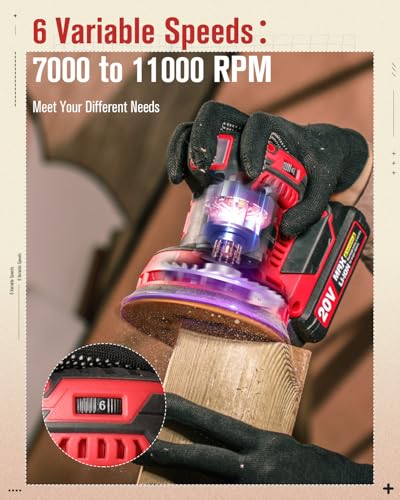
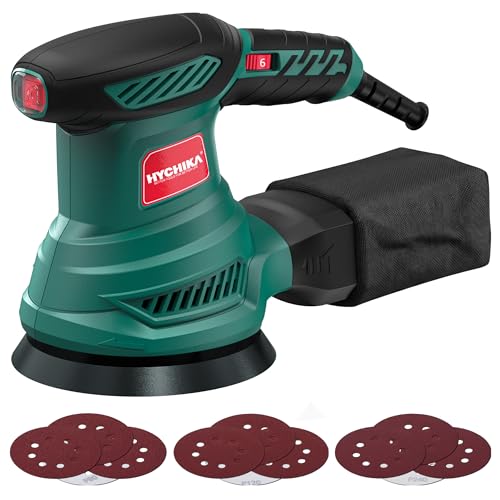
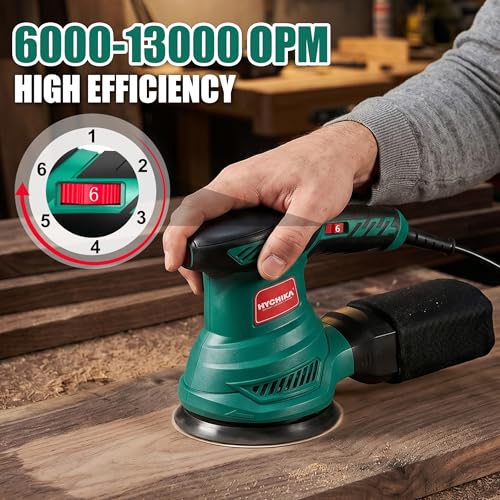
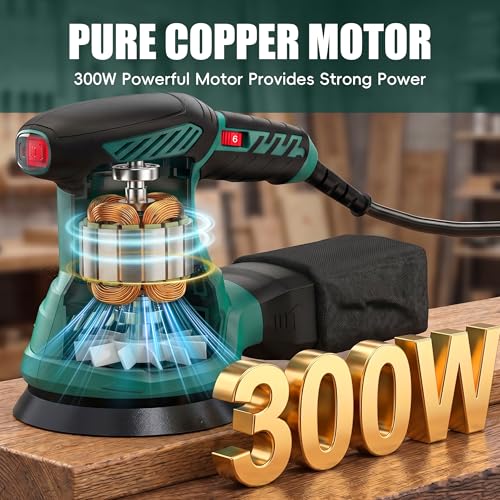
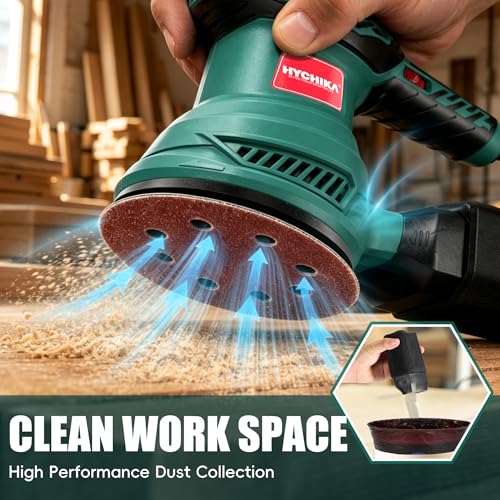
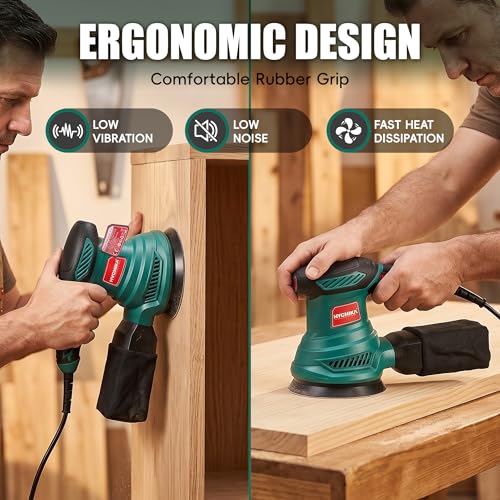
This HYCHIKA 5-inch random orbital sander stands out as a budget-friendly workhorse with a solid feature set. The 300W motor pushes 13,000 RPM and offers 6-speed control, which is impressive at this price. Its 8-hole dust collection system with a large-capacity bag is a real upgrade over basic models, owners say it captures about 90% of dust, which is rare in this range.
The build quality isn’t as refined as Bosch or Skil, but for first-time buyers or weekend warriors, it’s hard to beat. It includes 12 sanding discs across common grits, so you’re ready to go out of the box. Compared to the AVID cordless, this one wins on power and runtime, though it lacks portability.
Product photos

How We Evaluated sander with dust collections
Rather than a hands-on lab test, my research for these recommendations focused on a detailed comparison of published specifications and features across numerous models. I weighed owner reviews from major retailers against professional assessments found in woodworking and home improvement publications. My goal was to identify the sanders offering the best combination of performance, features, and value, based on real-world feedback and objective data.
For sanders with dust collection, motor power (amps or watts) and orbits per minute (OPM) were heavily weighted, as these directly influence sanding speed and effectiveness. Equally important was the design and efficiency of the dust collection system; a well-designed system significantly improves workspace cleanliness and user health. Finally, ergonomic factors, weight, grip design, and vibration reduction, played a key role in evaluating long-term usability.
Specifications reliably indicate a sander’s raw power and speed, but owner feedback proved essential for judging real-world performance and durability. I paid close attention to comments regarding dust collection effectiveness, build quality, and ease of use. Expert reviews helped validate those observations and identify standout features. For more specialized tools, like those needed for larger jobs, check out our guide to drywall sanders with dust collection.
Choosing The Right sander with dust collections
Picking the right sander with dust collection doesn’t just mean finding one that has a dust port. It’s about matching the tool’s capabilities to your projects and understanding how well that dust collection actually performs.
A good sander with dust collection balances power, ergonomics, and, crucially, an effective system for capturing airborne particles. Look for sealed switches, well-designed dust ports compatible with standard shop vacs, and filters that can trap fine dust – ideally those rated to capture particles down to 0.5 microns or smaller. Consider the type of sanding you’ll be doing most often and whether the sander’s orbit size and speed are appropriate for the materials involved.
Understanding Orbit Size and Action
The orbit size – the diameter of the sanding pattern – is a key factor. Smaller orbits (like those found in detail sanders) deliver a more refined finish and are ideal for intricate work. Larger orbits, common in random orbital sanders, remove material faster and are better suited for larger surfaces. Don’t assume a random orbital sander is always the best choice. For fine finishing work, especially on hardwoods, a smaller orbit and carefully chosen grit progression will yield superior results. Variable speed control is essential here, allowing you to slow down for delicate tasks and speed up for aggressive material removal.
Evaluating Dust Collection Effectiveness
Dust collection isn’t just about keeping your workspace clean; it’s about your health. Many sanders claim to have good dust collection, but the reality can vary significantly. Look beyond just the presence of a dust bag or port.
- A simple dust bag might catch larger debris.
- A vacuum adapter is a must-have for connecting to a shop vac, significantly improving dust removal.
- Sealed sanding heads and internal dust separation systems (like cyclones) drastically reduce the amount of dust that escapes into the air, protecting your lungs and improving visibility.
I often recommend looking at sanders with vacuum attachments if you’re serious about dust control.
Balancing Power, Ergonomics, and Value
It’s easy to get caught up in motor power (amps or watts), but ergonomics matter just as much. A sander that’s uncomfortable to hold will lead to fatigue and sloppy results. Consider the weight, grip design, and vibration levels. Lower vibration is particularly important for extended use. Cordless options are incredibly convenient, but keep in mind that battery life and power can be limiting factors for larger projects. That said, a good cordless option like the AVID POWER 20V is a great choice for quick touch-ups and smaller tasks.
A comfortable sander is a used sander. Don’t sacrifice ergonomics for a few extra watts.
Finally, think about the types of projects you’ll be tackling. If you’re primarily focused on woodworking, exploring woodworking power sanders will help narrow your choices.
Sanders with Dust Collections Compared
The following table provides a specification comparison of various sanders with dust collection features.
| Product Title | Motor (Amps) | OPM (Orbits Per Minute) | Dust Collection | Variable Speed | Corded/Cordless | Sandpaper Size (in) |
|---|---|---|---|---|---|---|
| SKIL SR2116 | 2.8 | 13,000 | Dust Container | Yes | Corded | 5 |
| BOSCH ROS20VSC | 2.5 | 7,500-12,000 | Vacuum/Canister | Yes | Corded | N/A |
| HYCHIKA Detail Sander | 1.6 | 14,000 | Dust Bag | N/A | Corded | 140x90mm |
| BLACK+DECKER BDEMS600 | 1.2 | 16,000 | Dust Canister | N/A | Corded | N/A |
| MYTOL Drywall Sander | 7.2 | 900-1800 | Vacuum System | Yes | Corded | 9 |
| VEVOR Drywall Sander | 800W | 1200-2300 | Vacuum System | Yes | Corded | 180mm |
| AVID POWER 20V | 20V 2.0A | 7,000-11,000 | Dust Bag | Yes | Cordless | N/A |
| HYCHIKA 5-Inch Random Orbital | 300W | 13,000 | Dust Bag | Yes | Corded | 5 |
Frequently Asked Questions
What sandpaper grit should I start with when sanding a new piece of wood?
Generally, begin with 80-grit sandpaper to remove imperfections or old finishes. Moving to finer grits (120, 180, 220) progressively refines the surface, creating a smooth finish – a crucial step before applying stain or paint.
How often should I empty the dust collection bag or canister?
You should empty the dust bag or canister frequently, ideally every 15-30 minutes of continuous use. A full collection system reduces suction and compromises dust removal efficiency, impacting both the sanding performance and air quality.
Can I use a standard shop vac with any sander that has a dust port?
Most sanders with dust ports are designed to work with standard 2.5-inch shop vac hoses. However, some models may benefit from an adapter for a tighter seal, and the shop vac’s power setting impacts dust collection effectiveness, so experimentation may be needed.
What’s the difference between random orbital and detail sanders for dust collection?
Random orbital sanders generate more dust overall due to their aggressive material removal, so a robust dust collection system is vital. Detail sanders produce less dust, but their smaller size can make it harder to capture all particles, so look for models with sealed heads and efficient filters.
Are cordless sanders with dust collection as powerful as corded models?
Cordless sanders have come a long way, but generally, corded models still offer more consistent power for demanding tasks. However, if you need portability or are only doing light-duty work, a cordless option with good dust collection – and investing in efficient dust management systems for shops – can be a convenient choice.
The Bottom Line
Choosing a sander with dust collection often comes down to how much control you want versus how much fuss you’re willing to tolerate. For most homeowners and DIYers, the BOSCH ROS20VSC strikes the best balance – it offers strong performance, good dust collection when connected to a shop vac, and the versatility of variable speed. It’s a capable machine that won’t overwhelm a beginner, yet still delivers the power and features experienced users will appreciate.
If you’re on a tighter budget, the SKIL SR2116 is a solid choice. While its dust collection isn’t as refined as the Bosch, it’s a capable corded sander for general purpose use. For those needing a cordless option for quick jobs, the AVID POWER 20V provides convenient portability, and is a good value if you’re already invested in their 20V battery platform. And if you’re looking at sanders for wall preparation, consider the specialized drywall sanders like the MYTOL Drywall Sander and VEVOR Drywall Sander for larger projects.
Ultimately, the specs are less important than finding a sander that feels comfortable in your hand and suits the type of work you do most often. Prioritize a well-sealed sanding head, compatibility with your shop vac, and a variable speed control. Don’t chase the highest numbers, focus on finding a tool that makes your projects easier and delivers the quality finish you’re after.
