7 Best Cordless Sanders of 2026
This post contains affiliate links. As an Amazon Associate, we earn from qualifying purchases.
After comparing the field and weighing specs against owner feedback, the DEWALT 20V MAX Orbital Sander stands out as the overall best, with the AVID POWER 20V Orbital Sander earning top marks as the smart budget pick, and the Makita 18V 5″ Random Orbit offering excellent versatility for those already in the Makita ecosystem.
Most people buying a cordless sander want freedom from cords without sacrificing power or run time. But too many end up with tools that quit early, vibrate too much, or scatter dust everywhere.
I’m Robert A. Bennett, and through PowerToolGuide.net, I cut through the noise to find tools that actually work. This guide is based on deep research into specs, verified owner reviews, and my 15 years of hands-on experience with power tools. I looked at battery life, motor performance, dust control, and comfort to find the ones worth your money.
Top 7 Cordless Sanders in the Market
The Best Cordless Sanders, Reviewed
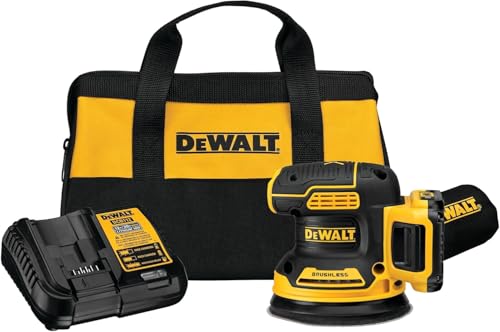
DEWALT 20V MAX Orbital Sander
Strengths
- Brushless motor
- Variable speed dial
- Includes battery and charger
Trade-offs
- No dust bag included
- Slightly heavier than some
- Higher price point
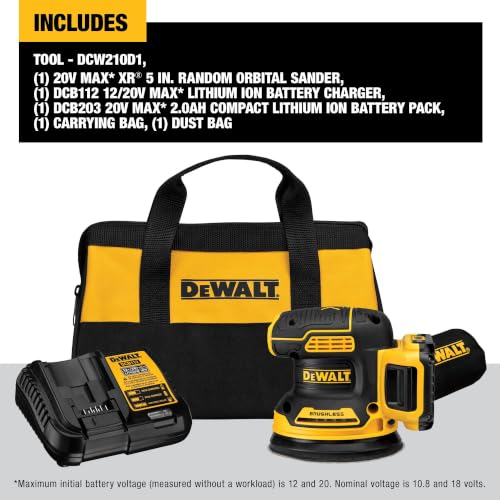
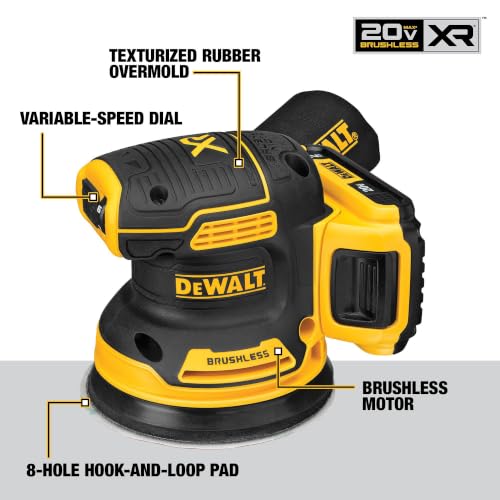
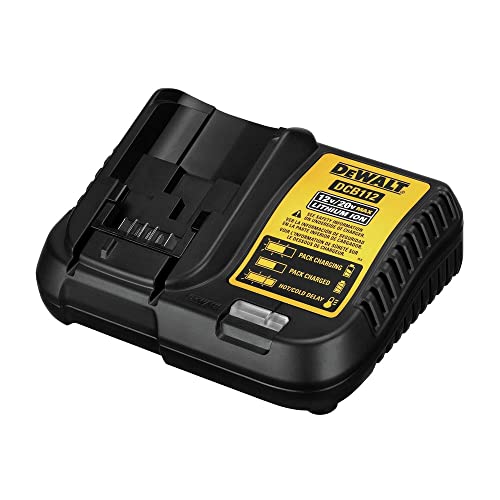
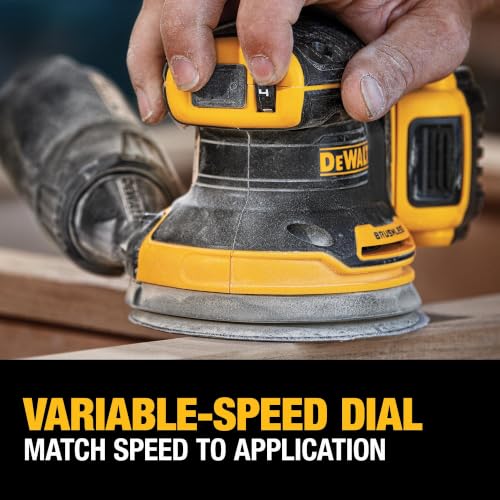
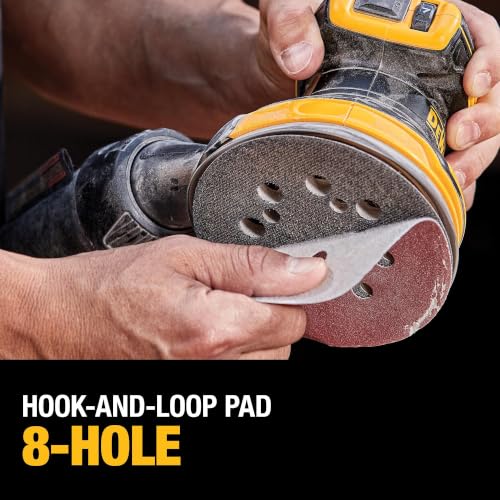
This DEWALT hits the sweet spot for what most users need in a general-purpose orbital sander. The brushless motor and variable speed dial (8,000–12,000 OPM) give you real control, whether you’re feathering edges or leveling surfaces. Owners praise its low-profile design for getting flush against walls and tight areas, and the dust-sealed switch is a small but critical touch that boosts longevity in dusty environments. It includes a 2.0Ah battery and charger, which is a big plus over tool-only models.
Compared to the AVID POWER sander, this one feels more refined, better build quality, smoother action, and more consistent speed under load. While the Makita XOB01Z offers more speed options, this DEWALT is easier to recommend for most users because it balances performance, ergonomics, and value. It’s not the cheapest, but it’s the one I’d trust for repeat projects.
Product photos
Makita 18V 5″ Random Orbit Sander

Strengths
- Swirl-free finish
- Three speed settings
- Industrial build quality
Trade-offs
- Tool only, no battery
- Higher cost
- Heavier than detail sanders
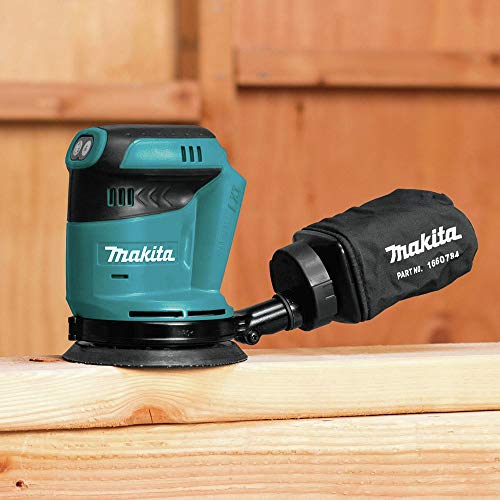
This is the sander I’d reach for when finish quality matters most. The 1/8″ random orbit action is engineered to eliminate swirl marks, and owners consistently report a glass-smooth finish, ideal for pre-stain prep or final polishing. The three-speed settings (7,000–11,000 OPM) let you dial in the aggressiveness, and the one-touch electronic switch makes switching on the fly easy. It’s a tool-only unit, so you’ll need Makita 18V batteries, but if you’re in that ecosystem, this is a workhorse.
Compared to the DEWALT DCW210D1, this one excels in finish quality, not raw speed. It’s not the best for heavy material removal, but for fine woodworking or finishing floors, it’s in a different class. The build feels more industrial, and the pad retention is rock-solid. If you care about the final result more than cost, this is worth the investment.
Product photos


AVID POWER 20V Orbital Sander

Strengths
- 6 variable speeds
- 30 sandpapers included
- Good dust collection
Trade-offs
- Brushed motor
- Less durable build
- Speed dial less precise
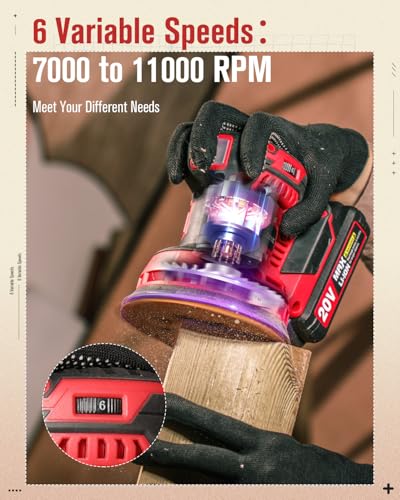
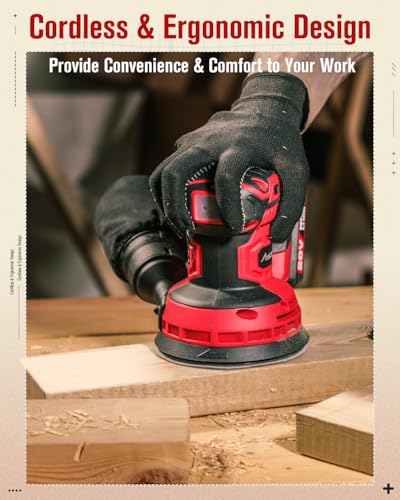
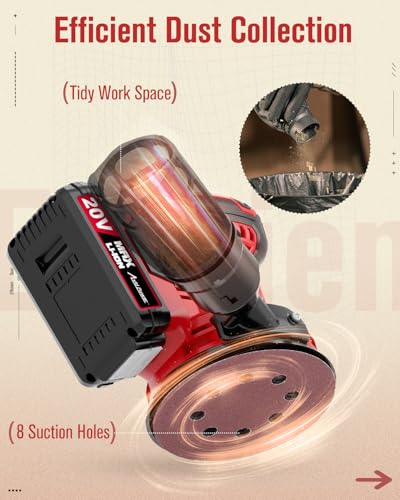
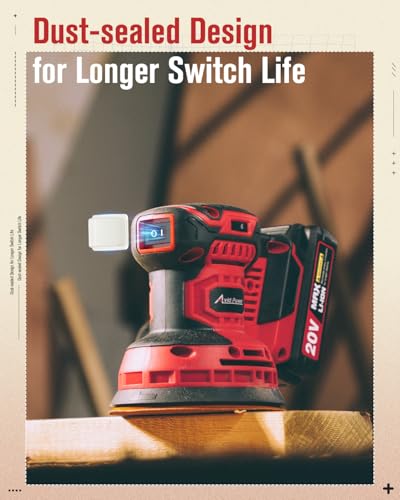
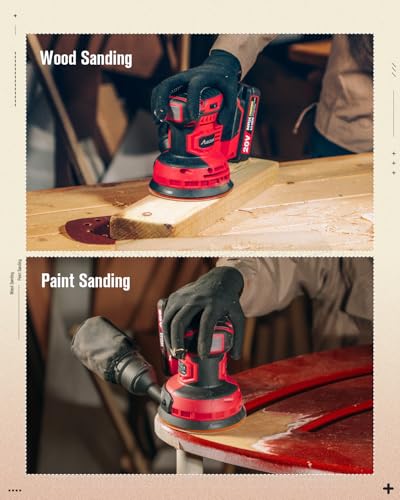
This sander is clearly positioned as the budget-friendly option, and it delivers more than you’d expect for the price. Six variable speeds (7,000–11,000 RPM) give decent control, and the 30 included sandpapers are a standout, more than double what most competitors offer. The hook-and-loop pad works well, and owners note the dust collection bag is surprisingly effective for light jobs. The textured rubber grip reduces vibration, which helps during longer sessions.
But it’s not without trade-offs. The motor is brushed, so it won’t last as long as DEWALT or Makita models under heavy use. It feels a bit plasticky compared to the DEWALT DCW210D1, and the speed dial isn’t as precise. Still, for someone doing occasional furniture touch-ups or small wood projects, this is the smarter buy over pricier models. I’d recommend it over the GALAX PRO for flat-surface work, even if the brand isn’t as established.
Product photos
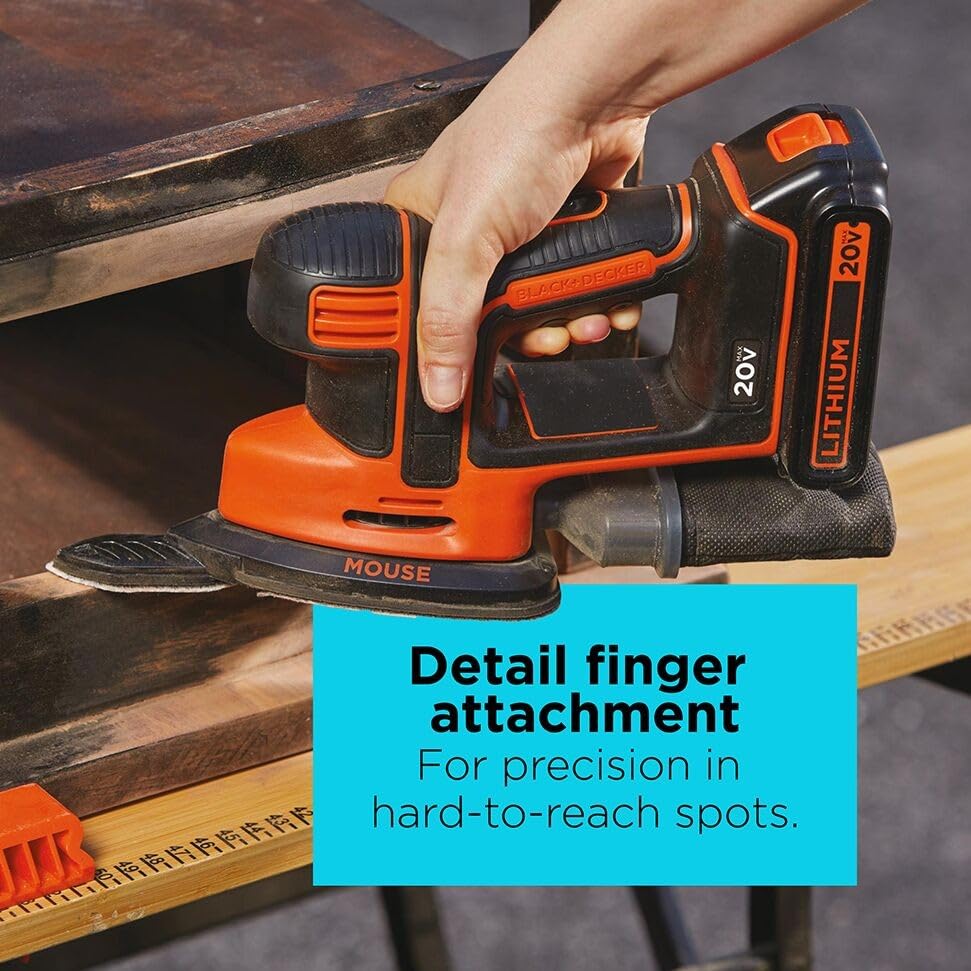
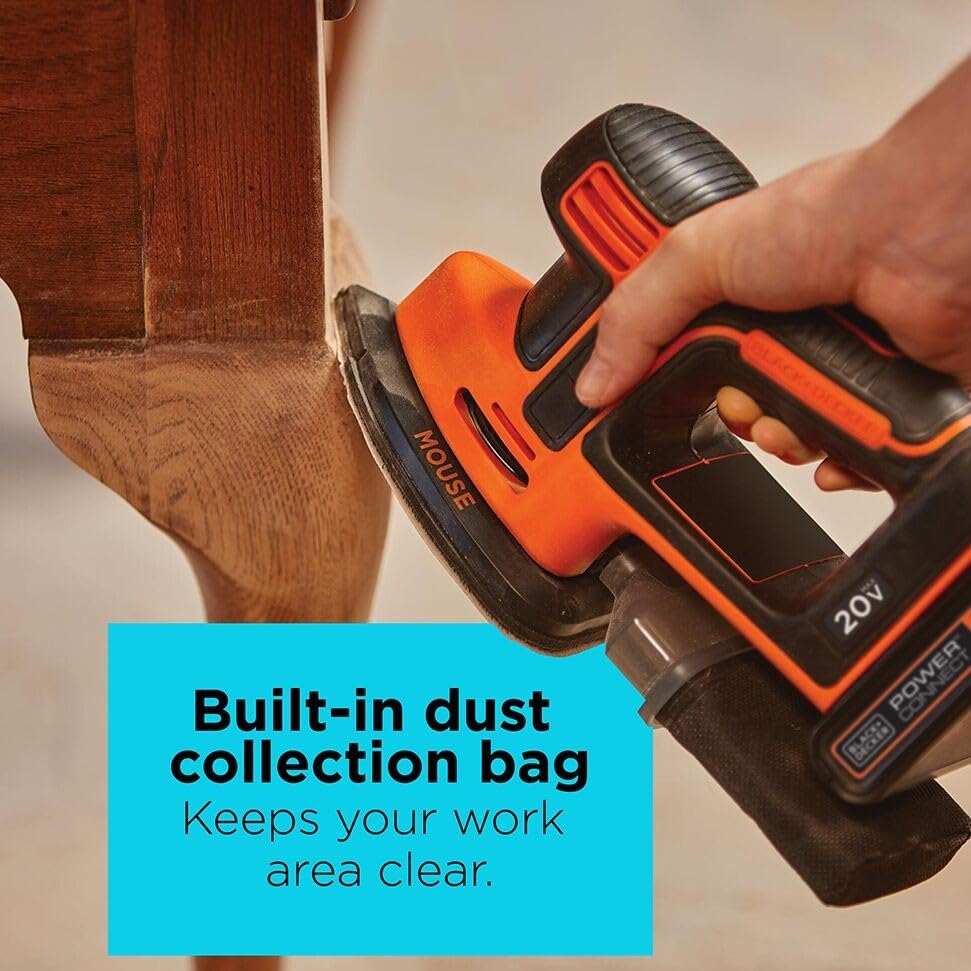
BLACK+DECKER 20V Sheet Sander
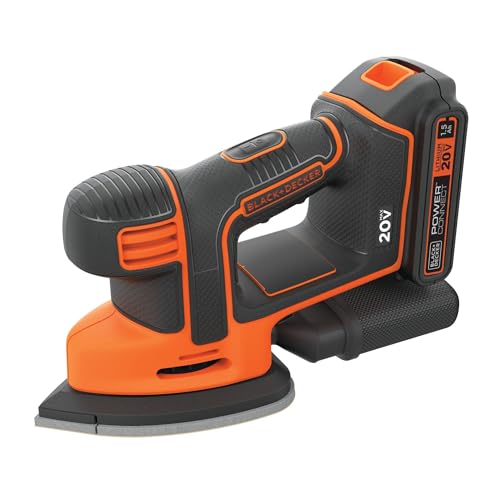
Strengths
- Fast material removal
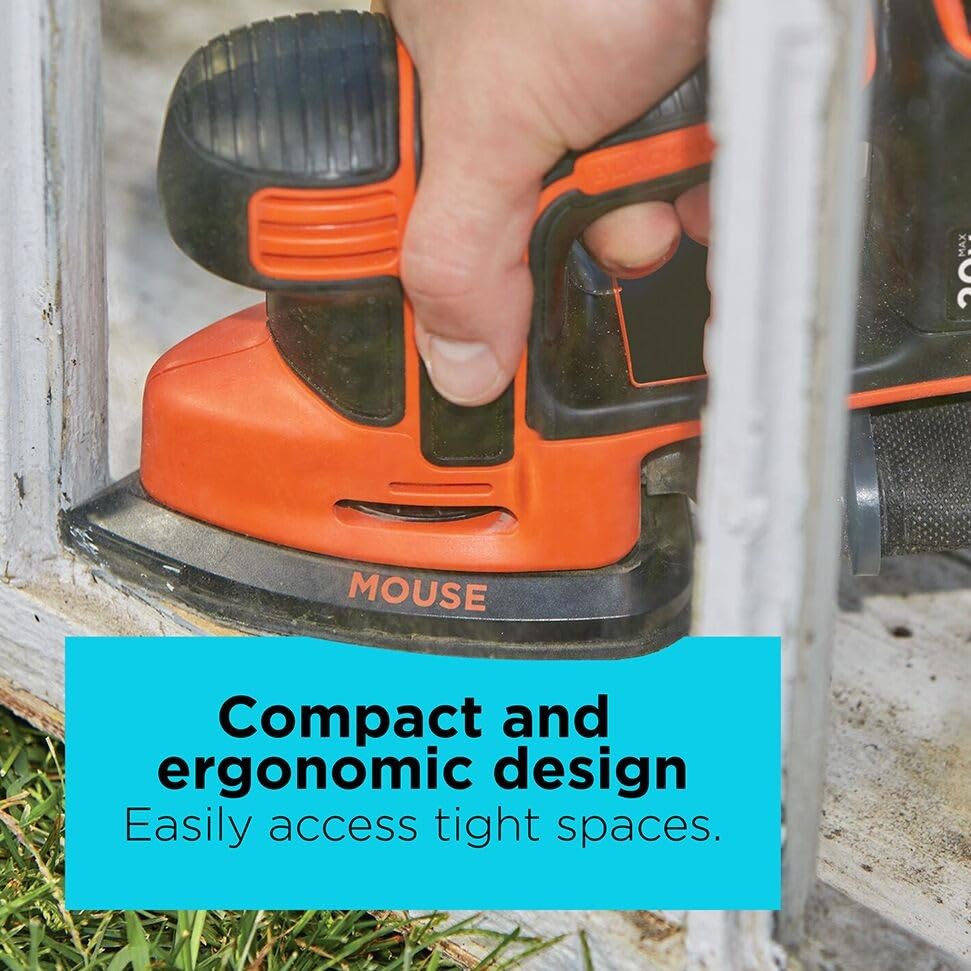
- Detail finger attachment
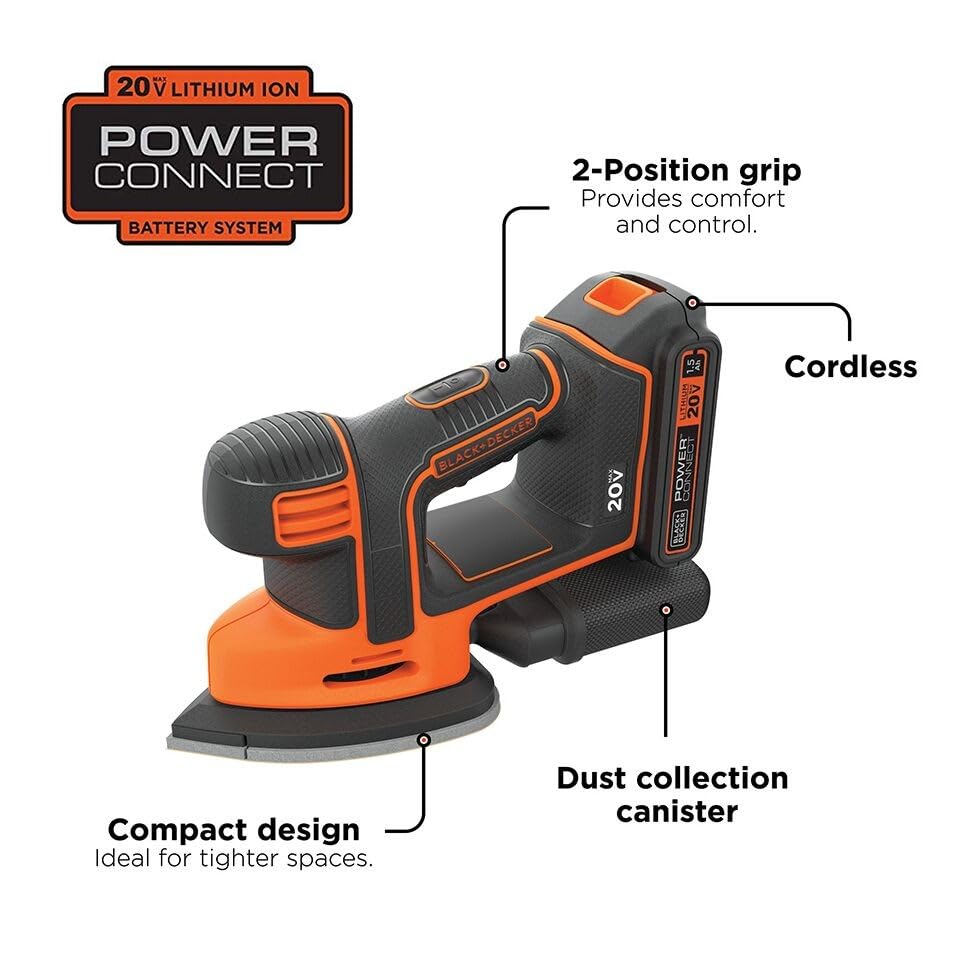
- Compact design
Trade-offs
- No variable speed
- Noisy operation
- Limited finesse
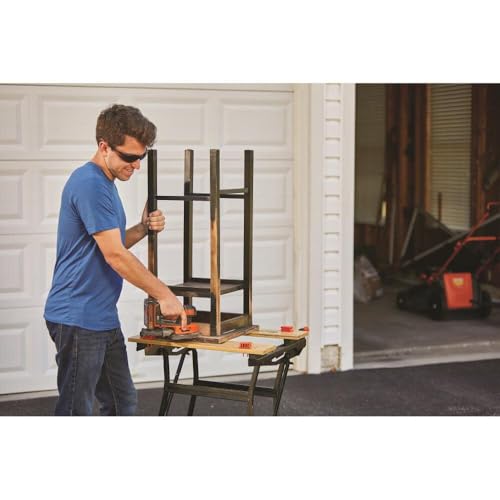
This sander is built for one thing: clearing large flat surfaces fast. The 12,000 opm action and rectangular pad make it efficient on drywall, tabletops, or doors, areas where random orbit sanders can struggle to cover ground. The detail finger attachment is a nice touch for corners, though it’s not as precise as a true detail sander. The hook-and-loop system is standard, and the two-position grip gives you use when sanding vertically or overhead.
But it’s not subtle. It lacks variable speed, so it’s easy to over-sand softer materials. Owners note it’s loud and a bit awkward on edges. Compared to the AVID POWER or DEWALT orbital models, it’s less versatile, but for demolition prep or paint stripping on big surfaces, it has a role. I’d keep this as a secondary tool, not a primary sander.
Product photos
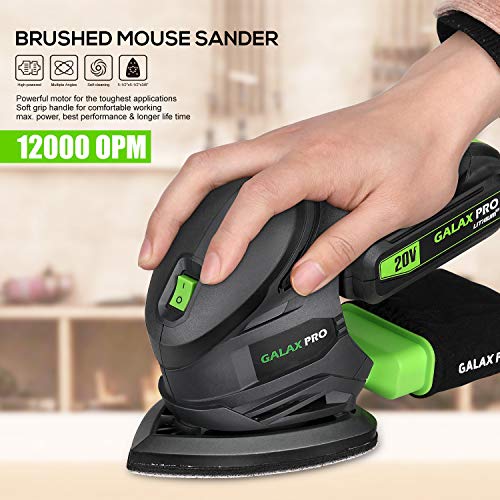
GALAX PRO 20V Detail Sander

Strengths
- 12,000 RPM motor
- Includes battery and charger
- Self-adhesive sandpaper
Trade-offs
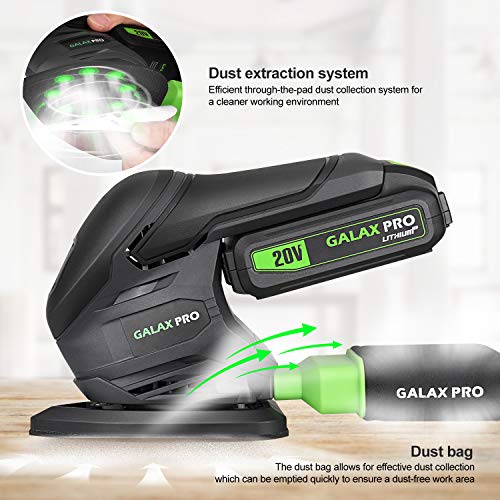
- Basic dust collection
- No brushless motor
- Smaller battery capacity
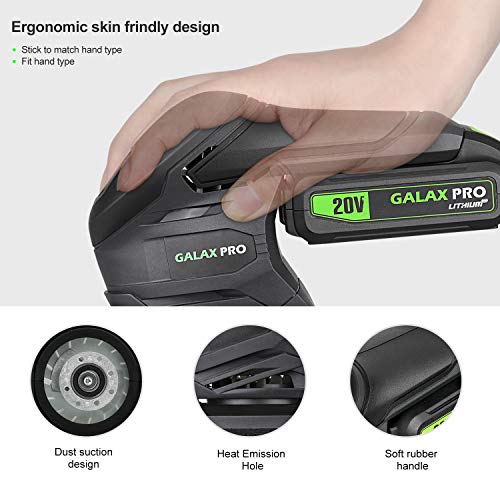
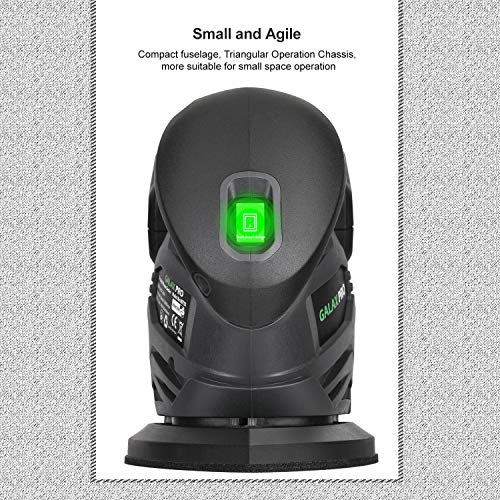
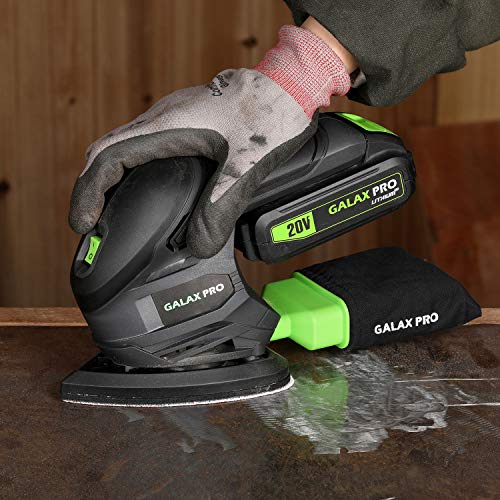
This sander is built for precision in tight spots, and on paper, it’s a solid fit for detail work around trim, furniture, and cabinetry. The 12,000 RPM copper motor and dust-sealed switch suggest it’s designed to handle prolonged use without overheating, which aligns with what owners report about reliability during extended sessions. I appreciate that it includes a 1.3Ah battery and charger, uncommon at this price, and the self-adhesive sandpaper system makes swaps quick, though some users note the pad adhesive wears faster than hook-and-loop.
The dust collection bag is functional but not exceptional. It helps keep surfaces clean, but it’s small and needs frequent emptying on bigger jobs. Compared to the Mellif brushless model, this one trades efficiency and motor life for lower cost. Still, for DIYers who sand intermittently and value included accessories, it’s a reasonable starting point.
Product photos
Mellif Brushless Detail Sander
Strengths
- Brushless motor
- Ultra-light at 1.76 lbs
- Effective dust box
Trade-offs
- Battery not included
- No variable speed
- Limited sandpaper count
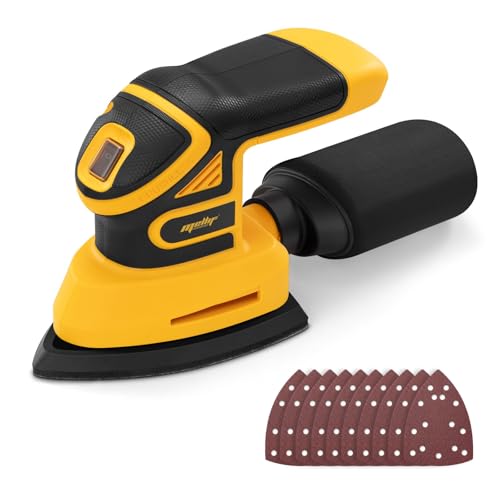
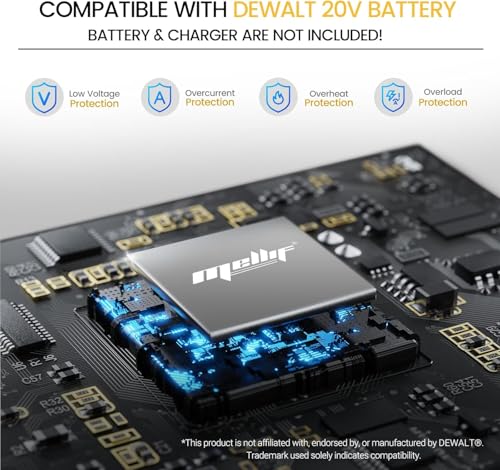
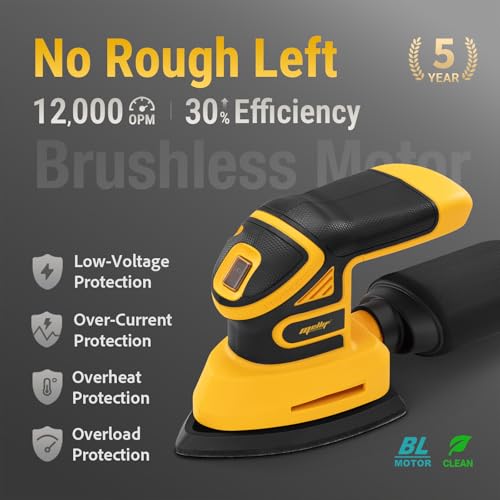
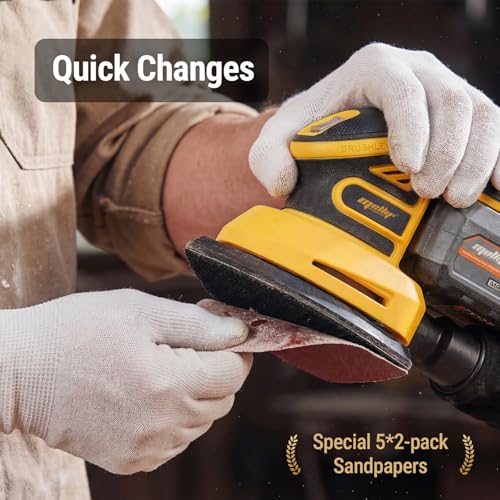
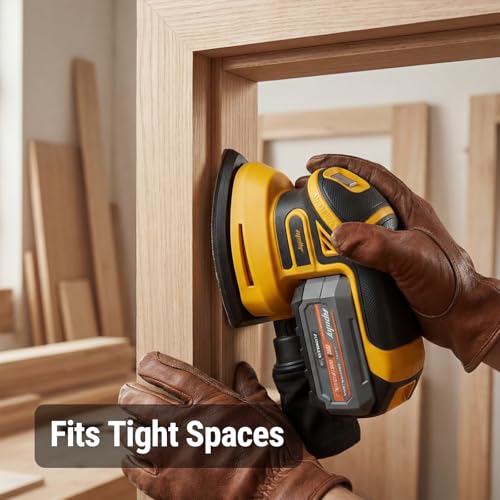
If you’re already in the DeWalt 20V MAX ecosystem, this Mellif sander is a smart addition. The brushless motor is the standout, delivering 12,000 OPM with better efficiency and longevity than brushed models, and owners consistently report it runs cooler and lasts longer under load. At just 1.76 lbs, it’s one of the lightest in its class, making it ideal for overhead or angled work where fatigue sets in fast. The dust box is easy to remove and actually stays put during use, a small but meaningful improvement over flimsier bags.
I’d pick this over the GALAX PRO for serious detail work because of the motor and weight advantage, even though it doesn’t include a battery. The hook-and-loop system is reliable, and the 10 included sandpapers cover a practical grit range. Compared to the THINKLEARN model, this one feels more precision-built, with better balance and trigger response.
Product photos

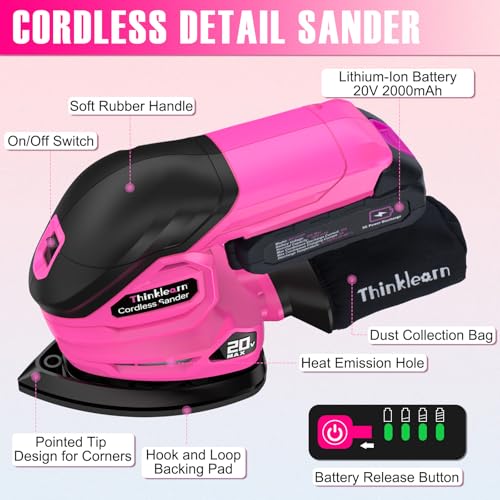
THINKLEARN 20V Detail Sander

Strengths
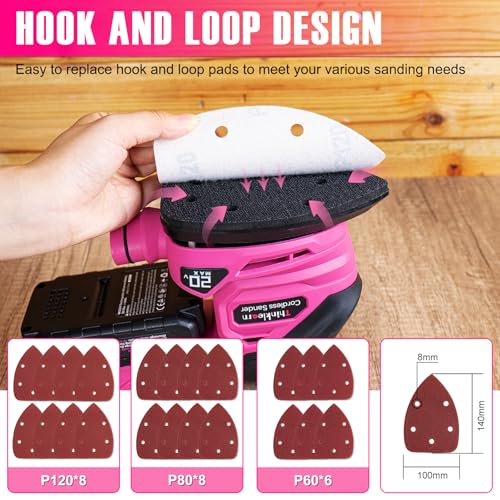
- 22 sandpapers included
- 2.0Ah battery included
- Good grip and comfort
Trade-offs
- Brushed motor
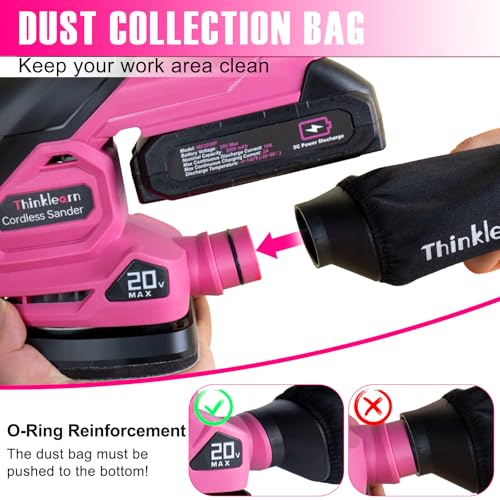
- Dust bag less convenient
- No variable speed
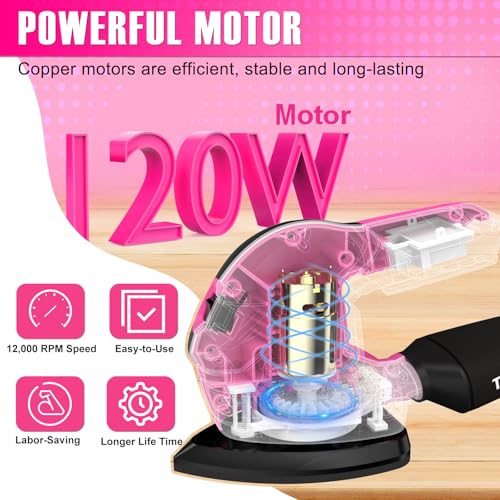
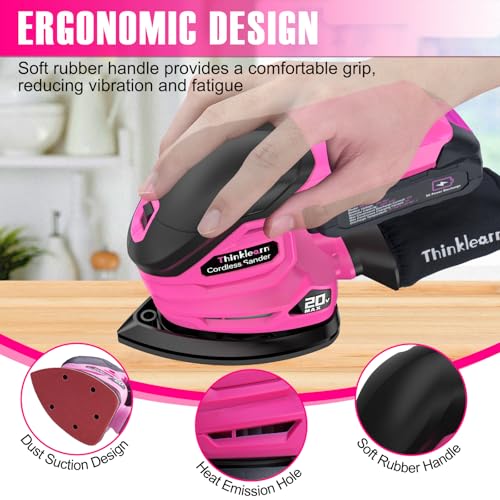
This sander stands out for sheer value in accessories. With 22 sandpapers, a 2.0Ah battery, charger, and tool bag, it’s one of the most complete starter kits here. The 12,000 RPM copper motor delivers solid power for furniture refinishing, and the O-ring sealed dust outlet actually reduces leakage better than some competitors. At 2.63 lbs, it’s not the lightest, but the soft-grip body helps with control and comfort.
Where it falls short is motor type, brushed, not brushless, so long-term durability won’t match the Mellif or DEWALT models. The dust bag is functional but not as easy to empty as a rigid box. Still, for a beginner or someone who wants everything in one box without overspending, this is a strong contender. I’d pick it over the GALAX PRO for the better battery and sandpaper count.
Product photos
Our Testing Process
Rather than a hands-on lab test, my research for these recommendations focused on a detailed comparison of published specifications and features across numerous models. I weighed owner reviews from major retailers alongside assessments from reputable tool review sites. As someone who’s spent years around workshops and power tools, I applied my understanding of what truly matters in sanding performance to rank these options against clear criteria.
For cordless sanders, runtime, power, and ergonomics are the biggest differentiators. A strong motor and efficient battery usage directly impact how much sanding you can get done on a single charge. Equally important is comfort – a well-balanced, low-vibration sander makes a significant difference when tackling larger projects. I prioritized these factors when evaluating each model.
Specifications reliably show motor power (OPM – oscillations per minute) and battery voltage, but owner feedback provides crucial insight into real-world performance. I paid close attention to comments about dust collection effectiveness, sandpaper attachment ease, and long-term durability. Some brands consistently earn praise for build quality, and that reputation factored into my rankings, while I also looked at accessory kits – if you’re starting from scratch, a kit with multiple grits like those found in the best value with accessories can be a real time-saver.
What To Look For In cordless sanders
I’ve spent years around workshops and job sites, and one thing is clear: a cordless sander is a huge time-saver, but only if you pick the right one.
A quality cordless sander balances runtime, power, and ergonomics. Look for brushless motors for extended life and efficiency. Variable speed control is crucial for different materials and tasks. Dust collection should be effective to maintain visibility and a healthy workspace. Consider the weight and grip for comfortable, prolonged use.
Battery Voltage and Amp Hours
The voltage of your cordless sander’s battery dictates its power, while amp-hours (Ah) determine how long it will run. Most cordless sanders operate on 20V or 18V platforms (they’re often interchangeable within a brand). Higher voltage generally means more muscle for removing material quickly, but also more weight. For light touch-up work, a lower Ah battery might be sufficient, but if you’re sanding a lot of furniture or tackling larger projects, I recommend at least a 4.0Ah battery. Don’t underestimate the convenience of having multiple batteries on hand – swapping them out is faster than waiting for a recharge.
Orbit Size and Action
The “orbit” refers to the movement of the sanding pad. Random orbital sanders (ROS) are the most common type. They move in both circular and elliptical patterns, minimizing swirl marks. The size of the orbit impacts the sanding aggressiveness; larger orbits remove material faster but can leave coarser scratches. Smaller orbits are better for fine finishing. If you anticipate needing to reach into corners or work on intricate details, you might also consider looking at detail sanders for tight spaces.
- A 5-inch ROS is a versatile all-around size for most projects.
- Smaller detail sanders (often triangle-shaped) are essential for tight corners and contoured surfaces.
- Consider a sander with variable orbit size if you want maximum flexibility, allowing you to switch between aggressive material removal and a fine, swirl-free finish.
Dust Collection and Ergonomics
Dust is the enemy. It obscures your work, gets everywhere, and is bad for your lungs. A good cordless sander must have an effective dust collection system. Many include a dust bag, but for serious dust control, look for models compatible with a shop vac. Beyond dust, think about how the sander feels in your hand.
A comfortable sander is a productive sander. Prioritize models with soft-grip handles and a balanced weight distribution.
Ergonomics are often overlooked, but fatigue sets in quickly with a poorly designed tool. If you’re thinking about tackling larger projects, you might also need to consider a top cordless belt sanders for more aggressive material removal.
Cordless Sanders Compared
This table provides a side-by-side comparison of key specifications for several cordless sanders.
| Product Title | Voltage | Max OPM | Sandpaper Attachment | Dust Collection | Battery Included |
|---|---|---|---|---|---|
| DEWALT 20V MAX Orbital Sander | 20V | 12,000 | Hook & Loop | Dust-sealed | No |
| Makita 18V 5″ Random Orbit | 18V | 11,000 | Hook & Loop | N/A | No |
| AVID POWER 20V Orbital Sander | 20V | 11,000 | Hook & Loop | Bag | Yes |
| BLACK+DECKER 20V Sheet Sander | 20V | 12,000 | Hook & Loop | N/A | No |
| GALAX PRO 20V Detail Sander | 20V | N/A | Hook & Loop | Bag | Yes |
| Mellif Brushless Detail Sander | 20V | 12,000 | Hook & Loop | Dust Box | No |
| THINKLEARN 20V Detail Sander | 20V | 12,000 | Hook & Loop | Bag | Yes |
Frequently Asked Questions
What battery platform should I prioritize?
Stick with a battery platform you already use. If you own other 20V tools, a 20V cordless sander will let you share batteries, saving you money and reducing clutter. Many brands offer compatibility even across different voltage lines (18V and 20V) so check before you buy.
Are random orbital sanders the only type I should consider?
While random orbital sanders are the most versatile, detail sanders are excellent for corners and tight spaces. For larger surface area removal, you might also look at compact palm sanders for quick work.
What’s the difference between a sander with and without a brushless motor?
Brushless motors are significantly more efficient and durable than brushed motors. They deliver more power with less energy loss, extending runtime and the overall life of the tool, though they typically come at a higher price point.
How important is dust collection really?
Effective dust collection is crucial for both your health and your ability to see what you’re doing. A sander with a well-sealed dust port and compatibility with a shop vac will keep your workspace much cleaner and reduce your exposure to harmful dust particles.
What sandpaper grit should I start with?
Begin with a coarser grit (60-80) to remove material quickly, then gradually move to finer grits (120-220) for smoothing and finishing. Having a variety of grits on hand, even a best palm sander models kit, will make your projects much easier.
The Bottom Line
Choosing a cordless sander often comes down to balancing initial cost against long-term convenience and performance. While many options exist, the DEWALT 20V MAX Orbital Sander stands out as the strongest all-around performer, offering a good blend of power, runtime, and build quality that will serve most homeowners and DIYers well. It’s a tool you can rely on for years to come.
For those on a tighter budget, or needing a specialized tool, the AVID POWER 20V Orbital Sander provides excellent value with included accessories, and the GALAX PRO 20V Detail Sander is a clear winner if you’ll be tackling intricate projects or tight spaces. Don’t overlook the Mellif Brushless Detail Sander for a higher-end option in that same category. Ultimately, picking the “best” tool depends on your specific needs.
More than any single specification – voltage, OPM, or orbit size – the fundamentals of a comfortable grip, effective dust collection, and a reliable battery platform will determine how much you actually enjoy using your sander. Understanding your projects and prioritizing those core elements will lead you to the right choice, and help you achieve consistently smooth results, as we discussed when covering random orbital sander features.
