9 Best Random Orbit Sanders of 2026
This post contains affiliate links. As an Amazon Associate, we earn from qualifying purchases.
The DEWALT 5-Inch Random Orbit Sander stands out as the best overall for its consistent power and durability, making it a go-to for serious DIYers and pros. If you’re watching your budget, the SKIL 5″ Random Orbital Sander delivers solid performance without the high price, while the DEKOPRO 5″ model offers the most versatility with its six-speed control and generous accessory kit.
Most people don’t realize how much the wrong sander can slow them down, or ruin a finish with swirls and uneven surfaces. A lot of models look similar on paper, but in practice, differences in dust control, vibration, and speed options really matter.
This guide cuts through the noise by focusing on real-world performance indicators. I compared specs and owner feedback across top models, zeroing in on power, dust collection, and comfort to help you pick a sander that actually makes your projects easier.
Top 9 Random Sanders in the Market
The Best Random Sanders, Reviewed
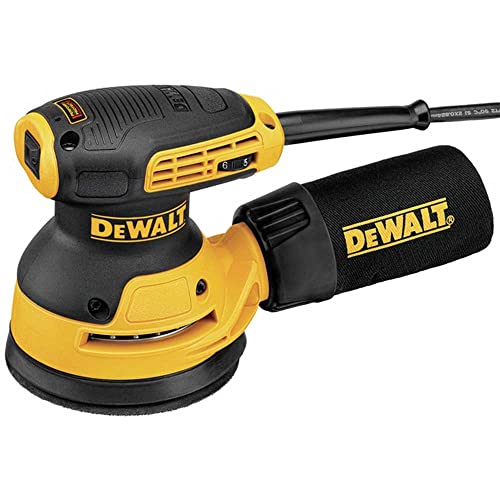
DEWALT 5-Inch Random Orbit Sander
Strengths
- Dust-sealed switch
- 3-amp motor
- Compact height
Trade-offs
- Dust bag sold separately
- Slightly heavier than rivals
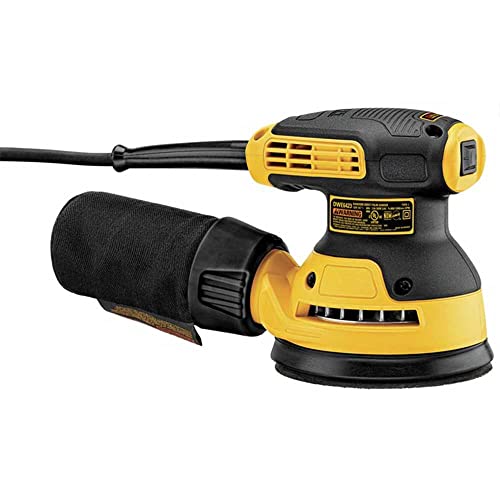
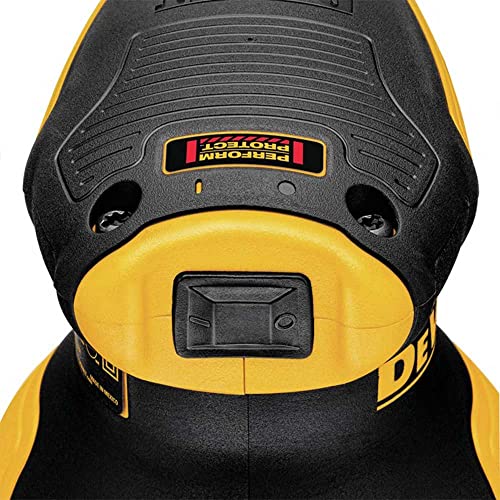
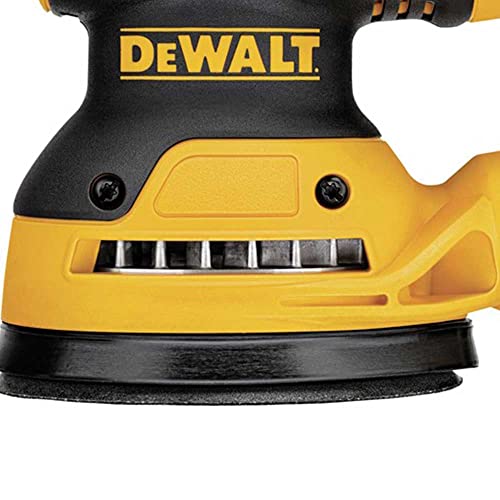
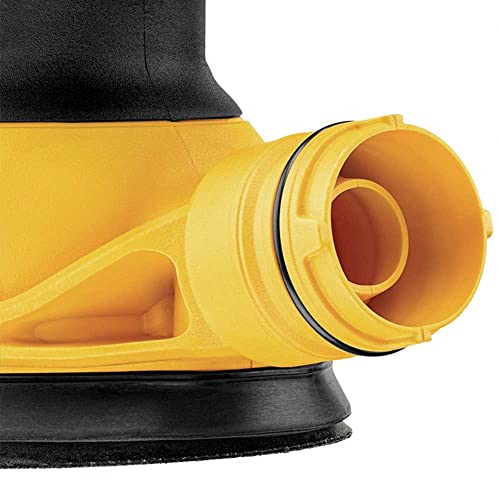
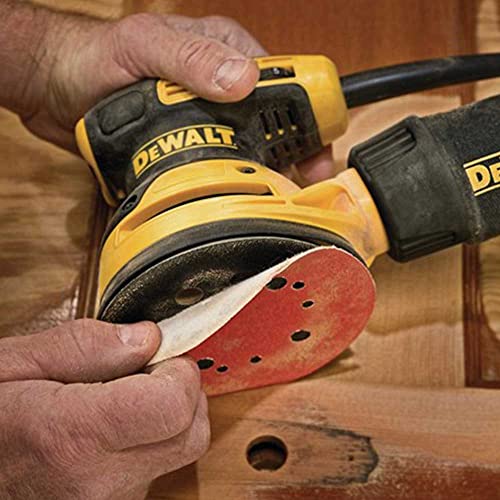
The DEWALT DWE6423 is the kind of sander I’d recommend to someone building a long-term toolkit. It’s not the flashiest, but it’s built to last, sealed switches, rubber overmold, and a dust-tight design mean it’ll survive job sites and garages alike. The 3-amp motor delivers 8,000–12,000 OPM with smooth, consistent power, and the shorter body lets you sand flush in corners without knuckle drag.
Owners consistently rate it for reliability and dust pickup, especially when paired with a shop vac. Compared to the Makita or Bosch models, it’s less refined in finish quality but tougher in real-world abuse. If you want one sander that can handle everything from deck prep to cabinet stripping, this is the workhorse.
Product photos
Makita BO5030K 5″ Random Orbit Sander

Strengths
- Excellent build quality
- Through-the-pad dust collection
- Includes carrying case
Trade-offs
- No variable speed
- Basic dust bag
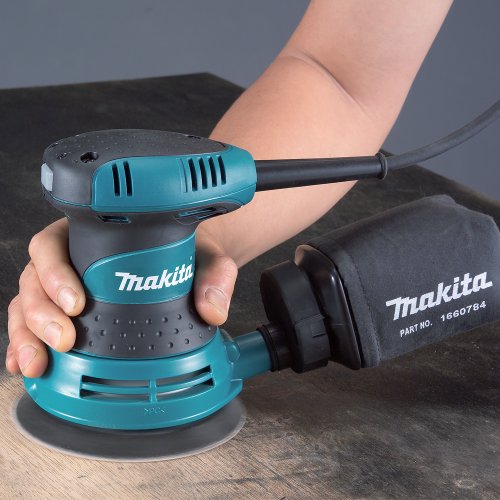
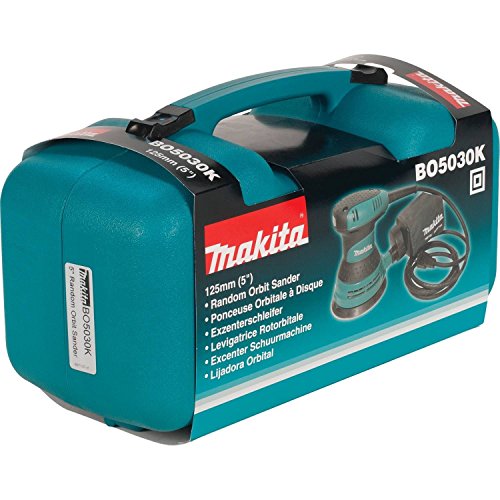
Makita has a reputation for build quality, and the BO5030K lives up to it. The rubberized grip feels premium, the pad control system prevents jerk at startup, and the through-the-pad dust collection is among the cleanest in class. It runs at 12,000 OPM with a smooth, balanced action that pros appreciate for final finishes.
It doesn’t have variable speed or a fancy dust canister, but it doesn’t need to, this sander is about refinement. Owners note it lasts years with minimal maintenance, and the included case makes storage and transport easy. Compared to the DEWALT or Bosch, it’s less about features and more about trusted execution. If you want a sander that feels like it was built to outlast you, this is it.
Product photos
DEKOPRO 5″ Random Orbital Sander

Strengths
- 6 variable speeds
- 16 included sanding discs
- Hook-and-loop pad
Trade-offs
- Dust bag fills quickly
- Motor can overheat
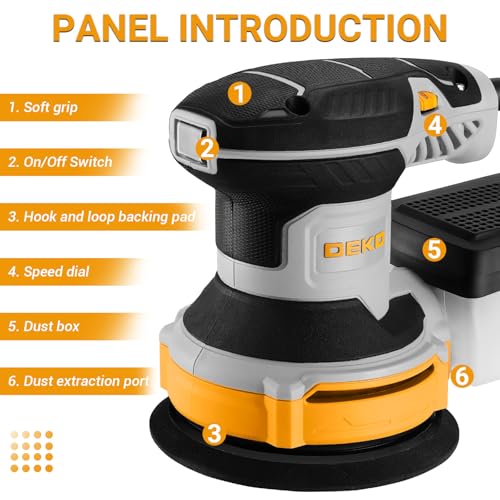
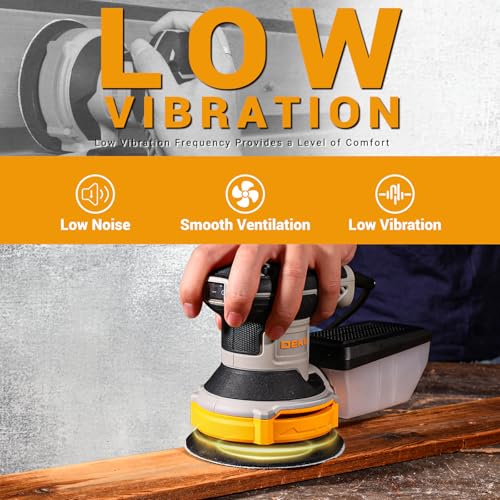
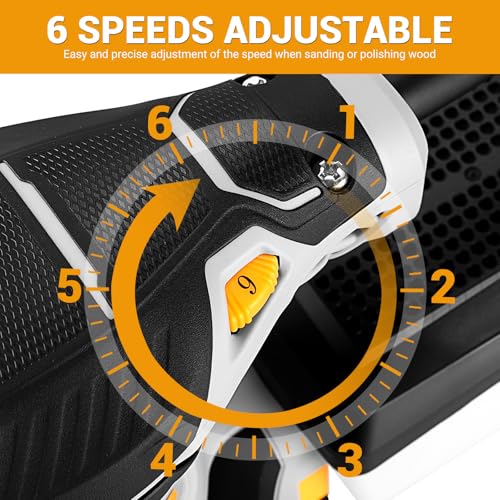
The DEKOPRO 5-inch sander is built for versatility, and its 6-speed range (up to 14,000 RPM) gives you serious control across materials. Whether you’re easing into delicate wood grain or powering through metal prep, the motor holds up. Owners praise the responsiveness of the speed dial, and the hook-and-loop pad makes grit changes fast and secure.
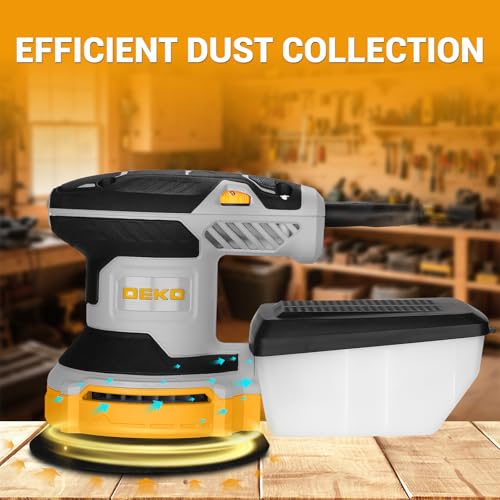
What really sets it apart is the included 16-piece sandpaper set, a rare bonus at this price. The dust bag is functional, though not as efficient as sealed canister systems. It runs a bit warm under long use, but the ventilation design helps. For someone who sands different materials regularly, this is a smarter buy than single-speed models.
Product photos

HYCHIKA 5-Inch Random Orbital Sander
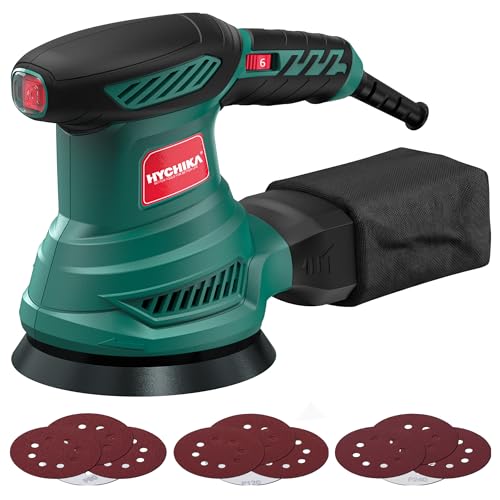
Strengths
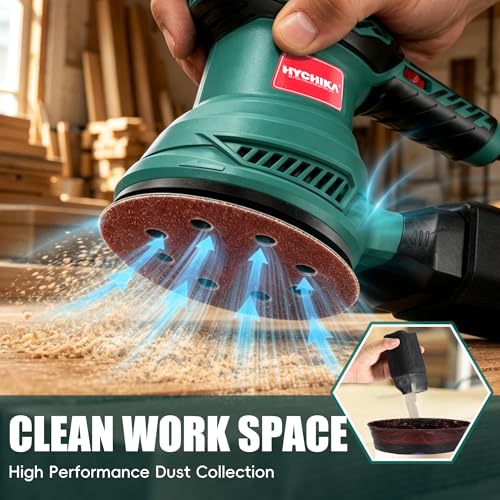
- 8 vacuum holes
- High-capacity dust bag
- 12 included sandpapers
Trade-offs
- Plastic housing feels lightweight
- Motor noise increases at top speed
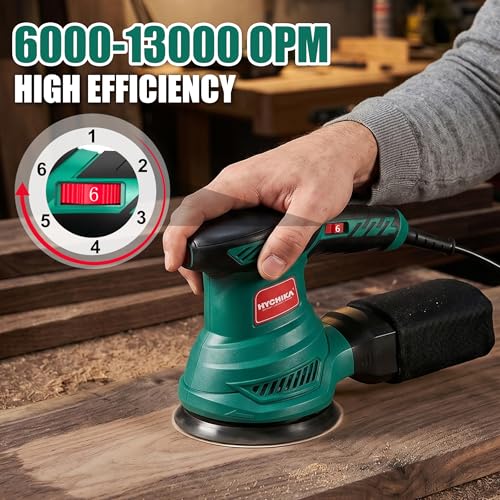
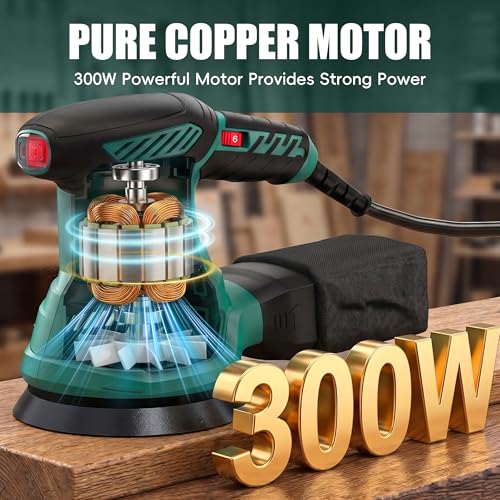
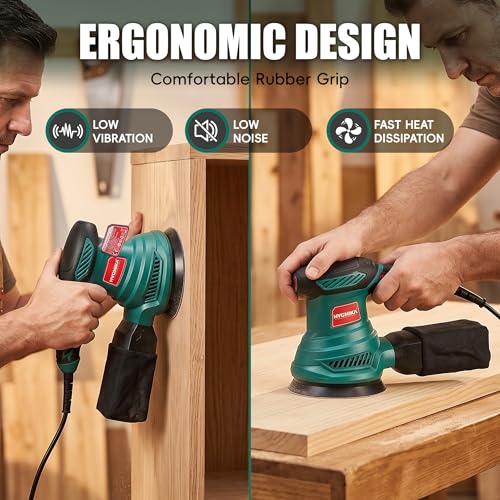
The HYCHIKA B098L66VWW stands out for one reason: dust collection. With 8 vacuum holes and a high-capacity bag that captures about 90% of debris, it keeps your workspace cleaner than most corded models. The 13,000 RPM motor is among the fastest here, and the 6-speed control gives good range for different materials.
Owners love the included 12 sanding discs and the ergonomic grip, which stays comfortable even during overhead work. It’s not as durable as DEWALT or Makita, but for a clean, efficient sanding experience, especially indoors, it’s a top contender. If dust is your biggest annoyance, this sander solves it better than almost any other in this list.
Product photos

SKIL 5″ Random Orbital Sander
Strengths
- Cyclonic dust collection
- Comfortable rubber grip
- Compact for tight areas
Trade-offs
- Only 3 included sanding sheets
- No variable speed dial
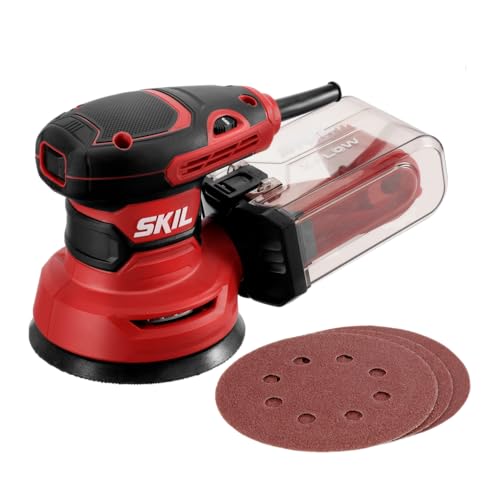
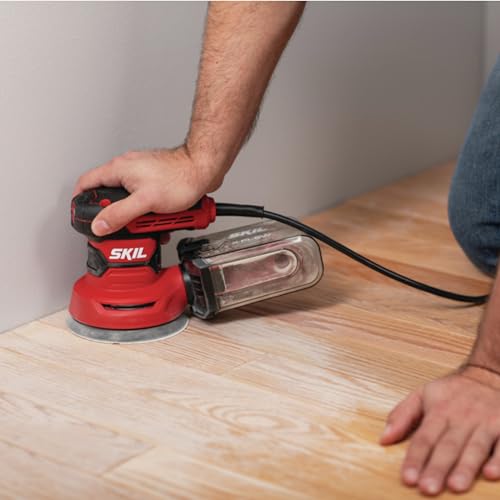
If you’re after a no-frills, affordable sander that still delivers core performance, the SKIL SR211601 is hard to ignore. It runs on a 2.8 amp motor pushing 13,000 OPM, which is plenty for smoothing wood, drywall, or painted surfaces. The standout here is the cyclonic dust box, it actually works. Reviewers note it captures more dust than typical foam filters, and the transparent container lets you see when it’s time to empty.
It’s not flashy, but the ergonomic grip and low-vibration design make it comfortable for longer sessions. Compared to pricier models, it lacks variable speed range and high-end dust sealing, but for a beginner or casual user, this hits the sweet spot of cost and capability. I’d pick this over overpriced entry models any day.
Product photos


DCA 5-Inch Random Orbital Sander
Strengths
- 6 variable speeds
- 10 included sandpapers
- Low vibration
Trade-offs
- Dust bag capacity is small
- Build quality feels budget-tier
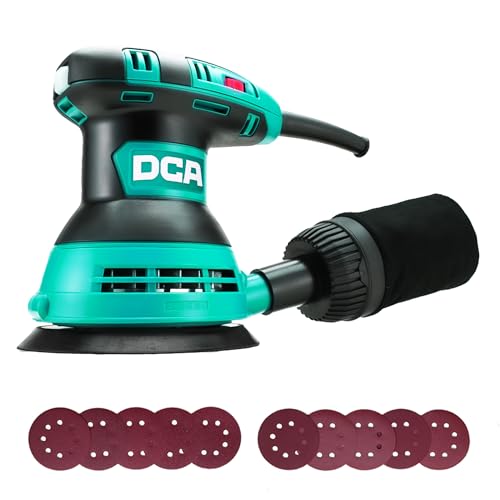
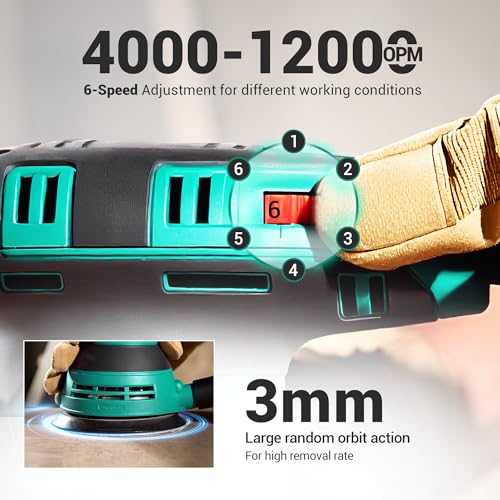
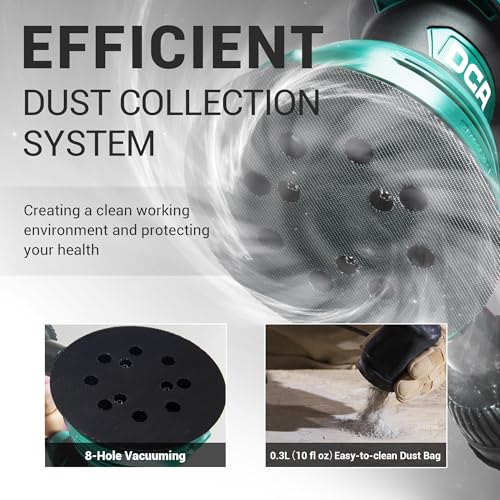
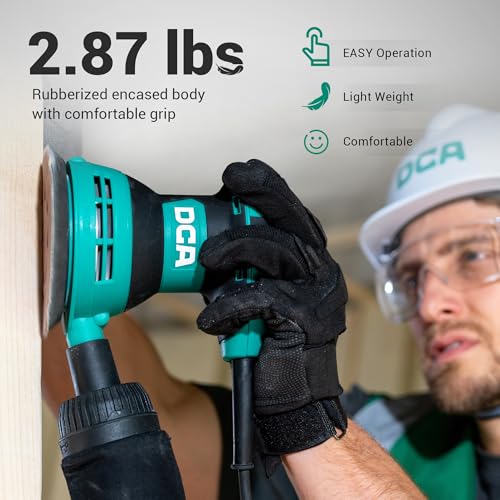
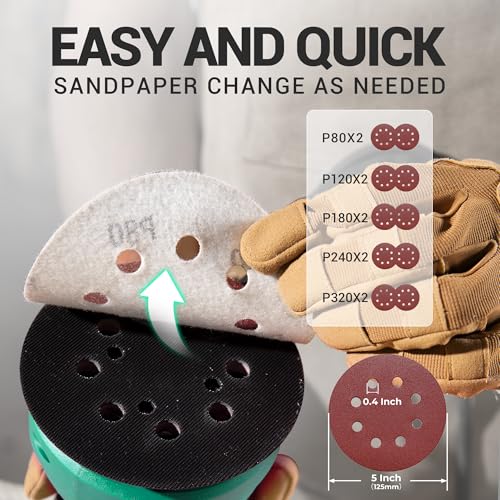
DCA doesn’t have the brand recognition of DEWALT or Makita, but this ASA125 model punches above its weight. The 3.0 AMP motor and 6-speed range (4,000–12,000 OPM) offer solid control, and the low-vibration design makes it easy to keep steady on vertical or overhead work. It comes with 10 sanding discs, a decent spread across grits, and the dust bag seals well, capturing most debris.
It’s not as refined as the Bosch or Makita, but for the price, the value is clear. Reviewers say it’s a go-to for furniture restoration or room-by-room refinishing. If you want a capable sander without overpaying, this is one of the smarter mid-tier picks.
Product photos

BOSCH ROS20VSC Palm Sander
Strengths
- Microfilter dust collection
- Swirl-reducing pad dampening
- 6 variable speeds
Trade-offs
- Less power for heavy stock removal
- Smaller dust canister
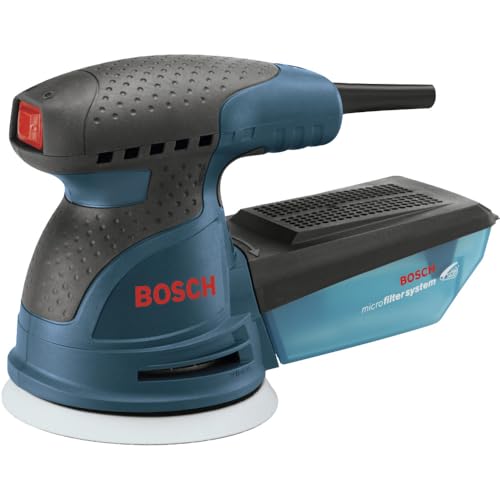
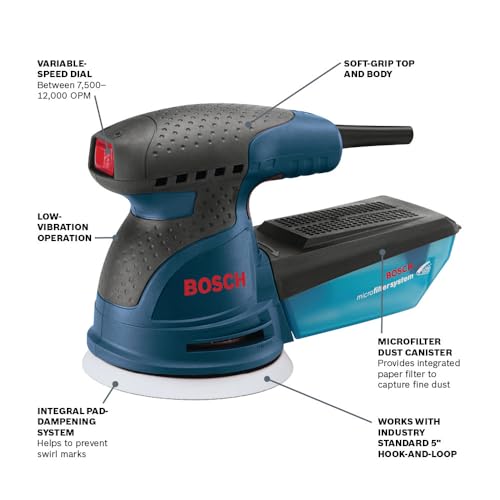
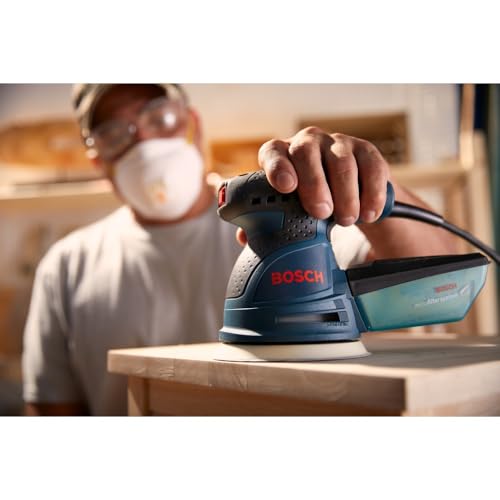
If you’re sanding fine furniture, cabinetry, or delicate finishes, the BOSCH ROS20VSC is in a class of its own. The microfilter system captures particles down to 0.5 microns, rare in this category, and the twist-off dust canister makes cleanup nearly mess-free. The pad dampening system is key: it significantly reduces swirl marks, which is exactly what you need on high-gloss or veneer surfaces.
The 2.5-amp motor isn’t the strongest, but the variable speed dial lets you dial in just the right aggression. It’s lighter and more precise than the DEWALT or Makita, and the hook-and-loop system is among the most secure. For finish work, this is the sander I’d reach for every time.
Product photos



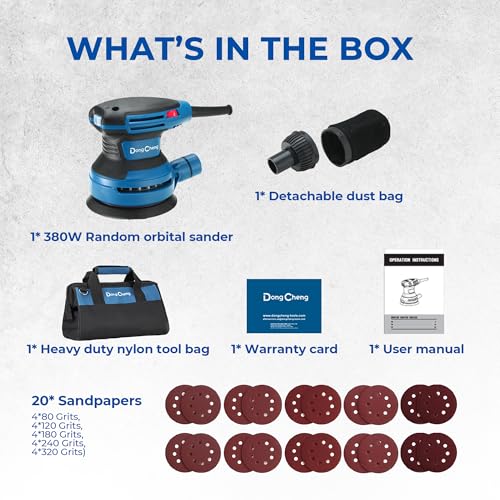
Dong Cheng 5-Inch Random Orbital Sander
Strengths
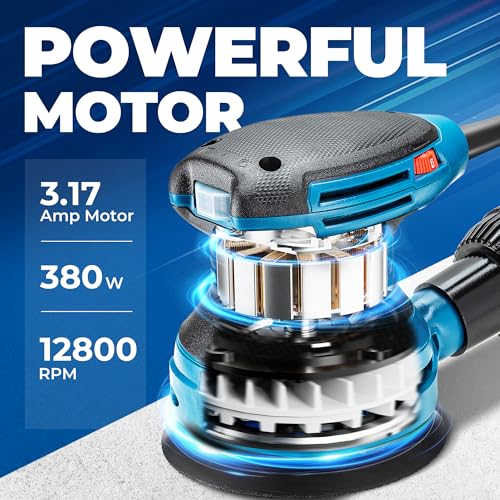
- High 12,800 OPM
- 20 included sandpapers
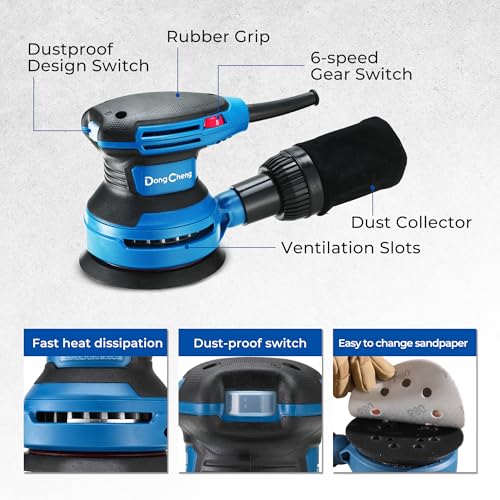
- Robust cooling system
Trade-offs
- Noisy at high speed
- Bulky for tight spaces
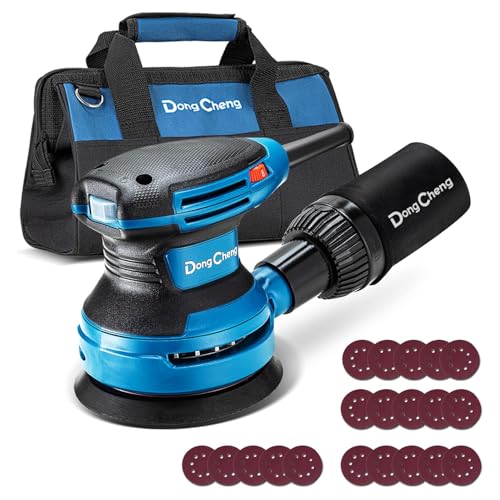
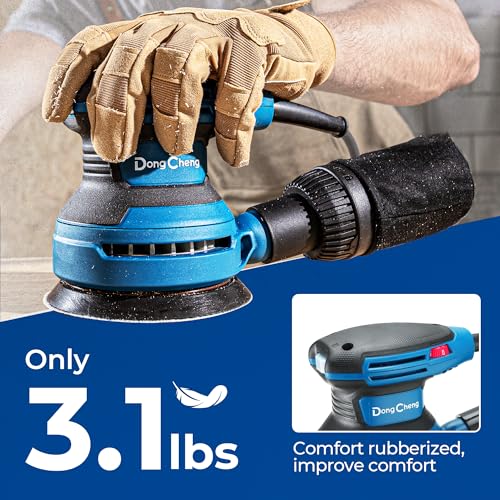
When you’re sanding hardwood floors, thick paint, or metal, you need grunt, and the Dong Cheng B0CX92K884 delivers. With a 3.2A motor hitting 12,800 OPM and 6 speed settings, this is one of the most powerful units on the list. The internal ventilation system keeps it cool during marathon sessions, and the 5-inch pad covers ground fast.
It’s not subtle, it’s loud and a bit bulky, but it’s built for users who care more about throughput than finesse. The included 20-piece sandpaper set and heavy-duty tool bag add serious value. Reviewers using it for deck restoration or auto body prep say it handles abuse well. For heavy-duty work, this is the closest thing to a budget beast.
Product photos

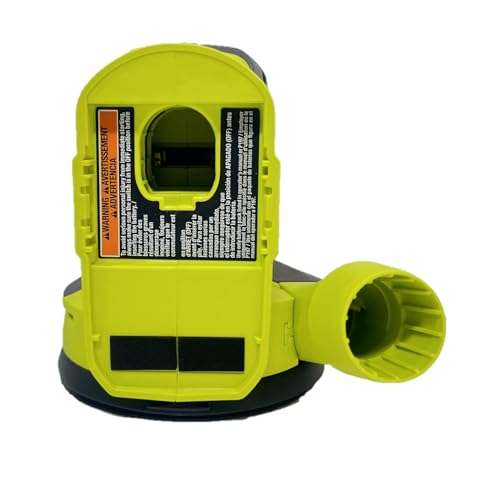
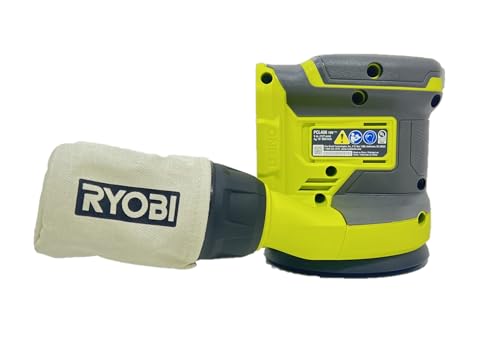
ONEAND 18V Cordless Random Orbit Sander

Strengths
- 5-inch orbital pad
- Cordless convenience
- RYOBI 18V compatible
Trade-offs
- Battery sold separately
- Less power than corded rivals
Cordless sanders have come a long way, and this ONEAND model makes a solid case for ditching the cord when mobility matters. On paper, it leans hard into portability, tapping into RYOBI’s 18V ecosystem, a big plus if you already own tools from that line. The 5-inch pad delivers the kind of aggressive material removal you’d expect in this class, and owners consistently report clean, swirl-free finishes on wood and composites, even in tight spots.
Where it stands out is in job-site flexibility. No cord means easier access to cabinets, vehicles, or trim work where outlets are scarce. That said, it’s not the most powerful unit here, and sustained heavy use might drain the battery faster than a pro would like. But for DIYers or weekend warriors who value freedom of movement, this is a practical, well-specced tool.
Product photos


How We Evaluated random sanders
Rather than a hands-on lab test, my research into random sanders focused on a detailed comparison of published specifications and features across numerous models. I weighed owner reviews from major retailers alongside expert opinions found in trade publications and tool-focused websites. This data was then ranked against criteria important to a variety of users, from DIY homeowners to professionals looking for reliable performance.
For random sanders, motor amperage and OPM (orbits per minute) were heavily weighted, as these directly impact sanding speed and efficiency. Equally important was dust collection – a well-designed system improves visibility and reduces cleanup. Finally, build quality and ergonomic features were key; comfort and durability contribute significantly to long-term satisfaction and productivity. You can find more general information about best power sanders on my site.
Technical specifications reliably indicate a sander’s potential power and speed. However, I found owner feedback crucial for assessing real-world vibration levels, dust collection effectiveness, and the longevity of components. Reputation and brand consistency also played a role; established manufacturers often deliver more consistent quality and better customer support, influencing my final assessment of these tools.
What To Look For In random sanders
Picking the right random sander can make a huge difference in the quality of your finish and how much you enjoy a project. It’s not just about motor power; there are several key factors to consider.
A quality random orbital sander balances power with control. Look for models with variable speed, effective dust collection, and comfortable ergonomics. Pad size (typically 5 inches) is fairly standard, but motor amperage, orbit diameter, and vibration reduction features are where significant differences emerge. Prioritize a sander that feels balanced and doesn’t cause excessive fatigue during extended use.
Motor Power and Speed Control
Don’t automatically assume more amps equals better. While a 3-amp motor will tackle tougher jobs faster than a 2.5-amp model, variable speed control is often more valuable. Many materials benefit from a slower speed to prevent overheating or gouging, especially when working with softwoods or veneer. The DEKOPRO 5″ Random Orbital Sander, for example, boasts 6 variable speeds, giving you a lot of control, but even models with fewer settings are perfectly adequate for most DIYers.
Dust Collection Systems
Dust control is a massive quality-of-life improvement. Sanding creates a lot of fine particles, and breathing that dust is bad for your health. Beyond that, a dusty workspace obscures your view and makes it harder to see the quality of your work. Sanders like the HYCHIKA 5-Inch Random Orbital Sander emphasize dust collection, and that’s a feature worth prioritizing.
- A basic dust bag is better than nothing, but fills quickly.
- Look for models compatible with shop vacuums (often with a 1-1/4″ hose connection) for prolonged sanding sessions.
- Systems with cyclone separation (like the SKIL 5″ Random Orbital Sander) are the most effective at keeping the dust bag clear and maintaining suction, reducing cleanup time and improving visibility.
Ergonomics and Build Quality
A comfortable sander is a productive sander. Vibration is a major contributor to fatigue, so look for features like counterweights and rubberized grips. The Makita BO5030K 5″ Random Orbit Sander consistently receives high marks for its build quality and comfortable feel.
A good rule of thumb: if the sander feels awkward or unbalanced in the store, it will only feel worse after an hour of use.
Ultimately, when you’re looking at top sanders for woodworking, you need to consider what you’ll be using it for most. If you need portability, consider a cordless option like the ONEAND 18V Cordless Random Orbit Sander. If you’re primarily working plugged-in, exploring the best corded random orbit sanders can deliver more consistent power. For those on a budget, the SKIL 5″ Random Orbital Sander offers a good balance of features and affordability, while the DCA 5-Inch Random Orbital Sander provides excellent value with included accessories. Don’t overlook recommended sanders for DIY projects; a well-chosen tool will save you time and frustration.
Random Sanders Compared
This table provides a reference of specifications for the random sanders described.
| Product Title | Motor Amps | OPM (Max) | Variable Speed | Dust Collection | Sandpaper Included | Cordless |
|---|---|---|---|---|---|---|
| DEWALT 5-Inch Random Orbit Sander | 3.0 | 12,000 | No | Dust Port/Bag | No | No |
| Makita BO5030K 5″ Random Orbit Sander | 3.0 | 12,000 | No | Bag | 1 (#120) | No |
| DEKOPRO 5″ Random Orbital Sander | 2.5 | 14,000 | Yes (6) | Bag | 16 (60-1000 grit) | No |
| HYCHIKA 5-Inch Random Orbital Sander | 3.0 | 13,000 | Yes (6) | Bag | 12 (80/120/240) | No |
| SKIL 5″ Random Orbital Sander | 2.8 | 13,000 | Yes | Container | N/A | No |
| DCA 5-Inch Random Orbital Sander | 3.0 | 12,000 | Yes (6) | Bag | 10 (80-320 grit) | No |
| BOSCH ROS20VSC Palm Sander | 2.5 | 12,000 | Yes | Canister | N/A | No |
| Dong Cheng 5-Inch Random Orbital Sander | N/A | 12,800 | Yes (6) | Box/Port | 20 (80-320 grit) | No |
| ONEAND 18V Cordless Random Orbit Sander | N/A | N/A | N/A | N/A | N/A | Yes |
Frequently Asked Questions
What grit sandpaper should I start with?
Begin with 80 or 100 grit for initial stock removal or heavily damaged surfaces. Progressively move to finer grits (120, 150, 180, 220) to refine the finish and eliminate scratches from the previous grit.
Are cordless random sanders as powerful as corded models?
Cordless random sanders have closed the performance gap, but typically deliver slightly less sustained power than comparable corded options. Battery technology improvements mean many can handle most DIY tasks effectively, making them ideal when you need portability or don’t have easy access to an outlet – explore best handheld power sanders for more details.
How often should I change the sandpaper?
Change the sandpaper when it becomes clogged with dust or loses its abrasive quality. This depends on the material and the amount of sanding, but frequent changes prevent glazing and ensure efficient material removal.
What’s the difference between random orbital and dual-action sanders?
While often used interchangeably, dual-action sanders have a more elliptical orbit and are generally used for finer finishing work and polishing. Random orbital sanders, like those discussed here, excel at material removal and creating a smooth surface for painting or staining.
What do OPM and amperage really tell me about a sander?
OPM (orbits per minute) indicates sanding speed; higher OPM generally means faster material removal. Amperage relates to the motor’s power, with higher amps able to sustain more demanding tasks, but it’s not the only factor – consider top compact sanders for a variety of options.
The Bottom Line
Choosing a random sander often comes down to balancing initial cost with long-term satisfaction. While you can find serviceable models at lower price points, the DEKOPRO 5″ Random Orbital Sander strikes a fantastic balance of features, power, and price, making it our overall recommendation for most users. It offers the control of variable speed without sacrificing sanding performance, and the included assortment of sandpaper is a real plus.
For those with specific needs, several other options stand out. If you’re on a tight budget, the SKIL 5″ Random Orbital Sander delivers surprising value. If you prioritize versatility and a wide range of grits, the DCA 5-Inch Random Orbital Sander is a strong contender. And for those already invested in the ONEAND ecosystem, the ONEAND 18V Cordless Random Orbit Sander provides the convenience of cordless operation.
Ultimately, remember that specifications only tell part of the story. A comfortable grip, effective dust collection, and a reputation for reliability are often more valuable than a few extra amps or OPM. Don’t hesitate to read reviews and consider what features will truly enhance your projects, and don’t forget to check out our guide to the best electric sanders for more options.
