
7 Best Pro Press Tools of 2026
This post contains affiliate links. As an Amazon Associate, we earn from qualifying purchases.
The RIDGID RP 251 Compact Press Tool stands out as the best overall pro press tool, combining solid compatibility and smart features like Bluetooth. For budget-conscious buyers, the AMZCNC 18V Pro Press Tool Kit delivers strong basic performance, while the SWANSOFT 18V Pro Press Tool Kit offers the broadest range of jaw sizes for heavy-duty jobs.
Most people shopping for pro press tools aren’t just buying a gadget, they’re trying to avoid leaks, callbacks, and wasted time on the job. The real challenge isn’t finding a tool that crimps, but one that crimps reliably across multiple pipe types and sizes without burning out or wearing down.
This guide cuts through the marketing noise. I compared specs and owner feedback across the top models, focusing on what actually matters: crimping force, jaw compatibility, durability, and real-world usability. These picks reflect the best balance of performance, versatility, and value based on how these tools hold up over time.
Top 7 Pro Press Tools in the Market
The Best Pro Press Tools, Reviewed
SWANSOFT 18V Pro Press Tool Kit
Strengths
- 6 jaw sizes included
- Dual 4Ah batteries
- Smart OLED display
Trade-offs
- Heavier than mini tools
- No Bluetooth
- Bulky for tight spaces
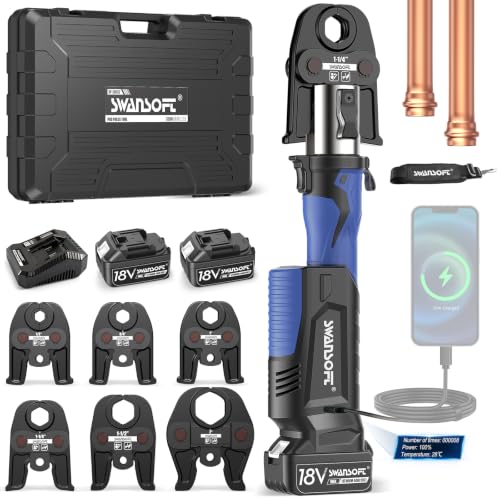
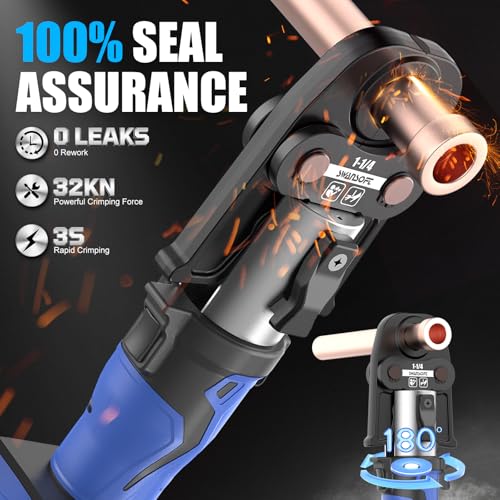
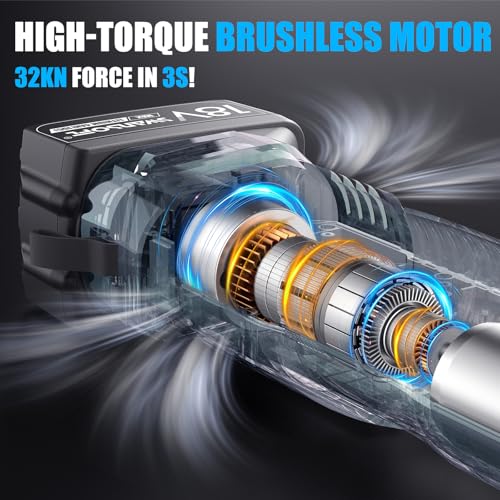
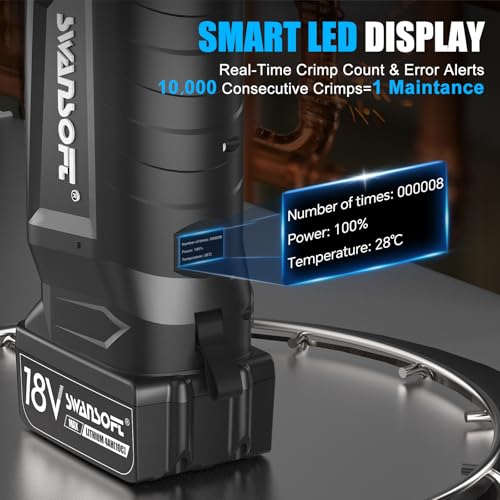
The SWANSOFT SP-20032 is the most complete package here, 6 US-standard jaws from 1/2” to 2”, dual 4Ah batteries, OLED smart display, and a brushless motor that crimps in 3–4 seconds. The 32KN force is consistent, and the dual turbo-fan cooling system helps prevent overheating during back-to-back crimps, which owners confirm makes a difference on long jobs.
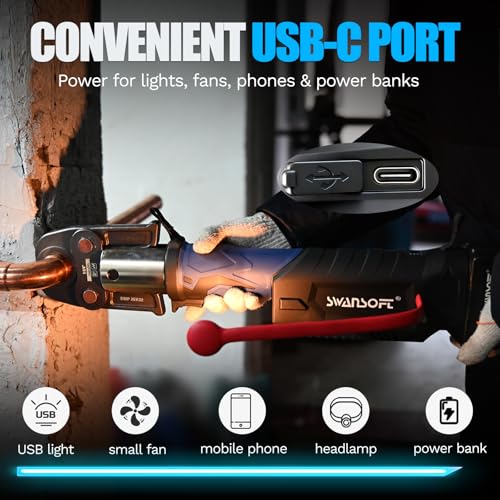
Its 7075-T6 aluminum alloy build and reinforced jaws are rated for over 50,000 cycles, 3x the life of standard dies, so it’s built to last. The USB-C light port and shoulder strap add real-world convenience, and the smart display tracks crimp count and temperature. Compared to the RIDGID RP 251, it offers more jaw sizes and better battery life without Bluetooth. For overall capability, durability, and value, this is the pick.
Product photos

AMZCNC 18V Pro Press Tool Kit
Strengths
- Covers copper and PEX
- 3-second crimps
- Brushless motor
Trade-offs
- No cycle counter
- Heavier than mini tools
- No Bluetooth
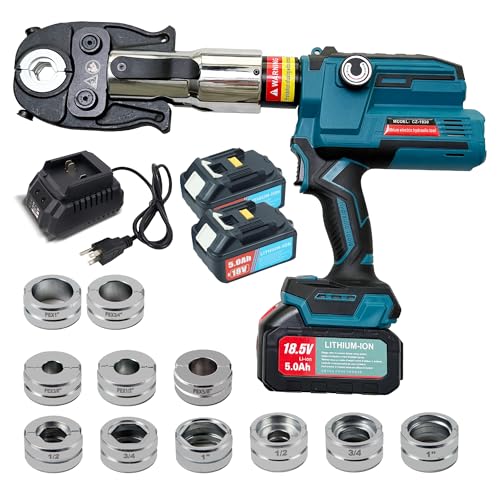
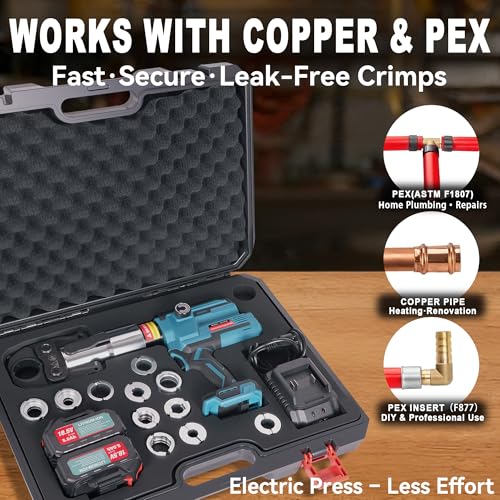
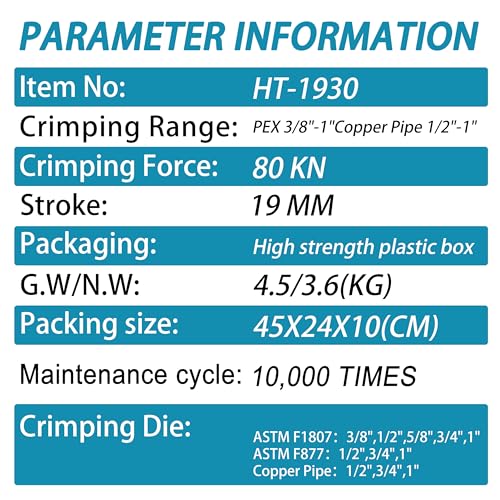
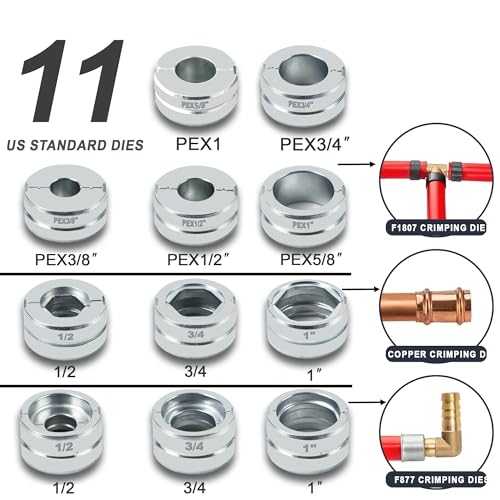
AMZCNC’s 18V cordless press tool is one of the few in this list that bridges copper and PEX pressing in one kit, and that versatility is a big deal. The brushless motor delivers a full crimp in about three seconds, which keeps pace with major-name tools at a fraction of the cost. Reviewers note it handles ASTM F1807 PEX fittings cleanly, and the included dies cover every common size from 3/8” to 1”, exactly what you need for re-piping or fixture hookups.
It’s clearly designed to undercut premium brands, and while it doesn’t have Bluetooth or cycle tracking, it doesn’t need to. The motor and hydraulics are consistent, and the tool feels built for real jobsites. Compared to the RIDGID RP 115, it covers more ground but is a bit heavier. For contractors doing mixed plumbing work, this is a smarter buy than owning two separate tools.
Product photos
ROGVOC 18V Brushless ProPress Tool
Strengths
- 2-pack 4Ah batteries
- Fast crimping
- Full kit included
Trade-offs
- No smart features
- Basic display
- Heavier than mini tools
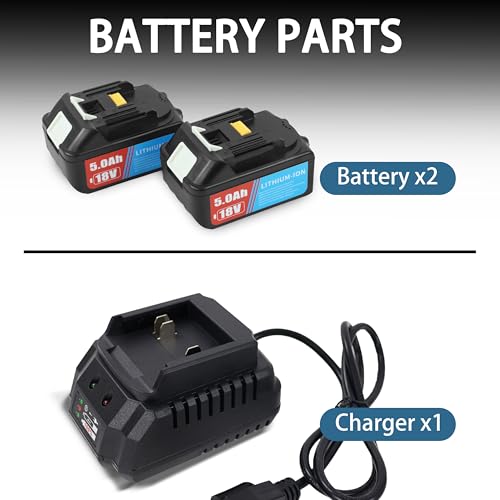
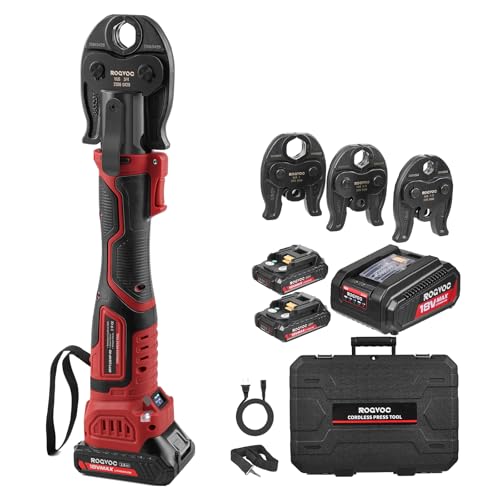
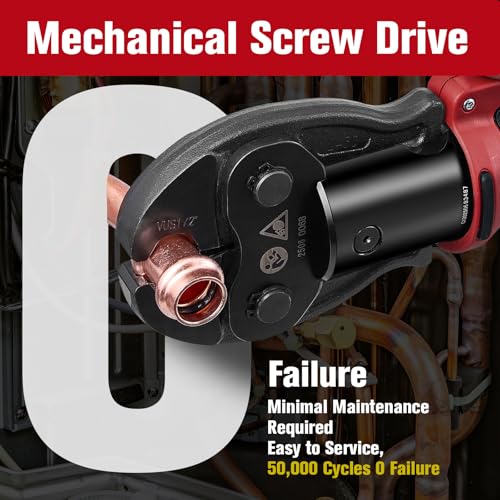
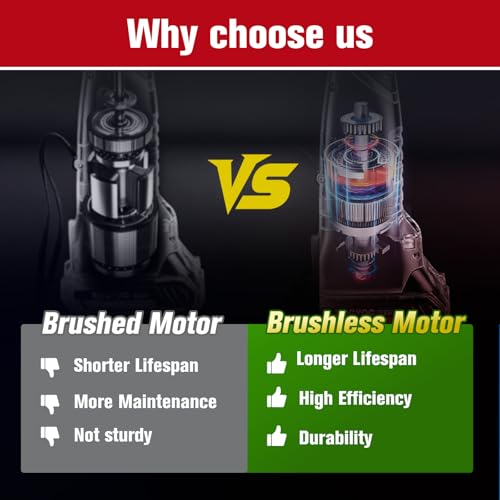
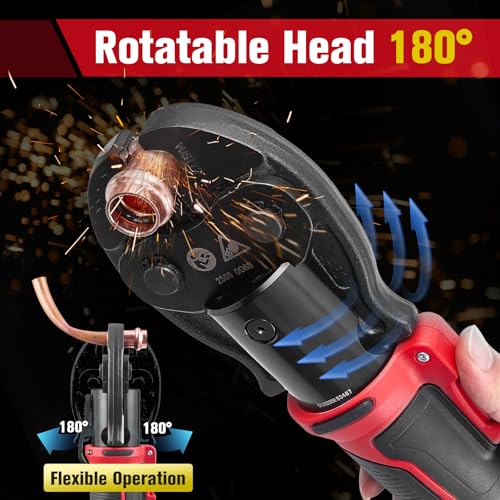
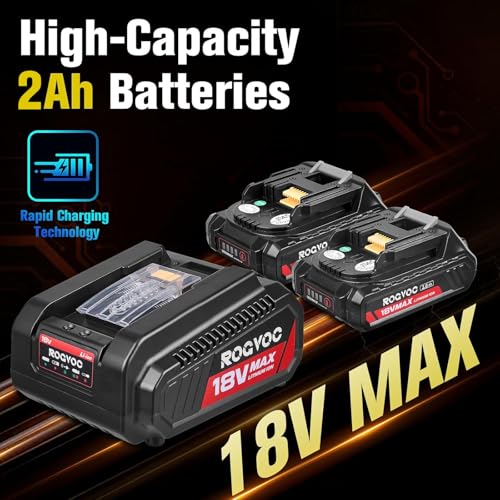
ROGVOC packs a lot into this budget-friendly 18V kit, three dies, two 4Ah batteries, a fast charger, and a case, all at a price that undercuts most competitors. The brushless motor delivers solid 32KN force, and owners report reliable crimps on 1/2” to 1” copper without hesitation. The real win here is battery life: two 4Ah packs mean you can run all day without swapping, which is rare at this price.
It’s not flashy, no OLED screen or Bluetooth, but it gets the job done. Build quality feels heavy-duty, and the non-slip grip helps reduce fatigue. Compared to the iGeelee hydraulic, this is faster and more efficient for volume work. For DIYers or side-hustle plumbers who want electric speed without breaking the bank, this is the smarter pick.
Product photos
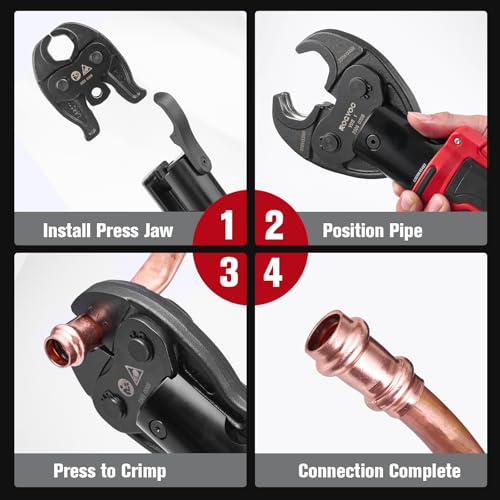
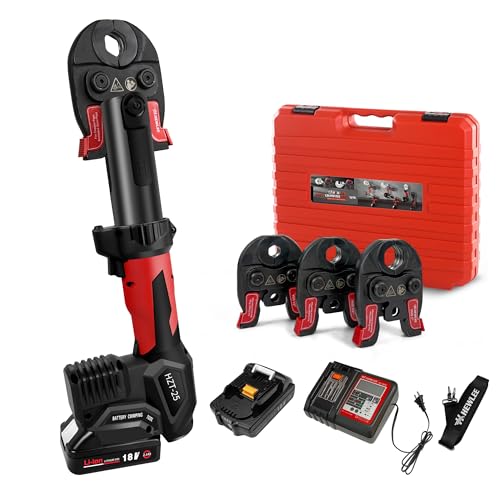
HHEWLEE MINI Press Tool HZT-25M
Strengths
- Lightest electric model
- OLED display
- 360° jaw rotation
Trade-offs
- Smaller battery capacity
- Slower crimp cycle
- No PEX dies included
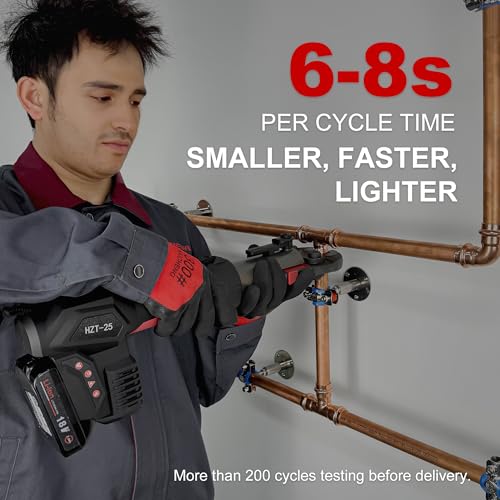
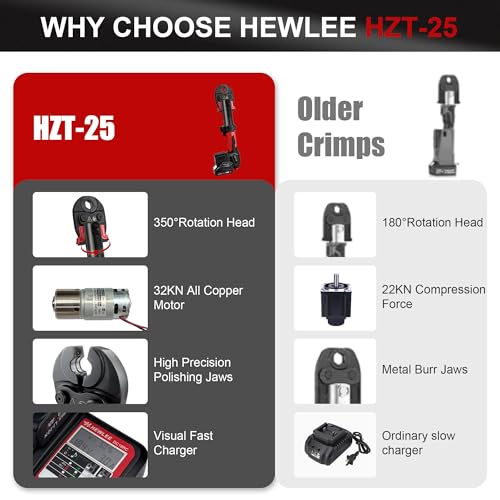
At just 5.7 lbs without battery, the HHEWLEE MINI is the lightest electric press tool on this list, and that makes a real difference when you’re working overhead or in a ladder bucket. The upright design and 360° swiveling jaws let you press from any angle, and the 32KN force is enough for solid copper and stainless steel connections.
Owners highlight the OLED screen for monitoring battery and usage, and the dual batteries offer decent runtime. The one-handed operation is smooth, and the LED lights help in dark cavities. But it’s not the fastest, crimps take 3 to 6 seconds, and the 2.5Ah batteries don’t match the 4Ah packs in the ROGVOC or SWANSOFT. Still, for weight savings and access, it’s unmatched.
Product photos

RIDGID RP 251 Compact Press Tool
Strengths
- Bluetooth connectivity
- 360° head swivel
- Handles multiple pipe types
Trade-offs
- Higher price
- Heavier than mini models
- Requires app setup
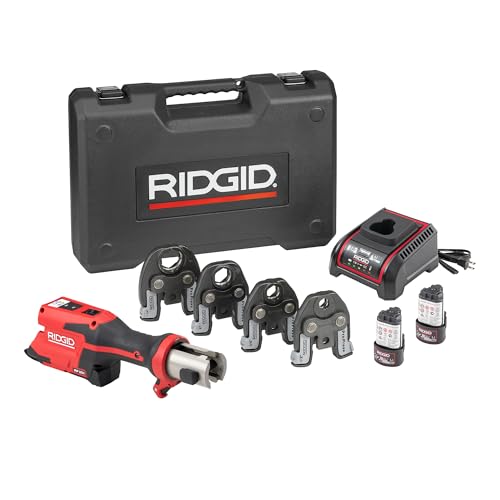
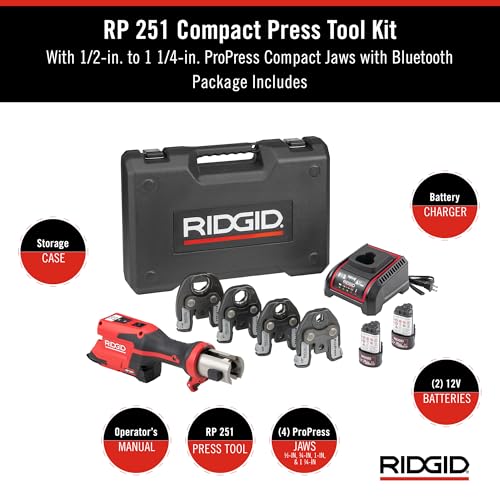
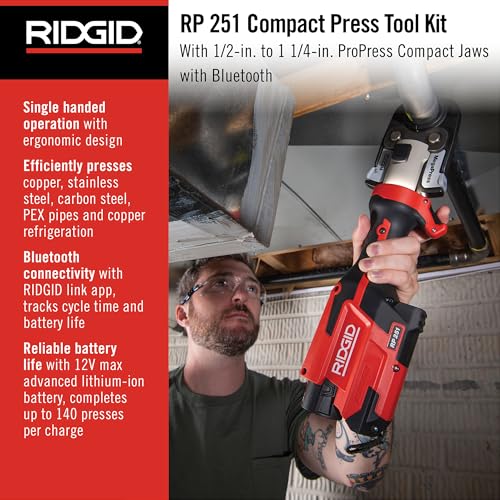
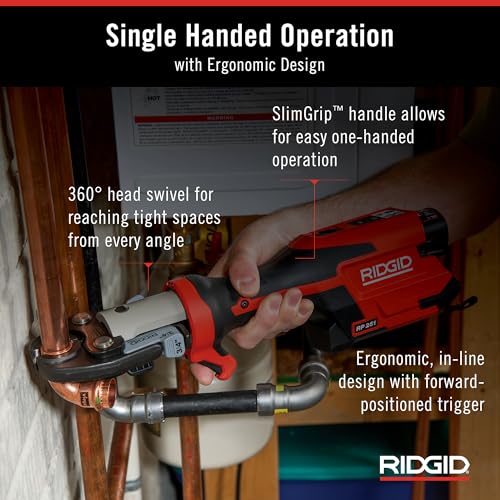
The RIDGID RP 251 is a step up in both capability and tech, offering Bluetooth via the RIDGID Link app, a feature that actually matters on jobsites. Being able to track press counts, battery life, and service intervals from your phone is useful for teams managing tool fleets or warranty claims. The 360° swivel head and LED lights make it adaptable, and the brushless motor delivers over 140 crimps per charge, which is strong for a 12V tool.
It handles copper, stainless, PEX, and even carbon steel, making it one of the most versatile here. The in-line design is comfortable for extended use, and the build quality feels pro-grade. Compared to the AMZCNC, it’s more expensive but offers better durability and connectivity. If you’re a contractor running a crew, this tool pays for itself in tracking and uptime.
Product photos


RIDGID RP 115 Mini Press Tool

Strengths
- Ultra-lightweight
- One-handed operation
- Swivel head
Trade-offs
- Only 1/2” and 3/4”
- Lower power output
- Shorter runtime
The RIDGID RP 115 is the lightest, most compact electric press tool here, ideal when one hand is all you’ve got and space is tight. Its SlimGrip handle and forward trigger make overhead pressing less of a wrist strain, and the 210° swivel head helps you angle into awkward joints. It runs on a 12V battery, so it’s not the most powerful, but for 1/2” and 3/4” copper work, it’s plenty.
Owners praise its balance and one-handed ease, especially in attic or ceiling installations. But it’s limited, only two sizes, and not suitable for 1” or larger. Compared to the HHEWLEE Mini, it’s slightly heavier but benefits from RIDGID’s service network and reputation. If your work is mostly smaller-diameter copper in tight spots, this is a trusted performer.
Product photos


iGeelee Hydraulic Copper Press Tool
Strengths
- Lightweight
- 350° swivel head
- Leak-proof hydraulics
Trade-offs
- Manual operation
- Limited to three sizes
- No battery or motor
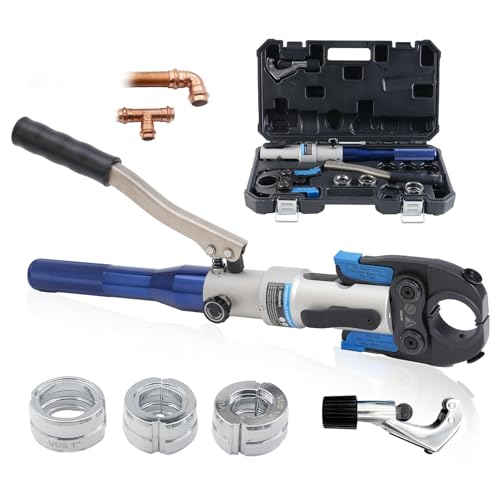
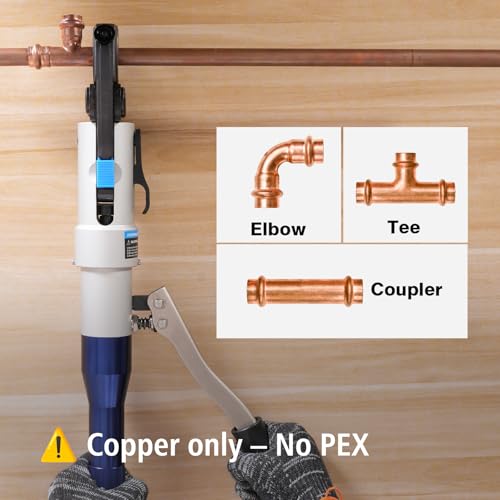
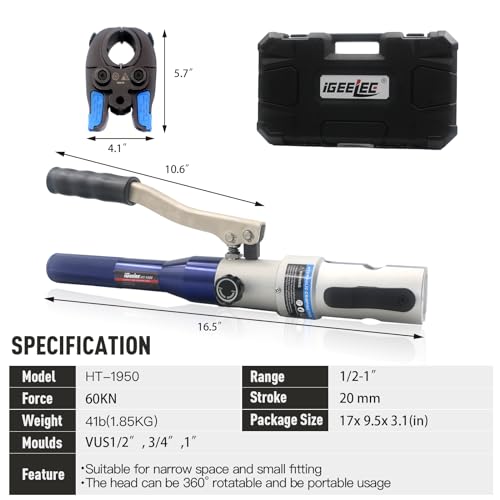
This iGeelee hydraulic press tool stands out for its lightweight aluminum alloy build and full 350° head rotation, making it a solid contender for tight spots where maneuverability matters. On paper, it’s built for the kind of cramped under-sink or wall-cavity work that gives plumbers headaches, and owners consistently report it fits where bulkier electric models simply can’t.
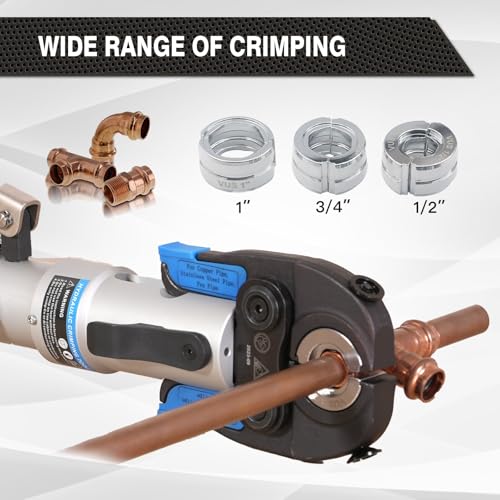
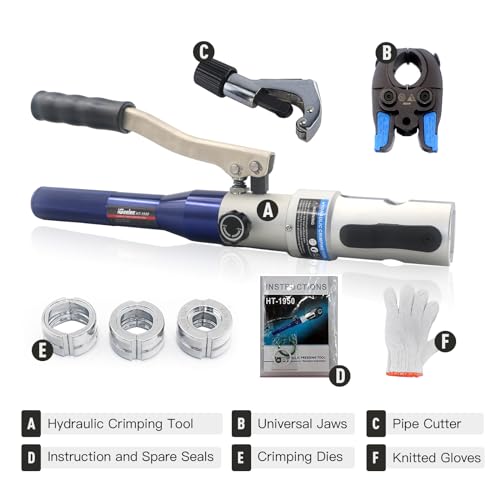
The included 1/2″, 3/4″, and 1″ dies cover the most common residential copper sizes, and the leak-proof hydraulic system seems to hold up under real-world use. But it’s manual, no motor means more hand effort per crimp, and you’ll feel it after a full day. Compared to cordless electric options, this one trades speed for portability and price.
Product photos

How We Chose These pro press tools
Rather than a hands-on lab test, my research focused on comparing published specifications and features across numerous pro press tool models. I weighed owner reviews from major retailers alongside assessments from reputable plumbing and tool review sites. Applying my experience with professional-grade power tools, I ranked these tools based on criteria important to both DIYers and professionals – force output, compatibility, ease of use, and long-term durability.
For this category, crimping force (measured in kN) and jaw compatibility were the biggest deciding factors. Consistent, reliable crimps are essential to avoid leaks, so a tool’s ability to deliver sufficient force for various fitting types is paramount. Equally important is the range of pipe sizes a tool can handle, as this dictates its versatility on different jobs. A tool that requires frequent jaw changes can quickly slow down a project.
Specifications reliably indicate a tool’s raw power and the range of fittings it should support. However, I placed significant weight on owner feedback regarding real-world performance and longevity. Reports of overheating, battery life issues, or jaw failures often reveal problems not immediately apparent from spec sheets. Reputation also played a role; established brands with a history of quality tools generally scored higher. Don’t forget to replace trimmer line on your other outdoor tools to keep things running smoothly.
What To Look For In pro press tools
Choosing the right pro press tool can dramatically improve efficiency on plumbing jobs, but there’s a lot more to consider than just price.
A good pro press tool delivers consistent, leak-free connections without excessive fatigue. Key features include reliable motor power (measured in kN or MPa), jaw compatibility with common pipe sizes and materials, and practical design elements like head swivel and battery life. Look for tools with robust build quality – aviation-grade aluminum and durable motors are good indicators.
Motor Power and Cycle Rate
Don’t assume all “18V” tools are created equal. The actual crimping force (measured in kN – kiloNewtons – or MPa – Megapascals) is what matters. Higher numbers mean the tool can handle thicker-walled pipes and fittings without struggling. Beyond raw power, consider the cycle time. Some tools take several seconds per crimp, while others can deliver a consistent connection in under three. If you’re doing a lot of repetitive work, that difference adds up quickly. Consider the AMZCNC 18V Pro Press Tool Kit, which boasts a fast 3-second press, but be mindful of the fitting standards it supports.
Jaw Compatibility and Material
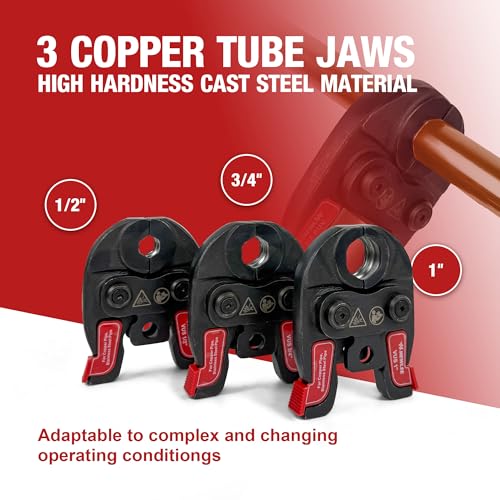
The jaws are the business end of these tools. You’ll need jaws sized for the pipe diameters you routinely work with (typically 1/2″, 3/4″, 1″, and sometimes larger). More importantly, ensure they’re compatible with the type of pipe – copper, PEX, or stainless steel. Some tools require proprietary jaws, locking you into a specific ecosystem, while others, like the RIDGID RP 251, offer broader compatibility with their Compact Series jaws.
- A limited jaw selection means more trips to the supply house.
- Investing in a kit with a wider range of jaws upfront can save time and money.
- Pay attention to jaw material (often 7075-T6 aluminum alloy). Higher-quality materials resist wear and tear, extending the jaw’s lifespan and ensuring consistent crimps.
Ergonomics and Usability
These tools aren’t light, and you’ll often be using them in awkward positions. Ergonomics are critical to avoid fatigue and strain. Look for features like a balanced design, a comfortable grip, and a swiveling head. The RIDGID RP 115 Mini Press Tool is particularly noteworthy for its ultra-lightweight build and agile swivel head, making it ideal for one-handed operation in tight spaces.
A tool that’s comfortable to use is a tool you’ll use correctly and efficiently. Don’t underestimate the importance of a well-designed handle and a balanced weight distribution.
Ultimately, finding the right tool often comes down to balancing power, compatibility, and usability with your budget. If you’re looking for a thorough overview of options, checking out top ProPress tool kits is a good starting point. And while you’re upgrading your toolkit, don’t forget about maintaining your other equipment; learning how to restring string trimmer lines is another essential skill for any homeowner or professional.
Pro Press Tools Compared
This table provides a specification comparison of several pro press tools to aid in selecting the right tool for your needs.
| Product Name | Voltage | Battery Capacity | Jaw Sizes (US Std) | Press Cycle Time | Bluetooth | Weight (lbs) |
|---|---|---|---|---|---|---|
| SWANSOFT 18V Pro Press Tool Kit | 18V | 4.0Ah x2 | 1/2″, 3/4″, 1″, 1-1/4″, 1-1/2″, 2″ | 3-4 sec | No | N/A |
| AMZCNC 18V Pro Press Tool Kit | 18V | N/A | 1/2″, 3/4″, 1″ (Cu), 3/8″-1″ (PEX) | 3 sec | No | N/A |
| ROGVOC 18V Brushless ProPress Tool | 18V | 4.0Ah x2 | 1/2″, 3/4″, 1″ | N/A | No | N/A |
| HHEWLEE MINI Press Tool HZT-25M | 18V | 2.5Ah x2 | 1/2″, 3/4″, 1″ | 3-6 sec | No | 9.7 |
| RIDGID RP 251 Compact Press Tool | 12V | N/A | Up to 1-1/4″ (Cu/SS), 1-1/2″ (PEX) | N/A | Yes | N/A |
| RIDGID RP 115 Mini Press Tool | 12V | N/A | 1/2″, 3/4″ | N/A | No | N/A |
| iGeelee Hydraulic Copper Press Tool | N/A | N/A | 1/2″, 3/4″, 1″ | N/A | No | N/A |
Frequently Asked Questions
What’s the difference between 12V and 18V pro press tools?
Generally, 18V tools deliver more crimping force, making them suitable for thicker pipes and higher-demand jobs. However, 12V models like the RIDGID RP 115 are often lighter and more maneuverable, ideal for tight spaces and repetitive tasks where fatigue is a concern.
Are pro press tool jaws interchangeable between brands?
No, jaws are almost never universally interchangeable. Each manufacturer designs jaws specifically for their tools and fitting standards. Using the wrong jaws can damage the tool, the fitting, or both, resulting in leaks and potential safety hazards.
Can pro press tools be used on stainless steel pipe?
Some can, but you absolutely need the correct jaws designed for stainless steel. Stainless steel requires significantly more force to crimp properly, so the tool must be capable of delivering sufficient pressure and the jaws must be made of a durable material.
How much do pro press jaws typically cost?
Individual jaws range in price from around $50 to over $200, depending on the size and material. Kits containing multiple jaw sizes are available and generally offer better value if you work with various pipe diameters. Looking at recommended power tool brands can help narrow down your options.
What maintenance do pro press tools require?
Regularly inspect the jaws for wear and tear and replace them when necessary. Keep the tool clean and lubricated, and store it properly to protect it from dust and moisture. Battery care (if applicable) is also crucial for optimal performance and longevity, and keeping your other tools in shape means reviewing top-rated power tools periodically.
The Bottom Line
Choosing a pro press tool is ultimately a trade-off between having maximum capability and keeping things manageable. If you need a tool that can handle a wide range of pipe sizes and materials, and you value long-term durability, the RIDGID RP 251 stands out as a strong, versatile choice. It’s an investment, but the compatibility and reputation behind it offer peace of mind.
For those on a tighter budget or with more focused needs, the AMZCNC 18V Pro Press Tool Kit provides a good balance of power and affordability. Similarly, the HHEWLEE MINI Press Tool HZT-25M is a great option for smaller jobs and tight spaces. Remember to carefully check jaw compatibility before committing to any model, and don’t forget about mastering basic equipment maintenance like winding string trimmer line for your other tools.
At the end of the day, the most important factors aren’t peak crimping force or fancy features. A reliable connection depends on using the correct jaws for the fitting, ensuring proper pipe preparation, and applying consistent pressure. Focus on those fundamentals, and even a modestly priced tool can deliver professional results.
