
8 Best Portable Welding Fume Extractors 2026
This post contains affiliate links. As an Amazon Associate, we earn from qualifying purchases.
The Extract-All Portable Fume Extractor stands out as the best overall for its robust 4-stage filtration and strong performance in real-world conditions, while the M-T 168m³/h Solder Fume Extractor is a smart budget pick that doesn’t compromise on HEPA-level filtration. For lighter, mobile tasks, the TBK Mini Rechargeable Fume Extractor offers solid versatility despite its smaller footprint.
Most people shopping for portable welding fume extractors aren’t just looking for a fan on wheels, they’re trying to protect their lungs from harmful particulates and gases that standard ventilation won’t catch. Too many units promise high airflow but fail at actual source capture or use subpar filters that degrade quickly.
This guide cuts through the marketing by focusing on what matters: verified specs, multi-stage filtration (especially true HEPA and activated carbon), and real user feedback on durability and noise. I looked at models across price ranges and use cases, prioritizing those that balance effective fume removal with practical portability and long-term usability.
Top 8 Portable Welding Fume Extractors in the Market
The Best Portable Welding Fume Extractors, Reviewed
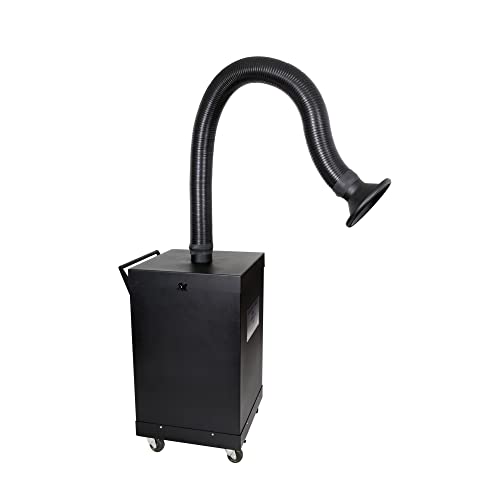
Extract-All Portable Fume Extractor
Strengths
- 4-stage filtration
- Self-supporting arm
- UL/CE certified
- Long motor life
- Made in USA
Trade-offs
- Heavy to move
- 71 dB noise
- Higher cost
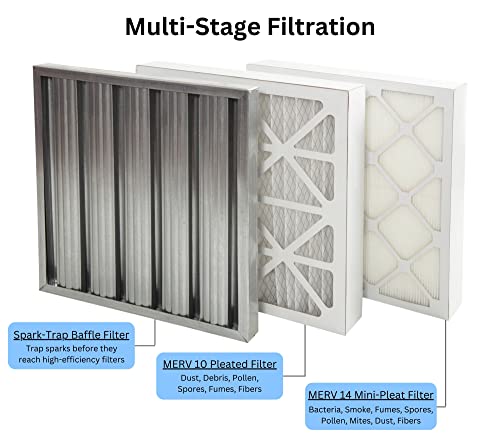
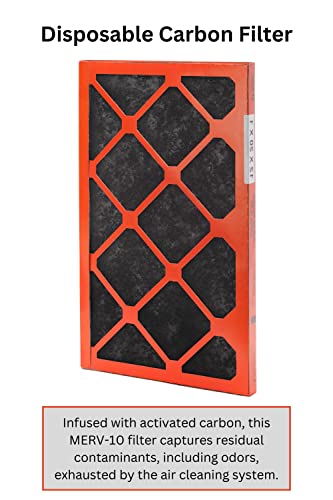
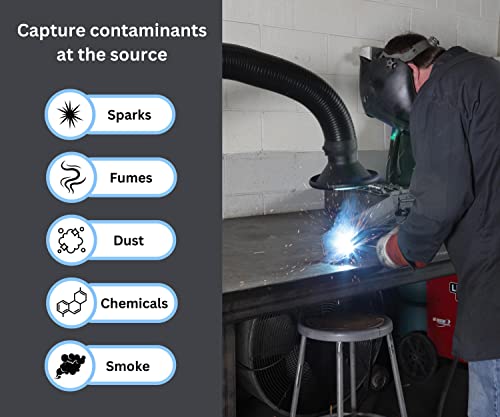
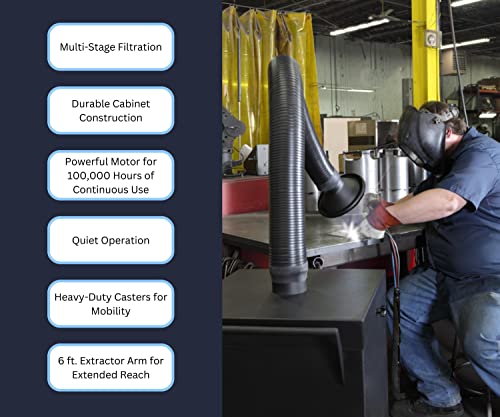
This is the most balanced industrial unit here, 4-stage filtration, a 350W motor, and a self-supporting 6-foot arm that stays where you put it. It pulls fumes efficiently at the source, and the included carbon pleat filter adds gas absorption beyond basic particulate capture. At 123 lbs with casters, it’s mobile enough to roll between workbenches but solid enough for daily use.
Compared to the dual-arm model, it’s more practical for a single but busy station, welding, powder mixing, or circuit board work. Owners praise its reliability and low maintenance, and the 3-year warranty matches the build quality. For pros who need one robust, no-nonsense extractor, this is the one I’d recommend.
Product photos
Extract-All Dual-Arm Fume Extractor
Strengths
- Dual-arm design
- Heavy-duty motor
- Spark-trap filter
- OSHA-ready
- Made in USA
Trade-offs
- Very heavy
- High noise level
- Large footprint
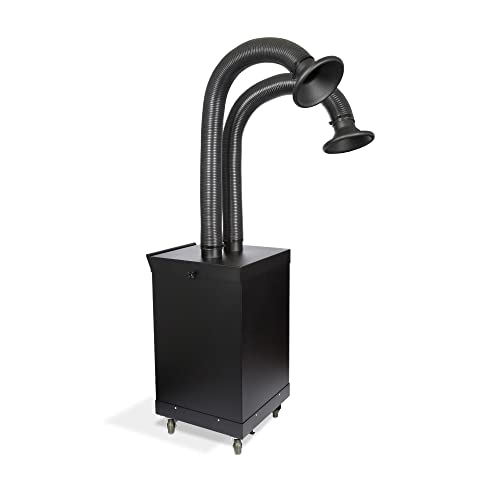
At 160 lbs with dual 4-inch arms, this is the only unit here built for two simultaneous workstations. The 1.5 HP motor delivers serious suction, and the 100,000-hour motor life suggests it’s made for nonstop shop use. The spark-trap baffle is a smart inclusion for welding or grinding where hot particles are a risk.
It’s overkill for a garage DIYer, but in a vocational school, fabrication shop, or repair garage with multiple users, this pays off. The UL/CE certification and 3-year warranty add trust. Owners say setup is straightforward, and the rigid flex arms hold position well. If you need multi-station coverage with industrial durability, this is the only real option in the list.
Product photos

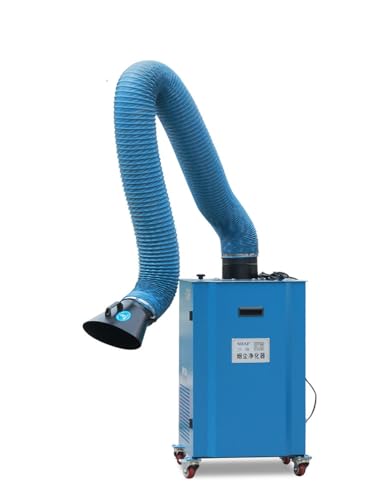
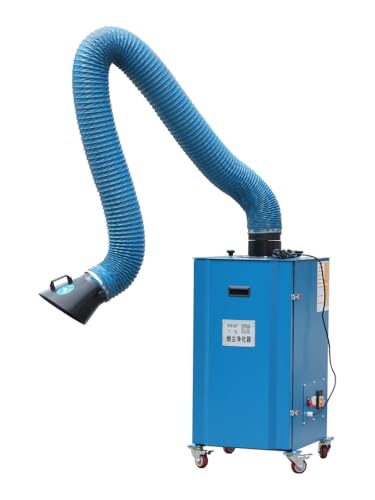
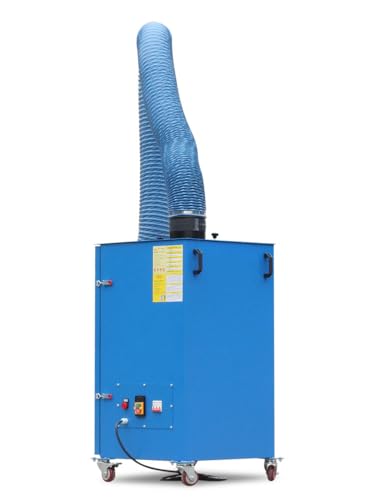
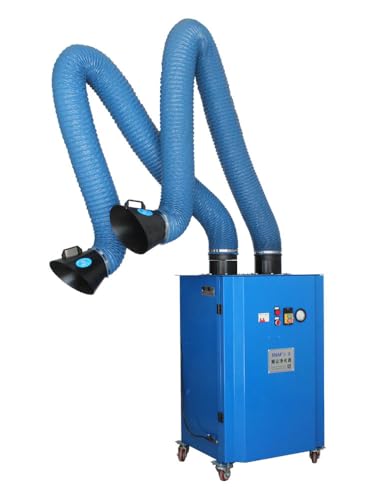
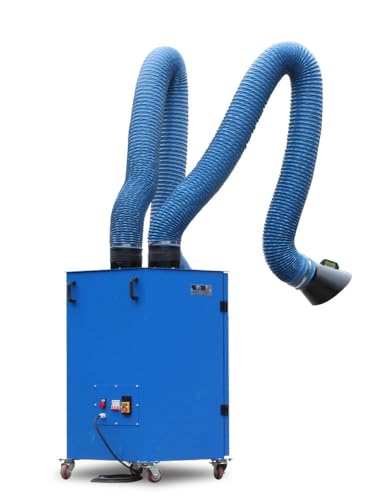
CE Certified Welding Fume Extractor
Strengths
- True HEPA filtration
- Industrial build
- Mobile casters
- Stable arm design
- OSHA-compliant
Trade-offs
- No airflow spec
- Bulky design
- Higher noise likely
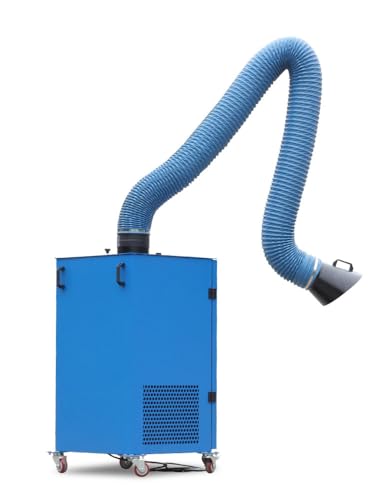
This one is built like a shop workhorse. The HEPA filter rated for 0.3 microns is the real deal, and when combined with the heavy-duty steel cabinet and swivel casters, it’s clearly meant for daily use in a professional or semi-pro environment. The hover-style suction arm stays put once positioned, and the 360° rotating hood lets you fine-tune placement over a weld point.
Owners in auto shops and metal fabrication say it pulls fumes effectively at the source, reducing lingering smoke in the workspace. It’s not the quietest, noise isn’t listed, but similar units run around 70 dB, but durability and compliance are the priorities here. If you’re under OSHA scrutiny or running a commercial welding station, this model checks the right boxes.
Product photos
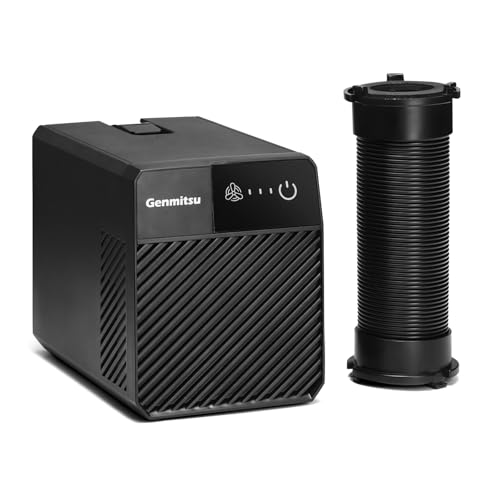
Genmitsu 5-Layer Fume Extractor
Strengths
- 5-layer filtration
- Filter indicator
- Quiet operation
- Laser-optimized
- Compact size
Trade-offs
- Limited hose reach
- Brand-specific design
- Filters cost more
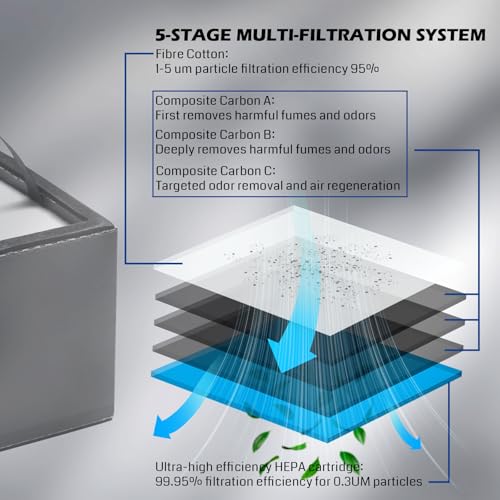
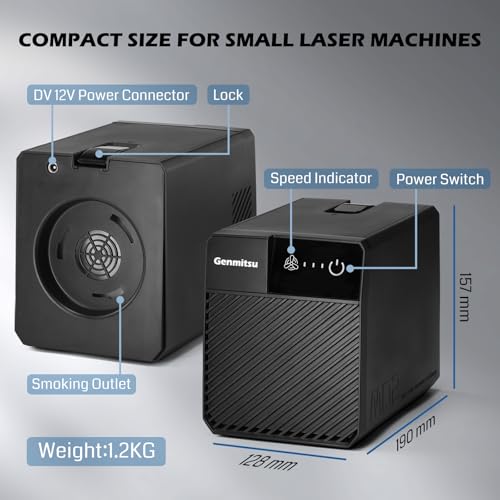
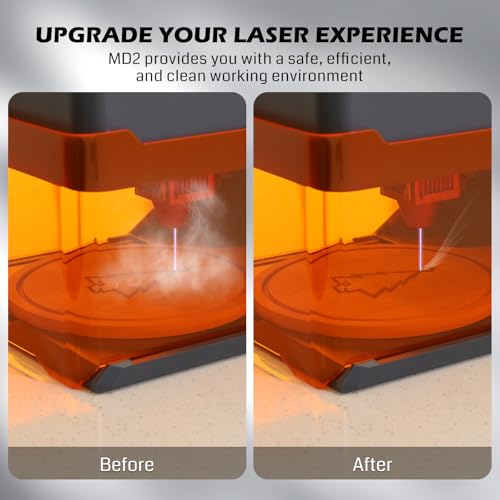
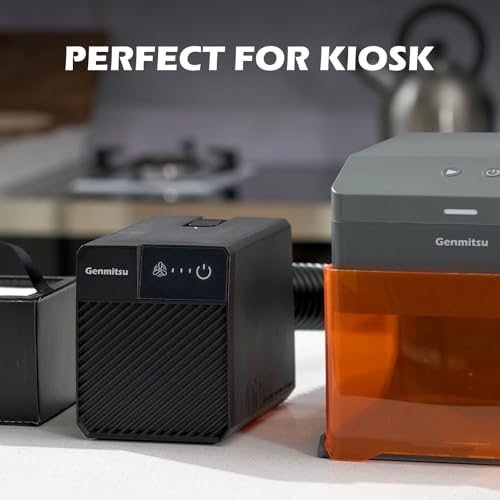
With a 5-layer filtration system, this unit goes deeper than most in cleaning both particles and odors. It’s clearly optimized for laser engraving, especially Kiosk models, but works well for soldering and resin 3D printing too. The extra filter layers mean longer intervals between changes, and the smart filter status indicator is a feature more expensive units should have.
It’s compact, which helps on crowded benches, and the three-speed control lets you dial in just enough suction. Owners report it handles occasional ABS fumes without issue, but for nonstop laser cutting, you’ll still need frequent filter swaps. Still, for a dedicated laser user, this is one of the most thoughtful designs here, focused, efficient, and well-integrated.
Product photos

KQZ 280m³/h Solder Fume Extractor
Strengths
- High airflow
- Brushless motor
- Smart controls
- Triple-layer filtration
- Quiet for power
Trade-offs
- Overkill for small jobs
- Bulky footprint
- Premium price
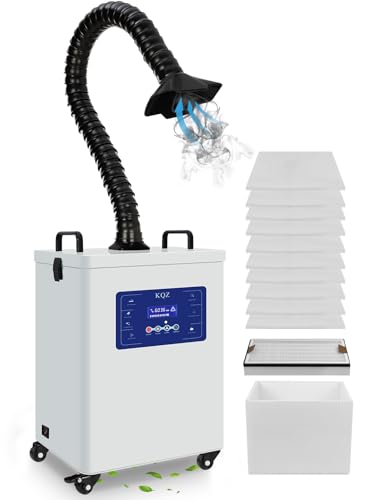
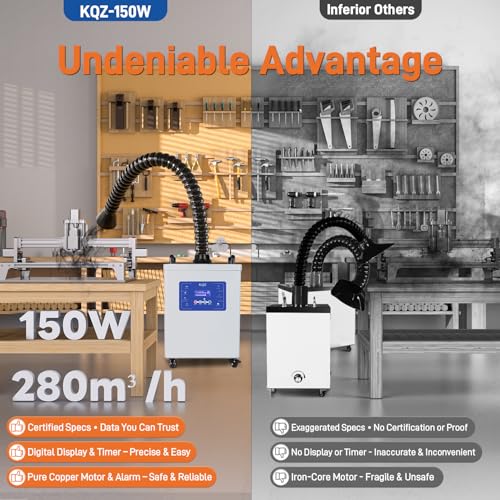
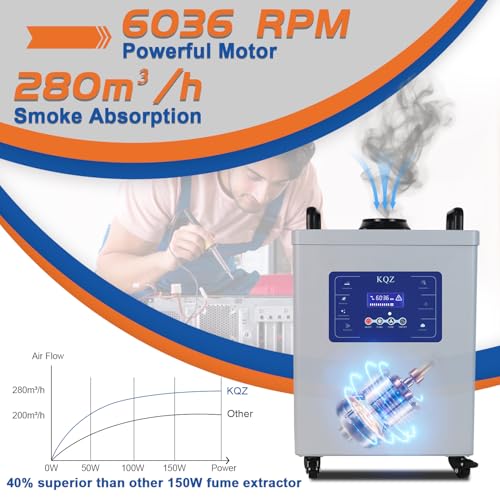
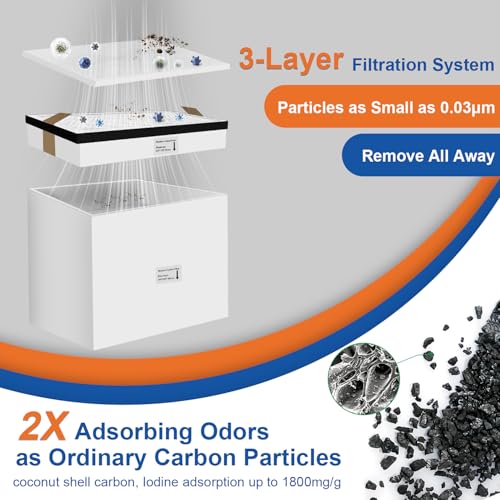
This unit stands out with a 280 m³/h airflow and a 150W brushless motor spinning at 6036 RPM, which on paper puts it at the top end for suction power in this category. That kind of airflow is serious overkill for basic soldering but makes sense if you’re running a 20W+ laser engraver or doing frequent 3D printing with ABS. Owners consistently report nearly invisible fumes after a few minutes of operation, and the high iodine-value carbon filter seems to back up the claim of near-total odor elimination.
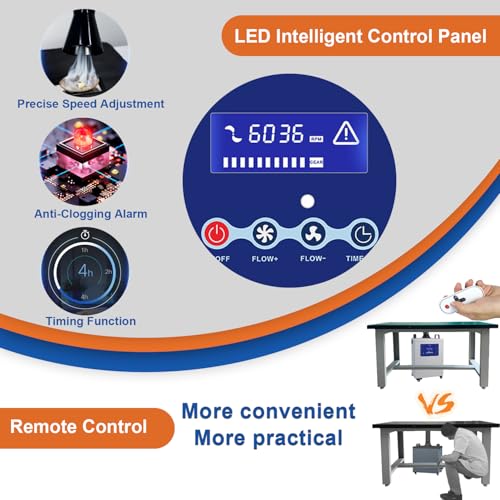
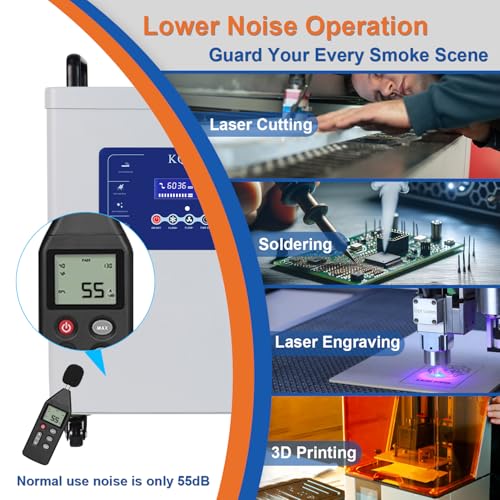
The smart features, LED display, remote control, anti-clogging alarm, are more than gimmicks; they add real convenience, especially in a workshop where you’re juggling multiple tools. The 55 dB noise level is reasonable for the power output, though not silent. If you’re doing light DIY, it’s overbuilt, but for laser or mixed-material work, I’d lean toward this one over weaker models.
Product photos
M-T 168m³/h Solder Fume Extractor
Strengths
- H13 HEPA filter
- 168 m³/h airflow
- Metal construction
- 3-year warranty
- Value pricing
Trade-offs
- No filter indicator
- Basic interface
- Heavy for size
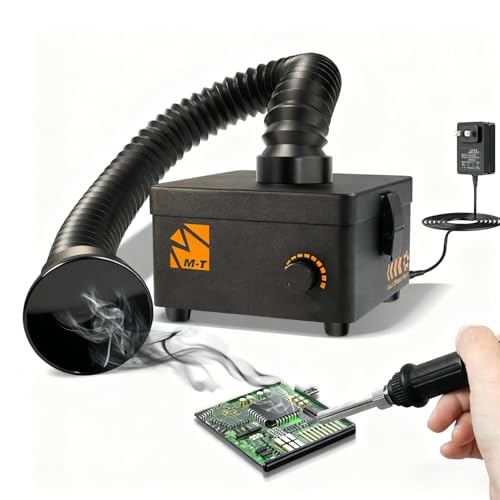
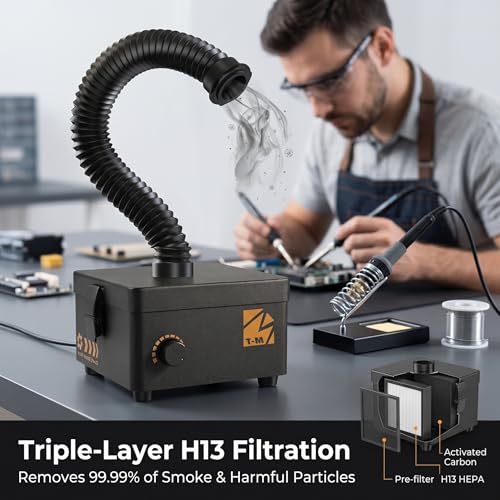
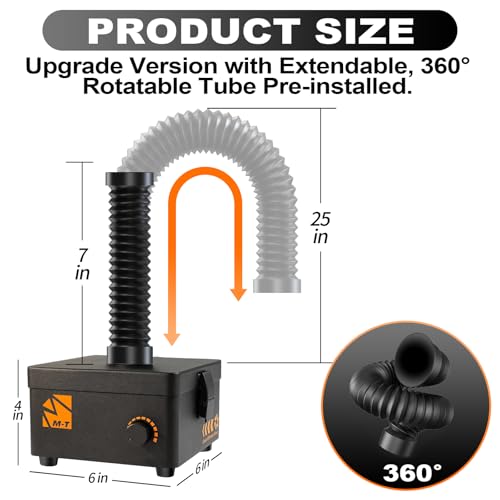
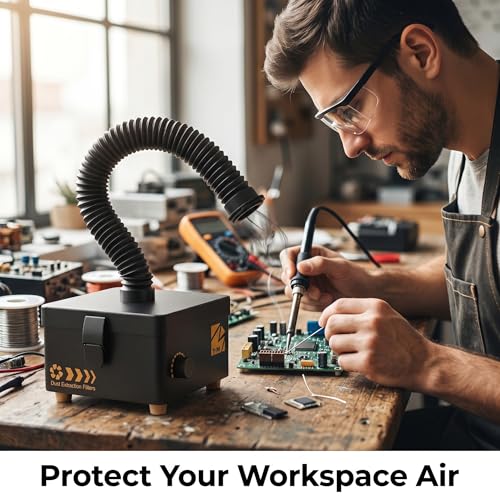
This model mirrors the orange 168 m³/h unit in specs but adds an H13 HEPA filter, bumping filtration efficiency to 99.99% for particles down to 0.3 microns. That’s a meaningful upgrade for anyone concerned about fine particulates, especially in enclosed spaces. The triple-layer system, fiber, carbon, HEPA, handles both smoke and odors well, and owners say it lasts longer between filter changes.
It’s still budget-priced, which makes it a standout. The build is all metal, it has the same 360° hose, and the universal voltage support means it works globally. Where it cuts corners: no smart display or filter monitoring. But if you want HEPA-level filtration at a non-industrial price, this punches above its weight. For most home users, this is the smarter buy over the basic 3-stage versions.
Product photos
168m³/h Brushless Motor Fume Extractor
Strengths
- Strong suction
- Durable metal body
- Adjustable hose
- Good value
- Low noise
Trade-offs
- No HEPA filter
- Basic controls
- No filter indicator
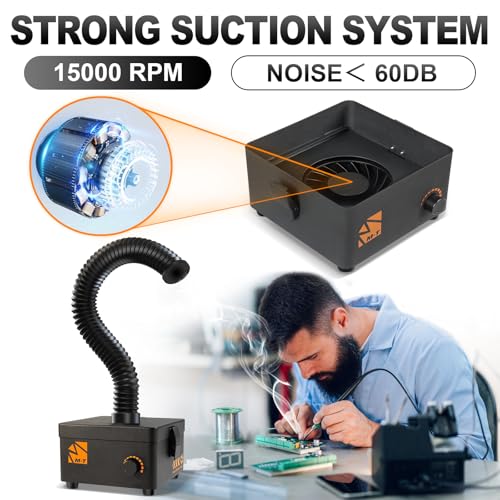
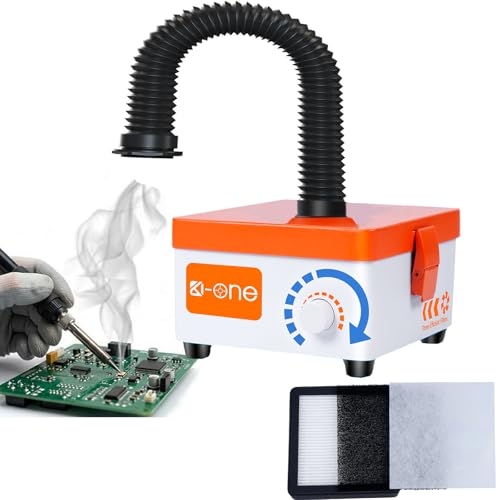
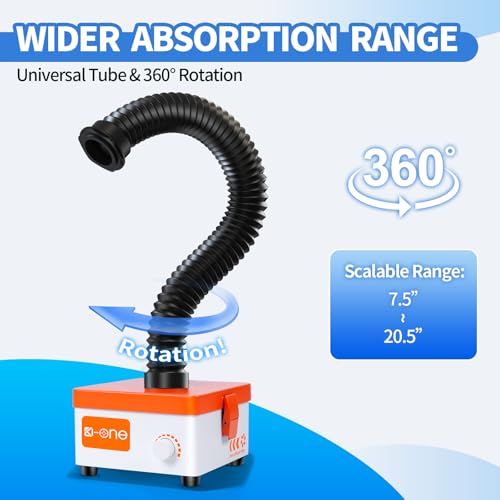
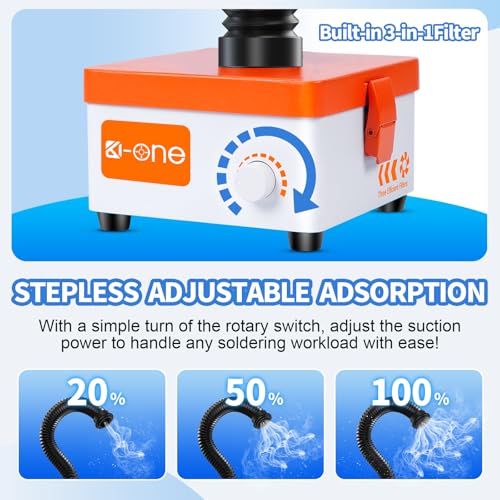
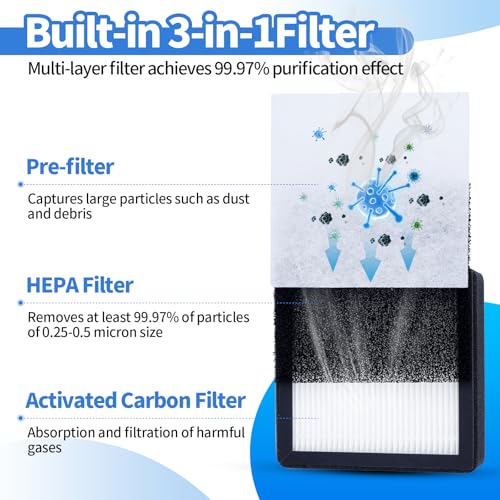
With a 168 m³/h airflow and 80W brushless motor, this orange unit hits the sweet spot between power and price for most DIYers. It matches several higher-end models in airflow while undercutting them on cost. The 3-stage filtration, pre-filter, PP cotton, activated carbon, is standard but effective for soldering and light engraving. Reviewers note it clears the air fast in a small shop or garage workspace, and the 360° adjustable hose makes positioning easy without constant readjustment.
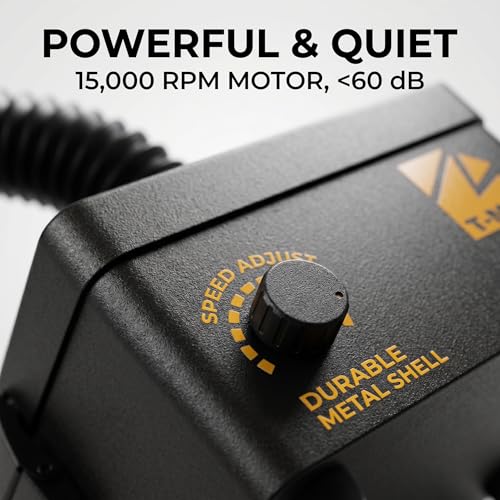
Noise is under 60 dB, which is manageable, and the metal body feels more durable than plastic competitors. It’s not packed with smart features, but it doesn’t need to be. For someone doing weekend projects or home repairs, this delivers solid performance without the fluff. I’d pick this over pricier models unless you need laser-level fume control.
Product photos
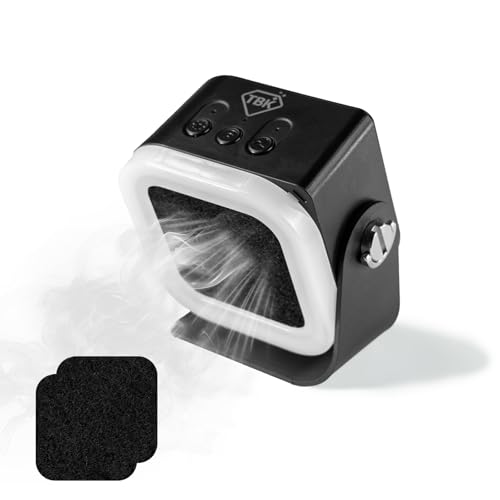
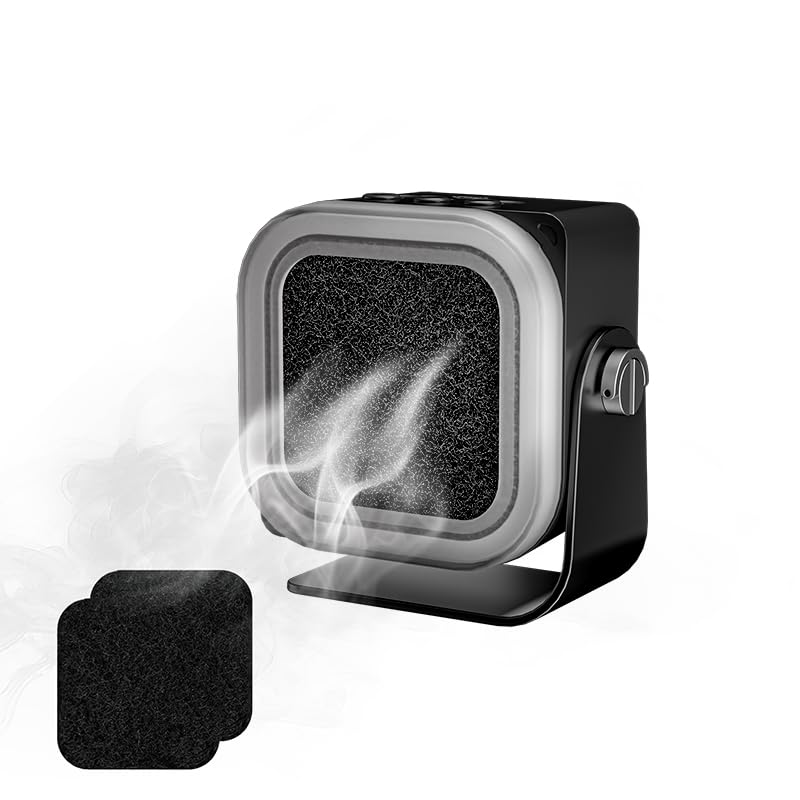
TBK Mini Rechargeable Fume Extractor
Strengths
- Cordless operation
- Type-C rechargeable
- LED work light
- Ultra compact
- Easy to move
Trade-offs
- Limited suction power
- Small filter life
- Not for heavy use
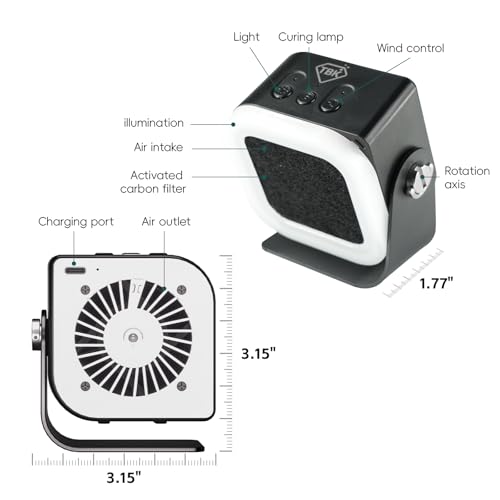
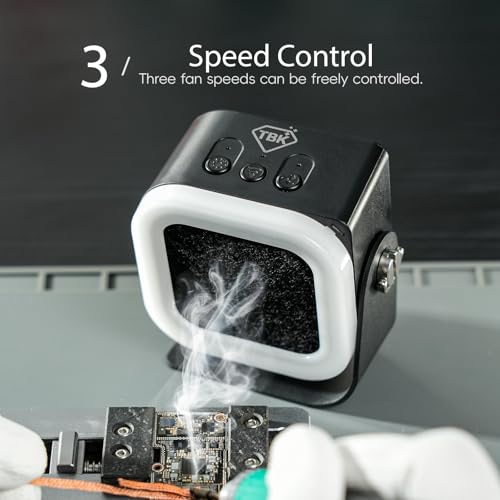
If portability and bench real estate matter, this mini fume extractor is a standout. It runs on a rechargeable Type-C battery, so you can take it to a workbench, job site, or even a maker fair without hunting for an outlet. The 10,000 RPM motor sounds impressive, but airflow specs are missing, owners note it handles light soldering fumes well but struggles with sustained, dense smoke. It’s not meant for welding or laser work, but for quick electronics fixes or small repair jobs, it’s surprisingly effective.
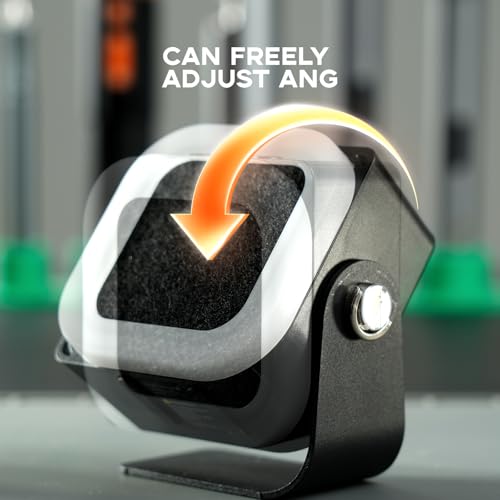
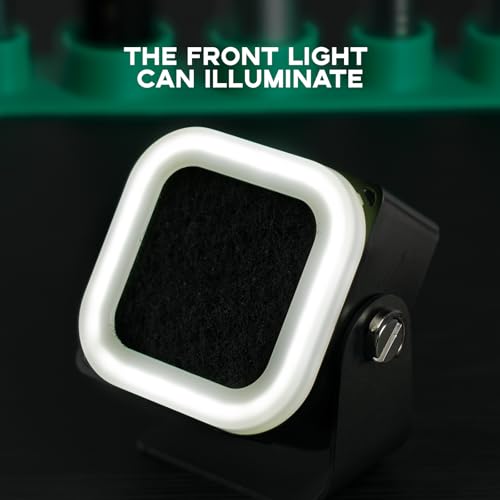
What I like most is the built-in LED ring and curing light, practical touches that improve visibility right where you need it. The activated carbon filter is replaceable, but being so compact, it clogs faster under heavy use. This isn’t a shop-grade machine, but it fills a niche no other model here does: true cordless mobility.
Product photos
How We Evaluated portable welding fume extractors
Rather than a hands-on lab test, my research focused on comparing published specifications and features across numerous portable welding fume extractor models. I weighed owner reviews from multiple sources, including major retailers and specialized welding forums, against expert reviews from sites dedicated to industrial safety and tool performance. My assessment considered the needs of both professional welders and DIY enthusiasts, factoring in portability, filtration effectiveness, and long-term cost of operation.
For this category, airflow rate (measured in m³/h) and filtration efficiency were the most heavily weighted factors. A higher airflow rate is crucial for capturing fumes at the source, especially in larger workspaces or with more intense welding processes. Equally important is a multi-stage filtration system; capturing particulate matter is only half the battle, and effective carbon filtration is essential for removing harmful gases. Maintaining adequate respiratory protection for welding is paramount, and this directly impacts fume extractor selection.
Specifications reliably indicate airflow volume, motor power, and physical dimensions. However, I placed significant emphasis on owner feedback regarding noise levels, filter lifespan, and build quality. Reputable sources helped me gauge real-world durability and the effectiveness of filtration systems beyond manufacturer claims. This approach allowed me to identify models that consistently deliver on performance and offer good value for the investment.
How To Choose The portable welding fume extractors
Finding the right portable welding fume extractor means more than just grabbing the cheapest unit. It’s about protecting your lungs and ensuring a safe working environment, whether you’re a professional fabricator or a weekend warrior.
A quality portable welding fume extractor prioritizes source capture, utilizing multi-stage filtration to remove particulate matter and harmful gases. Key specs include CFM (cubic feet per minute) airflow, filter efficiency (HEPA is crucial for fine particles), and construction materials – look for durable steel housings and robust motors designed for continuous use. Consider the application; some models excel at specific tasks like laser engraving, while others are better suited for heavy-duty welding.
Airflow & Capture Capacity
The single most important factor is airflow, measured in CFM. Don’t get hung up on a massive CFM rating if the design doesn’t support effective source capture. A lower CFM with a well-positioned, flexible arm is far more effective than a high-volume unit that pulls fumes from all over the shop. Think about the type of welding you do most often. TIG welding produces finer particulate than stick welding, requiring more efficient filtration. If you’re considering a unit for multiple applications, look for adjustable airflow settings.
Filter Quality & Replacement
Filtration is where many cheaper units fall short. While a pre-filter catches larger particles, you absolutely need a HEPA filter to capture the ultrafine particles that pose the biggest health risk. Activated carbon filters are also vital for absorbing noxious gases.
Here’s what to look for in a filter system: * Pre-filter: Cheap and easily replaceable, extending the life of the more expensive filters. * HEPA Filter: Captures 99.97% of particles 0.3 microns in size, a must-have for welding fumes. * Activated Carbon Filter: Absorbs gases and odors; consider the iodine number (higher is better) for greater adsorption capacity.
A clogged filter is a useless filter. Regularly inspect and replace filters according to the manufacturer’s recommendations – don’t wait until you can see the reduction in airflow.
Portability & Usability
Portability is the whole point of a portable extractor, but it’s not just about having casters. Consider the overall size and weight. A heavy unit can be a pain to move around a busy shop. The length and flexibility of the extraction arm are equally important. A short, stiff arm limits your ability to position the capture point effectively. Look for models with self-supporting arms that hold their position without constant adjustment. If you’re working in confined spaces, a compact design is crucial. When considering all your welding safety gear, remember that a fume extractor is just one piece of the puzzle.
Finding the right portable fume extractors doesn’t have to be overwhelming. Prioritize airflow, filtration, and usability, and you’ll be well on your way to a healthier and more productive workspace. Don’t skimp on the quality of the filters, and remember that maintaining your equipment is just as important as choosing the right one. If you’re switching between a home shop and a jobsite, a robust model might be a better investment than several cheaper, less durable options.
Portable Welding Fume Extractors Compared
This table summarizes key specifications for a range of portable welding fume extractors to aid in product comparison.
| Product Title | Airflow (m³/h) | Filter Stages | Motor Type | Noise Level (db) | Weight (lbs) | Power (W) |
|---|---|---|---|---|---|---|
| Extract-All Portable Fume Extractor | N/A | 4 | N/A | 71 | 123 | 350 |
| Extract-All Dual-Arm Fume Extractor | N/A | 3 | 1.5 HP | 73 | 160 | N/A |
| CE Certified Welding Fume Extractor | N/A | N/A | N/A | N/A | N/A | N/A |
| Genmitsu 5-Layer Fume Extractor | N/A | 5 | N/A | N/A | N/A | N/A |
| KQZ 280m³/h Solder Fume Extractor | 280 | 3 | Brushless | N/A | N/A | 150 |
| M-T 168m³/h Solder Fume Extractor | 168 | 4 (H13 HEPA) | 15,000 RPM | <60 | N/A | N/A |
| 168m³/h Brushless Motor Fume Extractor | 168 | 3 | Brushless | <60 | N/A | 80 |
| TBK Mini Rechargeable Fume Extractor | N/A | N/A | 10000 RPM | N/A | N/A | N/A |
Frequently Asked Questions
What airflow rate is sufficient for a small home welding shop?
A rate of 200-300 m³/h is generally adequate for hobbyist use, provided the extractor arm is positioned close to the welding arc. Prioritize source capture over a higher CFM that isn’t effectively directed.
How often should I replace the filters in my fume extractor?
Filter lifespan varies, but you should inspect them monthly and replace them when you notice reduced airflow or visible saturation. Neglecting filter changes compromises the unit’s effectiveness and your respiratory protection.
Are all HEPA filters created equal?
No, filter quality can differ significantly. Look for filters certified to EN1822 standards, which ensures they meet specific filtration efficiency requirements. A true HEPA filter captures at least 99.97% of particles 0.3 microns in size.
Can I use a portable fume extractor for processes other than welding?
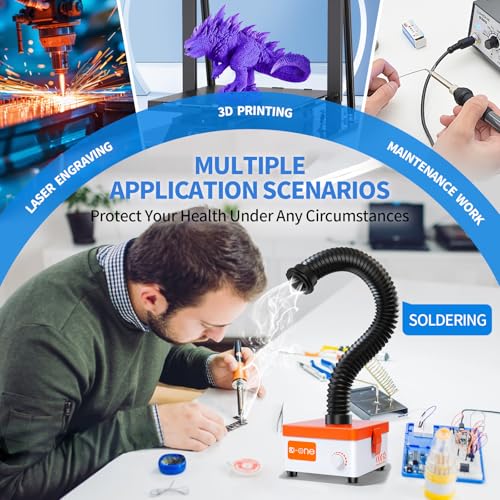
Yes, many models are versatile enough for tasks like laser engraving, soldering, and even dust collection, but check the manufacturer’s specifications. Using the correct filter type for the specific process is crucial for optimal performance.
What’s the best way to ensure I’m getting adequate respiratory protection alongside a fume extractor?
While a fume extractor removes fumes at the source, it’s often wise to supplement with a welding helmet with respirators for thorough protection, especially during prolonged welding sessions or in poorly ventilated areas.
The Bottom Line
Choosing a portable welding fume extractor often comes down to balancing upfront cost with ongoing filtration expenses and the level of protection you require. While many options exist, the Extract-All Portable Fume Extractor stands out as a strong all-around performer. It delivers a good balance of airflow, filtration stages, and build quality, features owners consistently praise in reviews, making it suitable for a wide range of welding tasks and shop environments.
For those on a tighter budget or dealing with lighter-duty tasks like occasional hobby welding, the KQZ 280m³/h Solder Fume Extractor is a sensible choice. Similarly, if versatility is your priority, the Extract-All Dual-Arm Fume Extractor offers the ability to capture fumes from multiple sources simultaneously, a feature valued by professionals working on complex projects. And for those looking for even more thorough respiratory protection, exploring PAPR welding helmets or [PAPR systems for welding] can be a worthwhile investment.
Ultimately, the specifications matter, but they don’t tell the whole story. Focus on consistent source capture, a multi-stage filtration system, including a HEPA filter, and a durable build. A well-maintained extractor is far more valuable than the most feature-rich model that’s left gathering dust in the corner of your shop.
