7 Best Non-Marring Hammers for LVP Installations 2026
This post contains affiliate links. As an Amazon Associate, we earn from qualifying purchases.
The Goldblatt 16 oz Rubber Mallet stands out as the best overall non marring hammer for LVP installations, thanks to its reliable white rubber head and solid build. For a budget-friendly option, the C&T White Rubber Flooring Mallet delivers strong performance at a lower price, while the Big Horn 12 Oz Non-Marring Mallet offers added versatility with its dual nylon and rubber faces.
If you’ve ever ruined a perfectly laid plank with a scuff or dent, you know how critical the right mallet is. Most standard hammers are too harsh, and even some “non-marring” models leave marks if the material or hardness is off.
I’ve researched and compared the top options based on specs, owner feedback, and real-world flooring needs. These picks focus on proven materials, effective weight, and comfortable handling, so you can tap with confidence and avoid costly mistakes.
Top 7 Non Marring Hammer For Lvp Installations in the Market
The Best Non Marring Hammer For Lvp Installations, Reviewed
Goldblatt 16 oz Rubber Mallet

Strengths
- Low-recoil rubber
- Comfortable soft-grip handle
- Non-scuffing white head
Trade-offs
- Slightly pricier
- Not replaceable head
If I had to pick one mallet for most LVP jobs, it’d be this Goldblatt. The 16 oz weight hits the sweet spot, enough force to tap planks home without risking damage. The solid white rubber head consistently gets praised for leaving zero marks, and the low-recoil design really does reduce vibration, which matters over long installs.
The soft-grip handle is a standout. Reviewers who’ve used it all day on flooring projects say it’s the most comfortable in class. It’s not the cheapest, but owners treat it like a long-term investment. For balance, control, and surface protection, it’s the smartest all-around pick.
Product photos


C&T White Rubber Flooring Mallet
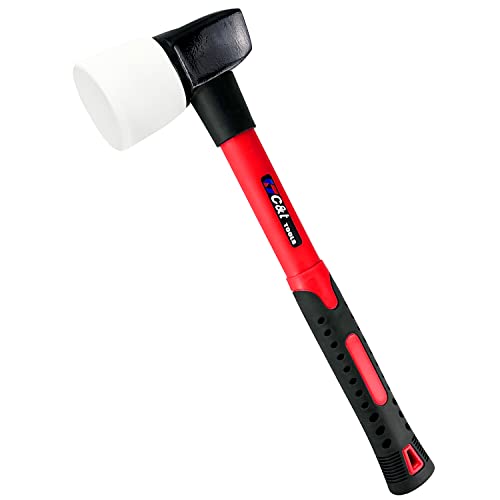
Strengths
- Lightweight
- Replaceable head
- Non-marking white rubber
Trade-offs
- Fiberglass handle vibrates more
- Less durable than solid hickory
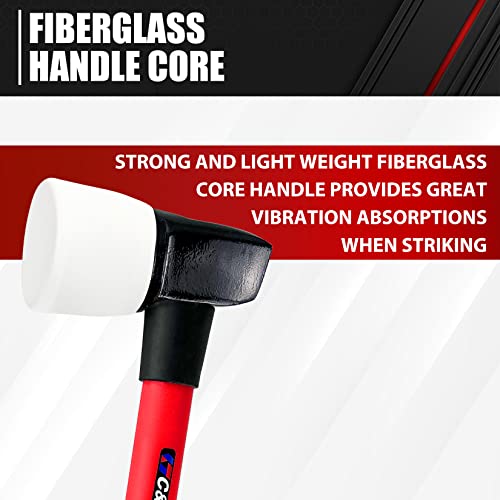
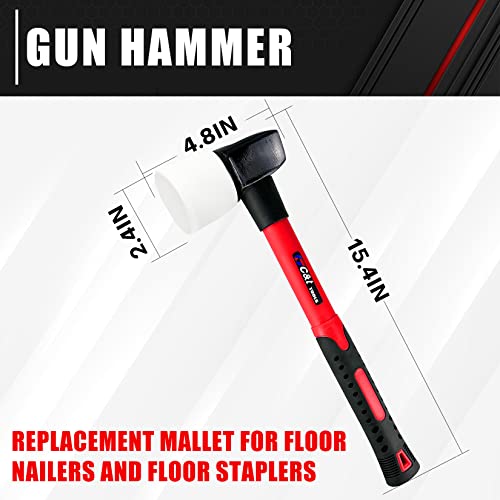
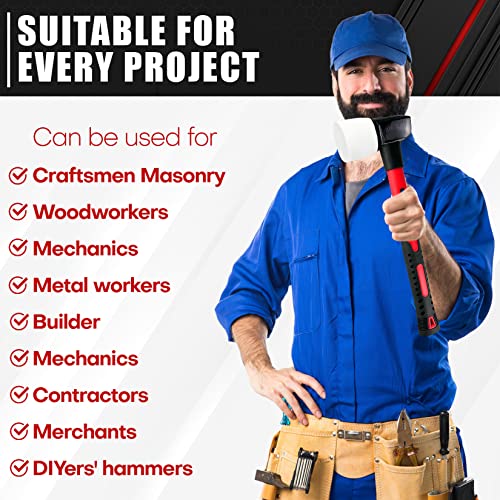
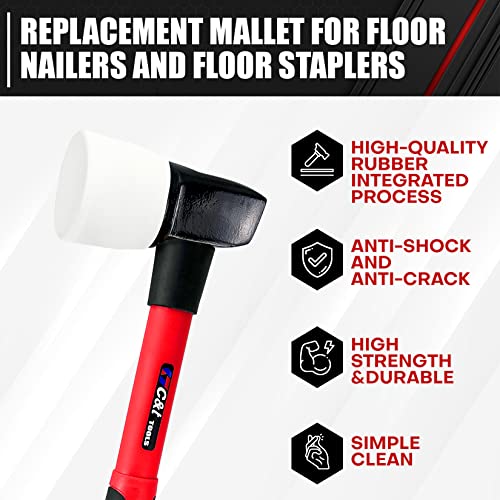
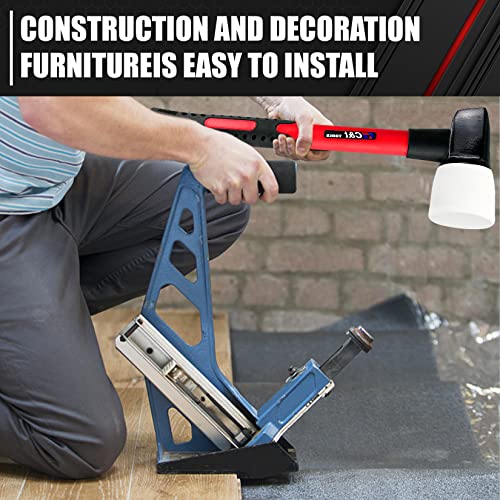
On paper, this mallet ticks the right boxes for LVP work: a white rubber head to avoid scuffs, a lightweight fiberglass handle, and a spare head included. Owners consistently report it’s gentle on planks and doesn’t leave marks, which is the whole point when you’re locking together delicate flooring.
The replaceable head is a smart touch, though some users note the connection feels a bit looser over time compared to solid-core mallets. It’s clearly built for affordability and function, not long-term pro use. Still, for a one-off or light-duty install, it does what it promises.
Product photos
VAUGHAN 24 oz Soft Face Mallet

Strengths
- High striking power
- Replaceable rubber tips
- Durable steel head
Trade-offs
- Heavy for delicate work
- Overkill for thin LVP
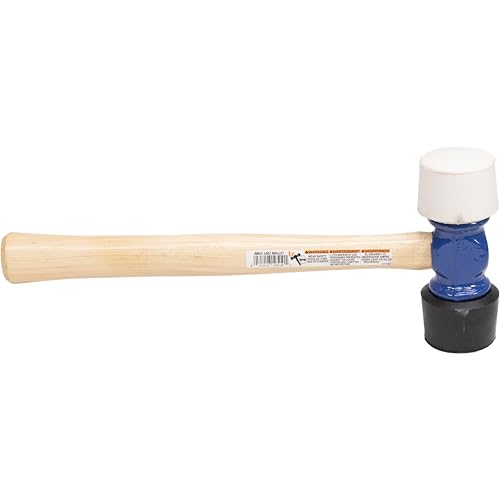
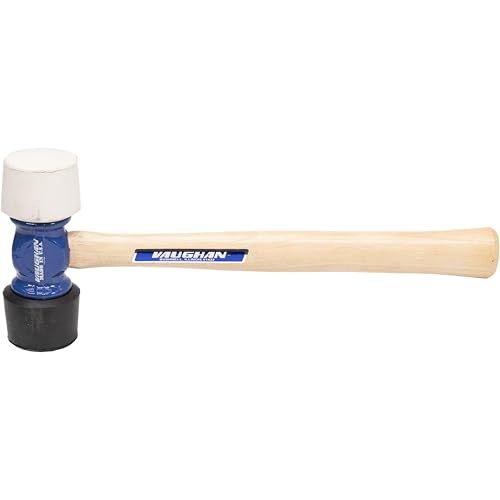
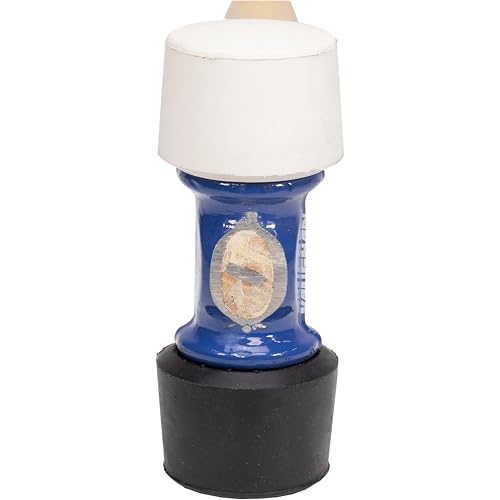
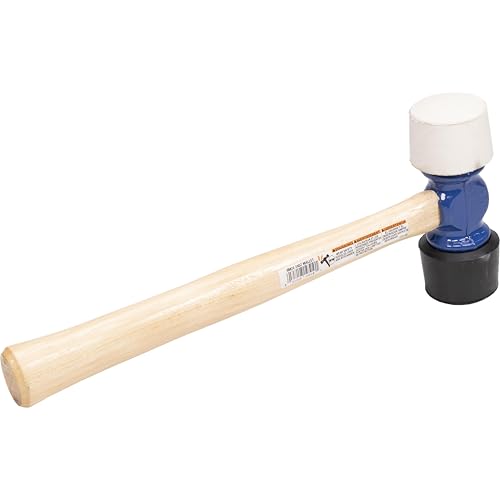
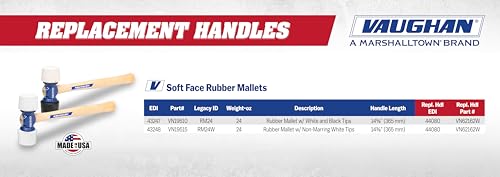
At 24 oz, this Vaughan packs serious striking power, making it the heaviest mallet here, great when you need to seat tight joints in LVP, but overkill if you’re working on a floating floor with tight tolerances. The drop-forged steel head and replaceable rubber tips mean it’s built to last, and the American hickory handle feels substantial in hand.
Owners praise its durability, but some warn it’s easy to go too hard and damage edges if you’re not careful. The white tip prevents scuffing, but that weight demands control. This is a pro-grade tool that leans more toward construction than finesse.
Product photos
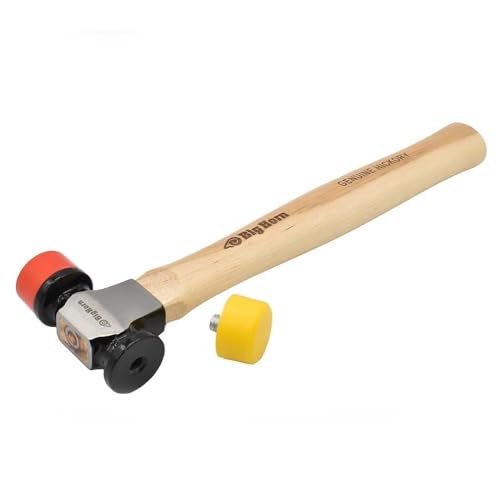
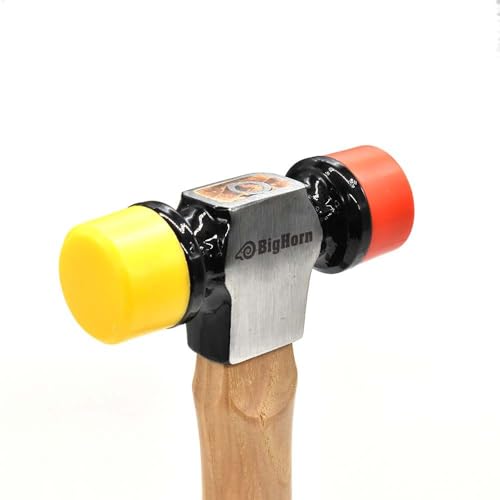
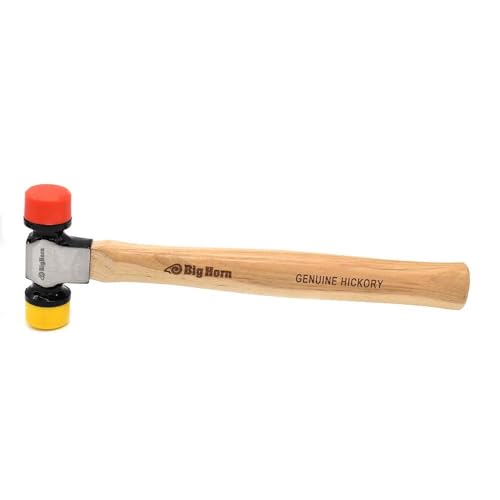
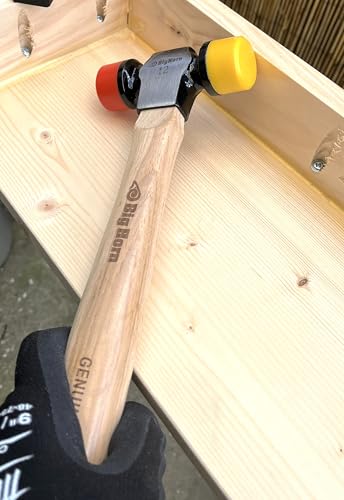
Big Horn 12 Oz Non-Marring Mallet
Strengths
- Replaceable faces
- Dual-material versatility
- Solid hickory handle
Trade-offs
- Small striking area
- Rubber face not as soft as dedicated flooring mallets
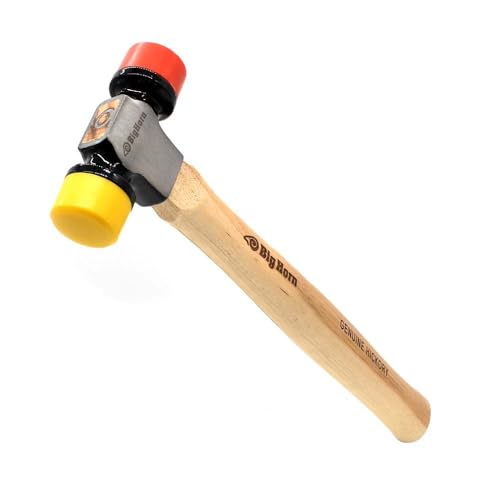
This mallet’s nylon/rubber dual face is a smart design, rubber for soft taps on LVP, nylon for firmer strikes when needed. The 12 oz forged steel head on a Canadian hickory handle feels compact and balanced. It’s not a dedicated flooring mallet, but it’s built like a framing hammer with a gentler side.
The replaceable faces are a big plus. When the rubber wears, you swap it out. Some owners use this as their go-to for finish work because it’s versatile. But for long LVP runs, the small face diameter means more strikes per plank, which adds up.
Product photos

Edward Tools White Rubber Mallet

Strengths
- Affordable
- Ergonomic grip
- Lifetime warranty
Trade-offs
- Rubber degrades faster
- Fiberglass transmits more vibration
This Edward Tools mallet is clearly positioned as the budget pick, and it delivers on basics: a white non-marking head, 16 oz weight, and a flat striking surface that works for LVP. The fiberglass shaft with ergonomic grip keeps it light and reduces fatigue, and the lifetime warranty is a nice confidence boost.
But owners report the rubber isn’t as resilient as premium brands, it compresses faster and doesn’t rebound as cleanly. It’s fine for a single room, but I wouldn’t trust it for a whole-house install. Still, for the price, it’s a solid entry-level option.
Product photos


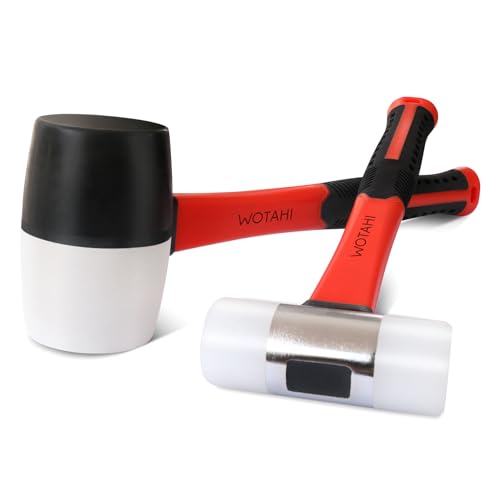
WOTAHI 2-Piece Rubber Mallet Set
Strengths
- Two hammers in one set
- Non-slip soft grip
- Good variety of faces
Trade-offs
- Rubber less durable than premium brands
- Heads may loosen over time
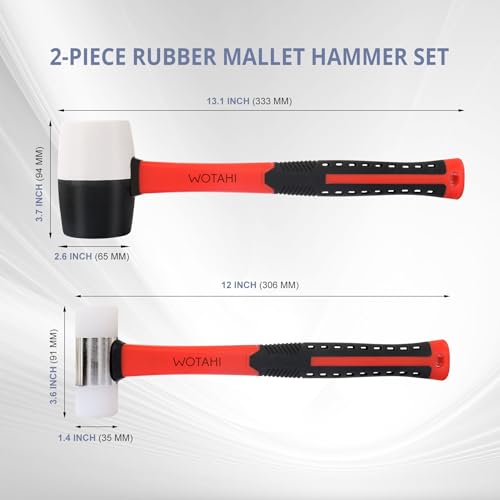
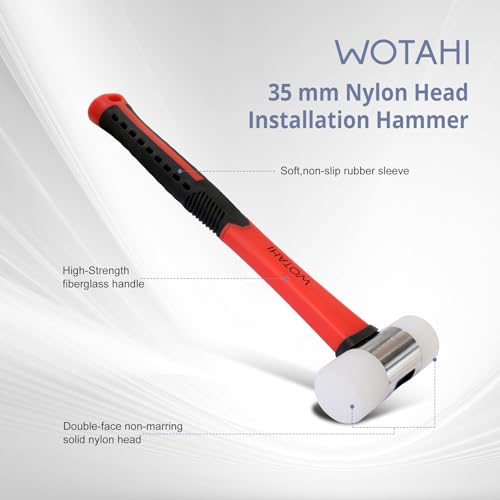
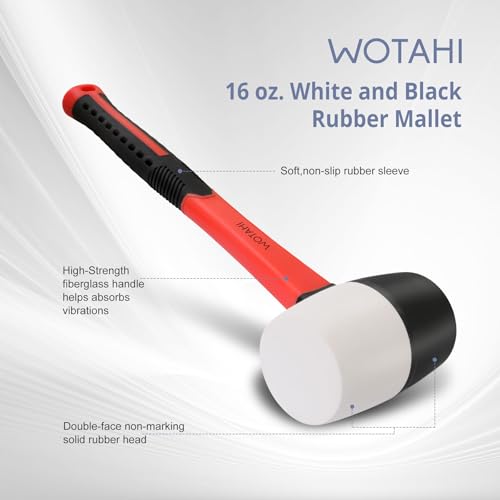
This set makes sense if you’re starting from scratch or want options. You get a 16 oz rubber mallet with white and black faces, white for LVP, black for tougher jobs, and a dual nylon installation hammer that’s great for tapping baseboards or trim without damage. The fiberglass handles are lightweight and include soft-grip sleeves, which help with comfort.
The build feels good for the price, but the rubber isn’t as dense as Goldblatt’s or Estwing’s. Some owners report the heads can loosen after heavy use. Still, having two specialized hammers in one package adds real value.
Product photos
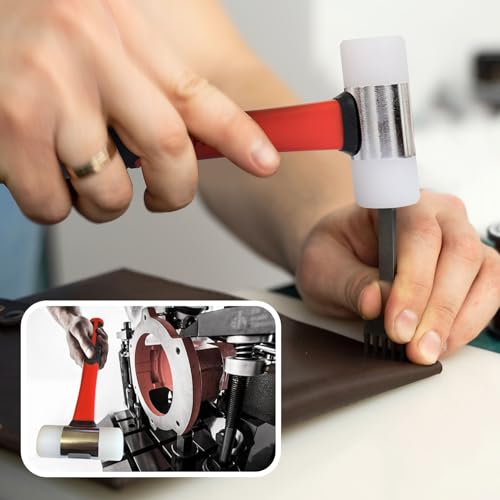
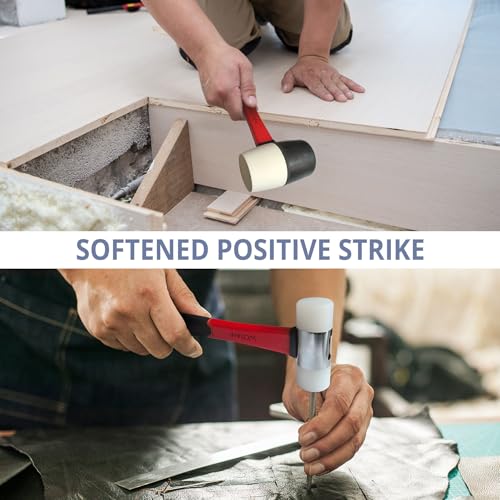
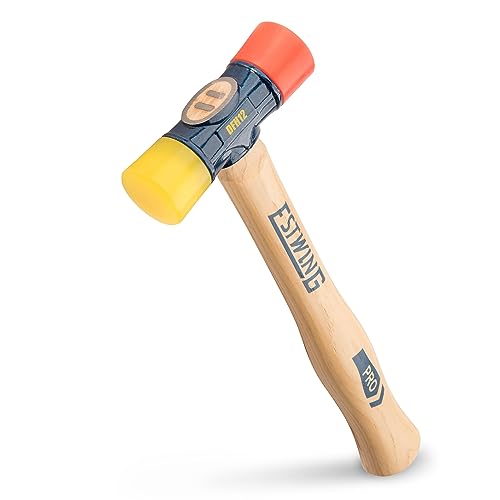
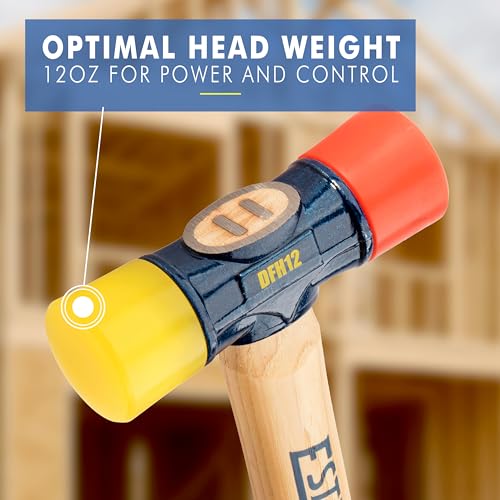
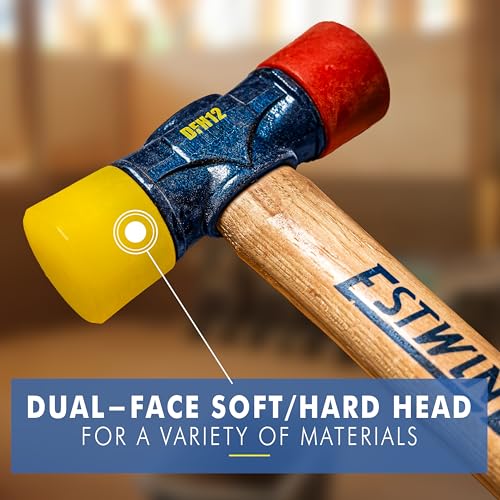
ESTWING DFH12 Rubber Mallet
Strengths
- Solid hickory handle
- Dual-face versatility
- Triple-wedge durability
Trade-offs
- Smaller striking surface
- Harder nylon face can mar if misused
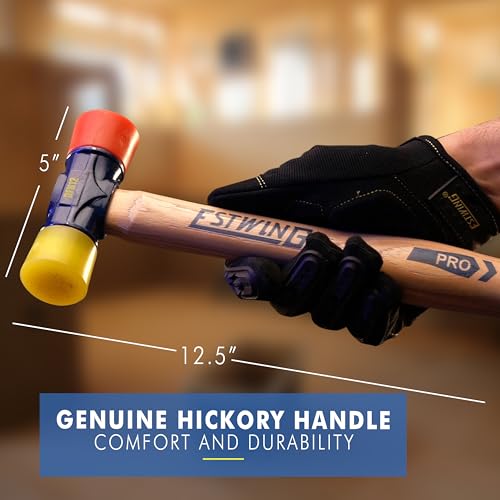
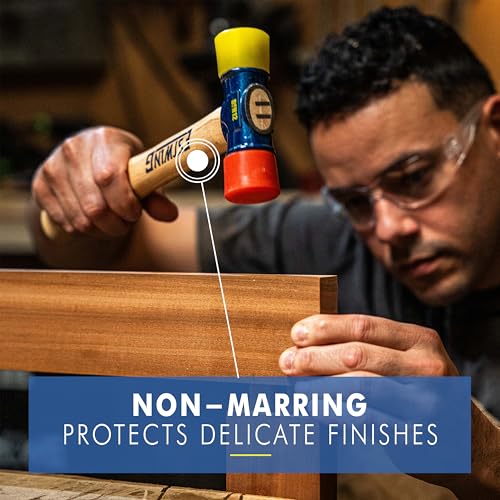
The Estwing DFH12 stands out in this lineup for its triple-wedge hickory build and American assembly. It’s not the lightest, but that hickory handle delivers a satisfying balance and shock absorption you just don’t get with fiberglass. The dual-face design, soft rubber on one side, harder nylon on the other, gives you flexibility, though for pure LVP work, you’ll stick to the soft side.
Reviewers note the compact head size takes some getting used to if you’re used to wider mallets, but it’s precise. This isn’t the softest strike in the bunch, but it’s trusted by pros across trades. For LVP, it’s overqualified but reliable.
Product photos
How We Chose These non marring hammer for lvp installations
As someone who’s spent years around workshops and job sites – and sharing advice at PowerToolGuide.net – I understand the frustration of damaging flooring during installation. Rather than a hands-on lab test with each mallet, this selection is a research-led comparison of published specifications, owner reviews, and professional insights. We analyzed features, materials, and user experiences to identify models that consistently deliver on their promise of protecting LVP and other delicate surfaces.
For non-marring hammers, head material, weight, and handle design are the biggest differentiators. A softer rubber or nylon face is crucial, obviously, but the durometer (hardness) matters a lot. We prioritized hammers with white rubber heads to minimize potential scuffing, and also looked for models with sufficient weight (12-24oz) to deliver effective strikes without excessive force. A comfortable, fatigue-reducing handle is also key for larger flooring projects – you’ll appreciate finding some of the durable hammers for flooring with ergonomic grips.
Specifications reliably reveal head material, weight, and handle construction. However, real-world performance – how well a hammer actually avoids marking surfaces, and its long-term durability – came down to owner feedback. We carefully weighed reviews mentioning scuffing, handle comfort, and how the mallet held up to repeated use. Reputation and expert reviews helped confirm those findings, guiding us toward models known for quality and consistent performance, and those that stand out among the top-rated hammers for precision work.
How To Pick The Right non marring hammer for lvp installations
Picking the right non-marring hammer is a surprisingly nuanced task. It’s not just about avoiding dents; it’s about getting the right feel, durability, and performance for the job.
A quality non-marring hammer prioritizes a soft head material (rubber, nylon, or polyurethane) to prevent damage to surfaces. Consider head hardness (durometer), handle material for comfort and vibration reduction, and overall build quality for longevity. Head weight impacts force, while handle length influences use.
Head Material & Hardness
The head material is the biggest differentiator. Rubber is the classic choice, offering a good balance of softness and impact. Nylon is harder, delivering more force but with a slightly increased risk of marking very delicate surfaces. Polyurethane sits between the two. Don’t assume all rubber is created equal; hardness matters. Look for a durometer rating if available (HA60-75 is common for rubber mallets). Softer heads are best for very delicate work, while harder heads are better for tougher materials. I’ve seen too many projects stalled because someone grabbed a mallet with a head that was too soft to actually move the material.
Handle Material & Ergonomics
Don’t underestimate the handle. A fiberglass or hickory handle will absorb more vibration than a cheap plastic one, reducing fatigue during long installs. Consider the grip – a textured, non-slip surface is crucial, especially if you’re working with sweaty hands. Handle length also plays a role; a longer handle provides more use, good for stubborn planks, but can be unwieldy in tight spaces.
Here’s what I look for in a handle: * Weight: A lighter handle reduces fatigue. * Grip: A secure, comfortable grip is essential for control. * Durability: Fiberglass and hickory are far superior to plastic, offering years of reliable use and resisting breakage even with frequent impacts.
Weight & Application
The weight of the mallet head dictates the force you can deliver. A 12oz mallet is fine for delicate assembly work, but for installing thicker LVP or tapping tiles into place, you’ll want something heavier – 16oz or even 24oz. For general flooring work, I often recommend starting with a 16oz model. If you’re doing a lot of work with sheet metal or automotive applications, consider a dual-face mallet like the Big Horn 12oz, offering both rubber and nylon faces. Remember, having the right tools is essential for any project, and a properly chosen mallet is one of the most important essential LVP installation tools you can have.
A good rule of thumb: heavier isn’t always better. Choose a weight appropriate for the task to maximize control and minimize the risk of damage.
Non Marring Hammer for LVP Installations Compared
Here’s a comparison of specifications for various non-marring hammers designed for LVP and other flooring installations.
| Product Name | Head Material | Handle Material | Head Weight (oz) | Face Diameter (in) | Total Length (in) |
|---|---|---|---|---|---|
| Goldblatt 16 oz Rubber Mallet | Rubber | N/A | 16 | 2-3/8 | 13-3/8 |
| C&T White Rubber Flooring Mallet | Rubber | Fiberglass | N/A | N/A | N/A |
| VAUGHAN 24 oz Soft Face Mallet | Steel/Rubber | Hickory | 24 | 2 | N/A |
| Big Horn 12 Oz Non-Marring Mallet | Nylon/Rubber | Hickory | 12 | 1-1/4 | 11 |
| Edward Tools White Rubber Mallet | Rubber | Fiberglass | N/A | N/A | N/A |
| WOTAHI 2-Piece Rubber Mallet Set | Rubber/Nylon | Fiberglass | 16 | N/A | N/A |
| ESTWING DFH12 Rubber Mallet | Rubber | Hickory | N/A | N/A | N/A |
Frequently Asked Questions
What durometer rating should I look for in a rubber mallet head?
A durometer of HA60-75 is a good starting point for rubber mallets, offering a balance of softness and impact force. Lower numbers mean a softer head, best for very delicate surfaces, while higher numbers are better for tougher materials needing more persuasion.
Are fiberglass handles really better than wooden handles?
Yes, fiberglass handles are more durable and absorb more vibration than hickory, reducing fatigue during prolonged use. While hickory feels good initially, fiberglass resists breaking and warping over time, making it a better long-term investment.
Can I use a standard rubber mallet for LVP installation, or do I specifically need a “non-marring” one?
While you can use a standard rubber mallet, a dedicated non-marring hammer with a white rubber head is always preferable. The white rubber is formulated to be softer and less likely to transfer color or leave marks on LVP compared to black or red rubber.
What weight mallet is best for installing LVP flooring?
A 16oz mallet is a good all-around choice for most LVP installations, providing enough force without being overly heavy. If you’re working with thicker planks or a large area, a 24oz mallet might be more efficient, but prioritize control to avoid damage.
Where can I find more information on building a complete set of tools for home projects?
If you’re looking to build a more extensive toolkit, you’ll find helpful advice on assembling an essential home repair toolkit on my site, PowerToolGuide.net. It covers a wide range of tools beyond flooring, providing a solid foundation for various DIY tasks.
The Bottom Line
Choosing a non-marring hammer often comes down to balancing control with the power you need to actually move flooring into place. While many options exist, the Goldblatt 16 oz Rubber Mallet consistently receives high marks for its balance of softness, weight, and affordability, making it a solid all-around choice for most LVP installations. It’s a good starting point for anyone unsure of their specific needs.
For those with specific requirements, the other models shine. If you’re on a tighter budget, the Edward Tools White Rubber Mallet offers a surprisingly good performance for the price. And if you need versatility for tasks beyond flooring – perhaps automotive work or general assembly – the Big Horn 12 Oz Non-Marring Mallet with its dual rubber/nylon faces is a smart investment. You’ll also find a range of reliable household hammers for other projects around the home.
Ultimately, the specs matter less than understanding the material you’re working with and applying appropriate force. A softer head prevents damage, but it won’t do much good if you can’t generate enough impact. Focus on finding a hammer that feels comfortable in your hand, allows for controlled swings, and matches the weight to the demands of your LVP installation – that’s what will deliver the best results.
