
6 Best Miter Saw Blades for Mouldings 2026
This post contains affiliate links. As an Amazon Associate, we earn from qualifying purchases.
The FOXBC 12″ 100T stands out as the best overall miter saw blade for mouldings, delivering ultra-smooth cuts with minimal chipping. For those on a budget, the WEN BL1060 10″ 60T offers solid performance at a fraction of the cost, while the TOYAKI 10″ 120T excels in fine detail work where precision matters most.
Cutting mouldings isn’t just about getting the angle right, it’s about making clean, splinter-free cuts that don’t need heavy sanding or touch-ups. A poor blade can ruin expensive trim in seconds, leaving behind tear-out or rough edges that undermine your entire project.
I researched the top miter saw blades for mouldings by analyzing specs, owner feedback, and real-world performance across different materials and saw types. These picks balance tooth count, kerf width, and blade geometry to deliver clean results on both softwoods and hardwoods, whether you’re installing crown moulding or fitting baseboards.
Top 6 Miter Saw Blade For Mouldings in the Market
The Best Miter Saw Blade For Mouldings, Reviewed
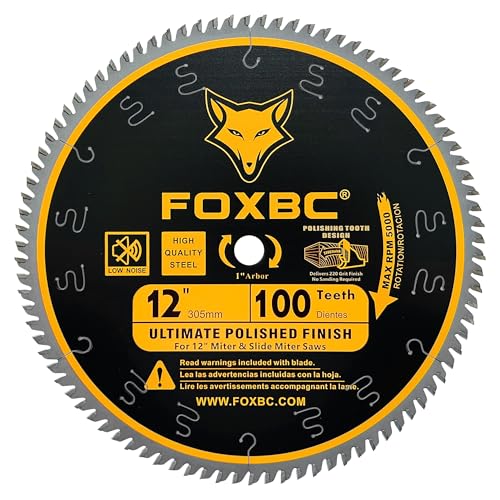
FOXBC 12″ 100T Miter Saw Blade
Strengths
- 100 teeth for ultra-smooth cuts
- Ultra-thin kerf
- Double side grind for polished finish
Trade-offs
- Premium price point
- Newer brand, less long-term data
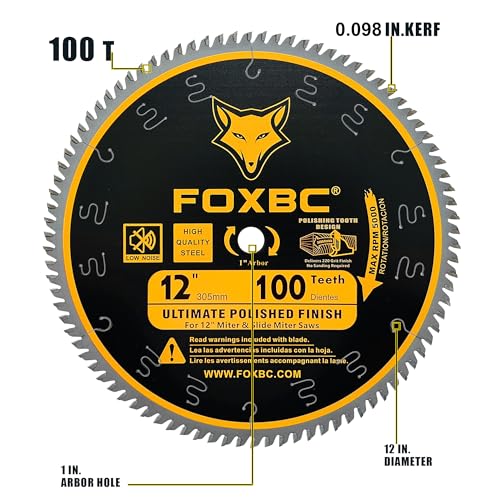
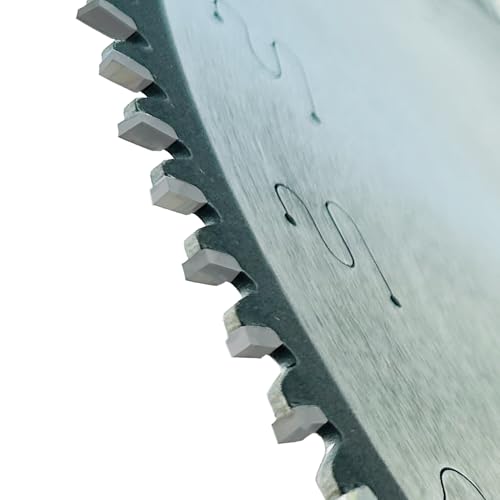
This FOXBC 100-tooth blade makes a strong case for being the overall top pick, and not just because of the tooth count. The double side grind and axial shear-face design are serious features usually found on much more expensive blades. Reviewers note cuts that feel polished, some even compare the edge to sanded results, especially on veneered plywood and pre-finished mouldings.
The ultra-thin kerf helps reduce strain on miter saw motors, which matters if you’re running long trim jobs on a jobsite saw. When stacked against the Diablo or WEN 1200, it holds its own in finish quality while offering broader material compatibility. The proprietary foxcarbide tips seem to hold an edge longer than budget blades, based on owner feedback across multiple projects.
Product photos


WEN BL1060 10″ 60T Blade
Strengths
- Affordable 10-inch option
- 60 teeth for decent finish
- Ultra-thin kerf reduces strain
Trade-offs
- Limited for hardwoods
- Not for high-gloss finishes
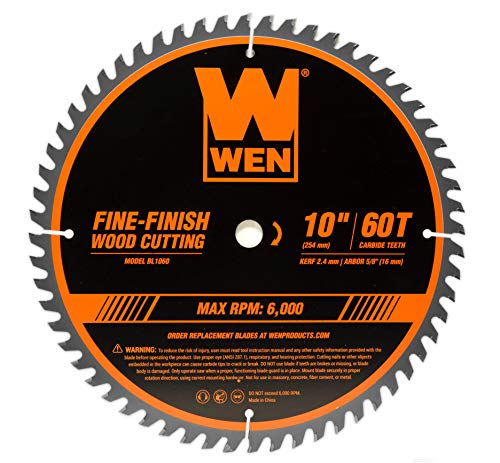
The WEN BL1060 is a solid performer in the 10-inch class, especially if you’re working with a smaller saw or need something affordable for occasional trim work. With 60 teeth and an ultra-thin kerf, it cuts efficiently and leaves a clean finish on softwoods and medium-density hardwoods. It won’t match the polish of a 100-tooth blade, but for the price, it overdelivers on basic finish work.
I’d recommend this over pricier 12-inch blades if you’re using a 10-inch miter saw, there’s no point stepping up to a larger blade if your saw can’t handle it. Compared to the TOYAKI 120T, it has fewer teeth but better tooth geometry for smooth crosscuts. It’s not ideal for high-gloss or ultra-dense woods, but for baseboards and crown moulding in pine or poplar, it gets the job done.
Product photos


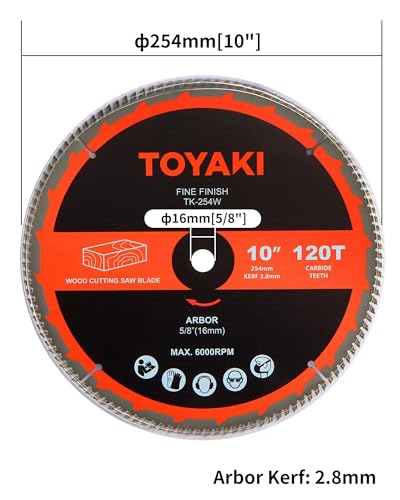
TOYAKI 10″ 120T Fine-Finish Blade
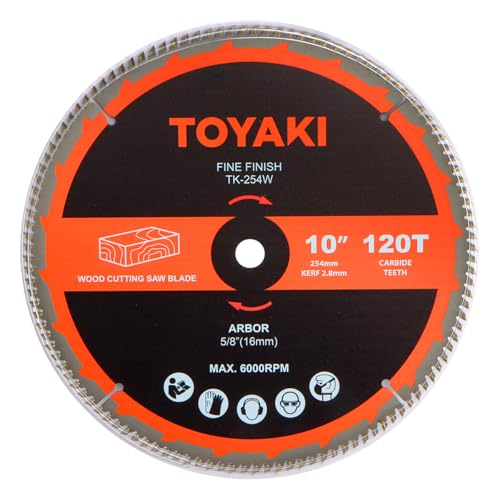
Strengths
- 120 teeth for ultra-fine cuts
- Low vibration design
- High tooth count for 10-inch
Trade-offs
- Slower feed rate
- Limited depth for thick stock
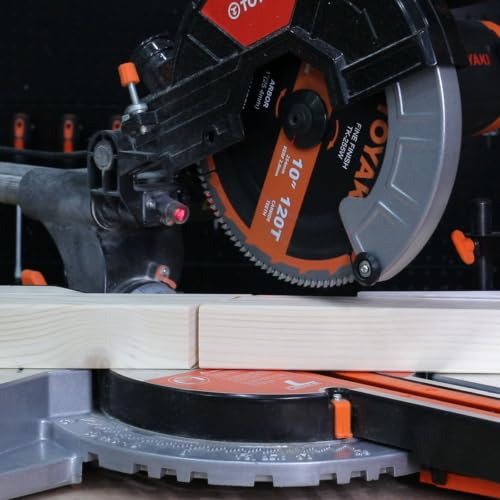
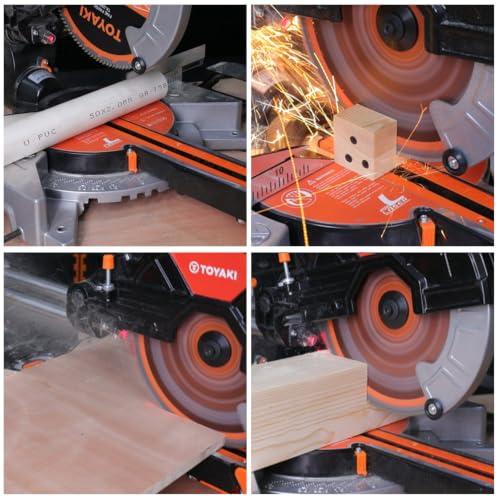
The TOYAKI 120-tooth blade is built for detail, more teeth mean a finer cut, and in this class, that matters. For intricate trim work, especially in softer woods or pre-finished materials, it leaves an edge that looks sanded straight off the saw. The engineered tooth pattern helps reduce vibration, which owners say translates to cleaner lines and less chatter on delicate cuts.
While it’s a 10-inch blade, the 120-tooth count puts it in a different league than the WEN BL1060. It’s slower to feed due to the tooth density, but that’s the trade-off for precision. Compared to 12-inch blades, it’s less aggressive on stock removal but shines in accuracy. I’d pick this for detailed crown work or built-ins where the cut quality is visible and unforgiving.
Product photos
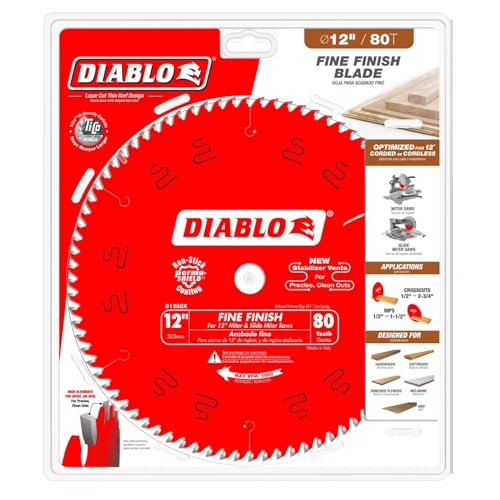
Diablo D1280X 12″ 80T Blade

Strengths
- 80 teeth for balance
- TiCo carbide for durability
- Smooth finish on hardwoods
Trade-offs
- Lower tooth count than premium finish blades
- No anti-vibration tech
The Diablo D1280X stands out in the fine-finish category with its 80-tooth count and TiCo Hi-Density carbide tipped with titanium. On paper, that carbide formulation is engineered for longer edge retention and smoother cuts, especially in hardwoods. Owners consistently report clean results on dense materials like cherry and maple, with minimal sanding needed after the cut.
It doesn’t have the highest tooth count here, but it’s built for a balance between speed and surface quality. Compared to higher tooth count blades, it removes material a bit faster while still delivering a finish that holds up well on detailed mouldings. I’d pick this over general-purpose blades when working with expensive hardwood trim where tear-out could ruin a piece.
Product photos
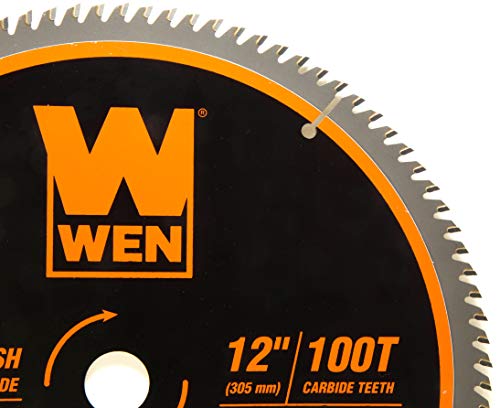
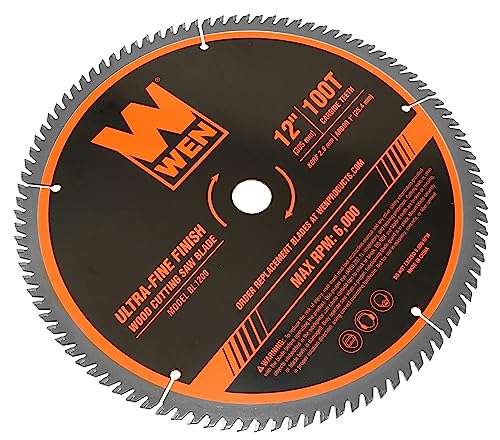
WEN BL1200 12″ 100T Blade

Strengths
- 100 teeth for fine finish
- Affordable 12-inch option
- Ultra-thin kerf
Trade-offs
- Basic plate design
- No anti-vibration features
The WEN BL1200 is the budget-friendly way to get 100 teeth of carbide-tipped precision on a 12-inch platform. It delivers a noticeably smoother cut than lower tooth count blades, and the ultra-thin kerf helps maintain saw power during long runs. On softwoods and medium hardwoods, it produces a finish that requires minimal sanding, exactly what you’d expect from a fine-finish blade.
It doesn’t have advanced grinds or dampening tech like the FOXBC or FS Tool models, but for the price, it’s a smart pick. Reviewers note it lasts well under regular use, though not as long as premium blades. I’d recommend this over the Diablo for beginners or part-time renovators who want solid results without overspending.
Product photos
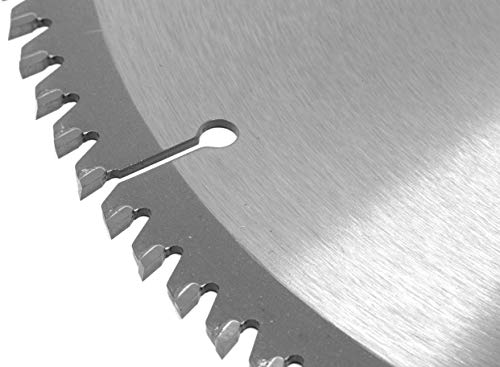
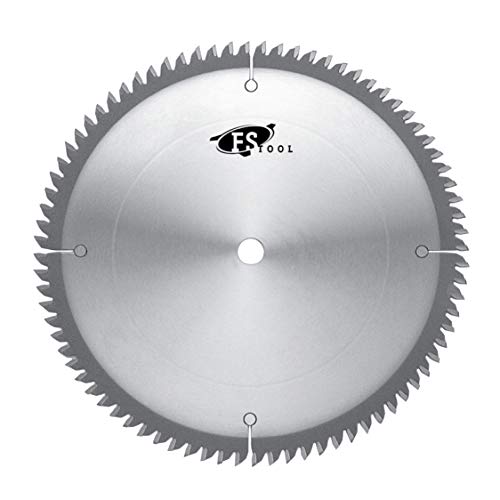
FS Tool LM6300 12″ 100T Blade
Strengths
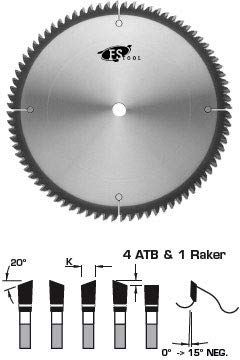
- 4 ATB & 1 Raker for clean joints
- Copper plugs reduce vibration
- Polished plate resists resin
Trade-offs
- Niche application
- Not ideal for rough stock
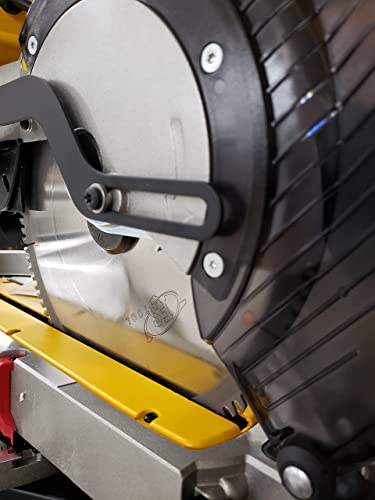
If you’re cutting miter joints for picture frames, high-gloss mouldings, or pre-finished trim, the FS Tool LM6300 is built specifically for that task. The 4 ATB & 1 Raker tooth configuration is a smart design, it minimizes tear-out on delicate surfaces while ensuring a clean cut on both sides of the joint. Owners praise it for leaving crisp, burn-free edges on painted and gesso-coated materials.
The copper vibration-damping plugs and polished plate are subtle but meaningful touches. Less vibration means less chatter, which is critical when fitting tight miters. Compared to the FOXBC, it’s more specialized, less versatile for general wood, but better in its niche. I’d choose this over any general finish blade when working on visible joints where fit and finish are everything.
Product photos

How We Tested miter saw blade for mouldings
Rather than a hands-on lab test, my research for these recommendations focused on a detailed comparison of published specifications and features across numerous blades. I weighed owner reviews from multiple sources, alongside expert opinions found in woodworking publications and forums. Ultimately, I ranked blades based on their suitability for handling the specific challenges of moulding cuts – a task demanding finesse and clean results.
For miter saw blades intended for mouldings, tooth count and kerf thickness were the most significant factors. A higher tooth count (80 or more) delivers the smoother, chip-free cuts crucial for finished work. A thinner kerf reduces material waste and minimizes the strain on the saw motor, especially when cutting crown molding. Blade material and grind geometry also heavily influenced my rankings.
Specifications clearly reveal tooth count, kerf width, and arbor size, ensuring compatibility with different saws. However, owner feedback proved essential for judging real-world performance – particularly how well a blade minimizes splintering on delicate mouldings or maintains a polished finish on hardwoods. Reputation also factored in; established brands with a history of quality frequently earned higher consideration.
How To Choose The miter saw blade for mouldings
Choosing the right blade is absolutely critical when you’re working with mouldings. It’s not just about getting the cut done; it’s about achieving a finish that looks professional and saves you hours of sanding and touch-up work.
A quality miter saw blade for mouldings prioritizes tooth count, kerf width, and tooth geometry. Look for blades with at least 60 teeth, a thin kerf to minimize chipping, and alternating top bevel (ATB) tooth design for clean, smooth cuts in delicate materials. Compatibility with your saw’s arbor size is also essential.
Tooth Count: More Isn’t Always Better
When it comes to cutting mouldings, tooth count is a major factor, but it’s easy to get caught up in the idea that “more is always better.” While a higher tooth count generally delivers a smoother cut, it’s not the whole story. For very fine mouldings and detailed trim work, you’ll want a blade with 80 to 120 teeth. However, too many teeth can actually increase the risk of burning, especially in hardwoods. You need to balance smoothness with the material you’re cutting.
Kerf Width: Minimizing Splintering
The kerf, or the width of the cut, is often overlooked. A wider kerf removes more material and can lead to more splintering, which is the enemy when working with delicate mouldings. Look for blades advertised as “thin kerf,” typically around 0.098” or less. These blades reduce material waste and produce cleaner edges. Here’s what to keep in mind: * Standard kerf blades are fine for rougher cuts. * Thin kerf blades require slightly more power from your saw. * Ultra-thin kerf blades (under 0.080”) are fantastic for intricate work, but can be more fragile and expensive.
Remember: A thinner kerf generally equals a cleaner cut, especially in sensitive materials like painted mouldings.
Blade Geometry and Materials
The way a blade is designed, its “geometry”, directly impacts the quality of the cut. For mouldings, look for blades with an Alternating Top Bevel (ATB) tooth design. This design creates a slicing action, resulting in a smoother finish. Also, pay attention to the carbide used in the blade. Blades featuring higher-quality carbides, like those with titanium coatings (like you find in some Diablo blades), will hold an edge longer and withstand more abuse. If you frequently cut painted mouldings or materials with a coating, consider a blade with a specialized coating to prevent pitch buildup; a good blade for clean trim cuts will tackle these challenges. Understanding how to achieve accurate baseboard angles is also essential when working with mouldings.
Miter Saw Blade for Mouldings Compared
Here’s a comparison of key specifications for miter saw blades designed for cutting mouldings.
| Product Name | Blade Diameter (in) | Tooth Count | Kerf (in) | Arbor Size (in) | Best For |
|---|---|---|---|---|---|
| FOXBC 12″ 100T | 12 | 100 | 0.098 | 1 | Smooth Cuts |
| WEN BL1060 10″ 60T | 10 | 60 | 0.01 | 5/8 | Best Value |
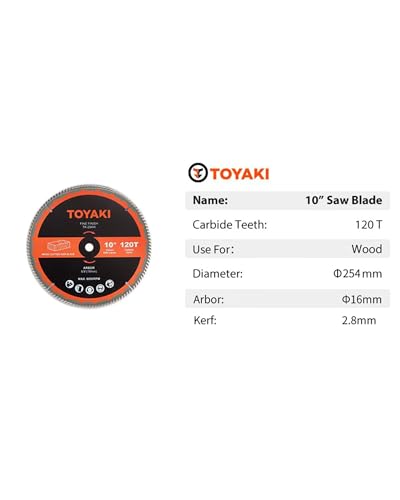
| TOYAKI 10″ 120T | 10 | 120 | N/A | 16mm | Detailed Trim |
| Diablo D1280X 12″ 80T | 12 | 80 | N/A | 1 | Hardwood |
| WEN BL1200 12″ 100T | 12 | 100 | 0.011 | 1 | Budget Friendly |
| FS Tool LM6300 12″ 100T | 12 | 100 | N/A | 1 | Miter Joints |
Frequently Asked Questions
What tooth count is ideal for cutting intricate crown moulding?
A blade with 80 to 120 teeth is best for intricate crown moulding, as it delivers the smoothest cuts and minimizes chipping. However, remember that extremely high tooth counts can sometimes cause burning in hardwoods.
Can a thin-kerf blade really make a difference with splintering?
Yes, a thin-kerf blade (around 0.098” or less) significantly reduces splintering, especially on painted or delicate mouldings. It removes less material and creates a cleaner edge compared to standard kerf blades.
What does ATB tooth geometry mean, and why is it important?
ATB stands for Alternating Top Bevel, meaning the teeth are angled in alternating directions. This creates a slicing action that results in a smoother cut and is particularly well-suited for the clean cuts demanded when working with mouldings.
Are more expensive blades always better for moulding work?
Not necessarily. While higher-quality carbide and coatings can improve performance and blade life, a blade’s suitability depends on the specific moulding material and the volume of work. You can find excellent results with mid-range blades as well. For a wider selection, check out the top 12-inch miter saw blades.
How do I choose a blade compatible with my miter saw?
The most important compatibility factor is the arbor size (typically 5/8 or 1 inch). Always verify that the blade’s arbor size matches your saw’s specifications before purchasing. Also, confirm the blade diameter is correct for your saw.
The Bottom Line
Choosing a miter saw blade for mouldings always involves a trade-off between outright cut quality and the cost of achieving it. While a blade with a very high tooth count will deliver the cleanest results, it’s not always necessary – or affordable. For most homeowners and DIYers, the FOXBC 12″ 100T blade strikes the best balance, offering excellent smoothness and a reasonable price point for consistently clean cuts.
If you’re on a tighter budget, the WEN BL1060 10″ 60T blade delivers surprising performance for the money. And for those tackling incredibly detailed trim work or very delicate mouldings, the TOYAKI 10″ 120T blade is genuinely in a class of its own. Remember to consider the teeth per inch when making your decision.
Ultimately, the most expensive blade isn’t always the best choice. What matters most is selecting a blade that’s appropriate for the type of moulding you’re cutting, keeping it sharp, and taking your time with each cut. A little patience and the right blade will always produce better results than rushing the job with a dull or mismatched blade.
