7 Best MIG, TIG & Stick Welders of 2026
This post contains affiliate links. As an Amazon Associate, we earn from qualifying purchases.
The ARCCAPTAIN MIG205MP is the best overall MIG TIG stick welder for most users, offering solid performance across all processes with reliable build quality. If you’re on a tighter budget, the YESWELDER 135A delivers solid entry-level versatility without breaking the bank. For those needing serious power and professional-grade features, the ESAB Rebel EMP 205ic AC/DC stands out as the top high-end choice.
Most people shopping for a MIG TIG stick welder aren’t just looking for a tool, they’re looking for flexibility. The real challenge isn’t finding a machine that claims to do it all, but one that actually performs well across processes without sacrificing reliability or ease of use.
This guide cuts through the noise by focusing on real-world specs, owner experiences, and what actually matters when you’re standing in your garage or on a jobsite. I looked at amperage, duty cycle, process quality, and build factors to find models that deliver where it counts.
Top 7 Mig Tig Stick Welders in the Market
The Best Mig Tig Stick Welders, Reviewed
ARCCAPTAIN MIG205MP 9-in-1 Welder

Strengths
- 9-in-1 functionality
- Plasma cutter included
- APP control and memory
- Dual voltage
- Advanced parameter tuning
Trade-offs
- App dependency for full features
- Spool gun sold separately
- Cooling fans can be noisy
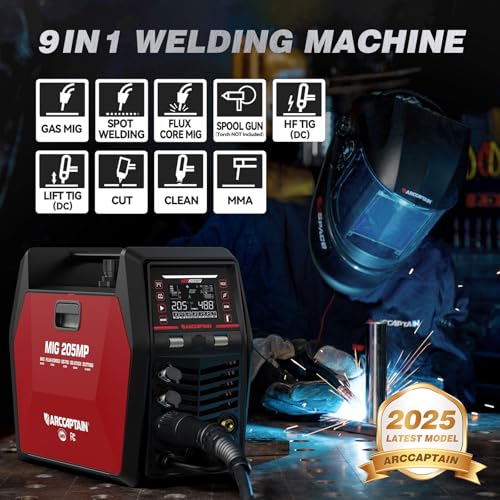
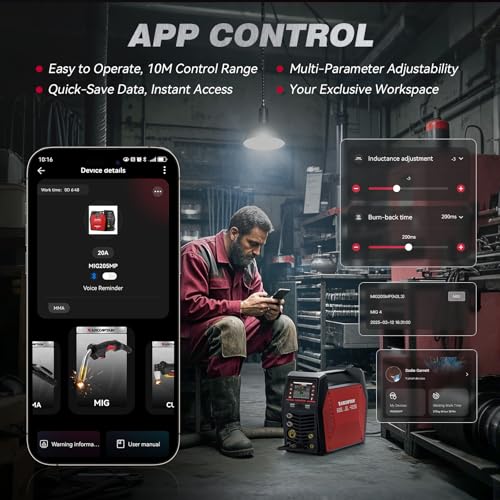
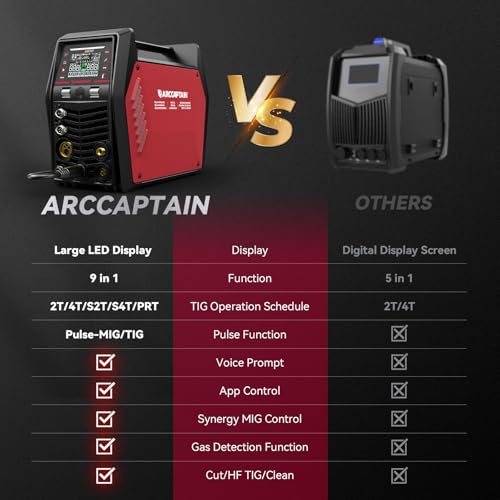
This is the most feature-packed unit on the list, and for the right user, that versatility is worth its weight in saved trips to the shop. The 9-in-1 functionality includes a plasma cutter, rare in this category, and the ability to switch between dual voltages adds serious job-site flexibility. The iControl app is a standout; while some might dismiss it as gimmicky, owners report it’s actually useful for saving custom profiles and troubleshooting via the integrated FAQ system.
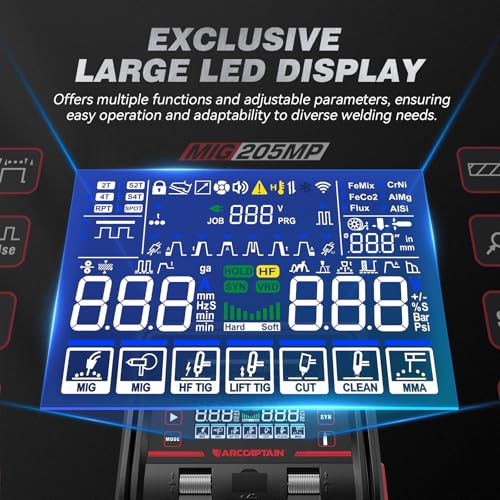
The large LED display and smart parameter matching make it surprisingly accessible for beginners, yet advanced users can tweak inductance, pulse settings, and arc force to fine-tune performance. It’s not quite as refined as the ESAB in pure TIG work, but it covers more ground overall. Compared to the YESWELDER MCT-520, it offers similar cutting capability but adds app control and more welding modes. For someone who wants one machine to do it all, weld, cut, and adapt to different materials, this is the most complete package.
Product photos

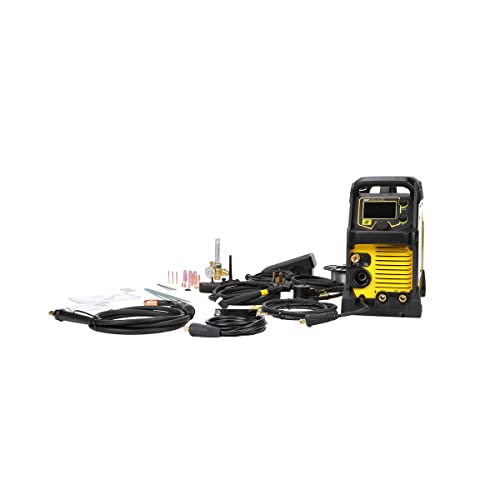
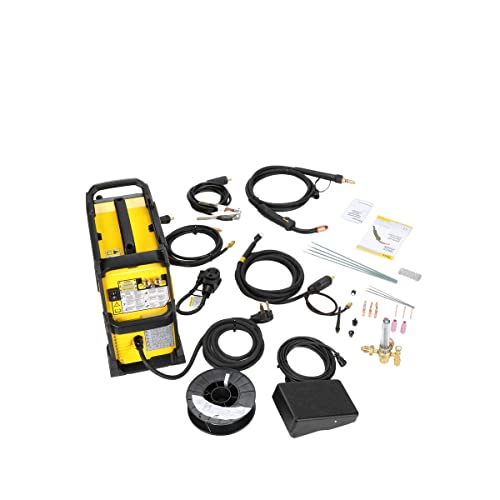
ESAB Rebel EMP 205ic AC/DC

Strengths
- True AC/DC TIG
- sMIG smart arc tech
- Excellent portability
- Programmable memory
- Robust industrial build
Trade-offs
- High price point
- No included spool gun
- Limited voltage options
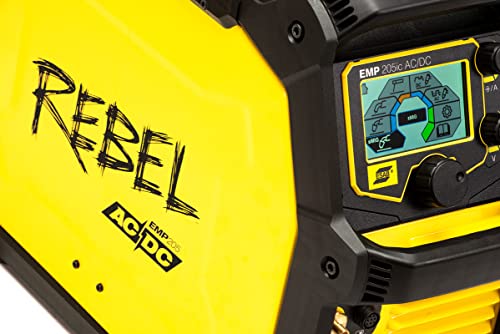
This is the kind of welder that makes you understand why pros pay a premium. On paper, the Rebel EMP 205ic stands out with true AC/DC TIG capability, a rare feature at this weight class, and that’s a big deal if you’re working on aluminum or need precise arc control in challenging conditions. The sMIG technology isn’t just marketing fluff; owners consistently report a noticeably smoother arc, especially during long MIG runs, and it seems to help less experienced users avoid common mistakes without sacrificing control for veterans.
The TFT multilingual display and programmable memory settings add real workflow value, letting you lock in specific setups for different jobs. It’s lightweight for its class at 49 lbs, but it’s the build quality and industrial-grade features, like frequency and balance adjustment on AC TIG, that justify its reputation. Compared to the Everlast Thunder 215, this one is more refined and capable in AC TIG, but you’ll pay for that precision. If you need top-tier performance across all processes, especially in field or mobile work, this is a machine built to deliver.
Product photos


ARCCAPTAIN MIG Welder 200Amp
Strengths
- 200A output
- Dual voltage support
- Synergic MIG control
- Large LED display
- 10 preset memory groups
Trade-offs
- Lift TIG only
- Spool gun not included
- Rollers for some wires sold separately
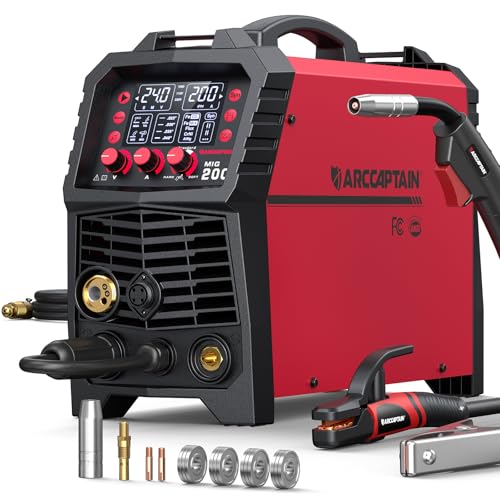
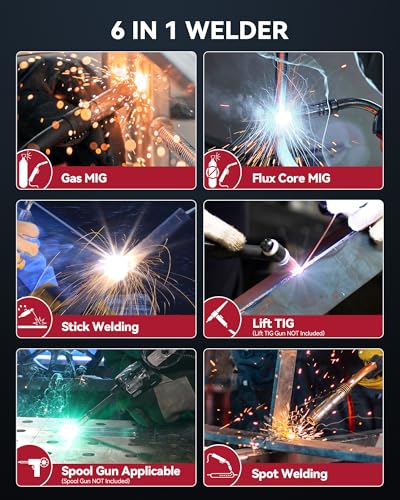
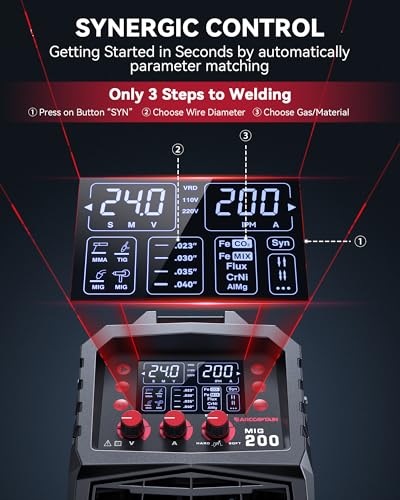
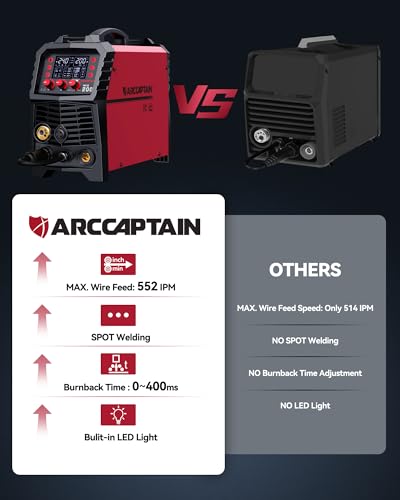
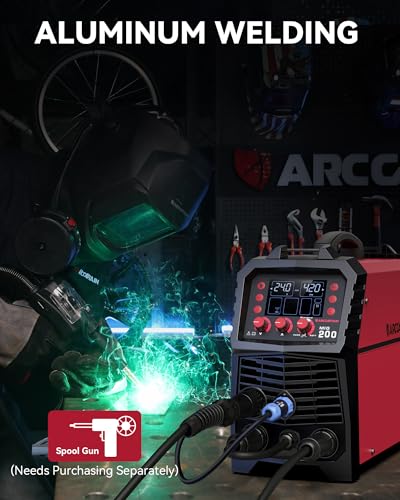
This ARCCAPTAIN model is a strong value play, it gives you 200A output, dual voltage, and six welding modes without the bells and whistles that inflate prices. The synergic control makes MIG setup simple, and the large LED display is easy to read even with a helmet on, which is a small but meaningful detail. It handles aluminum with a spool gun (sold separately), and the burn-back and pre/post flow adjustments help reduce waste and improve weld quality.
It doesn’t have app control or a plasma cutter like its bigger sibling, but it’s more than capable for most home and shop use. Owners report solid performance on MIG and Stick, though TIG is limited to DC Lift start, fine for casual use but not ideal for precision work. Compared to the YESWELDER 135A, it’s significantly more powerful and versatile, making it the smarter long-term buy if your projects are scaling up. For the price, it’s hard to find a better balance of features and output.
Product photos
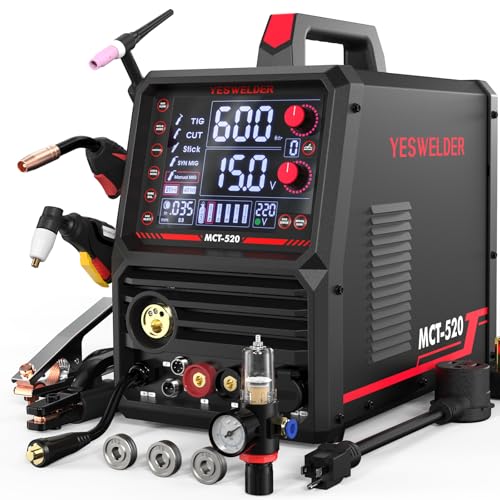
YESWELDER MCT-520 6-in-1 Combo
Strengths
- High-quality plasma cutter
- Large glove-friendly display
- Precise parameter control
- Foot-pedal compatible
- 2-year warranty with USA support
Trade-offs
- No built-in spool gun
- Heavy for portability
- TIG foot pedal sold separately
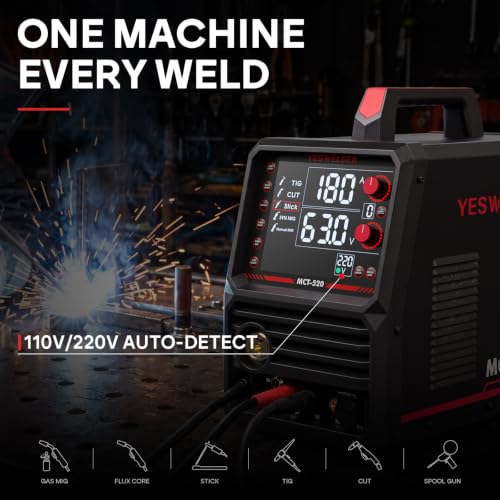
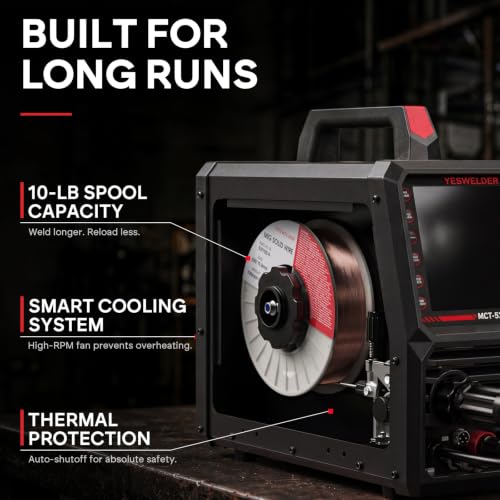
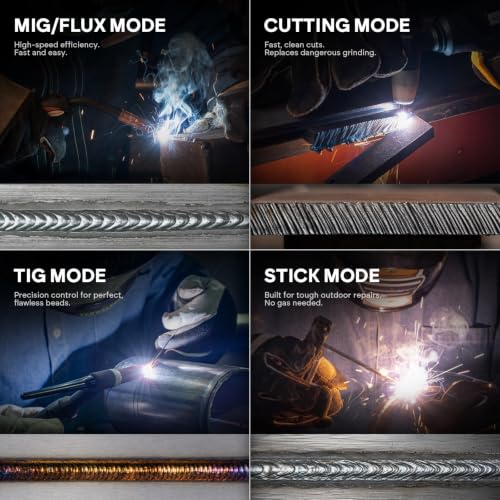
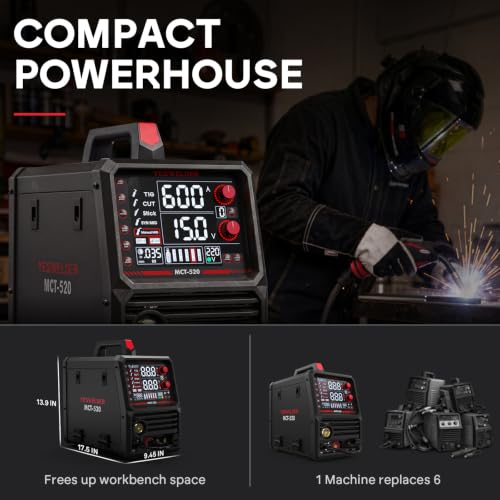
If you want pro-level cutting and welding without buying two machines, the MCT-520 is hard to beat. It delivers a clean 5/16-inch plasma cut and handles 200A welding across MIG, TIG, and Stick, serious power for a combo unit. The 7-inch LED display is glove-friendly and easy to read, which matters when you’re in the middle of a job and can’t fumble with tiny buttons. Physical dials beat touchscreens any day in a dirty shop.
Owners appreciate the step-by-step video guides and the fact that it’s field-tested by pros, that builds trust. The smart parameter matching helps beginners get decent results fast, but the real win is the granular control for experienced users: adjustable inductance, arc force, and foot-pedal-ready TIG. It doesn’t have app control like the ARCCAPTAIN MIG205MP, but many will prefer that simplicity. For a shop that needs reliable cutting and solid welding in one rugged unit, this is a top contender.
Product photos

Everlast THUNDER 215 200A

Strengths
- Dual voltage support
- Lightweight and portable
- Digital CC/CV control
- Memory function
- Lift and HF TIG start
Trade-offs
- No AC TIG mode
- No included torch accessories
- Higher cost than entry-level
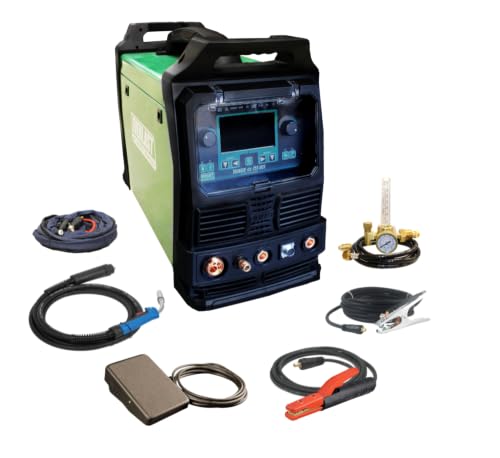
The Thunder 215 hits that sweet spot between pro capability and portability, and I’ve seen it show up regularly in mobile welding crews and motorsports shops. It’s fully digital, which means clean power delivery and consistent arc starts across Stick and TIG, a real advantage over analog units in its range. The dual voltage support makes it flexible for job sites, and the 9-memory setting function is something I’d expect on more expensive units.
Where it stands out is in usability. The panel is straightforward, and owners say it’s easy to dial in settings even with gloves on. It doesn’t offer AC TIG like the ESAB Rebel, so it’s not ideal for aluminum work in windy or tricky conditions, but for DC TIG, MIG, and Stick, it performs solidly. Compared to the YESWELDER budget options, the Thunder 215 feels more durable and precise, though you’re paying for that reliability. If you need a lightweight workhorse that won’t quit, this is one to consider.
Product photos


YESWELDER 135A MIG Welder
Strengths
- Ultra lightweight
- Synergic MIG control
- Gasless flux core capable
- Budget-friendly
- Bonus wire included
Trade-offs
- Low amperage limit
- Lift TIG requires extra torch
- Not for thick materials
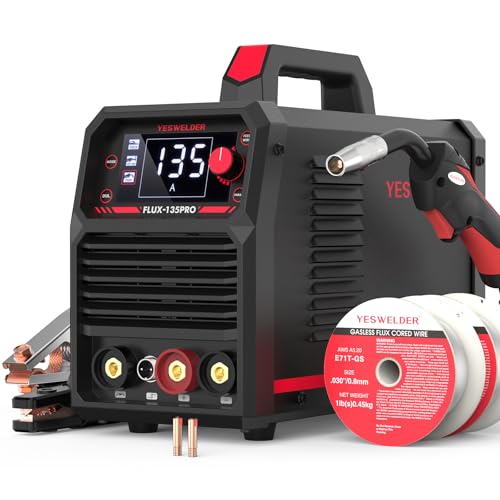
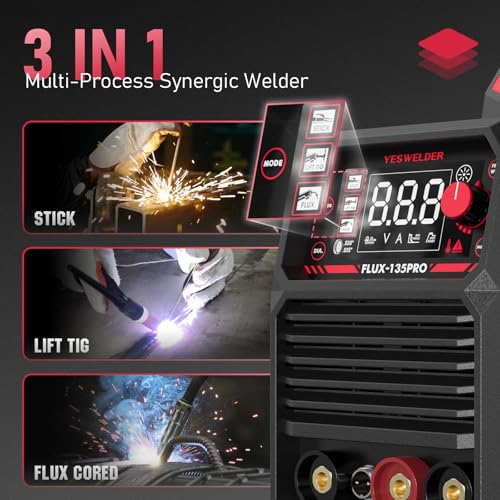
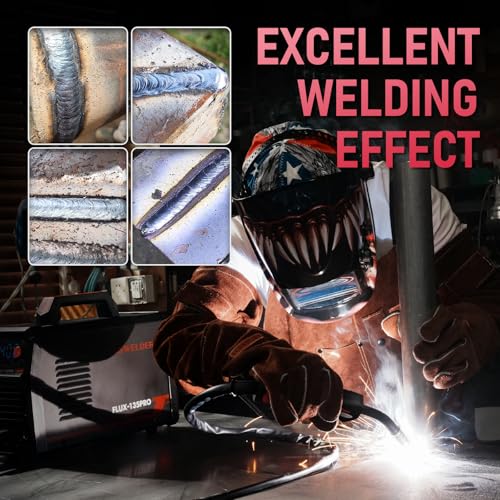
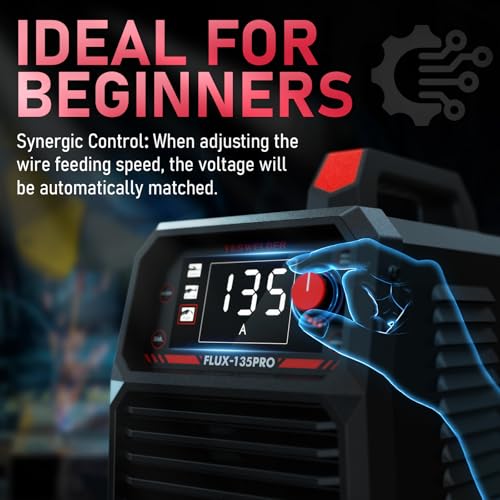
For beginners or light-duty home users, this YESWELDER punches above its weight. At just 11.4 lbs, it’s one of the most portable units in the list, and the synergic control takes a lot of the guesswork out of MIG settings, a big plus for new welders. The 135A output is modest, but it’s enough for thin steel up to about 1/8 inch, especially with flux core, which is where this machine shines since it runs gasless right out of the box.
Owners consistently praise the included flux core wire and the ease of setup, though there’s a clear ceiling on what it can handle. It supports Lift TIG and Stick, but only with add-on torches, and the performance in those modes is limited compared to dedicated machines. When stacked against the ARCCAPTAIN MIG205MP, it’s clearly less powerful and less versatile, but it’s also far more affordable. If you’re doing small repairs, garden projects, or learning the basics, this gets you started without breaking the bank.
Product photos


New Everlast THUNDER 255 275A
Strengths
- 275A high output
- Pulsed MIG and TIG
- Large color display
- Supports 12″ spools
- 5-year warranty
Trade-offs
- 240V only
- Heavy and less portable
- No AC TIG capability
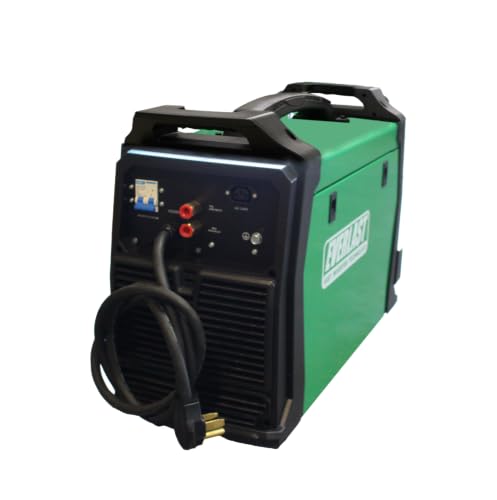
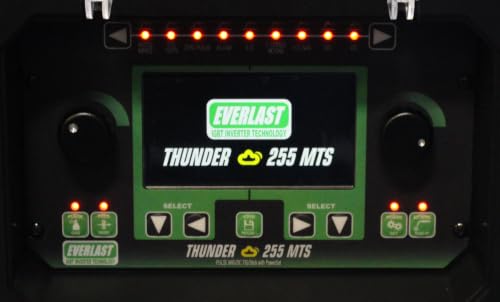
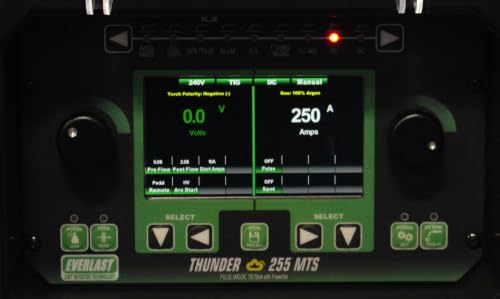
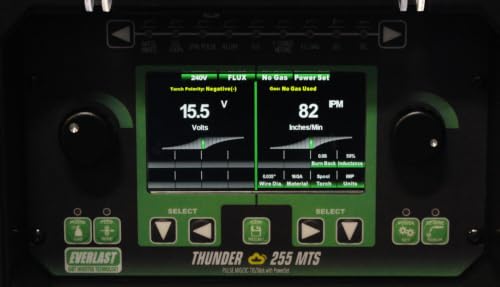
When you need raw power and industrial durability, the Thunder 255 steps up. At 275A, it’s the highest-output machine here, designed for heavy-duty fabrication and thick materials that would stall smaller units. The 4.3-inch color LCD screen makes setup intuitive, and the ability to run pulsed MIG and Pulsed TIG means you get cleaner, spatter-free welds on thin or heat-sensitive metals, a real advantage over basic machines.
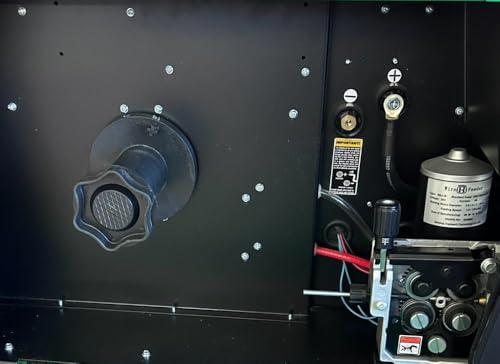
It supports both 8-inch and 12-inch spools, which cuts downtime on long jobs, and the customizable waveform and arc controls let pros tune the machine to their exact preference. It’s 240V only, so not as flexible as dual-voltage models, but that’s the trade-off for this level of performance. Compared to the ESAB Rebel 205ic, it lacks AC TIG, but it outguns it in amperage and duty cycle. If you’re welding thick steel or doing production work, this is the kind of machine that keeps up.
Product photos
How We Picked These mig tig stick welders
Rather than a hands-on lab test, my research for these recommendations involved a detailed comparison of published specifications and features across numerous models. I weighed owner reviews from major retailers alongside expert opinions found in industry publications and welding forums. This approach allowed me to build a ranking based on real-world feedback and technical capabilities, focusing on what matters most to a range of users.
For this category, the primary factors dictating my choices were versatility – the number of processes a machine handles well – and amperage output relative to its price point. A welder capable of handling MIG, TIG, and stick processes offers the broadest appeal, while sufficient amperage is crucial for tackling thicker materials. Portability and ease of use also played a significant role, particularly when considering models aimed at hobbyists or those needing to move their welder frequently.
Specifications reliably indicate a machine’s maximum output and duty cycle, providing a baseline for its capabilities. However, I placed greater emphasis on owner feedback regarding arc stability, ease of setup, and long-term reliability. Reputation within the welding community, as reflected in expert MIG welder reviews, also heavily influenced my assessment, helping to separate marketing claims from genuine performance. Finding the top MIG welding machines involved balancing these factors.
How To Choose The mig tig stick welders
Picking the right machine can feel overwhelming, but focusing on your needs will narrow the field considerably.
A good MIG TIG welder balances power with usability. Key specs include amperage output (matching material thickness), process versatility (MIG, TIG, Stick), duty cycle (how long it can weld continuously), and ease of use features like synergic control and digital displays. Portability and included accessories are also significant considerations, especially for field work.
Amperage and Material Thickness
Too many people jump straight to features and overlook the core requirement: can this welder handle your projects? A 135-amp machine like the YESWELDER 135A is fine for thin sheet metal and auto body repair, but you’ll quickly run into limitations with thicker steel. Conversely, a 275-amp machine like the New Everlast THUNDER 255 275A is overkill for hobbyist work and adds unnecessary cost and weight. Consider the thickest material you realistically plan to weld and choose a welder with an amperage output that provides sufficient penetration. Don’t forget to check the manufacturer’s recommendations for compatible wire and electrode sizes.
Process Versatility and Control
While many welders advertise themselves as “multi-process,” the quality of each process can vary significantly. Some machines, like the ESAB Rebel EMP 205ic AC/DC, excel across all modes (MIG, Flux-Cored, Stick, DC TIG, AC TIG), offering professional-grade features in each. Others prioritize one process over others. If you anticipate needing AC TIG for aluminum, confirm the welder supports it and has the necessary controls (balance, frequency, pulse). Synergic control, found in models like the ARCCAPTAIN MIG Welder 200Amp, simplifies setup for beginners by automatically adjusting parameters, but experienced welders will appreciate the granular control offered by machines like the YESWELDER MCT-520 6-in-1 Combo.
- A basic Stick welder will get you started, but MIG offers faster travel speeds and cleaner welds.
- TIG is essential for precise work on thin materials and aluminum, but requires more skill.
- Having a plasma cutter integrated, as with the YESWELDER MCT-520, can be a huge time-saver – especially if you’re also fabricating.
A welder that adapts to your skill level is more valuable than one packed with features you won’t use.
Value, Portability, and Features
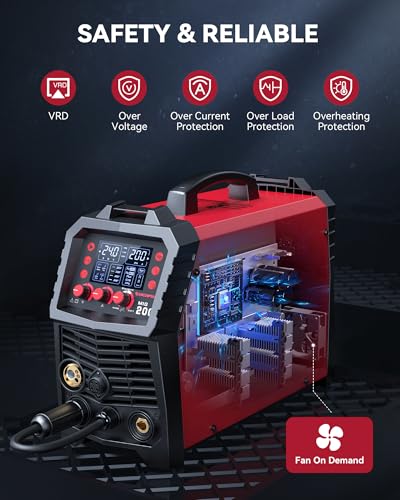
The price range for MIG TIG welders is enormous. The ARCCAPTAIN MIG205MP 9-in-1 Welder attempts to pack a lot of capability into a single unit, but sometimes, simpler is better. Consider what features you genuinely need versus those that are marketing hype. App control, while novel, isn’t essential for many users. A large, clear display, robust safety features (overload protection, VRD), and a reasonable duty cycle are more important. For jobsite work, portability is key; the Everlast THUNDER 215 200A’s lightweight design is a major advantage. If you’re looking for a truly versatile option, exploring versatile multi-process welders can provide a good overview. Finally, remember that finding the right combination of features often means settling on a dual-process welding machines that suits your specific needs.
MIG TIG Stick Welders Compared
Here’s a comparison of key specifications for several MIG, TIG, and stick welders.
| Product Name | MIG Amperage | TIG Amperage | Stick Amperage | Processes | Input Voltage |
|---|---|---|---|---|---|
| ARCCAPTAIN MIG205MP | 30-205A | 20-205A | 20-205A | MIG/TIG/Stick/Cut/Clean/Spot | 120V/240V |
| ESAB Rebel EMP 205ic AC/DC | N/A | N/A | N/A | MIG/TIG/Stick/Flux-Cored | N/A |
| ARCCAPTAIN MIG Welder 200Amp | 200A | N/A | N/A | MIG/Stick/TIG/Spot | 110V/220V |
| YESWELDER MCT-520 | 20-200A | N/A | N/A | MIG/TIG/Stick/Cut | N/A |
| Everlast THUNDER 215 200A | N/A | N/A | N/A | MIG/TIG/Stick | N/A |
| YESWELDER 135A | 135A | N/A | N/A | MIG/Stick/TIG | N/A |
| New Everlast THUNDER 255 275A | N/A | N/A | N/A | MIG/TIG/Stick/Flux-Cored | N/A |
Frequently Asked Questions
What input voltage do most multi-process welders require?
Many welders offer 120V/240V input, providing flexibility for use in shops with different outlet configurations. However, higher-amperage machines often require a dedicated 240V circuit for optimal performance, so check the specifications carefully.
Are more expensive welders always better?
Not necessarily. While higher-priced welders often include advanced features and improved build quality, a more expensive machine isn’t beneficial if you don’t need those extras. Focus on finding a welder that meets your amperage and process requirements within your budget.
What’s the difference between synergic and non-synergic control?
Synergic control automatically adjusts welding parameters based on material thickness and wire type, simplifying the process for beginners. Non-synergic control requires manual adjustment of settings like voltage and wire feed speed, providing greater control for experienced welders.
How important is duty cycle when choosing a welder?
Duty cycle is crucial, especially for extended welding projects. It indicates how long a welder can operate at a given amperage before needing to cool down. A higher duty cycle means less downtime, but it generally comes with a higher price tag.
Where can I find more information on dedicated stick welding options?
If you primarily need to weld with stick electrodes, exploring top-performing stick welders can help you find machines specifically optimized for that process, potentially saving money and space compared to a multi-process unit.
The Bottom Line
Choosing a MIG, TIG, and stick welder always involves a trade-off between having all the bells and whistles and keeping things simple and affordable. For most users, the sheer versatility and solid performance of the ARCCAPTAIN MIG205MP 9-in-1 Welder strike the best balance. It provides a lot of capability for the money and handles a wide range of projects without being overly complicated to set up and use.
If you’re just starting out or have a limited budget, the YESWELDER 135A is a surprisingly capable machine. For those who need professional-grade performance across all processes, particularly for demanding applications or aluminum work, exploring premium TIG welding machines like the ESAB Rebel EMP 205ic AC/DC will be worthwhile. And if you are looking for a compact, portable option, the Everlast THUNDER 215 200A remains a strong contender.
Ultimately, the best welder isn’t the one with the highest amperage or the most features. It’s the one that fits your skill level, your typical projects, and your budget. Focus on getting a machine that provides stable arc control, reliable performance, and the processes you actually need to get the job done right.
