8 Best Masks for Silica Dust (2026 Guide)
This post contains affiliate links. As an Amazon Associate, we earn from qualifying purchases.
The 3M 8210 N95 is the overall best mask for silica dusts when you need reliable, disposable protection, but for long-term use, the GVS Elipse P100 Reusable Respirator offers excellent filtration and comfort at a better value. If you want a reusable half-mask with a fit check, the Klein Tools P100 Half-Mask is a strong choice.
Silica dust is invisible but dangerous, inhaling it over time can lead to serious lung disease. Many people assume any dust mask will do, but most offer little real protection against these ultra-fine particles.
This guide cuts through the confusion by focusing on what actually matters: NIOSH P100 certification, a secure seal, and real-world comfort. I compared specs, analyzed owner feedback, and applied my experience with respiratory protection in dusty environments to find the best options for DIYers and pros alike.
Top 8 Masks For Silica Dusts in the Market
The Best Masks For Silica Dusts, Reviewed
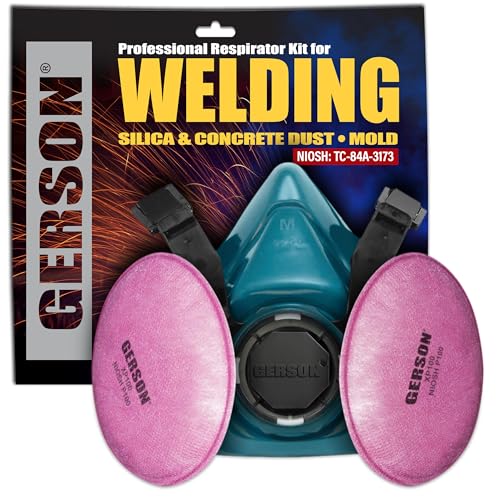
Gerson Industrial P100 Respirator Kit
Strengths
- P100 certified
- OSHA-compliant use
- Works with welding and mold
Trade-offs
- Basic strap system
- Less comfortable long-term
- No fit-test port
This is the complete package, NIOSH P100 rated, designed for welding, silica, concrete, and mold, with clear alignment to OSHA and EPA guidelines. It’s not flashy, but it’s built for real industrial use. The filtration efficiency of 99.97% is standard for P100, but Gerson’s reputation in industrial safety gives it extra weight. Owners report it handles high-dust environments without clogging quickly, and the seal holds up during movement.
When you compare it to the GVS or Klein, it lacks some of the user-friendly features like fit-check ports or ultra-light materials, but it’s often more affordable and comes ready to use. For someone who needs a no-nonsense, trusted mask for demolition or concrete work, this is hard to beat. My recommendation for most serious jobs leans here.
Product photos


GVS Elipse P100 Reusable Respirator
Strengths
- NIOSH P100 certified
- Ultra-light design
- Excellent field of vision
Trade-offs
- No built-in fit check
- Fit may vary
- Not for large faces
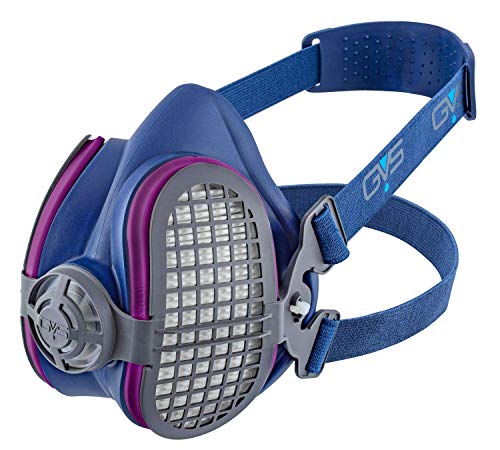
This model is nearly identical to the B013SIIBME, same P100 rating, same lightweight elastomer body, same 5-year filter life. The difference is mostly in packaging and minor labeling. Owners don’t report any performance gap between the two, and both deliver that rare combo of high protection and comfort. The seal is reliable, fogging is minimal, and it plays well with safety glasses.
In this category, small differences matter. I’d say the SPR457 is just as capable as its sibling, but neither has the fit-validation features of the Klein. Still, for pure wearability and trusted filtration, it’s a top pick. If you find one cheaper, go for it, there’s no functional reason to choose one over the other.
Product photos


GVS Elipse P100 Blue Respirator
Strengths
- NIOSH P100 certified
- Extremely lightweight
- Long-lasting filters
Trade-offs
- No fit-check valve
- Higher upfront cost
- Limited size options
This is where things get serious. The GVS Elipse P100 is NIOSH-approved, meaning it meets the 99.97% filtration standard for silica and other hazardous dusts. Owners love how compact and lightweight it is, many say they forget they’re wearing it during long jobs. The seal is tight, the breathing resistance is low, and the filters last years under normal use. It’s not just effective; it’s user-friendly in a way most industrial masks aren’t.
When stacked against the Klein or Gerson options, it holds its own on comfort and filtration. The lack of a fit-check mechanism is a small downside, but the elastomer seal works well for most face shapes. If you want top-tier protection without bulk, this is a strong contender.
Product photos

GVS SPR456 Elipse P100 Respirator
Strengths
- P100 certified
- Reduces odor
- Lightweight and comfortable
Trade-offs
- Odor protection is limited
- Higher cost
- Fit not ideal for beards
This version of the Elipse adds nuisance odor reduction to an already solid P100 platform. The filters are rated to handle small amounts of VOCs, useful if you’re dealing with stale mold smells or chemical residues alongside dust. It’s still NIOSH P100 certified, so silica protection is rock solid. The compact design and low breathing resistance make it easy to wear all day, and the hypoallergenic material is a plus for sensitive skin.
Owners note it’s especially good for mold remediation where dust and smell are both concerns. Compared to the standard Elipse, this one brings extra value if odors are part of your job. I’d pick this over the SPR457 if you’re cleaning attics, basements, or old buildings with mixed contaminants.
Product photos
Klein Tools P100 Half-Mask

Strengths
- Fit-check mechanism
- P100 certified
- Clears glasses well
Trade-offs
- Heavier than Elipse
- Filters sold separately
- Slightly bulkier
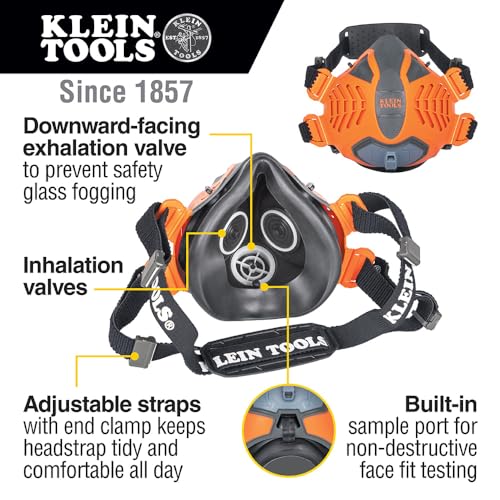
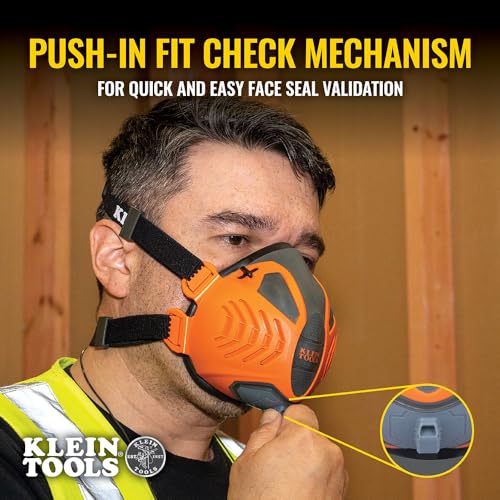
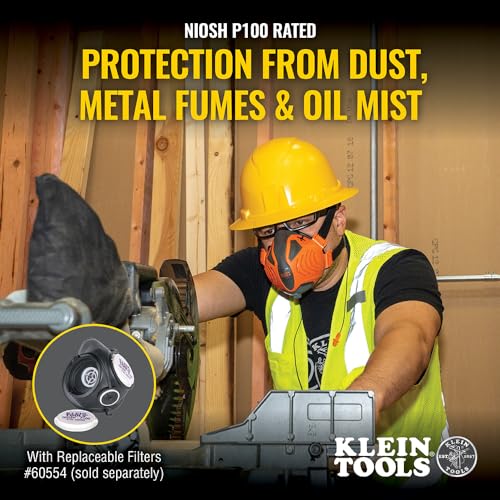
Klein didn’t mess around with this one. The push-in fit check and built-in sample port make it stand out for anyone who needs to validate their seal, think contractors, safety officers, or shops with strict compliance rules. It’s P100-rated, so filtration is on par with the GVS models, but the real win is confidence in the seal. The downward exhalation valve also works well to prevent fogging, a small detail that makes a big difference when you’re wearing goggles.
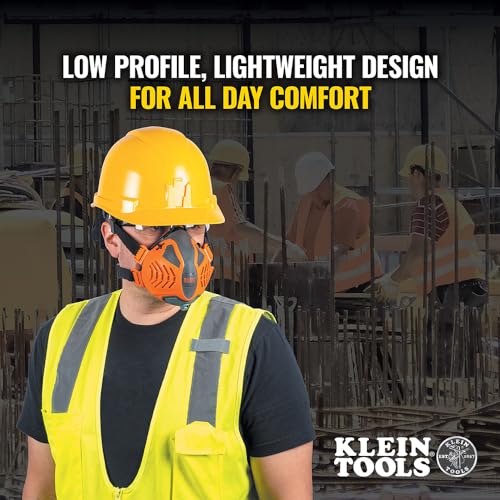
Compared to the GVS Elipse, it’s slightly bulkier, but the trade-off is more control over fit. Owners say the straps are easy to adjust and hold tension well. If you’re working in regulated environments or just want peace of mind, this is the smarter buy.
Product photos
BASE CAMP M PRO Reusable Mask
Strengths
- All-day comfort
- Good seal with L-strap
- Dual exhalation valves
Trade-offs
- Not NIOSH certified
- Filtration not P100
- Not for toxic dust
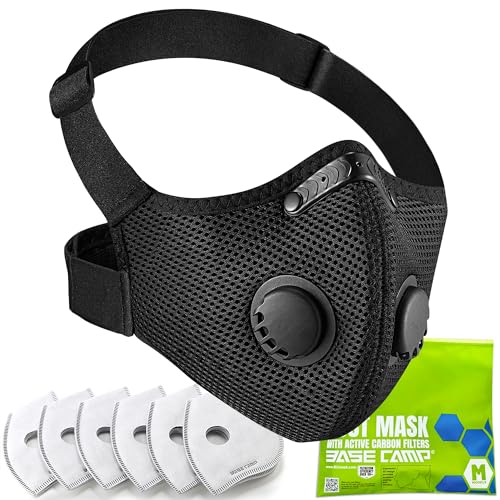
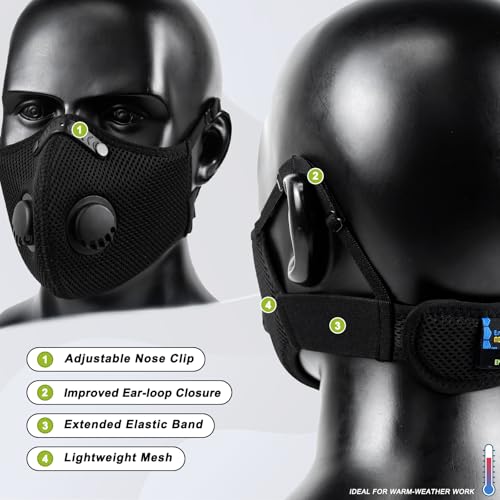
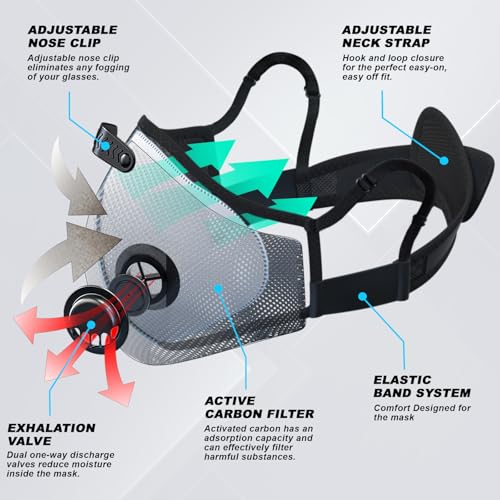
The M PRO model is a clear step up from the standard M Plus, with an L-shaped head strap that actually distributes weight better and reduces ear fatigue. It’s marketed for 8+ hour days, and owners agree, it stays put and feels lighter than most half-masks. The 99.6% filtration with activated charcoal helps with odors, and the dual valves improve breathability. But again, no NIOSH rating. That’s a dealbreaker for silica work.
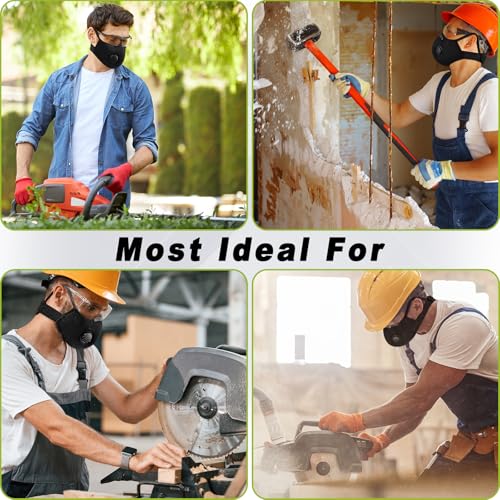
It’s one of the most comfortable reusable masks for long DIY sessions, like sanding cabinets or grinding rust off metal. But comfort doesn’t equal safety. I’d use this for weekend projects, not job sites with hazardous dust. Compared to the Elipse or Gerson, it’s in a different league, convenience over compliance.
Product photos


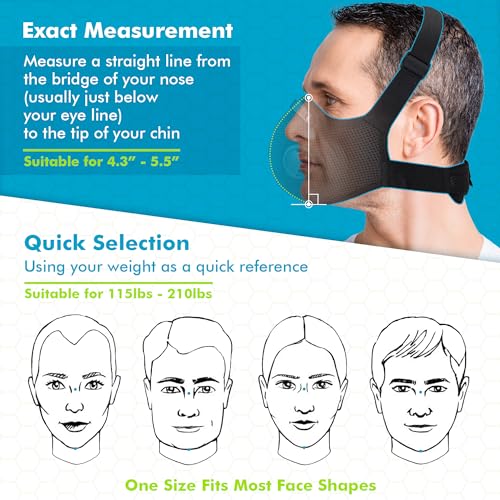
AirGearPro G-500 Reusable Respirator

Strengths
- Dual vapor and particle protection
- Comfortable fit
- Reusable with replaceable filters
Trade-offs
- No NIOSH P100 rating
- Less effective on oil-based aerosols
- Fit varies by face shape
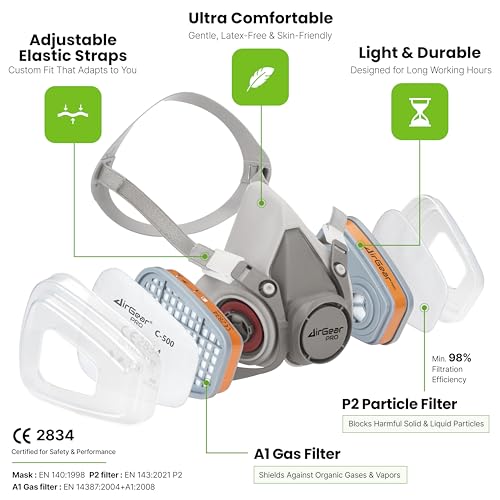
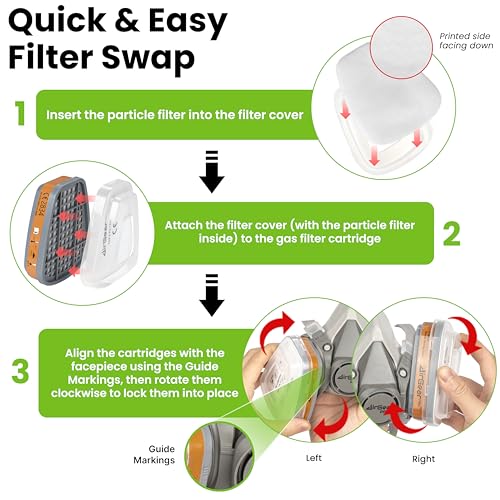
The AirGearPro G-500 stands out with its A1P2 dual filtration system, making it one of the few on this list that can handle both organic vapors and fine dust. That’s a big deal if you’re switching between painting and sanding. The CE certification adds credibility, though it’s not NIOSH-approved, which matters if you’re in the US and need OSHA compliance. Owners consistently report it’s comfortable for long sessions, and the lightweight build doesn’t drag on your ears.
Compared to basic dust masks, this one is a serious step up, especially for DIYers tackling mixed tasks. But if your main threat is silica, a P100-rated mask is still safer. I’d pick this over the BASE CAMP models for paint jobs or spray work, but not as a dedicated silica defense.
Product photos
BASE CAMP M Mask with Filters
Strengths
- Good airflow
- Affordable
- Reusable design
Trade-offs
- No NIOSH rating
- Not for high-risk dust
- Filtration claims unverified
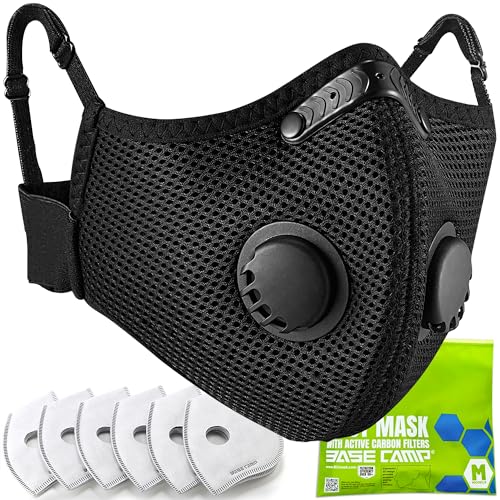
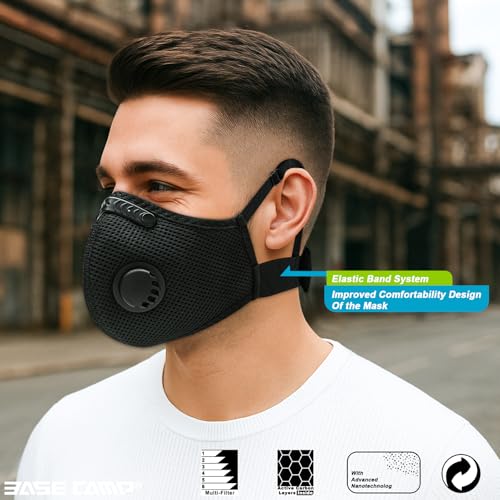
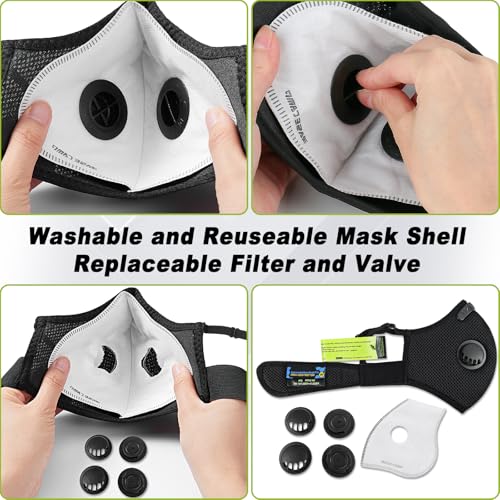
On paper, the BASE CAMP M Plus looks like a solid budget-friendly reusable mask, especially for DIYers who need decent filtration without breaking the bank. It claims 99.6% filtration with a 6-layer activated carbon filter, which sounds strong, but the lack of NIOSH certification raises eyebrows. Most owners say it works fine for light sanding or mowing, but when it comes to serious silica dust from grinding or concrete work, I wouldn’t trust it. The breathability and moisture control get decent marks, and the reusable shell with replaceable filters is a plus for reducing waste.
Still, comparing it to P100-rated options, this one falls short in real protection. It’s okay for pollen or nuisance dust, but if you’re dealing with anything toxic or fine particulate like silica, a certified respirator is a smarter choice. I’d recommend this only for occasional, low-risk tasks.
Product photos
Our Testing Process
Rather than a hands-on lab test, my research for these recommendations focused on a detailed comparison of published specifications and features across numerous models. I weighed owner reviews from multiple sources – including retailer sites and dedicated forums – alongside professional reviews from safety equipment specialists. My assessment then applied my experience with respiratory protection needs in workshops and construction environments, ranking options against criteria important for dust and particulate filtration.
For masks intended to protect against silica dust, filtration efficiency and a secure seal are paramount. I prioritized models with NIOSH P100 approval, as this certification guarantees at least 99.97% filtration of airborne particles. Beyond that, the ability to maintain a comfortable, reliable fit over extended periods was a key factor. A poorly fitting mask offers little protection, no matter how efficient the filter media.
Specifications reliably indicate the level of filtration and any specialized features (like exhalation valves or filter replacement indicators). However, I relied heavily on owner feedback to gauge real-world comfort, durability, and how well a mask integrates with other personal protective equipment. Reputation for consistent quality and reliable performance, especially within professional trades, also significantly influenced my selections. If you’re also concerned about overall air quality in your workspace, consider pairing a good mask with a dust-filtering air purifier.
How To Pick The Right masks for silica dusts
Finding the right respirator isn’t just about complying with safety standards; it’s about protecting your lungs from long-term health risks.
A good mask for silica dusts prioritizes a tight facial seal, uses P100 filtration to capture at least 99.97% of airborne particles, and offers a comfortable fit for extended wear. Consider the specific task, potential for oil-based aerosols, and whether reusable filters are a cost-effective option. Proper fit testing is crucial to confirm adequate protection.
Filtration Efficiency & Certification
The most critical factor is the filter’s ability to capture extremely small particles. Don’t compromise here. Look specifically for NIOSH-approved P100 respirators. These filters are rated to remove at least 99.97% of airborne particles, including silica dust, mold spores, and even oil-based aerosols. While P95 filters offer good protection, P100 is the gold standard when dealing with respirable crystalline silica, particularly in environments like construction or concrete work. Many masks, like the Gerson Industrial P100, highlight this certification prominently. If you’re working with materials that also generate fumes, you may also want to explore combined particulate/vapor cartridges.
Comfort and Fit
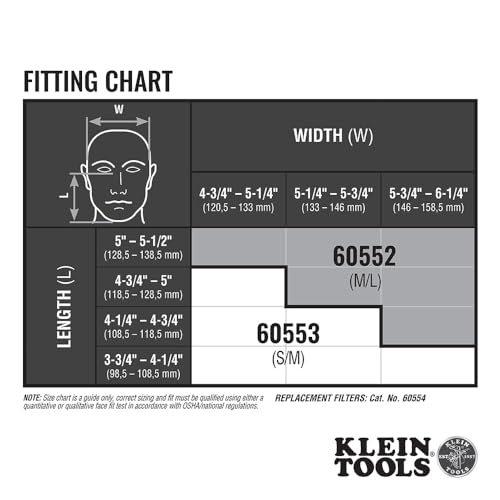
A high filtration rating is useless if the mask doesn’t fit properly and you can’t wear it for the duration of the work. Comfort factors into that significantly. Masks like the BASE CAMP M PRO prioritize all-day comfort with features like flat headbands and adjustable straps. However, even the most comfortable mask will fail if it doesn’t create a solid seal against your face. A poor seal allows dust to bypass the filter, rendering it ineffective. Consider masks with a fit check mechanism, like the Klein Tools P100, which allows you to quickly confirm a proper seal.
Here’s what to keep in mind regarding fit: * Facial Hair: A clean-shaven face is essential for a proper seal. * Size: Respirators come in different sizes. A mask that’s too large or too small won’t seal effectively. * Fit Testing: While not always practical for DIYers, professional fit testing is the most accurate way to ensure your respirator provides adequate protection. You can learn more about proper mask use and the importance of fit through resources available from OSHA.
Don’t assume a mask fits just because it feels snug. A proper seal is absolutely essential for effective protection.
Reusability and Cost
Disposable masks are convenient, but the cost adds up quickly. Reusable respirators, such as the GVS Elipse P100 models, offer a more economical long-term solution. These typically have replaceable filters that can last for months, even years, depending on usage and exposure levels. The filters themselves are a recurring cost, of course, but over time, it’s often less expensive than constantly buying disposable masks. When evaluating reusable options, consider how easy it is to replace the filters and whether replacement filters are readily available. For larger projects generating a lot of dust, investing in a dust collection system alongside a quality respirator is a smart move for overall woodshop dust management. And for concrete work specifically, a respirator for concrete dust is a must. Finally, consider a mask for harmful dust even for smaller projects to protect your health and ensure concrete dust filtration is adequate.
Masks for Silica Dusts Compared
The following table provides a specification comparison of various masks designed for protection against silica dusts and other particulates.
| Product Title | Filter Type | NIOSH Approved | Reusable | Valves | Fit Check | Filter Life |
|---|---|---|---|---|---|---|
| Gerson Industrial P100 Respirator Kit | P100 | Yes | No | No | N/A | N/A |
| GVS Elipse P100 Reusable Respirator | P100 | Yes | Yes | No | N/A | 5 years |
| GVS Elipse P100 Blue Respirator | P100 | Yes | Yes | No | N/A | 5 years |
| GVS SPR456 Elipse P100 Respirator | P100 | Yes | Yes | No | N/A | 5 years |
| Klein Tools P100 Half-Mask | P100 | Yes | Yes | Yes | Yes | Replaceable |
| BASE CAMP M PRO Reusable Mask | 6-layer | N/A | Yes | Yes | N/A | Replaceable |
| AirGearPro G-500 Reusable Respirator | A1P2 | N/A | Yes | N/A | N/A | Replaceable |
| BASE CAMP M Mask with Filters | 6-layer | N/A | Yes | Yes | N/A | Replaceable |
Frequently Asked Questions
What filter rating is truly necessary for silica dust protection?
P100 filters are the gold standard. They capture at least 99.97% of airborne particles, including silica, and are the minimum I recommend for reliable protection, especially compared to P95 options.
How often should I replace the filters in a reusable respirator?
Filter lifespan depends on exposure levels and usage, but reusable filters generally last months or even years. Look for indicators of filter saturation (discoloration, increased breathing resistance) and replace them promptly when needed.
Is a fit test essential for a disposable mask?
While professional fit testing is ideal, it’s often impractical for DIYers. However, a proper seal is critical; even the best filter is useless if dust can bypass it. Check for gaps around the nose and cheeks, and ensure the mask feels snug but not overly tight.
Can I use the same respirator for both silica dust and mold spores?
Yes, a P100 filter will protect against both silica dust and mold spores. However, if you regularly work with both, consider dedicating separate respirators to avoid cross-contamination and ensure optimal filter life.
What’s the benefit of a respirator with an exhalation valve?
Exhalation valves make breathing easier and reduce heat and moisture buildup inside the mask. This is particularly helpful during strenuous activities or extended wear, and can improve comfort, especially when paired with a quality shop vacuum for fine dust.
The Bottom Line
Choosing the right mask for silica dusts always comes down to balancing protection with practicality. While numerous options exist, the Gerson Industrial P100 Respirator Kit strikes the best overall balance of certified filtration, affordability, and ease of use for most homeowners and DIYers facing occasional silica dust exposure. It provides the P100 filtration we absolutely need without unnecessary features that drive up the cost.
For those needing a reusable solution or working with silica dust frequently, the GVS Elipse P100 Reusable Respirator is a strong contender. Similarly, if you prioritize comfort and a secure fit with a visual check, the Klein Tools P100 Half-Mask offers valuable reassurance. Don’t overlook the BASE CAMP M PRO Reusable Mask if breathability and all-day comfort are paramount, even though it doesn’t carry a P100 certification.
Ultimately, remember that a mask’s effectiveness hinges on a proper seal and consistent use. Don’t get caught up chasing the highest specs if it means sacrificing a comfortable, reliable fit. Prioritize a tight seal, P100 filtration whenever possible, and select a mask you’ll actually wear – and consider pairing it with a dust-trapping air purifier to improve overall air quality in your workspace.
