7 Best Marble Polishers of 2026
This post contains affiliate links. As an Amazon Associate, we earn from qualifying purchases.
The Antstone 860W stands out as the best overall marble polisher for its powerful motor and precise six-speed control, making it ideal for serious DIYers and pros. For those on a budget, the VEVOR 800W delivers solid performance with a full pad set and solid safety features. If you need versatility across stone types and jobs, the Makita PW5001C offers reliable variable speed in a lightweight, well-balanced design.
Most people don’t realize how much technique and tool quality affect the final shine on marble. A poor polisher can leave swirls, heat damage, or uneven spots, no matter how careful you are.
I compared specs, owner feedback, and real-world usability to find models that deliver consistent results without frustration. These picks balance power, water management, and control, so you can achieve a smooth, professional finish without guesswork.
Top 7 Marble Polishers in the Market
The Best Marble Polishers, Reviewed
Makita PW5001C 4″ Stone Polisher

Strengths
- Lightweight design
- Consistent speed under load
- Soft start motor
Trade-offs
- No included pads or kit
- Basic water attachment
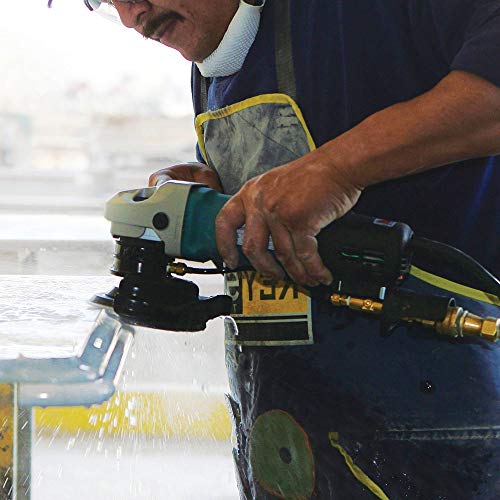
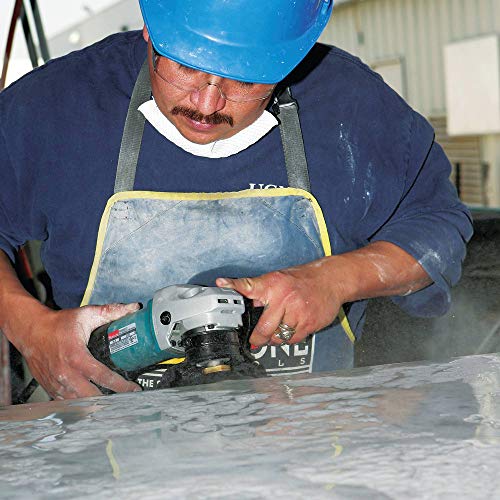
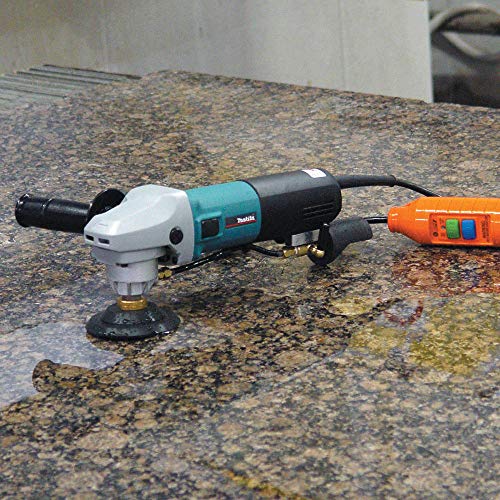
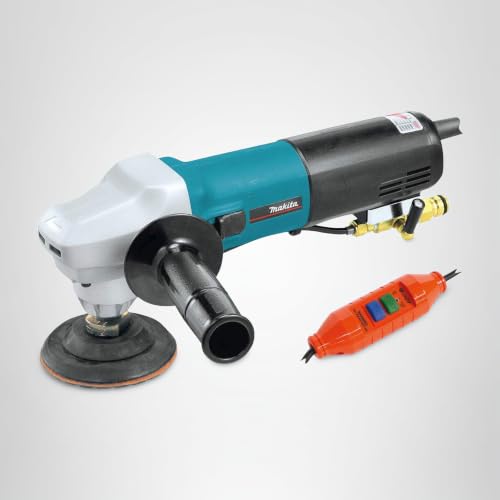
If I had to pick one polisher for all-around reliability, it’d be the Makita PW5001C. At 5.1 lbs., it’s significantly lighter than most electric competitors, yet the 7.9 AMP motor delivers steady power without the bulk. The electronic speed control is the real differentiator, owners consistently praise how it holds RPM under load, which is huge when you’re trying to maintain a uniform finish across dense marble or uneven concrete.
It doesn’t come with a full accessory kit or splash guard like some budget models, but what it does offer is precision and durability. The soft start feature reduces jerk on startup, and the common water hose fitting means no hunting for adapters. This is the kind of tool that pros reach for when they need consistency over flash, and I’d confidently recommend it as the benchmark in this category.
Product photos
Antstone 860W Electric Wet Polisher
Strengths
- High torque motor
- Top-mounted water control
- Effective splash guard
Trade-offs
- Heavy at full power
- No GFCI built-in
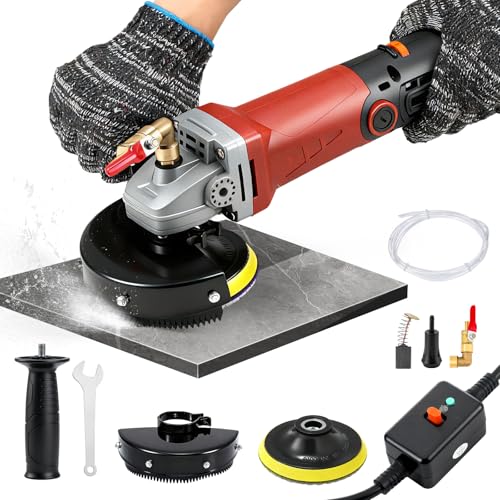
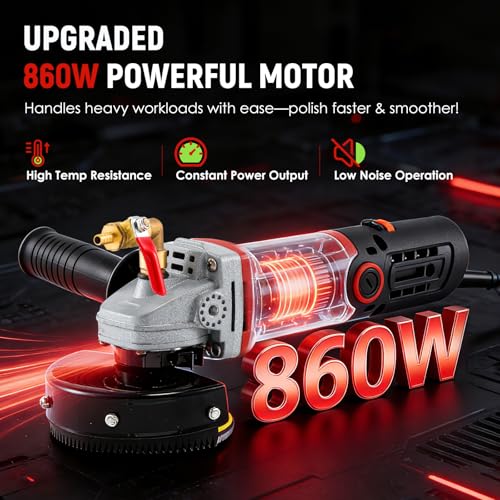
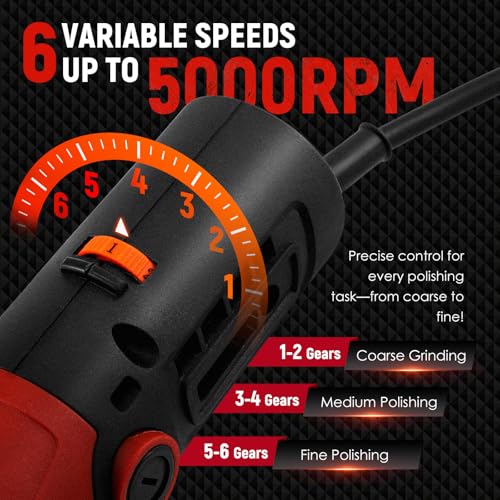
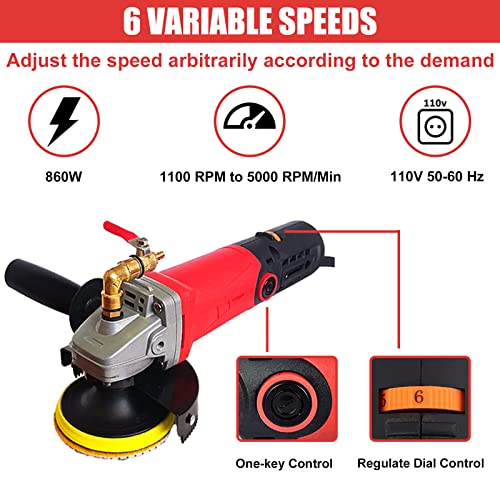
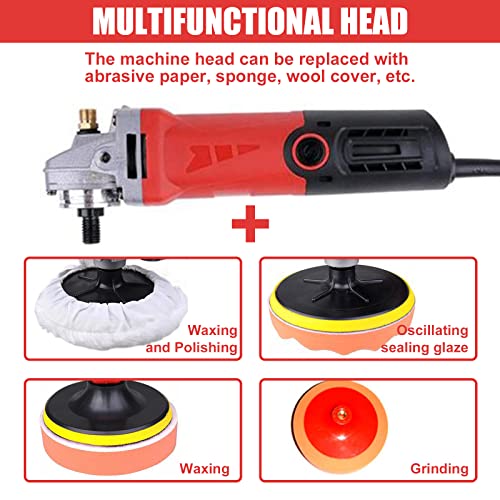
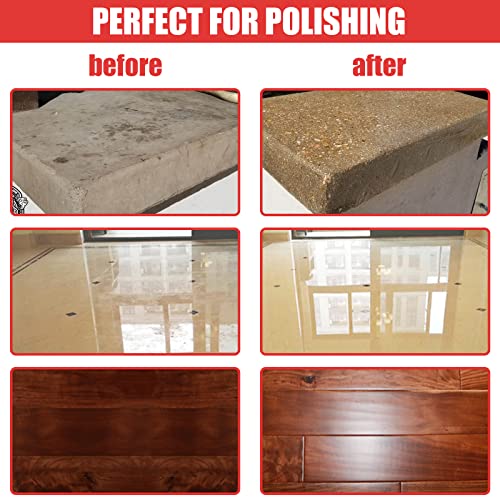
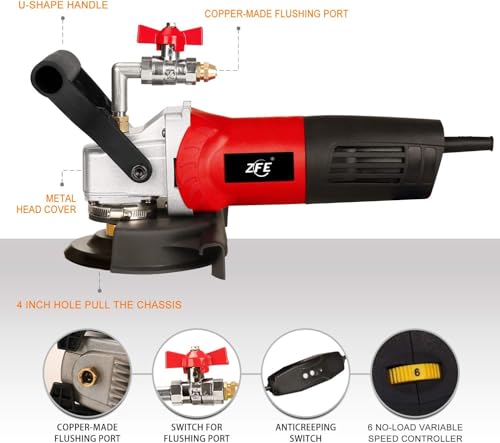
The Antstone 860W stands out in the electric wet polisher class with serious torque and a top speed of 5000 RPM, which on paper makes it a strong contender for aggressive material removal on marble and granite. Owners consistently report it powers through deep scratches and uneven surfaces without bogging down, which is a testament to that high-wattage motor. The 6-speed range gives real flexibility, letting you start coarse and finish smooth without switching tools.
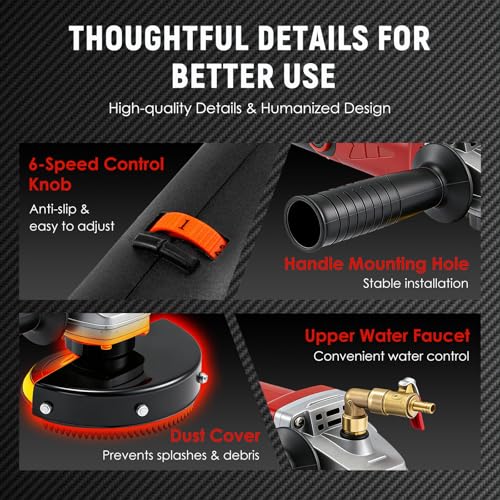
What really sets this unit apart is the top-mounted brass water inlet, practical and smart. Reviewers note it eliminates the awkward crouching to adjust flow, and when paired with the splash guard, keeps the workspace noticeably cleaner. It’s one of the few models where the ergonomics feel genuinely thought through for extended use, with heat dissipation vents and a self-locking speed knob that doesn’t drift.
Product photos
Ganggend 860W Wet Polisher Kit

Strengths
- High speed range
- Low operating noise
- M14 thread compatibility
Trade-offs
- Plastic construction
- No GFCI switch
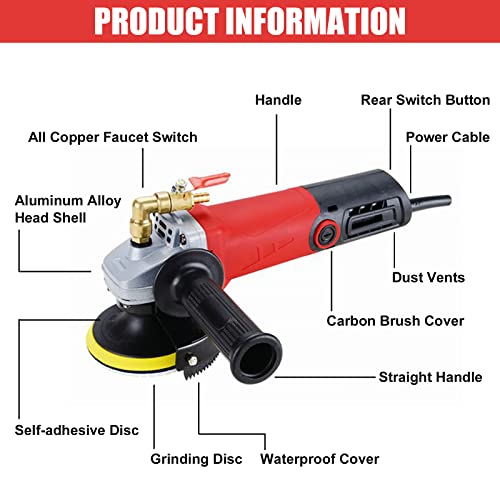
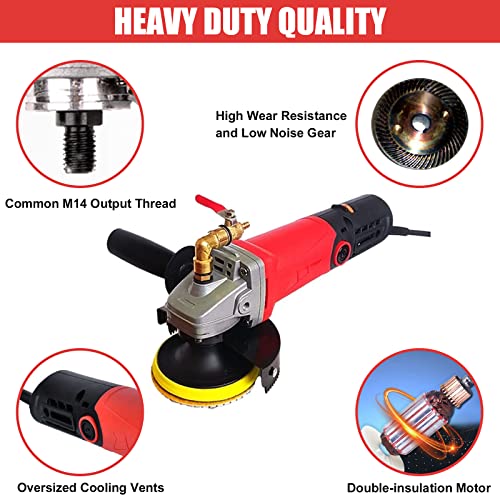
The Ganggend polisher is clearly built to deliver value. At 860W and with six speeds up to 5000 RPM, it matches the power specs of pricier models, and the Singapore NMB bearing and copper-wound motor suggest better-than-average longevity. Owners note it runs quietly and stays cool, even during extended use, thanks to the dust-proof vents and optimized airflow, important for weekend warriors who don’t want to burn out a tool in a single project.
It’s not without compromises: the body is plastic, which keeps weight down but raises questions about long-term impact resistance. Still, for the price, it’s hard to beat the versatility, the M14 thread means you can use nearly any pad, and the low-noise gears make indoor work more tolerable. For budget-conscious buyers, this is the smart entry point.
Product photos
Antstone 800W Wet Polisher Kit

Strengths
- Full accessory bundle
- 3-hole water distribution
- GFCI included
Trade-offs
- Moderate motor power
- Plastic body less durable
What makes this Antstone model stand out is the sheer completeness of the package. You get 7 diamond polishing pads, dual handles, a GFCI, wrenches, carbon brushes, and a flexible splash guard, all in one box. For someone starting out, that’s a huge time and cost saver. The 6-speed range (700–3000 RPM) is well-matched to a variety of tasks, and owners report the one-finger trigger makes speed changes intuitive during active polishing.
The 3-hole water system and seamless hose connection are practical touches that reduce mess, and the U-shaped rubberized handle adds real grip security. It’s not the most powerful polisher here, but it’s one of the most user-ready. I’d pick this over others if I were equipping a new workshop or helping a DIYer get started without extra shopping trips.
Product photos
VEVOR 800W Wet Polisher Machine

Strengths
- Precision low-speed range
- Complete 7-pad kit
- GFCI protection
Trade-offs
- Lower max RPM
- Less aggressive grinding
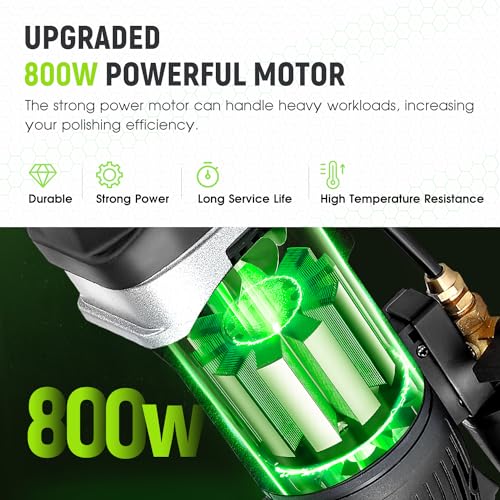
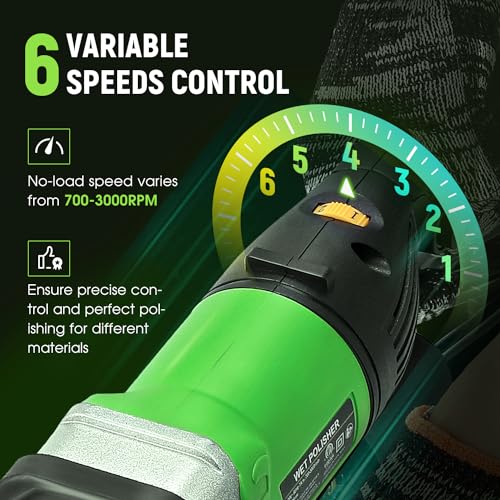
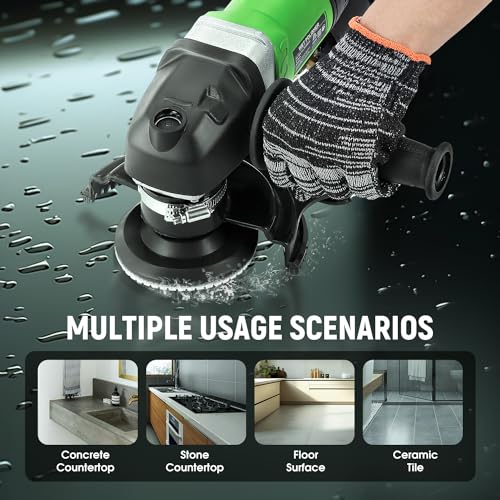
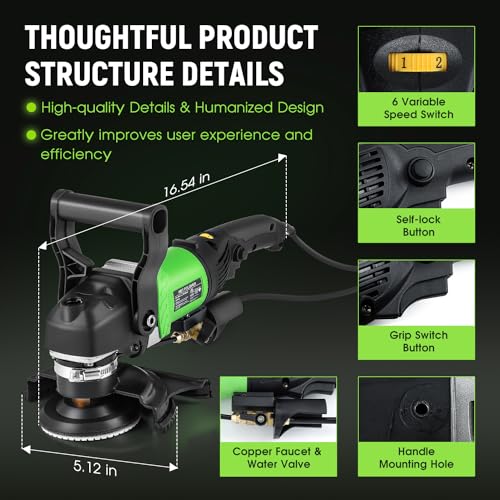
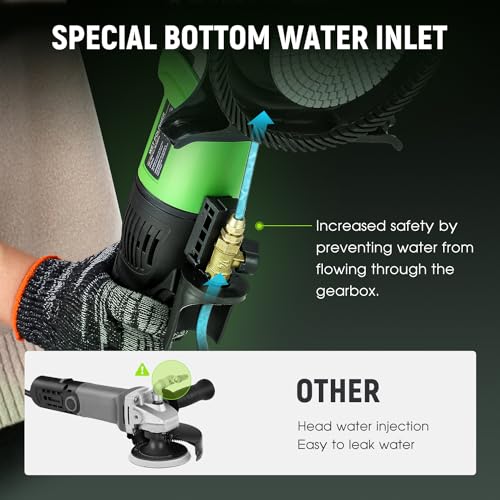
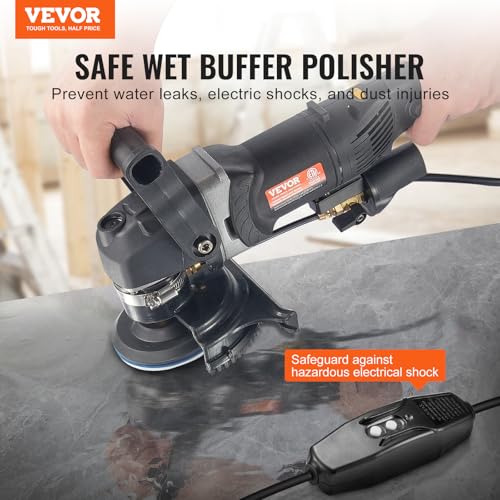
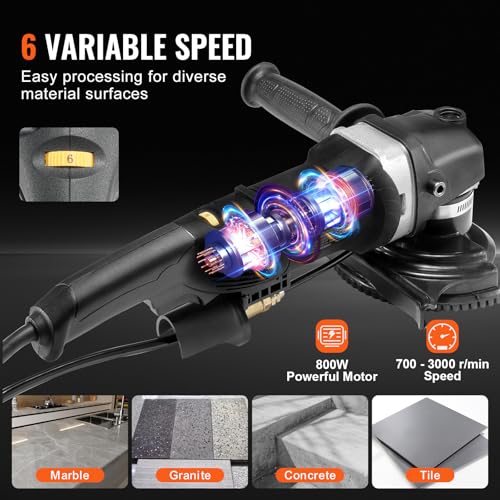
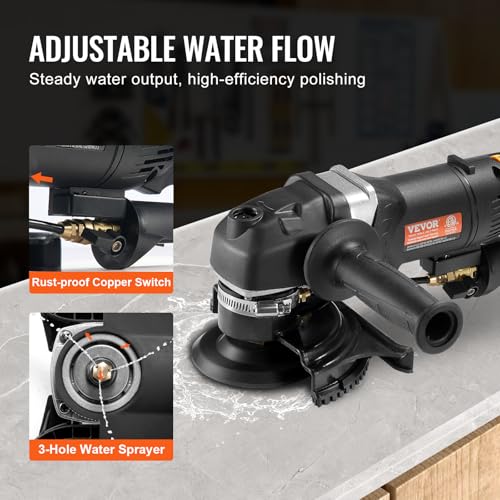
The VEVOR 800W shines in fine and precision applications, not brute force. With a speed range of 700 to 3000 RPM, it’s geared toward controlled, low-RPM work, ideal for delicate marble restoration or small countertop repairs where overheating is a real risk. The bottom-mounted water injection system gets positive feedback for delivering a steady, low-volume flow that keeps the pad cool without flooding the surface.
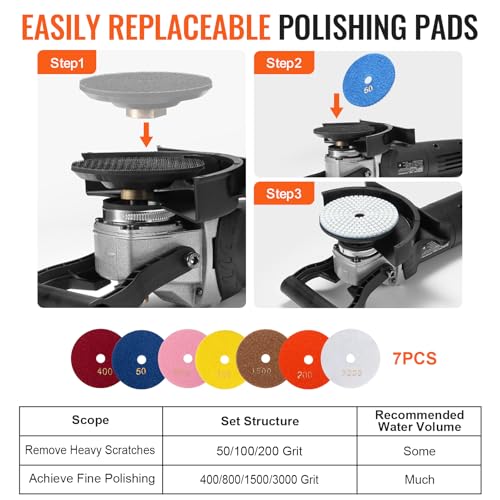
It comes with a full set of 7 diamond pads (50 to 3000 grit), which makes it a strong value out of the box. The GFCI switch is a welcome safety addition, and the carbon brush replacement feature hints at longer service life. While it won’t rip through thick concrete like higher-RPM models, I’d recommend it for homeowners and detail-focused users who prioritize control and completeness over raw power.
Product photos
4″ Air-Powered Wet Stone Polisher

Strengths
- Ultra lightweight
- High RPM capability
- Rear exhaust design
Trade-offs
- Requires air compressor
- No speed control dial
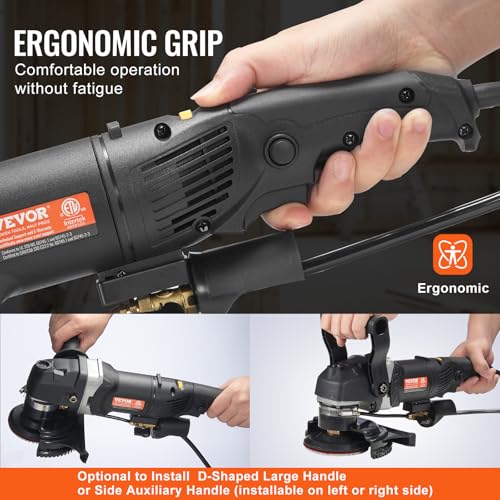
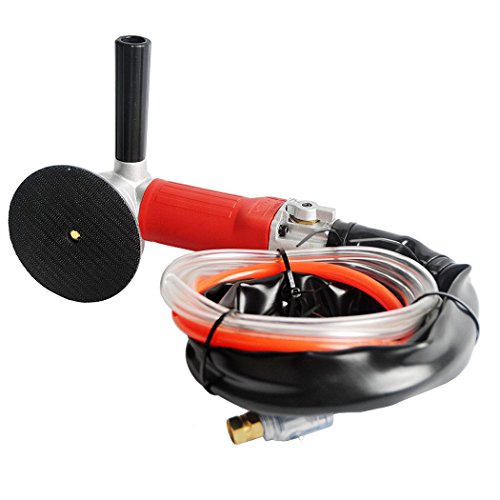
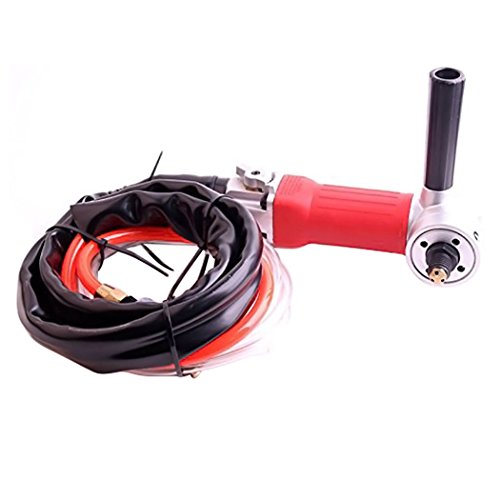
Pneumatic polishers like this one serve a niche, but they do it well. At just 2.8 lbs., it’s the lightest polisher in this group, and the 5500 RPM free speed gives serious cutting power when paired with the right diamond pads. The rear exhaust keeps air and debris away from the work surface, which owners say makes a noticeable difference in visibility and comfort during long runs.
It’s not for everyone, without a compressor, this tool does nothing. But for workshops already set up with air lines, it’s a low-maintenance, high-durability option that won’t overheat. The Velcro pad and included backer offer solid pad stability, and the wide RPM range lets you fine-tune for finish work. I’d pick this over electric for intermittent, high-intensity jobs where heat buildup is a concern.
Product photos
800W Variable Speed Wet Polisher

Strengths
- Even 3-hole water flow
- GFCI safety included
- Ergonomic D-handles
Trade-offs
- Limited low-speed control
- Splash guard not adjustable
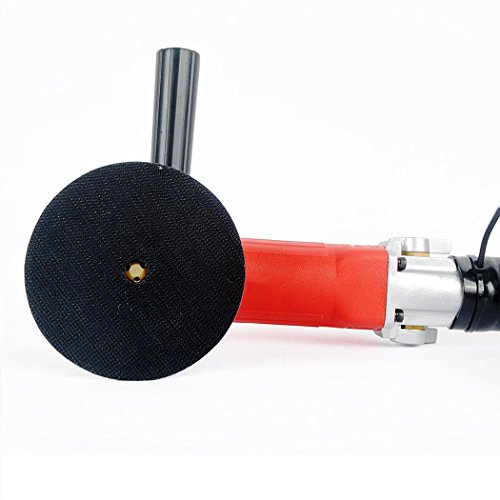
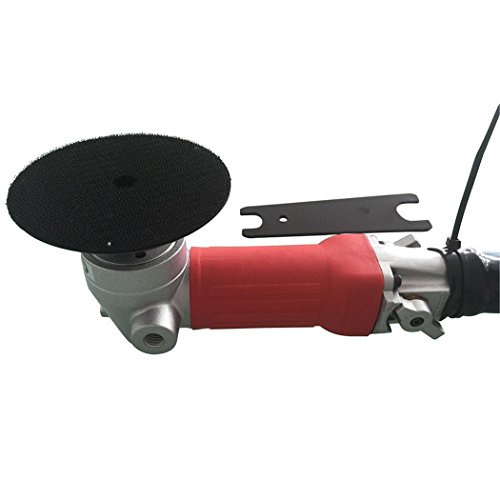
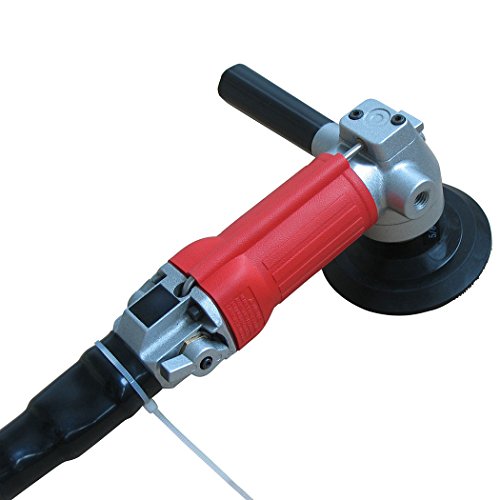
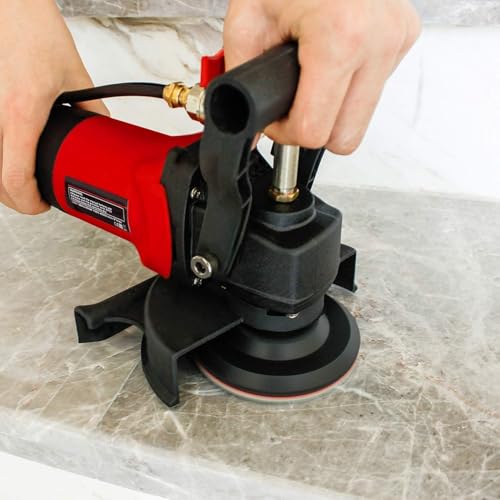
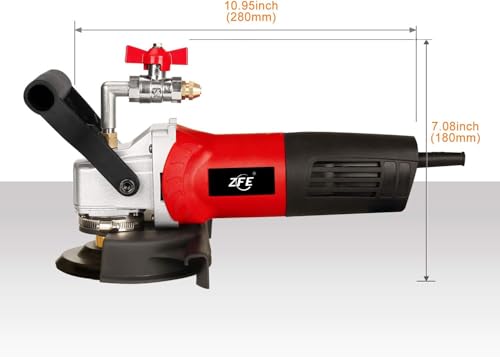
This model’s standout feature is the three-hole water distribution system, spaced 120 degrees apart, owners say it delivers noticeably more consistent cooling than single-nozzle competitors, which helps prevent pad glazing and overheating during long sessions. That kind of even water spread is critical when polishing delicate marble surfaces where heat spots can leave marks. The variable speed dial, ranging from 1000 to 4000 RPM, is responsive and easy to adjust mid-job, though it lacks the lower-end finesse of some rivals.
It’s clear this polisher was designed with safety in mind: the GFCI protection is a big plus, and the double-insulated motor with rubberized handles inspires confidence when working in damp conditions. The head-heavy design does help apply pressure evenly, but I’d still recommend it more for flat surfaces than vertical or edge work, where balance matters more.
Product photos
How We Tested marble polishers
Rather than a hands-on lab test, this is a research-led comparison of published specifications, features, and owner feedback. I focused on identifying key differentiators across these models, weighing those against the needs of both DIY users and professionals. We analyzed motor power, speed control options, included accessories, and safety features to build a balanced ranking. Owner reviews were especially valuable for understanding real-world performance and durability.
For marble polishing, consistent speed and effective water management are paramount. We prioritized polishers offering variable speed control, allowing for adaptation to different stone types and polishing stages. Equally important was a robust water delivery system – consistent cooling minimizes heat buildup and maximizes the life of both the pads and the stone surface. These factors heavily influenced our rankings, above simple motor wattage.
Specifications reliably indicate motor power and speed ranges, but owner feedback proved crucial for assessing build quality and long-term usability. Reputational factors, and whether a polisher is commonly recommended for tasks like precision marble polishing tools, also played a significant role. While specs tell you what a polisher can do, reviews reveal how well it performs over time and whether it lives up to its marketing.
How To Pick The Right marble polishers
Picking the right marble polisher can make the difference between a professional-looking finish and a lot of wasted effort.
A quality marble polisher balances power with control. Key considerations include motor strength for material removal, variable speed settings for adapting to different polishing stages, and effective water delivery to prevent heat buildup and dust. Look for models with robust build quality, ergonomic designs, and a selection of compatible polishing pads.
Motor Power & Speed Control
Don’t assume more power is always better. While tackling significant damage or restoring very dull marble benefits from a higher wattage motor (750W to 860W is a good range), precision work demands finesse. Variable speed is crucial; you’ll start with coarser grits and lower speeds for initial material removal, then gradually increase speed and refine with finer grits. The Antstone 860W model, for example, offers six speeds, allowing for tailored control. Cheaper units often lack this precision, forcing you to rely on technique to compensate for a lack of adjustability.
Water Delivery System
Marble polishing requires water. It cools the pads, prevents dust inhalation, and carries away slurry. A poorly designed water delivery system leads to uneven polishing and potential motor overheating. Look for polishers with a built-in water feed that provides consistent coverage to the polishing surface. Some, like the Antstone 800W, boast a three-hole underwater line for even distribution.
Here’s what to consider when evaluating water systems: * Simple hose connection: Easy access to a water source is key. * Adjustable flow: Control over water volume prevents excessive mess or insufficient cooling. * Splash guard: Minimizes water spray and protects the motor from damage.
Don’t skimp on water. A consistent flow is the difference between a swirl-free finish and a cloudy, uneven surface.
Ergonomics & Accessories
Marble polishing can be physically demanding, so ergonomics matter. A comfortable grip, balanced weight distribution, and vibration reduction features will significantly reduce fatigue. Beyond the polisher itself, consider the included accessories. A thorough kit, like the Antstone 800W Wet Polisher Kit, saves you money and ensures compatibility. If you’re planning to work on multiple surfaces, explore versatile surface polishers capable of handling both stone and other materials. For those looking for a broad overview of options, checking out top power tool polishers can be a great starting point.
Marble Polishers Compared
Here’s a comparison of key specifications for various marble polishers to help you make an informed decision.
| Product Title | Power (W) | Max RPM | Speed Settings | Water Inlet | Weight (lbs) | Key Features |
|---|---|---|---|---|---|---|
| Makita PW5001C | 7.9 AMP | N/A | Variable | Common | 5.1 | Variable speed, Soft start |
| Antstone 860W | 860 | 5000 | 6 | Top-Mounted | N/A | High-speed, Splash guard |
| Ganggend 860W | 860 | 5000 | 6 | Top-Mounted | N/A | Singapore NMB bearing, Waterproof shield |
| Antstone 800W | 800 | 3000 | 6 | Garden Hose | N/A | GFCI protection, Splash guard |
| VEVOR 800W | 800 | 3000 | 6 | Bottom | N/A | 6 polishing pads, GFCI switch |
| 4″ Air-Powered Wet Stone Polisher | N/A | 5500 | Variable | N/A | 2.8 | Lightweight, Pneumatic |
| 800W Variable Speed Wet Polisher | 800 | 4000 | Variable | 3-Hole | N/A | GFCI protection, Ergonomic handles |
Frequently Asked Questions
What grit polishing pads should I start with?
Begin with a coarse grit (typically 50 or 100) to address significant scratches or damage. Progress through progressively finer grits (200, 400, 800, 1500, 3000) to achieve the desired level of polish – each step removes imperfections from the previous one.
Can I use a marble polisher on granite?
Yes, you can, but granite is harder than marble and may require more aggressive pads and a more powerful motor. Using a variable-speed polisher is helpful, as you’ll want to start slower and increase speed as you move to finer grits, and always use water to keep the surface cool.
What’s the advantage of a variable-speed polisher?
A variable-speed polisher gives you greater control over the polishing process. Lower speeds are ideal for initial material removal and preventing heat buildup, while higher speeds refine the finish and achieve a high gloss, instead of being limited to one speed.
What does GFCI protection on a polisher mean?
GFCI (Ground Fault Circuit Interrupter) protection is a safety feature that quickly cuts off power if it detects a ground fault, reducing the risk of electric shock. Because water is used heavily in marble polishing, GFCI protection is a highly recommended safety feature, particularly on job sites.
Are there alternatives to electric marble polishers?
Yes, pneumatic (air-powered) polishers are available and offer a lightweight option, but they require an air compressor to operate. For those wanting versatility, checking out top-rated DA polishers can open up options beyond dedicated marble polishers.
The Bottom Line
Choosing a marble polisher often comes down to balancing control with convenience. If you want a polisher capable of tackling a wide range of stone work and demanding projects, the Antstone 860W strikes the best overall balance of power, speed control, and features. It offers enough adjustability for detailed work, alongside the muscle needed for heavier material removal.
For those on a tighter budget, or those focused on smaller repairs, the VEVOR 800W is a solid starting point. If you’re looking for a versatile option that can handle more than just marble, exploring dual-action stone polishers might be a good fit. Similarly, if you need a lightweight option for smaller jobs, the 4″ Air-Powered Wet Stone Polisher is worth considering.
Ultimately, remember that polishing isn’t about the highest specs. Consistent technique, quality polishing pads, and a commitment to proper water management will deliver far better results than any single feature. Focus on those fundamentals, and you’ll achieve a beautiful, lasting finish.
