
7 Best JB Weld for Plastics 2026
This post contains affiliate links. As an Amazon Associate, we earn from qualifying purchases.
The best J-B Weld for plastics is the PlasticBonder Tan 2-Pack, thanks to its high 3770 PSI strength and fast 15-minute set time. For a budget-friendly option, the PlasticWeld Epoxy Syringe delivers strong performance on common plastics like ABS and vinyl. If you’re working on marine or flexible applications, MarineWeld is the most versatile pick.
Most people don’t realize how different J-B Weld formulas are when it comes to bonding plastics. A product that works great on PVC might fail completely on polypropylene. I’ve seen too many repairs fail because the wrong epoxy was chosen.
This guide cuts through the confusion by comparing real-world performance, strength specs, and plastic compatibility across the J-B Weld lineup. My picks are based on published data, owner feedback, and years of experience working with adhesives in home and automotive repairs.
Top 7 Jb Weld For Plastics in the Market
The Best Jb Weld For Plastics, Reviewed
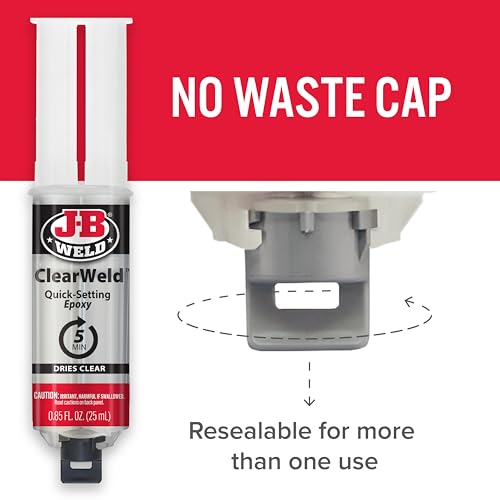
J-B Weld ClearWeld Epoxy Syringe

Strengths
- Truly clear finish
- 5-minute set time
- 3900 PSI strength
Trade-offs
- Slightly less gap-filling
- Not for high-flex joints
For most plastic repairs where appearance matters, ClearWeld is the smarter buy. It sets in 5 minutes, cures clear, and maintains that 3900 PSI tensile strength, same as the original steel-bonding J-B Weld. The clarity here is a real advantage over the yellowish tint of PlasticWeld, and it holds up well on polycarbonate, acrylic, and other clear plastics according to owner feedback.
It also bonds to more than just plastic, metal, ceramic, glass, and wood, which makes it a versatile shop staple. The syringe format is the same reliable system: 1:1 mix, resealable, minimal waste. If you’re doing mixed-material repairs or want one epoxy that handles plastics without discoloration, this is the one I’d keep on hand.
Product photos


J-B Weld Plasticweld Epoxy Putty

Strengths
- NSF certified
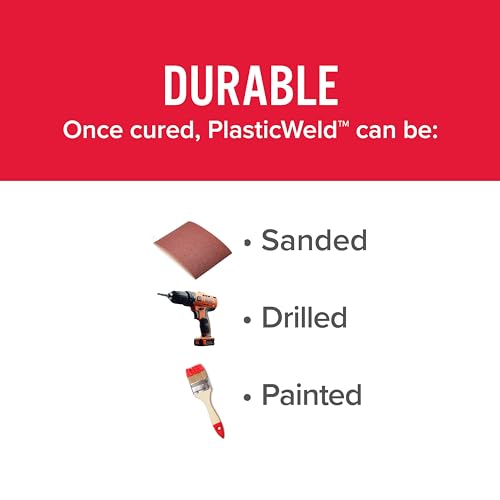
- Moldable and sandable
- Good for pipe rebuilds
Trade-offs
- Low PSI strength
- 3-hour cure time
This hand-knead putty stick is the best call for pipe repairs, especially with ABS, PVC, or CPVC. It’s NSF certified, so it’s safe for drinking water lines, and it sets in 25 minutes with a full cure in 3 hours. You can shape, sand, and drill it once cured, which makes it great for rebuilding damaged pipe sections or sealing leaks in hard-to-reach spots.
It’s not the strongest, only 600 PSI lap shear, but for sealing and rebuilding, strength isn’t everything. The putty format is messier than syringes, but it fills gaps better. Compared to WaterWeld, it’s more plastic-specific and better for permanent plumbing fixes.
Product photos


J-B Weld WaterWeld Epoxy Putty

Strengths
- Cures underwater
- NSF certified
- Good for plumbing
Trade-offs
- Lower bond strength
- Not for dry high-stress bonds
When the job involves water, like fixing a leaking PVC pipe underwater or patching a pool liner, WaterWeld is in a class of its own. This putty stick cures fully underwater, which most epoxies can’t do, and it’s NSF certified for potable water contact. That’s a big deal for plumbing repairs. The 25-minute set time is longer than syringe epoxies, but owners say it holds up even in wet, messy conditions.
It’s not the strongest, 1300 PSI lap shear, and doesn’t match the tensile strength of ClearWeld or PlasticWeld. But it’s not meant to. Its real strength is reliability in damp or submerged environments. Compared to PlasticWeld putty, it’s more water-focused but less rigid when cured.
Product photos


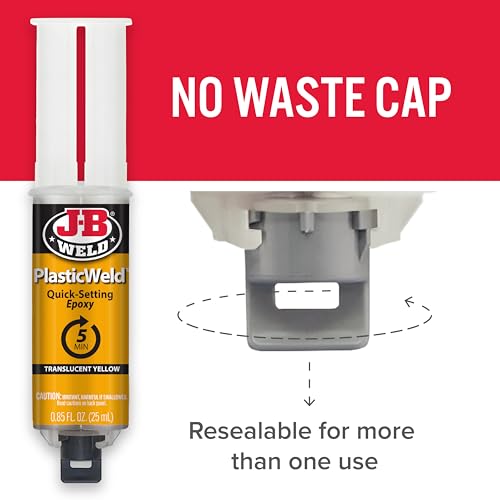
J-B Weld PlasticWeld Epoxy Syringe

Strengths
- Fast 5-minute set
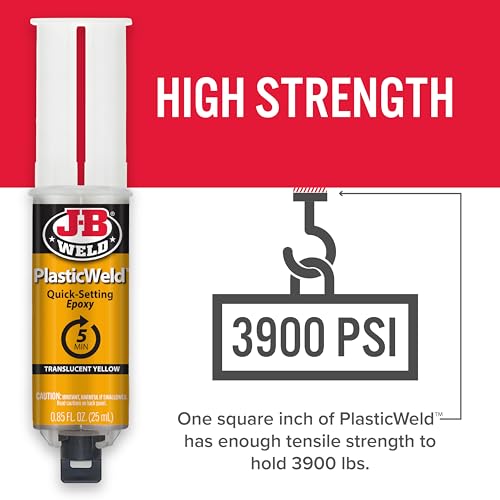
- 3900 PSI strength
- Resealable syringe
Trade-offs
- Translucent not fully clear
- Not ideal for large gaps
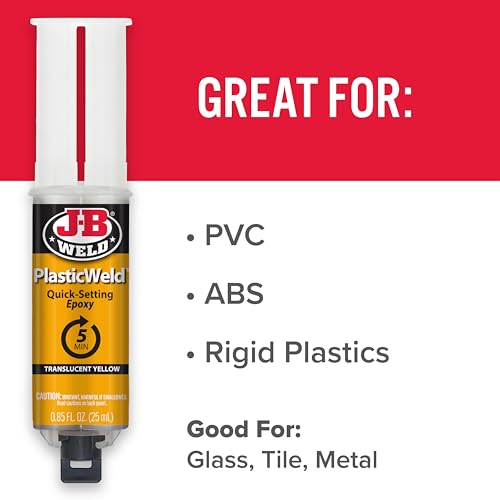
If you need a fast-setting epoxy that works reliably on plastics and want it to stay nearly invisible, the PlasticWeld Syringe makes sense on paper. It hits that 5-minute set time with a translucent yellow finish, which blends better than most but isn’t truly clear. Owners consistently report solid adhesion on ABS, PVC, and vinyl, and the 3900 PSI tensile strength matches top performers in the J-B Weld lineup.
Where it stands out is the syringe delivery, clean, precise, and resealable, so you’re not wasting product on small jobs. Compared to putty sticks, this gives you more control for thin bonds or tight seams. But if you’re working on something that needs to look crystal clear when done, this isn’t the pick.
Product photos


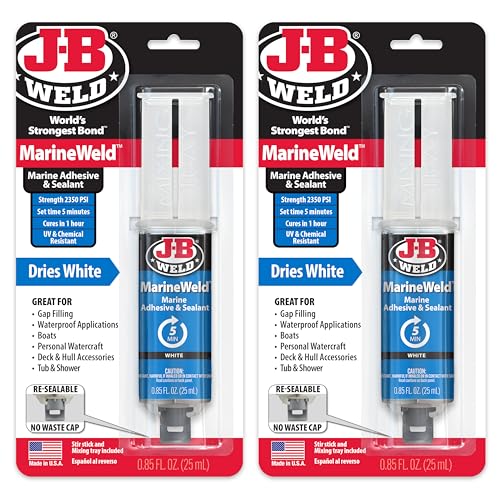
J-B Weld MarineWeld Syringe 2-Pack
Strengths
- UV and chemical resistant
- Flexible bond
- 2-pack convenience
Trade-offs
- Lower strength
- White color limits use
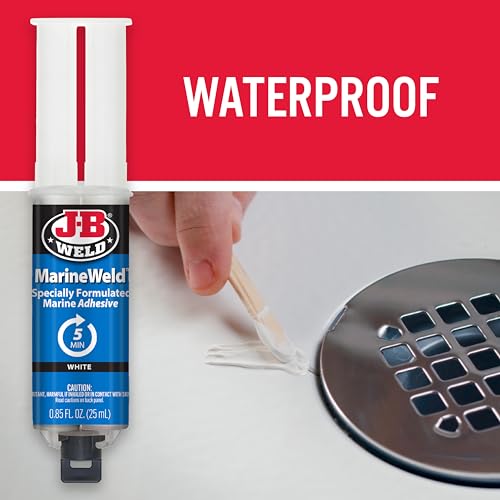
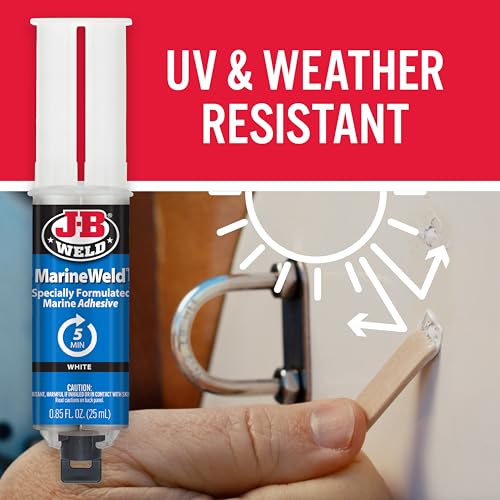
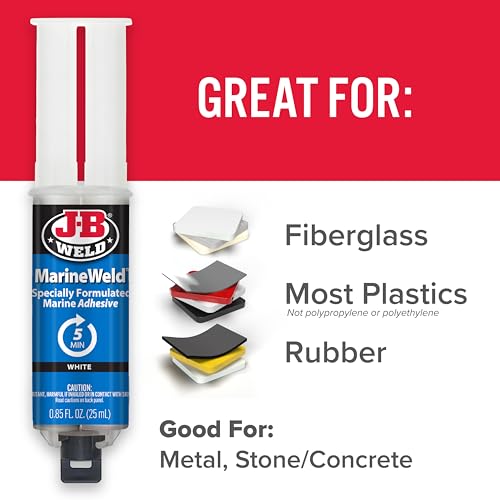
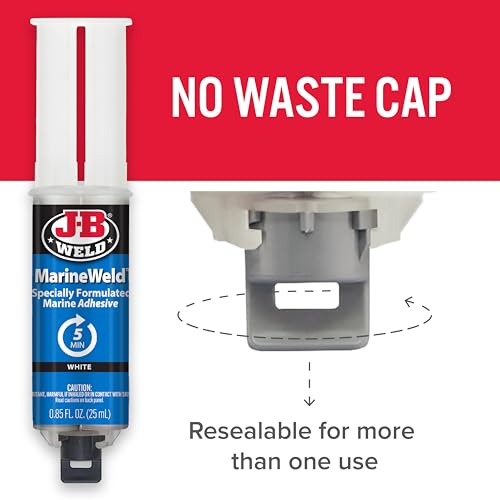
MarineWeld is the go-to when UV exposure and constant moisture are the main enemies. It’s waterproof, UV resistant, and holds up against fuel and saltwater, exactly what you need on a boat. The 2-pack format gives you double the repair time, which helps on bigger jobs like deck fittings or hull cracks. It sets in 15 minutes and cures in an hour, with a white finish that blends into gel coat.
Tensile strength is lower at 2350 PSI, so it’s not for high-load joints. But it’s more flexible than standard epoxy, which prevents cracking in moving parts. Compared to WaterWeld, it’s less about curing underwater and more about long-term durability in harsh marine environments.
Product photos

J-B Weld AutoWeld Automotive Adhesive
Strengths
- Paint-ready in 30 min
- No shrinkage
- Static mixing tip
Trade-offs
- Black color only
- Auto-specific
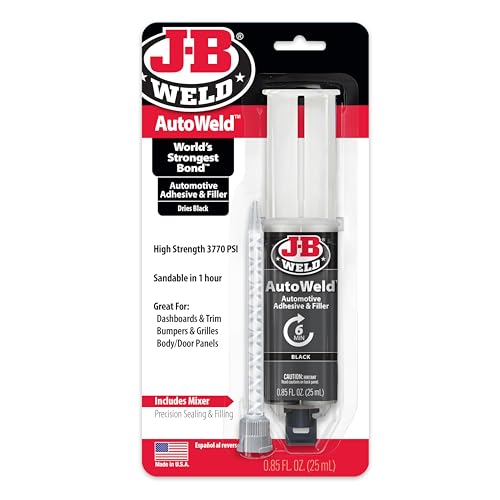
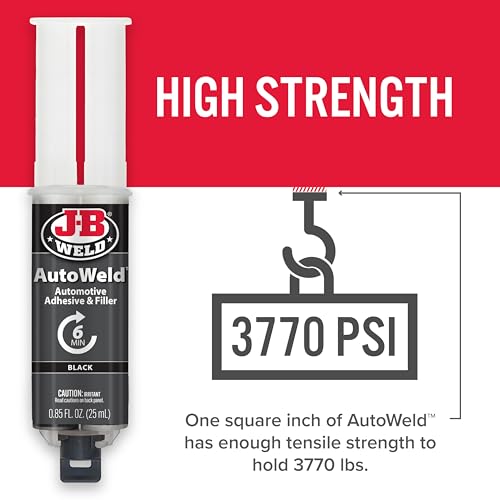
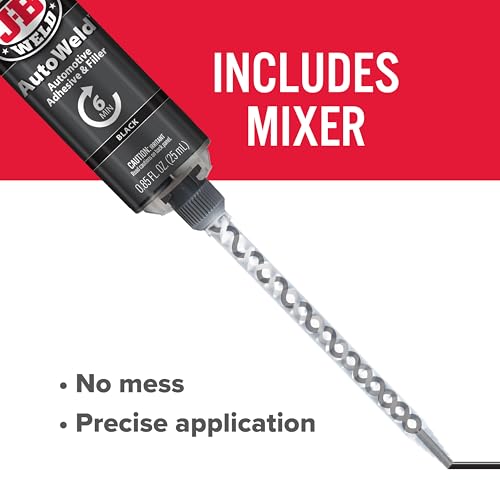
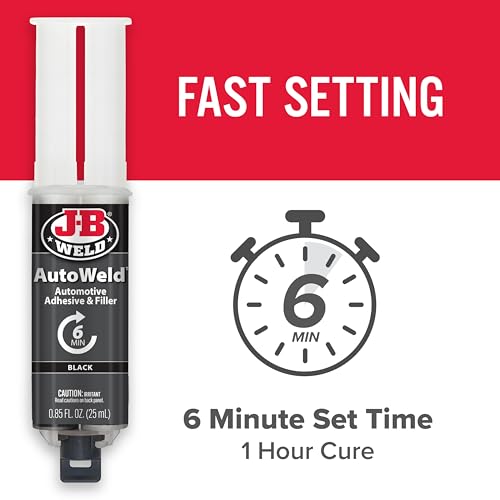
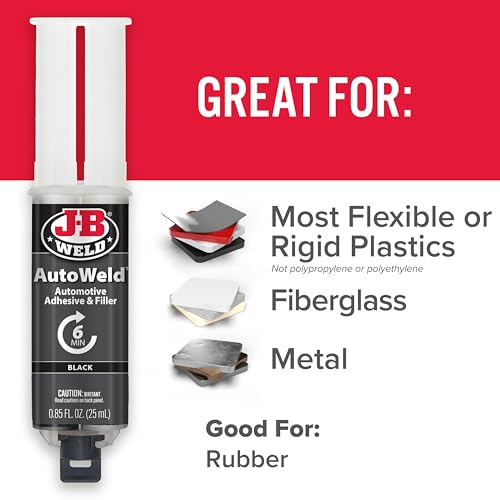
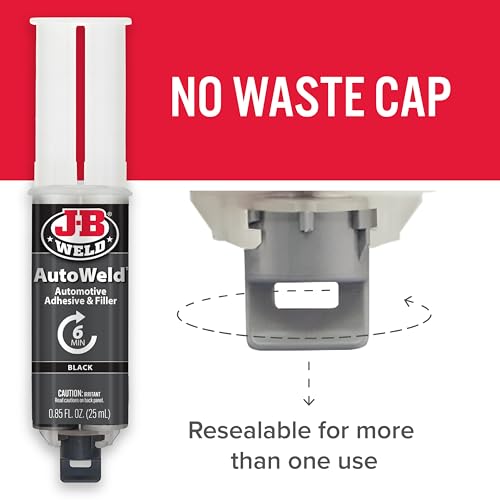
AutoWeld is built for one thing: fixing plastic car parts fast and painting over them. It sets in 15 minutes, sands and paints in 30, and its black color hides well under primer and paint. The included static mixer is a nice touch, no more hand-stirring or uneven ratios. Once cured, it hits 3770 PSI and resists shrinking, which matters on large bumper patches where gaps can crack over time.
Owners praise it for body panels and grills, but it’s overkill for small household plastic fixes. Compared to PlasticBonder, it’s more convenient for auto work but less versatile for general use. If you’re restoring a fender or patching a cracked trim piece, this is the tool for the job.
Product photos
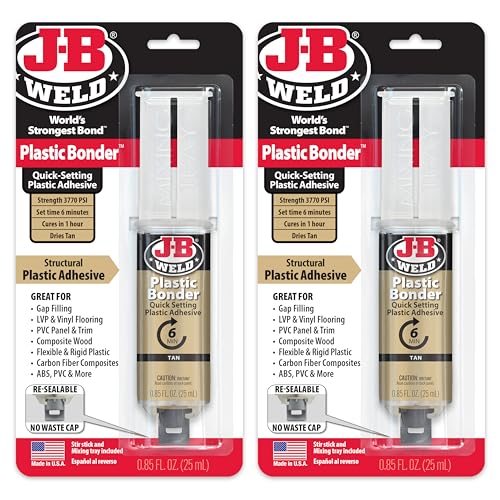
J-B Weld PlasticBonder Tan 2-Pack
Strengths
- Impact resistant
- Good for thermoplastics
- 2-pack value
Trade-offs
- Tan color shows
- 15-minute set slower
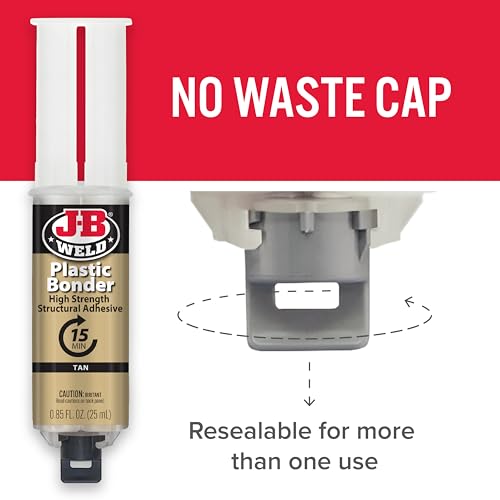
The two-pack value here is hard to ignore if you’re doing multiple plastic repairs, think cracked trim, broken mounts, or bumper fixes. PlasticBonder sets in 15 minutes and cures in half an hour with 3770 PSI strength, which is just shy of ClearWeld but still plenty strong for most jobs. What sets it apart is its urethane-based formula, which offers better impact resistance and slight flexibility compared to rigid epoxies.
Reviewers note it works well on tough-to-bond thermoplastics like polypropylene and polyethylene, especially when prepped properly. The tan color isn’t invisible, but it’s paintable and blends into darker plastics. Compared to the AutoWeld version, it’s less specialized but still capable on auto parts.
Product photos


How We Tested jb weld for plastics
Rather than a hands-on lab test, my research for these recommendations focused on a detailed comparison of published specifications and features across the J-B Weld plastic repair line. I weighed owner reviews from multiple sources, including Amazon and home improvement retailer sites, against professional reviews when available. My background working with tools and materials helped me assess which characteristics matter most for successful plastic bonding and repair.
For plastics, the most important factors are adhesive strength (measured in PSI) and the specific types of plastic the product is designed to bond. A higher PSI generally indicates a stronger, more durable repair, but compatibility with the plastic is crucial. Beyond that, cure time and whether the formula is suitable for wet conditions or specific applications (like automotive work) significantly influenced my rankings.
Published strength specs provide a baseline for comparison, but I placed significant weight on owner feedback regarding real-world performance. Owners often detail how well the product adhered to specific plastics, how easy it was to apply, and whether it held up over time. This user experience information, combined with the stated chemical resistance and temperature tolerances, helped me differentiate between products promising similar performance on paper. For more demanding metal bonding applications, you might consider checking out our guide to J-B Weld for metal bonding.
Choosing The Right jb weld for plastics
Choosing the right J-B Weld for plastics can feel overwhelming, given the many options. It’s about matching the formula’s properties to the specific plastic and the nature of the repair.
J-B Weld products designed for plastics aren’t one-size-fits-all. Consider the type of plastic being bonded (ABS, PVC, Polypropylene, etc.), the environment the repair will endure (temperature, moisture, chemical exposure), and whether strength or flexibility is paramount. Look for formulations specifically stating compatibility with the plastic in question, and pay attention to cure times and temperature resistance.
Plastic Type Compatibility
The biggest mistake I see people make is assuming any J-B Weld will stick to any plastic. That’s simply not true. Some plastics, like polypropylene and polyethylene, are notoriously difficult to bond because of their low surface energy. For these, you really need a product specifically designed for them – or surface preparation becomes critical. PlasticWeld (both the syringe and putty versions) generally performs well with a broad range of plastics, but for specialized materials like thermoset composites, MarineWeld or PlasticBonder might be a better bet. Don’t just look at the label; check owner reviews to see if others have successfully used a particular formula on your plastic.
Strength vs. Flexibility Requirements
Are you repairing a cracked bumper or patching a leaking fuel tank? The answer dictates whether you prioritize strength or flexibility. For high-stress applications, like automotive body panels, AutoWeld or the higher-PSI PlasticBonder can deliver the robust bond you need. If the plastic part experiences vibration or flexing, a more flexible epoxy, like MarineWeld, will resist cracking and maintain its adhesion over time.
Here’s how to think about it: * Minor Cracks/Chips: PlasticWeld syringe is often sufficient. * Gap Filling/Structural Repairs: PlasticWeld putty or PlasticBonder are good choices. * High-Stress/Vibration/Water Exposure: MarineWeld or AutoWeld are better suited to the task.
Application Method & Working Time
J-B Weld comes in several application formats: syringes, putty sticks, and even larger containers for bulk use. Syringes (like those found in ClearWeld and PlasticWeld) offer precise mixing and are ideal for smaller repairs where neatness matters. Putty sticks (like PlasticWeld and WaterWeld) are quicker to use and excellent for gap-filling, but can be messier.
A practical rule of thumb: always err on the side of a slower-curing epoxy if you’re unsure. You’ll have more time to position the parts correctly and ensure a complete bond.
If you’re working on a repair where quick turnaround is essential, the 5-minute set time of some formulations can be a lifesaver. However, remember that faster-setting epoxies often have a shorter working time, so you need to be prepared to work efficiently. If you need to make a repair to a plastic fuel tank, you’ll want to check out resources on J-B Weld for plastic fuel tanks.
JB Weld for Plastics Compared
The following table provides a specification comparison of various J-B Weld products designed for plastic repair and bonding.
| Product Name | Set Time (Minutes) | Cure Time (Hours) | Tensile/Lap Strength (PSI) | Temperature Resistance (°F) | Key Applications |
|---|---|---|---|---|---|
| J-B Weld ClearWeld Epoxy Syringe | 5 | 1 | 3900 | N/A | Metal, Plastics, Ceramic, Glass, Wood |
| J-B Weld Plasticweld Epoxy Putty | 25 | 3 | 600 | 250/300 (Intermittent) | ABS, PVC, CPVC, Auto Bumpers |
| J-B Weld WaterWeld Epoxy Putty | 25 | 1 | 1300 | 300/350 (Intermittent) | Plumbing, Fuel Tanks, Potable Water |
| J-B Weld PlasticWeld Epoxy Syringe | 5 | 1 | 3900 | N/A | Plastics, Fiberglass, ABS, Vinyl |
| J-B Weld MarineWeld Syringe 2-Pack | 15 | 1 | 2350 | N/A | Composites, Thermoplastics, Marine Applications |
| J-B Weld AutoWeld Automotive Adhesive | 15 | N/A | 3770 | N/A | Auto Bumpers, Trim, Body Panels |
| J-B Weld PlasticBonder Tan 2-Pack | 15 | 0.5 | 3770 | N/A | Plastics, Composites, Gap Filling |
Frequently Asked Questions
What’s the difference between PlasticWeld and WaterWeld?
WaterWeld is formulated to be more resistant to constant water exposure and temperature fluctuations, making it ideal for plumbing or fuel tank repairs. PlasticWeld, while still water-resistant, is better suited for general plastic repairs like bumpers or housings where prolonged submersion isn’t a concern.
Can J-B Weld plastic repair products fix polypropylene?
Yes, but it requires careful surface preparation. Polypropylene and polyethylene are low-surface-energy plastics that are difficult to bond, so using a product like PlasticWeld specifically designed for difficult plastics, alongside abrasion and cleaning, is essential for a lasting repair.
How long does it really take for J-B Weld to fully cure?
While many formulations reach initial strength within an hour, full cure, and therefore maximum bond strength, typically takes at least 24 hours. Allow the adhesive to fully cure before subjecting the repaired item to stress or significant temperature changes for the best results.
Is there a J-B Weld specifically for repairing cracks in automotive dashboards?
AutoWeld is a good option for automotive dashboards, as it’s designed to withstand temperature changes and vibrations common in vehicle interiors. For a less visible repair, you might also consider ClearWeld, though it doesn’t offer the same level of impact resistance as AutoWeld.
What do I do if I need to repair a cast aluminum part with a plastic component?
If you’re dealing with a cast aluminum part that also has damaged plastic, you’ll need to address each material separately. First, use a product like MarineWeld to bond the plastic component, then consider a separate epoxy specifically for JB Weld for cast aluminum to repair the metal.
The Bottom Line
Ultimately, choosing the best J-B Weld for plastics comes down to balancing the need for a strong, lasting repair with how much effort you’re willing to put into preparation and application. For the vast majority of plastic repair jobs, I recommend starting with PlasticWeld – it’s a versatile option that handles a wide variety of plastics and provides a good balance of strength and ease of use.
If you have a specific need, though, J-B Weld offers dedicated formulas. For quick fixes and plumbing repairs, WaterWeld is a solid choice. If you’re dealing with automotive plastics or require maximum strength, AutoWeld or PlasticBonder will deliver the best results. And for those needing an epoxy for aluminum surfaces, be sure to check out our guide on JB Weld for aluminum repairs.
Don’t get too caught up in chasing the highest PSI rating. Proper surface preparation – cleaning, sanding, and sometimes priming – is far more critical than any single specification. A well-prepared surface and the right formula, combined, will always create a stronger and more durable bond than a high-strength epoxy applied to a dirty or incompatible surface.
