
7 Best JB Weld for Metals of 2026
This post contains affiliate links. As an Amazon Associate, we earn from qualifying purchases.
The J-B Weld Original Epoxy is the strongest overall choice for metal repairs, with the highest tensile strength and solid heat resistance. For quick fixes, the KwikWeld 6-Minute Epoxy works well, and if you’re dealing with extreme heat, the J-B Weld ExtremeHeat Metallic Paste is the only real option.
Most people don’t realize how different J-B Weld products are until they’re holding a broken muffler or a cracked pipe and realize their epoxy won’t hold. A bad choice can mean redoing the job in days, or worse, a dangerous failure.
This guide cuts through the confusion by comparing real-world performance, specs, and user feedback across the J-B Weld lineup. I focused on strength, cure time, temperature limits, and ease of use to find the best picks for common metal repairs.
Top 7 Jb Weld For Metals in the Market
The Best Jb Weld For Metals, Reviewed
J-B Weld SteelStik Epoxy Putty Stick

Strengths
- No mixing required
- Sets in 5 minutes
- NSF certified for water
- Moldable and shapeable
- Good for gap filling
Trade-offs
- Lower tensile strength
- Not for high-load joints
SteelStik is the most user-friendly option in the J-B Weld lineup. The hand-knead putty format eliminates messy mixing and makes shaping repairs intuitive, especially on vertical or awkward surfaces. Setting in 5 minutes and fully curing in an hour gives you speed without sacrificing too much strength. The 900 PSI lap shear isn’t record-breaking, but for rebuilding corroded metal parts or filling gaps, it’s more than adequate.
Its NSF certification for potable water contact is a standout feature, making it safe for plumbing repairs involving drinking water. Compared to KwikWeld, it’s easier to apply precisely and holds shape better. For overall versatility, ease of use, and safety, this is the one I’d keep on hand for general metal restoration.
Product photos


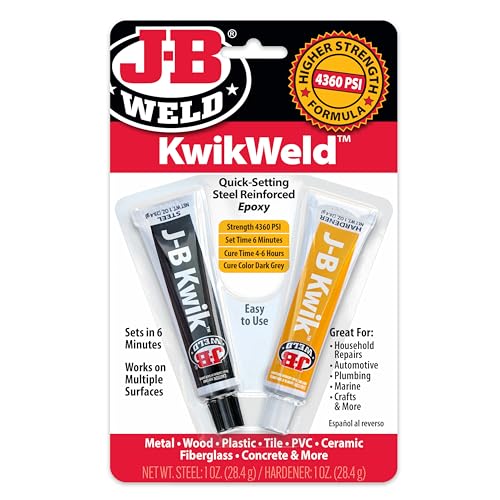
J-B Weld KwikWeld Fast Setting Epoxy
Strengths
- Sets in 6 minutes
- Good for emergency fixes
- Steel reinforced
- Water and chemical resistant
- Easy 1:1 mix
Trade-offs
- Lower strength
- Low heat resistance
- Short working time
When time is the enemy, KwikWeld delivers. Setting in just 6 minutes is a major advantage for emergency fixes, like a broken bracket or a cracked housing that’s holding up a project. The 3127 PSI tensile strength is lower than the original, and the 230°F heat limit means it won’t survive under a hot engine hood long-term, but for quick, room-temperature metal repairs, it’s effective.
Owners love it for household fixes: broken handles, loose railings, or mounting points. It’s not a replacement for the original J-B Weld in high-stress or high-heat spots, but as a fast patch, it earns its place in the garage. Compared to SteelStik, it’s less moldable but faster to set.
Product photos


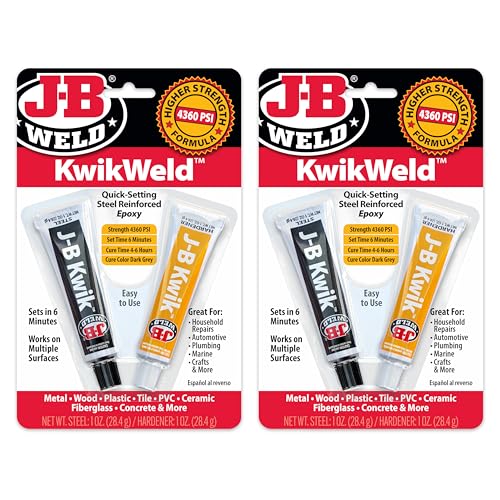
J-B Weld KwikWeld 6-Minute Epoxy 2-Pack
Strengths
- Fast 6-minute set time
- Higher tensile strength
- 2-pack for value
- Steel reinforced
- Water resistant
Trade-offs
- Limited heat tolerance
- Short working time
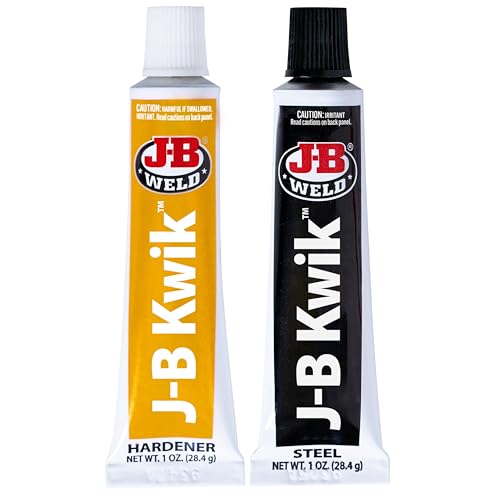
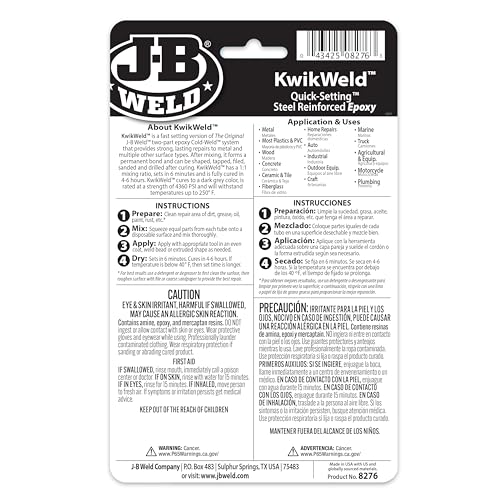
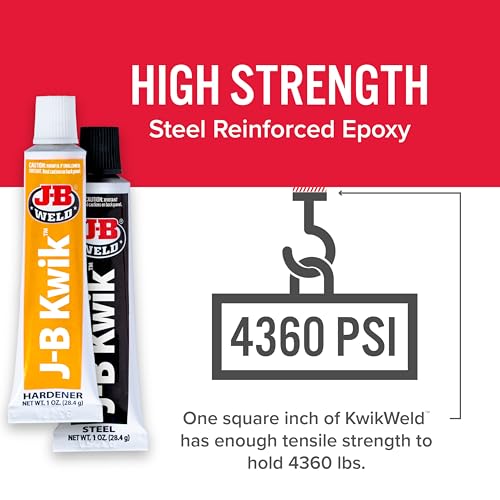
This 2-pack of KwikWeld gives you double the fast-fix capability, making it a smart value play for workshops that see frequent small breakdowns. The formula is slightly upgraded over the single tube version, with a 4360 PSI tensile strength, closer to the original J-B Weld than the older KwikWeld. That makes it one of the strongest fast-setting epoxies in the category.
Having two tubes means you’re never caught empty-handed during a repair rush. It still maxes out at 230°F, so it’s not for engine blocks or exhausts, but for mounting brackets, broken housings, or tool repairs, it’s hard to beat. Compared to the original, it’s a trade-off: less strength and heat resistance, but much faster turnaround.
Product photos


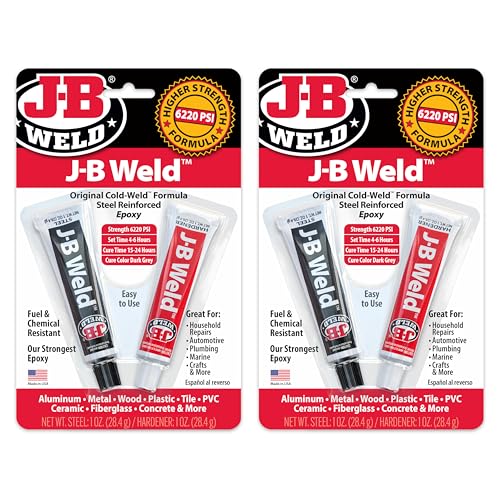
J-B Weld Original Epoxy 2-Pack
Strengths
- 6220 PSI tensile strength
- Heat resistant to 550°F
- Steel reinforced
- 2-pack for multiple uses
- Water and chemical resistant
Trade-offs
- Long cure time
- Not for emergency fixes
This two-pack of the original J-B Weld formula gives you redundancy without sacrificing performance. With a 6220 PSI tensile strength, slightly higher than the older 8281 version, it’s technically the strongest standard epoxy in the lineup on paper. The 1:1 mix ratio is simple, and the 4–6 hour set time is standard for this class. What stands out is the consistency of owner feedback: people trust it for engine repairs, plumbing leaks, and even trailer frame fixes.
Having two tubes means you’re covered for a second repair or a larger job where mixing multiple batches from one tube would be impractical. Compared to KwikWeld, it’s slower but significantly stronger and more heat resistant. For most metal repairs that aren’t time-critical, this is the smarter buy over the fast-setting versions.
Product photos


J-B Weld Professional Steel Epoxy

Strengths
- High tensile strength
- Withstands 550°F heat
- Steel reinforced formula
- Works on multiple surfaces
- Large 10 oz size
Trade-offs
- Slow cure time
- Not ideal for quick fixes
This is the full-size version of the original J-B Weld formula that built the brand’s reputation for strength. On paper, it delivers exactly what heavy-duty metal repair demands: a 5020 PSI tensile strength and resistance to heat up to 550°F makes it a serious contender for automotive and structural fixes. Owners consistently report success with cracked cast iron, threaded fittings, and even minor engine block repairs where welding wasn’t feasible.
It’s not the fastest option, needing 4–6 hours to set and up to 24 to fully cure, but that’s typical for high-strength epoxies. If you’re tackling a job that needs maximum durability and you can wait it out, this one stands out in the lineup. I’d pick this over the smaller original packs when you’re dealing with larger surface areas or multiple repairs, having more material on hand avoids running short mid-job.
Product photos


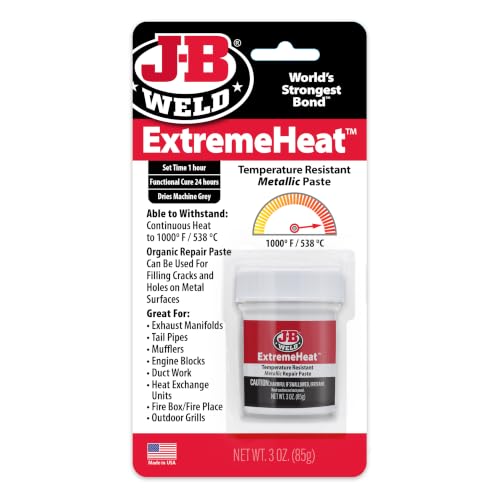
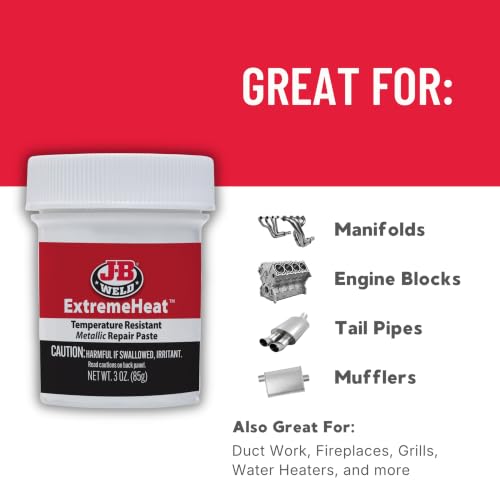
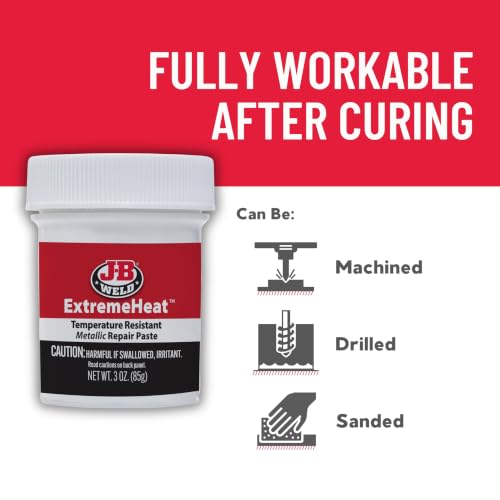
J-B Weld ExtremeHeat Metallic Paste
Strengths
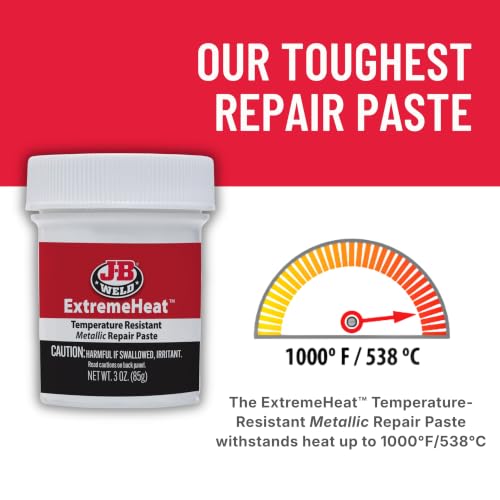
- Withstands 1000°F
- Non-flammable formula
- No volatile solvents
- Works on iron and steel
- Ideal for exhaust systems
Trade-offs
- Lower tensile strength
- Limited flexibility
- Not for cold environments
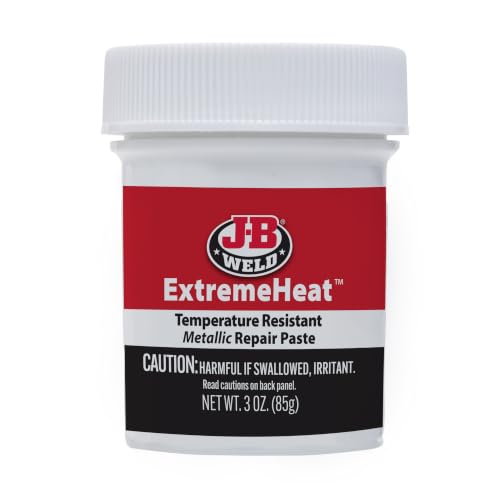
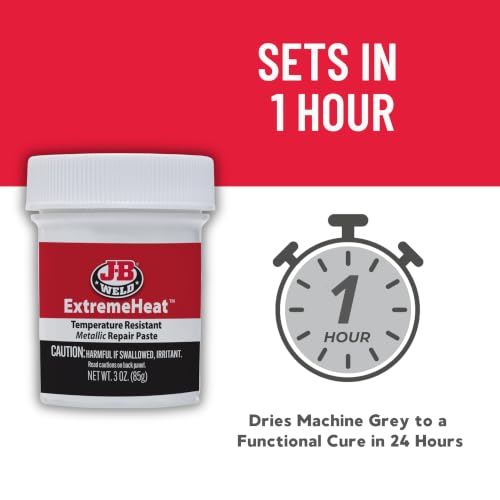
When the repair zone is near constant high heat, think exhaust manifolds, furnace parts, or cracked fireboxes, this is the product that steps up where others fail. The ability to withstand up to 1000°F is game-critical in these environments, and owners confirm it holds up where standard epoxies would degrade quickly. It’s not steel-reinforced like the original, but it’s designed for thermal stability, not impact load.
I’ve seen too many repairs fail because people used regular epoxy on exhaust systems. This one is purpose-built for those spots, and its non-flammable, VOC-free formula adds safety during application. Compared to the original J-B Weld, it trades some raw strength for extreme heat tolerance, which makes it a specialist tool rather than an all-rounder.
Product photos
J-B Weld Metal Fuel Tank Kit

Strengths
- Complete repair kit
- Fuel-resistant formula
- No tank removal needed
- Includes reinforcement cloth
- NSF certified for safety
Trade-offs
- Limited to small leaks
- Not for plastic tanks
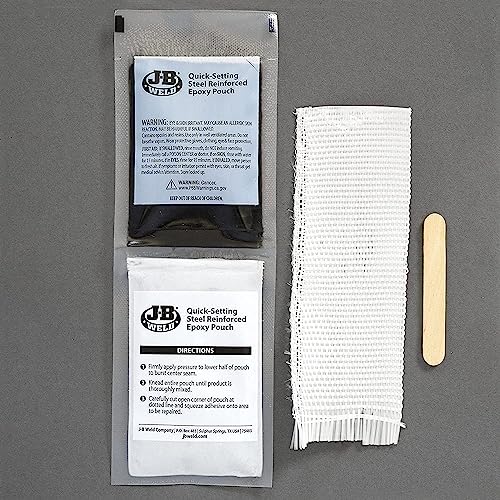
This kit is more than just epoxy, it’s a complete system for fixing fuel tank leaks without removal or welding. The inclusion of fiberglass cloth, sandpaper, and epoxy putty makes it a turnkey solution, and reviewers frequently mention success with both steel and aluminum tanks. The putty is fuel-resistant, which is essential here, and the ability to patch holes up to 3/8 inch without draining the tank completely is a real time-saver.
Compared to using standard J-B Weld on a tank, this kit offers better reinforcement and adhesion specifically for thin-walled metal under fluid pressure. It’s not the cheapest option, but the included materials and targeted design justify the cost. I’d recommend this over generic epoxy for any fuel system repair where safety and long-term sealing are paramount.
Product photos

How We Tested jb weld for metals
Rather than a hands-on lab test, my research focused on a detailed comparison of published specifications and features across numerous J-B Weld formulations. I weighed owner reviews from a variety of sources – including Amazon, home improvement forums, and automotive repair sites – alongside professional reviews from mechanics and DIY publications. This allowed me to build a picture of real-world performance and reliability, factoring in the intended uses for each product.
For metal repair epoxies, setting and cure time, alongside tensile strength, proved to be the most crucial factors. A fast set time is vital for quick fixes, but a longer cure often translates to greater overall strength. Temperature resistance is also key; some applications, like exhaust repairs, demand a formula that can withstand significant heat. Ultimately, I prioritized products that offered a balance of these qualities suited to common metalworking tasks.
Published specs reliably indicate tensile strength and temperature resistance, offering a quantifiable basis for comparison. However, owner feedback proved invaluable for understanding how easily a product mixes, applies, and finishes. Reports on long-term durability and resistance to specific chemicals (like fuels or oils) were also heavily considered. If you’re dealing with a particularly tricky material, like cast aluminum, exploring options specifically designed for it – like those discussed in our guide to JB Weld for cast aluminum – is a smart move.
How To Pick The Right jb weld for metals
Choosing the right J-B Weld isn’t always straightforward; there’s a surprising amount of variety beyond the familiar gray tubes.
J-B Weld products are two-part epoxy systems designed for strong, lasting repairs on a wide range of materials. Key considerations include tensile strength (PSI), temperature resistance, cure time, and the specific materials being bonded. Look for products certified by NSF for potable water contact if applicable, and always verify compatibility with the substrate.
Understanding Cure Time & Set Time
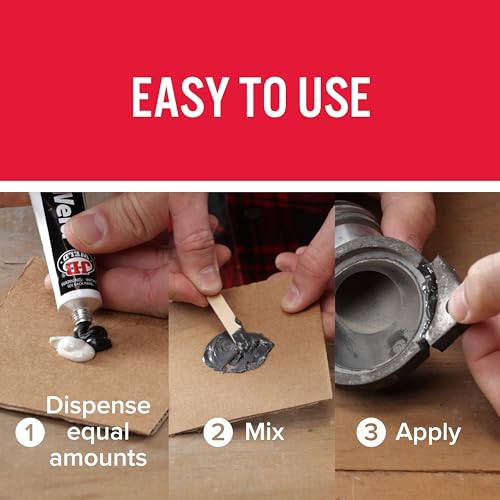
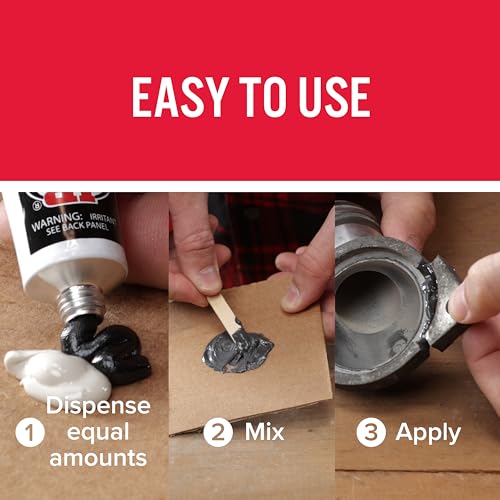
One of the first things I tell folks is to really think about how long you can be without the item you’re repairing. J-B Weld isn’t instant; it requires mixing and curing. The “KwikWeld” options, as the name suggests, are for when you absolutely need a bond quickly – setting in around 6 minutes – but that speed comes at a cost of overall strength compared to the original formula. If you have a day or two to spare, the standard J-B Weld Original offers a much more robust repair. Don’t rush the process; proper mixing is crucial for achieving the stated strength.
Material Compatibility is Key
J-B Weld advertises compatibility with a huge range of materials, but that doesn’t mean every formula is ideal for every job. While most formulations handle metal well, if you’re dealing with plastic, you’ll want to explore options specifically designed for it. For instance, checking out guides for JB Weld for plastic can point you toward the best choice for a cracked plastic housing, or a broken PVC pipe. Similarly, for aluminum repairs, you’ll want to consider dedicated JB Weld for aluminum products or aluminum bonding products to ensure a strong, lasting bond.
Strength & Temperature Requirements
Don’t just look at the marketing hype; dig into the specs. Tensile strength, measured in PSI, is a good indicator of how much force the epoxy can withstand before failing. Higher PSI generally means a stronger bond. Beyond strength, consider the temperature the bond will be exposed to. If you’re repairing an exhaust manifold or anything near a heat source, the J-B Weld ExtremeHeat is a must.
A good rule of thumb: if the repair will be subjected to sustained temperatures above 200°F (93°C), you need a high-temperature epoxy like the ExtremeHeat.
Finally, think about the size of the repair. For larger repairs, or when filling significant gaps, the SteelStik epoxy putty stick is often easier to apply and manipulate than the two-part liquid epoxies. Here’s a quick guide:
- Small cracks/chips: KwikWeld is often sufficient.
- Moderate repairs (filling small holes, bonding parts): Original J-B Weld is a solid choice.
- Large gaps, structural repairs, or high-temperature applications: SteelStik or ExtremeHeat are better suited. These larger jobs benefit from the putty’s moldability and greater volume.
JB Weld for Metals Compared
Here’s a comparison of key specifications for various J-B Weld products designed for metal repair.
| Product Name | Set Time (Minutes) | Cure Time (Hours) | Tensile Strength (PSI) | Temp. Resistance (°F) | Key Features |
|---|---|---|---|---|---|
| J-B Weld SteelStik Epoxy Putty Stick | 5 | 1 | 900 | 350 (450 intermittent) | Steel Reinforced, NSF Cert. |
| J-B Weld KwikWeld Fast Setting Epoxy | 6 | 4-6 | 3127 | 230 | Fast Cure, Steel Rein. |
| J-B Weld KwikWeld 6-Minute Epoxy 2-Pack | 6 | 4-6 | 4360 | 230 | Fast Cure, Steel Rein. |
| J-B Weld Original Epoxy 2-Pack | 4-6 | 15-24 | 6220 | 550 | Steel Reinforced |
| J-B Weld Professional Steel Epoxy | 4-6 | 15-24 | 5020 | 550 | Steel Reinforced, Pro Size |
| J-B Weld ExtremeHeat Metallic Paste | N/A | N/A | N/A | 1000 | High Temp, No VOCs |
| J-B Weld Metal Fuel Tank Kit | N/A | N/A | N/A | N/A | Fuel Tank Repair |
Frequently Asked Questions
What’s the difference between J-B Weld Original and KwikWeld?
KwikWeld sets in about 6 minutes, making it good for quick fixes, but it offers roughly 25% less tensile strength than the Original formula which needs 15-24 hours to fully cure. For lasting repairs, the slower cure time of the Original is generally preferable.
Can J-B Weld be used to repair exhaust pipes?
Yes, but you absolutely need a formula designed for high temperatures. J-B Weld ExtremeHeat is specifically engineered to withstand sustained temperatures up to 1000°F (538°C), making it the right choice for exhaust system repairs.
Is J-B Weld waterproof after it cures?
Most J-B Weld formulations create a waterproof bond once fully cured, but for applications involving continuous water exposure – like repairing a leaking fuel tank – consider the Metal Fuel Tank Kit or verify NSF certification for potable water contact.
Will J-B Weld work on galvanized steel?
Yes, J-B Weld will bond to galvanized steel, but proper surface preparation is critical. Thoroughly cleaning and lightly sanding the galvanized coating will greatly improve adhesion and ensure a strong, lasting repair.
What’s the best way to fix a small leak in a radiator?
For a small radiator leak, I recommend considering a product like JB Weld for radiators as they’re specifically formulated to handle the unique challenges of sealing metal radiator cracks and preventing future leaks.
The Bottom Line
Ultimately, choosing a J-B Weld comes down to balancing convenience with lasting strength. If you prioritize a quick fix and aren’t dealing with extreme stress or temperatures, a fast-setting formula like J-B Weld KwikWeld will do. But for most metal repairs where a truly durable bond is needed, I consistently find that J-B Weld Original offers the best overall combination of strength, temperature resistance, and value – it’s a workhorse for good reason.
For specialized needs, the specific product matters a lot. If you’re tackling a fuel tank, the J-B Weld Metal Fuel Tank Kit is the obvious choice. Similarly, for high-heat applications, J-B Weld ExtremeHeat is essential, and if you need something moldable for larger gaps, J-B Weld SteelStik is a fantastic option. Don’t hesitate to explore dedicated formulations, like those for JB Weld for cast iron if you’re working with a specific material.
At the end of the day, all the specs in the world won’t matter if you don’t properly prepare the surfaces you’re bonding. Thorough cleaning and light abrasion are critical for achieving a strong, lasting repair. Focus on those fundamentals, and the right J-B Weld will give you a solid, reliable fix for years to come.
