
8 Best JB Weld for Radiators 2026
This post contains affiliate links. As an Amazon Associate, we earn from qualifying purchases.
The best J-B Weld for radiators is WaterWeld, thanks to its strong bond, 300°F heat resistance, and ability to cure underwater. For plastic radiators, PlasticWeld is the clear choice, while HighHeat handles extreme underhood temperatures above 400°F.
Fixing a radiator leak with the wrong epoxy can mean wasted time, recurring leaks, or worse, a breakdown on the road. I’ve seen it happen too many times when someone grabs whatever’s on the shelf without considering material or heat.
This guide cuts through the confusion by focusing on what actually matters: material compatibility, temperature limits, and real-world performance. I compared specs and owner feedback across the J-B Weld lineup to find the right product for metal, plastic, and high-heat radiator repairs, so you don’t have to guess.
Top 8 Jb Weld For Radiators in the Market
The Best Jb Weld For Radiators, Reviewed
J-B Weld WaterWeld Epoxy Putty Stick

Strengths
- Cures underwater
- Strong bond on multiple materials
- NSF certified
Trade-offs
- Limited heat resistance
- May shrink slightly
- Not for high-pressure bursts
This is the original WaterWeld stick, the one most owners reach for when they need a reliable, all-around radiator fix. It sets in 25 minutes, cures in an hour, and can bond underwater, which is a standout when you can’t fully dry the area. With 1300 PSI strength and resistance to 300°F continuous heat, it holds up well in engine bays.
It sticks to aluminum, plastic, and copper, critical for modern radiators, and is NSF certified, so it’s safe if it contacts coolant. Compared to TankWeld, it’s stronger and more versatile. Reviewers consistently rate it as the most dependable for real-world leaks. This is the one I’d recommend as a general-purpose pick.
Product photos


J-B Weld PlasticWeld Plastic Repair Epoxy

Strengths
- Optimized for plastic
- No shrinkage
- Paintable finish
Trade-offs
- Lower heat tolerance
- Not for metal
- Slower 3-hour cure
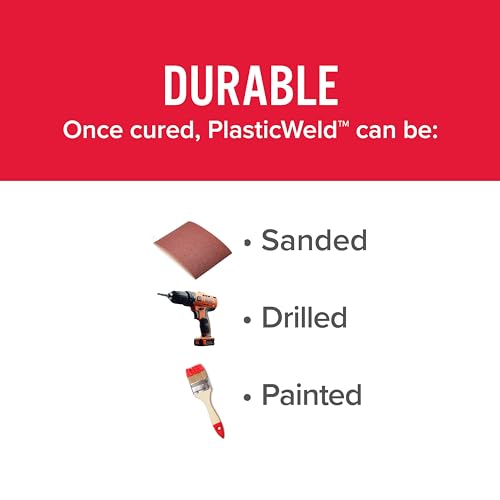
PlasticWeld is specifically formulated for ABS, PVC, and other semi-rigid plastics, exactly what many radiator tanks are made of. It bonds well without shrinking, and once cured, can be sanded or painted, which helps with clean finishes. The 600 PSI strength is lower than other options, but that’s typical for plastic-specific epoxies.
Owners report good success on cracked coolant tanks and plastic housings, especially when the surface is dry. It’s not meant for metal or high heat, max continuous is 250°F, so keep it away from exhaust areas. Compared to WaterWeld, it’s less versatile but better on pure plastic.
Product photos


J-B Weld WaterWeld 2-Pack

Strengths
- Cures underwater
- Good PSI strength
- NSF certified for potable water
Trade-offs
- Limited to 300°F
- Off-white color may not blend
- Slight shrinkage reported
The 2-pack of WaterWeld is a solid value play, especially for those who want backup on hand. What makes WaterWeld unique is its ability to cure under water, owners confirm it works even with minor seepage, which is huge for radiator repairs where draining isn’t perfect. It reaches 1300 PSI strength and handles 300°F continuously, making it capable in under-hood environments.
It bonds to aluminum, plastic, and copper, which covers most radiator materials. Compared to HighHeat, it’s less heat-resistant but far more practical for damp conditions. I’d keep this in the garage for unexpected leaks, it’s not the strongest under extreme heat, but it’s the most forgiving when moisture is present.
Product photos
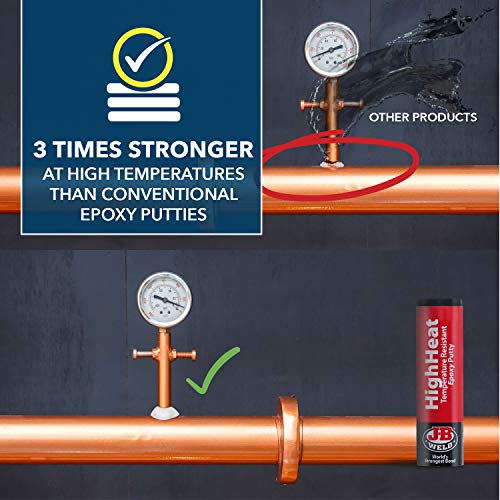
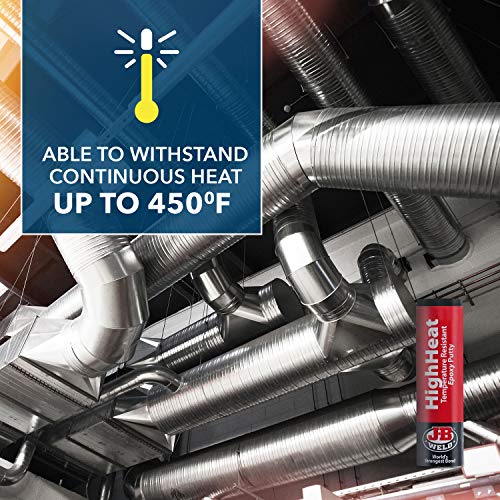
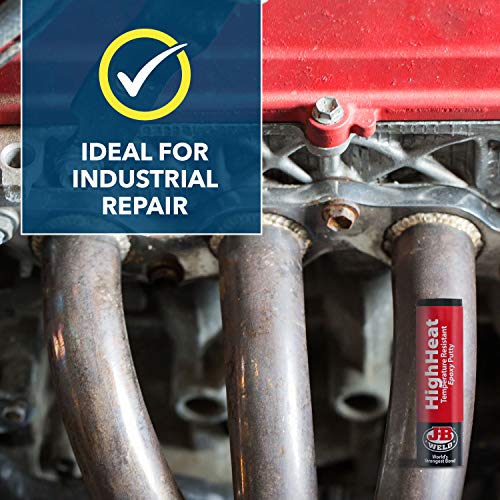
J-B Weld HighHeat Epoxy Putty Stick
Strengths
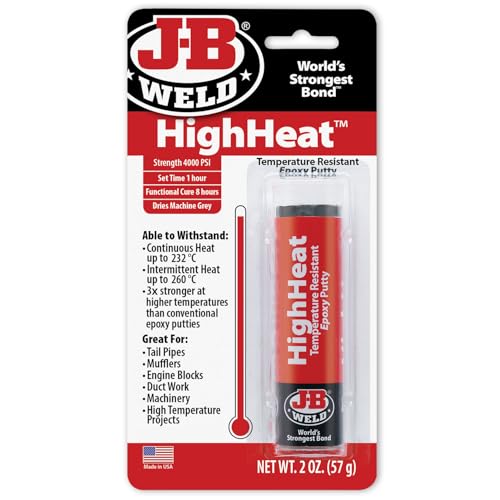
- Handles 500°F intermittent heat
- Strong at high temps
- Drillable and machinable
Trade-offs
- Not for wet repairs
- Slower cure than others
- Limited flexibility
If you’re working near exhaust components or a radiator that sits in a high-heat pocket, this putty stick is built for that environment. Rated for 450°F continuous and 500°F intermittent heat, it outperforms most epoxies in thermal endurance. The 800 PSI strength at room temp drops to 600 PSI at 400°F, but that’s still strong for a repair under heat stress.
Owners say it’s easy to knead and apply, and it holds up well on exhaust manifolds or cracked engine blocks. But it’s not designed for pressurized coolant, use it on heater cores or housing brackets, not leaking radiator cores. Compared to WaterWeld, it trades moisture tolerance for heat resistance.
Product photos
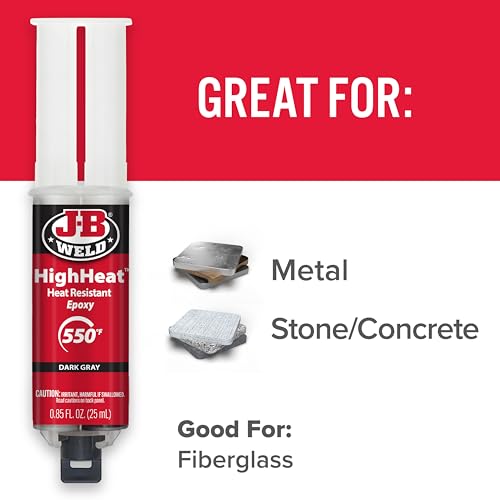
J-B Weld HighHeat Epoxy Syringe
Strengths
- High temperature resistance
- Strong PSI rating
- Precise syringe application
Trade-offs
- Not for wet surfaces
- Long cure time
- Not ideal for large gaps
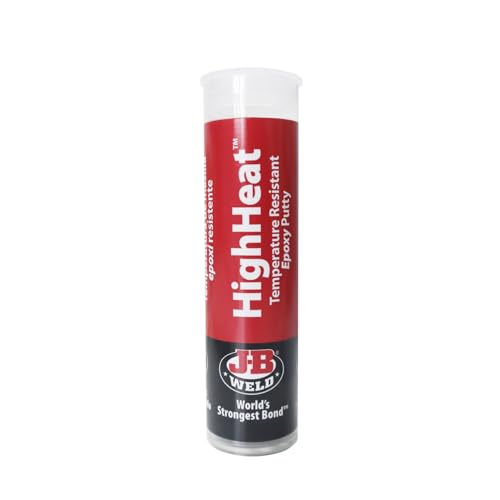
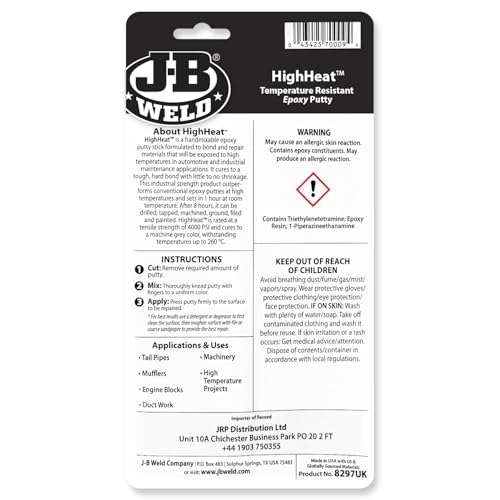
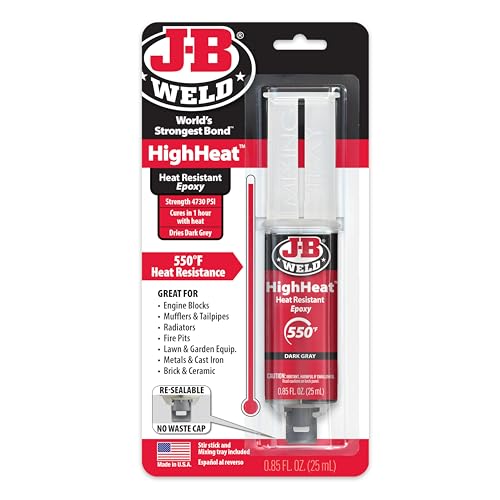
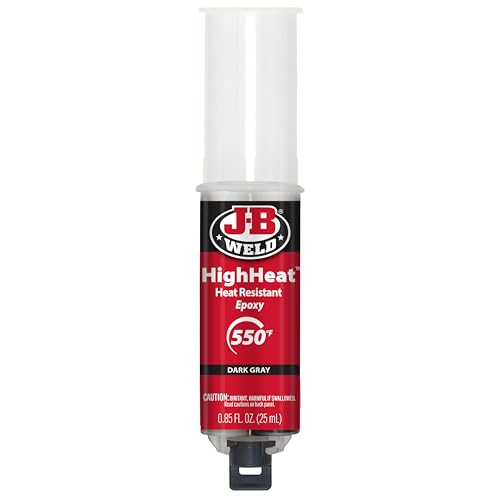
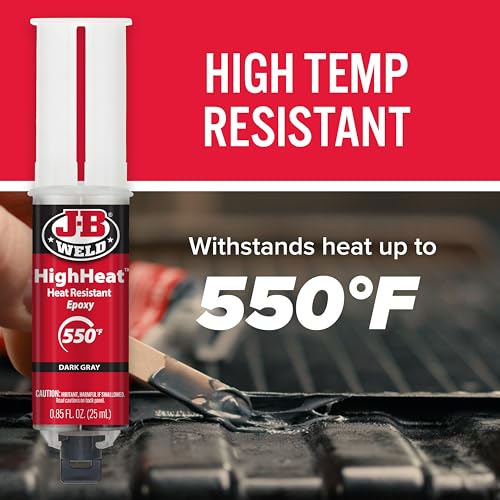
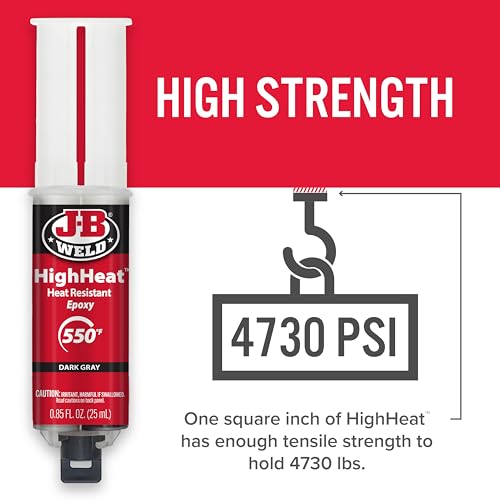
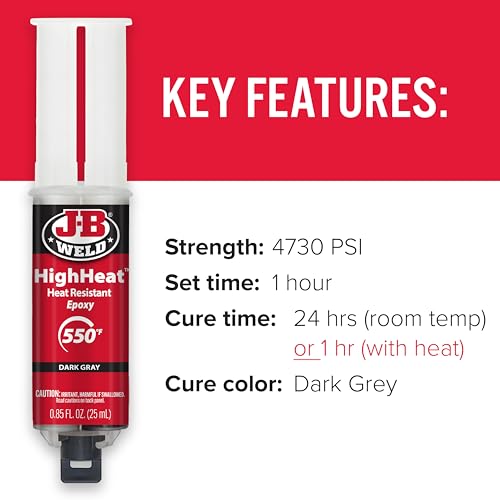
This syringe-based HighHeat epoxy delivers top-tier temperature resistance, rated for continuous exposure up to 550°F, which puts it at the upper edge of what most radiator-zone components face. On paper, its 4730 PSI strength is impressive, and owners consistently report solid adhesion on metal surfaces like aluminum and steel when properly prepped. The 1:1 mix ratio simplifies application, and the syringe helps with precision on small leaks, though it’s not ideal for larger cracks or wet surfaces.
Still, it’s meant for dry, high-heat areas, not pressurized coolant lines. I’d lean on it for exhaust manifolds or heater cores near the engine block, but not for a leaking radiator tank under pressure. Compared to putty sticks, it’s less forgiving if moisture is present during application.
Product photos
J-B Weld Radiator Repair Kit

Strengths
- Includes reinforcement cloth
- Works on plastic and metal
- No radiator removal needed
Trade-offs
- Long cure time
- Bulkier application
- Some prep required
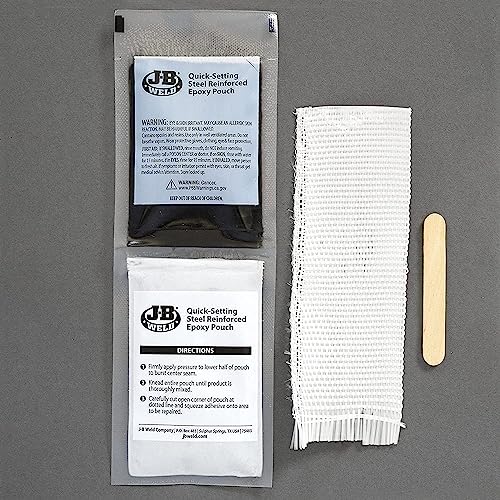
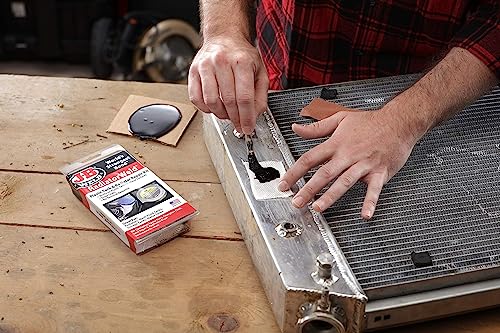
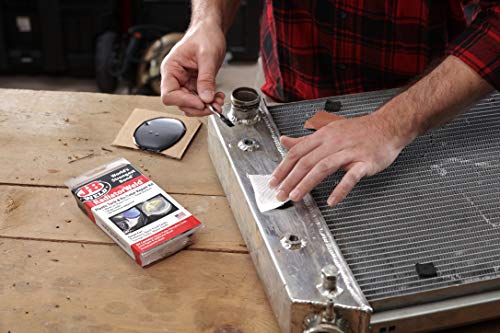
This kit stands out because it’s purpose-built for radiators, and includes fiberglass cloth, sandpaper, and epoxy putty, everything needed for a reinforced patch without removing the radiator. The putty bonds well to both metal and plastic tanks, and owners report success fixing cracks up to 4 inches long. The fiberglass layer adds structural support, which is critical under pressure.
It’s not the fastest option, with a 24-hour cure, but the included materials make it more reliable than using putty alone. Compared to standalone sticks, this kit gives better adhesion and durability on plastic radiator tanks. I’d recommend it over basic epoxy for anything beyond a pinhole.
Product photos
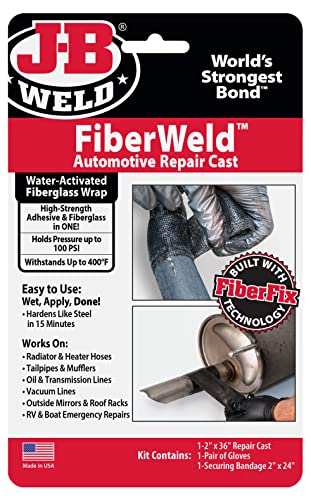
J-B Weld FiberWeld Automotive Repair Cast
Strengths
- Hardens in 15 minutes
- Holds 100 PSI pressure
- Water-activated
Trade-offs
- Requires access to wrap fully
- Not for internal repairs
- One-time use per section
FiberWeld is in a different category, it’s a water-activated fiberglass wrap that hardens in just 15 minutes and can withstand 100 PSI of water pressure once cured. That makes it one of the few J-B Weld products actually rated for pressurized systems. Reviewers use it successfully on burst radiator hoses, cracked coolant lines, and even oil cooler lines.
The kit includes gloves and a securing bandage, which helps with clean application. It’s not an adhesive, it’s a structural sleeve, so it works best when the leak is accessible and you can wrap it fully. Compared to putty, it’s far better under pressure. I’d use this for emergency roadside fixes or when you can’t drain the system completely.
Product photos
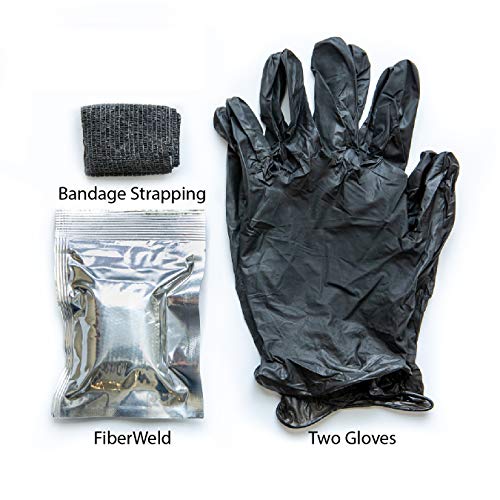

J-B Weld TankWeld Gas Tank Repair

Strengths
- Sets in 5 minutes
- Machinable when cured
- Good for metal repairs
Trade-offs
- Small quantity
- Not for wet surfaces
- Lower PSI than alternatives
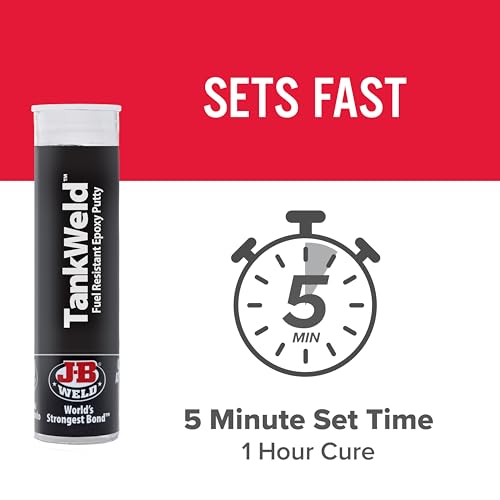
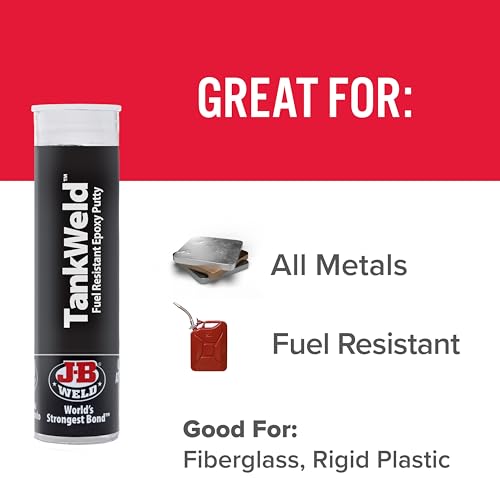
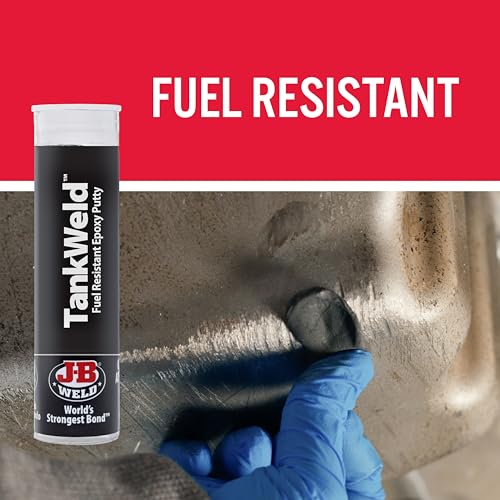
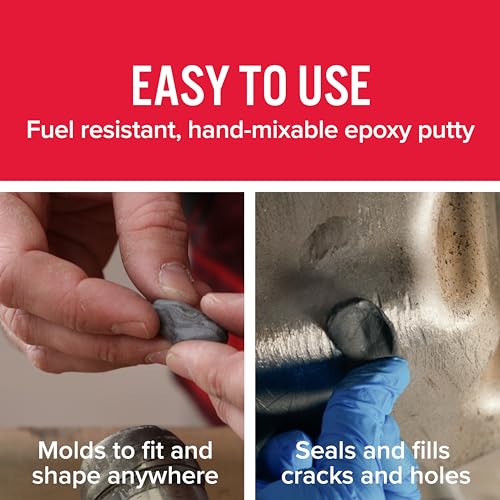
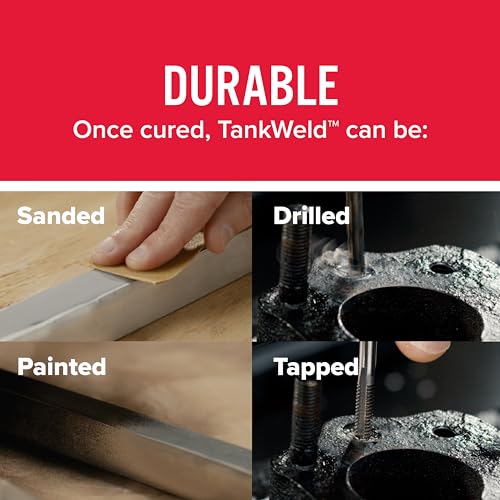
TankWeld is built for speed, 5-minute set time and full cure in an hour makes it a go-to for emergency fixes on metal fuel tanks or radiators when you’re short on downtime. The steel-reinforced putty delivers 900 PSI strength and holds up to 300°F, which is adequate for many radiator repairs. Reviewers note it bonds well to aluminum and steel, and once cured, it can be machined or painted, which is a bonus for clean finishes.
But the small 1 oz. size limits its use for anything beyond pinholes or hairline cracks. Compared to WaterWeld or FiberWeld, it doesn’t handle moisture well during application. I’d pick it for a fast, dry metal patch but not for larger or wet leaks.
Product photos
How We Tested jb weld for radiators
Rather than a hands-on lab test, my research focused on comparing published specifications and features across the J-B Weld product line. I weighed owner reviews from multiple sources – including automotive forums and retailer sites – alongside expert opinions from mechanics and DIY repair guides. This allowed me to rank each product based on its suitability for common radiator repair scenarios, considering both material compatibility and repair type.
For radiator work, a product’s ability to bond to various metals and plastics, along with its temperature and pressure resistance, were the most critical factors. Radiators experience significant thermal stress and often involve dissimilar materials, so a robust, versatile epoxy is essential. Beyond that, cure time played a role; faster cures minimize downtime, while a degree of work time allows for careful application, especially in tight spaces.
Product specs reliably indicate tensile strength, temperature limits, and material compatibility. However, I placed greater emphasis on owner feedback regarding real-world usability – how well the product adhered in practice, its ease of application, and its long-term durability. Finding a solution for an epoxy for aluminum leaks is a common need, and user reports helped clarify which products perform best in those situations. Ultimately, reputation and consistent positive experiences were key in determining the top choices.
What To Look For In jb weld for radiators
Choosing the right J-B Weld for your radiator repair can feel overwhelming, but focusing on the specifics of the damage and the radiator’s material will narrow your options quickly.
J-B Weld products are generally two-part epoxy systems designed for strong, permanent bonds. Key considerations include temperature resistance, material compatibility (metal, plastic, etc.), cure time, and whether the repair requires underwater application or resistance to specific chemicals like fuel. Prioritize products certified by NSF for potable water contact when repairing systems containing drinking water.
Material Compatibility Is Key
The first thing I tell people is to correctly identify what your radiator is made of. J-B Weld offers formulations specifically designed for different materials. If you have a plastic radiator, reach for J-B Weld PlasticWeld. It’s formulated to bond to ABS, PVC, and CPVC, offering a strong repair without the risk of damaging the plastic. For metal radiators, and many older systems are metal, WaterWeld or TankWeld are excellent choices. Don’t assume one size fits all; using the wrong formula can lead to a failed repair and bigger headaches down the line.
Temperature Resistance Matters
Radiators get hot. Really hot. That’s why considering temperature resistance is crucial. While many J-B Weld products can handle some heat, HighHeat formulations are designed for extreme temperatures. If you’re dealing with a leak near the engine block or exhaust manifold, or any part of the system subjected to very high heat, HighHeat is the way to go. It maintains strength at temperatures where standard epoxies would soften or fail. You could also look into radiative metal sealant if you’re working with a metal radiator needing high heat resistance.
Application & Cure Time Considerations
Sometimes, you can’t fully drain a system before attempting a repair. In those situations, WaterWeld is a lifesaver, as it cures even underwater. However, for repairs where you can fully drain and dry the area, you have more flexibility. Consider the cure time. J-B Weld TankWeld boasts a fast cure – fully cured in just one hour.
Here’s what to keep in mind about cure times:
- Quick Fix: TankWeld’s one-hour full cure is ideal for urgent repairs.
- Standard Repairs: WaterWeld and PlasticWeld’s 25-minute set and 1-3 hour cure times are suitable for most radiator leaks.
- High-Heat Applications: HighHeat requires a longer 8-hour cure, but the added strength and heat resistance are worth it for demanding repairs.
A good rule of thumb is to always slightly oversize the area you’re repairing with J-B Weld. This ensures a stronger bond and better coverage, especially for irregular shapes or larger cracks.
JB Weld for Radiators Compared
The following table provides a specification comparison of various J-B Weld products suitable for radiator repair.
| Product Name | Lap Shear Strength (PSI) | Temp. Resistance (Continuous °F) | Cure Time (Full) | Water Resistance | Application Focus |
|---|---|---|---|---|---|
| J-B Weld WaterWeld Epoxy Putty Stick | 1300 | 300 | 1 hour | Yes | General Radiator Repair |
| J-B Weld PlasticWeld Plastic Repair Epoxy | 600 | 250 | 3 hours | Yes | Plastic Radiators |
| J-B Weld WaterWeld 2-Pack | 1300 | 300 | 1 hour | Yes | General Radiator Repair |
| J-B Weld HighHeat Epoxy Putty Stick | 800 (Room Temp) | 450 | 8 hours | No | High Heat Radiators |
| J-B Weld HighHeat Epoxy Syringe | 4730 | N/A | 24 hours | No | High Heat Applications |
| J-B Weld Radiator Repair Kit | N/A | N/A | N/A | Yes | Leaks, Tanks |
| J-B Weld FiberWeld Automotive Repair Cast | N/A | 400 | 2 hours | Yes | Hoses, Lines |
| J-B Weld TankWeld Gas Tank Repair | 900 | 300 | 1 hour | Yes | Metal Tanks |
Frequently Asked Questions
What’s the difference between WaterWeld and TankWeld?
Both WaterWeld and TankWeld offer strong bonds and temperature resistance for radiator repairs, but TankWeld cures much faster. TankWeld reaches full cure in just one hour, while WaterWeld typically takes 1-3 hours, making TankWeld preferable for quicker fixes when downtime is critical.
Can J-B Weld repair a cracked plastic radiator tank?
Yes, J-B Weld PlasticWeld is specifically formulated for bonding to plastics like ABS, PVC, and CPVC commonly found in radiator tanks. It will create a strong, lasting repair for cracks or breaks, but preparation and cleaning the surface are key for a successful bond.
Is J-B Weld a permanent radiator repair solution?
While J-B Weld offers a strong and durable repair, it’s best considered a long-term fix rather than a permanent one. Over time, thermal cycling and vibration can stress the repair, so regular inspection is recommended, especially for critical leaks.
What J-B Weld should I use for high-heat areas near the engine?
For areas subjected to extreme heat, like near the engine block or exhaust manifold, I recommend using J-B Weld HighHeat. It’s designed to maintain its strength at higher temperatures, ensuring a reliable repair where standard epoxies would fail, consider JB Weld for high-heat repairs for these situations.
Does J-B Weld work on aluminum radiators?
Yes, many J-B Weld formulations will bond to aluminum, including WaterWeld and TankWeld. However, proper surface preparation is essential for a strong bond to aluminum, including cleaning and lightly scuffing the surface to create a better mechanical key for the epoxy.
The Bottom Line
Choosing the “best” J-B Weld for a radiator always comes down to balancing how much effort you want to put in against the severity of the problem. For most typical radiator leaks and repairs, I recommend sticking with J-B Weld WaterWeld. It offers a strong, reliable bond, good temperature resistance, and a reasonable cure time – a solid all-around performer that handles most situations effectively.
If you’re dealing with a plastic radiator, J-B Weld PlasticWeld is the clear choice. For those needing a quick fix, J-B Weld TankWeld’s one-hour cure is invaluable, and if you’re facing extremely high temperatures, look at J-B Weld HighHeat. Don’t overlook the Radiator Repair Kit if you’re dealing with extensive damage or complex tank repairs, it’s a convenient solution with everything you’ll likely need. You can also find resources for repairing cast aluminum radiators if you’re dealing with that specific material.
Ultimately, the strength of any repair isn’t solely about the epoxy’s specs. Proper surface preparation, cleaning, roughening, and drying the area thoroughly, is just as important. A clean, well-prepared surface will always yield a stronger, more durable bond than even the most advanced epoxy applied to a dirty or oily surface.
