
8 Best Industrial Dust Collectors of 2026
This post contains affiliate links. As an Amazon Associate, we earn from qualifying purchases.
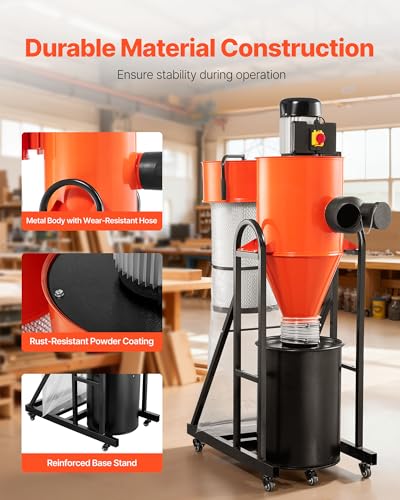
The VEVOR 3.0HP Vortex Cone Dust Collector stands out as the best overall industrial dust collector, delivering strong airflow and solid capacity for demanding shops. For tighter budgets, the VEVOR 1.5HP Cyclone Dust Collector offers reliable performance in a smaller footprint, while the Bosch VAC090AH HEPA Dust Extractor is the top choice for fine filtration and OSHA compliance in sensitive environments.
Most shop owners struggle with dust that clogs filters, reduces tool efficiency, and creates health risks over time. A poorly matched collector can be worse than none at all, wasting power and space while failing to protect your lungs or your equipment.
This guide cuts through the marketing by focusing on real specs and user experiences. I compared airflow, filtration, capacity, and key features like auto-start and portability to find models that deliver where it counts. These picks are based on what actual owners report and what matters in daily shop use.
Top 8 Industrial Dust Collectors in the Market
The Best Industrial Dust Collectors, Reviewed
VEVOR 3.0HP Vortex Cone Dust Collector
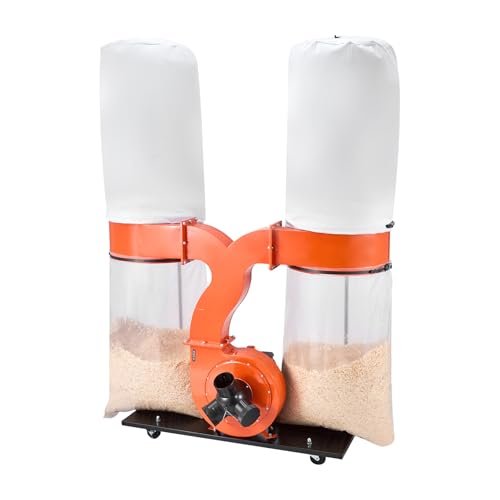
Strengths
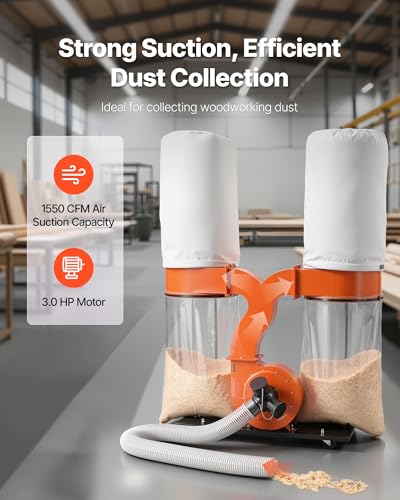
- 1550 CFM output
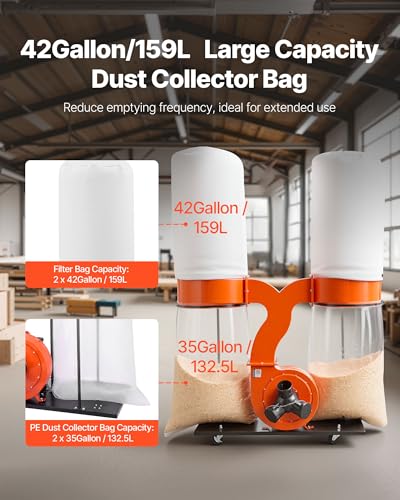
- Dual 42-gallon filter bags
- 2.5-micron filtration
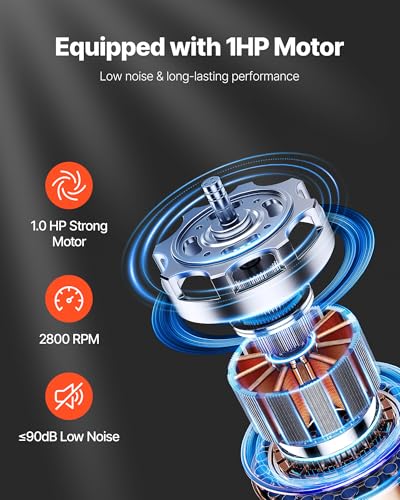
- 3.0HP induction motor
- Easy clip-on bag system
Trade-offs
- 220V only
- Heavy and bulky
- No casters included
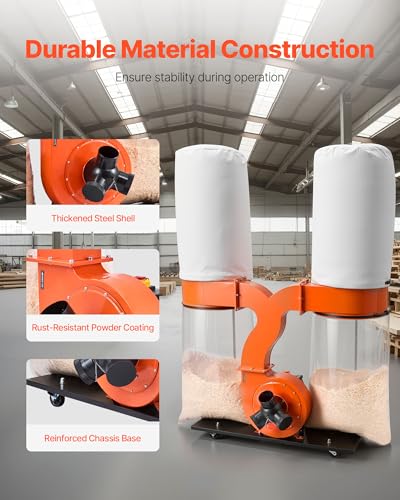
On paper, this VEVOR unit looks like a workshop beast. With 1550 CFM and a 3.0HP motor, it’s built to handle serious dust loads, and owners consistently report it keeps up with planers, jointers, and table saws running in sequence. The dual 42-gallon filter bags are a standout, more volume means fewer dump stops during long sessions. The 2.5-micron filtration isn’t HEPA-level, but it’s solid for general woodshop use, and the vortex cone design helps separate heavier debris before it hits the filter, which helps sustain suction.
I’d pick this over smaller units for a shared or mid-to-large shop where downtime matters. Compared to the WEN DC1300, it moves more air and has better storage, though it lacks mobility out of the box. The 220V requirement also means you’ll need a dedicated circuit, which could be a hurdle for some garages. But if you’ve got the power supply, this is a no-nonsense workhorse that delivers industrial-level performance at a non-industrial price.
Product photos

JET DC-1200VX-CK1 2HP Vortex Collector

Strengths
- Vortex cone separation
- 2-micron filtration
- Industrial motor build
- Quiet single-stage design
- Quick-connect bags
Trade-offs
- Lower CFM than rivals
- 230V only
- Higher price point
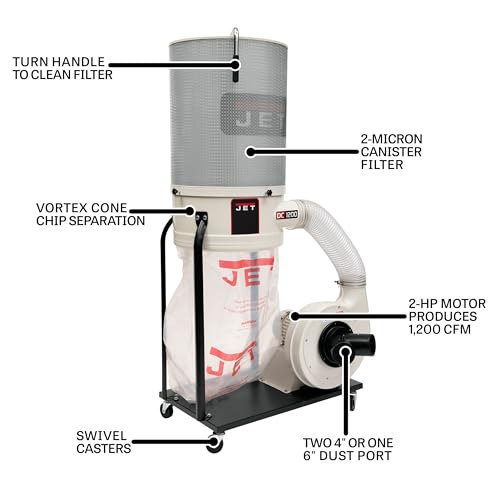
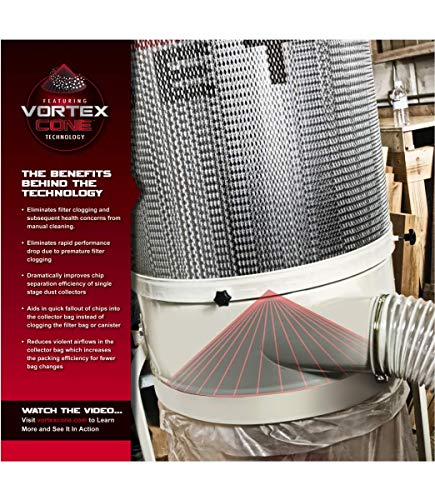
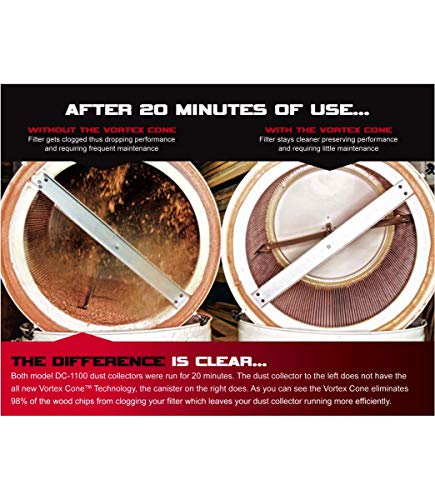
JET has long been a trusted name in industrial tools, and this 2 HP, 2-micron unit shows why. It’s built like a tank, with a vortex cone design that boosts chip separation and reduces filter clogging, a key advantage for long runs. Owners praise its durability and consistent suction, even after hours of use. The permanently lubricated motor and industrial-grade controls mean it’s made for continuous operation, not just weekend duty.
It doesn’t have the highest CFM, but what it lacks in raw power it makes up for in reliability and smart engineering. Compared to the VEVOR 1550 CFM model, it’s less about brute force and more about sustained performance. I’d take this one if I were running a professional cabinet shop and needed a collector I could trust daily. The 2-micron filter is also better than most in this range, though still not HEPA.
Product photos

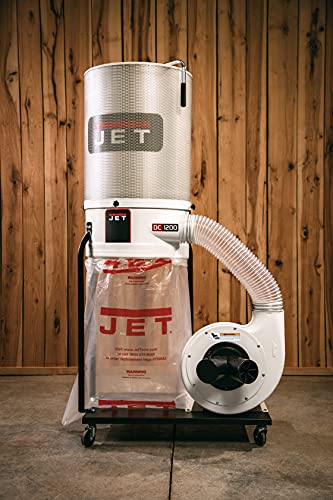
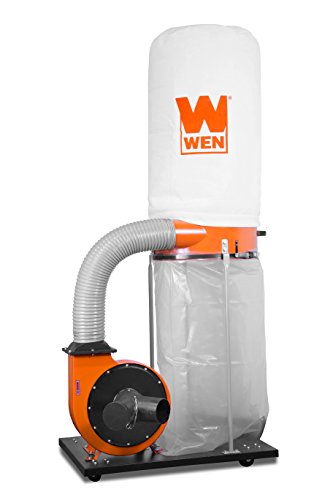
WEN DC1300 1,300 CFM Dust Collector
Strengths
- Dual 4-inch inlets
- Mobile base with casters
- 50-gallon vertical bag
- 1,300 CFM suction
- 14-amp reliable motor
Trade-offs
- 5-micron filter limit
- Bag can sag when full
- No auto-clean feature
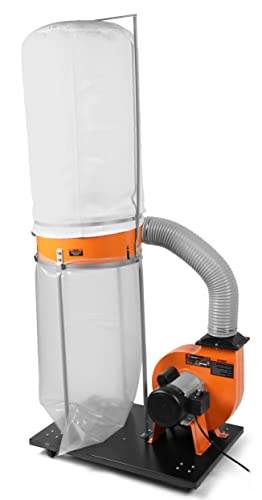
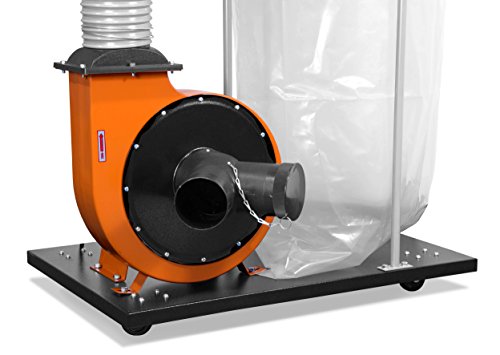
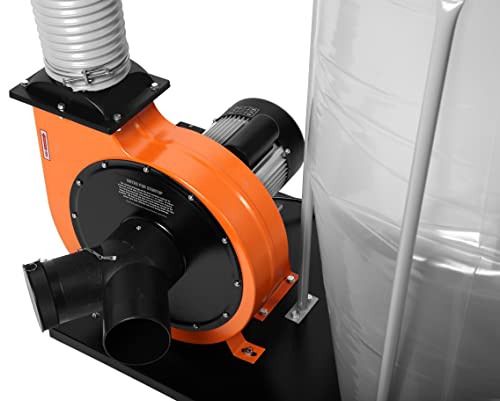
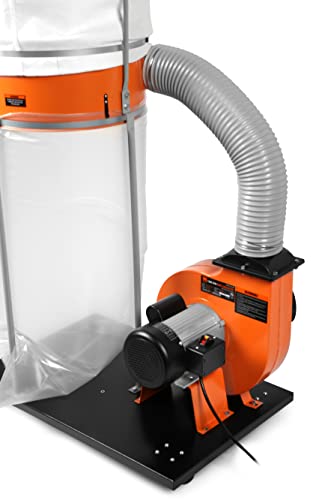
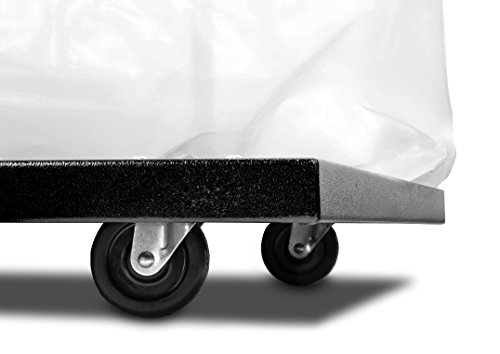
The WEN DC1300 hits the sweet spot for many mid-sized shops. At 1,300 CFM, it’s not the strongest on paper, but it’s more than enough for occasional jointer use or a table saw paired with a router. What really stands out is the dual 4-inch inlets, you can run two tools at once without a switch box, which owners love for workflow efficiency. The 50-gallon vertical bag is easy to access and dump, and the mobile base with swivel casters makes repositioning a breeze.
Compared to the Central Machinery model, it’s quieter and better built, though it falls short in raw power. The 5-micron filtration won’t catch the finest silica dust, so it’s not OSHA-compliant for daily concrete or MDF work. But for general woodworking, especially in a garage or hobby shop, it’s a smart, flexible pick. I’d recommend it over the BUCKTOOL for anyone who values mobility and dual-tool use.
Product photos
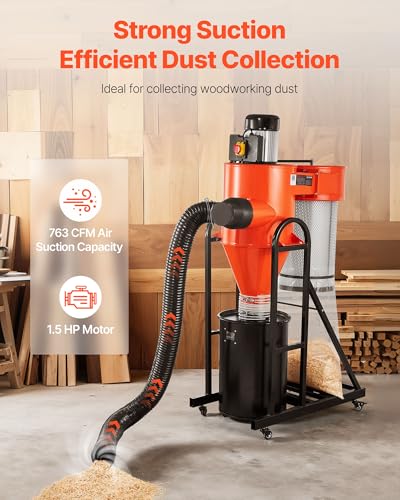
VEVOR 1.5HP Cyclone Dust Collector
Strengths
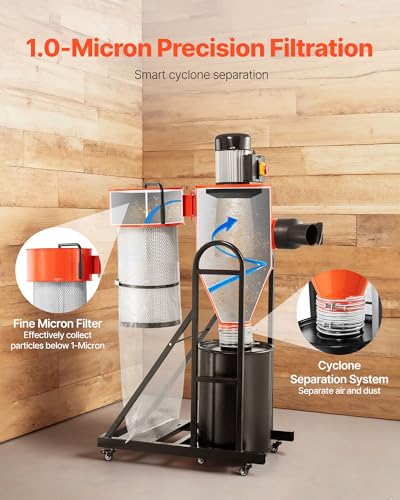
- 1-micron filtration
- Cyclone separation
- 763 CFM suction
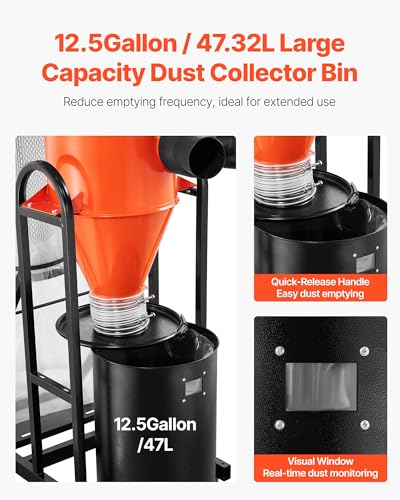
- Visible dust window
- Easy lever dump
Trade-offs
- 12.5-gallon capacity
- No dual inlets
- Base lacks locking casters
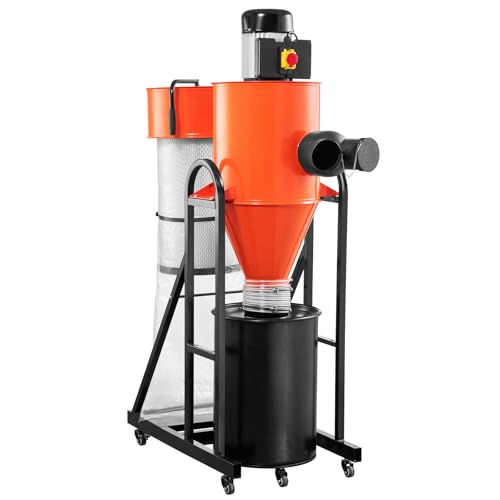
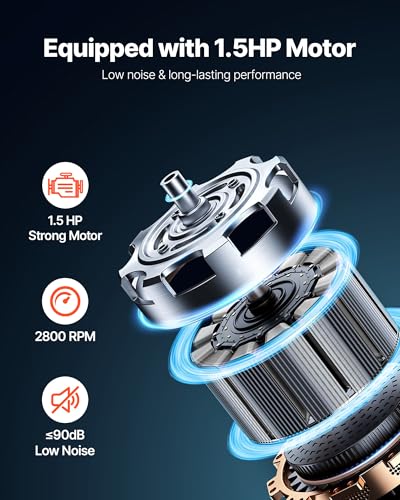
This VEVOR cyclone model is a strong pick for fine dust control. At 763 CFM, it’s not the strongest, but the 1-micron filtration and smart cyclone separation make it effective at capturing the smallest particles. The 12.5-gallon drum is manageable, and the visible dust window is a small but appreciated touch. Owners note it runs quietly for its class, and the lever-release bin makes emptying quick.
Compared to the Bosch VAC090AH, it’s better for volume but less compliant. Against the WEN 3417, it’s more of a true collector. I’d choose this for a shop focused on finish carpentry or detailed work where fine sawdust is a constant issue. It’s not for heavy milling, but for precision and filtration, it’s a standout.
Product photos
WEN 3417 Air Filtration System
Strengths
- 1-micron filtration
- Remote control
- Programmable timer
- 3-speed settings
- Covers up to 1000 sq ft
Trade-offs
- Not a dust collector
- No tool ports
- Low static pressure
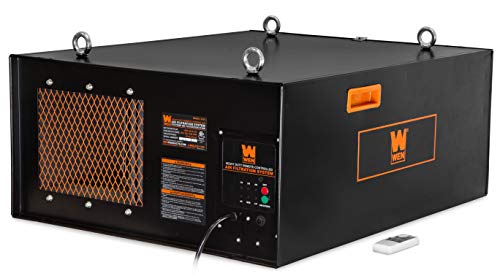
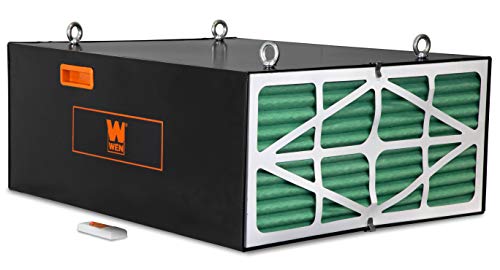
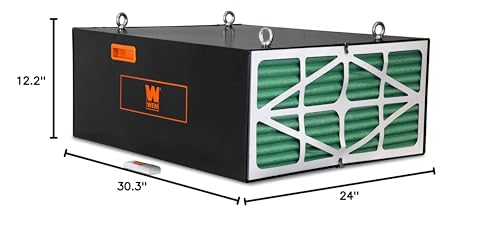
This isn’t a dust collector, it’s an air scrubber. With 1044 CFM max and a 1-micron filter, it’s designed to clean ambient air, not capture dust at the source. The remote control and programmable timer are genuinely useful, letting you run it after hours to clear lingering dust. Owners use it alongside a collector, not as a replacement.
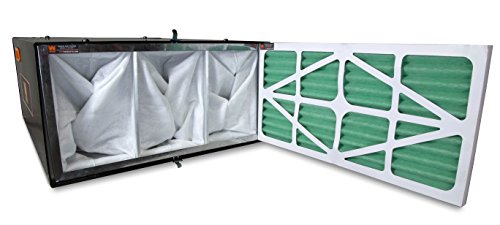
The 1-micron main filter and 5-micron pre-filter handle fine particles well, and at 63–68 dB, it’s quiet for its class. But it has no tool integration or high suction for chips. Compared to the VEVOR cyclone model, it’s a different beast entirely. I’d recommend this for anyone who finishes projects and wants cleaner breathing air, especially in attached garages or indoor shops.
Product photos

Central Machinery 2HP Dust Collector

Strengths
- 1550 CFM on 120V
- Compact vertical design
- 2 HP motor
- Good value
- 3450 RPM impeller
Trade-offs
- Basic 5-micron filter
- No casters
- Spartan build quality
This Central Machinery unit surprises with 1550 CFM from a 2 HP, 120V motor, a rare combo. On paper, it’s a powerhouse for standard outlets, making it a strong value pick. It’s tall and narrow, so it fits in tighter spaces, and at 103 lbs, it’s manageable for repositioning. But owners note the build feels more utilitarian than premium, and the 5-micron filter limits its use with fine dust.
Compared to the VEVOR 1550 CFM model, it lacks dual bags and mobility, but wins on voltage flexibility. I’d recommend it for DIYers who want high airflow without upgrading their electrical system. It’s not as refined as the JET or as mobile as the WEN, but for raw power on a budget, it’s hard to beat. Just don’t expect advanced features or quiet operation.
Product photos
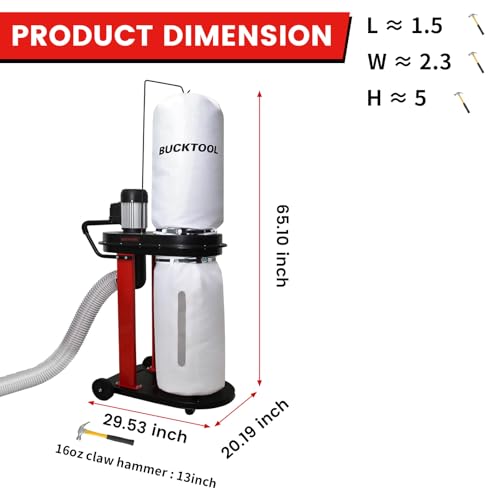
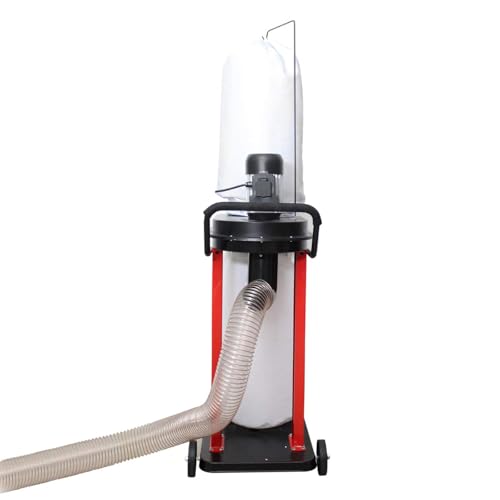
BUCKTOOL 1.2HP Auto-Start Dust Collector

Strengths
- Auto-start tool sync
- 3-bag filtration system
- Includes reducers and hose
- 1.2 HP motor
- Compact mobile base
Trade-offs
- 750 CFM limit
- Plastic bag durability
- Not for large tools
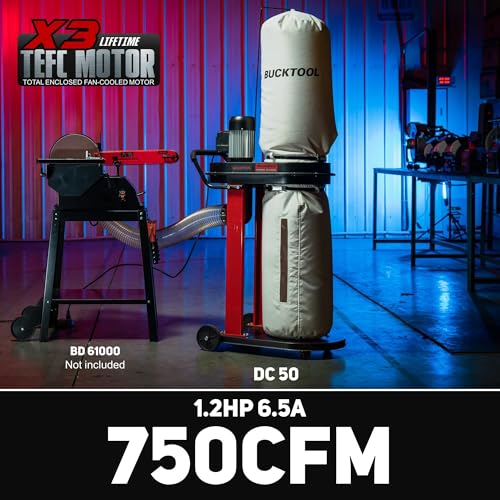
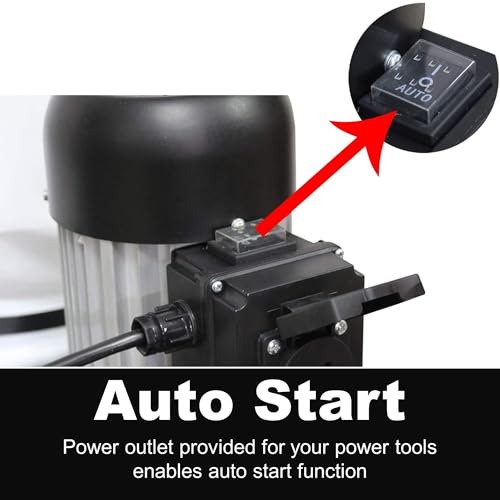
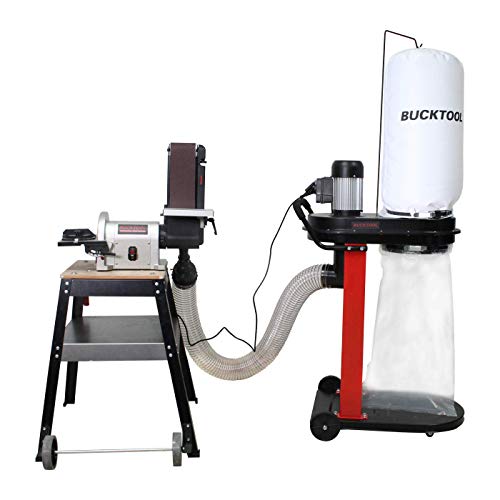
The BUCKTOOL stands out for tool integration. Its auto-start feature powers on when your saw or sander does, which owners say cuts clutter and improves workflow. At 750 CFM, it’s modest, but enough for benchtop tools or a small table saw. The inclusion of 5 reducers and a 4-inch hose makes it versatile, and the three-bag system helps with fine dust separation.
It’s not built for heavy use, but the 1.2 HP motor and 120V plug make it accessible. Compared to the WEN DC1300, it’s less powerful but smarter for single-tool shops. I’d pick this for a compact setup where convenience and automation matter more than raw power. Just don’t expect it to keep up with a planer or wide-belt sander.
Product photos
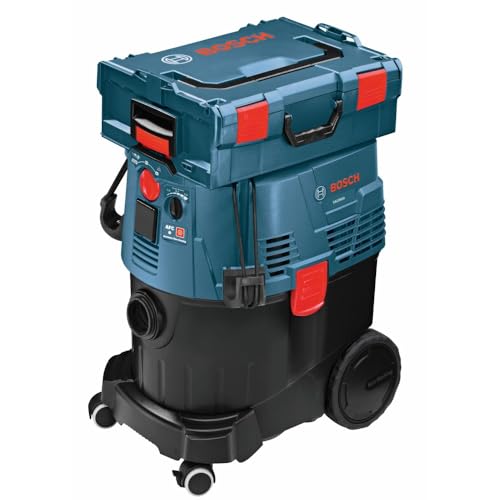
Bosch VAC090AH HEPA Dust Extractor
Strengths
- HEPA 0.3-micron filtration
- Auto filter cleaning
- Tool-sync power activation
- OSHA Table 1 compliant
- 97 in. static lift
Trade-offs
- Low 150 CFM
- Small 9-gallon capacity
- Not for large debris
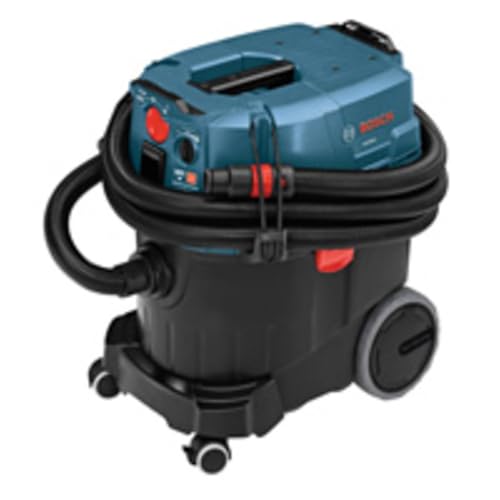
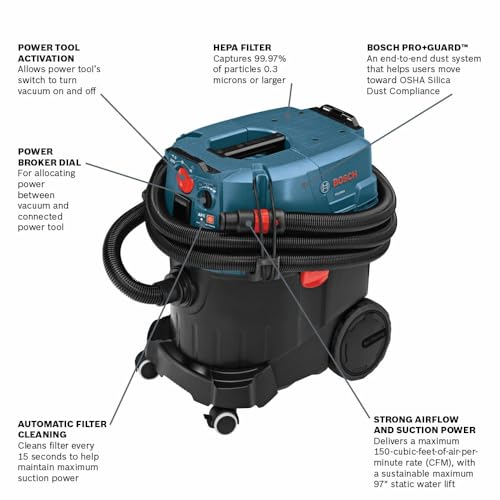
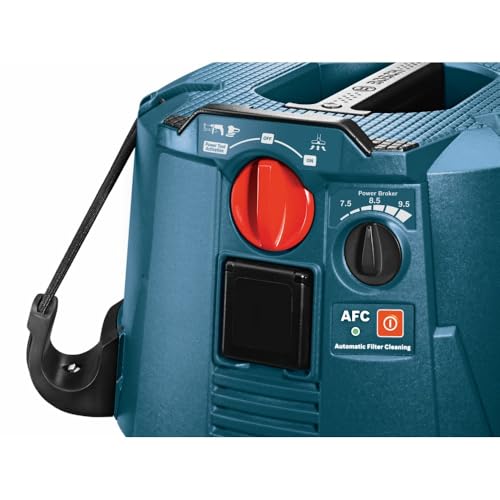
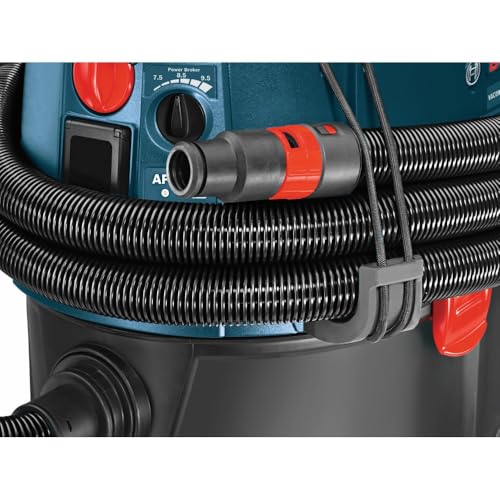
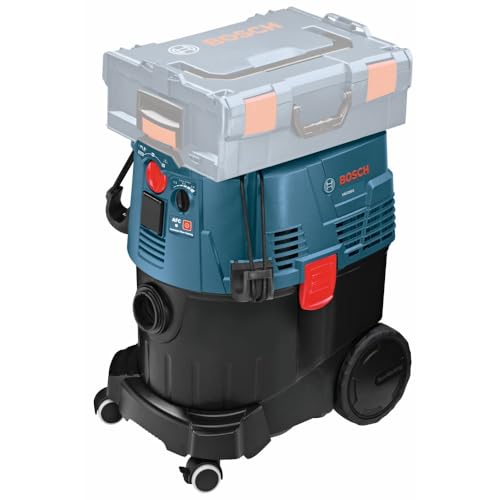
The Bosch VAC090AH isn’t a traditional dust collector, it’s a HEPA-certified extractor built for compliance, not volume. With only 150 CFM, it won’t replace a shop-sized cyclone, but its 0.3-micron HEPA filter captures 99.97% of fine particles, which is essential for OSHA Silica Table 1 compliance. Contractors doing concrete or MDF work will appreciate the auto filter clean every 15 seconds, which maintains suction during long jobs.
Owners love the Power Broker dial that syncs with tool activation, eliminating manual start/stop. Compared to the WEN 3417, it’s far more specialized, this isn’t about air movement, it’s about safety. I’d pick this for on-site work or shops where health regulations matter. It’s overkill for basic wood chips, but unbeatable when fine dust is a liability.
Product photos
How We Evaluated industrial dust collectors
My approach to evaluating industrial dust collectors centered on a detailed comparison of published specifications and features. I weighed this against owner reviews from multiple sources, along with assessments from reputable tool review sites. Rather than a hands-on lab test, this is a research-led comparison focusing on real-world feedback and quantifiable data. Ultimately, I ranked these models based on how well they address the core needs of woodworkers and shop professionals.
For this category, airflow (CFM) and filtration quality were the most heavily weighted factors. A high CFM is essential for capturing dust at the source, preventing it from spreading throughout the workshop. Equally important is effective filtration – ideally down to the micron level – to protect lung health. Storage capacity also played a role, as frequent bag changes interrupt workflow. I also looked for durability indicators, like motor type and construction materials.
Specifications reliably reveal airflow capacity, motor horsepower, and bag volume. However, owner feedback provided crucial insights into real-world performance, noise levels, and the longevity of components. Reputation within the woodworking community mattered greatly, particularly regarding filter efficiency and ease of maintenance. You can find more information about specialized options in our guide to the best cyclone dust collectors.
How To Pick The Right industrial dust collectors
Finding the right dust collector is essential for any shop, whether you’re a hobbyist or a professional.
A quality dust collector prioritizes airflow (measured in CFM) to efficiently remove particles. Look for models with sufficient filtration – ideally down to 1 micron or less – to capture fine dust that poses health risks. Storage capacity is also key; larger containers mean less frequent emptying, boosting productivity. Durable motor construction and thoughtful design features contribute to longevity and ease of use.
Understanding CFM and Airflow
CFM (cubic feet per minute) is the headline number with dust collectors, and for good reason. It dictates how quickly the machine can clear the air. However, don’t fall for just the biggest number. The actual CFM delivered at the tool connection is what matters, and that’s affected by ductwork length and diameter. If you’re running long hoses or multiple tools simultaneously, you’ll need significantly more CFM than a smaller shop with a single tool. Consider the tools you’ll be connecting. A jointer or planer generates a lot more dust than a sander, so think about the highest demand and size accordingly.
Filtration: Beyond Basic Dust Bags
Many dust collectors use fabric bags as a primary filter, but the quality of those bags varies dramatically. Look for collectors that specify a micron rating. A micron is a unit of measurement for particle size; the lower the number, the finer the particles the filter can capture. For wood dust, you want a filter capable of trapping particles down to 1 micron or less, as these are the ones that pose the greatest respiratory hazard. HEPA filters are increasingly common, and offer excellent filtration but can restrict airflow if not properly maintained. Some systems, like the Bosch VAC090AH, are specifically designed for OSHA compliance, which emphasizes fine dust filtration.
Portability and Shop Integration
Dust collectors aren’t always stationary. Many smaller units, like the VEVOR 1.5HP Cyclone Dust Collector, are designed to be portable, making them ideal for smaller workshops or job sites. If you plan to move your collector frequently, look for models with sturdy casters and a manageable weight. For larger shops, consider a central dust collection system – several manufacturers offer components to build your own, or you can explore pre-built systems. Don’t underestimate the value of auto-start functionality. The BUCKTOOL 1.2HP Auto-Start Dust Collector exemplifies this, offering a convenient way to automatically activate the collector when your power tools start.
A dust collector’s effectiveness isn’t just about raw power; it’s about matching the collector to your shop’s size, the types of tools you use, and your workflow.
For those seeking a more in-depth look at options, checking out reviews of the top woodworking dust collectors can be a great starting point.
Industrial Dust Collectors Compared
Here’s a comparison of key specifications for several industrial dust collectors.
| Product Title | HP | CFM | Filter Size (Microns) | Bag Capacity (Gallons) | Noise (dB) | Auto-Start |
|---|---|---|---|---|---|---|
| VEVOR 3.0HP Vortex Cone Dust Collector | 3.0 | 1550 | 2.5 | 42 (x2) | ≤90 | N/A |
| JET DC-1200VX-CK1 2HP Vortex Collector | 2.0 | N/A | N/A | N/A | N/A | N/A |
| WEN DC1300 1,300 CFM Dust Collector | N/A | 1300 | N/A | 50 | N/A | N/A |
| VEVOR 1.5HP Cyclone Dust Collector | 1.5 | 763 | 1.0 | 12.5 | ≤90 | N/A |
| WEN 3417 Air Filtration System | N/A | 556-1044 | 1.0 / 5.0 | N/A | 63-68 | Yes |
| Central Machinery 2HP Dust Collector | 2.0 | 1550 | N/A | N/A | N/A | N/A |
| BUCKTOOL 1.2HP Auto-Start Dust Collector | 1.2 | 750 | 2.0 | N/A | N/A | Yes |
| Bosch VAC090AH HEPA Dust Extractor | N/A | 150 | 0.3 | N/A | N/A | Yes |
Frequently Asked Questions
What CFM level is sufficient for a small workshop?
For a small workshop with mostly hand tools and occasional use of a table saw or sander, around 700-1000 CFM is generally adequate. However, consider the specific tools you’ll use most often; larger tools like planers require significantly more airflow to effectively capture dust.
Are cyclone dust collectors really better than standard models?
Cyclone dust collectors excel at separating larger particles before they reach the filter, extending filter life and maintaining consistent suction. While they often come at a higher price, the improved efficiency and reduced filter maintenance can make them a worthwhile investment, especially for high-volume dust production.
How often should I replace the dust collector filter?
Filter replacement frequency depends on usage and the type of dust collected. Generally, check the filter monthly and replace it when it appears clogged or when you notice a significant drop in airflow. Using a pre-filter can extend the life of your main filter.
Can a dust collector be used with multiple tools at once?
Yes, but you’ll need a dust collector with sufficient CFM and properly sized ductwork. Splitting the suction between multiple tools reduces the airflow available to each, so consider a system designed for multi-tool operation or dedicate a larger collector to tools used simultaneously. For more thorough floor cleaning options, explore powerful industrial floor vacuums.
What’s the difference between a dust collector and a shop vacuum?
While both remove dust, dust collectors are designed for continuous operation and to capture dust at the source of creation, typically connected directly to power tools. Shop vacuums are better suited for general cleanup and typically have smaller capacities and lower airflow than dedicated dust collectors.
The Bottom Line
Choosing a dust collector often comes down to balancing initial cost against long-term health and productivity. While you can find options at various price points, the VEVOR 3.0HP Vortex Cone Dust Collector stands out as the strongest overall performer, offering a substantial CFM rating and good filtration for a wide range of shop tools and tasks. It’s a significant investment, but one that pays off in a cleaner, safer workshop.
For those on a tighter budget, the VEVOR 1.5HP Cyclone Dust Collector delivers respectable performance in a more compact and affordable package. If automatic operation is a priority, the BUCKTOOL 1.2HP Auto-Start Dust Collector is an excellent choice, providing the convenience of hands-free activation with your tools. And for specialized applications involving fine powders, exploring options for industrial powder dust collectors might be the best path forward.
Ultimately, remember that CFM and micron ratings are just numbers. The most important factors are selecting a collector that matches your shop’s size and tool usage, maintaining it properly with clean filters, and consistently using it to capture dust at the source. A well-chosen and consistently used dust collector is an investment in your health, your workshop, and the quality of your work.
