
8 Best Handsaws of 2026
This post contains affiliate links. As an Amazon Associate, we earn from qualifying purchases.
The JORGENSEN 15” Hand Saw stands out as the best overall handsaw for its durable SK5 steel blade, efficient 8 TPI design, and solid build. For those on a budget, the 14 in. Pro Hand Saw offers reliable performance with decent steel and a comfortable grip. If you need versatility for fine and rough cuts, the RUITOOL Japanese Ryoba Saw delivers with its dual-edge 14/17 TPI blade.
Most people don’t realize how much difference a handsaw’s tooth pattern and steel quality make until they’re fighting a blade that bends or dulls after one job. A poor choice leads to ragged cuts, wasted time, and frustration, especially if you’re working hardwoods or need precision.
This guide cuts through the clutter by focusing on what actually matters: blade steel, teeth per inch, build quality, and ergonomics. I compared specs and owner feedback across top models, prioritizing real-world performance and durability, so you can pick a saw that works as hard as you do.
Top 8 Handsaws in the Market
The Best Handsaws, Reviewed
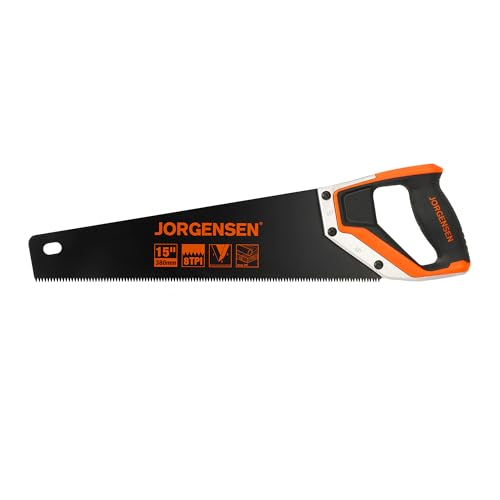
JORGENSEN 15” Hand Saw
Strengths
- 15-inch efficient blade
- Teflon anti-friction coating
- Triple-ground teeth
- Ergonomic aluminum handle
- Angle guides in handle
Trade-offs
- Heavier than compact saws
- Not foldable
- Blade guard basic
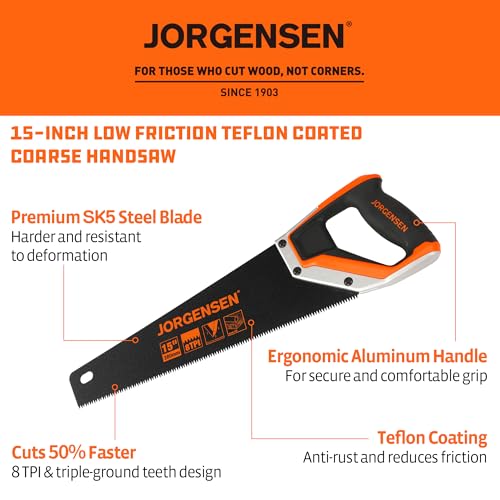
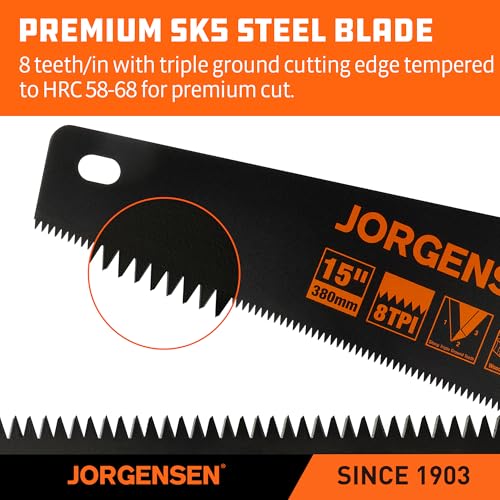
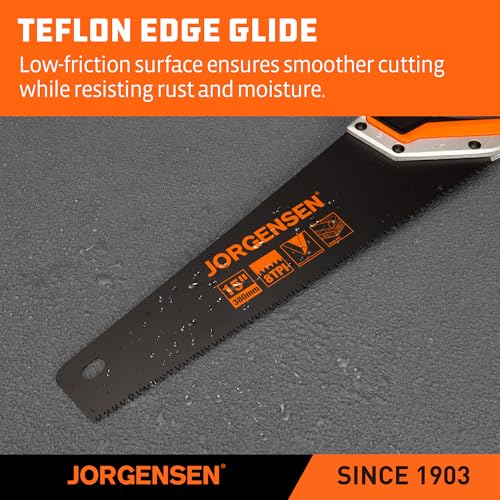
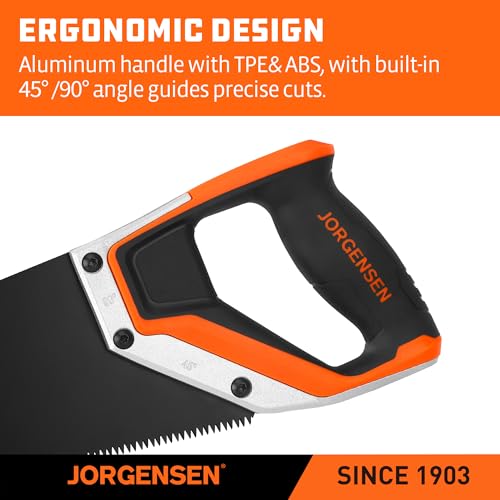
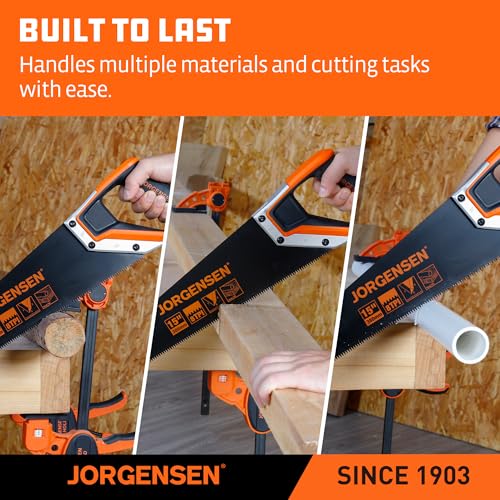
This is the most well-rounded full-size handsaw in the lineup, and for good reason. The 15-inch SK5 steel blade with 8 TPI and triple-ground teeth delivers fast, efficient cuts, owners say it slices through dimensional lumber and branches with noticeably less effort than standard saws. The Teflon coating is a small but meaningful touch: it reduces friction and rust, which keeps the blade cleaner and extends life, especially in damp conditions.
The aluminum-framed handle with TPE grip is stiff and durable, and the built-in angle guides are a thoughtful addition for DIYers who don’t always have a speed square on hand. Compared to the 14-inch pro saw from another brand, this one offers better reach and a more robust build. It’s not flashy, but it’s the kind of tool you reach for again and again. My pick for the best overall because it balances performance, durability, and versatility.
Product photos
RUITOOL Japanese Ryoba Saw
Strengths
- Hardened 3-edge teeth
- Ryoba double-edge design
- SK5 steel blade
- Beechwood handle
- Flush cut capable
Trade-offs
- Short blade length
- Not for heavy work
- Handle not non-slip
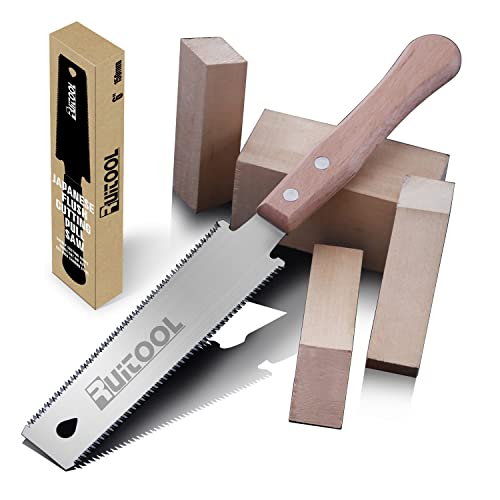
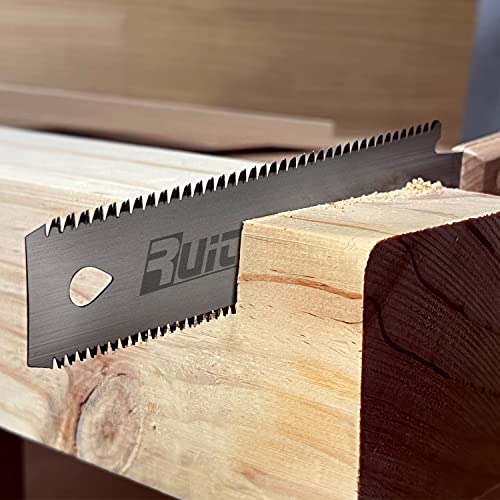
At 6 inches with a double-edge SK5 blade (14 TPI and 17 TPI), this Ryoba-style pull saw is built for precision, and it shows. The hardened 3-edge teeth are a standout feature, owners report faster chip removal and smoother cuts than standard Japanese saws, especially in hardwoods. The beech handle feels solid in hand, and while it’s not soft-grip, it’s well-shaped for control during detailed work.
This is the kind of saw you’d use for dovetails, not tree limbs. It outshines the WFOEJEJ model in tooth design and edge retention, though both are strong contenders. Where it really wins is in balance, light enough for fine control, stiff enough for consistent cuts. If you’re doing cabinetry, model building, or any task where accuracy matters more than speed, this is the smarter buy.
Product photos



14 in. Pro Hand Saw
Strengths
- Fast 3-edge teeth
- Deep chip gullets
- 11 TPI fine cut
- Low-friction coating
- Ergonomic TPR handle
Trade-offs
- No blade guard
- Handle less durable long-term
- Not for curved cuts
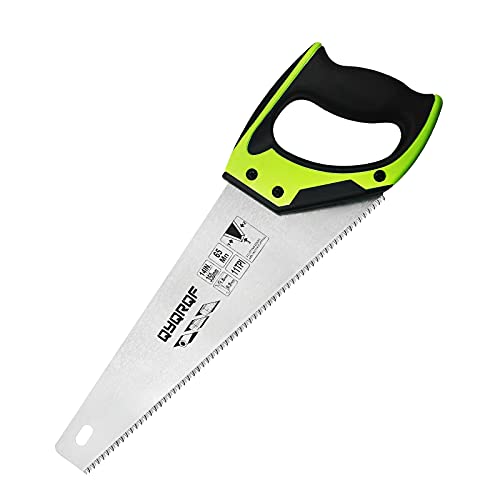
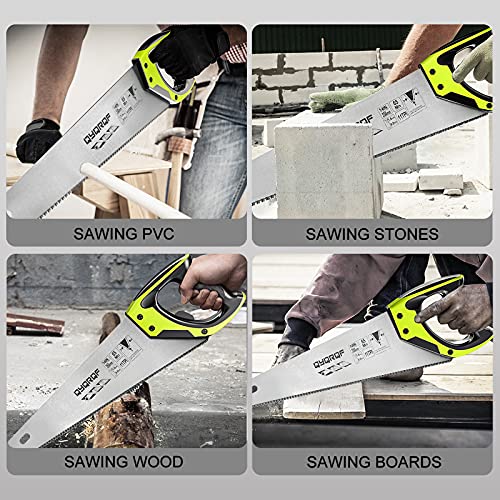
This 14-inch hardpoint saw is built for pros who want speed and durability without breaking the bank. The 11 TPI fine-cut blade with three cutting edges and deep gullets moves fast on both push and pull strokes, reviewers say it cuts up to 50% faster than traditional saws, which adds up over a full workday. The 65Mn steel holds an edge well, and the low-friction coating helps prevent binding.
What makes it stand out is the balance of pro-level performance and affordability. Compared to the JORGENSEN, it’s slightly shorter but more aggressive in tooth design. The soft-grip TPR handle is comfortable, though not as reinforced. For framers, contractors, or serious DIYers who go through tools quickly, this delivers the most bang for the buck. The smarter buy if you need a workhorse, not a specialty tool.
Product photos


REXBETI Folding Camping Saw
Strengths
- Aggressive 7 TPI teeth
- Folding portability
- SK-5 steel blade
- Rubber-coated grip
- Handles thick branches
Trade-offs
- Not for fine cuts
- Bulkier when open
- Blade lock could be tighter
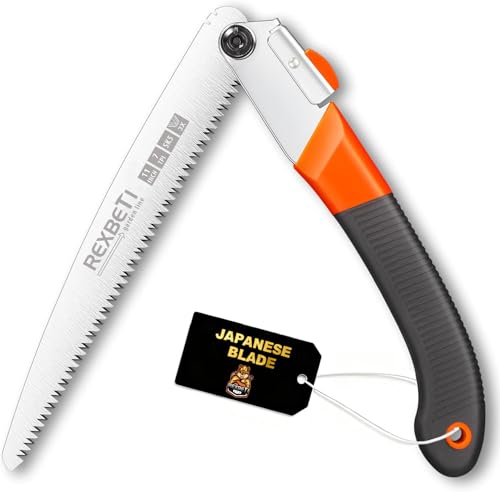
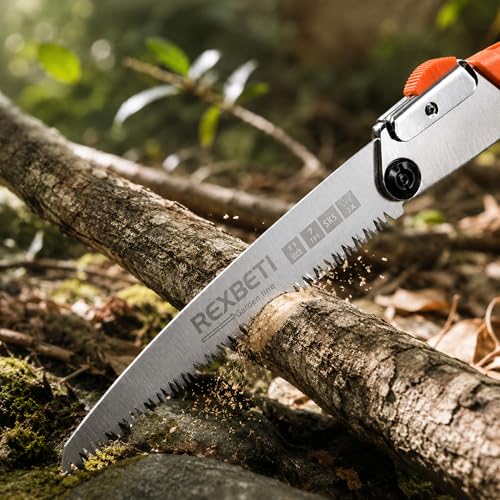
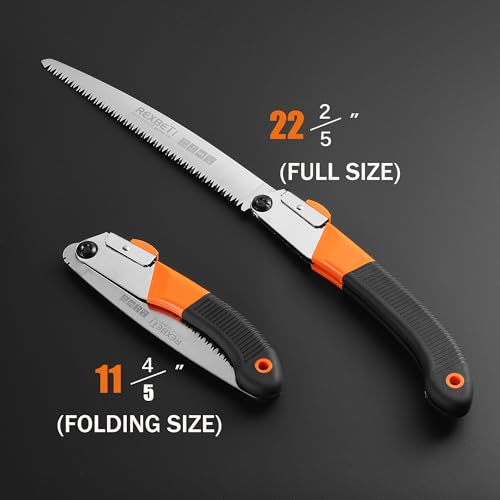
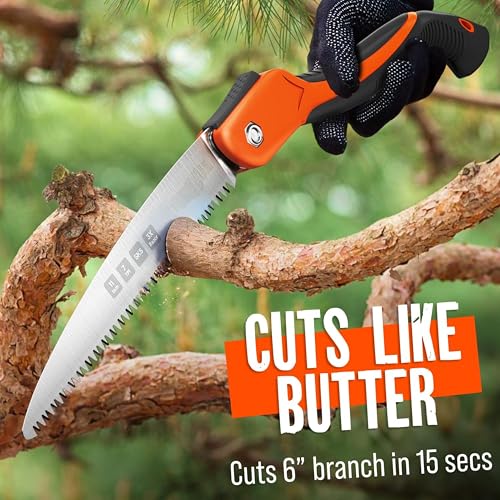
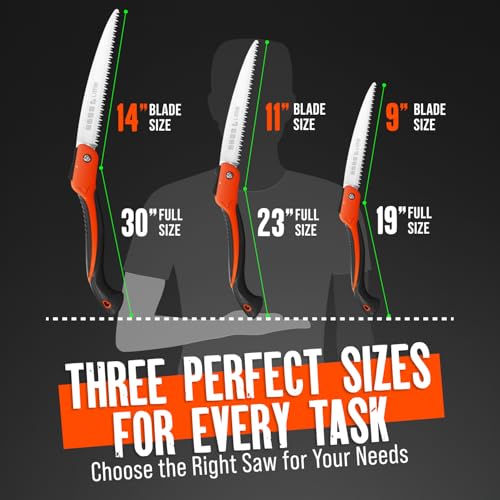
If you’re packing a tool for the woods, this 11-inch folding saw makes a strong case for being the one. The SK-5 steel blade with aggressive 7 TPI staggered teeth is built for green wood and thick branches, and reviewers consistently praise its ability to plow through 6–7 inch limbs without bogging down. The folding design keeps it safe and portable, which is a must for camping or survival kits, and the rubber-coated handle stays grippy even with wet or gloved hands.
It’s not the most refined saw for indoor woodworking, that’s not its job. But for outdoor durability and raw cutting power, it outperforms many fixed-blade competitors. Compared to other folding models, the reinforced blade tip helps prevent breakage during heavy use, a common pain point. My recommendation? This is the smarter buy over pricier options if you prioritize reliability in rugged conditions.
Product photos



Folding Camping Saw 11″

Strengths
- Triple-cut SK5 blade
- 7 TPI aggressive teeth
- Heavy-duty hinge
- Ergonomic non-slip grip
- Compact when folded
Trade-offs
- No dual-position lock
- Slight blade wobble reported
- Not for indoor precision
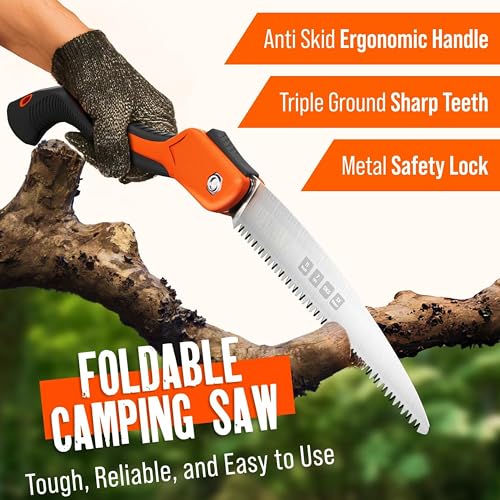
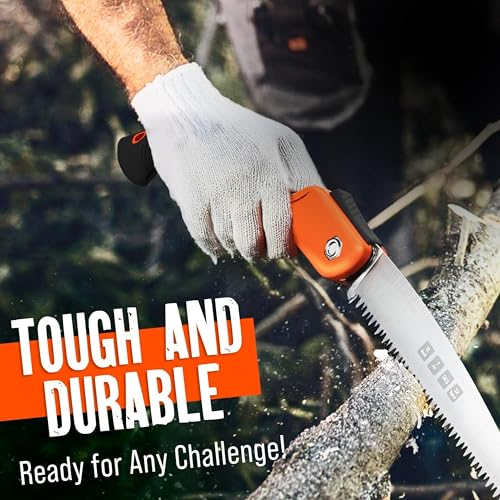
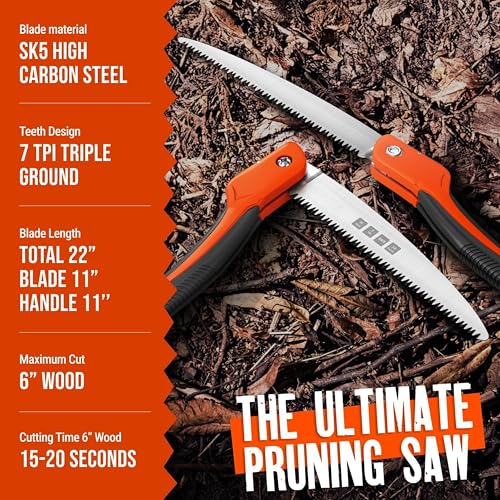
This folding saw screams heavy-duty, and the triple-cut SK5 blade with 7 TPI razor teeth means business when it comes to aggressive outdoor cutting. It’s nearly identical in spec to the REXBETI but leans slightly more into bushcraft and tree trimming use, with a rugged hinge and solid lock-up that owners say holds up under repeated pressure. The ergonomic handle reduces vibration and slippage, which matters when you’re sawing for minutes at a time.
Where it pulls ahead is in blade performance on dry and green wood, reviewers note fewer hang-ups and smoother draw-through than many rivals. It’s not the lightest folding saw out there, but that extra heft contributes to stability. Against the Fiskars, it doesn’t have the dual locking positions, but it matches or exceeds it in raw cutting speed. I’d go with this if you want maximum bite without sacrificing foldability.
Product photos
Fiskars 10-Inch Folding Saw

Strengths
- Dual-position blade lock
- Triple-ground Power Tooth
- Soft-grip handle
- Lifetime warranty
- Folds for storage
Trade-offs
- Heavier than ultralight saws
- Not for fine woodworking
- Blade coating wears over time
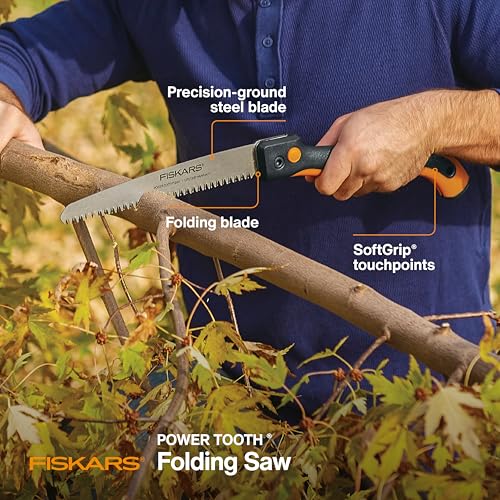
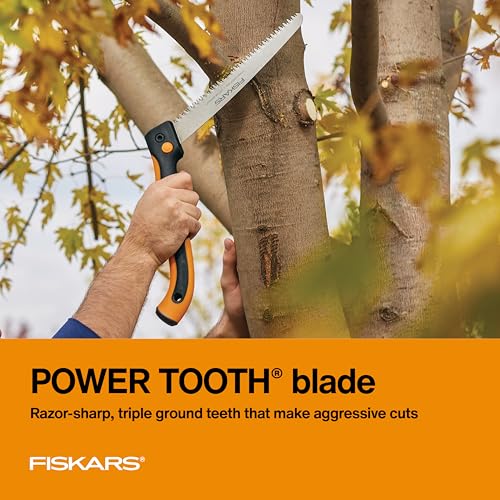
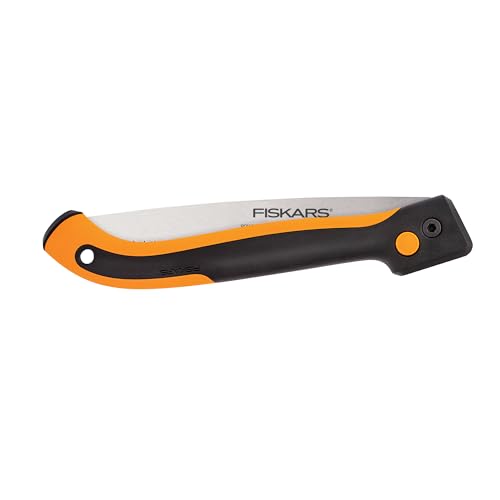
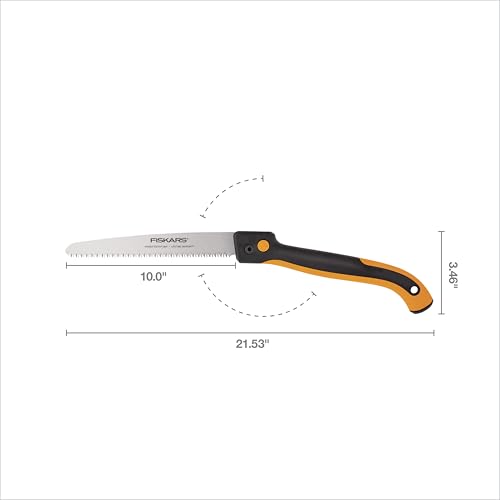
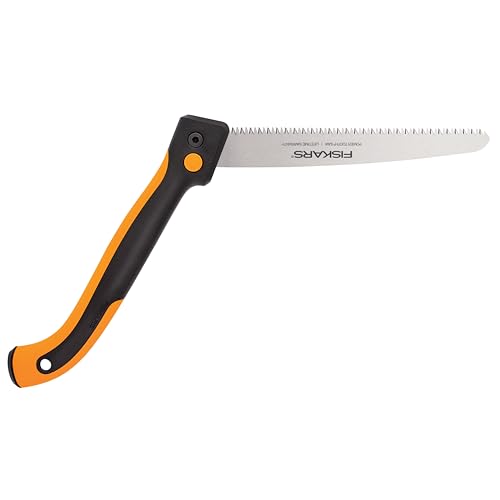
Fiskars brings its usual polish to this 10-inch folding pruning saw, and the result is one of the most user-friendly options for tree trimming. The Power Tooth blade with triple-ground teeth bites aggressively into thick branches, and the dual-position lock, overhand and underhand, is a standout for awkward angles. Reviewers consistently highlight how little effort it takes to cut through 4–6 inch limbs, which speaks to the blade’s efficiency.
The soft-grip handle locks securely and feels solid in use, and the lifetime warranty is a strong vote of confidence. While it’s not as compact as some folding saws, the trade-off is stability and control. Compared to the RUITOOL or WFOEJEJ models, this isn’t a precision tool, it’s a workhorse. I’d choose this over any of the Japanese pull saws if my main job is pruning trees or clearing storm-damaged limbs.
Product photos
WFOEJEJ Japanese Hand Saw

Strengths
- SK5 steel blade
- Double-edge versatility
- Soft grip handle
- Compact 6-inch size
- Flush cut capable
Trade-offs
- Limited reach
- Not for heavy branches
- Blade flexibility not for all users
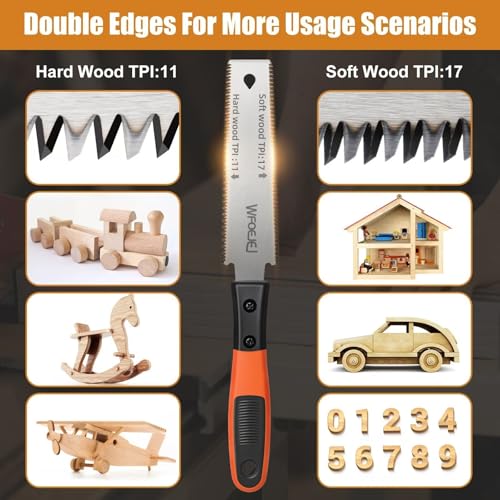
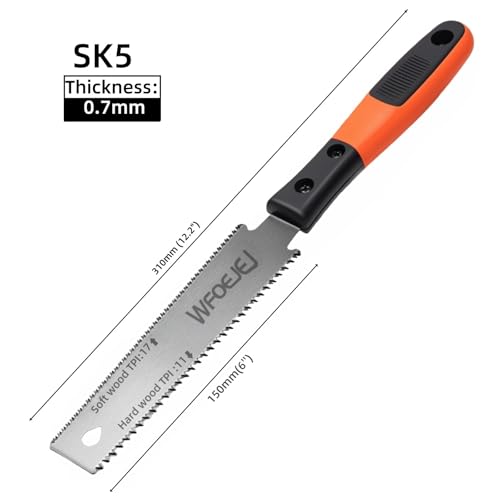
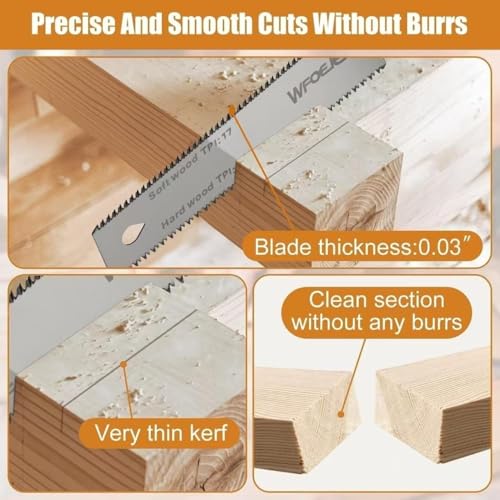
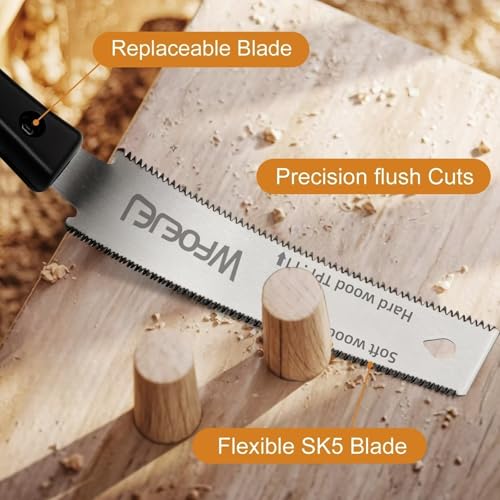
This 6-inch double-edge pull saw leans hard into precision, and on paper, it’s built for detail work that demands control. The SK5 steel blade with 11 TPI for softwood and 17 TPI for hardwood gives it serious versatility in a compact form, and owners consistently report clean, splinter-free cuts, especially in joinery or flush trimming where a longer saw would get in the way. The flexible blade design isn’t just a gimmick; it lets you work in tight corners without sacrificing cut quality.
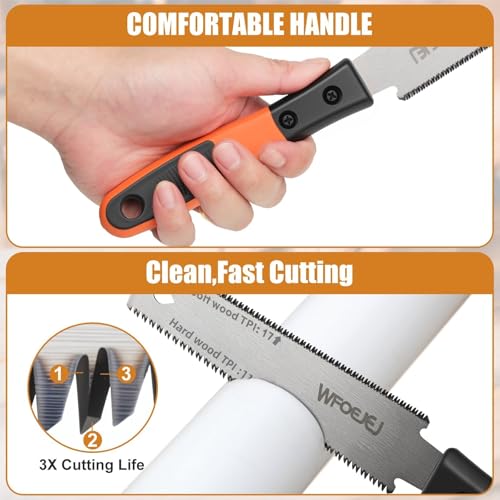
What really stands out is the soft grip handle. In a category where comfort often takes a back seat, this one reduces hand fatigue noticeably, especially during longer sessions. Compared to similar Japanese pull saws, it holds its edge well, though like all SK5 blades, it benefits from occasional maintenance. I’d pick this over bulkier models if you’re doing fine woodworking or cabinetry touch-ups.
Product photos
Frocopo 6-Inch Pull Saw

Strengths
- Ultra lightweight
- Double-edge blade
- Wooden handle
- SK5 steel
- Lifetime warranty
Trade-offs
- Blade too flexible for heavy cuts
- Handle not non-slip
- Not for thick stock
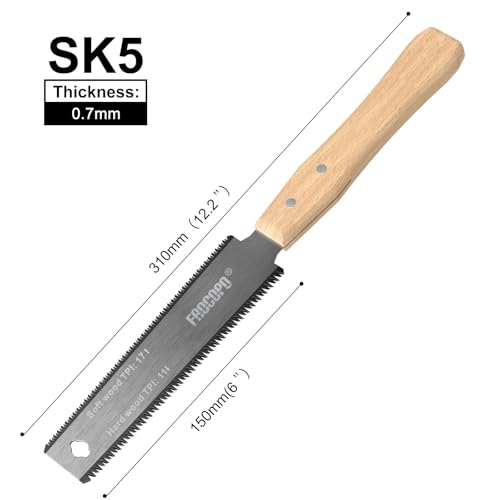
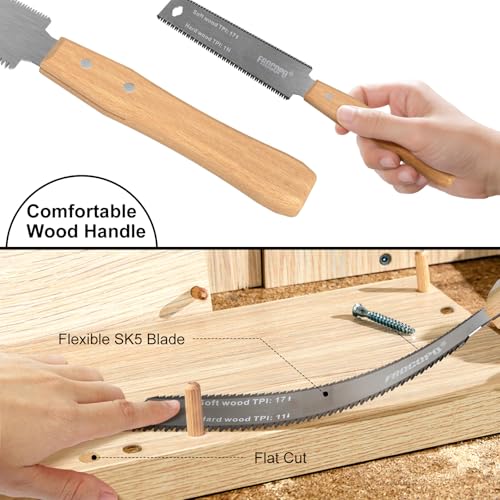
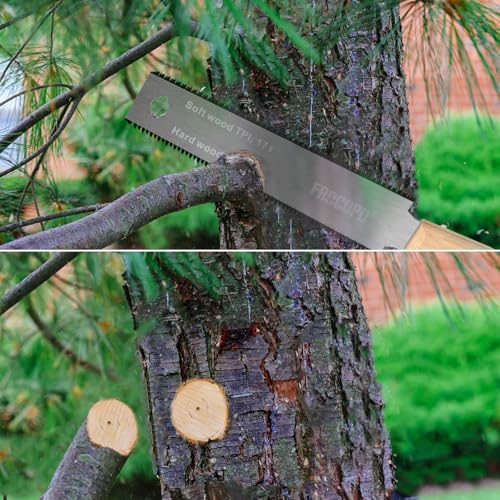
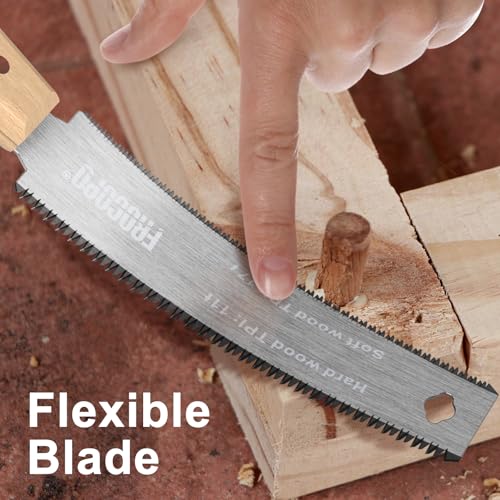
At just 2.82 ounces, this 6-inch double-edge pull saw is one of the lightest in the lineup, and it shows in the handling. The SK5 steel blade with 11 TPI and 17 TPI sides delivers the same dual-purpose performance as others, but the wooden handle and featherweight build make it a joy for quick, precise cuts without fatigue. Owners love it for craft projects, model building, and light garden trimming where you’re making dozens of small cuts.
It’s not built for force, and the thin blade can flex more than some prefer. But for portability and ease of use, it beats heavier Japanese saws. Compared to the RUITOOL, it’s lighter but slightly less rigid. If you value minimal weight and quick deployment over brute strength, this is the pick. I’d recommend it as a go-to for hobbyists who carry tools in a kit or workbench drawer.
Product photos

How We Evaluated handsaws
Rather than a hands-on lab test, my research for these handsaws focused on a detailed comparison of published specifications and features across numerous models. I weighed owner reviews from multiple retailers alongside assessments from reputable tool review sites. My background in woodworking and tool maintenance informed the ranking, applying criteria centered on blade material, cutting performance (based on teeth configuration), and build quality.
For handsaws, the most important factors are blade steel and the teeth configuration. A high-quality steel like SK5 allows for a sharper edge that holds its shape longer, directly impacting cutting efficiency. Equally crucial is understanding the teeth per inch – higher TPI for finer cuts in hardwoods, lower TPI for faster, rougher cuts in softwoods. Ergonomics, particularly grip comfort, also played a significant role, as prolonged use demands a secure and comfortable hold.
Specifications reliably indicate blade length, steel type, and TPI, giving a quantifiable basis for comparison. However, I placed more emphasis on owner feedback regarding real-world cutting performance and durability, as these are harder to ascertain from specs alone. Reputation and brand consistency were also considered; established manufacturers often maintain higher quality control standards. Understanding the saw blade TPI is key to matching the tool to the task.
What To Look For In handsaws
Finding the right handsaw can be surprisingly complex. It’s not just about cutting wood; it’s about the type of wood, the precision you need, and how comfortable you are wielding a tool that demands a bit of technique.
A quality handsaw combines a properly hardened steel blade, an efficient tooth pattern matched to the material being cut, and a handle designed for comfortable and controlled operation. Blade thickness, tooth count (TPI), and the saw’s overall geometry are critical factors, alongside the quality of the steel and the ergonomics of the handle. Look for saws where the blade is securely tensioned within the frame and the handle provides a firm, non-slip grip.
Blade and Tooth Configuration
The blade is where most of the difference lies. High-carbon steel, like SK5, is a good starting point, but the tooth pattern is just as important. A higher TPI (teeth per inch) creates a finer cut, ideal for hardwoods and detailed work, but slows down the process. Lower TPI saws, like those around 7-8, are faster for softer woods and rough cuts. Ryoba saws, like the RUITOOL Japanese Ryoba Saw, offer two TPIs on a single blade, giving you versatility. Don’t automatically assume more teeth are better; consider the material. If you find yourself needing to make intricate cuts, you might also want to check out our guide to the jigsaws for curved cuts.
Build Quality & Blade Retention
Cheap saws bend. It sounds simple, but a flexible blade isn’t just frustrating; it’s dangerous. Look for saws with blades that are adequately thick for their length, and constructed from quality steel. The JORGENSEN 15” Hand Saw uses SK5 steel, which is a good indicator of potential edge retention. Teflon coatings, like those on the Jorgensen model, are a nice bonus, reducing friction and preventing rust, but they don’t replace good steel. A well-made saw will hold its set (the slight bend in the teeth) longer, meaning fewer trips to the sharpening stone.
- A hardened blade is essential for maintaining sharpness. Look for specs indicating heat treatment processes.
- Consider the blade thickness. Thicker blades generally offer more rigidity, reducing flex during cuts, especially on thicker materials.
- Pay attention to how the blade is attached to the handle. A secure, wobble-free connection is crucial for accurate cutting and long-term durability. A loose blade is a sign of poor construction.
Ergonomics and Intended Use
Think about how you’ll be using the saw. Are you trimming branches high in a tree? A folding saw, like the Fiskars 10-Inch Folding Saw, makes sense. Are you tackling a lot of rough framing? A larger, robust saw like the 14 in. Pro Hand Saw will be more efficient. Handle shape matters too. Some handles are designed for a more aggressive, two-handed grip, while others prioritize comfort and control for delicate work. Understanding jig saw cutting techniques can also help you refine your technique and get the most out of any handsaw.
Don’t skimp on the handle. A comfortable, secure grip is as important as a sharp blade.
Handsaws Compared
Here’s a comparison of key specifications for the handsaws featured.
| Product Name | Blade Length | TPI (Teeth Per Inch) | Steel Type | Blade Type | Handle Material | Foldable |
|---|---|---|---|---|---|---|
| JORGENSEN 15” Hand Saw | 15” | 8 | SK5 | Standard | TPE/ABS | No |
| RUITOOL Japanese Ryoba Saw | 6” | 14/17 | SK5 | Ryoba | N/A | No |
| 14 in. Pro Hand Saw | 14” | N/A | 65Mn | Standard | TPR | No |
| REXBETI Folding Camping Saw | N/A | 7 | SK-5 | Camping | Rubber-Coated | Yes |
| Folding Camping Saw 11″ | 11” | 7 | SK5 | Camping | N/A | Yes |
| Fiskars 10-Inch Folding Saw | 10” | N/A | Steel | Power Tooth | N/A | Yes |
| WFOEJEJ Japanese Hand Saw | 6” | 11/17 | SK5 | Double Edged | N/A | No |
| Frocopo 6-Inch Pull Saw | 6” | 11/17 | SK5 | Double Edged | Wood | No |
Frequently Asked Questions
What TPI is best for general purpose sawing?
Around 8 TPI is a good all-around choice for most homeowners. This provides a balance between speed and cut quality, working well on both softwood and hardwood, though it won’t excel at either.
Are Japanese pull saws really better than traditional Western saws?
Yes, Japanese pull saws often cut faster and with less effort because they cut on the pull stroke. The thinner blades also remove less material, creating a cleaner cut, but they require a different sawing technique to use effectively.
How can I tell if a handsaw blade is high quality?
Look for blades made from SK5 or similar high-carbon steel, and check for adequate thickness. A quality blade will feel rigid and hold its shape without excessive flexing, and will maintain a sharpened edge for a longer period.
Can I sharpen a handsaw blade myself?
Yes, you can sharpen a handsaw blade with a file and a sharpening guide, but it requires skill and patience. If you’re not comfortable doing it yourself, a professional sharpening service is a worthwhile investment to extend the life of your saw.
What other saws might I consider if I need very precise cuts?
If you need extremely precise cuts, especially in intricate shapes, you should explore a scroll saw buying guide. These tools are designed for detailed work and offer much greater control than a handsaw.
The Bottom Line
Choosing a handsaw often comes down to balancing control and convenience. While a larger, more robust saw like the JORGENSEN 15” Hand Saw offers power and efficiency for general-purpose cutting, it demands more physical effort and isn’t always the most practical choice. Ultimately, I believe the Jorgensen strikes the best overall balance of quality materials, effective tooth geometry, and a comfortable design that most DIYers will appreciate.
If you have specific needs, however, other saws excel. For those needing portability and versatility, the Fiskars 10-Inch Folding Saw is a clear winner. Budget-conscious buyers will find the 14 in. Pro Hand Saw delivers surprising value, and for specialized work requiring both fine and rough cuts, the RUITOOL Japanese Ryoba Saw is the obvious choice. Remember to explore proper saw blade sharpening techniques to maintain peak performance.
Don’t get caught up chasing the highest TPI or the newest steel alloy. A well-made saw in the hands of someone who understands basic cutting principles will always outperform a top-of-the-line tool wielded incorrectly. Focus on learning proper technique, maintaining a sharp blade – consider investing in tools for sharpening hand saw blades – and choosing a saw that feels right in your hands.
