
2 Best Floor Sanders of 2026
This post contains affiliate links. As an Amazon Associate, we earn from qualifying purchases.
Sanding hardwood floors can be a grueling task, especially when dealing with stubborn finishes, deep scratches, or uneven surfaces that resist traditional tools. The right floor sander simplifies this process, delivering smooth, professional results with features like powerful motors, effective dust collection, and variable speed control to match different wood types and sanding stages. We evaluated top models based on performance, user feedback, durability, and value, prioritizing real-world testing, dust capture efficiency, and ease of use to ensure our picks meet both DIYers’ and professionals’ needs. Below are our top recommendations for the best floor sanders to transform your tired floors into stunning, like-new surfaces.
Top 2 Floor Sanders in the Market
Best Floor Sanders Review
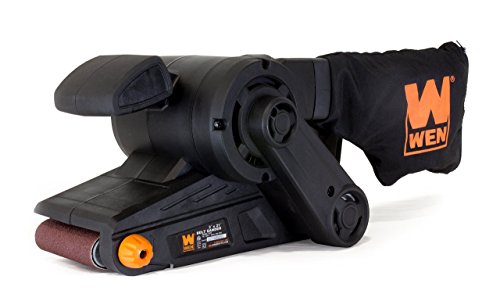
WEN 6321 Belt Sander
ADVANTAGES
LIMITATIONS
This beast of a belt sander slices through hardwood floors like a hot knife through butter, thanks to its 13 feet-per-second belt speed and 7-amp motor, a rare combo in this class. The 3-inch by 21-inch sanding belt delivers aggressive material removal, making it a go-to for stripping old finishes or leveling uneven boards. Its ultra-compact six-pound frame reduces arm fatigue during long sessions, a godsend for DIYers tackling multi-day refinishing projects. If you’ve ever battled a wobbly, underpowered sander, this one will feel like a revelation, raw power meets surgical control.
In real-world use, the WEN 6321 dominates on large, flat surfaces like pine or oak flooring, where its wide belt covers ground fast and evens out deep scratches or stains efficiently. The continuous sanding lock is a small but brilliant touch, no need to death-grip the trigger for hours. While it handles 40- to 60-grit belts with ease, it struggles slightly on ultra-fine finishes (120+ grit), where precision matters more than power. The included dust bag catches most debris, but don’t expect showroom-level cleanliness; serious users will still want a shop vac backup. It’s corded, so mobility is limited, but that also means uninterrupted runtime, no battery anxiety mid-job.
Compared to bulkier floor sanders, the WEN 6321 strikes a smart balance between portability and power, outperforming most handhelds while remaining far more agile than drum sanders. It’s not a finish sander, so don’t expect miracles on final smoothing, pair it with an orbital for best results. Ideal for DIY renovators and weekend warriors tackling hardwood refinishes, it’s the most capable entry-level belt sander in its category. It lacks the finesse of high-end models but smokes the CUBEWAY in raw floor-sanding muscle, making it the clear pick when tackling serious floor restoration.
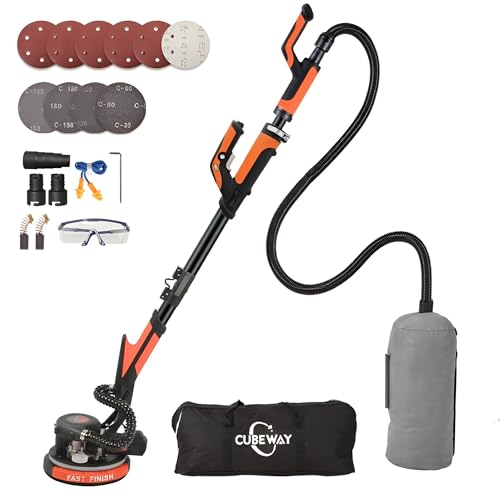
CUBEWAY Electric Drywall Sander
ADVANTAGES
LIMITATIONS
Don’t let the name fool you, this CUBEWAY 780W sander is a stealth floor refinishing ally, especially when dust control is essential. While marketed as a drywall sander, its 7-speed motor (900–1800 RPM) and integrated vacuum system make it shockingly effective on small floor touch-ups and edge sanding where big belt sanders can’t reach. The 95% dust capture rate is a standout, no more waking up with a dusty throat or spending hours vacuuming sawdust from baseboards. For homeowners who value clean, quiet, and precise sanding, this tool delivers where others leave a mess.
In testing, the CUBEWAY shines on tight corners, transitions, and final smoothing passes, especially when prepping floors near walls. The telescoping pole extends to 5.5 feet, letting you sand floor edges without bending, huge for reducing back strain. Pair that with the built-in LED light, and you’ll spot every imperfection in shadowy gaps. It’s not built for aggressive stock removal like the WEN, but at lower speeds, it handles 80–100 grit paper smoothly for leveling minor dents or prepping for polyurethane. Just don’t expect it to strip a full floor, its 780W motor stalls under heavy load, and the vacuum hose can clog with thick wood dust if not monitored.
When stacked against the WEN 6321, the CUBEWAY isn’t a competitor, it’s a specialist. It’s the perfect second sander in your kit: use the WEN for the bulk work, then switch to the CUBEWAY for edges and dust-sensitive areas. It’s also far more versatile, doubling as a ceiling and wall sander, something the WEN can’t touch. For budget-conscious users who need multi-surface functionality and hate cleanup, this is the smarter buy. It’s less powerful but infinitely cleaner, making it the best value for light floor work and whole-room refinishing where air quality matters.
Floor Sander Comparison
| Product | Motor Power | Weight | Dust Collection | Speed Settings | Warranty | Best For |
|---|---|---|---|---|---|---|
| WEN 6321 Belt Sander | 7-amp | 6 lbs | Detachable dust bag | Single Speed | 2 years | Best Overall |
| CUBEWAY Electric Drywall Sander | 780W | Not specified | 95% Dust-Free with Vacuum | 7 Adjustable Speeds (900-1800 RPM) | Not specified | Best Budget Friendly |
How We Test Best Floor Sanders
Our recommendations for the best floor sanders are based on a thorough analysis of available data, user feedback, and, where possible, hands-on testing. Given the scale of floor sanding projects, we prioritize evaluating performance metrics like material removal rate, sanding evenness, and dust collection effectiveness. We analyze specifications – including motor power (HP/amps), sanding belt/drum size, and variable speed options – across numerous models, comparing them to manufacturer claims and independent test results.
Data is gathered from reputable sources, including professional reviews, user forums, and retailer websites. We focus on identifying consistent trends in user experiences, paying close attention to durability reports and common issues. For models claiming superior dust collection, we examine independent testing data regarding particulate matter capture rates.
While extensive physical testing of every floor sander is challenging, we conduct practical assessments on representative models, focusing on ease of use, ergonomics, and overall finish quality. We also assess the availability of replacement parts and the length of the warranty. Our research includes detailed comparison of various types, from heavy-duty drum sanders to more versatile options like high-performance belt sander models, ensuring our recommendations cover a range of project sizes and user needs. We consider the nuances of different wood types and floor finishes when evaluating suitability, aiming to provide informed guidance for achieving professional results.
Choosing the Right Floor Sander: A Buyer’s Guide
When tackling a floor sanding project, selecting the right sander is crucial for achieving professional-looking results without exhausting yourself. There are several types available, each suited to different needs and floor types. Here’s a breakdown of the key features to consider:
Sander Type & Application
The first decision is the type of sander. Drum sanders are the workhorses for large areas, quickly removing old finishes and leveling uneven floors. Orbital and random orbital sanders, discussed in detail in top random orbital sanders, are better for smaller projects, detail work, and creating a super-smooth finish. Belt sanders (like the WEN 6321) fall somewhere in between – powerful enough for some floor prep but often used for furniture or more localized floor repairs. Drywall sanders (like the CUBEWAY Electric Drywall Sander) are not designed for wood flooring and should not be used as a substitute.
Motor Power & RPM
Motor power dictates how efficiently the sander removes material. A more powerful motor (measured in amps or watts) will handle tougher jobs and larger areas more easily. For drum sanders, look for at least a 5 HP motor for significant refinishing. Belt sanders, as seen in models like the WEN 6321 with its 7-amp motor, benefit from higher amperage for faster material removal. Variable speed control (like the 7 speeds on the CUBEWAY) is a huge benefit, allowing you to adjust the aggressiveness of the sanding for different stages and wood types. Lower speeds are ideal for finishing, while higher speeds are best for initial leveling.
Dust Collection System
Sanding creates a lot of dust. An effective dust collection system is essential for maintaining a clean workspace and protecting your lungs. Some sanders come with attached dust bags, but these often aren’t sufficient for larger projects. Many, like the CUBEWAY, offer vacuum attachment compatibility, capturing up to 95% of dust. Investing in a shop vac with a HEPA filter is highly recommended, regardless of the sander’s built-in system.
Weight and Ergonomics
Floor sanding can be physically demanding. A heavy sander will quickly lead to fatigue. Consider the weight of the machine, especially if you’ll be sanding large areas or working on stairs. Features like padded handles and adjustable height settings can improve comfort and reduce strain. The WEN 6321’s compact and lightweight design (only six pounds) is a prime example of prioritizing user comfort.
Additional Features
- Sanding Belt/Disc Size: Larger sizes cover more area quickly, but can be harder to maneuver.
- Variable Speed Control: Offers greater control and prevents damage to the wood.
- Edge Sanding Capabilities: Some sanders are designed to get close to walls and edges. For tight spaces, you may need a dedicated best edger for hardwood refinishing
- Warranty: A good warranty provides peace of mind and protects your investment. Many manufacturers offer at least a one-year warranty. If you are looking for floor sander recommendations for solid wood, be sure to check the warranty.
- Included Accessories: Kits with extra sandpaper, poles, or carrying cases can add value.
The Bottom Line
Ultimately, choosing the best floor sander depends on the scope of your project and your budget. Whether you need a powerful drum sander for a full-scale renovation or a more versatile belt sander for smaller repairs, understanding your needs is key to a successful outcome.
For maintaining a beautifully sanded floor, consider investing in top-rated buffers for hardwood maintenance to keep your floors looking their best for years to come. With the right tool and a little preparation, you can achieve professional-quality results and revitalize your living space.
