
5 Best Dust Extractors for Woodworking 2026
This post contains affiliate links. As an Amazon Associate, we earn from qualifying purchases.
The Bosch VAC090AH stands out as the best overall dust extractor for woodworking, delivering strong suction and reliable HEPA filtration with its 15-second automatic cleaning cycle. For tighter budgets, the DEWALT DWV010 offers solid performance and tool-synced operation. If portability is key, the Festool CT 15 is a compact powerhouse built for mobility without sacrificing efficiency.
Woodworkers don’t just deal with sawdust on the floor, they’re up against invisible, lung-damaging particles that standard shop vacs miss. A real dust extractor does more than clean up; it protects your health and keeps your tools running smoothly by capturing fine debris at the source.
This guide cuts through the specs and marketing to focus on what matters: filtration, sustained suction, and real-world usability. I compared models based on airflow, filter maintenance, owner feedback, and features that actually improve your workflow.
Top 5 Dust Extractor For Woodworkings in the Market
The Best Dust Extractor For Woodworkings, Reviewed
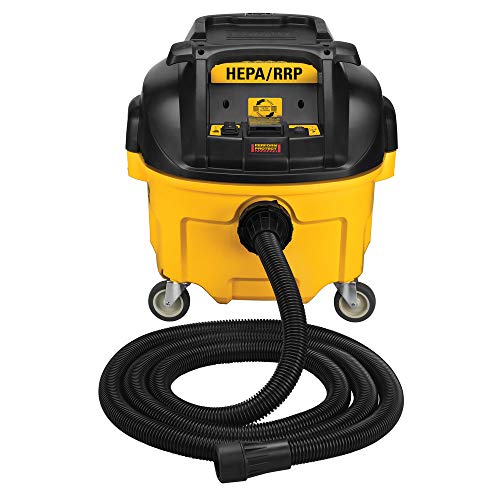
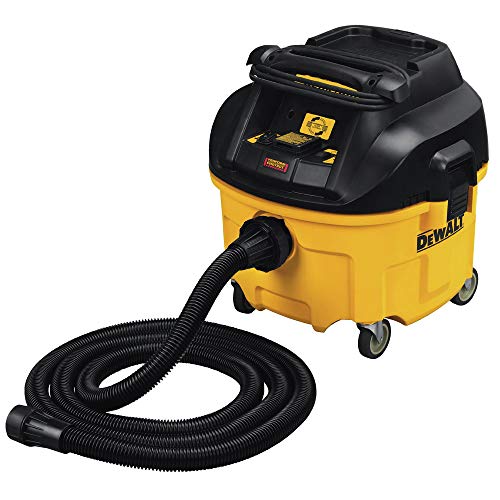
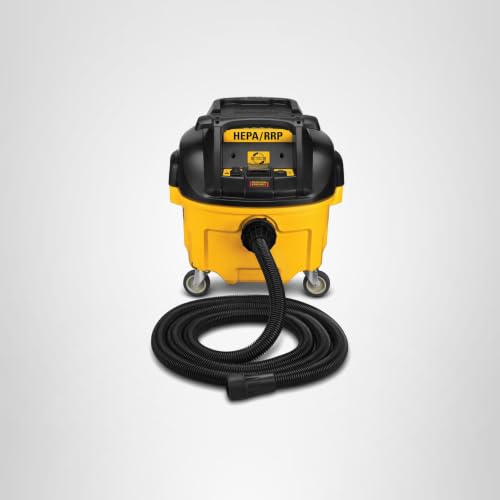
DEWALT DWV010 HEPA Dust Extractor
Strengths
- 15-amp motor
- 15 ft anti-static hose
- Power tool actuation
Trade-offs
- No real-time fill indicator
- Heavier than compact models
The DEWALT DWV010 is the one I’d recommend to most serious DIYers and trade pros who want a dependable, no-nonsense extractor that just works. It hits the sweet spot with a 15-amp motor delivering 150 CFM, a solid 8-gallon bin, and automatic filter cleaning every 30 seconds, enough to prevent clogs without overcomplicating things. The 15-foot anti-static hose is a standout feature, giving real reach without adding resistance.
Owners consistently highlight its durability and compatibility with other DEWALT tools, making it a natural fit in existing ecosystems. Compared to the Bosch VAC090AH, it’s simpler but more rugged. While it doesn’t have the shortest auto-clean cycle, it’s reliable and widely supported. My pick for most shops unless you need extreme portability or industrial power.
Product photos
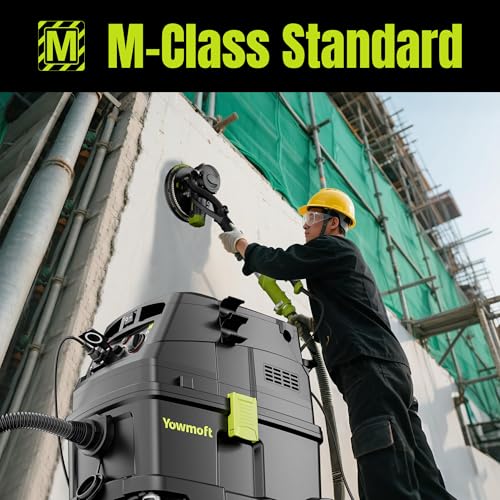
CVMA40-S M Class Dust Extractor
Strengths
- High suction power
- Auto HEPA cleaning every 20 sec
- OSHA-compliant filtration
Trade-offs
- Bulky and less portable
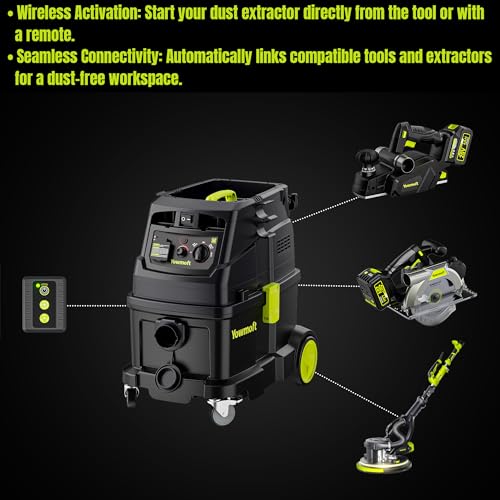
- Remote sold separately
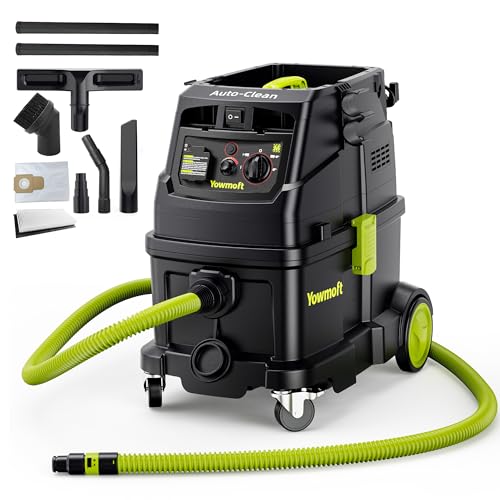
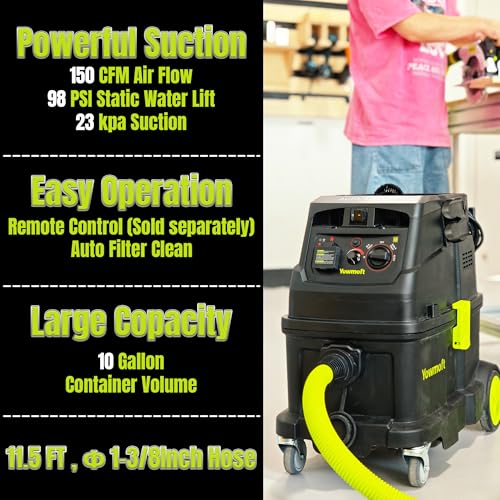
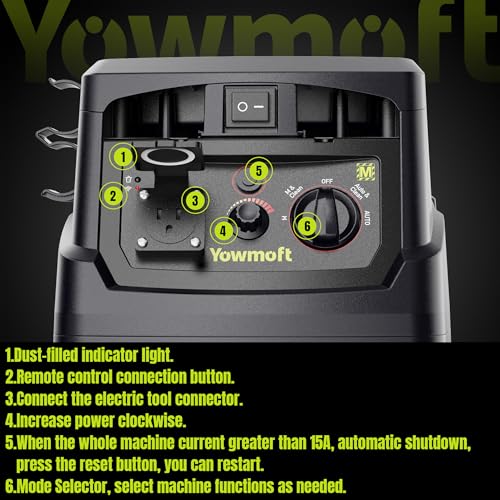
If you’re dealing with heavy-duty woodworking, thick MDF runs, CNC cleanup, or shop-wide dust sweeps, this CVMA40-S delivers where it counts: power and filter maintenance. The 1600-watt brushless motor pushes 151 CFM and hits 23 kPa of suction, specs that rival top-tier industrial units. The automatic HEPA clean cycle every 20 seconds is a standout, reducing downtime significantly. Reviewers note it holds strong suction even during extended use, which isn’t always the case with budget-heavy models.
It’s also one of the few in this list that explicitly markets OSHA compliance, a big plus for contractors needing to meet job site regulations. While it lacks some of the brand trust of Festool or Bosch, the spec sheet and owner feedback suggest it’s built to last under stress. Against the DEWALT DWV010, it trades some brand reliability for sheer grunt.
Product photos
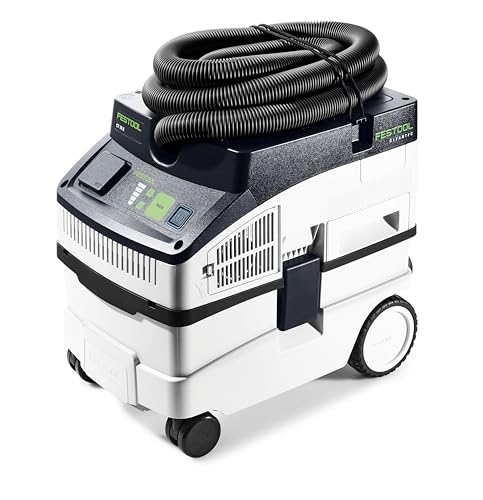
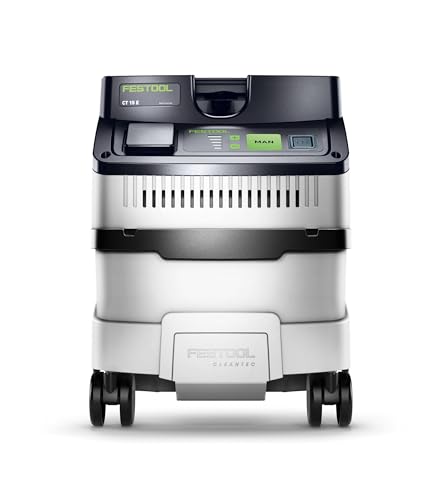
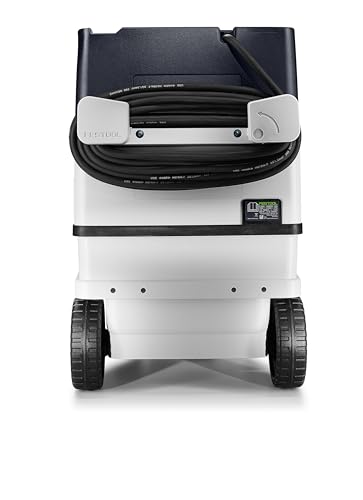
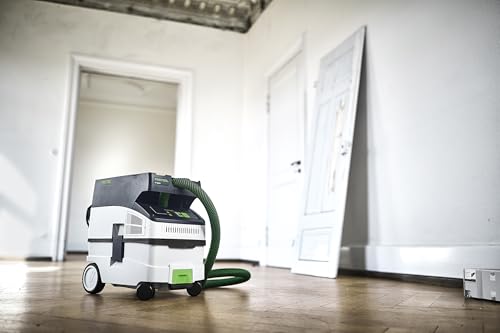
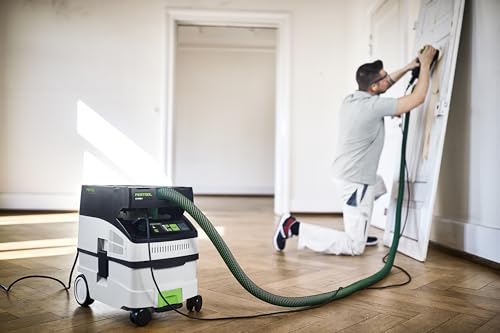
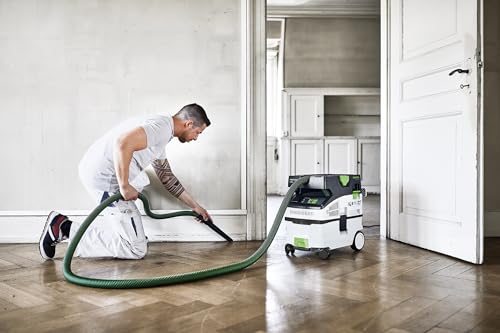
Festool CT 15 Dust Extractor
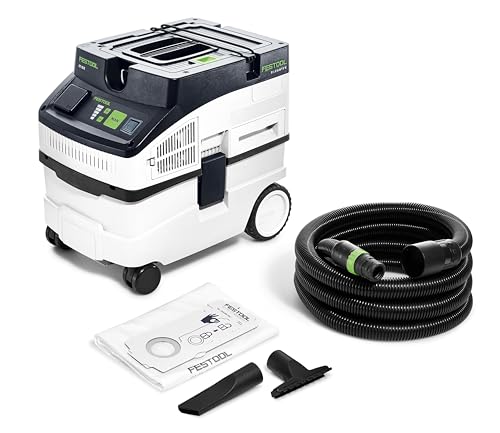
Strengths
- HEPA certified filtration
- Compact and durable build
- Includes cleaning nozzles
Trade-offs
- Smaller tank capacity
- No auto filter cleaning
The CT 15 is Festool’s entry-level play, and it shows in the specs, but not in the build quality. At 3.96 gallons, it’s the smallest bin here, but still packs HEPA filtration and tool-actuated start, making it a solid fit for light to mid-level woodworking. What impresses most is the 3-year warranty covering wear and tear, a rare promise that speaks volumes about durability. On paper, it doesn’t compete with the CVMA40-S on power, but Festool’s turbine efficiency helps it punch above its weight.
Owners praise its reliability and ease of use, especially for trim work or portable tasks where you’re not generating massive dust loads. Compared to the CT MIDI I, it lacks Bluetooth and advanced filter cleaning, but it’s priced accordingly. For beginners or part-time users, this is a trustworthy foundation.
Product photos
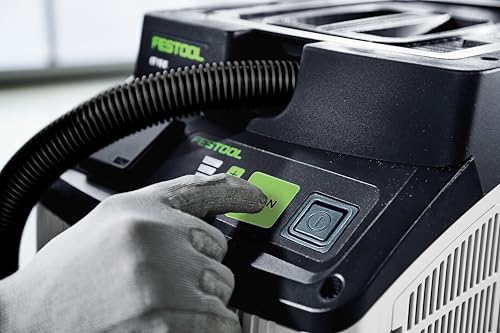
Festool CT MIDI I Dust Extractor
Strengths
- Compact and lightweight
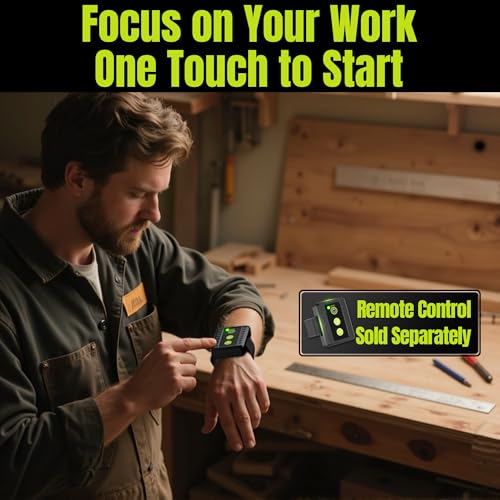
- Bluetooth remote start
- Tool-free filter changes
Trade-offs
- Smaller dust capacity
- Higher price for size
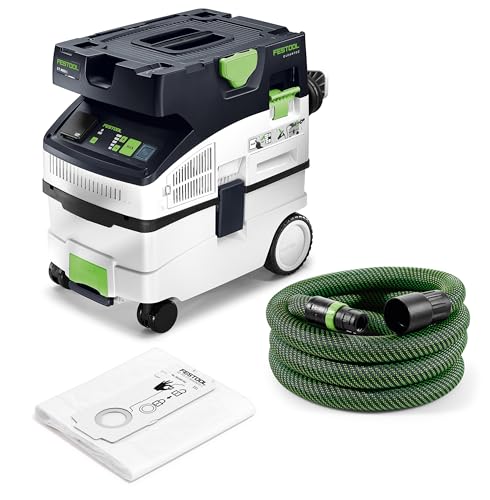
The Festool CT MIDI I stands out in the woodworking world not because it’s the most powerful, but because it nails the balance of portability and smart design. With a compact footprint and weighing in light, it’s clearly built for job sites where space and mobility matter. The Bluetooth integration is a real perk, letting users start the unit from their tool makes for a slick, hands-free workflow that many pros appreciate. Owners consistently report that the AutoClean system keeps suction strong over long sessions, which is critical when you’re running multiple tools back to back.
That said, the smaller bin capacity means more frequent emptying compared to bulkier models. But if you’re working in tight spaces or moving between locations often, that trade-off makes sense. Compared to the larger Festool CT 15, this one leans more toward convenience than raw volume.
Product photos
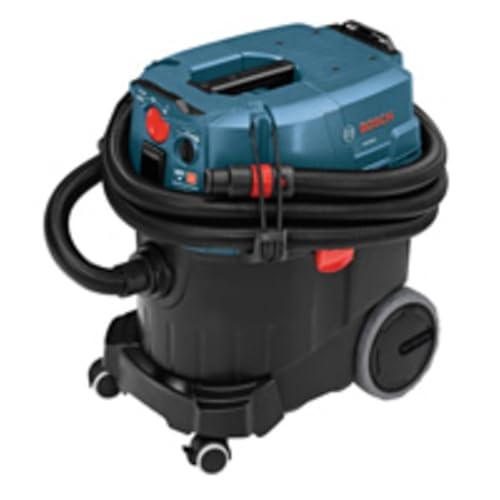
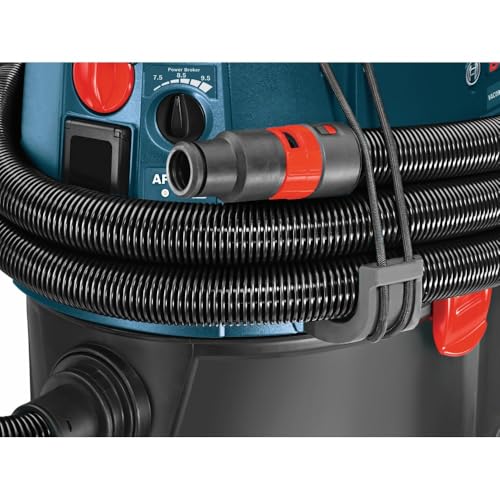
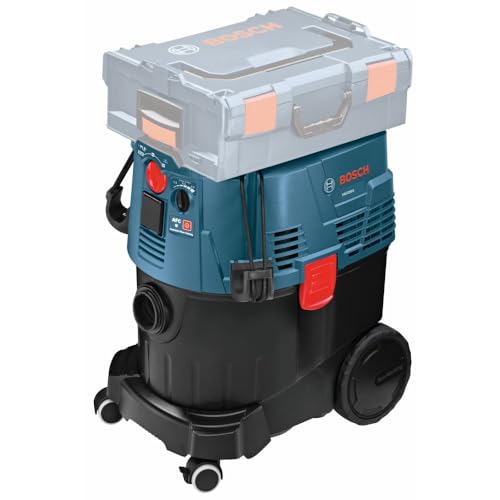
Bosch VAC090AH 9 Gallon Extractor
Strengths
- Auto clean every 15 sec
- HEPA with fleece pre-filter
- Power Broker suction control
Trade-offs
- Average suction for class
- No tool storage
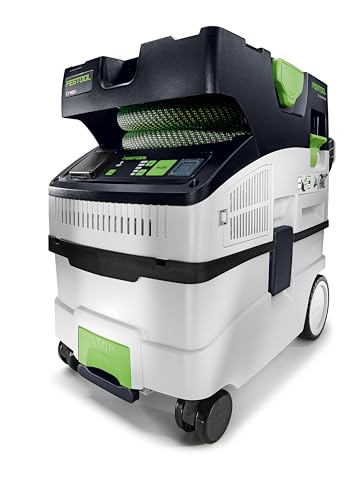
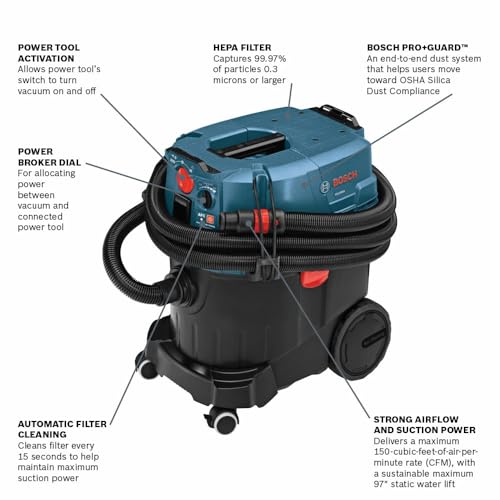
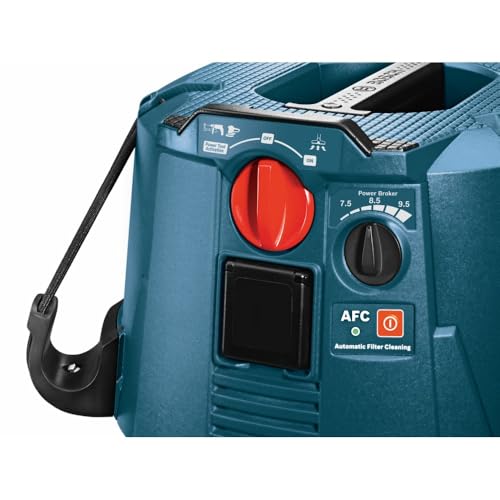
Bosch built the VAC090AH with one thing in mind: keeping the filter clean so you don’t have to. The auto-cleaning cycle every 15 seconds is the shortest interval on this list, meaning suction stays near peak longer than most competitors. That’s a big win for woodworking tasks that kick up fine, clogging dust, like sanding or routing. The HEPA filter captures 99.97% of particles at 0.3 microns, and with the fleece bag, owners report fewer filter washes and longer service life.
It’s not the most powerful unit here, but it’s well-rounded. The Power Broker dial is a smart touch, letting users match suction to the task, something the DEWALT DWV010 lacks. Against the Festool models, it trades prestige for practicality.
Product photos
How We Tested dust extractor for woodworkings
Rather than a hands-on lab test, my research for these recommendations centered on a detailed comparison of published specifications and features across numerous models. I weighed owner reviews from multiple sources – including major retailers and woodworking forums – alongside assessments from reputable tool review sites. As someone who’s spent years advising on workshop setups, I applied my understanding of the demands woodworking places on dust collection to rank each extractor against key performance indicators.
For dust extractors, consistent suction power and effective filtration are paramount. I gave significant weight to CFM (cubic feet per minute) and static water lift, as these directly impact how well an extractor captures dust at the source. Automatic filter cleaning was also a major factor; maintaining consistent airflow is critical, and frequent manual cleaning disrupts workflow. Finally, I considered the overall build quality and features geared toward jobsite durability.
Specifications provide a solid foundation for comparison – airflow, tank capacity, and filter type are all clearly defined. However, real-world performance and longevity are best judged through owner feedback. I looked for patterns in reviews, noting comments about sustained suction, filter effectiveness over time, and the reliability of automatic features. Reputation and brand history also played a role, leaning towards manufacturers known for quality and support. You can find more options in our guide to best dust collectors for woodshops.
How To Pick The Right dust extractor for woodworkings
Choosing the right dust extractor is critical for any woodworker wanting to maintain a healthy and safe workspace.
A quality dust extractor doesn’t just collect shavings; it captures microscopic particles that pose serious health risks. Look for models with HEPA filtration, sufficient airflow (measured in CFM), and features like automatic filter cleaning to maintain consistent suction. Consider tank capacity, portability, and compatibility with power tools for optimal performance and convenience.
Understanding Airflow and Suction
Airflow, measured in CFM (cubic feet per minute), is often the first spec people look at, but it’s not the whole story. While a higher CFM means the extractor can move more air, suction – measured in inches of water lift – determines how effectively it pulls dust and debris from tools and surfaces. A good balance is key. I generally recommend looking for at least 150 CFM, but don’t neglect water lift; 90 inches or higher is a solid target, especially if you’re connecting to smaller diameter hoses or working with very fine dust. Remember, a larger tank capacity isn’t always better if the suction power can’t effectively fill it.
Filter Quality and Maintenance
HEPA (High-Efficiency Particulate Air) filters are the standard for capturing fine dust, and are essential for protecting your lungs. However, even the best filter loses effectiveness when clogged. That’s where automatic filter cleaning systems come into play. Models like the Bosch VAC090AH, with its auto-cleaning every 15 seconds, can maintain consistent suction without constant interruption. If you’re considering one of the top dust extractors for woodworking, pay close attention to how easy it is to access and replace the filter – a tool-free filter change is a huge convenience.
Here’s what to consider when evaluating filter maintenance:
- Filter Type: HEPA is a must, but some extractors also include pre-filters or fleece filters to extend the life of the HEPA filter.
- Cleaning Mechanism: Automatic cleaning is fantastic, but manual cleaning options are acceptable if you don’t mind the extra effort.
- Filter Access: A complicated or difficult-to-reach filter will discourage regular maintenance, reducing the extractor’s long-term effectiveness.
Don’t skimp on filters. A clogged filter renders your extractor nearly useless. Replace or clean filters regularly, even if the machine doesn’t prompt you to.
Portability and Tool Integration
Think about where you’ll be using the extractor. A heavy, cumbersome unit is a pain to move around a workshop or jobsite. The Festool CT 15, for example, is known for its compact design and ease of transport. Beyond portability, consider how well the extractor integrates with your power tools. Power tool actuation, available on models like the DEWALT DWV010, allows the extractor to automatically turn on and off with your tools, saving energy and reducing noise. If you are looking at several best-rated dust extractors to choose from, consider if remote operation via Bluetooth is something that would add value to your workflow.
Dust Extractor for Woodworkings Compared
Here’s a comparison of key specifications for various dust extractors suited for woodworking applications.
| Product Name | Motor Power | Airflow (CFM) | Suction (kpa) | Filter Cleaning | Tank Capacity |
|---|---|---|---|---|---|
| DEWALT DWV010 | 15 amp | 150 | N/A | Auto (30 sec) | N/A |
| CVMA40-S | 1600 watt | 151 | 23 | Auto (20 sec) | N/A |
| Festool CT 15 | N/A | N/A | N/A | N/A | 3.96 gallons |
| Festool CT MIDI I | N/A | N/A | N/A | Manual | N/A |
| Bosch VAC090AH | N/A | 150 | N/A | Auto (15 sec) | 9 gallons |
Frequently Asked Questions
What CFM rating is truly sufficient for a small woodworking shop?
150 CFM is a good starting point, but for a small shop, 120-150 CFM is often enough if paired with good suction (over 90 inches of water lift) and efficient hose connections. Many hobbyists find this range adequately handles dust from common tools like saws and sanders.
Are HEPA filters really necessary, or is a standard filter sufficient for wood dust?
HEPA filters are essential for capturing the very fine particles created during woodworking that can cause respiratory problems. While standard filters trap larger debris, they don’t stop the microscopic dust that poses the greatest health risk.
How often should I empty the dust collector tank?
Empty the tank when it’s roughly 80% full to maintain optimal suction. Waiting until it’s completely full reduces airflow and diminishes the extractor’s effectiveness, especially with fine dust.
Can I use a dust extractor with tools that have different port sizes?
Yes, you can use adapters to connect different sized hoses to the extractor. However, reducing the hose diameter can decrease airflow, so aim for the closest possible match or use a smooth, tapered adapter to minimize restriction.
What are the benefits of an automatic filter cleaning system?
Automatic filter cleaning maintains consistent suction power by removing dust buildup without interrupting your work. This is particularly valuable during extended use, as it prevents the filter from clogging and reduces the need for frequent manual cleaning, offering a more streamlined workflow and contributing to more efficient dust collection solutions.
The Bottom Line
Choosing a dust extractor often comes down to balancing initial cost with long-term convenience and health. While you can find capable machines at lower price points, the Bosch VAC090AH really stands out as the best overall performer, offering a great combination of airflow, automatic filter cleaning, and tank capacity for consistent, hassle-free operation. It’s an investment that pays off in a cleaner, safer workshop.
For those on a tighter budget, the DEWALT DWV010 provides a solid level of performance and automatic filter cleaning at a more accessible price. If versatility is key and you need a compact extractor for smaller spaces or jobsite portability, the Festool CT 15 excels. And for those seeking truly thorough dust control, exploring woodworking-specific shop vacuums can open up even more options.
Ultimately, remember that specifications tell only part of the story. Consistent filtration, ease of maintenance, and the right balance of airflow and suction are far more crucial than chasing the highest CFM number. Prioritize a system that effectively captures fine dust, protects your health, and fits comfortably within your workflow – that’s what truly matters in a dust extractor.
