8 Best Dust Collection Systems of 2026
This post contains affiliate links. As an Amazon Associate, we earn from qualifying purchases.
The WEN DC1300 is the overall best dust collection system for most shops, delivering strong airflow and huge capacity. If you’re watching your budget, the WEN DC3401 offers solid performance at a lower price, while the DEWALT 10 Gal. Separator stands out for versatility with its dual-stage design.
Shop dust is more than a nuisance, it’s a health risk and a constant battle for anyone serious about woodworking. Without the right system, fine particles settle everywhere, clog tools, and make cleanup exhausting.
After comparing specs, owner feedback, and real-world performance across the market, I focused on airflow, filtration, and practical design to find systems that actually keep shops clean and safe. This guide breaks down what matters most so you can pick one that fits your space, tools, and workflow.
Top 8 Dust Collection Systems in the Market
The Best Dust Collection Systems, Reviewed
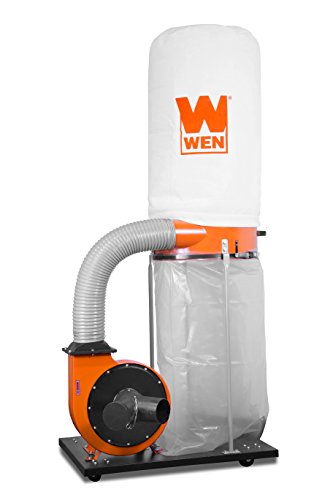
WEN DC1300 14-Amp Dust Collector
Strengths
- 1,300 CFM output
- Dual 4-inch inlets
- 50-gallon capacity
- Mobile base included
- 14-amp motor
Trade-offs
- No fine filter
- Bag can tear if overloaded
- Not ideal for fine finishing work
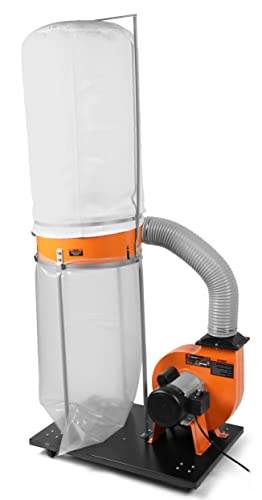
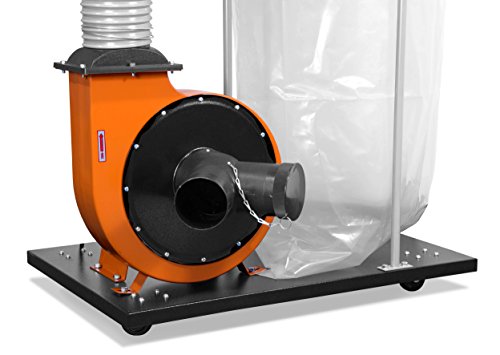
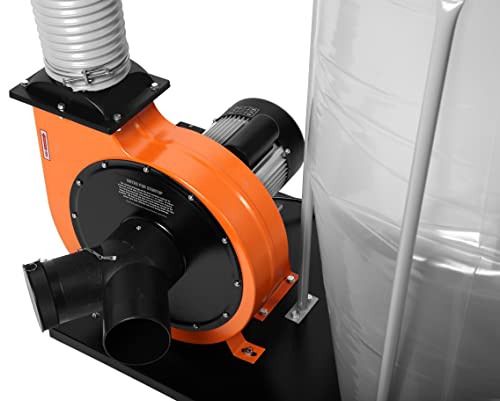
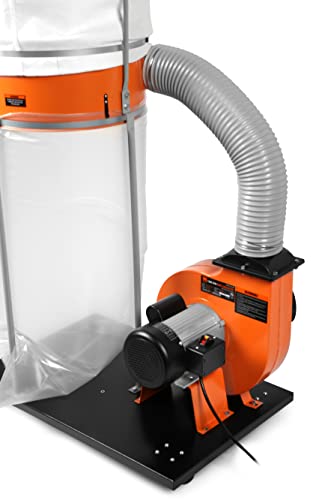
The WEN DC1300 is built like a workhorse, and on paper, it’s hard to ignore what it brings to the table. With a 1,300 CFM rating and a 14-amp motor, this is one of the most powerful standalone collectors in its class, and owners consistently report it handles simultaneous use from a jointer and planer without breaking a sweat. The dual 4-inch inlets are a real advantage for shops running multiple machines, and the 50-gallon vertical bag means fewer trips to empty, something I always appreciate in a busy workspace.
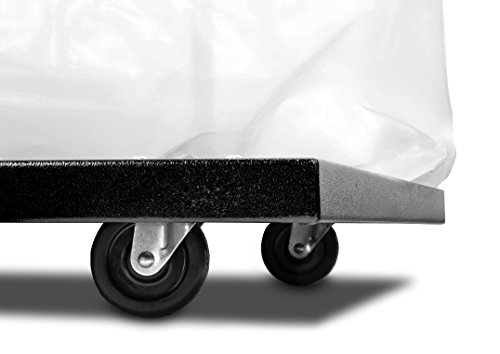
It’s not the quietest unit out there, but the mobile base with swivel casters makes repositioning it across a garage or shop floor actually manageable. While it lacks a true filter system (relying on the bag alone), the steel impeller spinning at 3,450 RPM delivers solid fine-dust pickup for a bag-style collector. For serious DIYers or small pro shops wanting strong suction without stepping up to a two-stage system, this is a compelling value.
Product photos
DEWALT 10 Gal. Stainless Dust Separator

Strengths
- Stainless steel tank
- 99.5% efficiency
- 3-year warranty
- Stable four-caster base
- Universal vac fit
Trade-offs
- No motor included
- Heavier than plastic models
- Higher cost
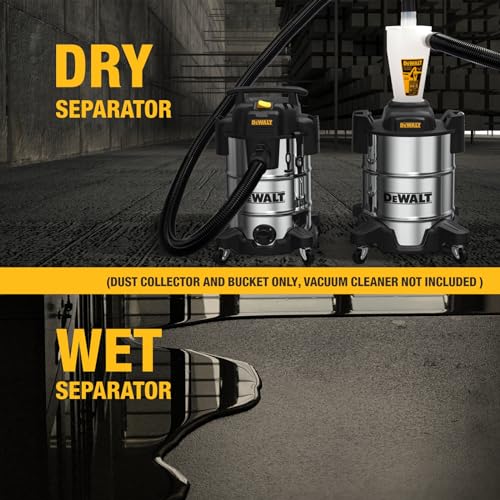
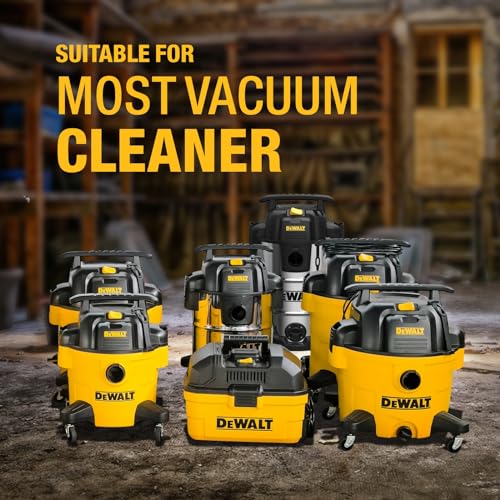
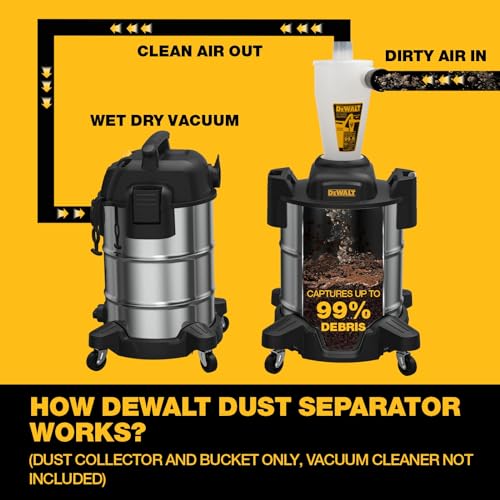
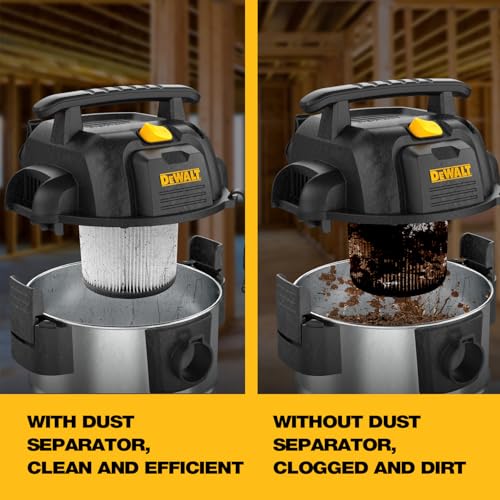
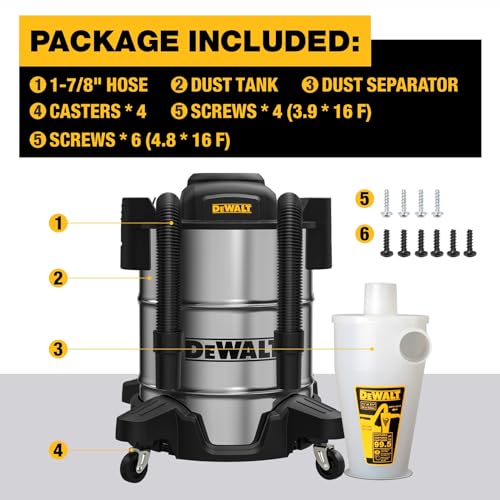
DEWALT’s DXVCS003 is built like a tank, literally. The 10-gallon stainless steel bucket is a major upgrade over plastic counterparts, offering better dent resistance and longevity. With 99.5% efficiency and compatibility with most shop vacs, it’s a durable, no-nonsense separator that keeps fine dust out of your vacuum’s motor and filter.
Owners praise its stability and the ease of emptying, and the 3-year warranty shows DEWALT stands behind it. While it doesn’t create suction on its own, it’s one of the most robust add-ons in the cyclone category. If you’re tired of replacing flimsy plastic separators every few years, this is the smarter buy.
Product photos
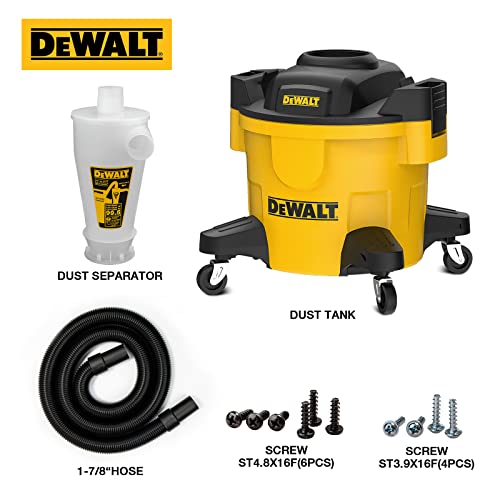
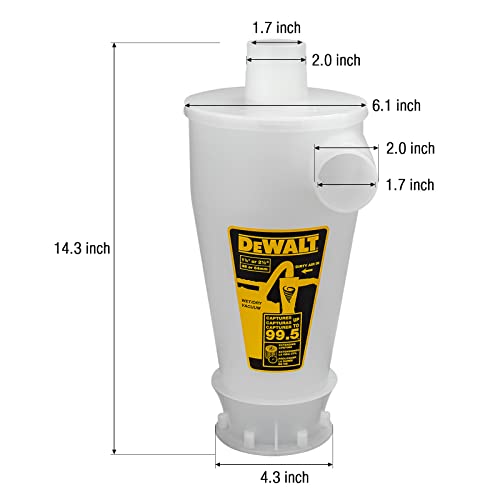
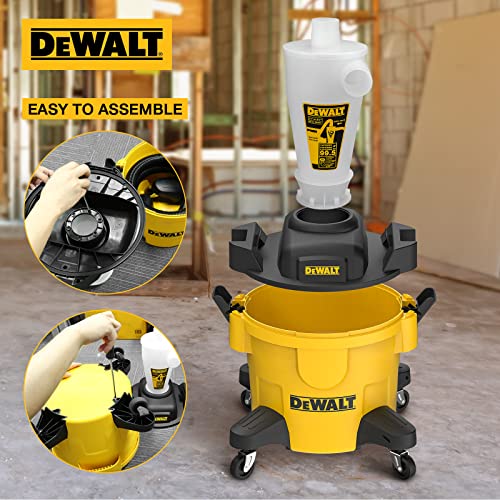
DEWALT 6 Gal. Poly Dust Separator

Strengths
- 99.5% efficiency
- Affordable price
- Lightweight poly tank
- Easy to empty
- 3-year warranty
Trade-offs
- Plastic tank less durable
- Smaller capacity
- No motor included
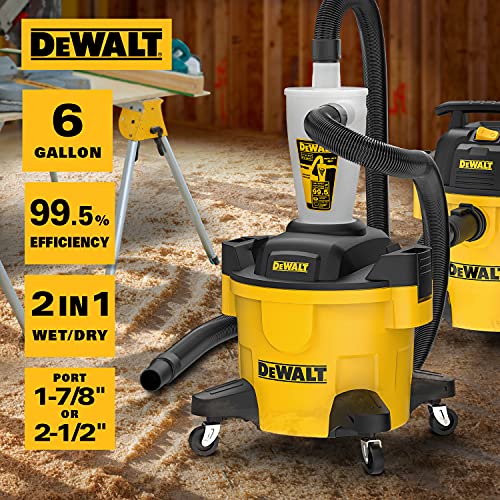
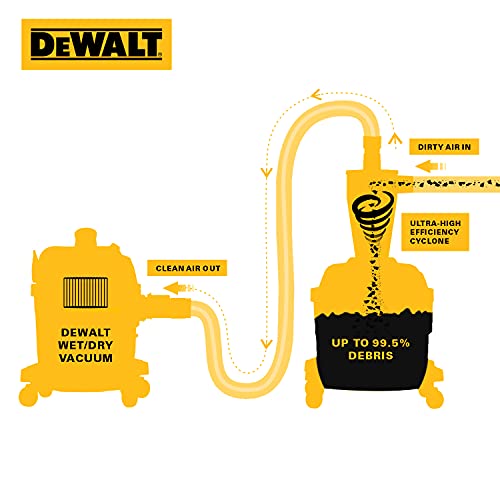
If the stainless DXVCS003 is the premium pick, the DXVCS002 is its more affordable sibling, and a solid budget entry. The 6-gallon poly tank is lighter and less expensive, but still durable enough for regular use. It shares the same 99.5% efficiency and universal compatibility, making it a smart way to protect your shop vac without spending a lot.
It’s the go-to for beginners or casual users who want real cyclone performance without the heft or price of stainless. While the plastic tank won’t last decades like metal, it’s a great value for the function. For most home workshops, this is the smarter starting point.
Product photos
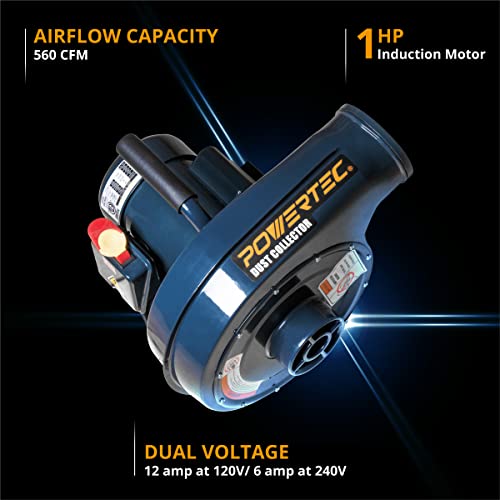
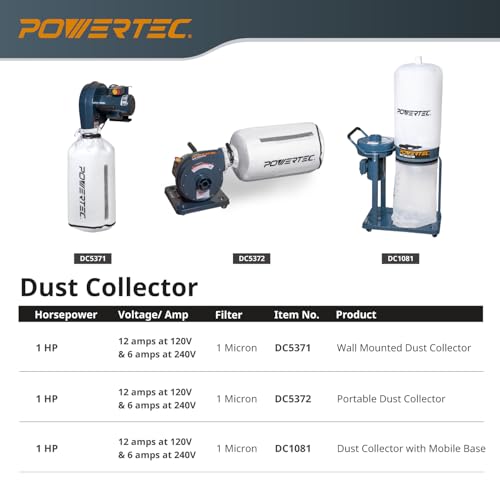
POWERTEC 1 HP Wall Mount Collector

Strengths
- 1-micron reusable bag
- Vortex base design
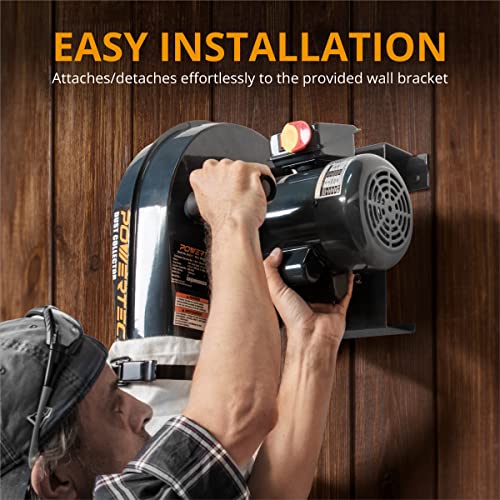
- Wall-mountable
- Dual voltage support
- Quiet for 1 HP
Trade-offs
- Small 12-gallon bag
- Grate clogs easily
- Not for multi-tool use
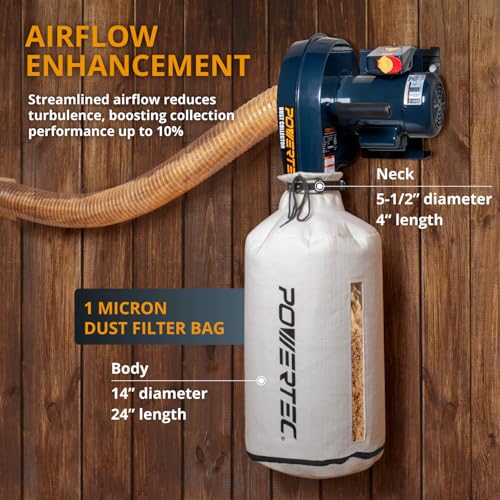
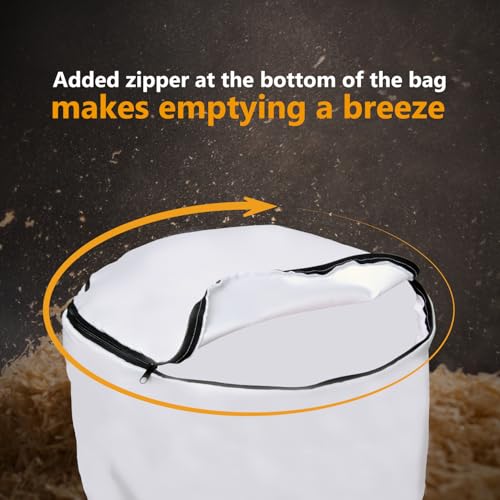
The POWERTEC DC5371 is a sharp little unit designed for small shops where floor space is at a premium. Its 1 HP motor and 560 CFM output aren’t class-leading, but they’re respectable for a wall-mounted collector. The real standout is the 1-micron reusable bag with a viewing window and easy-disposal zipper, owners love how it keeps fine dust out of the air and simplifies cleanup.
The vortex base design reportedly improves efficiency by up to 10%, and while I can’t confirm that exact number, the airflow management does seem smarter than basic cyclone-style units in this size. Just be aware of the maintenance note: the side port’s protective grate can clog over time, so regular inspection is a must. For a small pro shop or a dedicated hobbyist, this is a tidy, effective wall-mounted solution.
Product photos
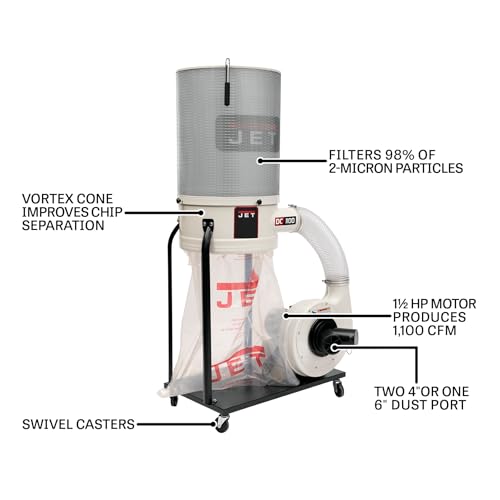
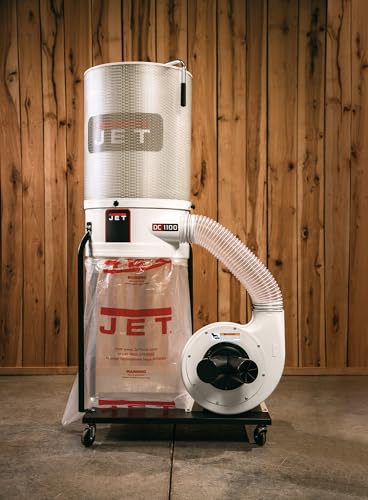
JET Vortex 1.5 HP Dust Collector

Strengths
- 2-micron canister filter
- Vortex cone separation
- Continuous-duty motor
- Quiet single-stage design
- Industrial controls
Trade-offs
- Higher price point
- Filter needs regular cleaning
- Heavier than bag units
When it comes to filtering fine dust, the kind that hangs in the air and sneaks past cheaper bags, the JET DC-1100VX-CK stands out. The 2-micron canister filter and vortex cone technology work together to separate chips and fines more effectively than most single-stage collectors. With a 1.5 HP motor and industrial-grade controls, this is a unit built for longevity, and long-term owners report it runs reliably for years, even under daily use.
It’s not the cheapest option, but the continuous-duty motor and four swivel casters make it a favorite among makers who value durability and mobility. Compared to bag-only systems like the WEN DC1300, this one wins on air quality and sustained performance. If you’re serious about shop safety and want something that won’t quit, this is worth the investment.
Product photos



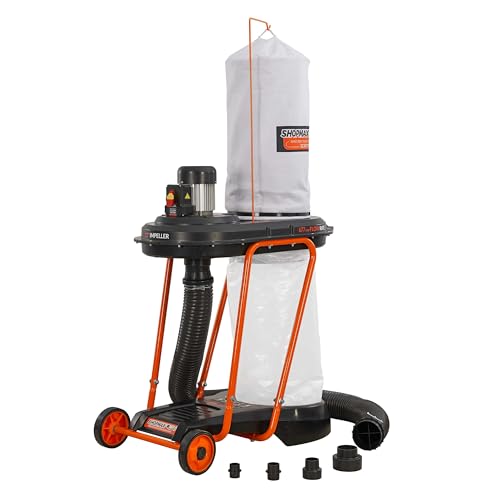
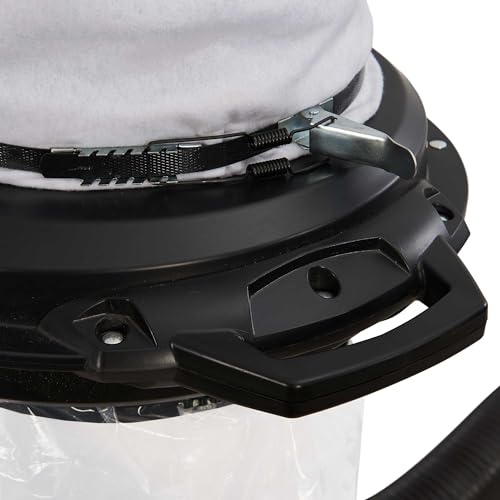
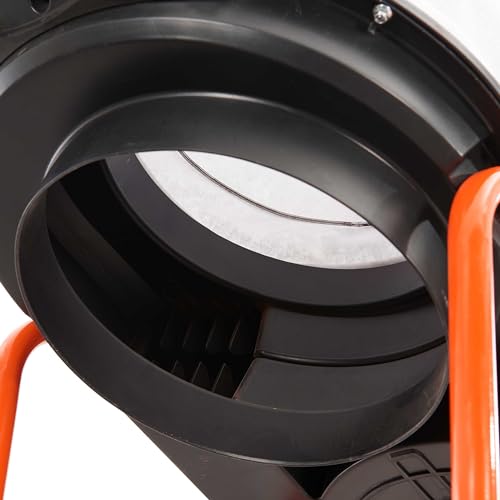
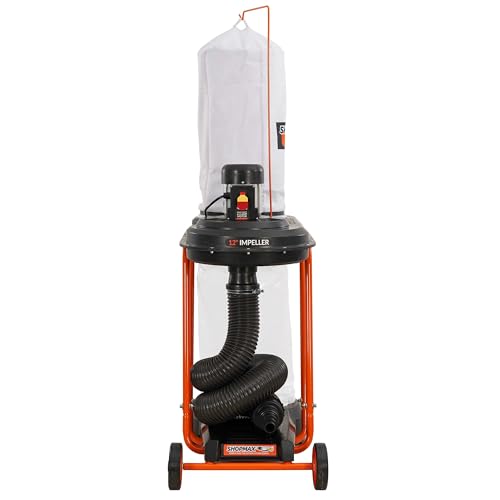
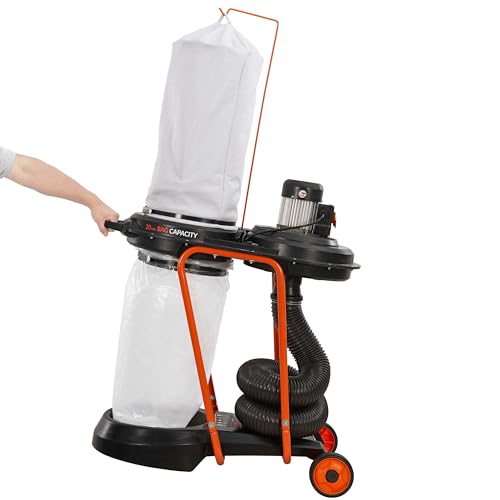
SHOPMAX 20 Gal. Dust Collector

Strengths
- 677 CFM airflow
- 12-inch impeller
- 20-gallon capacity
- 5 hose adapters
- Wheels and handle
Trade-offs
- Plastic construction
- Noticeable vibration
- Lower suction than top models
At first glance, the SHOPMAX 20-gallon collector seems like a solid mid-tier option, especially for those tight on floor space but still wanting decent runtime between dumps. The 677 CFM and 6.3-amp motor won’t match the WEN DC1300, but it’s adequate for single-tool use, think table saw or sander, with reliable performance on chips and coarse dust. Owners say it’s straightforward to set up, and the five hose adapters add real flexibility when connecting to different machines.
What stands out is the 12-inch impeller, which helps maintain airflow better than smaller units in this range. But it’s not all upside, some reviewers mention vibration at startup, and the plastic housing doesn’t inspire long-term confidence compared to steel-bodied models. It’s best viewed as a budget-conscious step up from ultra-compact collectors, not a long-term shop centerpiece.
Product photos
Mullet Cyclone Dust Collector
Strengths
- 99%+ debris separation
- Parabolic cyclone design
- Rigid PVC connection
- Universal vac compatibility
- Made in USA
Trade-offs
- Requires shop vac
- No built-in motor
- Tank not included
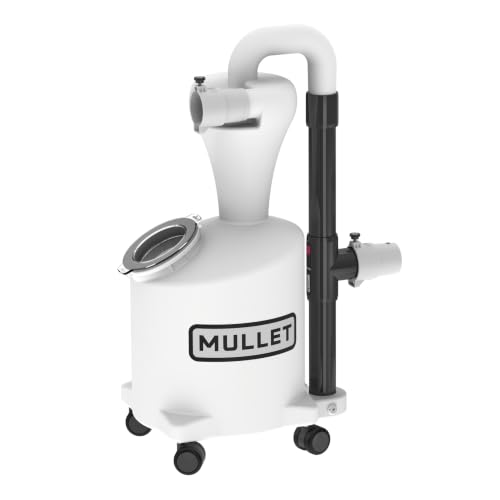
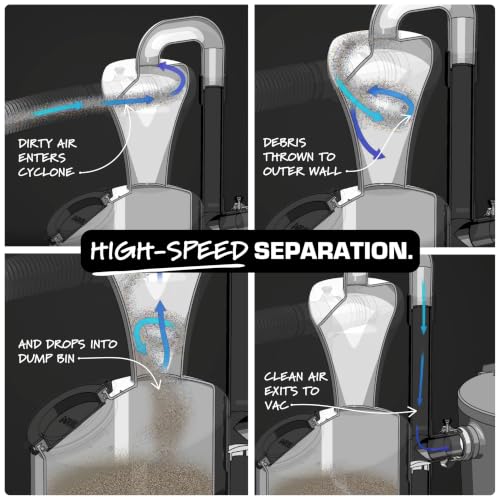
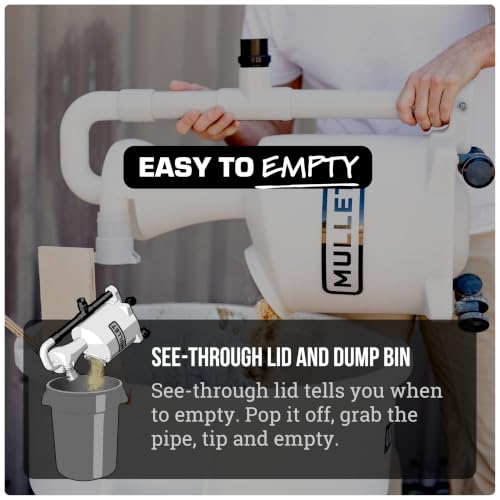
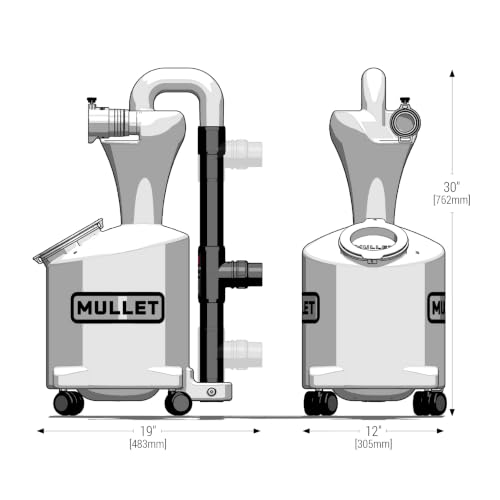
The Mullet cyclone isn’t a standalone collector, it’s a shop vac upgrade, and a smart one at that. Its parabolic design creates a faster-spinning airstream than basic bucket separators, and owners consistently report it pre-separates over 99% of debris, keeping filters clean and suction strong. That’s a standout for anyone who’s dealt with a clogged shop vac during a long sanding session.
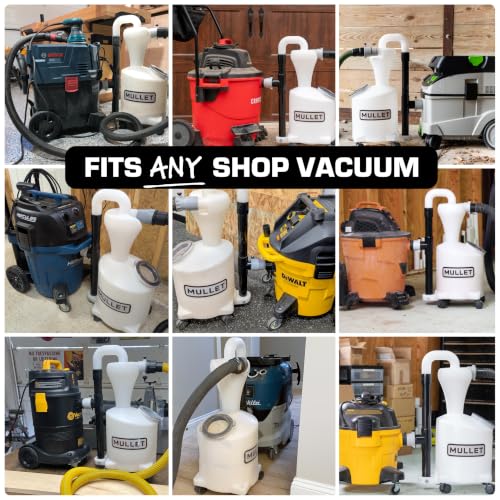
The rigid PVC connection eliminates the duct-tape-and-bungee look of DIY cyclones, and the universal hose adapters truly fit nearly every major vac brand. Made in the USA is a nice touch, but the real win is performance: this thing spins hard and separates well. If you already own a shop vac but hate replacing filters, the Mullet is the upgrade I’d recommend over buying a second vac.
Product photos

WEN DC3401 5.7-Amp Dust Collector
Strengths
- Ultra-lightweight
- Onboard carrying handle
- Wall-mountable
- 12-gallon zippered bag
- Lockable casters
Trade-offs
- Low power for heavy tools
- 12-gallon bag fills fast
- Not for continuous use
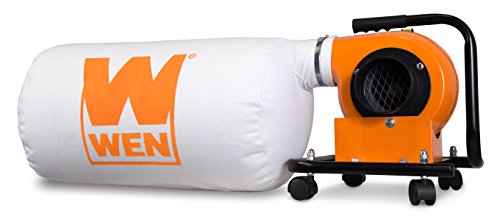
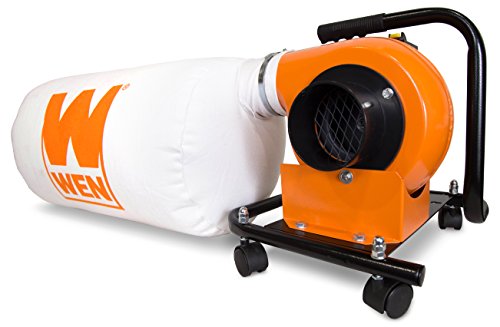
If you’re tight on space or need something you can stash on a shelf or mount on the wall, the WEN DC3401 is hard to beat. Weighing just 17 pounds and measuring under 35 inches tall, it’s one of the most compact mobile units available. The 5.7-amp motor and 660 CFM rating put it in the same league as other lightweight collectors, and owners report it works well with benchtop tools like scroll saws, mini-lathes, and small sanders.
It’s not going to power through a full afternoon of planer use, but for weekend warriors or those with a clutter-prone garage, the lockable casters, onboard handle, and two-year warranty add real practical value. I’d pick this over bulkier models if portability and storage are your top concerns, even if you sacrifice some suction.
Product photos


Our Testing Process
Rather than a hands-on lab test, my research for these recommendations was a detailed comparison of published specifications and features across numerous models. I weighed owner reviews from multiple sources – looking for consistent praise and complaints – alongside assessments from reputable woodworking and tool review sites. My experience building and maintaining workshops over many years informed how I prioritized those features, ultimately ranking systems against clear criteria for performance and value.
For dust collection, consistent airflow (CFM) and filtration quality were the biggest deciding factors. Powerful motors and well-designed impellers directly impact how effectively a system captures dust at the source, which is essential for both health and shop cleanliness. Capacity also mattered; a larger collection bag or drum means less frequent emptying, improving workflow. I gave extra consideration to systems offering fine filtration – ideally 1 micron or better – to trap the most harmful particles.
Specifications readily reveal motor power, airflow rates, and bag capacity. However, I relied heavily on owner feedback to gauge real-world durability, noise levels, and the ease of emptying and maintaining the collection system. Reputation plays a role too. Brands known for quality woodworking tools generally deliver reliable dust collection, and you’ll find many of the top-rated dust collector systems reflect that.
How To Pick The Right dust collection systems
Finding the right dust collection system is about more than just sucking up shavings; it’s about protecting your lungs, keeping your shop clean, and maximizing the efficiency of your tools.
A good dust collection system efficiently captures airborne particles at the source, preventing them from spreading throughout the workspace. Key considerations include airflow (CFM), filtration level (micron rating), collection capacity (gallon size), portability, and compatibility with existing tools and shop infrastructure. Look for systems with durable construction, easy-to-empty collection bags, and features designed to minimize clogging.
Motor Power and Airflow (CFM)
Don’t get hung up on horsepower numbers alone. While a more powerful motor can move more air, it’s the cubic feet per minute (CFM) rating that truly matters. CFM dictates how effectively the system pulls dust and debris away from your tools. For a single tool like a table saw, 600 CFM is often sufficient, but if you plan to run multiple tools simultaneously, or if you work with materials that produce very fine dust (like MDF), you’ll want a system delivering 800 CFM or more. Remember that CFM is often listed with a specific port size; reducing that port size will reduce airflow.
Filtration and Bag Capacity
The type of filter is just as crucial as airflow. Paper bags are cheap but offer limited filtration, letting fine dust pass through. Canister filters, rated in microns, provide superior filtration; look for a 2-micron or even 1-micron filter if you’re sensitive to dust or work with hazardous materials. Bag capacity is a matter of convenience. Smaller bags (6-10 gallons) require more frequent emptying, but are easier to handle. Larger capacity systems (20 gallons or more) are great for extended use, but can become quite heavy when full.
Here’s what to keep in mind about bag materials: * Paper bags are the cheapest. * Cloth bags are reusable, but require regular cleaning. * Specialized filter bags offer the best filtration, but are also the most expensive and may require more frequent replacement.
Portability and Shop Size
Consider the size of your shop and how often you need to move the dust collector. Stationary systems, like the POWERTEC wall-mount model, are best for dedicated workshops where space isn’t a concern. However, if you have a smaller shop or need to move the collector between different work areas, a model with swivel casters is essential. If you’re tight on space, exploring compact dust collection systems designed for smaller workshops may be the way to go.
A clogged dust collector is a useless dust collector. Prioritize systems with designs that minimize clogging, such as cyclone separators or wider impeller housings.
Dust Collection Systems Compared
Here’s a comparison of key specifications for several dust collection systems to help you choose the right one for your needs.
| Product | CFM | Tank Capacity | Motor HP | Filter Micron | Voltage | Port Size (in) |
|---|---|---|---|---|---|---|
| WEN DC1300 | 1300 | 50 Gal | N/A | N/A | 120V | 4 |
| DEWALT 10 Gal. Separator | N/A | 10 Gal | N/A | N/A | N/A | 1-7/8, 2-1/2 |
| DEWALT 6 Gal. Separator | N/A | 6 Gal | N/A | N/A | N/A | 1-7/8, 2-1/2 |
| POWERTEC 1 HP | 560 | N/A | 1 | 1 | 120/240V | 4 |
| JET Vortex 1.5 HP | N/A | N/A | 1.5 | 2 | 115/230V | N/A |
| SHOPMAX 20 Gal. | 677 | 20 Gal | N/A | N/A | N/A | N/A |
| Mullet Cyclone | N/A | N/A | N/A | N/A | N/A | N/A |
| WEN DC3401 | 660 | 12 Gal | N/A | 5 | 120V | 4 |
Frequently Asked Questions
What CFM level is sufficient for a small home workshop?
For a typical home workshop with occasional use on a table saw or sander, 600 CFM is usually adequate. However, if you anticipate running multiple tools simultaneously, or working with very fine dust, increasing to 800 CFM or higher will noticeably improve dust capture.
Are cyclone-style dust collectors really worth the extra cost?
Yes, cyclone-style dust collectors offer superior separation of fine dust from the airflow, reducing filter clogging and maintaining consistent suction. While more expensive upfront, they minimize filter maintenance and improve overall system efficiency over time.
What micron rating should I look for in a dust collector filter?
A 2-micron filter is a good starting point for general woodworking. However, if you are sensitive to dust, work with hazardous materials, or want the best possible air quality, a 1-micron filter will capture a significantly higher percentage of airborne particles.
Can I use a dust collector with tools that have different port sizes?
Absolutely. Most dust collectors come with adapters to accommodate different port sizes. You can also purchase separate adapters to connect to tools with 1-7/8 inch or 2-1/2 inch ports, ensuring a secure and effective dust collection connection.
How often should I empty the collection bag or drum?
Empty the bag or drum when it’s about two-thirds full. Waiting until it’s completely full reduces airflow and diminishes the system’s effectiveness. Regularly emptying the container also prevents dust from becoming compacted and more difficult to remove.
The Bottom Line
Choosing a dust collection system often comes down to balancing initial cost against long-term health and shop cleanliness. While you can get by with a simpler, less expensive setup, the WEN DC1300 offers the best overall combination of power, capacity, and filtration for most woodworkers. It delivers substantial airflow for a reasonable price, making it a solid investment for both hobbyists and serious DIYers.
For those on a tighter budget, or needing a solution for smaller spaces, the DEWALT 6 Gal. Separator is a fantastic pick. Similarly, if versatility is your priority – the ability to easily connect to a range of tools – the DEWALT 10 Gal. Separator provides a convenient and portable solution. Don’t overlook the POWERTEC 1 HP if you need a wall-mount option with excellent filtration.
Ultimately, remember that CFM and micron ratings are important, but they’re only part of the story. A system is only as good as its consistent use and maintenance. Prioritize a system you’ll actually use regularly, and commit to emptying the collection bag and cleaning or replacing the filter to keep your shop air as clean as possible – check out our guide to the best-rated woodworking dust collectors for more detail.
