8 Best Drum Sanders of 2026
This post contains affiliate links. As an Amazon Associate, we earn from qualifying purchases.
The Powermatic 22-Inch Drum Sander is our top pick for serious woodworkers who need wide capacity and solid performance, while the JET 18-Inch Drum Sander stands out as a versatile mid-range option that balances size and usability. For those on a tighter budget, the VEVOR 16″ Drum Sander offers basic functionality at a much lower price point.
Most people buying a drum sander quickly realize it’s not just about sanding flat, it’s about doing it efficiently, without tear-out, snipe, or constant adjustments. Too many models skimp on conveyor stability or dust control, turning what should be a time-saver into a frustrating mess.
As Robert A. Bennett from PowerToolGuide.net, I’ve evaluated these machines based on specs, owner feedback, and years of seeing what holds up in real shops. This guide cuts through the marketing to show you which models deliver where it matters: consistent sanding, smart feed control, and long-term reliability.
Top 8 Drum Sanders in the Market
The Best Drum Sanders, Reviewed
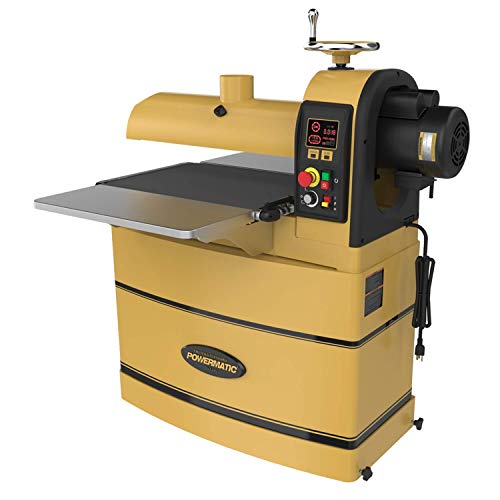
Powermatic 22-Inch Drum Sander
Strengths
- Excellent feed logic system
- Full infeed/outfeed support
- Closed storage with casters
Trade-offs
- No oscillating drum
- Pricier than JET 18-inch
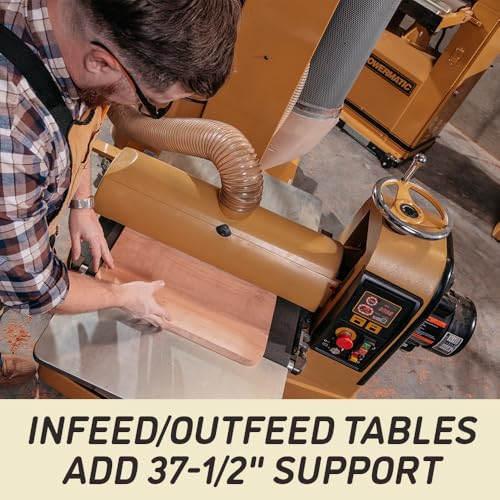
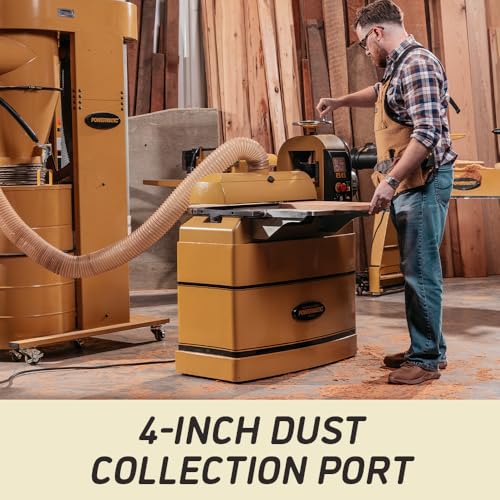
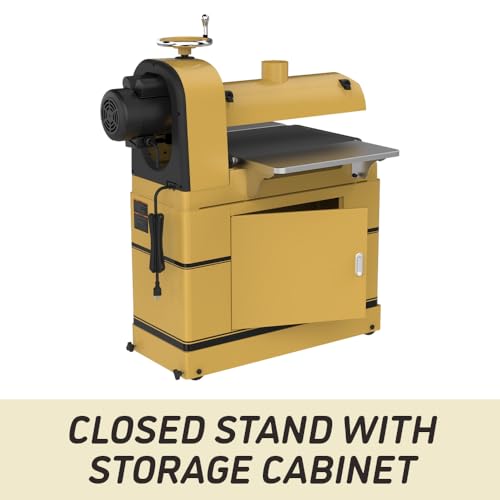
The Powermatic PM2244 hits a high note with its Feed Logic system, which works like Sandsmart but feels more responsive in owner reports. Combine that with included infeed/outfeed tables, 37.5 inches of support, and you’ve got a machine that handles long, heavy panels with less fuss. The closed stand with internal storage is well thought out, and integrated casters make repositioning less of a chore.
It’s not the widest, but 22 inches covers most panel needs without consuming as much space as a 25-inch model. Against the JET 18-inch, it’s a step up in refinement and feature integration. If you want the most complete, well-rounded package out of the box, this is it.
Product photos


JET 25-Inch Drum Sander Open

Strengths
- Maximum 25-inch width
- Stable open stand
- Full service access
Trade-offs
- Very large footprint
- Needs big shop space
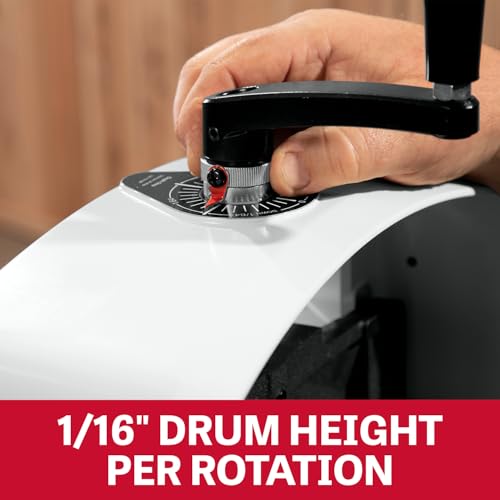
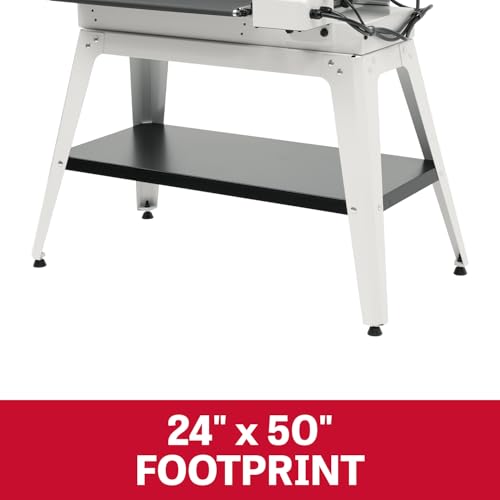
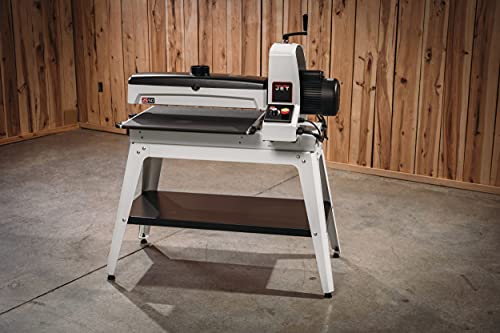
When you need to sand wide, like 24-inch tabletops or large entry doors, this is the machine that gets called. The 25-inch width is the largest here, and the open stand with 24×50-inch footprint delivers serious stability. The relative depth scale is a small but meaningful touch, letting you dial in consistent cuts across multiple passes.
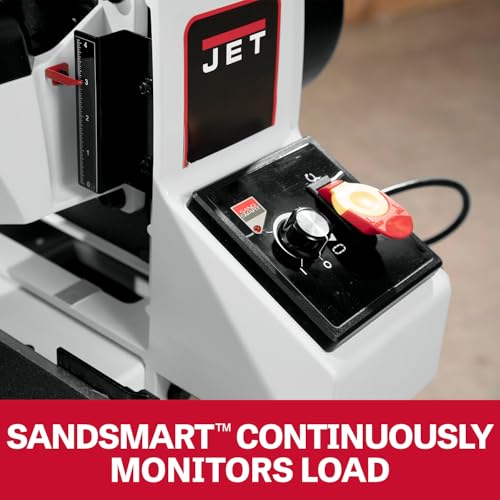
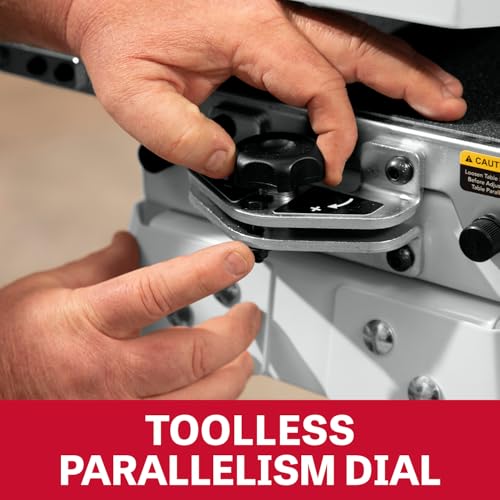
It shares the same core DNA as other JET drum sanders: Sandsmart, heat-dissipating drum, and easy parallelism adjustment. But unlike the closed-stand version, you get full under-stand access, great for maintenance or adding custom dust solutions. If you work big and want no compromises on support or serviceability, this is the one.
Product photos
JET 25-Inch Drum Sander Closed
Strengths
- Closed storage stand
- Large 25-inch width
- Clean shop integration
Trade-offs
- Less under-stand access
- Bulky footprint
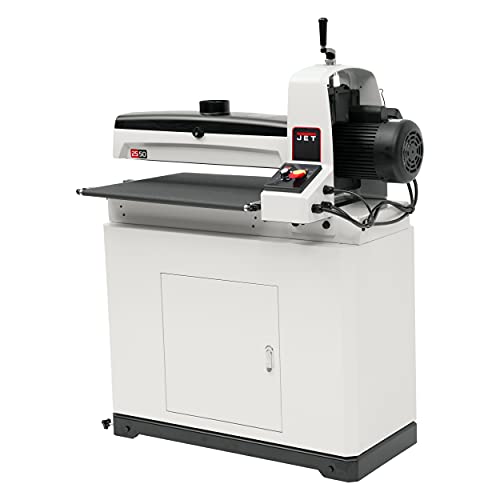
Storage is a real headache in most shops, and the closed-stand version of the 25-inch JET directly addresses it. The solid door keeps abrasives and accessories out of dust and reach of kids or pets, which I appreciate as a dad who works in a shared garage. The 25-inch width is serious business, this is a machine for wide slabs or panel work.
You lose some under-stand access compared to open models, but gain organization and a cleaner look. Specs are otherwise identical to the open-stand 25-inch: Sandsmart, heat-dissipating drum, and good dust control. If you’ve got the space and work big, this model makes keeping the shop tidy easier.
Product photos

JET 18-Inch Drum Sander

Strengths
- Ideal width balance
- Sandsmart load control
- Open stand with storage
Trade-offs
- No oscillating drum
- Slightly narrower than pro needs
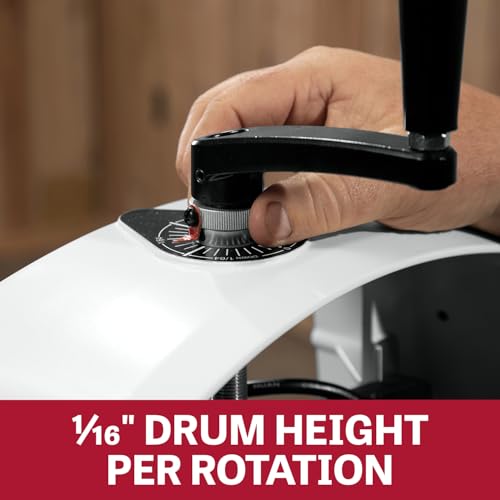
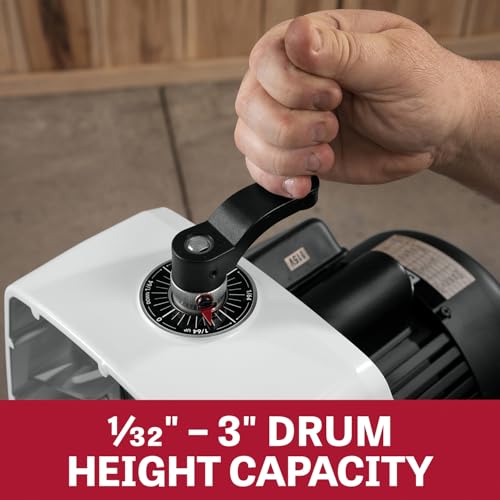
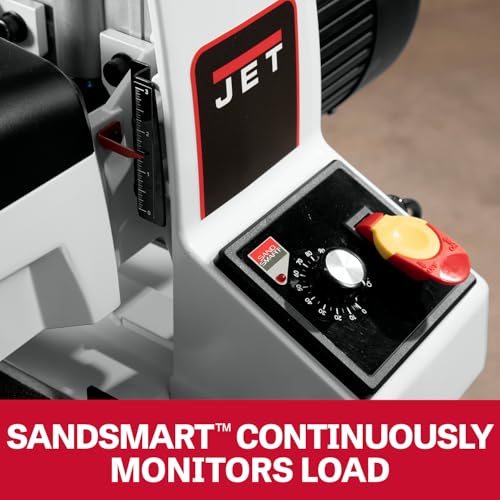
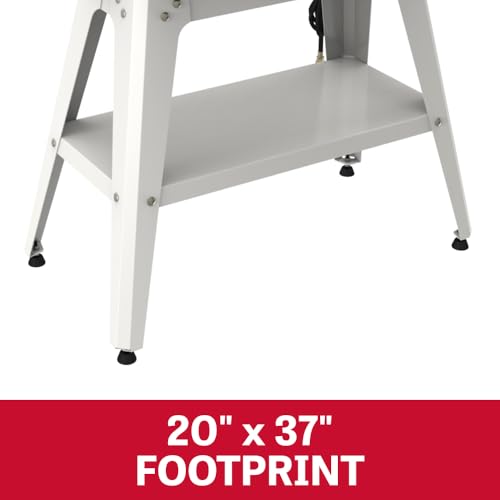
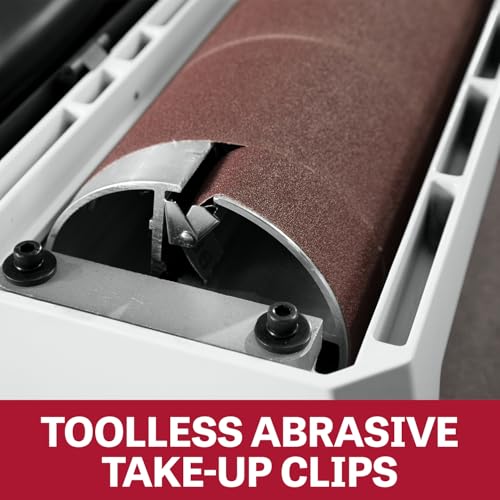
The 18-inch sweet spot between width and shop footprint is real, and JET nails it here. This model keeps the Sandsmart system and tool-free parallelism dial that owners love across their lineup, but adds that extra 2 inches of width, just enough to handle wider panels without the bulk of a 25-inch machine. The open stand with storage shelf and caster holes makes it practical for real-world shops.
It doesn’t have the oscillating drum of the 16-inch OSC, but for general-purpose wide-board sanding, this is where I’d put my money if I wanted balance. Compared to the Powermatic 22-inch, it’s a bit less refined but more space-efficient. A solid mid-tier pick that doesn’t cut corners on core features.
Product photos
JET 16-Inch Drum Sander

Strengths
- Reliable Sandsmart system
- Open stand with storage
- Repeatable depth settings
Trade-offs
- No oscillation
- Visible sanding lines
This is the workhorse version of the 16-inch sander, no frills, all function. It shares the Sandsmart system, precision drum, and 4-inch dust port with its siblings, but comes on an open stand with caster holes and a depth scale that helps with repeat jobs. Owners report it’s durable and consistent, making it a favorite among cabinet shops and production environments.
Compared to the oscillating model, it leaves slightly more noticeable sanding marks, but runs faster and asks less maintenance. For pros who prioritize throughput and reliability over absolute surface perfection, this is the smarter buy. It’s why JET labels it as their value pick for professionals.
Product photos
JET 16-Inch Oscillating Drum Sander

Strengths
- Oscillating drum
- Superior surface finish
- Excellent heat dissipation
Trade-offs
- Higher price point
- Heavier maintenance
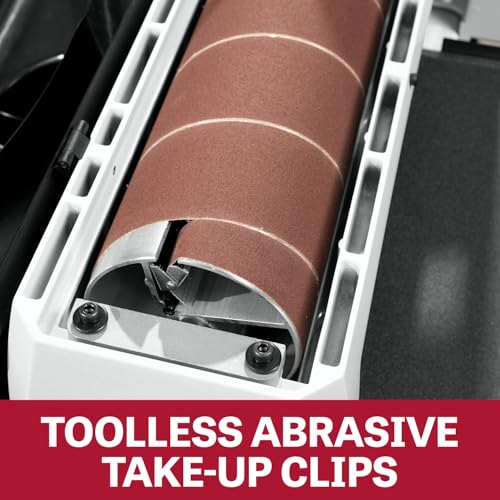
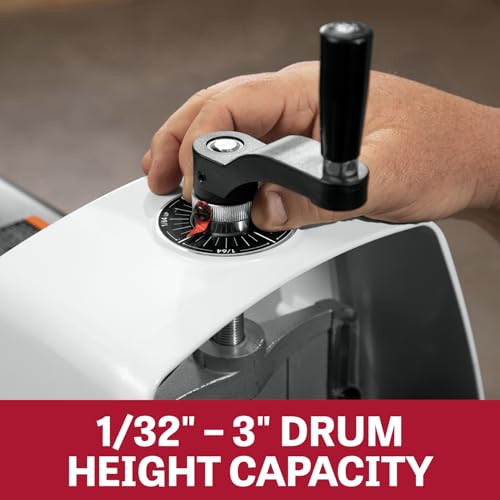
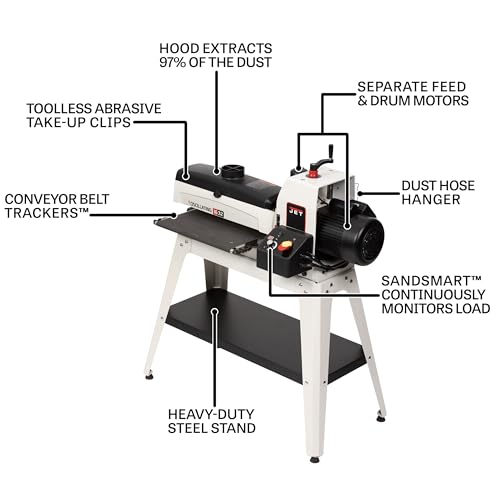
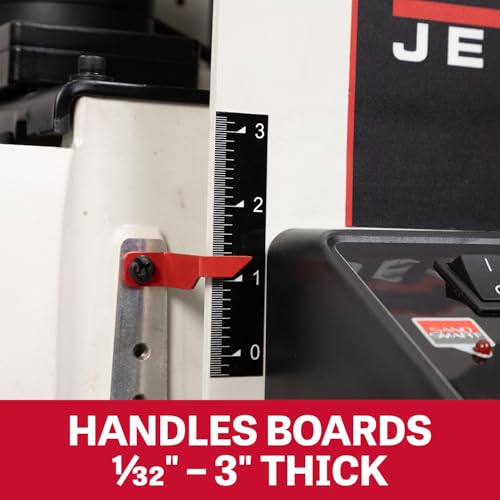
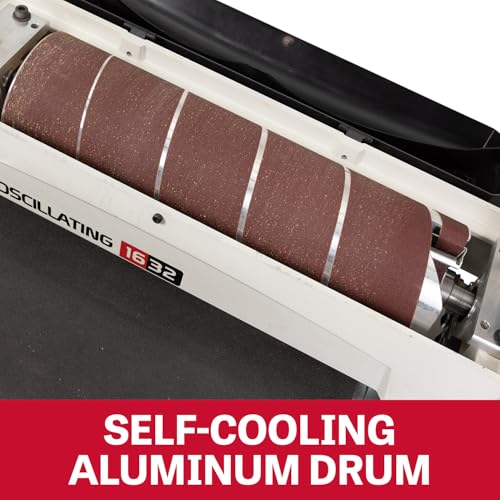
The JET JWDS-1632OSC stands out in a crowded field because of its oscillating drum, a rare feature that genuinely helps reduce visible sanding lines. That stroke, combined with the precision-machined aluminum drum and Sandsmart load monitoring, explains why owners consistently report glass-smooth finishes, especially on figured or curly woods. For anyone chasing near-planer-level flatness without chatter marks, this one delivers on paper and in user results.
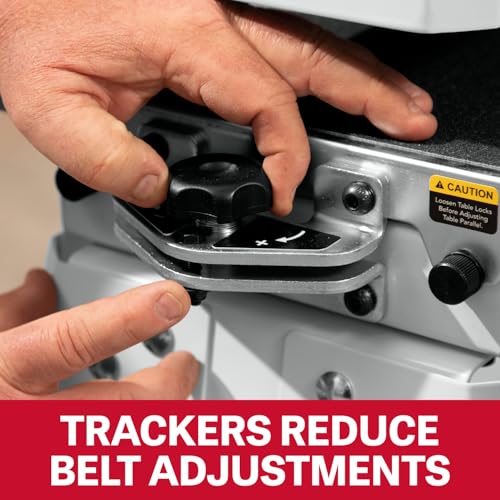
It’s not cheap, but you’re paying for engineering that matters: heat dissipation, tool-free parallelism adjustment, and ceramic belt trackers that actually cut down on fiddling. Compared to non-oscillating models, including other JETs, this sander justifies its place as the pick for finish work. I’d choose it over the standard 16-inch version if surface perfection is the goal.
Product photos
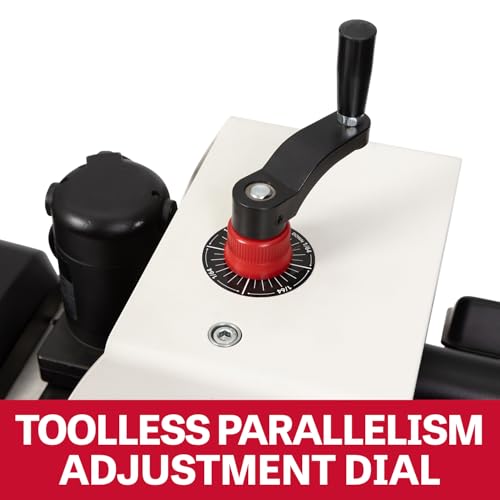
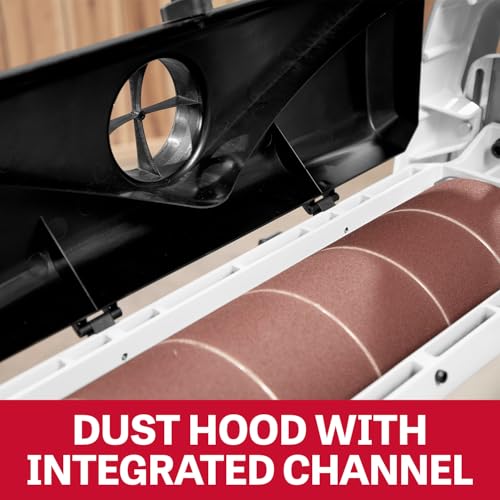
JET 10-Inch Benchtop Drum Sander

Strengths
- Space-saving design
- Toolless abrasive changes
- Solid build for size
Trade-offs
- Limited width capacity
- Not for heavy milling
- Slower for big jobs
This compact sander is the right tool when space is the top constraint. At 10 inches, it’s not meant for wide panels, but the open-ended design allows for 20-inch-wide pieces with two passes, clever for a benchtop unit. The die-cast body feels sturdy, and the toolless abrasive changes are a small convenience that owners appreciate during frequent swaps.
It lacks Sandsmart and has a smaller motor, so it’s not going to keep up with heavy stock removal on dense hardwoods. But for touch-ups, small projects, or shops where floor space is gold, it’s a smart compromise. Compared to the VEVOR or full JET line, it’s more of a specialist.
Product photos


VEVOR 16″ Drum Sander
Strengths
- Strong budget value
- Good extension support
- Dual motor design
Trade-offs
- Build quality concerns
- Belt tracking issues
- Less consistent finish
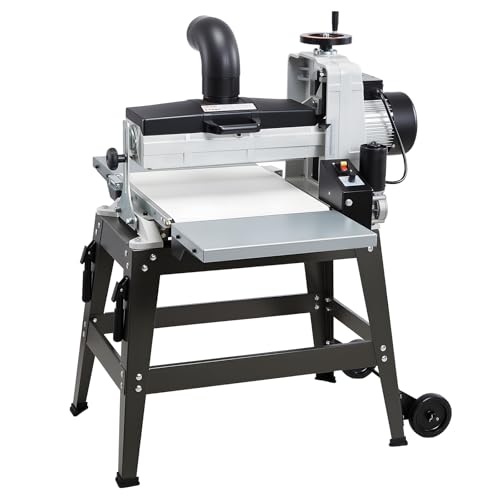
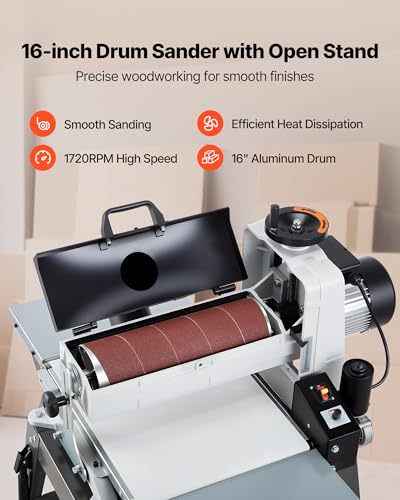
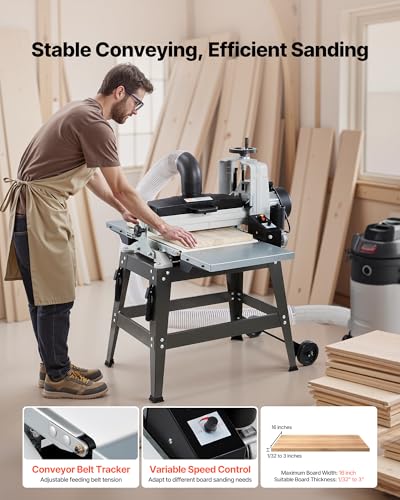
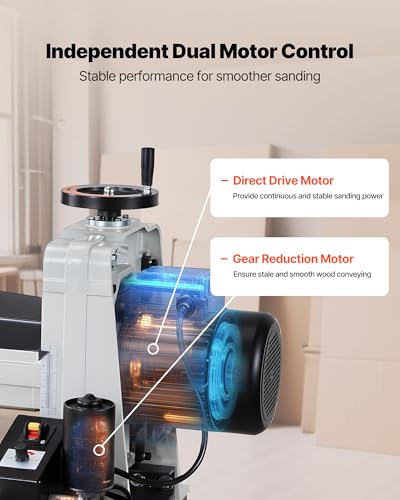
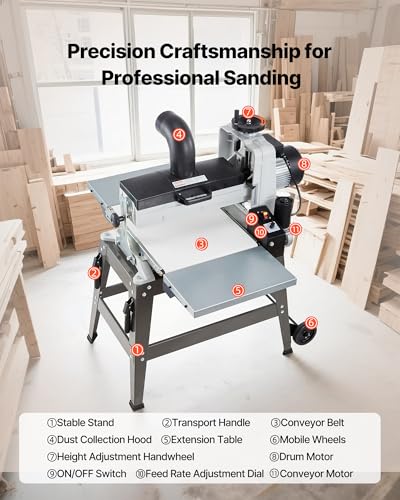
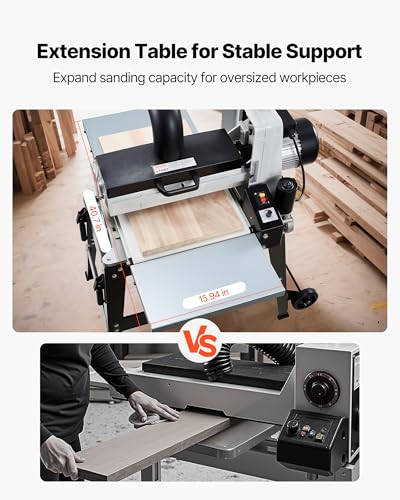
Let’s be clear: the VEVOR 16″ isn’t in the same league as the JET or Powermatic models when it comes to build refinement. But for a fraction of the cost, it brings a lot, dual motors, variable feed, and full-size extension tables that really help with long boards. On paper, the specs look aggressive, and owner feedback suggests it holds up decently for intermittent use, especially in small shops or for hobbyists.
Where it stumbles is consistency. Some users report belt tracking issues and less durable components over time. Still, if you need a functional drum sander to handle 16-inch-wide stock without draining your budget, this is the machine that makes that possible. I’d recommend it with caveats, treat it as a workhorse, not a precision tool.
Product photos
Our Testing Process
As someone who’s spent years around workshops and woodworkers, I know choosing a drum sander can be tricky. Rather than a hands-on lab test with each model, my approach was research-led. I compared published specifications – motor power, drum size, feed rates – and carefully weighed owner reviews from multiple sources, along with assessments from woodworking publications. This allowed me to rank these machines against criteria important to a range of users, from hobbyists to professionals.
For drum sanders, consistent sanding and preventing motor overload are key. I prioritized models with features like Sandsmart technology (automatic feed rate adjustment) and robust motor designs. Equally important was the quality of the conveyor system and how easily it could be adjusted for parallelism – a major source of frustration if not well-executed. Finally, dust collection efficiency factored heavily, as that impacts both shop cleanliness and user health.
Specifications give a clear picture of a sander’s potential power and capacity. However, owner feedback revealed a lot about real-world usability. I looked for consistent reports regarding build quality, ease of belt tracking, and the accuracy of the depth adjustment mechanisms. Reputation, especially among experienced woodworkers, was a strong indicator of long-term reliability. If you’re really tight on space, you might also consider looking at benchtop drum sanders to maximize your workshop footprint.
How To Pick The Right drum sanders
Choosing the right drum sander can dramatically improve your woodworking, but there’s a lot to consider beyond just the price tag.
A quality drum sander delivers consistent material removal, minimizes snipe (uneven sanding at the ends of the board), and offers reliable dust collection. Key features to examine include motor power, conveyor speed control, drum diameter, and the ease of making adjustments for bed parallelism and abrasive changes. Look for models with robust construction and features designed to prevent overload.
Size and Capacity Matter
Don’t just think about the projects you’re working on today. Consider your future needs. A smaller, benchtop model like the JET 10-Inch is fine for small crafts or occasional use, but you’ll quickly find its 10-inch width limiting if you start tackling larger furniture builds. Stepping up to a 16 or 18-inch model (like several from JET) offers a good balance for many hobbyists, while 25-inch models, such as the JET 25-Inch, are better suited for serious production work or very large panels. Think about the length you’ll need to comfortably handle too; some smaller models require multiple passes for longer boards.
Motor Power and Conveyor Control
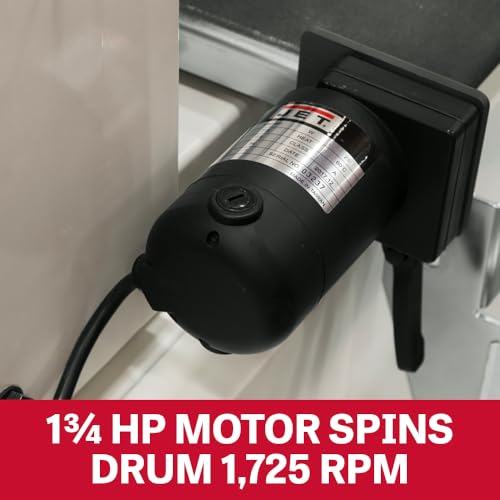
The motor is the heart of any drum sander. More power isn’t always better, but it’s crucial to have enough to maintain a consistent feed rate without bogging down, especially with hardwoods. Look for sanders with at least a 1.5HP motor for serious work. Equally important is the conveyor speed control. Infinitely variable speed is a huge advantage; it allows you to fine-tune the feed rate to match the wood species, thickness, and desired finish. A “Sandsmart” feature, found on many JET models, automatically adjusts the conveyor speed to prevent overload – a smart addition that protects the motor and ensures consistent results. If you’re considering options, you’ll want to read up on the top drum sander models to get a sense of what’s available.
Dust Collection and Stand Design
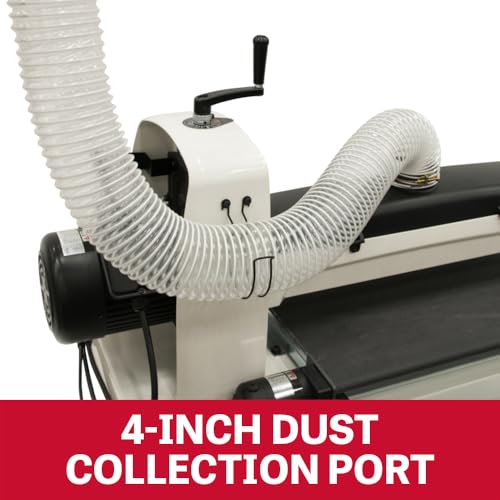
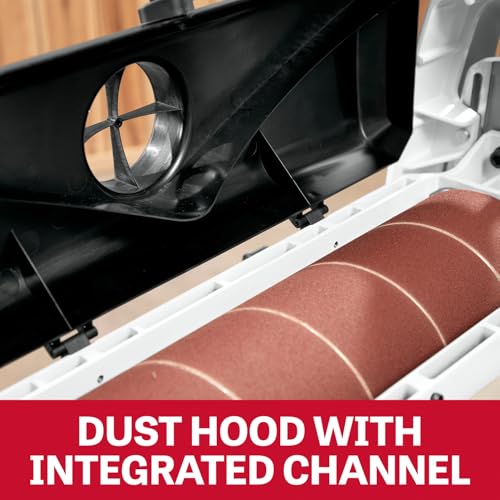
Drum sanders create a lot of dust. A robust dust collection port (4-inch is standard) is essential, and ideally, the sander will have a well-designed dust hood that effectively captures debris at the source. Beyond that, consider the stand. Closed stands, like on the JET 25-Inch Closed, offer convenient storage for abrasives and accessories, keeping your shop organized. Open stands are often more affordable and provide easy access to the conveyor mechanism for maintenance. If you’re short on space, models with integrated casters are a lifesaver.
- A basic open stand provides stability but little storage.
- A closed stand offers secure storage and a cleaner look, but can be more expensive.
- Models with pre-drilled caster holes offer the flexibility to add mobility later, providing a good compromise between stability and portability.
Don’t skimp on dust collection. Invest in a good shop vacuum or connect the sander to a dedicated dust collection system. Your lungs (and shop cleanliness) will thank you.
Ultimately, choosing the best drum sander depends on your specific needs and budget. But by carefully considering these factors, you can find a machine that will provide years of reliable service and help you achieve professional-quality results. For a broader overview of sanding options, explore versatile power sanders.
Drum Sanders Compared
This table provides a thorough specification overview of the discussed drum sanders.
| Product Title | Drum Width (in) | Motor HP | Stand Type | Dust Port (in) | Feed Rate Control | Smart Control |
|---|---|---|---|---|---|---|
| Powermatic 22-Inch Drum Sander | 22 | N/A | Closed | N/A | N/A | No |
| JET 25-Inch Drum Sander Open | 25 | N/A | Open | 4 | N/A | Yes |
| JET 25-Inch Drum Sander Closed | 25 | N/A | Closed | 4 | N/A | Yes |
| JET 18-Inch Drum Sander | 18 | N/A | N/A | 4 | Variable | Yes |
| JET 16-Inch Drum Sander | 16 | N/A | N/A | 4 | Variable | Yes |
| JET 16-Inch Oscillating Drum Sander | 16 | N/A | N/A | 4 | Variable | Yes |
| JET 10-Inch Benchtop Drum Sander | 10 | N/A | Benchtop | N/A | Variable | No |
| VEVOR 16″ Drum Sander | 16 | 1.5 | Open | 4 | Variable | No |
Frequently Asked Questions
What drum size is best for a beginner?
A 16-inch drum sander offers a good starting point; it balances capacity for common projects with manageability for someone new to drum sanding. It’s large enough to handle substantial boards without being overwhelming, and models like the JET 16-Inch provide useful features like variable speed control.
Are drum sanders only for flattening wood?
While excellent at flattening, drum sanders are also effective for stock removal and shaping. They can quickly reduce the thickness of boards and create consistently smooth surfaces, but aren’t ideal for detailed work – consider floor drum sanders if you need a machine for larger-scale projects.
How important is the dust collection port size?
A 4-inch dust port is the standard and highly recommended. Smaller ports restrict airflow, reducing the efficiency of your dust collection system and leaving more mess in your shop. Proper dust collection is crucial for both your health and a clean working environment.
What does “Sandsmart” technology actually do?
Sandsmart technology automatically adjusts the conveyor feed rate based on the resistance encountered by the drum. This prevents the motor from bogging down during hardwoods or heavier cuts, resulting in a more consistent sanding finish and extending the life of the machine.
How can I minimize snipe with a drum sander?
Snipe (uneven sanding at the beginning or end of a board) is a common issue. Applying consistent downward pressure on the board as it enters and exits the sander, and using a properly adjusted conveyor system, can help minimize it. Some users also employ sacrificial boards to take the brunt of the initial and final passes.
The Bottom Line
Choosing a drum sander always involves a trade-off between upfront cost and long-term capability. While you can certainly find models to handle smaller projects, if you anticipate larger builds or frequent use, investing in a more robust machine like the JET 25-Inch Drum Sander Closed will pay dividends in consistent results and durability. It’s a significant step up in price, but the convenience of the closed stand and Sandsmart technology make it a compelling option for serious woodworkers.
For those on a tighter budget, or just starting out, the JET 10-Inch Benchtop Drum Sander offers a surprisingly capable entry point. Similarly, if you need versatility and a good balance of power and control, the JET 18-Inch Drum Sander stands out with its variable feed rate and Sandsmart feature. These models won’t have all the bells and whistles of the larger, more expensive options, but they’ll get the job done for many common woodworking tasks.
Ultimately, remember that fancy features won’t compensate for a poorly maintained machine or improper technique. Consistent abrasive grit selection, careful bed parallelism adjustment, and a good dust collection system are far more critical to achieving a smooth, even finish than any specific horsepower rating or drum diameter. If you’re tackling larger projects, you might also want to consider wide belt sanders for increased efficiency and precision.
