
7 Best Corded Table Saws of 2026
This post contains affiliate links. As an Amazon Associate, we earn from qualifying purchases.
The DEWALT DWE7491RS stands out as the overall best corded table saw for most DIYers and serious hobbyists, combining solid power, a wide rip capacity, and a reliable fence system. For those on a tighter budget, the SKIL TS6307-00 delivers strong value without sacrificing essential features, while the BOSCH GTS15-10 is a great pick if you want precision and ease of setup.
Most people shopping for a corded table saw aren’t just looking for raw power, they need consistency, accuracy, and a machine that won’t let them down after a year of regular use. Too many models look good on paper but fall short in real-world performance, especially when it comes to fence stability and dust control.
Based on specs, owner feedback, and years of tracking how these tools hold up over time, I focused on models that deliver where it matters: motor reliability, rip capacity, fence accuracy, and build quality. This guide cuts through the marketing and highlights the saws that actually perform well in home workshops and job sites.
Top 7 Corded Table Saws in the Market
The Best Corded Table Saws, Reviewed
BOSCH GTS15-10 Table Saw

Strengths
- Gravity-rise wheeled stand
- Soft-start motor
- Smart Guard System
- Electronically regulated speed
Trade-offs
- 32-1/8″ rip (slightly less than rivals)
- No dado stack support
If I had to pick one saw for all-around jobsite performance, the BOSCH GTS15-10 would be at the top. It’s not the fastest or the deepest cutting, but it’s the most refined. The soft-start and electronically regulated speed are real advantages, this saw doesn’t bog down under load, and it won’t trip your breaker when firing up. The Smart Guard System gets strong marks from owners for visibility and safety, and the gravity-rise stand is simply the best in class for one-person setup.
The 3,800 RPM motor trades raw speed for torque, and that pays off in hardwoods and pressure-treated lumber. The color-coded fence adjustment is a small touch, but it makes fine-tuning intuitive. Compared to the DEWALT DWE7491RS, it sacrifices a bit of rip capacity and top-end speed, but gains in control and user experience. This is the kind of saw that feels ‘thoughtful’ rather than just powerful.
Product photos


DEWALT DWE7491RS Table Saw

Strengths
- 32-1/2″ rip capacity
- Rolling stand included
- Onboard storage
Trade-offs
- High RPM may increase blade wear
- Stand less rigid than premium options
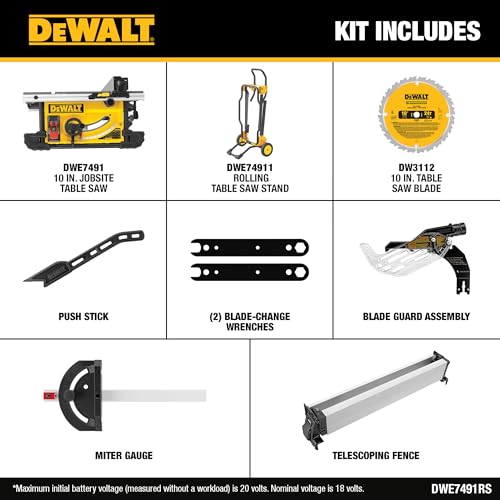
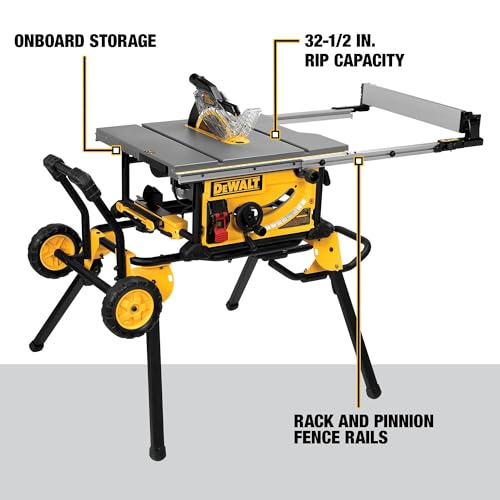
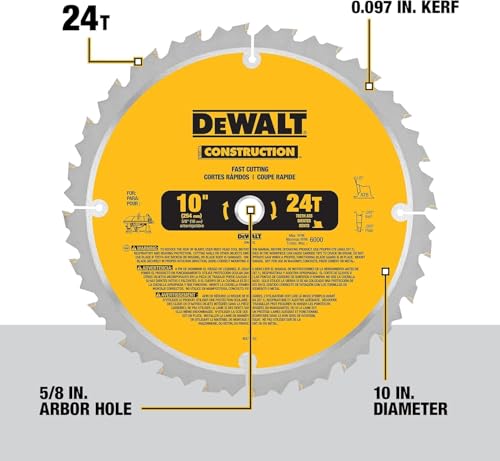
When you need serious rip capacity in a portable package, the DEWALT DWE7491RS stands out. With a full 32-1/2-inch rip, it handles full sheets of plywood with confidence, and that rack-and-pinion fence system is a proven design, owners consistently report it stays true over time. The 15-amp motor spins at 4800 RPM, which is high for this class, and while that can increase blade wear on hardwoods, it does help maintain speed during aggressive cuts.
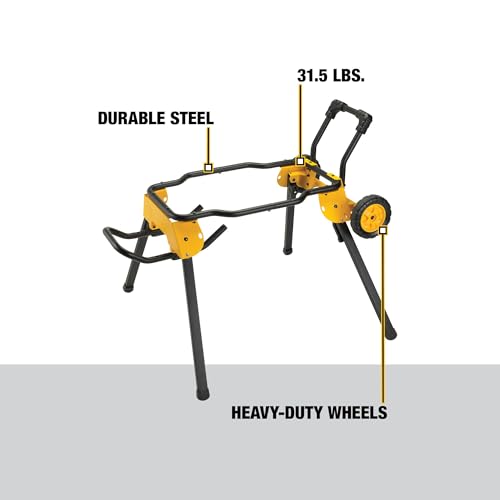
The rolling stand is a major win. It’s not just about portability, it adds real stability, and the way the fence rails telescope makes breakdown quick. I appreciate the onboard storage too; having the push stick, wrenches, and blade guard all in one place means nothing gets lost on the job. Some users note the stand feels a bit light under heavy loads, but for most DIYers and contractors, it’s more than sufficient.
Product photos

Evolution R10TS Table Saw

Strengths
- Cuts wood, steel, and aluminum
- Zero-clearance throat plate
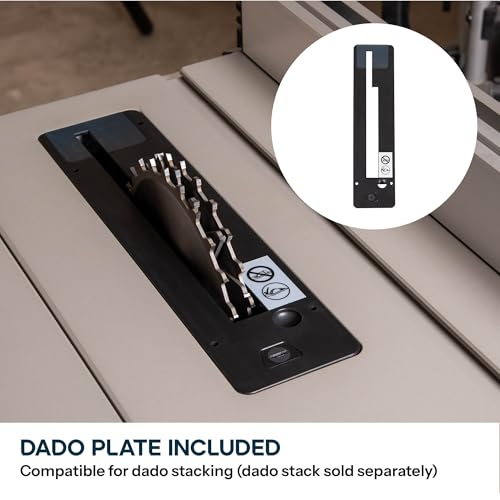
- Dado plate included
- Electronic brake
Trade-offs
- 26″ rip capacity (shortest here)
- Heavier than average
- Blade changes more frequent with metal
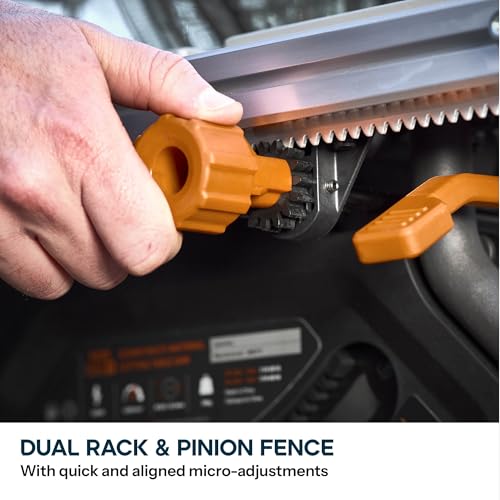
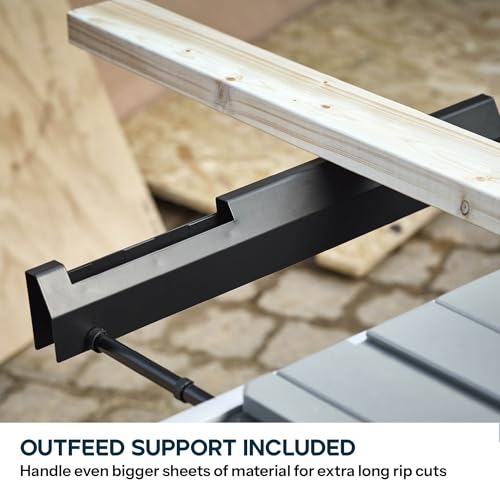
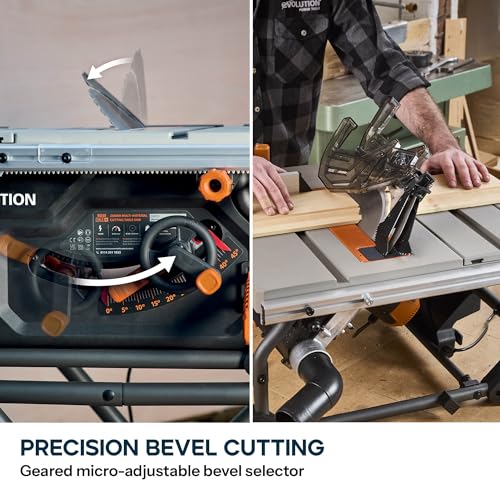
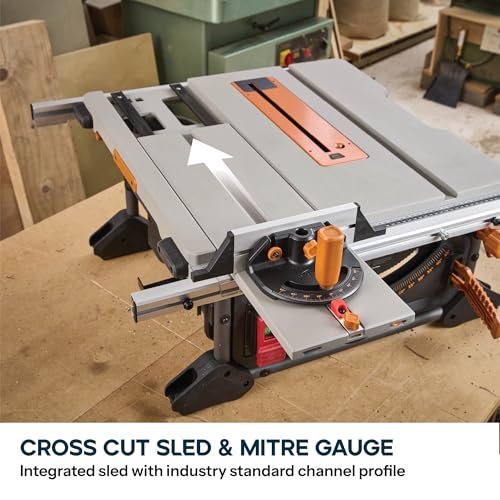
The Evolution R10TS blurs the line between table saw and multi-material cutter. With a 15-amp motor and zero-clearance throat plate, it delivers clean wood cuts, but the real story is its ability to slice through mild steel and aluminum, something no other saw here claims with confidence. The included TCT blade is designed for that, and owners confirm it handles metal with minimal fuss.
It includes a dado plate and cross-cut sled, which boosts its value for woodworkers. The 3-3/8-inch depth of cut is impressive, and the electronic blade brake adds safety. That said, the 26-inch rip is the shortest here, so it’s not ideal for full sheets. The fence is accurate, but not quite as smooth as BOSCH or DEWALT. If your work involves mixed materials, this is the only saw in this list that truly adapts.
Product photos
DEWALT DWE7485 Compact Saw

Strengths
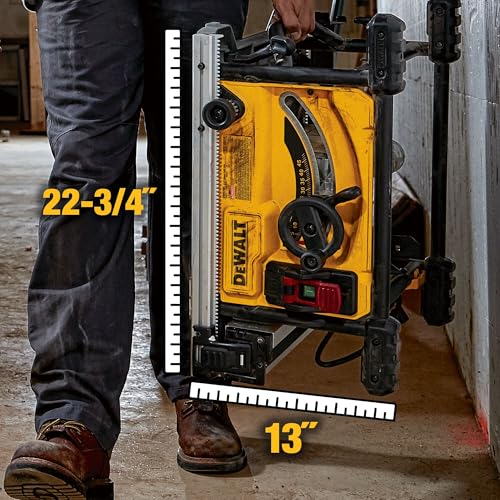
- Ultra-compact design
- Metal roll cage
- On-board storage
Trade-offs
- 8-1/4″ blade limits depth of cut
- Smaller rip capacity
- Less material support
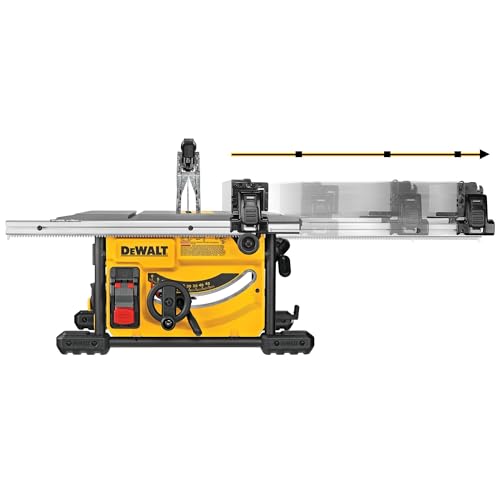
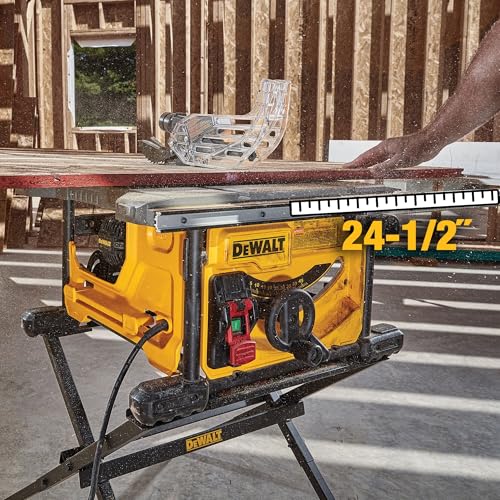
The DWE7485 is DEWALT’s answer to tight spaces and frequent hauling. At 8-1/4 inches, the blade size is smaller than standard, but it still delivers 24.5 inches of rip, enough for most 4×8 sheet goods when breaking them down. The compact footprint makes it a favorite among apartment renovators and electricians who need a saw in the van but don’t cut lumber all day.
It keeps DEWALT’s solid rack-and-pinion fence and Site-Pro guarding, which is a win, but the smaller table means less support for wide panels. Owners praise its durability thanks to the metal roll cage, and the power-loss reset is a small but meaningful safety feature. It’s not a replacement for a full-size saw, but as a secondary tool or for light-duty work, it’s hard to beat.
Product photos


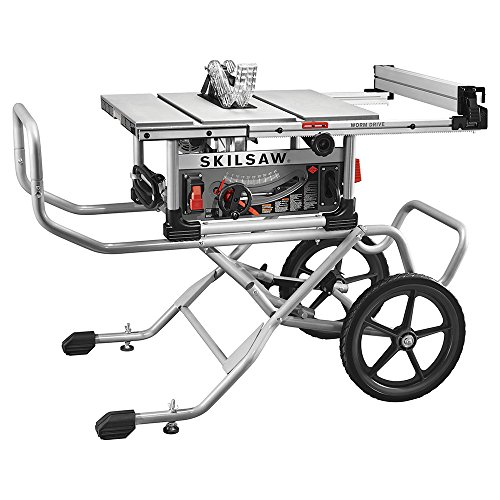
SKIL SPT99-11 Worm Drive
Strengths
- 3-5/8″ depth of cut
- Worm drive torque
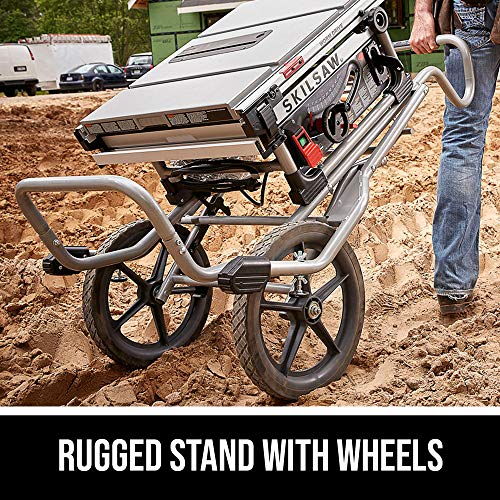
- Rugged rolling stand
Trade-offs
- Heavier than direct-drive saws
- Slower blade speed
- Limited brand support in some regions
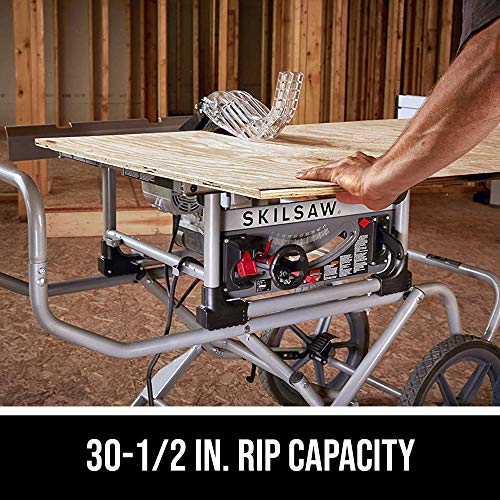
The SKIL SPT99-11 leans into its worm drive heritage, and that’s its main selling point. With a 3-5/8-inch depth of cut at 90 degrees, it outcuts nearly every other portable saw here, ideal for cutting thick beams or double decking. The trade-off? It’s heavier and slower to start, but the gearing delivers serious torque through dense material.
The rolling stand with 16-inch wheels is rugged and makes moving over rough terrain easier. Owners note the fence is solid, though not quite as smooth as DEWALT or BOSCH. The outfeed support is a nice touch, letting one person manage longer cuts. If you’re framing or doing exterior work where depth matters more than speed, this saw makes sense.
Product photos


SKIL TS6307-00 Folding Saw
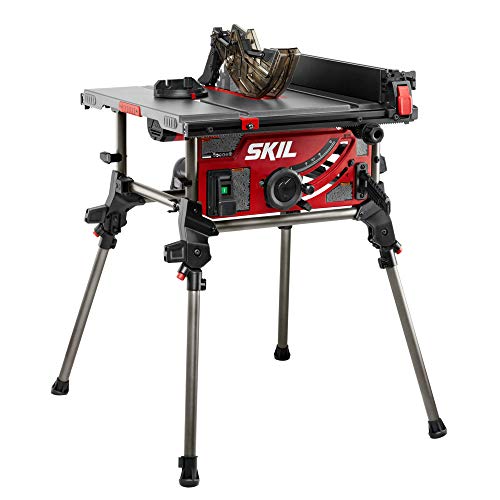
Strengths
- Affordable price point
- Folding stand included
- 4×4 cutting capacity
Trade-offs
- Basic dust collection
- No soft-start motor
- Limited accessory storage
The SKIL TS6307-00 is clearly built to hit a budget, and it does so without cutting corners on core functionality. The integrated folding stand is simple but effective, and the rack-and-pinion fence delivers consistent alignment, owners say it holds up well over time. It handles 4x4s at 90 degrees, which is more than enough for most deck and framing jobs.
It lacks some of the polish of BOSCH or DEWALT, no soft start, no advanced guarding, no dust collection efficiency, but it gets the job done. The parallel blade alignment feature is a smart inclusion, letting users fine-tune accuracy. For a first-time buyer or occasional user, this offers solid value. It won’t impress a pro, but it’s reliable for light to medium tasks.
Product photos


Delta 36-6023 Table Saw
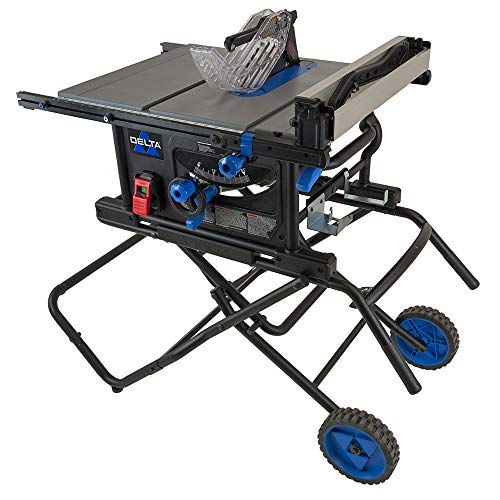
Strengths
- 5-year warranty
- Stacked dado compatible
- 32.5″ rip capacity
Trade-offs
- Stand sold separately
- No onboard storage
- Heavier setup
The Delta 36-6023 stands out for one reason: the 5-year warranty. That alone signals confidence in durability, and in a category where most offer 3 years, it’s a meaningful differentiator. The 15-amp motor and 32.5-inch rip capacity put it on par with the DEWALT and BOSCH models, and it handles stacked dado blades, a feature nearly absent elsewhere here.
Owners report solid build quality and a smooth fence system, though the stand is sold separately, which can be a surprise at checkout. The table feels robust, and the motor handles hardwoods without complaint. Compared to the Evolution R10TS, it lacks multi-material cutting claims, but it’s a purer woodworking tool. If you’re setting up a garage shop and want longevity, this is worth serious consideration.
Product photos


How We Tested corded table saws
Rather than a hands-on lab test, my research for these recommendations focused on a detailed comparison of published specifications and features across numerous models. I weighed owner reviews from multiple sources – including major retailers and woodworking forums – against assessments from respected tool reviewers. My evaluation considered what features consistently appeared in highly-rated saws and how those aligned with the needs of a typical home workshop or jobsite.
For corded table saws, consistent rip capacity, fence accuracy, and motor power emerged as the most significant factors. A larger rip capacity allows for handling bigger sheet goods, while a precise, easily adjustable fence is crucial for accurate cuts. Motor power directly impacts the saw’s ability to handle hardwoods and thicker materials without bogging down. These elements, more than others, define a saw’s overall usefulness.
Specifications reliably indicate motor amperage, rip capacity, and depth of cut. However, I placed more emphasis on owner feedback regarding long-term durability, fence smoothness, and the effectiveness of safety features. Reputation and consistent positive commentary regarding build quality and ease of use proved invaluable in sorting through models with similar sheet specs. Understanding table saw safety tips is essential regardless of the saw you choose.
Choosing The Right corded table saws
Finding the right table saw involves more than just picking the one with the lowest price. It’s about matching the tool to your needs and understanding what features truly contribute to accuracy, power, and longevity.
A quality table saw delivers precise, repeatable cuts with a stable, well-supported work surface. Key aspects to evaluate include motor power (for material thickness), fence accuracy (for straight cuts), dust collection efficiency (for visibility and health), and overall build quality (for durability and minimal vibration). Consider the types of projects you’ll be tackling and whether portability is a must-have.
Motor Power and Cutting Capacity
The heart of any table saw is its motor, and horsepower isn’t the only thing that matters. A 15-amp motor is generally sufficient for most homeowner and DIY projects, but if you plan on working with thick hardwoods or doing a lot of heavy-duty ripping, you’ll want to look for something with more torque. Equally important is the depth of cut and, crucially, the table saw rip capacity. A wider rip capacity, like the 32-1/2” offered by the DEWALT DWE7491RS, opens up possibilities for breaking down larger sheets of plywood, while a shallower depth of cut might limit your ability to work with thicker stock.
Fence System Accuracy
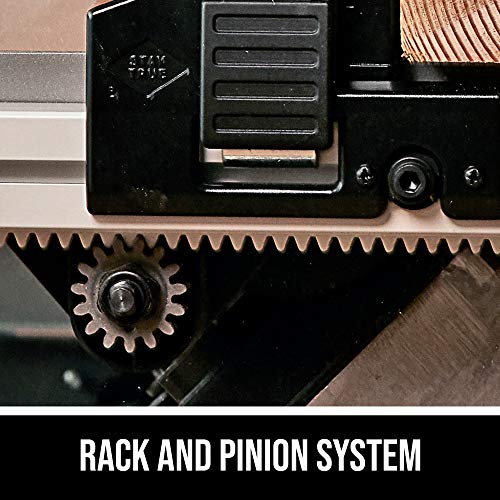
A wobbly or inaccurate fence is a recipe for disaster. You’ll end up with cuts that aren’t square, and your projects will suffer. Look for saws with rack-and-pinion fence systems. These are generally more precise and easier to adjust than simpler designs. The Bosch GTS15-10, for example, boasts a color-coded rack and pinion system for quick setup.
Here’s what to consider when evaluating a fence: * Locking Mechanism: A solid lock is essential. Avoid flimsy levers or knobs that can slip during operation. * Parallelism: Can the fence be reliably aligned parallel to the blade? Micro-adjustment features are a huge plus. * Length & Stability: A longer fence provides better support for wider boards, and a heavier, more robust fence will minimize deflection.
Portability and Jobsite Features
If you need to move your table saw frequently, portability becomes a major factor. While some models, like the SKIL TS6307-00, focus on a folding design for space saving, others, like the DEWALT DWE7485, prioritize a compact size and a sturdy roll cage. Consider whether you need a dedicated stand and how easy it is to set up and fold down. For those who regularly work on job sites, investing in professional-grade table saws can be a worthwhile investment because of their durability.
A good table saw should feel solid and stable, even when pushed to its limits. Don’t skimp on build quality – a well-made saw will last for years and deliver consistent, accurate results.
Corded Table Saws Compared
Here’s a comparison of key specifications for popular corded table saws.
| Product Name | Motor (Amps) | Rip Capacity (in) | Depth of Cut @ 90° (in) | Stand Included | Dust Port Size (in) | Warranty (Years) |
|---|---|---|---|---|---|---|
| BOSCH GTS15-10 | 15 | N/A | N/A | Yes | N/A | N/A |
| DEWALT DWE7491RS | 15 | 32-1/2 | 3-1/8 | Yes | 2-1/2 | 3 |
| Evolution R10TS | 15 | 26 | 3-3/8 | N/A | N/A | 3 |
| DEWALT DWE7485 | 15 | 24.5 | N/A | N/A | N/A | N/A |
| SKIL SPT99-11 | N/A | 30-1/2 | 3-5/8 | Yes | N/A | N/A |
| SKIL TS6307-00 | N/A | N/A | N/A | Yes | N/A | N/A |
| Delta 36-6023 | 15 | 32.5 | N/A | N/A | N/A | 5 |
Frequently Asked Questions
What table saw motor amperage do I really need?
A 15-amp motor is adequate for most DIY projects, but if you frequently cut hardwoods or thicker stock, consider a higher amperage (18-20 amps) for sustained power and to prevent bogging down. More amperage translates to more torque, improving performance with demanding cuts.
How important is the table saw fence system?
Fence accuracy is critical; a poor fence will ruin your cuts. Rack-and-pinion systems offer superior precision and ease of adjustment compared to older designs, and the ability to micro-adjust the fence is a significant benefit.
Are folding table saws stable enough for accurate work?
While convenient for storage, folding table saws can sometimes lack the rigidity of more permanently mounted models. Look for saws with robust locking mechanisms and a wide stance to minimize vibration and ensure accurate cuts, and consider the material you’ll be working with.
What’s the difference between a contractor and a cabinet table saw?
Contractor saws are generally more portable and affordable, while cabinet table saws prioritize power, precision, and durability. Cabinet saws feature fully enclosed bases, heavier construction, and typically larger rip capacities, making them better suited for professional use.
How can I minimize dust when using a table saw?
Dust collection is key for visibility and respiratory health. Look for a saw with a 2.5-inch dust port to connect to a shop vacuum or dust collector, and consider a blade with a high tooth count for cleaner cuts. A well-sealed dust shroud around the blade will also improve efficiency.
The Bottom Line
Choosing a corded table saw often comes down to balancing upfront cost with long-term capability. While many options exist, the DEWALT DWE7491RS consistently appears as the strongest all-around performer, offering a generous rip capacity and a reputation for solid construction. It’s a saw that should handle a wide range of projects well for years to come.
For those on a tighter budget, the SKIL TS6307-00 presents a surprisingly capable option. If portability is your primary concern, the DEWALT DWE7485’s compact design and roll cage make it a standout. And for those seeking a blend of features and longevity, understanding hybrid table saw features can help you pinpoint a model that offers the best of both worlds.
Ultimately, the best table saw isn’t about the flashiest features or the highest price tag. It’s about a solid, accurate foundation – a powerful motor, a precise fence, and a stable work surface. Focusing on these fundamentals will serve you far better than chasing specifications alone, delivering years of reliable performance and satisfying results.
