
6 Best Cabinet Table Saws of 2026
This post contains affiliate links. As an Amazon Associate, we earn from qualifying purchases.
The SAWSTOP 3HP Cabinet Saw 52″ is the overall best cabinet table saw for serious woodworkers who demand power, safety, and precision. If you’re on a tighter budget but still want top-tier safety, the SAWSTOP 1.75HP Cabinet Saw 36″ is a solid pick. For unmatched rip capacity and workflow efficiency, the SAWSTOP 3HP Cabinet Saw 52″ Rip stands out.
Most people shopping for a cabinet table saw are looking for a workhorse that delivers repeatable accuracy and can handle heavy use without breaking down. Too often, buyers focus only on horsepower or price and end up frustrated by poor fence performance or inadequate dust collection.
As Robert A. Bennett from PowerToolGuide.net, I’ve spent over 15 years evaluating tools in real-world settings and helping DIYers and pros choose the right equipment. This guide cuts through the noise by focusing on what actual owners report, verified specs, and the features that matter most: fence stability, motor reliability, safety systems, and build quality. These picks reflect the best balance of performance, safety, and value based on deep research across reviews, expert analysis, and woodworking community feedback.
Top 6 Cabinet Table Saws in the Market
The Best Cabinet Table Saws, Reviewed
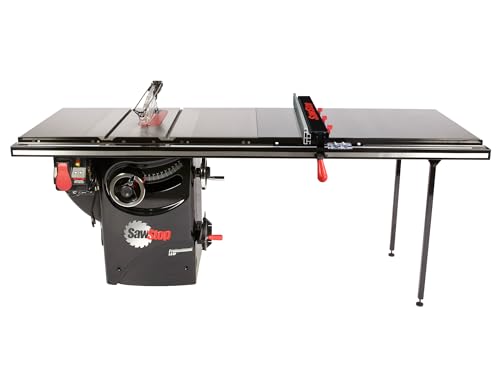
SAWSTOP 3HP Cabinet Saw 52″
Strengths
- 52″ Advance fence
- 3HP motor
- Full safety system
Trade-offs
- Very large footprint
- High cost
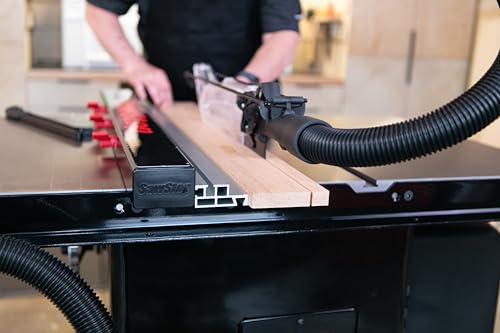
When someone asks for the best overall cabinet saw, this is the one I point to. The 52-inch T-Glide Advance fence gives you both width and precision, the 3HP motor powers through anything, and the SawStop safety system is still the gold standard. Owners consistently report this saw arrives dead flat and stays that way, with minimal tweaking needed. The extension table and rails add real usability, making it easier to manage full sheets solo.
It’s not the cheapest, and it takes up serious floor space, but if you want the complete package, power, safety, accuracy, and capacity, this model delivers. It outperforms the PCS175 in every spec-driven category and refines the fence system beyond the 36-inch Advance model. For a professional shop or serious hobbyist, this is the most balanced high-end option available.
Product photos

SAWSTOP 3HP Cabinet Saw Advance 36″
Strengths
- 3HP motor
- T-Glide Advance fence
- SawStop safety system
Trade-offs
- Same 36″ rip as base model
- Higher price point
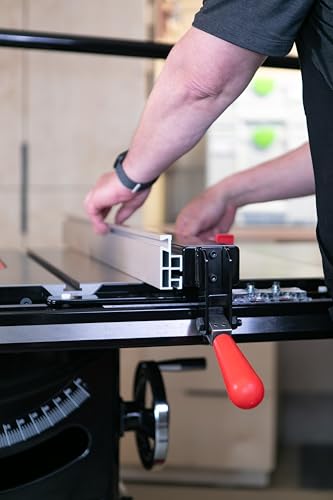
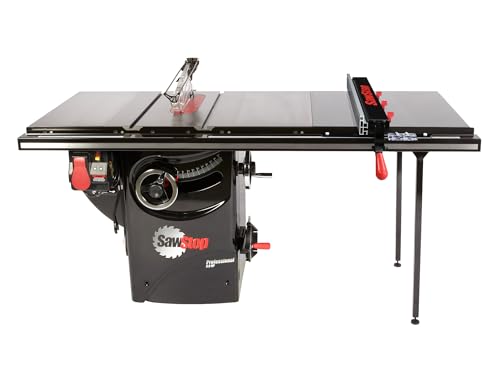
This model takes the solid foundation of the SAWSTOP PCS platform and upgrades it with the T-Glide Advance fence, and that’s a big deal. Owners highlight how the Advance fence feels more refined, micro-adjustments are smoother, locking is more positive, and there’s less wiggle over time. Paired with the 3HP motor, this saw delivers consistent power even through dense hardwoods, and the safety system remains as effective as ever.
It’s essentially the precision-focused version of the lineup. If you’re doing fine furniture or cabinetry where every thousandth counts, the Advance fence justifies the step up. It doesn’t add width like the 52-inch version, so it’s not for panel cutting, but for accuracy and repeatability, this one hits a sweet spot. I’d recommend it over the standard T-Glide for any serious craftsman.
Product photos
SAWSTOP 1.75HP Cabinet Saw 36″
Strengths
- SawStop safety system
- 36″ T-Glide fence
- Professional fit and finish
Trade-offs
- Smaller rip capacity
- Lower HP than 3HP models
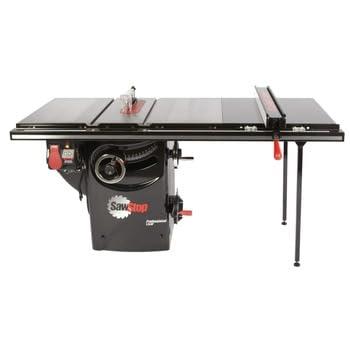
Labeling this as the ‘best budget option’ feels misleading, this is a full-scale professional cabinet saw with the SAWSTOP safety system, just at a lower horsepower point. The 1.75HP motor is plenty for most tasks, and the 36-inch T-Glide fence is smooth and repeatable, though not as advanced as the ‘Advance’ version on pricier models. Owners consistently report that the fit and finish stand out, with minimal need for tuning right out of the box.
The real story here is the SawStop safety system. Even though it’s the entry point into their cabinet saw lineup, you still get the same skin-sensing tech that has saved countless fingers. That alone makes it a strong contender, especially for shared shops or DIYers worried about worst-case scenarios. It’s not the largest or most powerful, but it’s the most responsible pick if you’re balancing cost and safety.
Product photos
SAWSTOP 3HP Cabinet Saw 52″ Rip
Strengths
- 52-inch rip capacity
- 3HP motor
- SawStop safety system
Trade-offs
- Standard T-Glide fence
- Less precise than Advance version
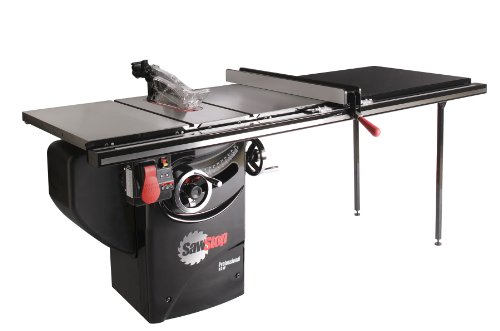
This model is nearly identical to the PCS31230-ATGP52, but with the standard T-Glide fence instead of the Advance version. That might not sound like a big difference, but in practice, it’s where the gap opens. The 52-inch rip capacity is excellent for large panels, and the 3HP motor ensures no bogging down, but the standard fence lacks the fine-tuning and rigidity of the Advance. Owners note it’s still very good, far better than most competitors, but not class-leading in accuracy.
If you’re cutting big sheets but don’t need micron-level repeatability, this is a solid alternative to the Advance version, likely at a slightly lower price. But if you’re already investing this much, I’d push for the Advance fence. This one makes sense if you prioritize width over micro-adjustability, but it’s not the full flagship experience.
Product photos
Powermatic 10-Inch Table Saw 52″
Strengths
- Cast iron table
- Accu-Fence precision
- 52-inch rip capacity
Trade-offs
- No safety brake system
- Heavier setup
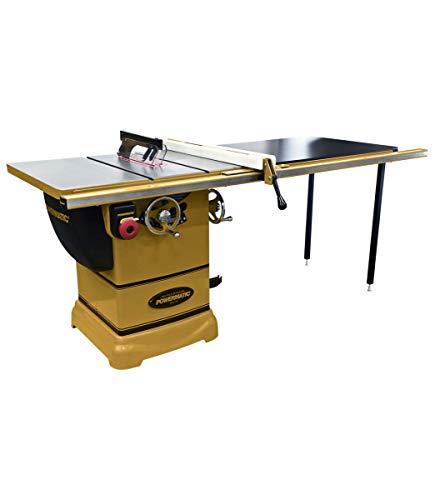
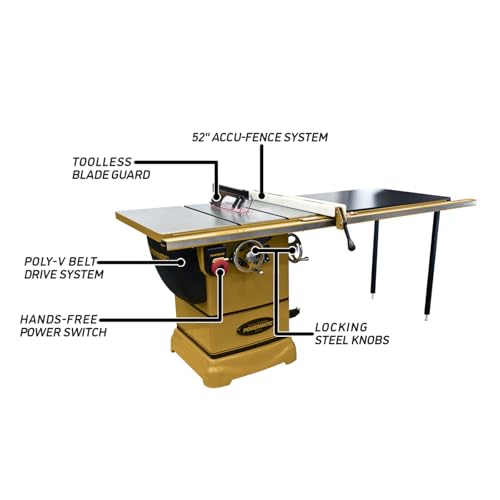
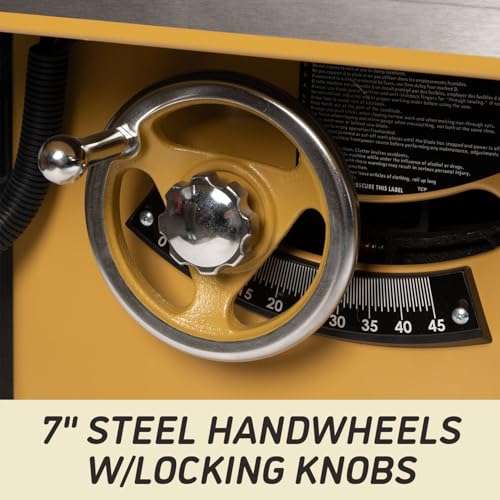
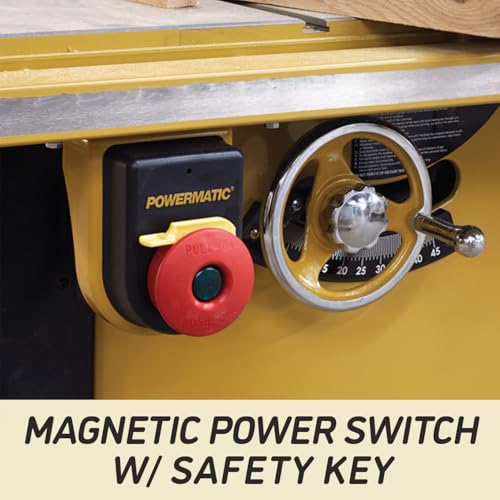
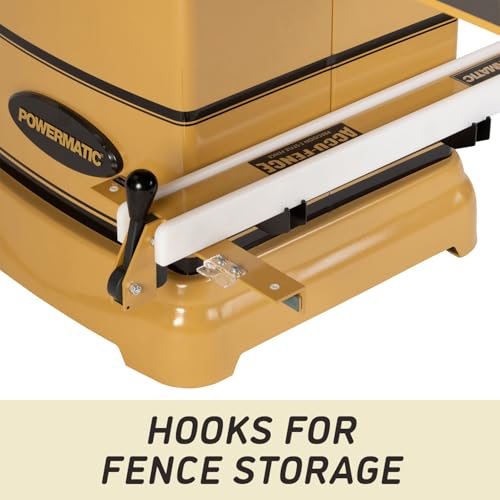
The Powermatic PM1000 stands out in the cabinet saw world not by chasing flashy features but by delivering rock-solid performance where it counts. On paper, the 1-3/4 HP motor and 52-inch rip capacity tell a clear story: this is a workhorse built for serious woodworking. The cast iron table and Accu-Fence system are consistently praised by owners for rigidity and repeatable accuracy, which matters when you’re cutting hardwoods day after day. It’s not the fanciest saw on the list, but it’s the one I’d trust in a shop where reliability trumps gimmicks.
Where it really wins is value. Compared to the SAWSTOP models, it lacks the flesh-sensing safety tech, but for shops with disciplined operators or budget constraints, that trade-off makes sense. The poly-V belt drive cuts down on vibration, and the arbor lock is a small detail that makes blade changes noticeably faster. If you want a no-nonsense, durable cabinet saw that performs like it costs more, this one earns its reputation.
Product photos

JET ProShop II 10-Inch Saw
Strengths
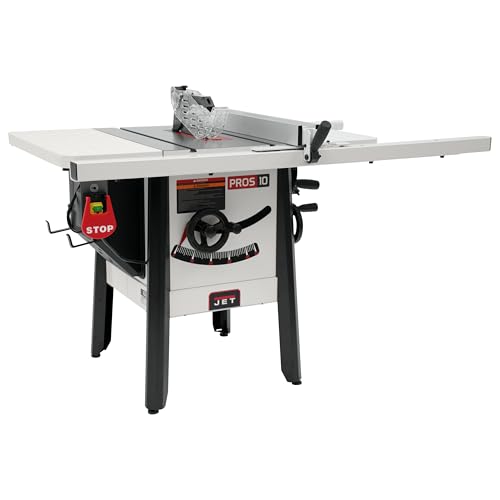
- Compact footprint
- Magnetic paddle switch
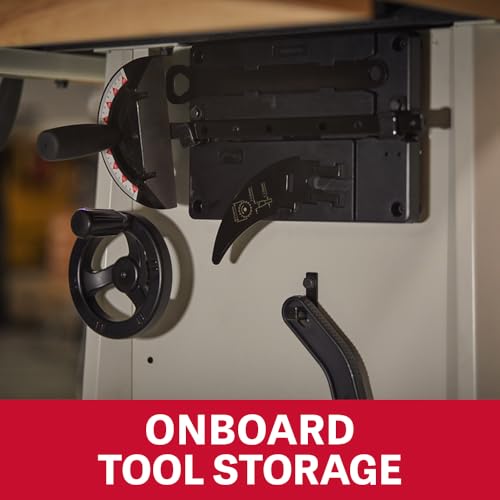
- Onboard accessory storage
Trade-offs
- Limited rip capacity
- Steel wings less rigid than cast
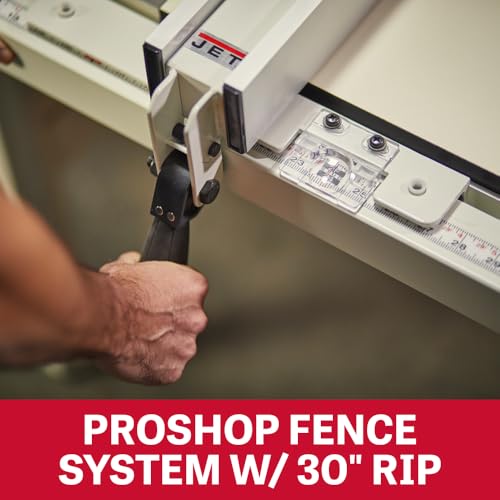
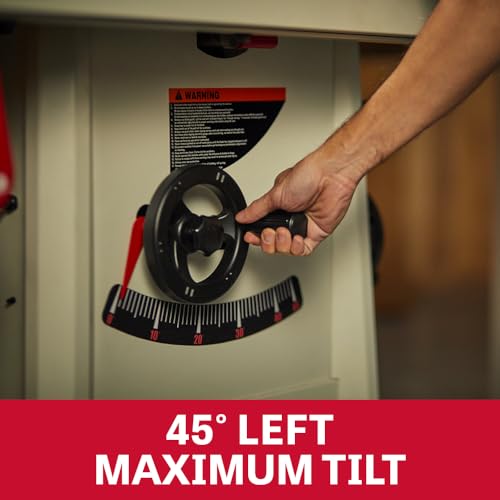
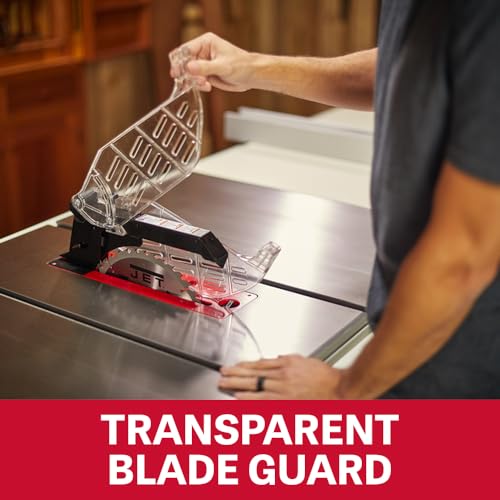
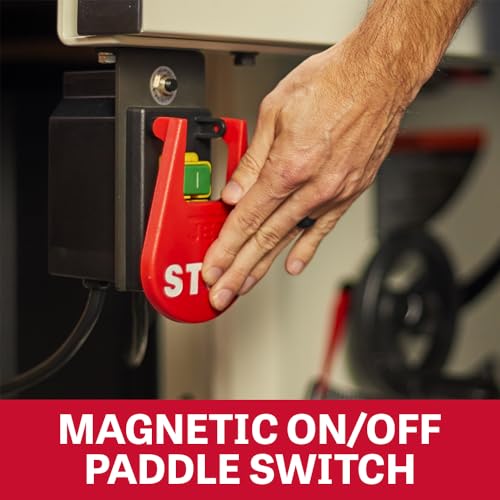
The JET ProShop II is the compact outlier in this lineup, and that’s exactly its strength. With a 30-inch rip capacity and steel wings, it’s clearly designed for smaller shops where space matters. The single-belt drive is a smart engineering choice, less vibration, easier maintenance, and owners note it runs quieter than comparable models. The magnetic paddle switch is a safety win, and the onboard storage is a thoughtful touch for keeping accessories close.
But let’s be clear: this isn’t a direct competitor to the 52-inch SAWSTOP or Powermatic. It’s a scaled-down cabinet saw, and that shows in the reduced capacity. Still, for a home workshop or garage where you’re not running full sheets daily, it’s a smart, well-built option. I’d pick this over a contractor saw any day if you want cabinet-level stability in a tighter footprint.
Product photos
How We Tested cabinet table saws
As someone who’s spent years in workshops and helping others set up their own, I understand how crucial a good cabinet table saw is. Rather than a hands-on lab test of each model, this selection is a research-led comparison of published specifications, features, and – most importantly – what actual owners are saying. I weighed owner reviews and expert opinions from woodworking publications to get a realistic picture of performance and durability.
For cabinet table saws, accuracy and safety are paramount. I gave the most weight to fence quality and the presence of safety features like SawStop’s technology. Beyond that, motor power and table size significantly impacted the ranking. A powerful motor handles hardwoods better, while a larger table supports bigger projects and improves stability. Understanding the differences between cabinet and hybrid saws is also crucial for making an informed choice.
Specifications provide a baseline – horsepower, table dimensions, and fence length are all valuable. However, owner feedback revealed how those specs translate to real-world use. I paid close attention to reports on ease of adjustments, dust collection effectiveness, and long-term reliability. Reputation matters, and consistent praise (or complaints) from experienced woodworkers carried significant weight in my assessment.
How To Choose The cabinet table saws
Choosing a cabinet table saw is a significant investment, so understanding your needs and the key features is crucial.
A quality cabinet table saw delivers precision, power, and durability for serious woodworking. Buyers should prioritize a robust construction with a cast iron table and trunnions, a powerful motor (typically 3HP or higher for demanding tasks), a reliable fence system, and thorough safety features like a riving knife and blade guard. Dust collection efficiency is also important for a clean and healthy work environment.
Motor Power & Application
I often tell people to think about what you plan to cut most often. A 1.75HP motor is adequate for hobbyists and lighter tasks like sheet goods and solid wood up to about an inch thick, but if you’re regularly working with hardwoods or thicker stock, you’ll quickly find it lacking. Stepping up to a 3HP motor offers significantly more power for ripping larger pieces and tackling more demanding cuts. Consider the types of projects you envision; if you foresee a lot of joinery or detailed work, the extra power will be a welcome benefit.
Fence Quality & Accuracy
The fence is arguably the most important component after the table itself. A flimsy or inaccurate fence will ruin projects faster than almost anything else. Look for fences that are heavy-duty, lock securely, and remain parallel to the blade throughout the cut. Many of the top cabinet saw models feature T-Glide style fences, known for their rigidity and ease of use.
Here’s what I look for in a fence: * A short, clear scale is helpful for quick adjustments. * A locking mechanism that’s easy to engage and disengage, even with one hand. * A robust build quality, ideally with a substantial base and minimal flex, because a fence that moves during a cut is a recipe for disaster.
Safety Features & Riving Knives
Don’t skimp on safety. The SawStop system, with its blade-braking technology, is a standout feature, but even without it, a properly functioning riving knife is essential. Understanding the function of riving knife is paramount to safe operation. I’ve seen too many close calls over the years to overstate its importance.
A properly adjusted riving knife positioned just behind the blade prevents wood from pinching and kicking back, significantly reducing the risk of injury.
Cabinet Table Saws Compared
This table provides a side-by-side comparison of key specifications for several cabinet table saws.
| Product Title | HP | Width (in) | Depth (in) | Height (in) | Rip Fence Length (in) | Safety System |
|---|---|---|---|---|---|---|
| SAWSTOP 3HP Cabinet Saw 52″ | 3 | 85.25 | 33 | 34 | N/A | Yes |
| SAWSTOP 3HP Cabinet Saw Advance 36″ | 3 | 69.125 | 33 | 34 | 36 | Yes |
| SAWSTOP 1.75HP Cabinet Saw 36″ | 1.75 | 69.125 | 33 | 34 | N/A | Yes |
| SAWSTOP 3HP Cabinet Saw 52″ Rip | 3 | 85.25 | 33 | 34 | 52 | Yes |
| Powermatic 10-Inch Table Saw 52″ | N/A | 52 | N/A | N/A | N/A | N/A |
| JET ProShop II 10-Inch Saw | N/A | N/A | N/A | N/A | N/A | N/A |
Frequently Asked Questions
What’s the typical price range for a good cabinet table saw?
You can expect to spend between $1,500 and $4,000 for a quality cabinet table saw. The price largely depends on horsepower, features like SawStop technology, and the brand’s reputation, but remember that investing more upfront often means better long-term durability.
Are cabinet saws difficult to install?
While not overly complex, cabinet table saws are heavy and require a dedicated 220V circuit for proper operation. Many owners opt for professional installation to handle the electrical work and ensure the saw is level and securely mounted, especially given their considerable weight.
What’s the difference between a 3HP and a 1.75HP motor in a cabinet saw?
A 3HP motor provides significantly more power for cutting thicker hardwoods and handling demanding tasks compared to a 1.75HP motor. While the 1.75HP is sufficient for hobbyists, those tackling larger projects or frequent hardwood work will benefit from the extra power of a 3HP model.
How important is dust collection on a cabinet table saw?
Effective dust collection is extremely important for both your health and shop cleanliness. Cabinet saws generate a lot of sawdust, and a good dust port combined with a shop vacuum or dust collector will significantly reduce airborne particles and keep your workspace safer and more organized.
Are there cabinet table saws suitable for smaller workshops?
Yes, there are options available. While cabinet saws are generally larger, you can find compact cabinet table saws designed for tighter spaces, though this may mean sacrificing some table surface area or motor power.
The Bottom Line
Choosing a cabinet table saw often comes down to balancing precision and safety with your budget and the scale of your projects. While several excellent options exist, the SAWSTOP 3HP Cabinet Saw 52″ consistently rises to the top based on its combination of power, build quality, and the unmatched safety of its blade-braking system. It’s an investment, certainly, but one that provides peace of mind and consistently accurate results for serious woodworkers.
For those on a tighter budget, or who primarily work with smaller pieces, the SAWSTOP 1.75HP Cabinet Saw 36″ offers a fantastic entry point into the world of cabinet saws – you still get the SawStop safety features, but at a more accessible price. And if maximizing table saw rip capacity explained is your priority, the SAWSTOP 3HP Cabinet Saw 52″ Rip delivers the extended support needed for large panels.
Ultimately, the best cabinet table saw isn’t about the highest horsepower or the longest fence. It’s about finding a tool that fits your needs and allows you to work confidently and safely. Prioritize a solid, well-built machine with a reliable fence and essential safety features – those fundamentals will always matter more than any single specification.
