8 Best Corded Circular Saws of 2026
This post contains affiliate links. As an Amazon Associate, we earn from qualifying purchases.
The Makita 5007F stands out as the best overall corded circular saw for its reliable power and clean cuts, while the SKILSAW SPT67WL-01 is a top choice for pros who want a lightweight, jobsite-ready tool. For those watching their budget, the Skil 5080-01 delivers solid performance without breaking the bank.
Most people don’t realize how much a circular saw’s weight, balance, and bevel accuracy affect their work until they’re six cuts into a long day. A poor choice can mean fatigue, inaccuracy, and frustration on the job.
I’ve researched the field thoroughly, comparing specs and owner feedback to find models that deliver real-world reliability and performance. This guide breaks down what actually matters, power, bevel range, build quality, and ergonomics, so you can pick the right saw for your projects.
Top 8 Corded Circular Saws in the Market
The Best Corded Circular Saws, Reviewed
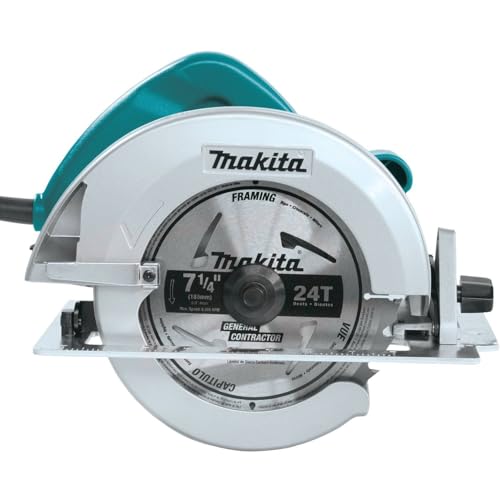
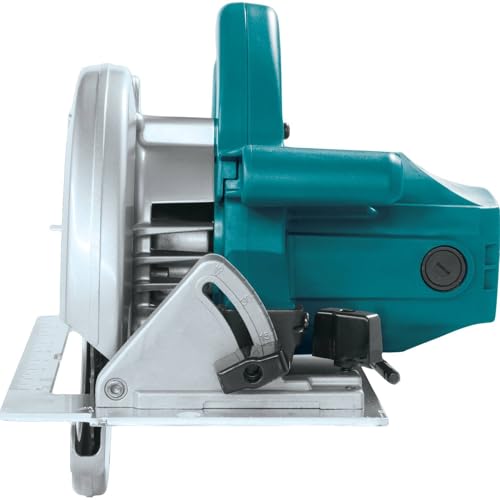
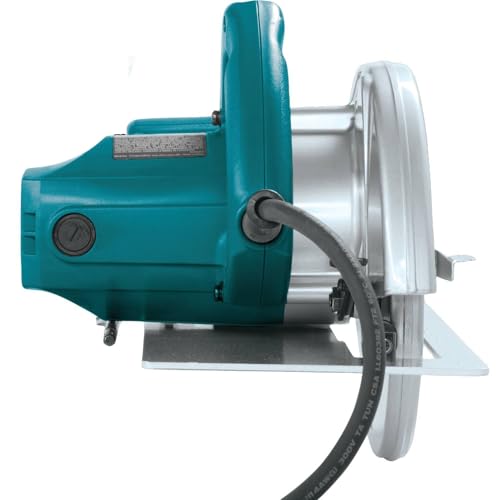
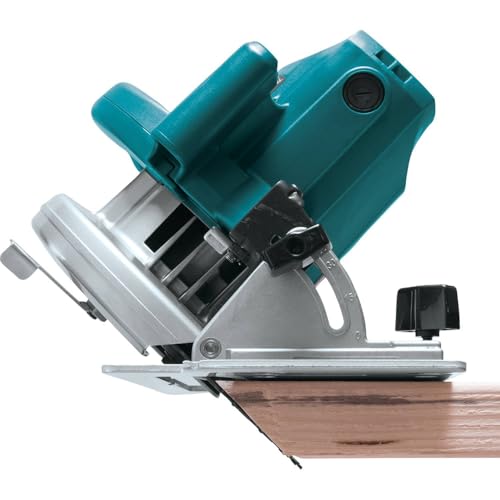
Makita 5007F 7-1/4″ Circular Saw

Strengths
- Dual LED lights
- 5,800 RPM motor
- AC/DC switch
Trade-offs
- Heavier at 10.5 lbs
- No laser guide
- Higher price point
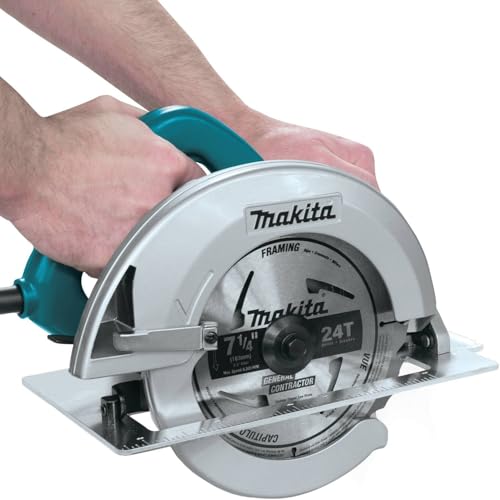
The Makita 5007F earns the ‘Best Overall’ label for good reason. It’s got a 15-amp motor cranking out 5,800 RPM, plenty of power for framing, decking, or sheathing. But what really sets it apart are the two LED lights. They flood the cut line with light, even in dim garages or under overcast skies. Owners consistently praise this feature, especially when cutting in low-light conditions.
It’s well balanced, easy to control, and the all-ball bearing construction suggests long life. The AC/DC switch is a niche but useful feature for off-grid job sites. Compared to the DEWALT DWE575SB, it’s slightly heavier but more feature-rich. And against the Bosch CS10, it’s more user-friendly with better visibility. If you want one saw that does everything well, this is it.
Product photos
DEWALT DWE575SB Corded Circular Saw

Strengths
- Electric brake
- 57° bevel capacity
- Tough cord protection
Trade-offs
- Slightly higher price
- No onboard wrench storage
- No LED lights
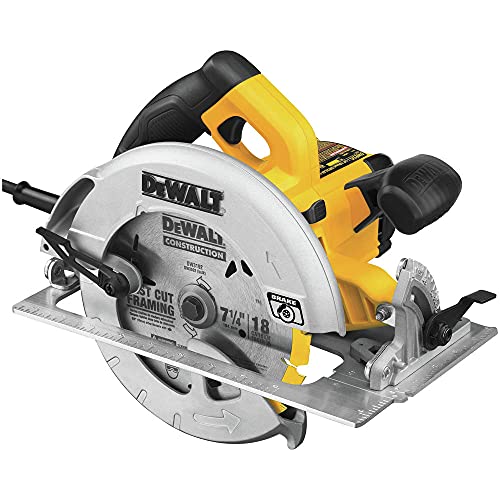
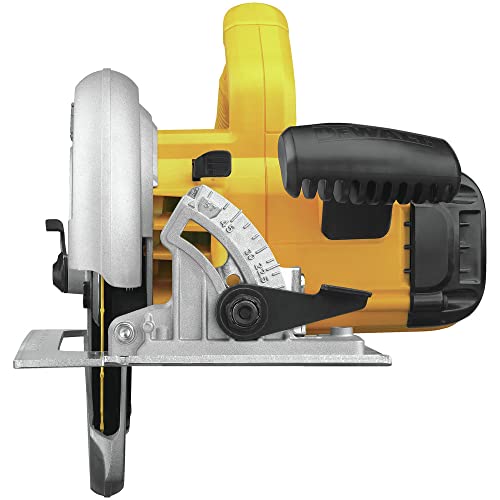
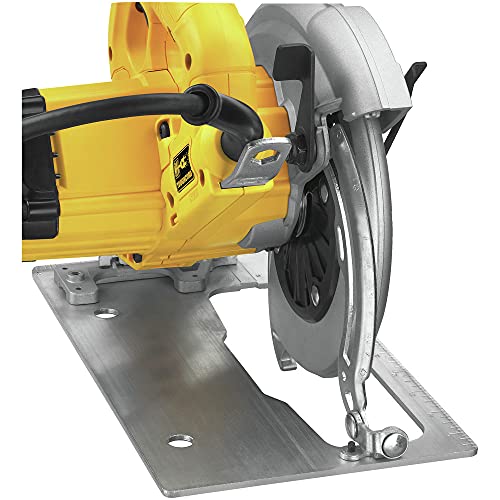
If you’re making frequent bevel cuts, especially at 22.5° or 45°, the DEWALT DWE575SB is one of the most reliable options here. The 57° bevel capacity is class-leading, and those positive stops are crisp and repeatable. The electric brake is a standout in practice, owners love how quickly the blade stops, which improves safety and workflow. At 8.8 lbs, it’s light without feeling flimsy, and the aluminum base stays true over time.
The real standout, though, is the lower guard design. It’s engineered to stay out of the way during bevel and shim cuts, which reduces drag and binding. Combined with the dust blower and Tough Cord system, this saw is built for real-world abuse. It’s not the cheapest, but for pros or serious DIYers, it’s a smart long-term pick.
Product photos
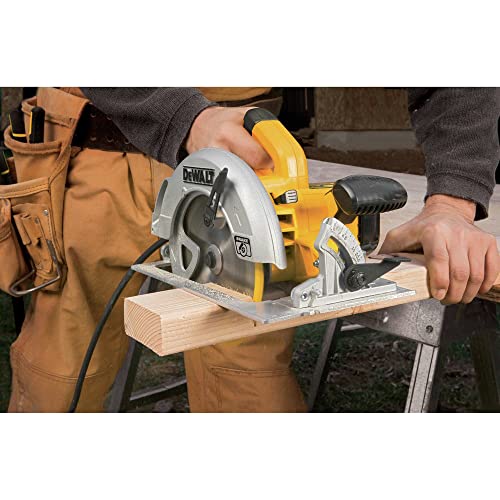
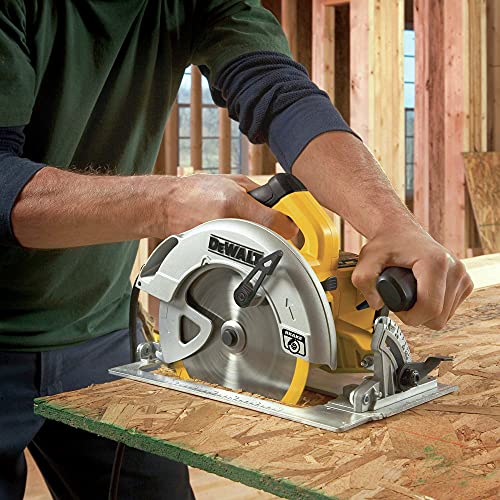
DEWALT DWE575 Lightweight Circular Saw

Strengths
- Lightweight
- Onboard wrench
- Dust blower
Trade-offs
- No electric brake
- Lower bevel angle
- Same price as better models
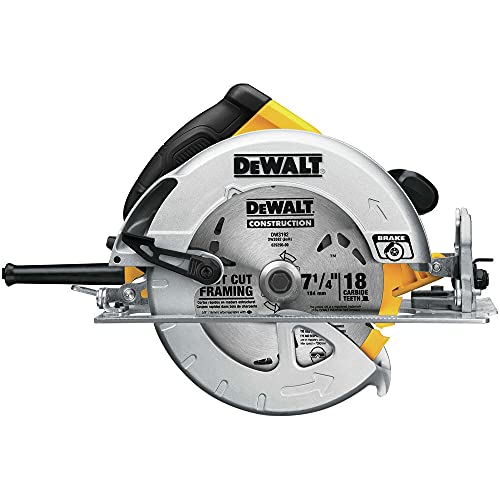
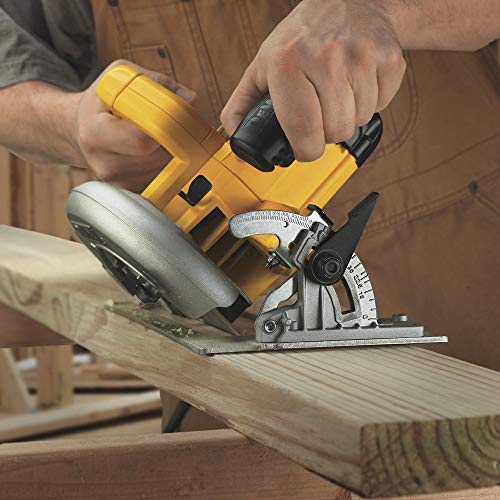
This DWE575 is nearly identical to the DWE575SB, but without the electric brake. That’s a significant downgrade. Otherwise, it’s still one of the lightest 15-amp saws at 8.8 lbs, with the same 53° bevel, aluminum base, and dust blower. The anti-snag guard works well, and the onboard blade wrench is a small convenience that adds up over time.
For DIYers, the missing brake might not matter much. But for pros or safety-conscious users, I’d push you toward the SB model instead. On paper, the specs look similar, but in real use, that brake makes a difference. Compared to the Metabo HPT, it’s lighter but offers less raw power.
Product photos

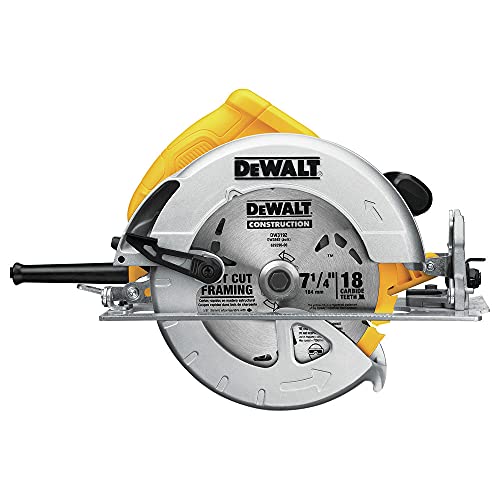
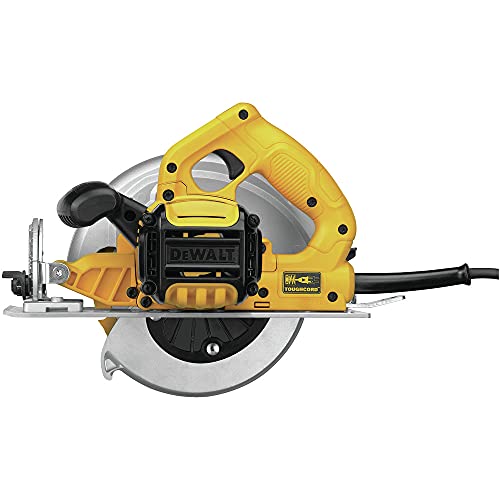
SKILSAW SPT67WL-01 Sidewinder Saw
Strengths
- Lightest 15-amp saw
- Dual-Field motor
- 10-foot cord
Trade-offs
- No electric brake
- No LED lights
- Basic dust blower
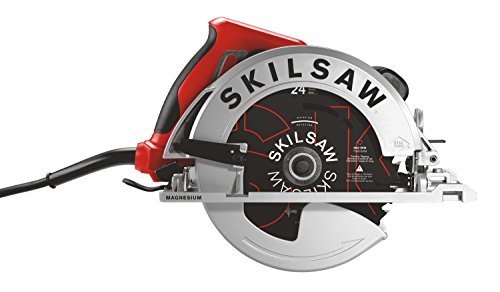
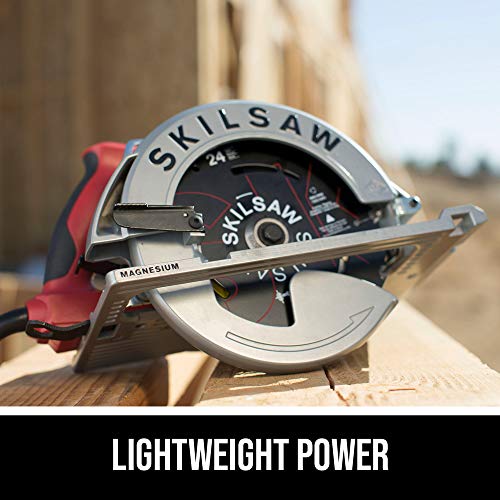
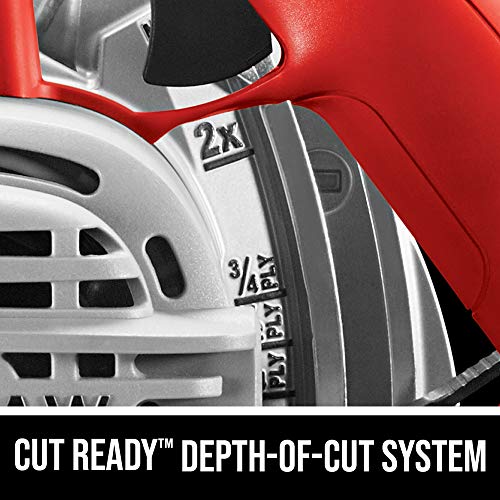
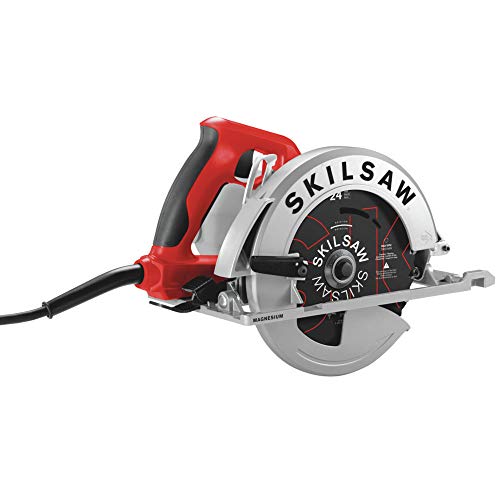
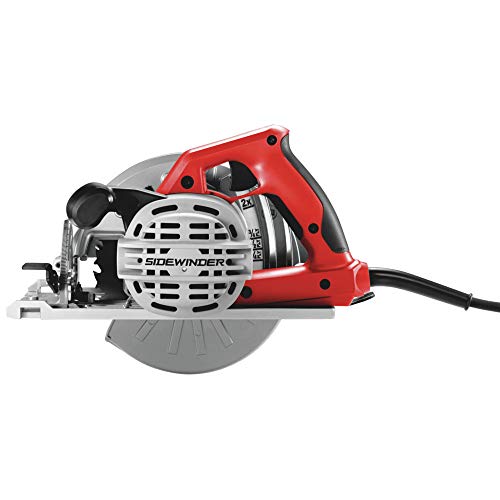
At 8.6 lbs, this SKILSAW is the lightest 15-amp pro saw in the lineup, and that matters. The Dual-Field motor is a proven design that runs cooler and lasts longer under heavy loads, which is why many demolition crews and remodelers stick with SKILSAW. It’s built like a tank but moves like a feather. The 10-foot cord is another underrated feature, fewer hang-ups on sheet goods.
It shares the same 56° bevel as others, but lacks some modern touches like an electric brake or LED lights. Still, if you’re cutting all day and need a saw that won’t quit, this one’s pedigree is solid. Compared to the DEWALT DWE575, it’s lighter and more durable, though the DEWALT has better dust control.
Product photos

Metabo HPT C7SB3 Circular Saw Kit

Strengths
- 6,000 RPM motor
- Includes quality blade
- Single-handed bevel
Trade-offs
- No electric brake
- No LED lights
- Plastic base
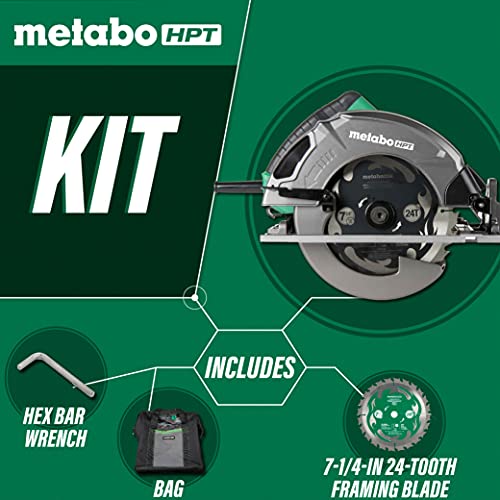
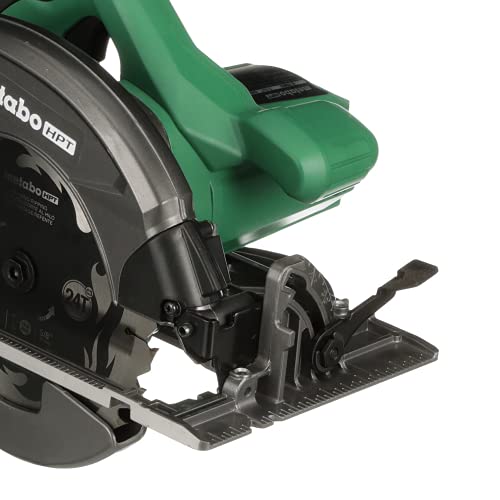
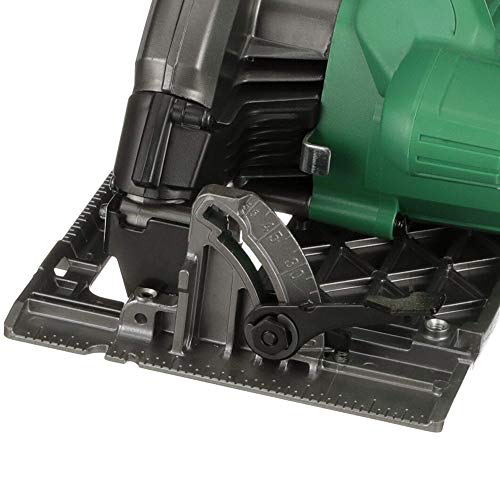
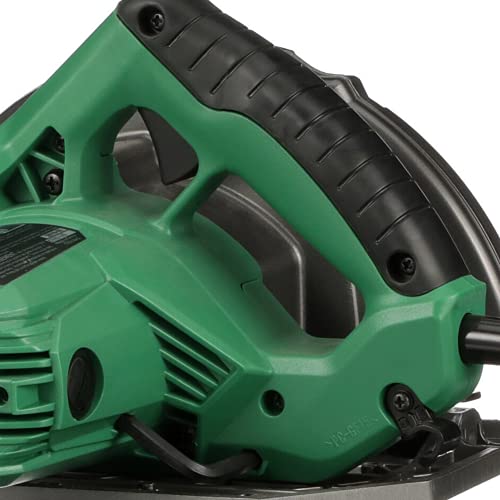
Metabo HPT hits the sweet spot for pros on a budget. The 15-amp motor hits 6,000 RPM, faster than most in this class, which helps with clean, burn-free cuts in plywood and OSB. The included 24T framing blade is a real upgrade over the cheap blades some brands toss in. Owners report it rips through lumber without bogging down, and the single-handed bevel adjustment is smooth and intuitive.
At 9.5 lbs, it’s light enough for all-day use, and the cord holder is a small but appreciated detail. It doesn’t have an electric brake or LED lights like the Makita or DEWALT, but for the price, it delivers pro-level performance. My recommendation? This is the smarter buy over the Skil 5080 if you need real power without the premium tag.
Product photos

SKIL 5280-01 Laser Circular Saw
Strengths
- 15-amp motor
- Laser guide
- Dust blower
Trade-offs
- Laser fades in sunlight
- Plastic base
- No electric brake
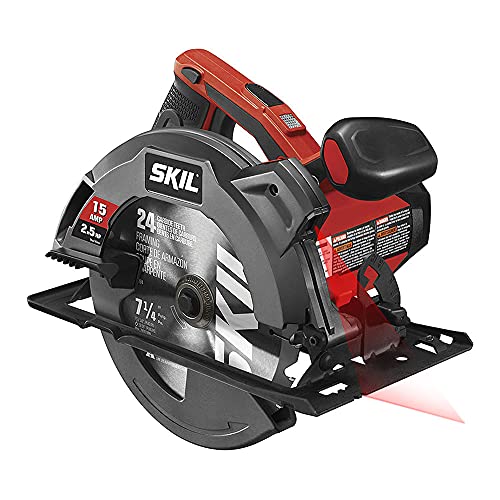
The SKIL 5280-01 stands out for one reason: that laser guide. On paper, it’s a typical 15-amp saw with solid specs, 5,300 RPM, 51° bevel, and a dust blower that actually works. But the laser is the headline. Owners consistently report it helps with straight-line accuracy, especially on long rip cuts where visual alignment is tricky. It’s not a replacement for a guide rail, but for DIYers who struggle with freehand precision, it adds real value.
Still, the laser isn’t perfect. Some users note it fades in bright light, and it doesn’t adjust with bevel cuts, which limits its usefulness there. Compared to the DEWALT or Makita models, the build feels a bit more budget-oriented, plastic components in the base, not magnesium. But for the right buyer, that trade-off makes sense.
Product photos


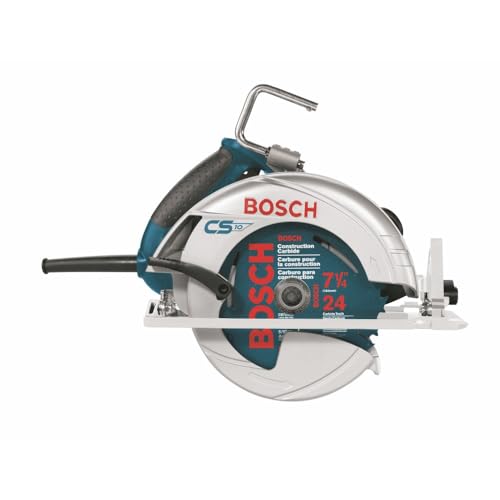
Bosch CS10 7-1/4″ Circular Saw
Strengths
- Magnesium footplate
- Durable build
- Anti-snag guard
Trade-offs
- Heavier than some
- No electric brake
- Bevel max 56°
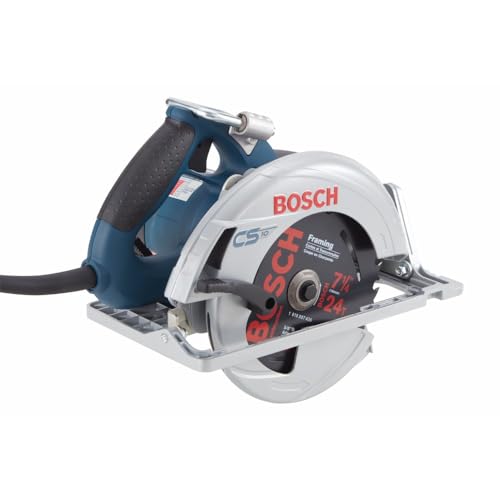
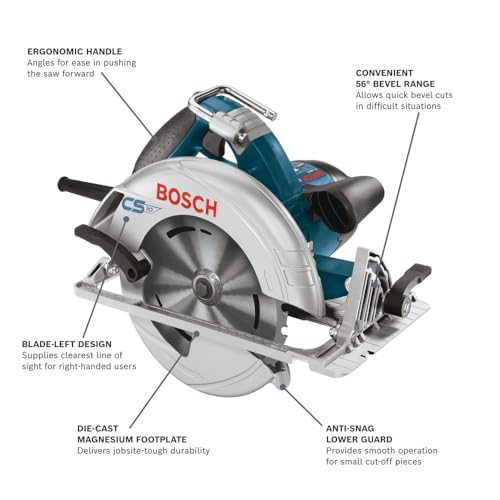
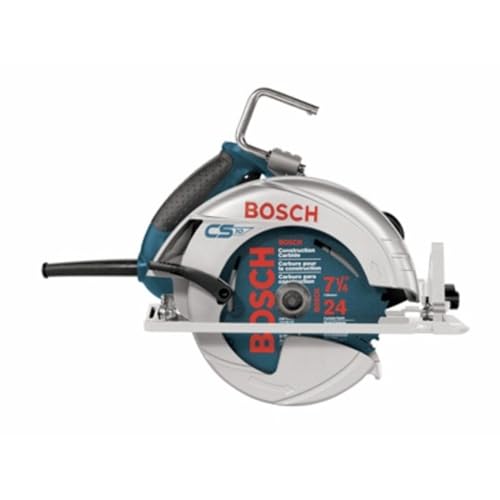
The Bosch CS10 feels like it was built to last. The die-cast magnesium footplate is a big deal, it stays flat, resists warping, and adds durability without adding weight. At 10.2 lbs, it’s not the lightest, but the balance is excellent. The bevel louver system is a Bosch-exclusive touch that actually improves dust clearing right at the cut line, which owners appreciate on dusty job sites.
It’s not flashy, no laser, no LED lights, but it’s overbuilt in the right places. The anti-snag lower guard and high-contrast scales make setup faster and smoother. Compared to the SKIL or budget Skil models, this one inspires confidence. If you’re the type who hates replacing tools, the CS10 is worth the investment.
Product photos

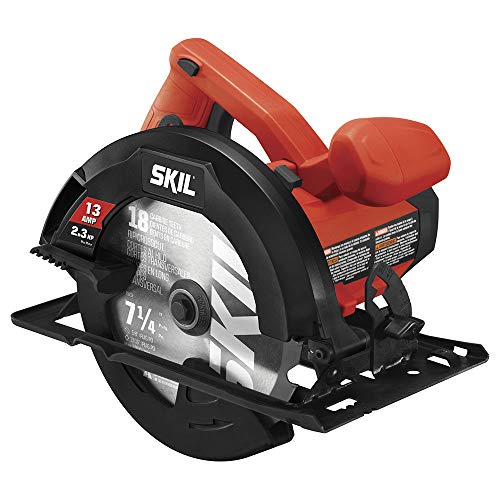
Skil 5080-01 13-Amp Circular Saw
Strengths
- Lightweight
- Spindle lock
- Dust blower
Trade-offs
- 13-amp motor lacks torque
- Not for heavy-duty use
- No electric brake
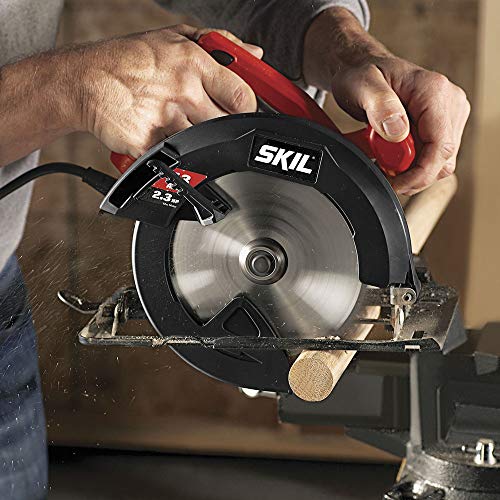
This Skil 5080-01 is an odd middle ground. It’s lighter than older Skil models and has a 13-amp motor, enough for basic framing or deck work, but not the kind of power you want when pushing through dense LVL or stacked lumber. The 15% weight reduction helps reduce fatigue, and owners say it’s comfortable for overhead cuts or extended use. But stepping down from 15 amps means you’ll feel it when the blade binds or the material gets tough.
It shares the same dust blower and bevel system as other Skil saws, and the spindle lock is a nice touch for quick changes. But compared to the Metabo HPT or DEWALT DWE575SB, it just doesn’t deliver the same confidence. I’d only recommend this if you’re upgrading from a very old or underpowered saw and need something light and affordable.
Product photos


How We Tested corded circular saws
Rather than a hands-on lab test, my research for these recommendations centered on a detailed comparison of published specifications and features across numerous models. I weighed owner reviews from multiple sources – focusing on long-term reliability and real-world performance – alongside professional reviews from respected tool publications. My background maintaining workshops and working with these tools daily informs how I interpret that data and rank these saws.
For corded circular saws, cutting capacity, motor power, and build quality stand out as the most crucial factors. A larger cutting capacity allows for tackling thicker materials, while a robust motor (typically 15 amps in this category) ensures consistent performance under load. Durability is paramount; a saw intended for jobsite use needs to withstand significant wear and tear, influencing my rankings heavily.
Specifications clearly indicate motor power, blade capacity, and weight. However, owner feedback consistently reveals how those specs translate to practical use – things like dust management, guard operation smoothness, and long-term reliability. I gave significant weight to consistent reports of durability issues or unexpectedly poor performance when determining the final rankings. Understanding circular saw operation basics is also vital when considering these features.
How To Choose The corded circular saws
Choosing a corded circular saw can feel overwhelming with so many options available.
A quality corded circular saw balances power, durability, and user-friendliness. Key considerations include the motor amperage (13-15A is typical), blade size (7-1/4″ is standard for most work), build quality (look for magnesium or aluminum components), and features like bevel capacity and dust blowers. Prioritize a saw that feels comfortable and balanced in your hands, and ensure it has a robust safety guard.
Motor Power and Application
Don’t assume more power is always better. While a 15-amp motor is common and capable of handling most framing and ripping tasks, a 13-amp model, like the Skil 5080-01, can be sufficient for lighter work and will be noticeably lighter. Consider the materials you’ll be cutting most often. If you’re primarily working with plywood and 2x4s, you likely won’t need the extra muscle of a 15-amp saw. However, for consistent cuts through hardwoods or engineered lumber, that extra power will be appreciated and reduce strain on the motor.
Bevel Capacity & Accuracy
Bevel cuts are essential for trim work, angles, and more complex projects. While many saws offer a 45-degree bevel capacity, some, like the DEWALT DWE575, go up to 57 degrees. However, the accuracy of the bevel is just as important as the range. Look for saws with clearly marked detents at common angles (22.5 and 45 degrees) and a secure locking mechanism to prevent shifting during cuts. If you’re doing a lot of bevel work, reading best circular saw reviews that detail user experiences with bevel accuracy is especially helpful.
Ergonomics and Features
A circular saw is more than just a motor and a blade; it’s an extension of your arm. Weight distribution is crucial. The SKILSAW SPT67WL-01, for example, is praised for being among the lightest professional models. Features like a comfortable grip, well-positioned controls, and a clear line of sight can significantly improve your control and reduce fatigue during long projects.
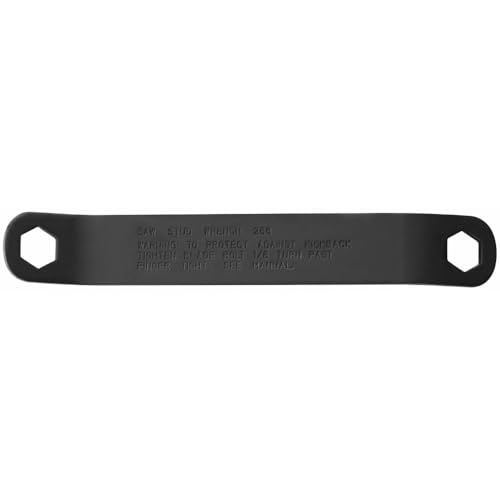
Here’s what I look for in the little touches: * A solid blade guard: It needs to retract smoothly and reliably. * A dust blower: Keeps the cut line clear, improving accuracy. * An easy-to-access spindle lock: Makes it much easier to replace circular saw blade quickly and safely.
Don’t skimp on the base. A heavy-duty aluminum base, like the one found on the Metabo HPT C7SB3, adds stability and prevents flexing, leading to more accurate cuts.
I always recommend taking the time to find the right saw for your needs. Don’t just grab the cheapest option; consider how you’ll be using it and prioritize features that will make your work easier and safer. For further expert circular saw advice, check out our guide to the top circular saw models currently available.
Corded Circular Saws Compared
This table provides a side-by-side comparison of key specifications for various corded circular saws.
| Product Name | Motor (Amps) | Blade Size (in) | Bevel Capacity (Deg) | Weight (lbs) | Max Cut Depth (90 Deg – in) | Cord Length (ft) |
|---|---|---|---|---|---|---|
| Makita 5007F | 15 | 7-1/4 | N/A | N/A | 2-3/8 | N/A |
| DEWALT DWE575SB | 15 | 7-1/4 | 57 | 8.8 | 2-9/16 | N/A |
| DEWALT DWE575 | 15 | 7-1/4 | 53 | 8.8 | 2-9/16 | N/A |
| SKILSAW SPT67WL-01 | 15 | N/A | 56 | 8.6 | N/A | 10 |
| Metabo HPT C7SB3 | 15 | 7-1/4 | N/A | 9.5 | 2-7/16 | N/A |
| SKIL 5280-01 | 15 | 7-1/4 | 51 | N/A | N/A | N/A |
| Bosch CS10 | 15 | 7-1/4 | 56 | 10.2 | 2-7/16 | N/A |
| Skil 5080-01 | 13 | N/A | 51 | N/A | N/A | N/A |
Frequently Asked Questions
What blade size should I choose?
A 7-1/4 inch blade is standard for most corded circular saws and provides a good balance of cutting depth and power for general carpentry. However, some specialized tasks may benefit from a smaller blade size for increased maneuverability or the ability to make tighter cuts.
Are more expensive saws always better?
Not necessarily. While higher-priced saws often feature premium materials and more advanced features, a mid-range model from a reputable brand can often deliver excellent performance for typical homeowner projects. Consider your specific needs and budget when making your decision.
How important is the cord length?
Cord length is often overlooked, but a longer cord (10 feet or more) provides greater freedom of movement and reduces the need for extension cords. Shorter cords can be restrictive, especially on larger projects, and limit your ability to reach certain areas safely.
What is the difference between a rip fence and a bevel cut?
A rip fence guides the saw for straight, accurate cuts along the wood grain (ripping), while a bevel cut angles the blade to create angled cuts across the wood grain. Many saws offer both, expanding their versatility for different project requirements.
Where can I find more in-depth reviews of different models?
You can find more detailed reviews and comparisons of top-rated circular saw models on sites specializing in power tool evaluations. These resources often include user feedback and performance data to help you make an informed choice.
The Bottom Line
Choosing a corded circular saw often comes down to balancing upfront cost with long-term durability and power. If you want a saw that will reliably handle demanding tasks for years to come, the Makita 5007F stands out as the strongest overall pick based on its consistent performance reports and solid construction. It’s a workhorse that’s likely to pay for itself over time.
For those on a tighter budget, the Skil 5080-01 delivers a surprising amount of capability at a lower price point. If versatility is your priority – particularly for trim work and angled cuts – the DEWALT DWE575, with its impressive 57-degree bevel capacity, is an excellent choice. And for a lightweight, professional-grade saw, the SKILSAW SPT67WL-01 continues to receive high marks.
Ultimately, the specs on the saw are less important than understanding your own needs and practicing safe operation. Prioritizing a comfortable grip, a clear line of sight, and performing essential circular saw maintenance will contribute far more to accurate, efficient, and safe work than any single feature.
