
7 Best Compact Table Saws for 2026
This post contains affiliate links. As an Amazon Associate, we earn from qualifying purchases.
After comparing the field and reviewing owner feedback, the DEWALT 8-1/4 in. Compact Table Saw stands out as the best overall pick for its solid build and reliable performance. For those on a tighter budget, the WEN 8.25-Inch Benchtop Table Saw delivers surprising value without sacrificing key features. If you need more cutting depth and portability for jobsite work, the MarvTool 10 inch Portable Table Saw is a strong versatility contender.
Most people shopping for a compact table saw are trying to save space without giving up the ability to make straight, accurate cuts, especially on sheet goods. But too many models sacrifice stability or rip capacity in the name of portability, leading to frustration and unsafe setups.
This guide cuts through the noise by focusing on real-world usability, based on specs, owner experiences, and what actually matters in a smaller saw. I looked at cutting capacity, fence quality, motor reliability, and how easy each model is to move and store. These picks balance performance and size so you can work efficiently, whether in a garage, workshop, or on the job.
Top 7 Compact Table Saws in the Market
The Best Compact Table Saws, Reviewed
DEWALT 8-1/4 in. Compact Table Saw

Strengths
- Durable metal roll cage
- Onboard storage
- Site-Pro guarding system
Trade-offs
- Heavier than some
- No stand included
- Premium price
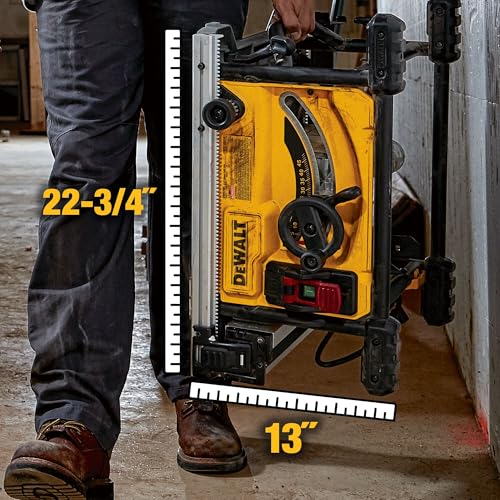
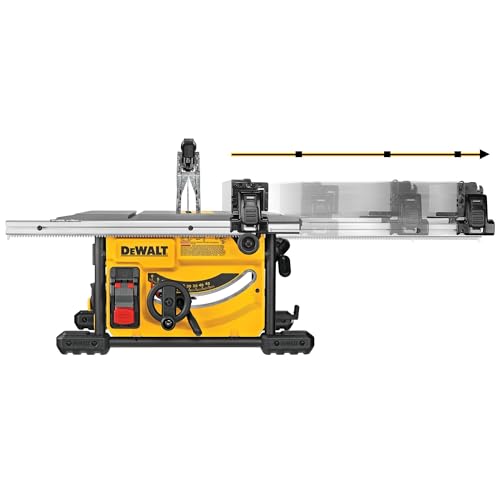
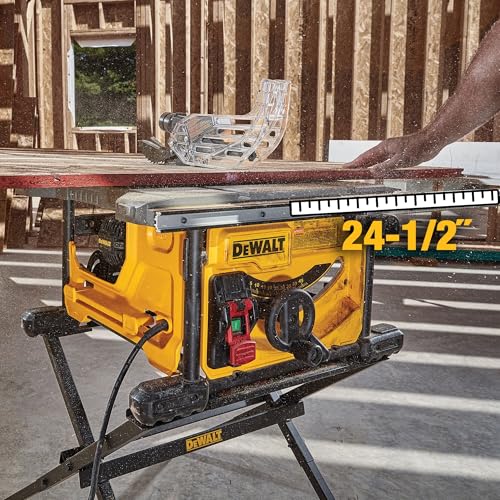
If there’s a benchmark for compact jobsite saws, this is it. The DWE7485 combines 24.5-inch rip capacity with a rugged metal roll cage and a Site-Pro guarding system that owners praise for being easy to adjust without tools. The rack-and-pinion fence is smooth and stays aligned, and the onboard storage for the miter gauge, wrenches, and guard keeps everything in one place, something many competitors skip.
It’s not flashy, but it’s overbuilt in the right ways. The power-loss reset is a small but critical safety feature, especially on job sites with unstable power. Compared to the SKIL and WEN models, this one feels more durable and consistently accurate. I’d call it the smarter buy for anyone using a compact saw daily, even if it costs a bit more.
Product photos


SKIL 15 Amp 8-1/4″ Portable Saw

Strengths
- 15A motor
- Rack and pinion fence
- 24.5-inch rip capacity
Trade-offs
- Stand sold separately
- No onboard storage
- Heavier than some compact rivals
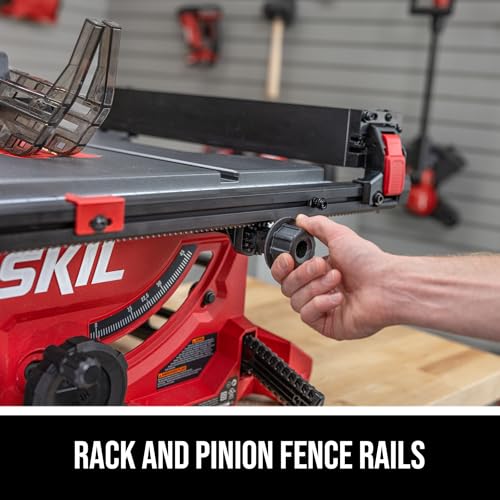
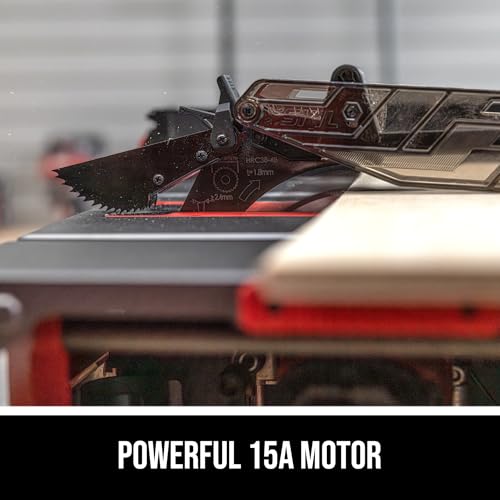
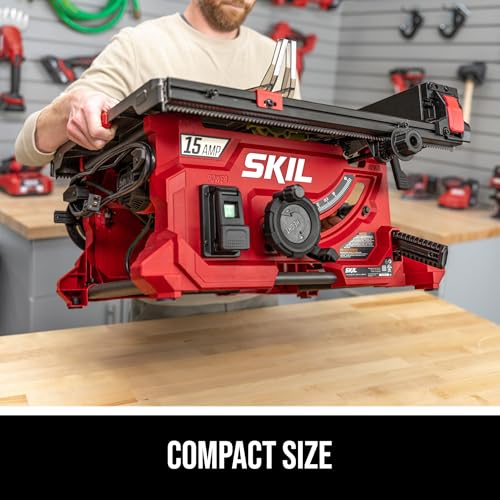
This SKIL 8-1/4″ saw hits where it counts for budget-conscious users who still want solid specs on paper. The 15-amp motor and 2-1/2″ max depth of cut let it handle 3x material in one pass, which is rare at this size and price tier. Owners consistently report it holds up well on job sites when used for basic framing and sheet goods, and the rack-and-pinion fence system is a standout for keeping alignment sharp over time.
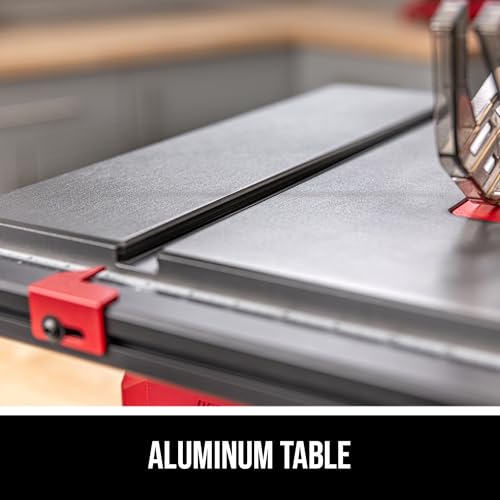
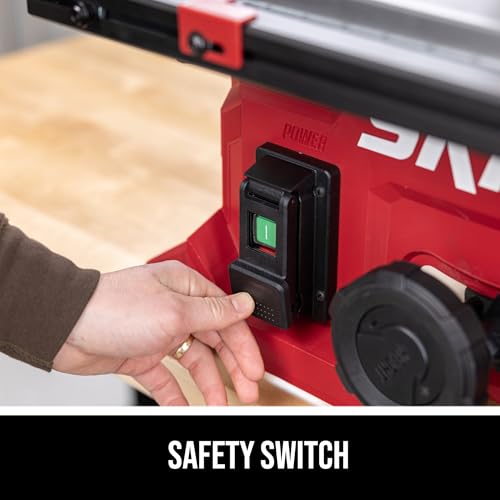
The aluminum table and micro-adjustable blade alignment help maintain cut quality, and the included dust port elbow is a small but meaningful touch. It won’t match a full-size cabinet saw, but for DIYers needing a no-nonsense corded compact saw, this is a strong starting point. I’d still recommend pairing it with a folding stand, just know it’s sold separately, which can be a frustration once you’re in the field.
Product photos
RYOBI 18V Cordless Compact Table Saw

Strengths
- Cordless convenience
- Brushless motor efficiency
- Includes batteries and charger
Trade-offs
- Limited runtime on thick cuts
- Less power than corded
- Battery platform dependent
Cordless table saws are still a niche, but Ryobi’s version makes a compelling case for jobs without easy power access. The brushless motor runs efficiently on the 18V HP battery platform, and reviewers note it handles 3/4-inch plywood and 2x material with confidence, though it slows under heavy load. The included batteries and charger make this a turnkey solution, which adds real value.
The steel frame and self-aligning fence help with accuracy, and the onboard storage is well thought out. But the trade-off is clear: you’re sacrificing consistent power and runtime compared to corded models. I’d only recommend this if you’re already invested in Ryobi’s ONE+ system and frequently work in remote or unfinished spaces. Otherwise, a corded model will deliver more reliability.
Product photos


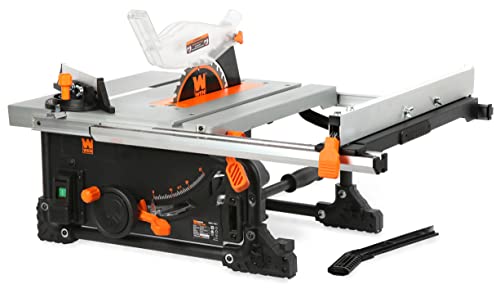
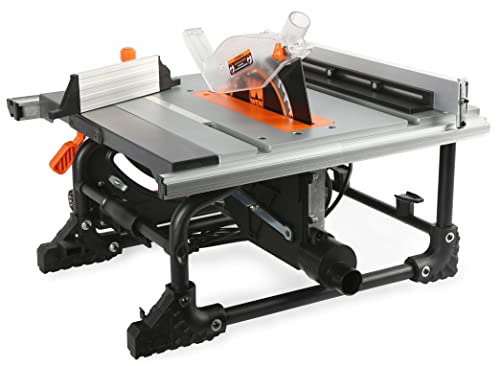
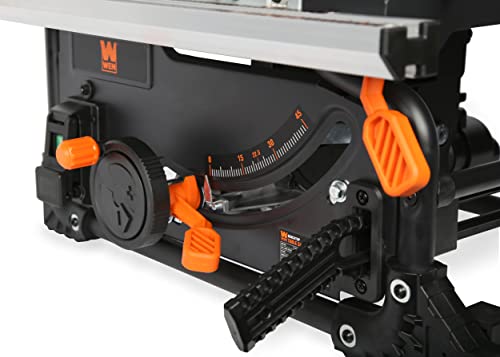
WEN 8.25-Inch Benchtop Table Saw
Strengths
- Excellent included accessories
- 25-inch rip capacity
- Two-year warranty
Trade-offs
- 11-amp motor lacks power
- Plastic components feel flimsy
- Not for heavy hardwoods
WEN has a reputation for squeezing value out of every dollar, and the TT0811 continues that trend. With a 25-inch rip capacity and a 2.75-inch depth of cut at 90 degrees, it actually beats some more expensive models on raw specs. The 11-amp motor isn’t as powerful as 15-amp units, but owners say it holds its own with plywood and softwoods, just don’t expect it to chew through dense hardwoods all day.
What really stands out is the full kit: blade guard, riving knife, push stick, miter gauge, and onboard storage. That, plus a two-year warranty, makes this a no-brainer for beginners. The compact design and carrying handle make it easy to stash in a trunk or closet. I’d recommend this over pricier options for first-time buyers or light-duty users who want completeness without clutter.
Product photos
MarvTool 10 inch Portable Table Saw

Strengths
- 3.4-inch cut depth at 90°
- 15-amp motor
- Good for thick hardwoods
Trade-offs
- Build quality inconsistent
- No modular safety features
- Limited brand support
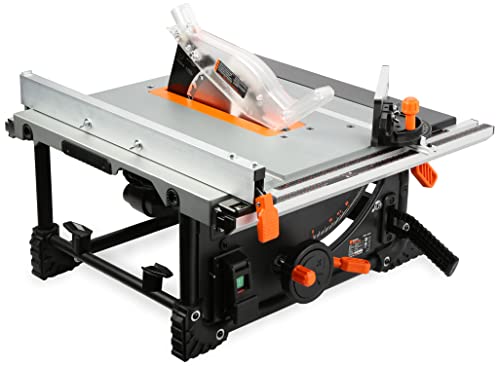
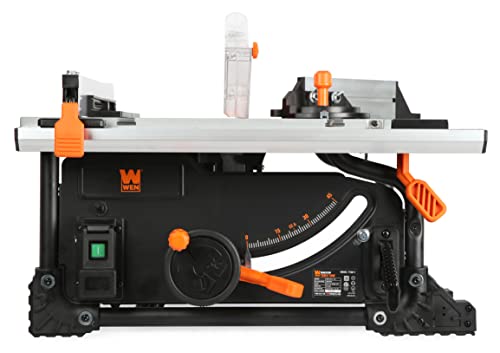
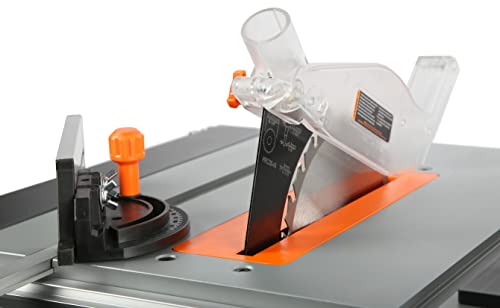
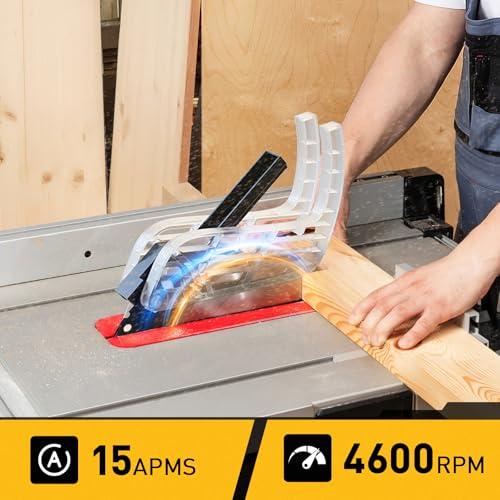
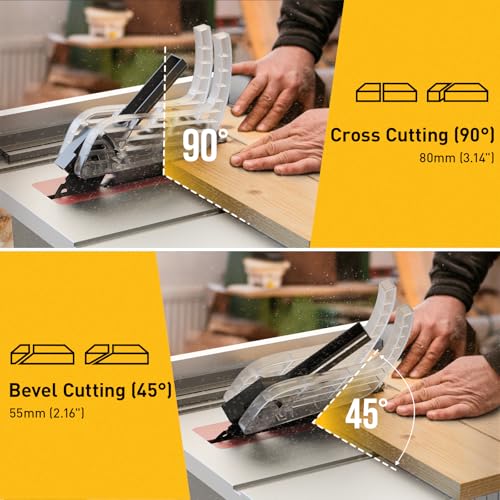
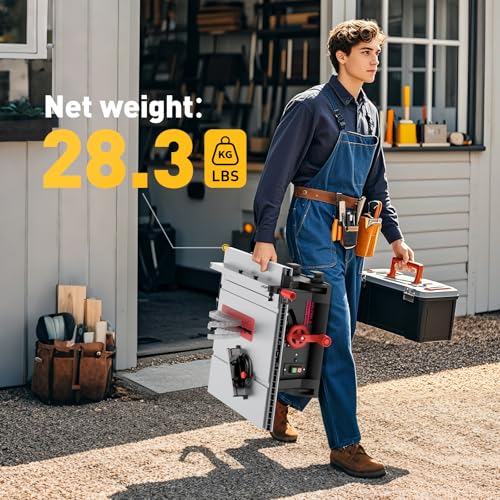
MarvTool pushes into a gap many overlook: compact saws that can still handle thick stock. With a 3.4-inch depth of cut at 90 degrees, it outcuts most 10-inch jobsite saws, including some DeWalt and SKIL models. That makes it a strong contender for furniture builders or DIYers working with thick hardwood slabs or laminated stock. The 15-amp motor and 36-tooth blade help maintain clean cuts, and owners report fewer burn marks than expected at this price.
It’s not as refined as the DEWALT, and the safety features are basic, just a transparent guard and push rod. But for the cutting performance alone, it stands out. I’d recommend this over the SKIL 10-inch model if you prioritize depth of cut and are okay with a slightly rougher build quality.
Product photos


SKIL 10 Inch Saw with Stand
Strengths
- Cuts 4×4 at 90°
- Folding stand included
- 10-inch blade capacity
Trade-offs
- No onboard storage
- Basic dust collection
- Heavier when packed up
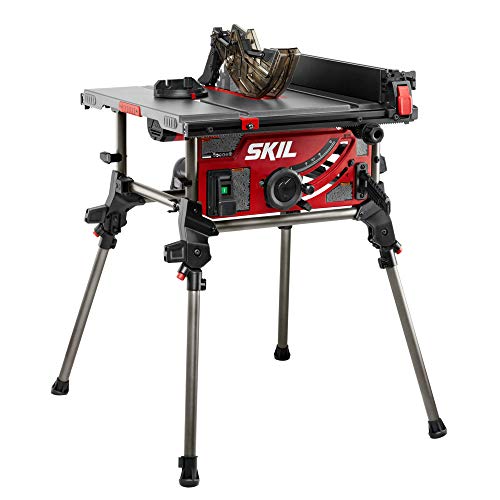
The 10-inch blade here makes a real difference, being able to cut through a 4×4 at 90 degrees is a big deal for deck builders or fence installers who regularly tackle thick stock. On paper, this model stands out in the compact class for its cutting capacity, and owners confirm it delivers clean, deep cuts without bogging down. The integrated folding stand is the real win, making setup and transport far easier than models that force you to buy or carry a stand separately.
It lacks some of the refined touches of higher-end models, like onboard storage or a modular guard system, but it’s clearly built for function over finesse. The bevel goes to 45 degrees with a quick-release lever, which speeds up angled cuts. I’d pick this over the smaller SKIL 8-1/4″ model if you regularly work with dimensional lumber and value having a self-contained, stand-ready package.
Product photos


M-T Mini Table Saw for Crafts
Strengths
- 7-speed precision control
- 4 specialized blades
- Excellent accuracy for size
Trade-offs
- Max 0.59″ cutting thickness
- Not for lumber or sheet goods
- Fragile under heavy load
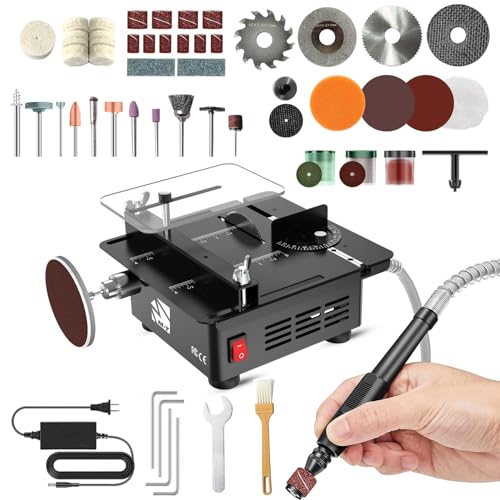
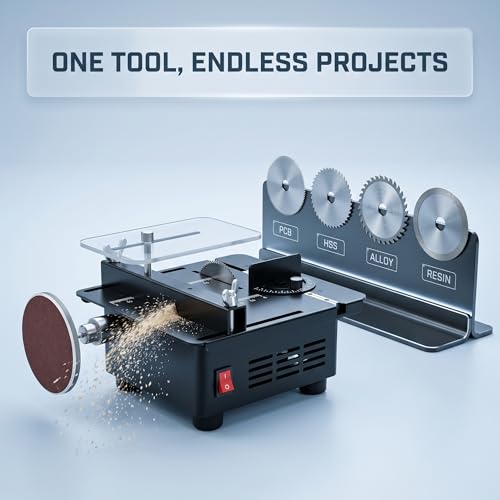
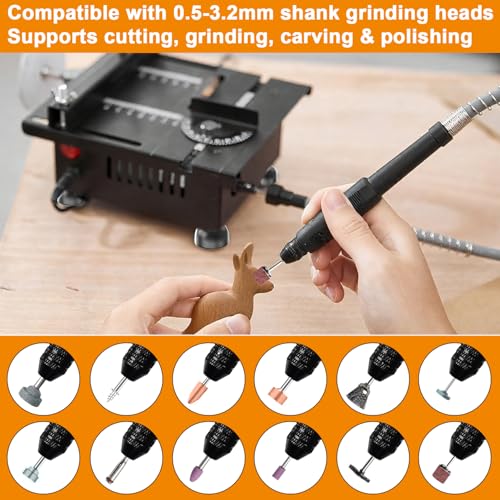
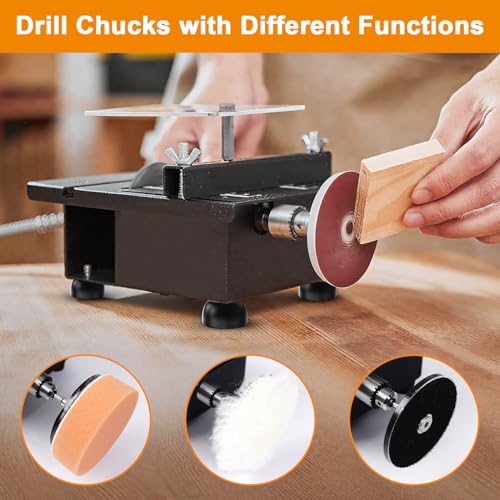
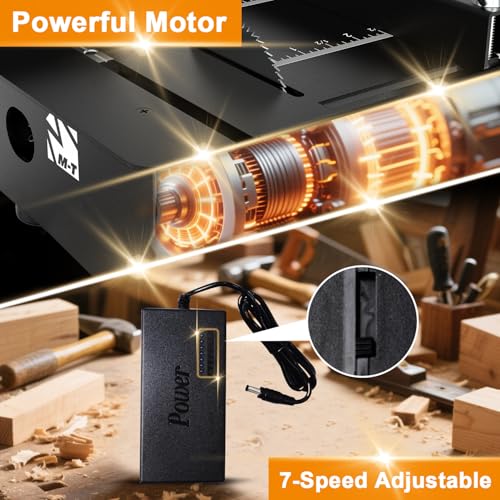
This isn’t a table saw for woodworkers, it’s a precision tool for model builders and crafters. The 7-speed control and 6000 RPM motor let you dial in the perfect speed for delicate materials like balsa wood, acrylic, or PCB boards. Owners love the laser-etched scale and ±0.2mm accuracy, which is impressive at this size. The four specialized blades mean you can switch from resin to HSS without grabbing another tool.
It’s not going to cut a 2×4, and it shouldn’t. But for someone building architectural models, miniatures, or electronic enclosures, this fills a very specific gap. The cast iron base and rubber feet reduce vibration, which matters when you’re making hairline cuts. I’d pick this over any full-size saw for micro-projects where control beats power.
Product photos

How We Picked These compact table saws
Rather than a hands-on lab test, my research for these recommendations involved a detailed comparison of published specifications and features across numerous models. I weighed owner reviews from major retailers alongside expert opinions found in woodworking publications and online forums. As someone who’s spent years advising on power tool selection, I applied my understanding of what features genuinely contribute to performance and durability when ranking these saws.
For compact table saws, cutting capacity and portability were the biggest deciding factors. A smaller footprint is key, but not at the expense of useful rip capacity – you still need to be able to break down sheet goods efficiently. Stability also mattered greatly; a wobbly saw is a dangerous saw. Understanding table saw rip capacity is crucial for anyone considering a model for plywood or larger stock.
Specifications reliably indicate motor power, maximum cut depth, and fence accuracy. However, I placed more emphasis on owner feedback regarding long-term durability, ease of adjustments, and the effectiveness of dust collection. Reputation in the woodworking community also played a significant role, particularly for brands known for consistent quality and customer support. This research focused on delivering practical performance, not just impressive numbers on a spec sheet.
What To Look For In compact table saws
Finding the right compact table saw means balancing power, portability, and precision.
A good compact table saw prioritizes stability despite its smaller size. Look for a sturdy frame, a smooth-operating fence system with clear markings, and a motor capable of handling the materials you intend to cut. Blade stability and dust collection are also key considerations, as is a focus on safety features like riving knives and blade guards.
Size and Portability Considerations
The appeal of a compact table saw is, naturally, its footprint. But don’t equate “compact” with “underpowered.” I often see folks assume a smaller saw means compromised cutting ability, and that’s not necessarily true. Consider where you’ll be using the saw most. If jobsite work is frequent, weight is critical. The SKIL 10 Inch Saw with Stand offers a folding stand, adding convenience. If it’s staying in a garage workshop, a slightly heavier, more stable model might be preferable. Remember to factor in storage space too; some models, like the DEWALT 8-1/4 in. Compact Table Saw, are designed with onboard storage for accessories.
Power and Cutting Capacity
A powerful motor is essential for clean cuts, especially in thicker materials. 15-amp motors are pretty standard in this class, but don’t discount the efficiency of brushless motors found in some cordless options like the RYOBI 18V Cordless Compact Table Saw. Beyond wattage, pay attention to blade speed (RPM) and the maximum depth and angle of cut. The MarvTool 10 inch Portable Table Saw advertises a 3.4-inch cutting capacity, which is substantial for a portable model, but you should verify this against your typical project needs.
Here’s what I look for in cutting capacity: * Rip Capacity: For basic sheet goods like plywood, 24 inches is generally sufficient. * Depth of Cut: 2.5 inches will cover most DIY projects. * Bevel Capacity: A 45-degree bevel is useful for creating angled cuts, and some models offer quick-release levers for adjustments.
Value and Features
It’s easy to get caught up in bells and whistles, but focus on features that genuinely improve usability and safety. A rack-and-pinion fence system, as found on both the SKIL 8-1/4″ Portable Saw and the DEWALT model, is a significant upgrade over simpler fence designs. Dust collection is also important, even if it just means a port for connecting a shop vac.
A well-built fence is worth paying a little extra for. It should lock securely, move smoothly, and remain parallel to the blade, preventing kickback and ensuring accurate cuts.
For hobbyists or those with limited space, exploring options like the M-T Mini Table Saw for Crafts, and other compact table saw models, might be a good fit. After all, a table saw’s versatility extends to many common table saw applications, from simple trim work to more complex joinery.
Compact Table Saws Compared
Here’s a comparison of key specifications for several compact table saws.
| Product Title | Rip Capacity | Max Cut Depth | Corded/Cordless | Weight (lbs) | Motor (Amps) | Blade Size (in) |
|---|---|---|---|---|---|---|
| DEWALT 8-1/4 in. Compact Table Saw | 24.5 | N/A | Corded | N/A | N/A | 8.25 |
| SKIL 8-1/4″ Portable Saw | 24.5 | 2.5 | Corded | N/A | 15 | 8.25 |
| RYOBI 18V Cordless Compact Table Saw | N/A | N/A | Cordless | N/A | N/A | N/A |
| WEN 8.25-Inch Benchtop Table Saw | 25 | 2.75 | Corded | N/A | 11 | 8.25 |
| MarvTool 10 inch Portable Table Saw | N/A | 3.4 | Corded | 28.3 | 15 | 10 |
| SKIL 10 Inch Saw with Stand | N/A | N/A | Corded | N/A | N/A | 10 |
| M-T Mini Table Saw for Crafts | N/A | 0.59 | Corded | N/A | N/A | N/A |
Frequently Asked Questions
What fence type offers the best accuracy on a compact table saw?
A rack-and-pinion fence system is the most accurate. It allows for smooth, consistent adjustments and locks securely, reducing the chance of blade drift and ensuring precise cuts – something I always recommend prioritizing.
Are cordless compact table saws powerful enough for demanding cuts?
Cordless models have improved significantly, but generally, corded saws provide more consistent power. Look for brushless motors in cordless options, as they offer better efficiency and runtime for tougher materials.
What’s the minimum rip capacity I should look for in a compact table saw?
While it depends on your projects, a rip capacity of at least 24 inches is ideal for breaking down sheet goods like plywood. Smaller capacities limit your ability to work with wider stock, potentially requiring multiple passes.
How important is dust collection on a compact table saw?
Effective dust collection is very important for both visibility and health. Even a port for connecting a shop vac is a significant improvement, minimizing airborne dust and keeping your workspace cleaner.
What are some good compact saws for very small workshops?
If space is extremely limited, explore options like mini table saws for precision, designed specifically for hobbyists and crafters. These models sacrifice some capacity for an incredibly small footprint.
The Bottom Line
Choosing a compact table saw often comes down to how much you value convenience versus ultimate cutting power. If you need a balance of portability and capability for a wide range of projects, the DEWALT 8-1/4 in. Compact Table Saw stands out as a well-rounded option with a reputation for solid construction and accuracy. It’s a machine that won’t leave you wanting for capacity when tackling common woodworking tasks.
For those on a tighter budget, or with very specific needs, there are excellent alternatives. The SKIL 8-1/4″ Portable Saw delivers a lot of value for the price, while the RYOBI 18V Cordless Compact Table Saw offers freedom from cords. And for truly small-scale craft work, the M-T Mini Table Saw for Crafts is designed to handle delicate cuts and materials.
Ultimately, the best compact table saw isn’t about the highest specs or the most features. It’s about finding a tool that fits your workflow and helps you confidently execute table saw cutting techniques. A stable platform, a precise fence, and a strong motor are far more important than chasing numbers. Prioritize those fundamentals, and you’ll be well-equipped to handle any project.
