
7 Best Caulk Removing Tools of 2026
This post contains affiliate links. As an Amazon Associate, we earn from qualifying purchases.
The TRUXXON Heat-Treated Steel Caulk Remover is the best overall pick for tackling stubborn, hardened caulk with minimal effort, thanks to its durable blade and precise design. For those on a budget, the ALLWAY GCR delivers solid performance for lighter jobs. If you want versatility and are already using an oscillating tool, the PAYA 3″ Oscillating Blade is a top choice.
Removing old caulk is one of those messy, tedious jobs that can make or break a bathroom or kitchen refresh. Most people underestimate how much time and effort it takes, especially when armed with the wrong tool. I’ve seen too many scratched surfaces and frustrated DIYers who started with something flimsy or poorly designed.
This guide cuts through the noise. I compared specs, analyzed owner feedback, and looked at real-world performance to highlight tools that actually work. You’ll find options for manual scraping and power tool users, with clear insights on what makes each one worth considering.
Top 7 Caulk Removing Tools in the Market
The Best Caulk Removing Tools, Reviewed
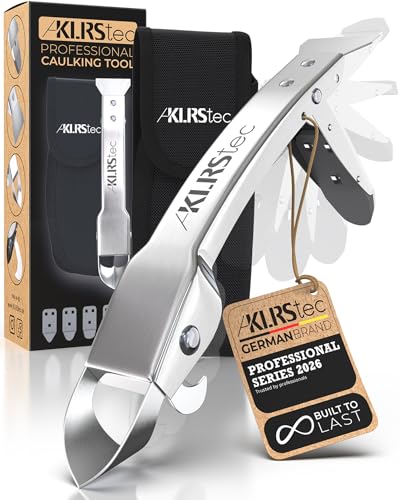
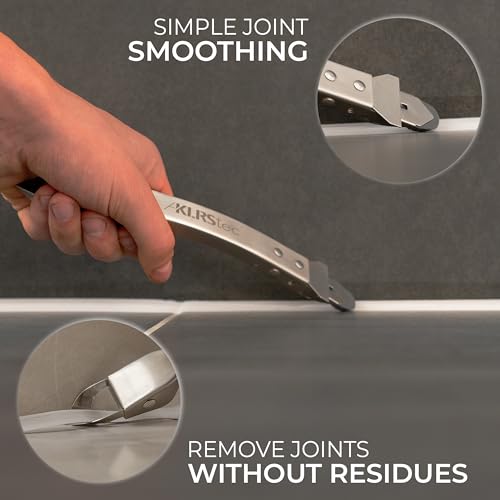
KLRStec 4-in-1 Stainless Steel Caulk Tool
Strengths
- Fully stainless steel
- Modular silicone pads
- Includes joint hook
- Durable and rustproof
Trade-offs
- Slightly bulky
- Steeper learning curve
- Higher initial cost
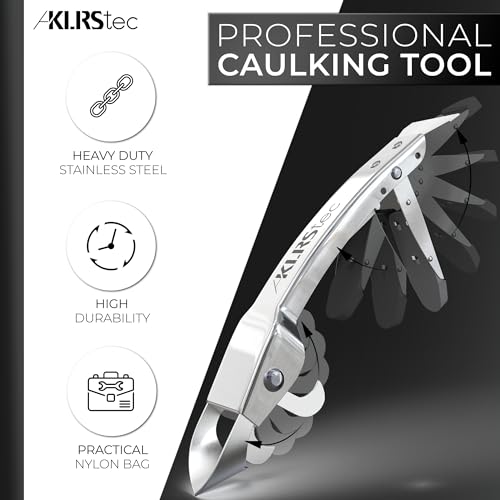
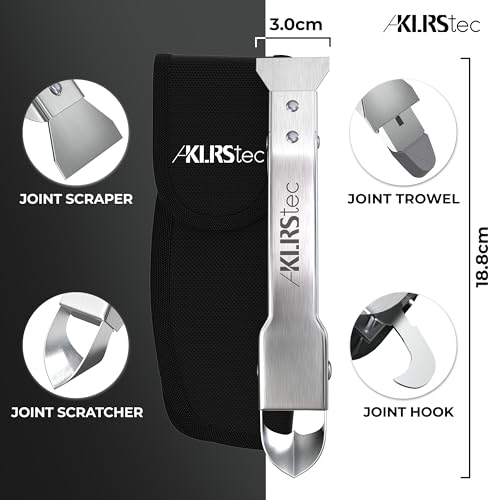
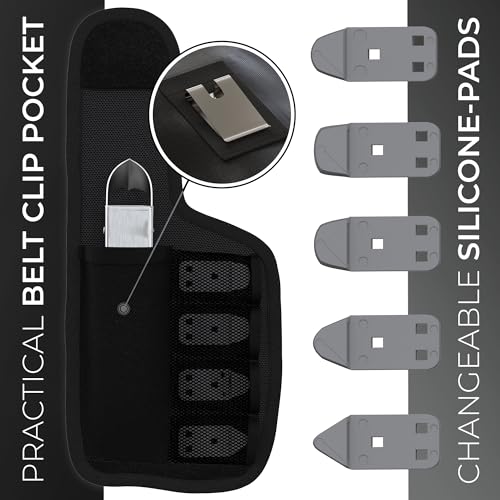
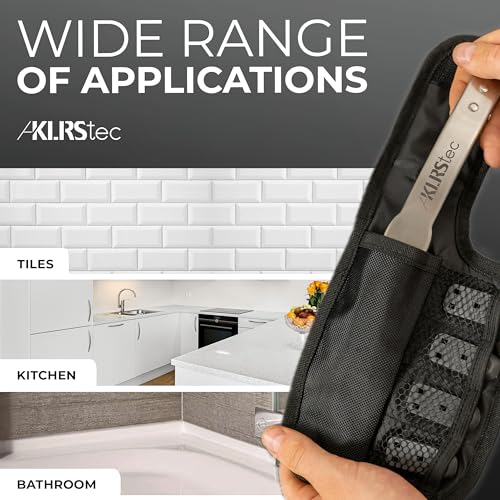
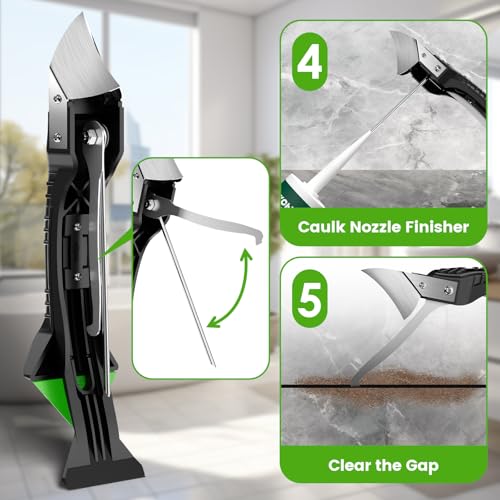
This is the most complete manual system on the list, and for good reason. The 100% stainless steel build means no rust, no flex, and no weak points, even after repeated use. But the real win is the modular design: the fold-out arm with interchangeable silicone pads lets you match the joint profile exactly, which is huge for achieving clean, pro-level finishes. Owners praise how easily it removes old silicone and smooths new beads without tape.
Compared to the Saker or Goopreen kits, the KLRStec feels more robust and better organized, thanks to the storage bag and belt clip. It’s pricier in concept, but the durability justifies it. The joint scraper and hook do a thorough job on residue, making this the rare tool that handles both demolition and refinement well.
Product photos
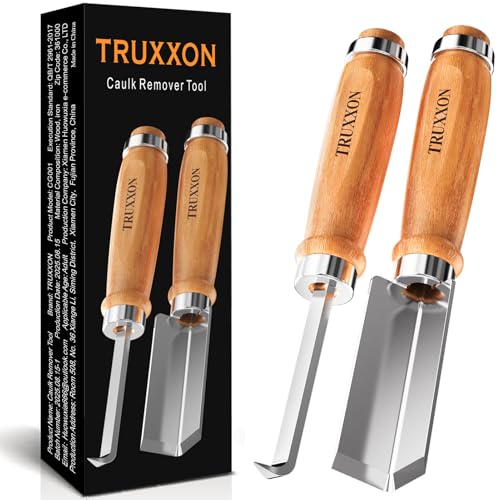
TRUXXON Heat-Treated Caulk Remover Tool
Strengths
- Heat-treated blade
- Wood handle comfort
- Precision 90° edge
- Long-lasting sharpness
Trade-offs
- No finishing attachments
- Heavier than average
- Single function
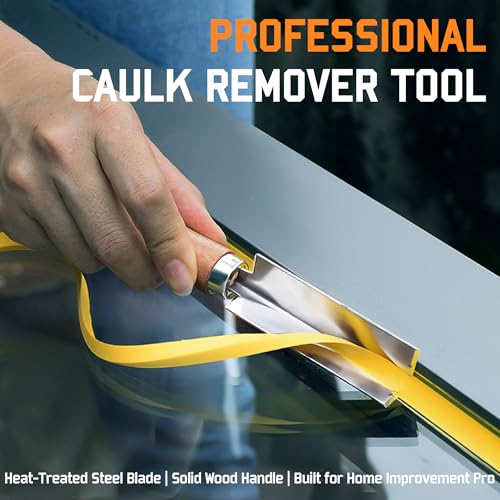
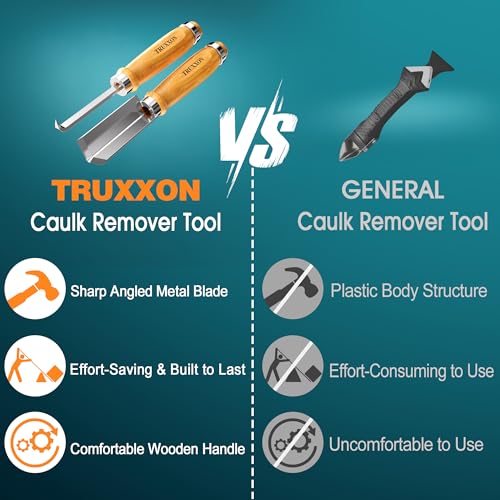
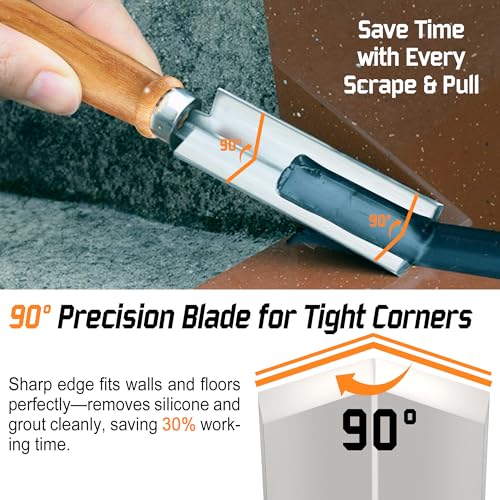
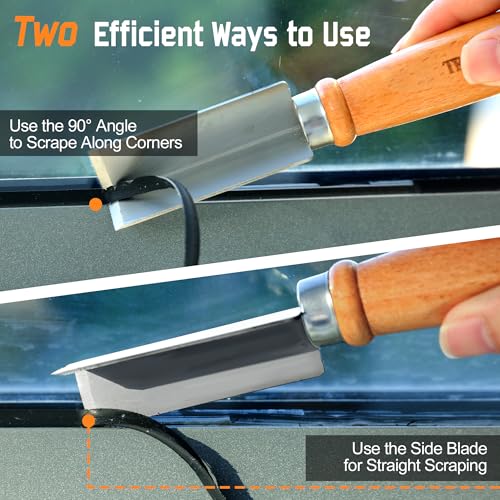
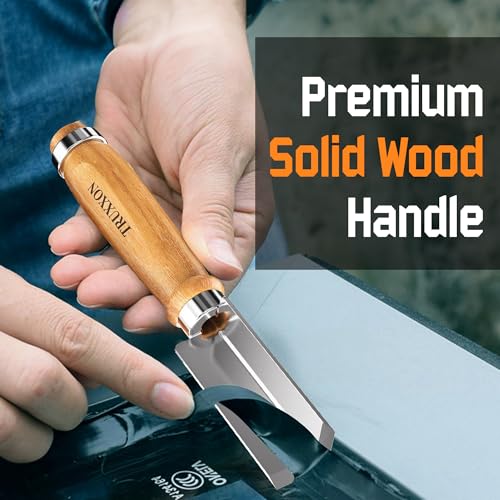
If you’re dealing with years-old silicone or grout that’s fused to the substrate, this TRUXXON set stands out for one reason: the heat-treated steel blade. That extra hardness means it holds an edge significantly longer than standard scrapers, and owners consistently report getting through thick, stubborn material with fewer blade swaps. The 90° angle is spot-on for floor-wall joints, and the solid wood handle offers better vibration damping than plastic, something you’ll appreciate after 20 minutes of scraping.
The two-pack setup is smart, letting you rotate tools while one cools or gets resharpened. It’s heavier than the Homax or ALLWAY models, but that weight adds control. Against the KLRStec stainless kit, it lacks multi-function attachments, but for pure removal power, this is the go-to manual option.
Product photos
Goopreen 5-in-1 Caulking Tool with Pads
Strengths
- 6 replaceable pads
- Multiple scrapers included
- Good finishing options
- Rust-resistant head
Trade-offs
- Mixed plastic build
- Bulkier than needed
- Pad mechanism can snag
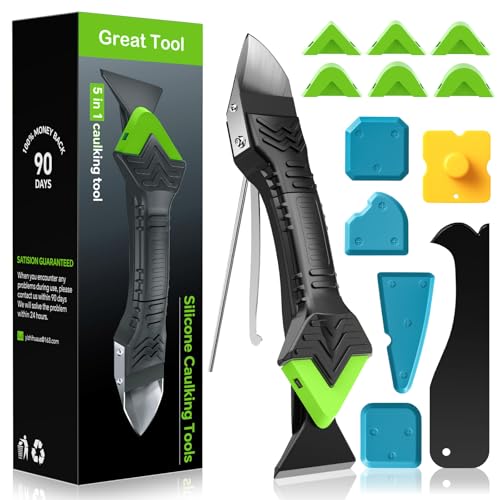
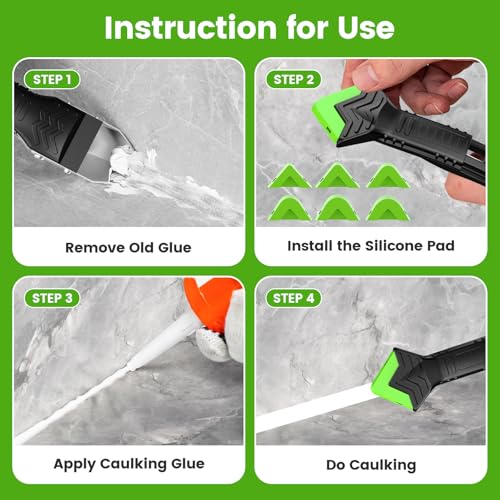
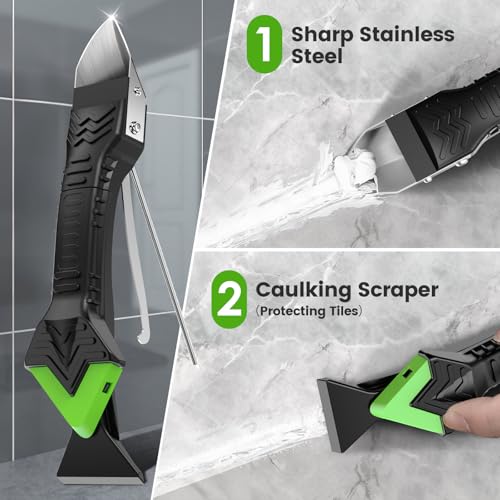
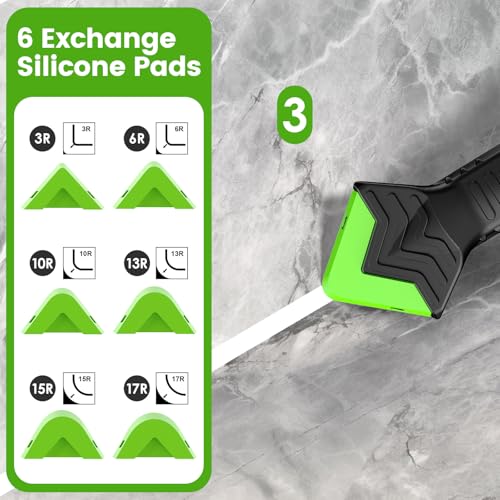
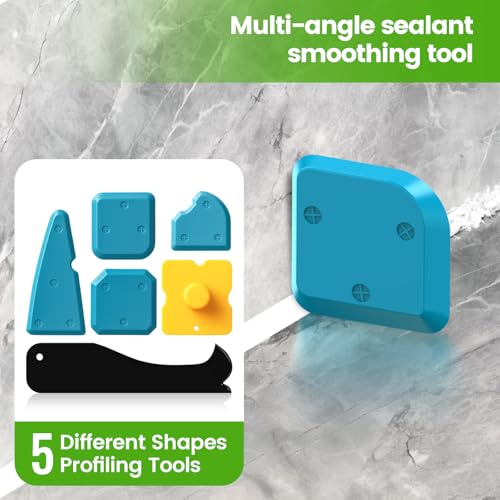
Goopreen throws everything into this kit, literally. Six radius pads, multiple scrapers, a sealant cover, and a push-button pad system make it the most feature-rich option here. Being able to match the pad curvature to the joint means less wasted caulk and cleaner lines, which is exactly what detail-focused users want. The stainless steel head resists rust, and owners say the scraper handles old silicone well, though not quite as aggressively as the TRUXXON blade.
Where it shines is in reapplication. The variety of pads and included tools make it a true 5-in-1 system, outpacing the Saker in flexibility. But the plastic body means it won’t last a decade like all-metal tools. Still, for the money, it’s hard to beat if you’re doing full bathroom makeovers or multiple reseals.
Product photos
PAYA 3″ Oscillating Caulking Cutter Blades
Strengths
- Fast deep removal
- Tapered knife edge
- Universal fit
- 10-blade pack
Trade-offs
- Requires power tool
- Overkill for small jobs
- Blades wear on grout
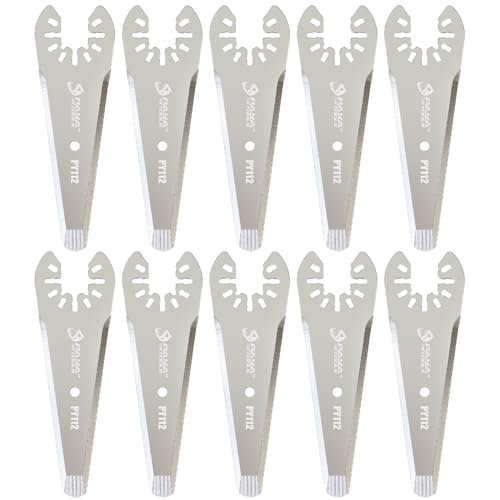
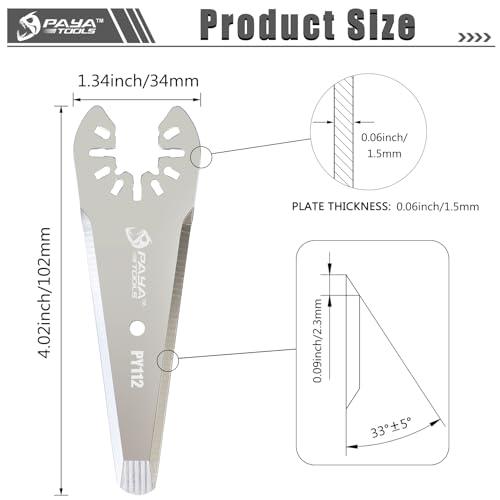
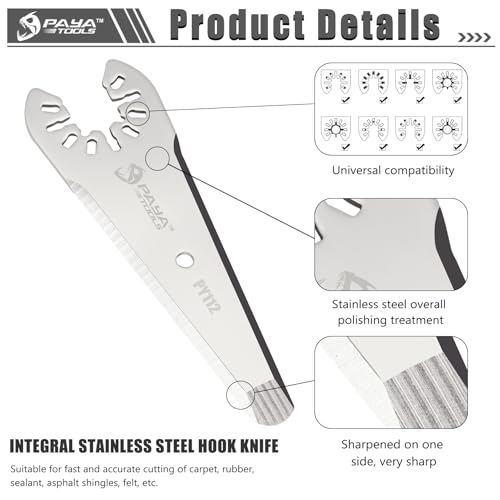
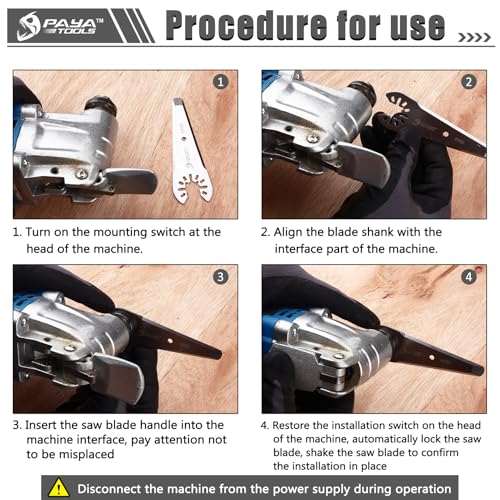
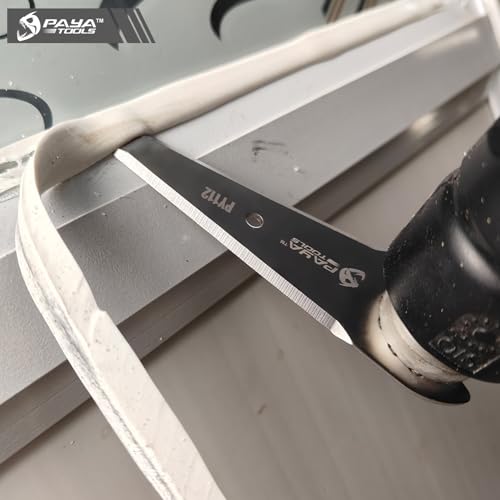
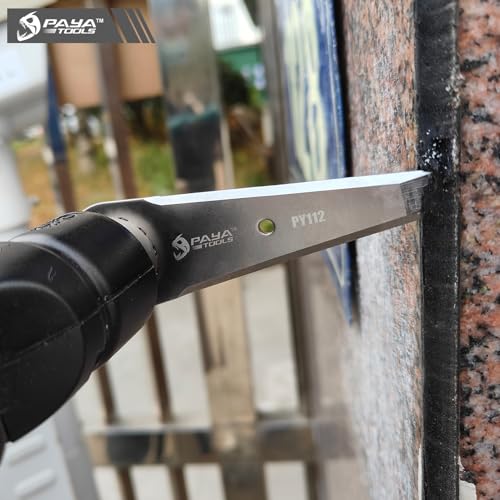
If you hate hand-scraping, this is your escape hatch. The PAYA oscillating blades are built for speed, tapered, triple-ground edges plunge easily into deep caulk lines, and the 3-inch depth handles even thick, layered sealant in one pass. Stainless steel means they resist bending, and the universal fit works flawlessly with most major oscillating tools. Owners consistently report cutting prep time in half compared to manual scraping, especially on large window perimeters or tub surrounds.
The 10-pack is a smart touch, you will go through these, especially on gritty or mixed-material joints. While it lacks the precision of a hand tool for tight corners, it dominates when coverage matters. Against manual options, it’s in a different class entirely: this is for people who value time over minimalism.
Product photos
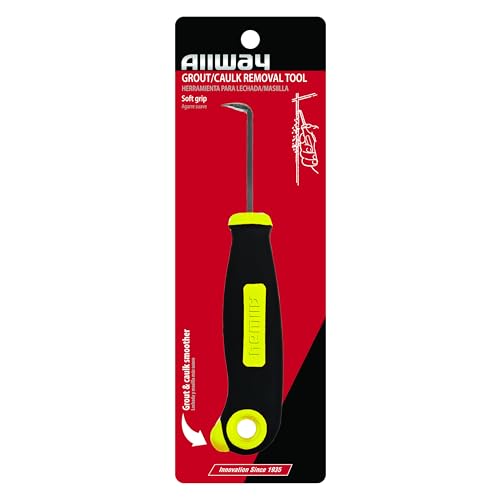
ALLWAY GCR Grout & Caulk Remover

Strengths
- Comfortable soft grip
- Durable carbon steel
- Good for grout and caulk
- Balanced feel
Trade-offs
- Blade not replaceable
- Moderate durability
- No specialty edges
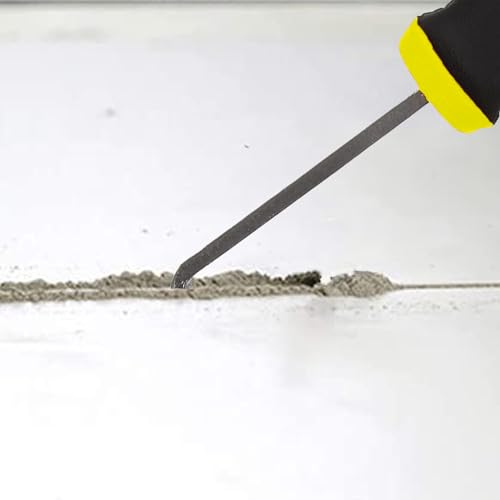
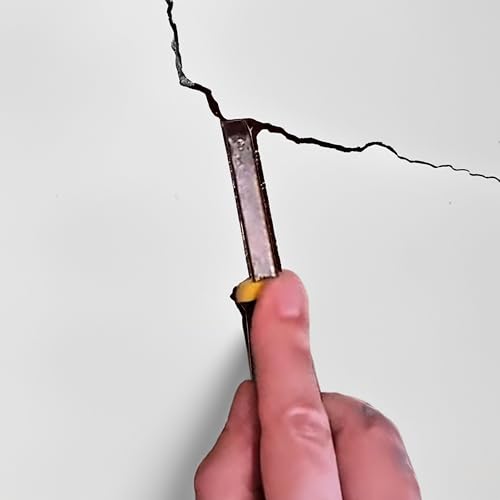
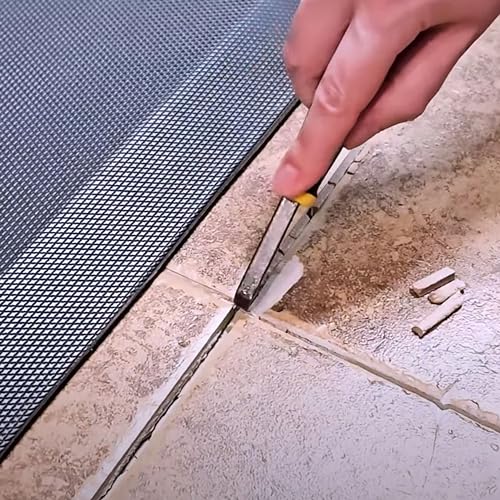
The ALLWAY GCR hits a sweet spot between affordability and usability, which explains why it’s a staple in so many home toolkits. The soft-grip handle really does make a difference in comfort, especially when you’re working on grout lines across a full bathroom floor. Carbon steel gives it decent edge retention, and it bites well into crumbling grout or dried caulk beads without immediately rolling or chipping.
It’s not the toughest scraper out there, don’t expect it to power through decades of overlapping sealant, but for standard maintenance or prep work before regrouting, it’s reliable. Compared to the Homax, it feels more substantial in hand, though it lacks the same surface protection claims. Owners note it works best when paired with a little solvent to soften thick deposits.
Product photos
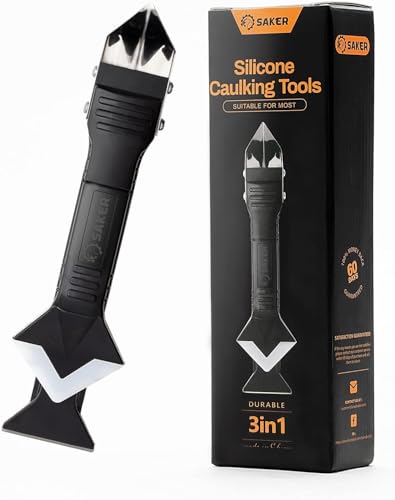
Saker 3-in-1 Silicone Caulking Tool
Strengths
- 3-in-1 functionality
- Smooth finishing
- Good silicone pads
- Compact design
Trade-offs
- Plastic parts wear down
- Not for grout
- Limited durability
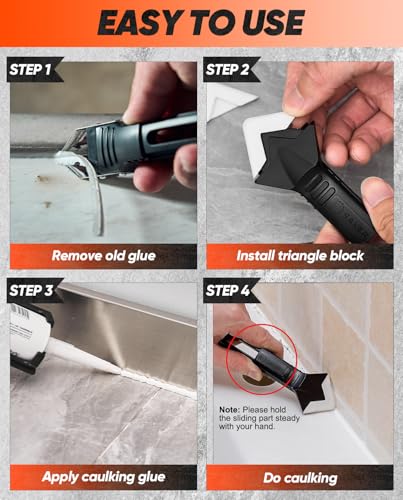
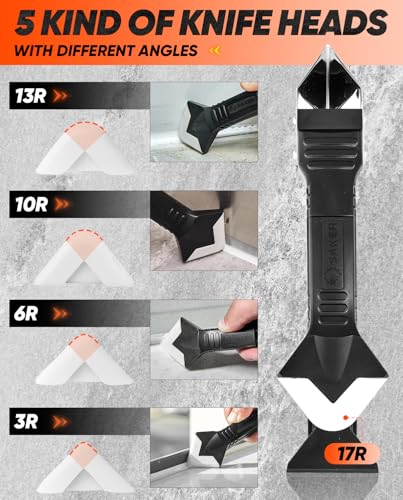
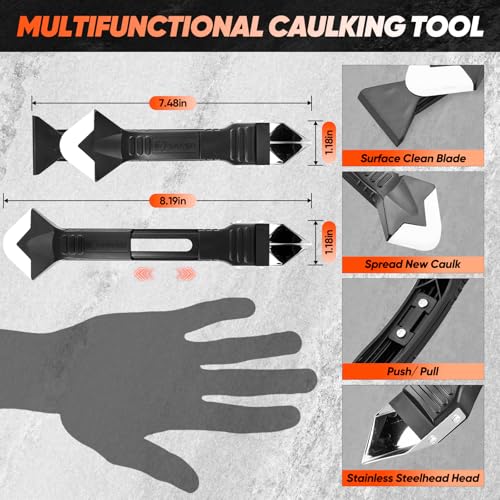
The Saker tool nails the balance between function and finesse, especially if you’re redoing bathroom seals or window beads. The stainless steel scraper bites into old caulk effectively, and the silicone trowel side genuinely helps achieve smooth, professional-looking lines, no tape needed, as many users confirm. I appreciate that it combines internal angle, flat scraper, and smoother in one body, reducing clutter in the toolbox.
But there’s a catch: the plastic components. While the head is steel, the sliding mechanism and some ends are plastic, and the warning in the features isn’t just boilerplate, owners report wear when used on grout or masonry. It’s best reserved for silicone and softer sealants on smooth surfaces. Against the KLRStec, it’s less durable but slightly more intuitive for beginners.
Product photos
Homax Caulk Remover Tool

Strengths
- Sharp angled tip
- Comfortable grip
- Scratch-resistant design
Trade-offs
- Blade dulls quickly
- Not for thick caulk
- Limited durability
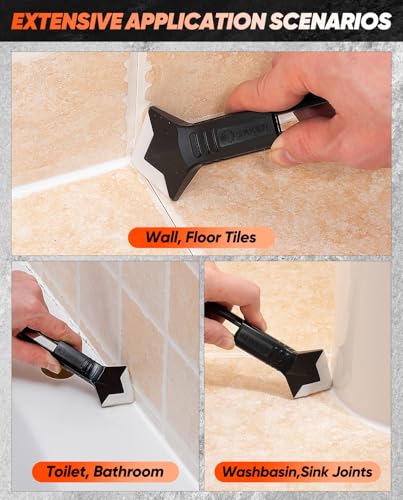
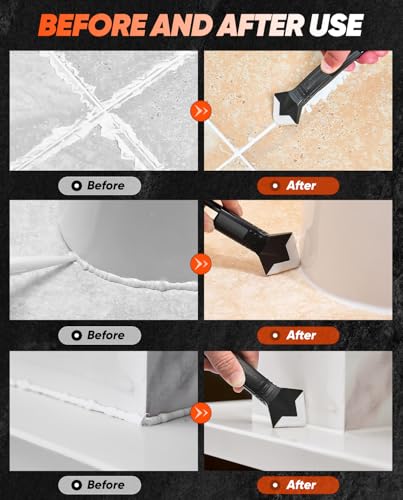
For the budget-conscious DIYer tackling light to moderate caulk removal, the Homax tool makes a solid first impression. On paper, it’s designed to be gentle on surfaces while still clearing out dried material, which matches what many owners report, especially around bathroom fixtures and window edges where scratching is a real concern. The angled tip does its job in tight spots, and the rubber handle helps reduce hand fatigue during short sessions.
That said, it’s clearly built for occasional use. The metal isn’t heat-treated, so it dulls faster on stubborn silicone or layered caulk. Compared to heavier-duty options, this one requires more elbow grease and multiple passes. But for a quick fix or a one-off tile job, it delivers what it promises: a cheap, no-fuss scraper that won’t wreck your tile.
Product photos
How We Evaluated caulk removing tools
Rather than a hands-on lab test, my research for these recommendations focused on a detailed comparison of published specifications and features across numerous caulk removal tools. I weighed owner reviews from multiple sources, alongside assessments from reputable tool review sites, to understand real-world performance. This was combined with my experience understanding what features truly matter in home improvement and repair work. The goal was to rank tools against clear criteria for effectiveness, durability, and ease of use.
For caulk removing tools, the most important factors are blade material and design, and the tool’s ability to access tight spaces. A robust blade – whether steel or a durable polymer – is essential for tackling hardened caulk without quickly dulling or breaking. Equally vital is the shape of the tool; many caulk lines are in corners or around fixtures, so maneuverability is key. This is why I prioritized tools designed for precision and access, and those built with materials that hold an edge.
Specifications reliably indicate blade material and dimensions, giving a good baseline for durability expectations. However, I heavily considered owner feedback when judging long-term performance and ergonomics. Reports of handles becoming uncomfortable or blades losing their edge quickly were significant negatives. You’ll find that many options exist, from manual caulk scrapers to more specialized caulk remover tools and even oscillating tool caulk blades for those already invested in a multi-tool system – all with varying degrees of success as reported by users.
Choosing The Right caulk removing tools
Removing old caulk and prepping surfaces for a fresh seal can be a real pain without the right tool.
A good caulk removal tool combines durability with precision. Look for hardened steel blades, comfortable grips, and designs that allow access to tight corners. Prioritize tools that minimize surface damage and reduce user fatigue, especially for larger projects. The best options offer versatility to handle various caulk types and application areas.
Blade Material & Durability
The material a tool is made from significantly impacts its lifespan and effectiveness. Plastic scrapers will wear out quickly, especially when tackling stubborn, older caulk. I consistently recommend tools with stainless steel blades; they hold an edge much longer and resist corrosion. Heat-treated steel, like in the TRUXXON model, is even better – it’s demonstrably more durable, offering a 50% improvement over standard blades according to the manufacturer. However, even stainless steel can be damaged if used aggressively on concrete, so be mindful of the surface you’re working on.
Access & Design for Tight Spaces
Caulk often hides in corners and along edges where standard tools can’t reach. That’s where specialized designs come into play. Angled blades, like those found on the TRUXXON and PAYA oscillating blades, are crucial for getting under the caulk bead and lifting it cleanly. For more detailed work, consider a multi-function kit like the Goopreen 5-in-1.
Here’s what I look for in a versatile kit: * A variety of silicone pad sizes for different gap widths. * A scraper for removing bulk caulk residue. * A smoothing tool to create a professional finish after re-caulking (this is where the Saker 3-in-1 really shines).
Don’t underestimate the value of a good grip. A comfortable, non-slip handle will save your hands during extended use.
Power vs. Manual Operation
You have a choice between manual scrapers and oscillating tool attachments. Manual options, like the ALLWAY GCR, are affordable and great for smaller jobs. However, they require more elbow grease. Oscillating tools, when paired with blades like the PAYA 3″ cutters, offer significantly faster removal, particularly for large areas. If you already own a premium oscillating multi-tools, investing in a set of caulk removal blades is a smart move. For those looking for a broader comparison, check out our caulk removal tool reviews. If you’re short on time and have a lot of caulk to remove, an oscillating tool is the way to go. For smaller touch-ups, best manual caulk removers are perfectly adequate.
Caulk Removing Tools Compared
Here’s a comparison of key specifications for popular caulk removing tools to help you make an informed decision.
| Product Name | Blade Material | # of Functions | Handle Material | Blade Thickness (in) | Included Accessories |
|---|---|---|---|---|---|
| KLRStec 4-in-1 | Stainless Steel | 4 | Stainless Steel | N/A | Silicone Pads, Bag |
| TRUXXON Heat-Treated | Heat-Treated Steel | 1 | Solid Wood | N/A | N/A |
| Goopreen 5-in-1 | Stainless Steel | 5 | Plastic | N/A | Silicone Pads, Scrapers |
| PAYA 3″ Oscillating | Stainless Steel | 1 | N/A | 0.058 | N/A |
| ALLWAY GCR | Carbon Steel | 1 | Polypropylene | N/A | N/A |
| Saker 3-in-1 | Stainless Steel | 3 | Plastic | N/A | Silicone Pads |
| Homax Caulk Remover | N/A | 1 | Rubber | N/A | N/A |
Frequently Asked Questions
What’s the difference between a manual caulk remover and an oscillating tool blade for caulk?
A manual caulk remover is typically a handheld scraper, ideal for small jobs and requiring more physical effort. Oscillating tool blades, on the other hand, attach to a power tool and remove caulk much faster, particularly beneficial for larger areas or stubborn residue – and are a good investment if you already own a top oscillating multi-tools.
Can I use a caulk remover on surfaces other than tile?
Yes, but blade material and technique matter. While stainless steel blades work on many surfaces, avoid using aggressive force on softer materials like drywall or painted wood, which could cause damage. Polymer blades are gentler, but wear out quicker when tackling hardened caulk.
Are some caulk removers better for corner removal than others?
Angled blades are specifically designed for corners and tight spaces. Tools like the TRUXXON and PAYA oscillating blades excel in these areas, allowing you to get under the caulk bead more easily than a straight-edged scraper.
What should I do with a caulk remover after I’m finished using it?
Clean the blade thoroughly to remove any remaining caulk residue. For metal blades, a solvent like mineral spirits can help. Store the tool in a dry place to prevent rust or corrosion, and consider a blade cover if it didn’t come with one.
What if the caulk is really old and hardened?
Older, hardened caulk requires more patience and a more robust blade. Heat-treated steel blades, like those found in the TRUXXON, are better equipped to handle this type of buildup, but you might also consider applying a caulk softening product before attempting removal. You could also consider an oscillating tool for caulk removal for faster, more effective results.
The Bottom Line
Removing caulk is rarely enjoyable, and the tools available represent a trade-off between speed and control. Ultimately, for most homeowners, I believe the TRUXXON Heat-Treated Caulk Remover strikes the best balance – it’s durable, effective, and doesn’t require any specialized equipment. It’s a straightforward tool that gets the job done without fuss.
If you’re already equipped with an oscillating multi-tool, the PAYA 3″ Oscillating Caulk Removal Blades are a clear winner. They dramatically speed up the process, especially for larger areas, and offer excellent precision. For those on a tighter budget, the ALLWAY GCR is a solid, no-frills option that will get you through smaller projects. And for those tackling both caulk and grout, exploring grout and caulk removal tools might be a worthwhile investment.
Don’t get too hung up on blade thickness or the number of included accessories. A sharp blade and a comfortable grip are far more important than any fancy feature. Focus on tools made with quality steel and designed for easy maneuverability, and you’ll be well-equipped to tackle any caulk removal job that comes your way.
