
6 Best Caulk Remover Tools for 2026
This post contains affiliate links. As an Amazon Associate, we earn from qualifying purchases.
The All-in-One Professional Caulk Remover Tool is the best overall choice for its durable SK5 steel blades and versatile attachments, closely followed by the budget-friendly ALLWAY CT31 3-in-1 Caulk Tool, which delivers solid performance for occasional use.
Removing old caulk shouldn’t mean wrestling with a tool that digs too deep, slips out of your hand, or wears out after one bathroom job. Most people just want something that works reliably without damaging tile or grout, but finding that balance between strength, control, and value isn’t always easy.
Based on specs, owner feedback, and years of working with tools in real home projects, I focused on durability, blade quality, and ergonomic design. This guide covers the top performers that consistently deliver clean removal and smooth finishing, without the frustration.
Top 6 Caulk Remover Tools in the Market
The Best Caulk Remover Tools, Reviewed
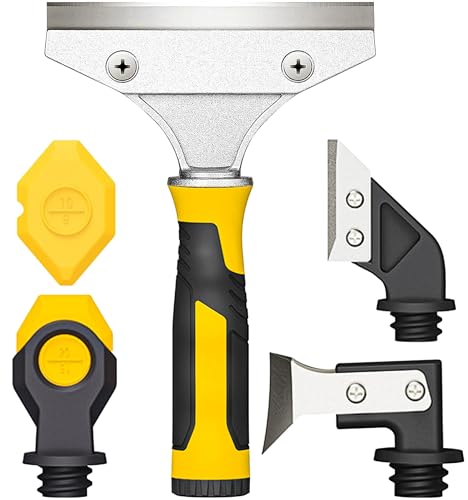
All-in-One Professional Caulk Remover Tool
Strengths
- Interchangeable heads
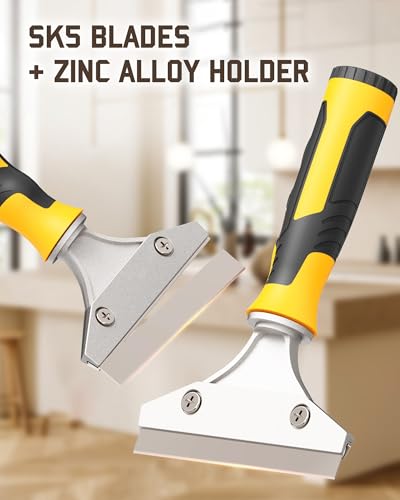
- SK5 high-carbon blades
- Ergonomic TPR handle
Trade-offs
- More parts to store
- Slightly higher learning curve
- Blades can be pricey to replace
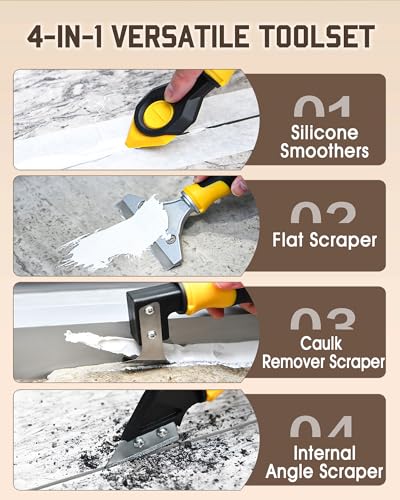
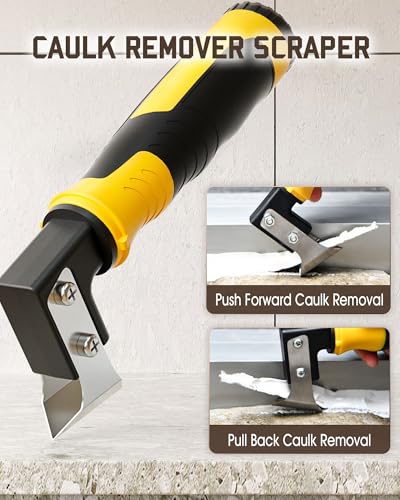
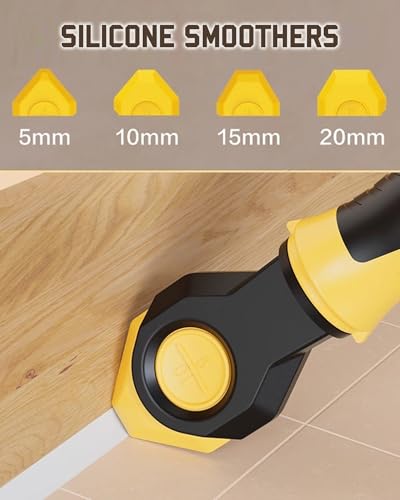
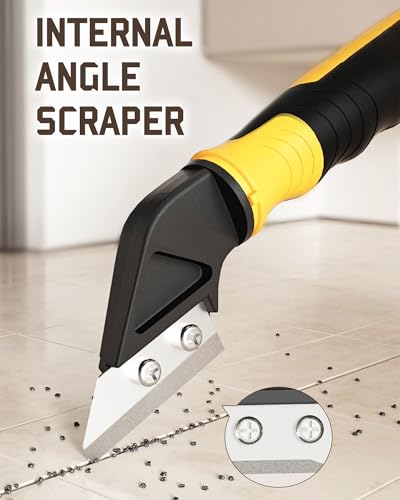
This is the most complete package in the lineup, and it shows. The quick-change head system lets you swap between flat, angle, grout, and silicone-smoothing blades in seconds, which saves real time on complex jobs. The SK5 high-carbon steel blades are noticeably tougher than standard scrapers, and owners say they stay sharp through multiple bathroom refinishes.
The ergonomic TPR-coated handle reduces hand strain, a big deal during long sessions. Compared to the KLRStec model, it offers more versatility and comfort, though the all-metal build of the KLRStec still wins for raw durability. But for most users, this is the smarter buy, it’s why it earns the ‘Best Overall’ label.
Product photos
ALLWAY CT31 3-in-1 Caulk Tool
Strengths
- Affordable
- 3-in-1 functionality
- Soft-grip handle
Trade-offs
- Blade wears quickly
- Not for heavy silicone
- Plastic body flexes
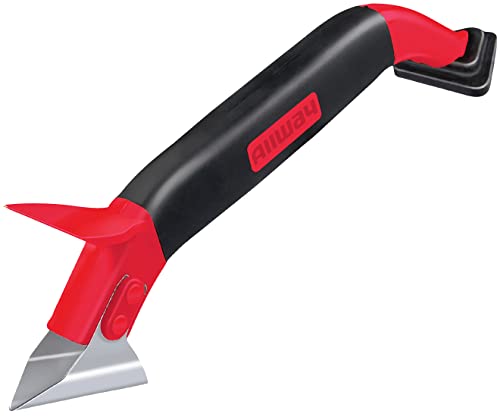
This tool makes a strong case for budget buyers who want something that can both strip old caulk and smooth new beads without spending much. The stainless-steel blade is replaceable and works well for basic scraping, while the rotatable silicone tip offers three bead profiles, a rare feature at this price. On paper, it’s smartly designed for DIYers tackling small bathroom or window jobs.
Owners consistently report it holds up fine on latex and acrylic caulk, though heavy silicone buildup tends to dull the blade faster than expected. The soft-grip handle helps, but use is limited compared to full-metal tools. Still, for light-duty maintenance, it delivers more function than you’d expect.
Product photos


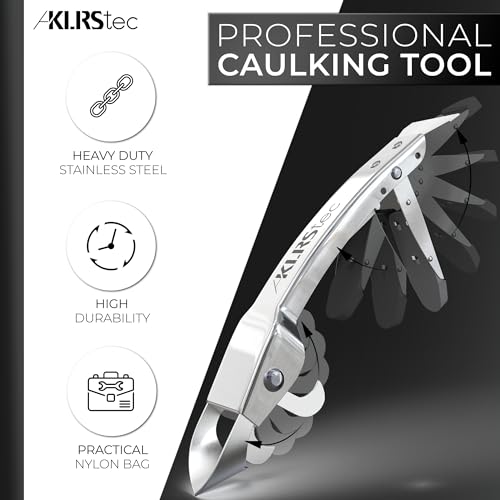
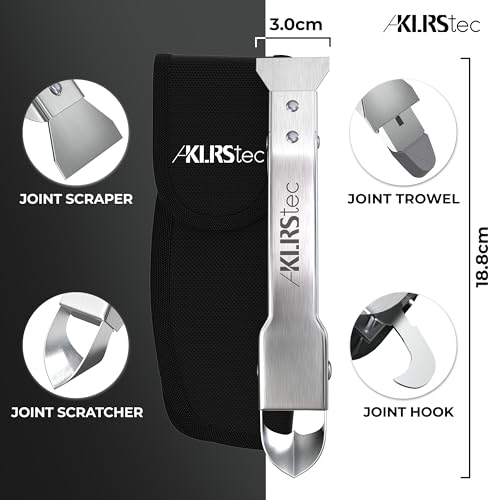
KLRStec 4-in-1 Stainless Steel Caulk Tool
Strengths
- Fully stainless steel
- Includes joint hook
- Durable and rust-proof
Trade-offs
- Heavier than plastic tools
- No ergonomic coating
- Slightly steeper learning curve
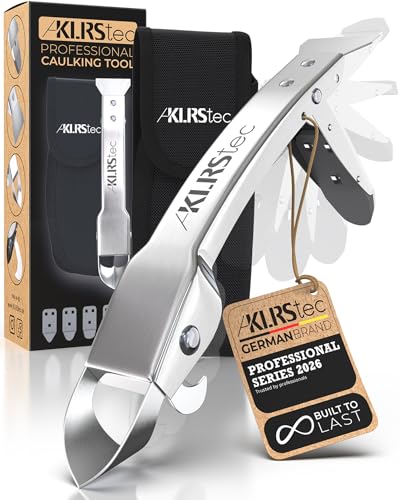
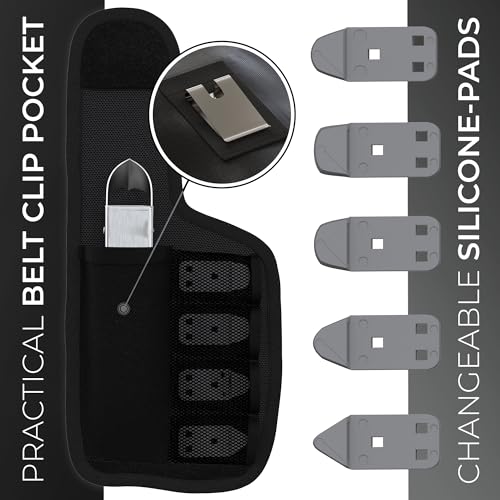
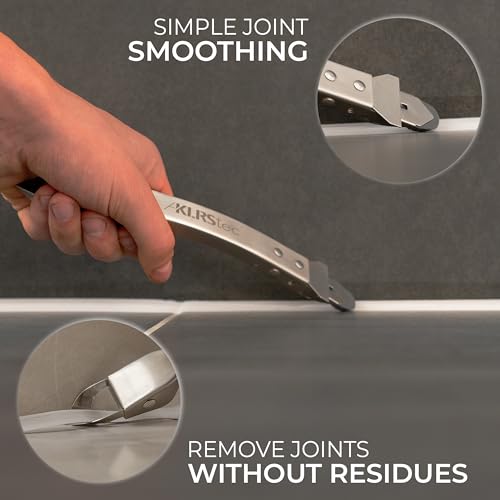
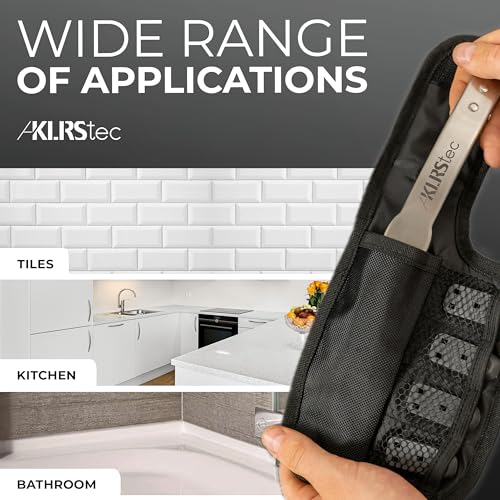
This is the one to grab if you hate replacing tools every few jobs. The 100% stainless steel build means no plastic fatigue, no cracking handles, and zero rust, a major win in wet environments like showers and sinks. The set includes a joint hook, 90° scraper, and five silicone pads, making it versatile for both removal and finishing.
Reviewers consistently highlight how well it handles stubborn outdoor silicone and thick kitchen sealant without deforming. Compared to the Goopreen model, it feels more rugged and better organized, with a storage bag that keeps everything together. It’s not the cheapest, but for long-term reliability, it’s hard to beat.
Product photos
Goopreen 5-in-1 Caulking Tool with Pads
Strengths
- 6 replaceable silicone pads
- Excellent finishing control
- Stainless steel head
Trade-offs
- Plastic body less durable
- Slightly bulky design
- Extra parts to manage
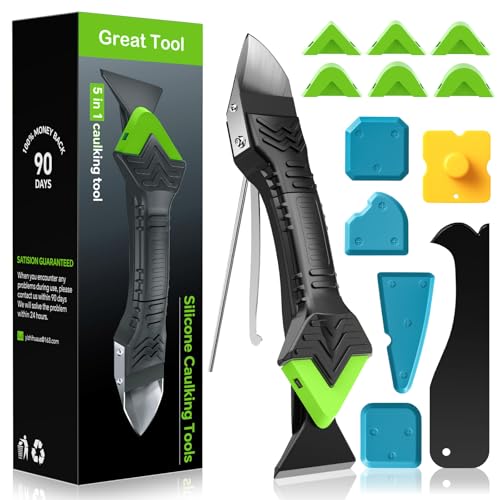
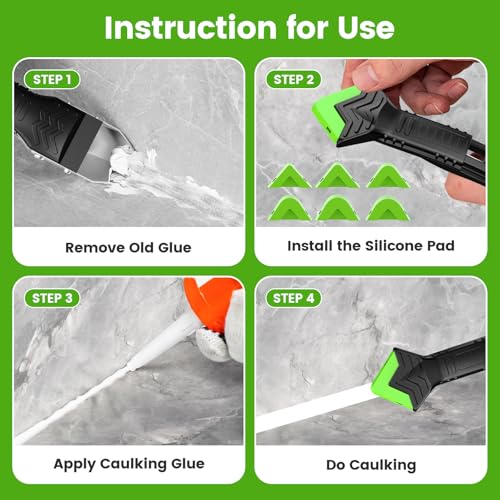
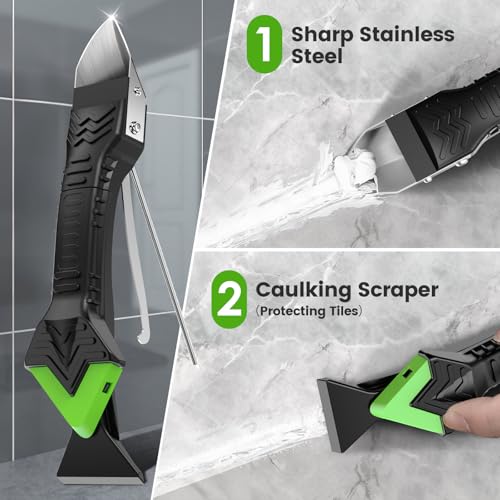
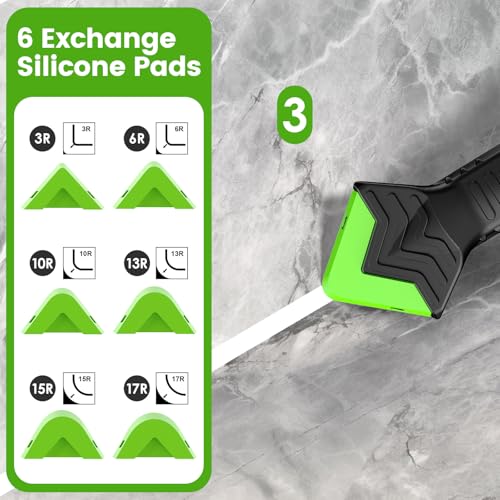
This is clearly built for people who care about clean, professional-looking sealant lines. The inclusion of six silicone pads with varying radii means you can match the curve of any corner or joint, a feature even some pro-grade tools skip. The stainless steel head stays rigid during scraping, and owners praise how smoothly the silicone trowel glides over fresh caulk without tearing.
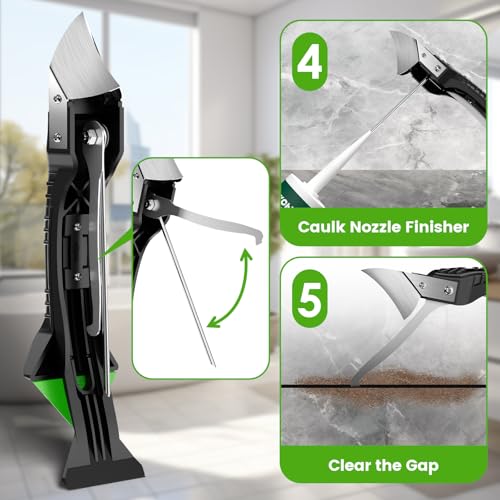
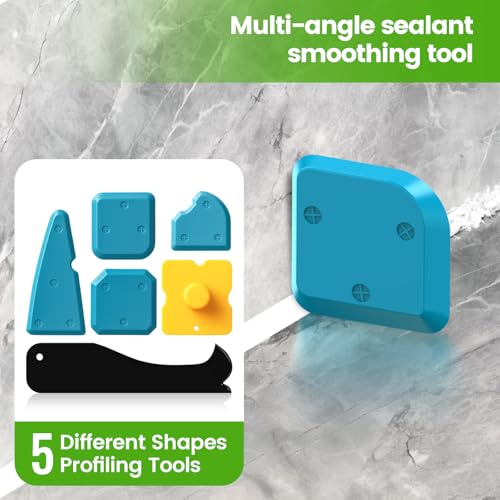
The kit feels thorough, with multiple scrapers and a sealant cover to prevent mess. While the plastic body isn’t as tough as full stainless, it’s durable enough for regular use. Against the ALLWAY tools, it’s a clear step up in finishing quality, though slightly bulkier.
Product photos
Homax Caulk Remover Tool

Strengths
- Sharp angled blade
- Great for corners
- Comfortable rubber grip
Trade-offs
- No finishing function
- Blade not replaceable
- Limited to narrow areas
Sometimes you just need to get into tight corners, and that’s where this tool shines. The sharp angled tip is perfect for slicing through caulk in 90-degree joints, think where a tub meets a wall or around sink rims. It’s not flashy, but the design is focused: push and pull motion cuts efficiently, and the blade digs deep without slipping.
It doesn’t smooth new caulk or handle wide surfaces well, but for precision removal in cramped spots, it outperforms bulkier multitools. Compared to the All-in-One Professional model, it’s less versatile but more agile in tight spaces.
Product photos
ALLWAY GCR Grout & Caulk Removal Tool

Strengths
- Strong carbon steel blade
- Good for grout and caulk
- Comfortable grip
Trade-offs
- No finishing capability
- Blade not replaceable
- Limited precision
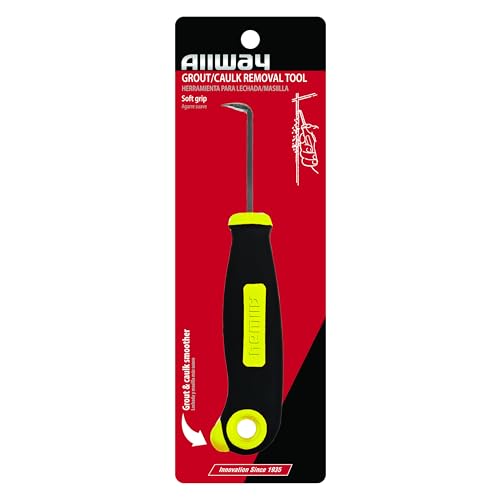
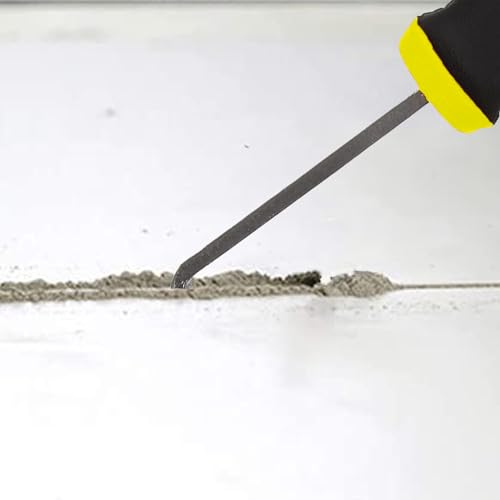
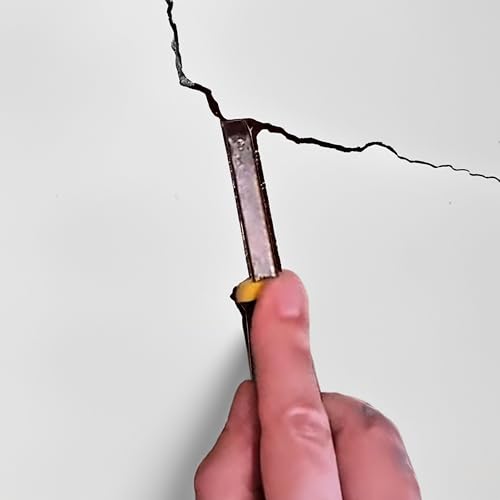
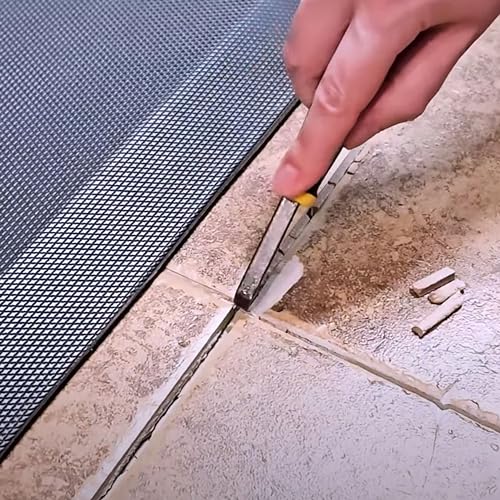
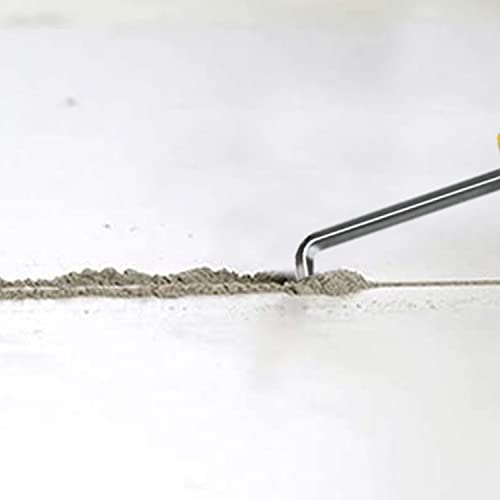
If you’re prepping tile for regrouting or stripping failing caulk lines, this one stands out for its dual-purpose strength. The carbon steel blade and rigid polypropylene body handle grout far better than most dedicated caulk tools, and reviewers note it bites into crumbling joints without bending. The soft-grip handle reduces fatigue, which matters when you’re knee-deep in a shower surround project.
Still, it’s not a finishing tool, you’ll need something else to smooth new sealant. Compared to the ALLWAY CT31, it trades finesse for durability. But for the prep phase of a renovation, especially in older bathrooms, it’s a solid mid-tier pick.
Product photos
How We Chose These caulk remover tools
Rather than a hands-on lab test, my research for these recommendations focused on a detailed comparison of published specifications and features across numerous caulk remover tools. I weighed owner reviews from multiple sources – Amazon, home improvement retailer sites, and dedicated tool forums – alongside expert opinions from publications like This Old House and Popular Mechanics. My experience maintaining workshops and helping with home renovations informed how I prioritized different characteristics.
For caulk remover tools, the most important factors are blade material and ergonomic design. Durable blades, particularly those made of high-carbon steel, significantly impact how efficiently and cleanly a tool removes old caulk. A comfortable grip is also critical; tackling caulk removal can be physically demanding, so reducing hand fatigue is key. Versatility, offering multiple head options for different caulk types and applications, also played a significant role in my rankings. You can find more details on specialized caulk removing tools here.
Specifications reliably indicate blade material and overall build quality. However, I placed greater emphasis on owner feedback regarding real-world durability and ease of use. Reputations for lasting performance, even with frequent use, heavily influenced my choices. I also considered how well the tools performed on various caulk types (silicone, acrylic, latex) based on user reports. For a broader look at options, including those utilizing oscillating tools for caulk removal, check out our detailed caulk scraper tool reviews.
How To Choose The caulk remover tools
Removing old caulk can be a surprisingly frustrating part of any renovation.
A truly effective caulk remover tool balances durability with usability. Look for high-carbon steel blades or robust stainless steel construction, ergonomic handles to reduce fatigue during longer projects, and interchangeable heads or profiles to tackle different caulk types and gap sizes. Prioritize tools that minimize surface damage while maximizing removal efficiency.
Blade Material and Durability
The material a caulk remover is made from significantly impacts its lifespan and effectiveness. Plastic tools, while inexpensive, tend to wear down quickly, especially when dealing with stubborn, dried caulk. Stainless steel, like you’ll find in the KLRStec 4-in-1, offers a good balance of corrosion resistance and strength, but high-carbon steel (SK5 is a common designation) is where you’ll find the best edge retention. Consider how frequently you’ll be using the tool; if it’s a one-time job, a plastic option might suffice, but for regular use, investing in a steel tool pays off.
Versatility and Included Attachments
Many caulk removers aren’t just about removing old caulk. They also help with the application of new caulk and smoothing the finish. The All-in-One Professional Caulk Remover Tool exemplifies this, offering a variety of scraper and smoother attachments. Here’s what to consider when looking at versatility: * A simple scraper is fine for straight lines. * Angle scrapers are essential for corners and tight spaces. * Multiple silicone smoothing profiles (different radii) allow for professional-looking caulk beads, and prevent unevenness.
Ergonomics and Comfort
Caulk removal often involves awkward angles and repetitive motions. A poorly designed handle can lead to significant hand fatigue. Look for tools with ergonomically molded grips, ideally coated with a material like TPR (Thermoplastic Rubber) to provide a secure, comfortable hold. The Homax Caulk Remover Tool, for example, specifically highlights its ergonomic grip.
Don’t underestimate the importance of comfort. A tool you’re less likely to use is a tool that won’t get the job done.
If you’re looking for a deeper dive, our caulk removal tool guide offers a more detailed look at some of the top caulk removal tools available. For those tackling larger projects, consider exploring both manual and powered options – our review of best manual and electric caulk removers can help you decide. We also have a list of recommended caulk stripping tools for a variety of scenarios.
Caulk Remover Tools Compared
Here’s a comparison of key specifications for various caulk remover tools to help you choose the right one for your needs.
| Product Name | Material (Blade/Body) | Number of Pieces | Included Accessories | Best For | Key Feature |
|---|---|---|---|---|---|
| All-in-One Professional Caulk Remover Tool | SK5 Steel / TPR | 6 | 5 Scrapers, Handle | All-Around Use | Versatile Toolset |
| ALLWAY CT31 3-in-1 Caulk Tool | Stainless Steel / Plastic | 1 | 3 Silicone Pads | Budget Friendly | Multifunctionality |
| KLRStec 4-in-1 Stainless Steel Caulk Tool | Stainless Steel | 1 | 5 Silicone Pads, Bag | Durability | All-Steel Construction |
| Goopreen 5-in-1 Caulking Tool with Pads | Stainless Steel / Plastic | 1 | 6 Silicone Pads, Scrapers | Smooth Finishing | Silicone Pad Variety |
| Homax Caulk Remover Tool | N/A | 1 | N/A | Tight Corners | Angled Tip |
| ALLWAY GCR Grout & Caulk Removal Tool | Carbon Steel / Polypropylene | 1 | N/A | Grout Removal | Multi-Purpose Design |
Frequently Asked Questions
What’s the difference between a caulk remover tool and a scraper?
A caulk remover tool is specifically designed for the task, with angled blades and often interchangeable heads to get into corners and create a clean removal. A scraper is a more general-purpose tool; while it can remove caulk, it typically isn’t as efficient or precise.
Will a plastic caulk remover tool work for a large bathroom renovation?
Probably not. While suitable for small touch-ups, plastic tools lack the durability to withstand the extensive use of a larger project, and will likely wear down quickly. Steel tools, especially those with high-carbon blades, are a better investment for significant renovations.
Can I use a caulk remover tool on acrylic caulk?
Yes, but blade angle is key. Acrylic caulk tends to be softer than silicone, so a sharper angle and lighter pressure will prevent damage to the surrounding surface. Some tools include specific silicone smoothing profiles that also work well with acrylic.
Are oscillating multi-tools a good alternative for caulk removal?
Yes, they can be very effective, especially for larger areas. If you already own one, using a caulk removal blade attachment with your best multi-tools for caulk removal is a fast option, but you need to be careful to avoid damaging the surrounding surfaces.
How do I prevent damaging the surface when removing caulk?
Using a sharp blade at the correct angle is the most important factor. Applying consistent, even pressure and avoiding excessive force will also minimize the risk of scratches or gouges. It is also worth considering a tool with multiple blade options for different caulk types and surfaces.
The Bottom Line
Choosing a caulk remover really comes down to how much you value convenience versus control. If you want a tool that handles nearly any caulk situation and delivers a professional finish, the All-in-One Professional Caulk Remover Tool offers the best balance of versatility and durability. However, if you’re facing a simpler job and want to spend as little as possible, you can still get good results.
For those on a budget, the ALLWAY CT31 3-in-1 Caulk Tool is a solid pick. If you’re primarily concerned with longevity and tackling tough, hardened caulk, the KLRStec 4-in-1 Stainless Steel Caulk Tool’s all-steel construction will stand up to repeated use. And if you’re already invested in an oscillating tool ecosystem, exploring top-rated oscillating multi-tools can open up even more caulk removal options.
Ultimately, remember that the best caulk remover is the one you’ll actually use. Blade material and ergonomic design are key, but even the most feature-rich tool won’t compensate for a lack of patience and careful technique. Focus on protecting the surfaces around the caulk line and taking your time, a little extra effort now will prevent bigger headaches later.
