8 Best Grout Removal Tools for 2026
This post contains affiliate links. As an Amazon Associate, we earn from qualifying purchases.
The Goldblatt Grout Removal Tool stands out as the best overall pick, thanks to its durable carbide tip and solid build, while the Coitak Tile Grout Saw offers a solid budget-friendly option for smaller jobs. For those tackling large areas, the 33-Piece Grout Tool Kit gives you the range and replacement blades needed to get through extended projects without breaking the bank.
Most people don’t realize how much the wrong grout removal tool can turn a manageable job into a wrist-cramping, inefficient mess. I’ve seen too many DIYers burn out early because they started with a flimsy blade or a tool that just wouldn’t cut cleanly.
This guide cuts through the noise by focusing on what actually matters: blade hardness, ergonomic design, and real-world durability. After comparing specs and analyzing owner feedback across hundreds of reviews, I’ve identified the tools that consistently deliver clean cuts, last over time, and make the work less punishing on your hands.
Top 8 Grout Removal Tools in the Market
The Best Grout Removal Tools, Reviewed
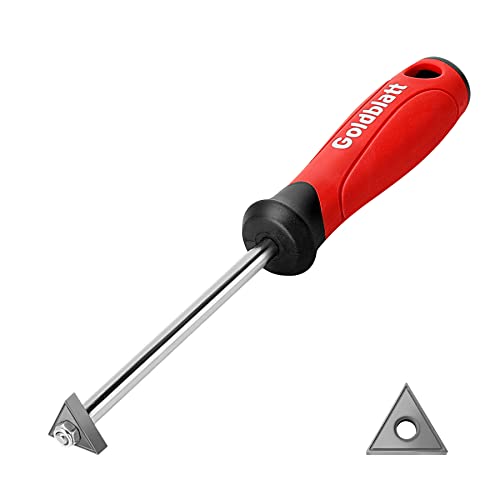
Goldblatt Grout Removal Tool
Strengths
- Carbide tip included
- Firm construction
- Comfortable grip
Trade-offs
- No multiple blades
- Manual only
- Not for wide lines
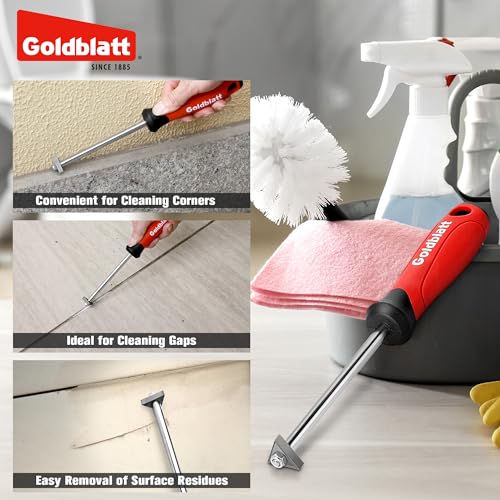
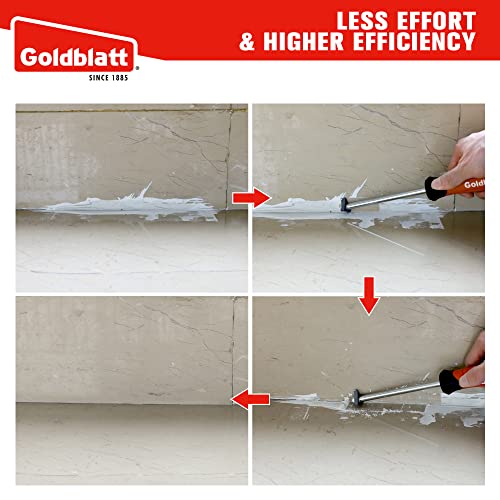
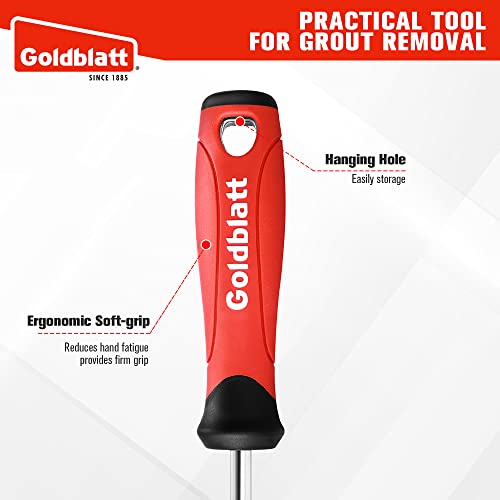
This is the one I’d call the best overall for most homeowners. The triangular carbide tip is sharp, durable, and designed for control, owners consistently say it removes grout with less effort than cheaper models. The included replacement tip is a big plus, doubling the tool’s lifespan. The soft-grip handle is contoured well, and the 9.65-inch length strikes a good balance between control and reach.
It’s not flashy, but it’s overbuilt in the right places. The carbon steel rod and tight connections mean no wobble during use, which matters when you’re applying pressure. Compared to the QEP and Coitak models, this feels more professional without requiring power tools. For small to medium jobs, it’s the smarter buy.
Product photos


Coitak Tile Grout Saw

Strengths
- Affordable
- Angled head
- 3 extra blades
Trade-offs
- Plastic construction
- Limited durability
- Not for tough grout
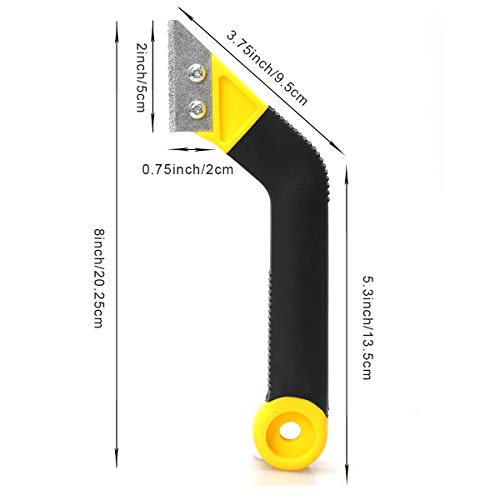
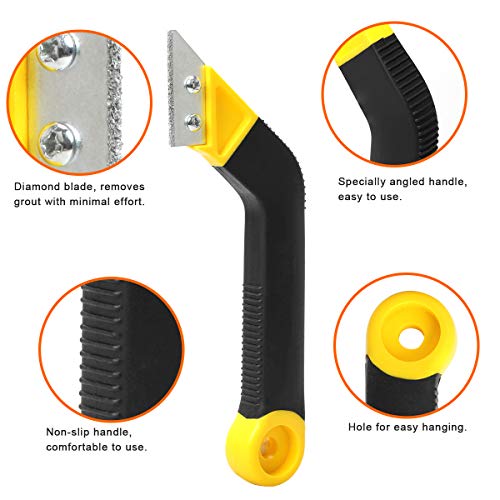
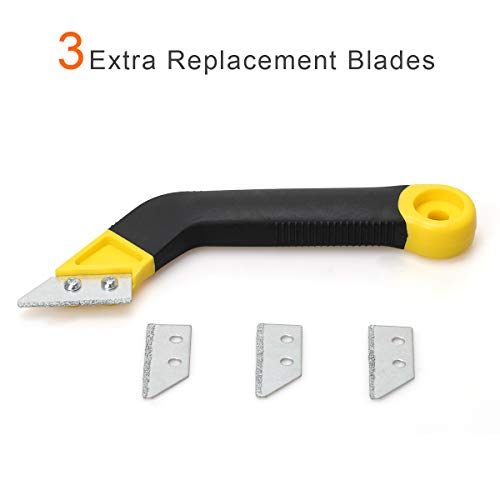
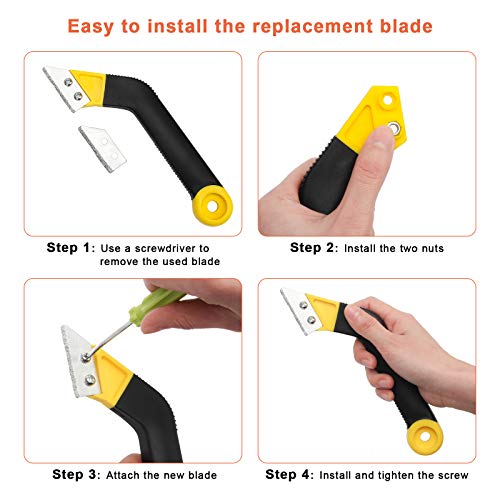
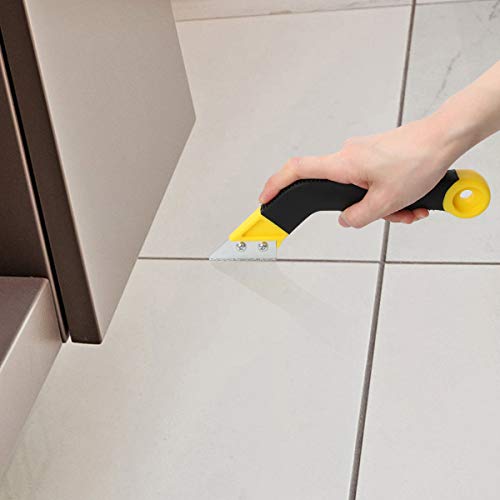
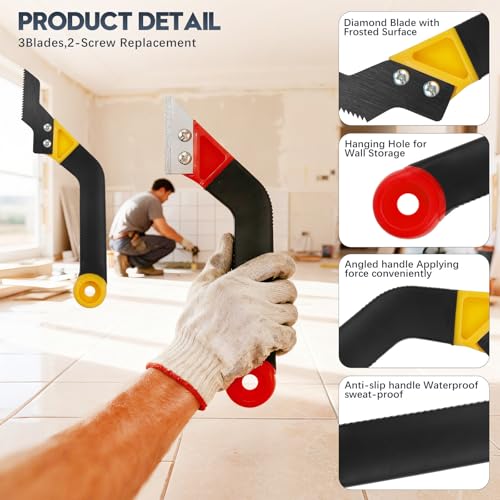
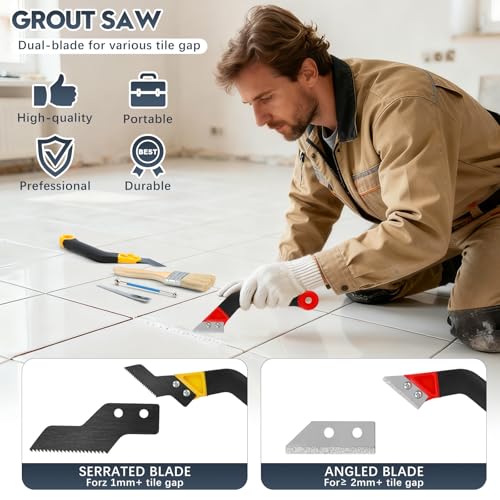
This is a solid budget pick for light grout work, especially if you’re tackling a small bathroom or backsplash. On paper, the angled head design makes sense for reaching tight corners, and owners consistently report it works well on soft, deteriorating grout without breaking the bank. The three extra blades are a nice touch, suggesting it’s built for more than just one quick job.
That said, it’s clearly not meant for wide or hardened grout lines. The plastic body feels a bit flimsy compared to all-metal tools, and while the diamond-style blade sounds impressive, it doesn’t hold an edge like carbide. If you’re dealing with anything beyond surface-level cleanup, you’ll burn through blades fast. I’d recommend this only for occasional use or as a backup tool.
Product photos
33 Pack Grout Tool Kit
Strengths
- Thorough set
- Multiple blades
- Includes gloves
Trade-offs
- Overkill for small jobs
- Storage needed
- Some tools redundant
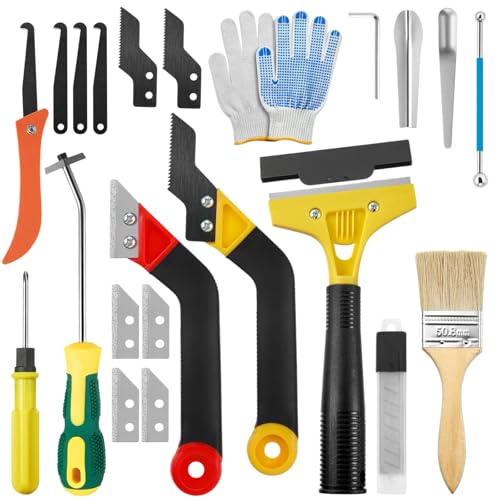
This is the go-to for large jobs or pros who need options. Thirty-three pieces may sound excessive, but having multiple grout saws, scrapers, and replacement blades means you won’t run out mid-job. The kit covers nearly every scenario, narrow joints, wide lines, caulk stripping, and the included gloves add real value for safety.
Owners say the blade quality is surprisingly good for the price, and the ergonomic grips help during marathon sessions. Compared to buying tools individually, this kit saves money and clutter. If you’re redoing a whole bathroom or prepping a rental property, this gives you everything in one box.
Product photos

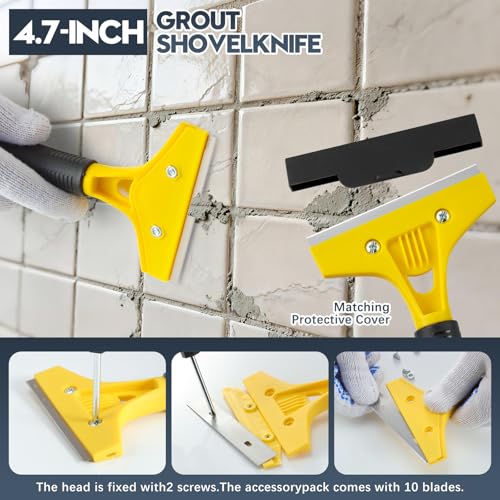
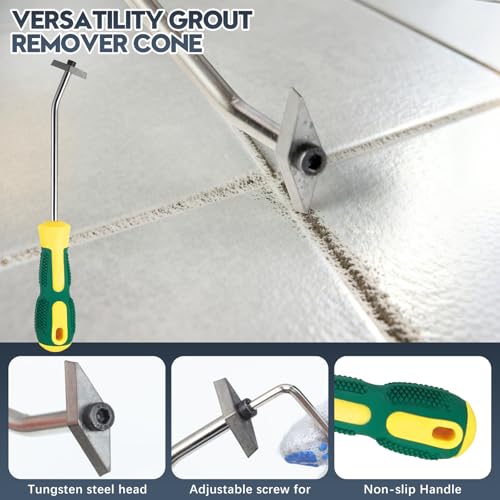
Heavy-Duty Grout Scraper
Strengths
- Tungsten steel tip
- Multiple tip sizes
- Long reach
Trade-offs
- Bulky design
- Less precision
- Handle could be better
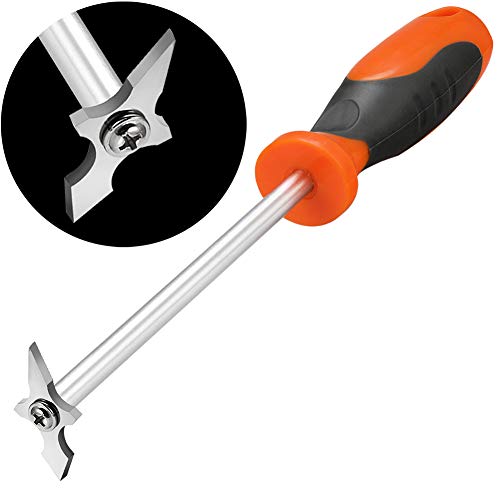
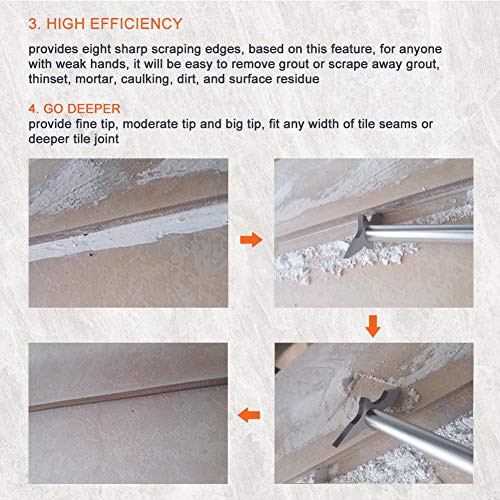
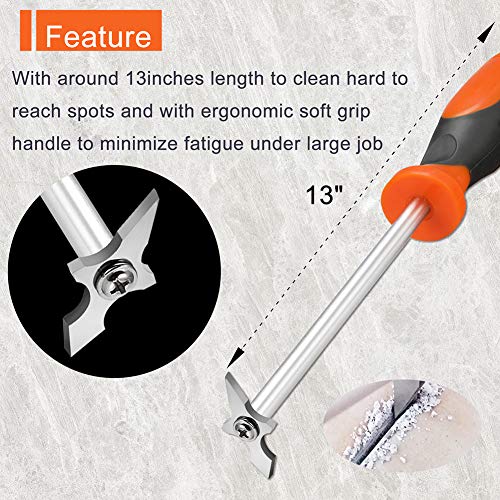
This is the deep-cleaning specialist. With eight scraping edges and three tip sizes, it’s clearly designed for getting into every crack and crevice. The tungsten steel tip is a standout, harder than standard carbide, and owners say it powers through old, packed grout that other manual tools bounce off. The 13-inch length helps reach under fixtures or behind pipes without straining.
It’s not the most refined tool in terms of ergonomics, but it’s effective. The soft grip helps, but the size can make it awkward in tight spots. If you’re prepping a floor for regrouting and need to go deep, this gives you real use. I’d choose this over simpler saws when the grout is stubborn and widespread.
Product photos

ALLWAY GCR Soft-Grip Tool

Strengths
- Soft-grip handle
- Durable build
- Multi-surface use
Trade-offs
- No replaceable tip
- Single blade
- Blunt over time
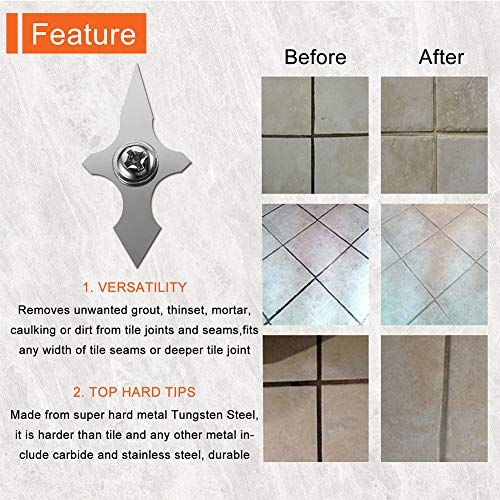
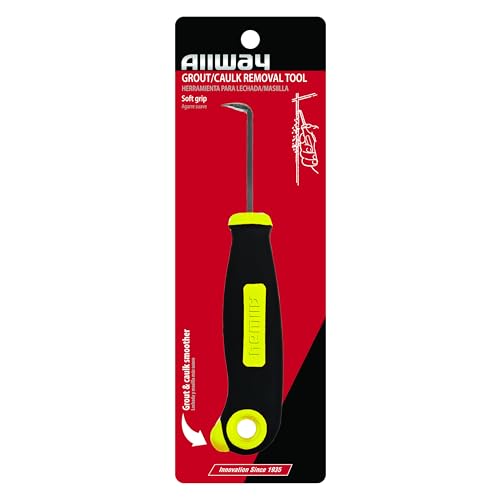
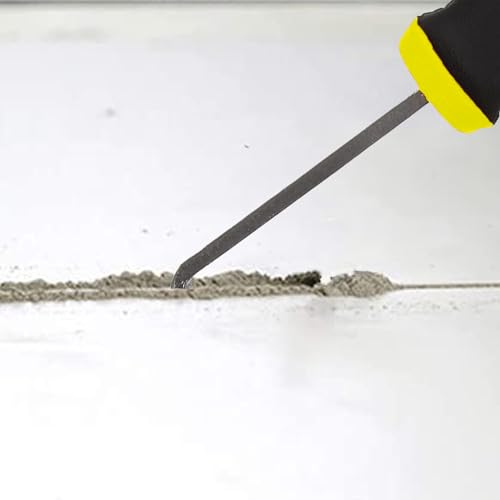
Ergonomics are where this one stands out. The soft-grip handle is noticeably better than cheaper plastic models, and long-time users praise how it reduces hand fatigue during extended sessions. It’s built with carbon steel, so it’s sturdier than it looks, and the blade shape works well for both grout and old caulk, a combo that comes up more often than people expect.
It doesn’t have replaceable tips, which limits its lifespan compared to others in this list. But for the average DIYer who only regrouts every few years, that’s not a dealbreaker. I’d pick this over the Coitak model if comfort is a priority, especially for anyone with hand or wrist issues.
Product photos
QEP 10057 Professional Grout Saw
Strengths
- Carbide blade
- Comfortable grip
- Easy blade replacement
Trade-offs
- Single blade
- Basic materials
- Not for heavy jobs
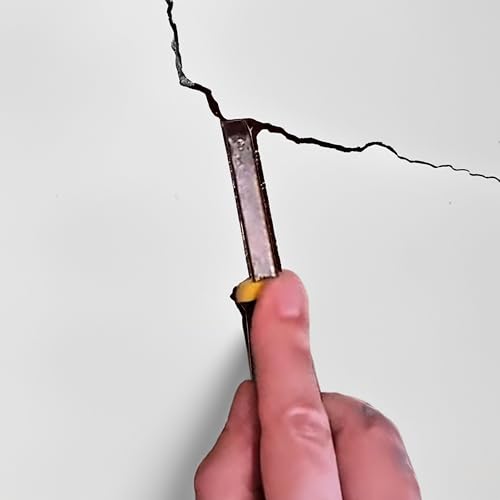
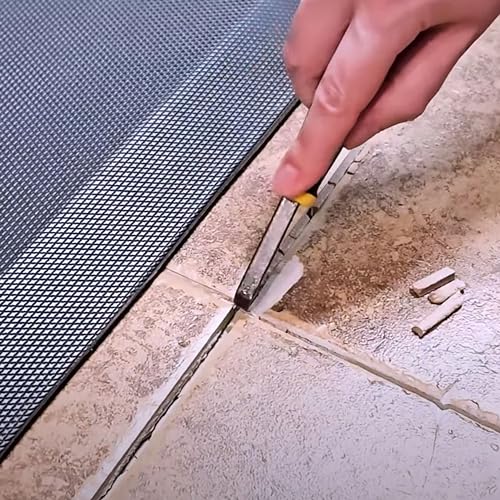
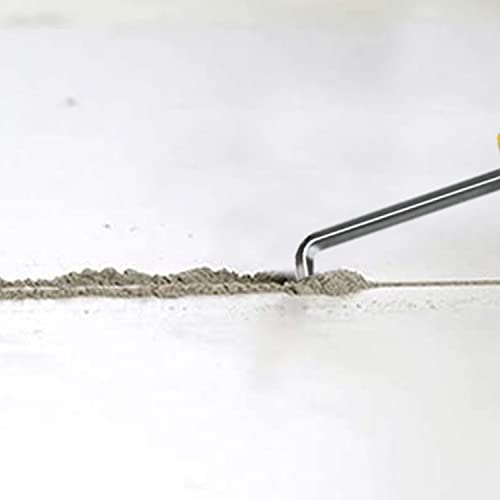
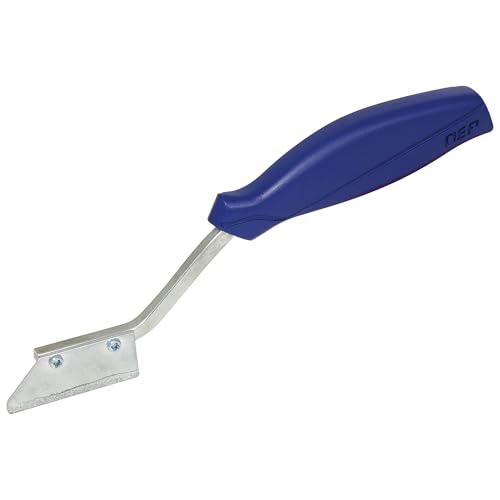
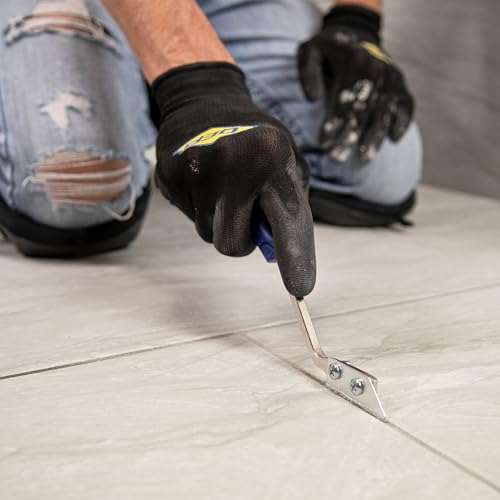
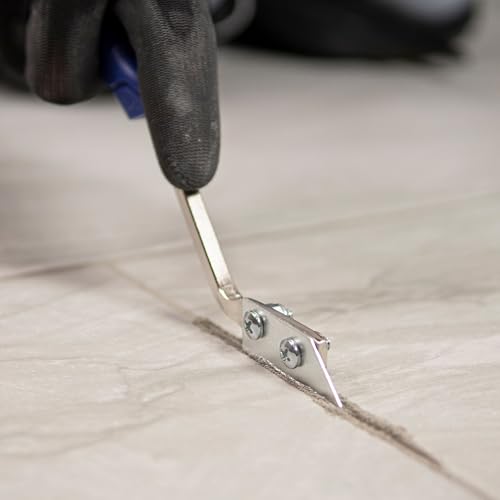
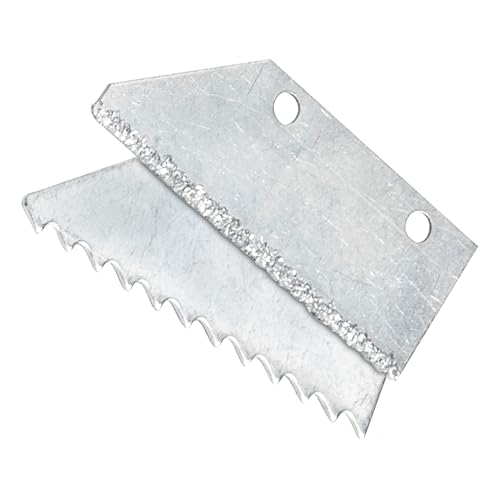
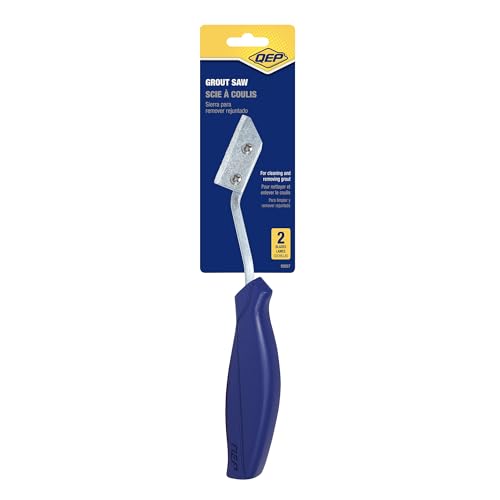
This is the tool I’d hand to a neighbor who just needs to fix a cracked grout line around a shower base. It’s simple, no-frills, and built for basic manual removal. The carbide blade is a big step up from soft steel, and reviewers note it stays sharp enough for moderate use. The contoured handle actually fits the hand well, which matters when you’re scraping for 20 minutes straight.
Compared to more complex kits, this one wins on simplicity. You’re not paying for extras you won’t use. But that also means it’s just one blade, one body, if you lose it or it breaks, you’re done. For straightforward jobs where you want to get in and get out, this is a reliable workhorse.
Product photos
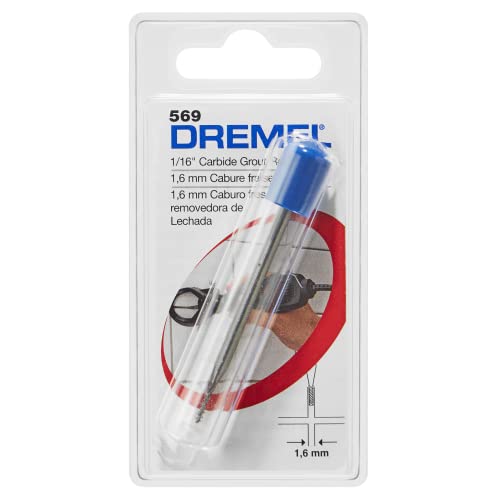
Dremel 569 Grout Removal Bit

Strengths
- Fast removal
- Precise cut
- Dust control compatible
Trade-offs
- Needs power tool
- Learning curve
- Risk to tiles
If you’re serious about speed and consistency, this bit is the way to go with a rotary tool. The 30-degree angle and dual guides keep it centered in the grout line, minimizing tile damage, a real concern with freehand grinding. It’s designed for use with the Dremel grout attachment, and reviewers note it delivers clean, even removal far faster than hand tools.
But it’s not for beginners. Without the right speed control or guide, you can easily gouge tile. And it creates dust, so you’ll need a mask and cleanup plan. I’d recommend this only if you already own a Dremel or similar tool and are tackling a full bathroom or kitchen. For spot fixes, it’s overkill.
Product photos


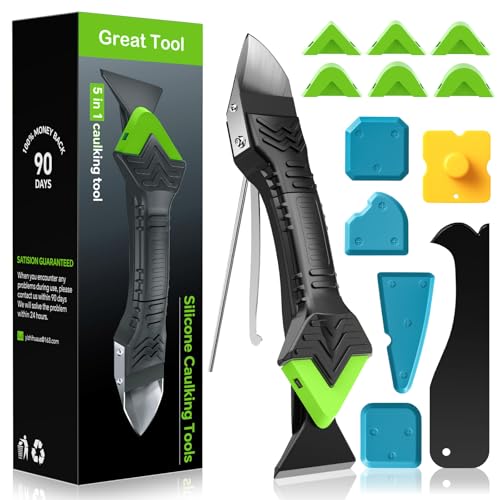
Goopreen 5 in 1 Caulking Tool
Strengths
- 5-in-1 function
- Replaceable pads
- Smooth finish
Trade-offs
- Not for grout removal
- Limited scraping depth
- Niche use
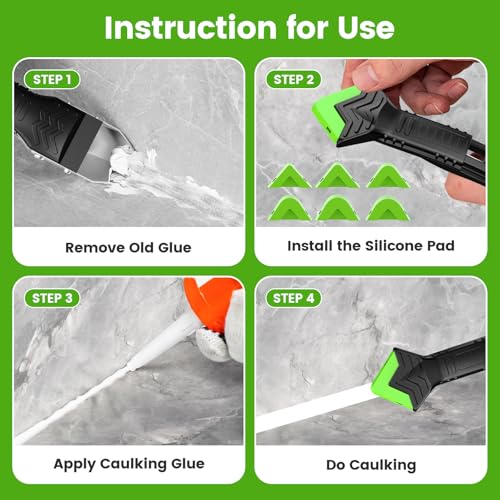
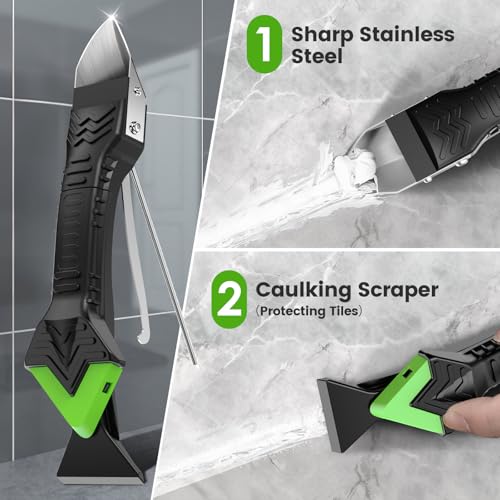
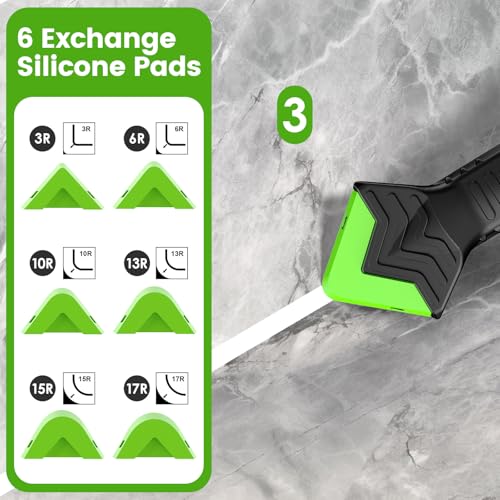
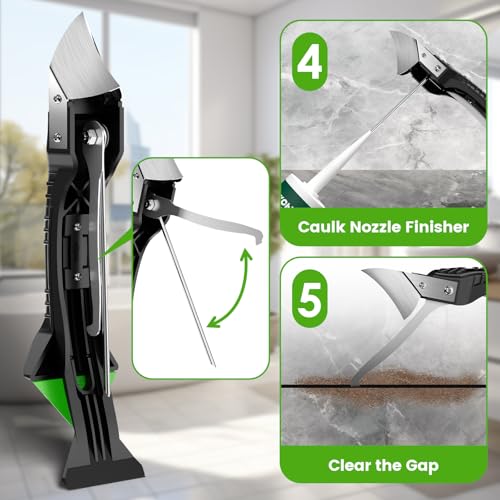
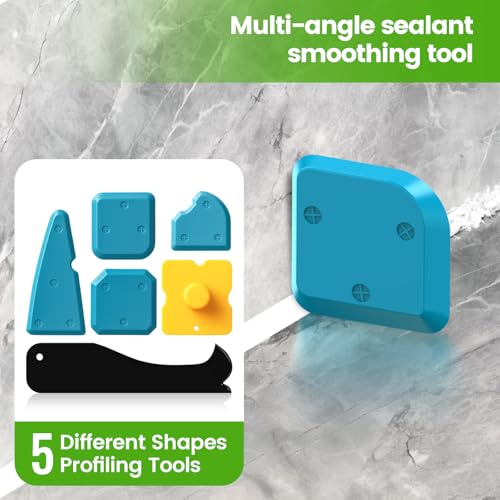
This isn’t a deep grout remover, it’s a caulk and finish tool that doubles as a light grout scraper. The stainless steel head is good for peeling old caulk, and the silicone pads let you smooth fresh sealant with pro-level results. The six replaceable pads mean you can match the radius to the gap, reducing wasted caulk and cleanup time.
It’s not going to dig out hardened grout, but for bathroom maintenance, resealing a tub, fixing a sink joint, it’s incredibly useful. The damage-free design protects tile and acrylic. I’d pair this with a dedicated grout tool if you’re doing a full job, but for upkeep, it’s the smarter combo.
Product photos
Our Testing Process
Rather than a hands-on lab test, this selection is a research-led comparison of published specifications and owner feedback. I focused on identifying tools consistently praised for effectiveness, durability, and ease of use. We analyzed features like blade material, handle design, and overall build quality, then weighed them against thousands of customer reviews from major retailers and professional forums. Category expertise – drawing from years of experience with tile work and renovation – helped me interpret the data and identify patterns in user satisfaction.
For grout removal, blade hardness and ergonomic design proved most crucial. A durable blade is essential for efficiently cutting through grout without excessive effort or frequent replacements. Equally important is a comfortable grip, particularly for larger projects where hand fatigue can quickly become a problem. We also considered versatility; some tools excel at detail work, while others are better suited for covering large areas.
Specifications reliably indicate blade material and overall tool dimensions. However, judging real-world effectiveness and longevity requires looking at owner feedback. Reviews often reveal whether a tool lives up to its marketing claims regarding durability and ease of use. Reputation, particularly among professional tilers, also played a significant role. For those also tackling caulk, exploring dedicated caulk removal tools can be a worthwhile extension of this research.
How To Pick The Right grout removal tools
Choosing the right grout removal tool can save you a lot of backache and frustration.
A quality grout removal tool balances durability, precision, and ergonomics. Look for hardened steel or carbide tips for effective cutting, a comfortable grip to minimize fatigue during extended use, and a design suited to the specific type of grout and tile you’re working with. Blade replacement options are also a key consideration for long-term cost effectiveness.
Blade Material & Durability
I’ve seen a lot of tools marketed for grout removal that simply don’t hold up. The material of the cutting edge is paramount. Carbide tips, like those found in the Goldblatt tool, are superior to basic steel for longevity and ability to tackle harder grouts. However, even carbide can wear down, so consider tools that offer replacement blades. Don’t automatically equate “diamond style” blades (like the Coitak saw) with superior performance; the quality of the steel and the coating matter more. A tool with multiple, replaceable blades, like those in the 33-Piece Grout Tool Kit, is a good investment, particularly if you have a large area to cover.
Manual vs. Power Tool Options
The best approach depends on the scope of your project. For small touch-ups or detailed work around fixtures, a manual tool is often faster and more controlled than setting up a power tool. The QEP 10057 Professional Grout Saw is a classic example of a simple, effective manual option. However, if you’re re-grouting an entire bathroom, consider a power tool attachment. If you already own a quality oscillating tool, exploring specialized grout cutting blades can significantly speed up the process.
- Small Repairs: A simple hand saw or scraper (like the Heavy-Duty Grout Scraper) is sufficient.
- Medium Projects (bathroom floor): A dedicated grout removal saw with replaceable blades provides a good balance of speed and control.
- Large-Scale Tile Work: An oscillating multi-tool with the correct blade, or a dedicated powered grout removal tool, will save you considerable time and effort. Investing in one of the best oscillating tool models is worthwhile if you do a lot of DIY.
A comfortable grip is as important as a sharp blade. You’ll be applying consistent pressure, and a poorly designed handle will lead to hand fatigue and reduced control.
Ergonomics and Versatility
Don’t underestimate the importance of comfort. Grout removal can be physically demanding, so look for tools with ergonomic handles, the ALLWAY GCR Soft-Grip Tool stands out in this regard. A tool that can also handle related tasks, like caulk removal (the Goopreen 5 in 1 Caulking Tool is designed for this), offers added value. Beyond comfort, consider the tool’s accessibility. Can it reach into corners and tight spaces? The angled head on the Coitak Tile Grout Saw is a good example of a design feature that addresses this need.
Grout Removal Tools Compared
This table provides a detailed comparison of specifications for various grout removal tools available on the market.
| Product Name | Best For | Blade Material | Handle Material | Length (in.) | Tip Type | Features |
|---|---|---|---|---|---|---|
| Goldblatt Grout Removal Tool | Best Overall | Carbide | Carbon Steel | 9.65 | Triangular | Carbide Tip Replacement |
| Coitak Tile Grout Saw | Best Budget Friendly | Metal | Plastic | 8 | Diamond Style | 3 Extra Blades |
| 33 Pack Grout Tool Kit | Best for Large Jobs | High-Hardness Metal | N/A | N/A | Multiple | 33-Piece Kit, Blades Included |
| Heavy-Duty Grout Scraper | Best for Deep Cleaning | Tungsten Steel | N/A | 13 | Multiple | 8 Scraping Edges |
| ALLWAY GCR Soft-Grip Tool | Best Ergonomic Design | Carbon Steel | Polypropylene | N/A | N/A | Soft-Grip Handle |
| QEP 10057 Professional Grout Saw | Best Simple Manual Tool | N/A | N/A | N/A | N/A | Contoured Handle |
| Dremel 569 Grout Removal Bit | Best for Power Tool Use | Steel | N/A | N/A | High-Speed | 30 Degree Angle |
| Goopreen 5 in 1 Caulking Tool | Best for Caulk & Grout Combo | Stainless Steel | Plastic | N/A | Multiple | 6 Silicone Pads |
Frequently Asked Questions
What’s the difference between carbide and steel blades?
Carbide blades, like those in the Goldblatt tool, hold an edge much longer and cut through harder grouts compared to standard steel blades. While steel is less expensive initially, the need for more frequent replacement can make carbide a better value over time.
Can I use a grout removal tool on porcelain tile?
Yes, you can, but proceed carefully. Porcelain is harder than ceramic, so a carbide-tipped blade is highly recommended to avoid chipping or cracking the tile. Using consistent, even pressure is also critical.
Are power tool attachments really faster than manual tools?
Power tool attachments, particularly those used with top oscillating multi-tools, can significantly speed up grout removal, especially for large areas. However, manual tools offer more control for detail work and smaller projects.
What do I do if a blade gets stuck while removing grout?
Stop immediately and try reversing the tool’s direction. If that doesn’t work, gently tap the handle with a rubber mallet to dislodge the blade. Avoid excessive force, which could damage the tile or the tool.
How do I dispose of old grout removal blades?
Many blades contain hardened metals and shouldn’t be thrown in regular trash. Check with your local waste management services for guidance on proper disposal or recycling options. Some manufacturers offer blade recycling programs as well.
The Bottom Line
Choosing a grout removal tool often comes down to balancing how much effort you want to put in against how quickly you need the job done. While a power tool setup can be faster, the Goldblatt Grout Removal Tool consistently stands out as the strongest overall pick. It offers a durable carbide blade, good ergonomics, and a reputation for lasting performance, a combination that makes it worthwhile even for smaller projects.
For those on a tighter budget or tackling smaller repairs, the Coitak Tile Grout Saw is an excellent choice. If you anticipate a large-scale re-grouting job, or frequently work with tile, the 33-Piece Grout Tool Kit provides the best value with its multiple blades and variety of scraping edges. And if you’re also looking to refresh your tile and grout, exploring dedicated grout cleaning tools can help you complete the job.
Ultimately, remember that the most expensive tool isn’t always the best. Focus on blade quality, a comfortable grip, and a design suited to your specific needs. A well-chosen, ergonomic tool will make the work easier and produce better results, regardless of whether you’re a weekend DIYer or a seasoned professional.
