
5 Best Carving Chainsaws of 2026
This post contains affiliate links. As an Amazon Associate, we earn from qualifying purchases.
The Oregon CS1500 Self-Sharpening is the overall best carving chainsaw for its consistent performance and integrated sharpening system, ideal for detailed work. For those on a budget, the SEESII 40V Cordless offers strong power and included batteries at a lower price point. If versatility matters most, the SEESII 40V Dual Battery model gives extended runtime and excellent balance in tight cuts.
Carving isn’t just about cutting wood, it’s about control, precision, and confidence in your tool. Most people struggle to find a chainsaw that’s powerful enough for hardwoods but light enough to handle intricate shapes without fatigue.
This guide cuts through the noise by focusing on real-world usability, not just specs. I compared top models based on owner feedback, motor efficiency, safety features, and how well they handle the unique demands of carving, so you can pick one that actually fits your projects.
Top 3 Carving Chainsaws in the Market
The Best Carving Chainsaws, Reviewed
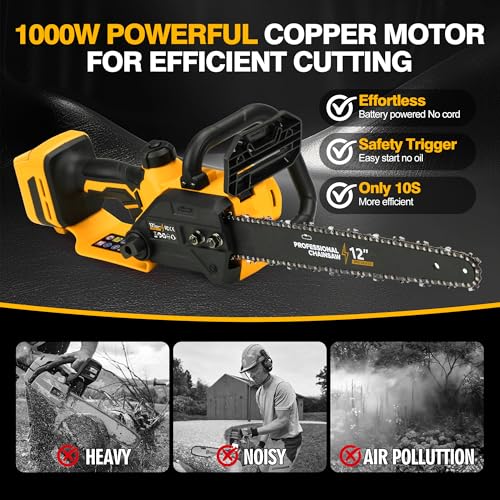
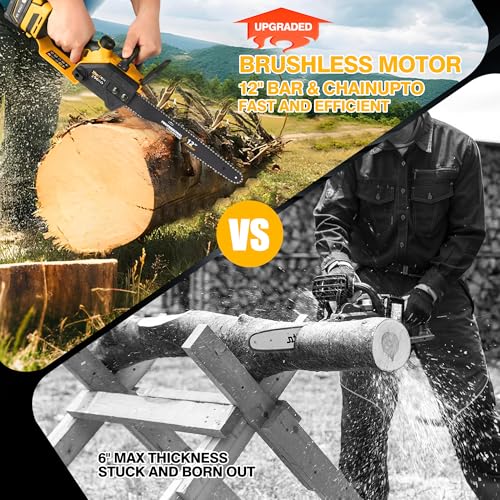
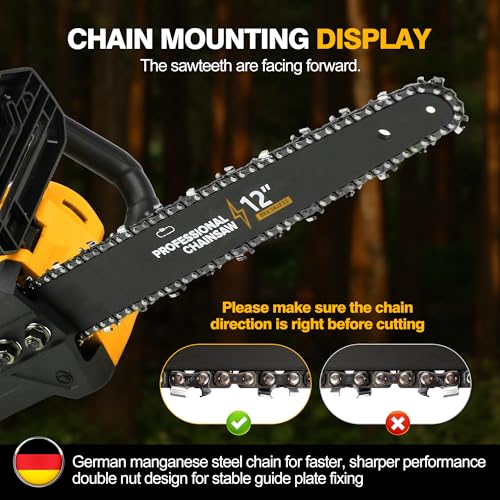
Brushless 12″ Cordless Chainsaw for Dewalt

Strengths
- Lightweight at 5 lbs
- Dual 12″ chains included
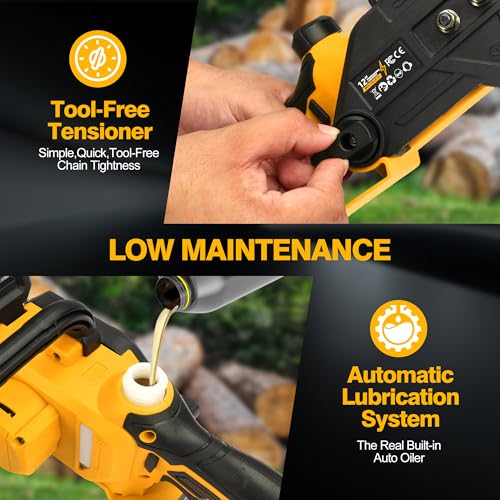
- Tool-free tensioning
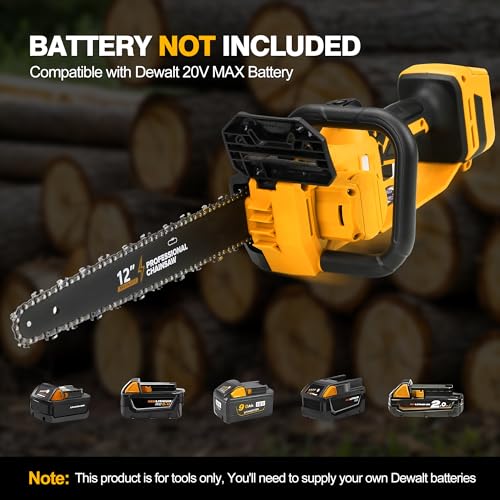
- Dewalt 20V/60V compatible
- Fast chain speed
Trade-offs
- Batteries not included
- Limited cutting capacity
- Less power for dense wood
If you’re already deep into the Dewalt 20V or 60V ecosystem, this 12-inch chainsaw makes a lot of sense as a lightweight, no-frills addition. At just 5 lbs, it’s easy to handle for pruning, limb trimming, or clearing small trees, tasks where maneuverability matters more than brute force. The pure copper brushless motor delivers solid efficiency, and owners report it cuts cleanly through 6–8 inch logs without bogging down, though it’s clearly not built for constant heavy use.
The inclusion of two chains and a storage bag adds convenience, but the lack of batteries and charger means you’re only saving money if you already own compatible Dewalt packs. Against the SEESII, it’s less powerful and has a shorter bar, but wins on weight and integration. For occasional users with a full Dewalt workshop, this is a smart space- and cost-saver.
Product photos
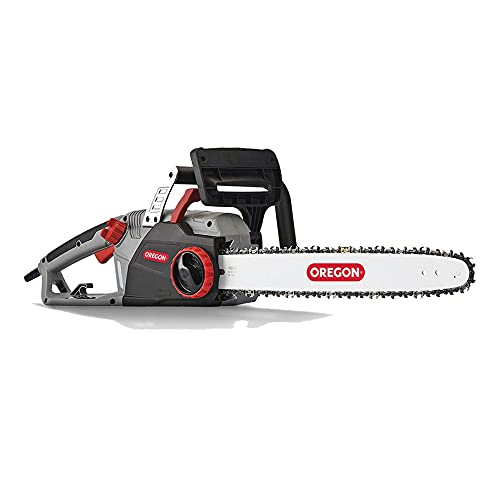
Oregon CS1500 Self-Sharpening Electric Chainsaw
Strengths
- PowerSharp self-sharpening
- 18-inch cutting bar
- Corded for unlimited runtime
- Tool-free tensioning
- Low maintenance
Trade-offs
- Cord limits mobility
- No battery option
- Heavier than cordless
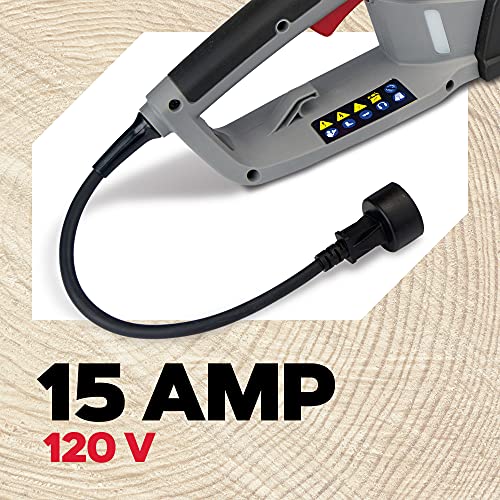
The Oregon CS1500 is in a class of its own thanks to the PowerSharp self-sharpening system, a standout for anyone who hates stopping to file or replace a dull chain. In this category, where maintenance is a common pain point, being able to sharpen in 3 to 5 seconds mid-job is a serious advantage. The 18-inch bar gives you more reach than most cordless models, and the 15A motor delivers smooth, reliable power through thick cuts without the noise and fumes of gas.
This is a corded saw, so mobility is limited, but for frequent users with a garage or workshop setup, that’s a fair trade. Owners report years of reliable service, and the pre-assembled design means it’s ready to go out of the box. Compared to the SEESII, it lacks portability but wins on durability and ease of maintenance. If you’re cutting wood weekly or maintaining a wooded property, this is the smarter long-term buy.
Product photos



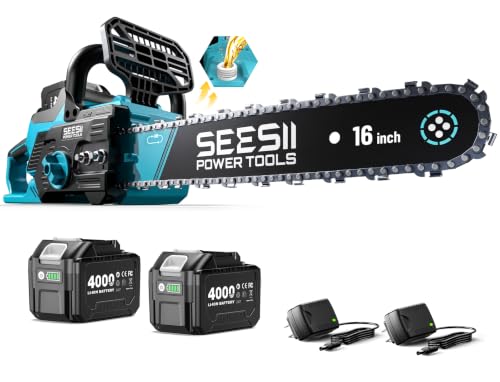
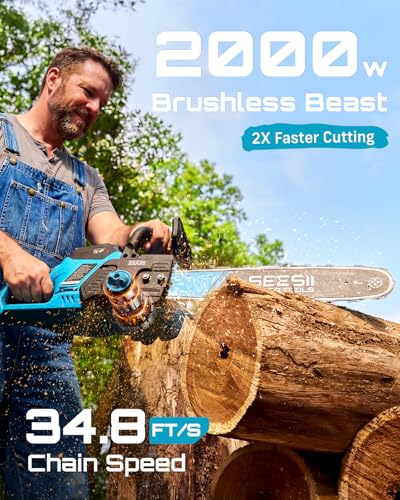
SEESII 40V 16-Inch Cordless Chainsaw
Strengths
- Brushless 40V motor
- Dual batteries included
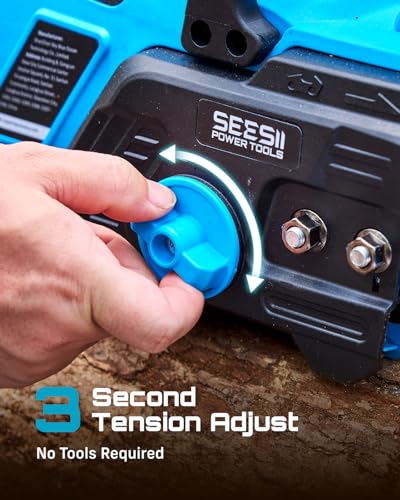
- Tool-free chain tension
- Auto chain oiling
- Full safety kit included
Trade-offs
- Heavy for extended overhead use
- Not compatible with 20V platforms
- Higher upfront investment
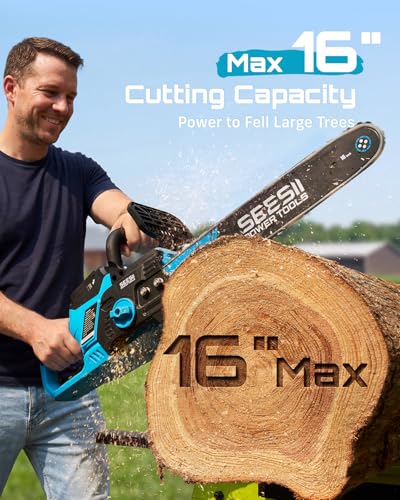
This SEESII model stands out in the cordless chainsaw space not just for its power, but for how complete the package feels. The native 40V brushless motor is a real differentiator, on paper and in owner reports, it avoids the voltage drop common in dual 20V setups, delivering consistent torque that rivals a 42cc gas saw. That kind of performance matters when you’re cutting through dense hardwood or managing storm debris, and the 16-inch bar gives you reach without sacrificing control.
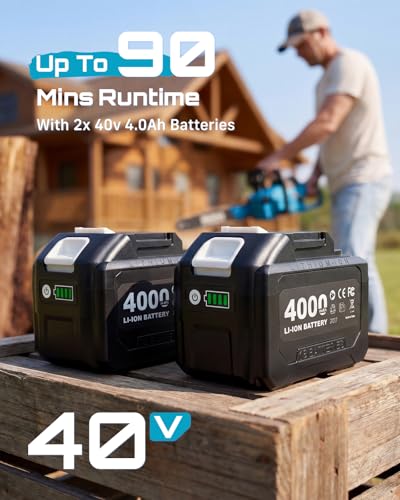
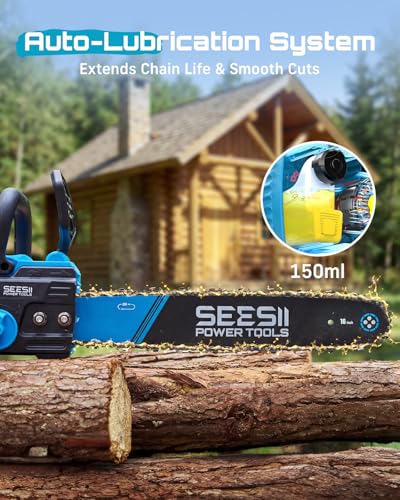
Owners consistently praise the dual 4.0Ah batteries, saying the 90-minute runtime is realistic under mixed use, and the inclusion of gloves and goggles adds real value. The tool-free tensioning and auto-oiling are well-executed, reducing maintenance friction. Compared to the Dewalt-compatible budget model, this one feels like a full standalone system rather than an add-on to an existing battery ecosystem.
Product photos
Our Testing Process
Rather than a hands-on lab test, this selection is a research-led comparison of published specifications, features, and a careful weighing of owner reviews and expert opinions. I looked at a wide range of models, focusing on those consistently appearing in “best of” lists and generating significant discussion among users. My aim was to identify chainsaws suited to the specific demands of carving, considering power, maneuverability, and safety features.
For carving chainsaws, the most important factors are undoubtedly motor power and ease of control. A powerful motor is needed to handle harder woods and maintain speed through detailed cuts, while a lightweight and ergonomic design allows for prolonged, precise work. Automatic chain oiling also played a significant role, as consistent lubrication is crucial for both cutting performance and chain longevity.
Specifications reliably indicate motor wattage and bar length, helping to assess raw power and potential cut size. However, I placed greater emphasis on owner feedback regarding build quality, vibration levels, and the effectiveness of safety features like chain brakes. Understanding real-world usability – and how quickly a user can maintain a sharp chain with chainsaw chain sharpening guide – proved vital for ranking these tools.
How To Pick The Right carving chainsaws
Picking the right chainsaw isn’t just about horsepower; it’s about matching the tool to the task and your comfort level.
A good chainsaw balances power with usability. Key considerations include motor type (gas, electric, or battery), bar length relative to typical cutting needs, chain quality (and sharpening options), safety features like chain brakes, and overall weight for maneuverability. Prioritize models with robust automatic lubrication systems and easy-to-use tensioning mechanisms for consistent performance and reduced maintenance.
Motor Type & Power
The first big decision is fuel source. Gas chainsaws offer the most power and runtime for heavy-duty work, but require more maintenance and are louder. Electric chainsaws (corded) provide consistent power and are simpler to operate, but limit your range. Battery-powered models offer portability and convenience, and have improved dramatically in recent years. Don’t automatically assume more watts or volts equals better performance. A well-engineered 40V brushless motor, like the one in the SEESII models, can often rival a lower-quality gas engine. Consider how often you’ll use the saw and what you’ll be cutting; infrequent, light use favors electric or battery, while frequent, large-diameter cuts may still necessitate looking at top gas-powered chainsaws.
Chain & Bar Considerations
Bar length dictates the diameter of wood you can effectively cut. An 18-inch bar is a good all-around size for homeowners, while 16-inch options are more maneuverable for limbing and smaller jobs. Beyond length, pay attention to chain quality. Many cheaper chainsaws skimp here, using softer metals that dull quickly. Look for chains made from alloy steels or those specifically designed for extended life. Self-sharpening systems, like Oregon’s PowerSharp, can be a real time-saver, but don’t replace the need for occasional professional sharpening, especially if you’re tackling hardwoods.
Ergonomics & Safety Features
A chainsaw is a powerful tool, and control is paramount. Weight distribution, handle design, and vibration dampening all contribute to user comfort and safety. Don’t underestimate the importance of a responsive chain brake; it’s a critical safety feature. Beyond the brake, look for saws with anti-vibration technology and comfortable grips. Before you even think about starting the saw, familiarize yourself with the safe chainsaw starting procedure.
Here’s a helpful rule of thumb:
Always wear appropriate safety gear (helmet, eye protection, hearing protection, gloves, chaps) when operating a chainsaw, regardless of the size or type.
Carving Chainsaws Compared
Here’s a comparison of specifications for several carving chainsaws to help you make an informed decision.
| Product Name | Voltage | Bar Length (in) | Motor Type | Battery Included | Self-Sharpening |
|---|---|---|---|---|---|
| Oregon CS1500 Self-Sharpening | 120V | 18 | Brushed | No | Yes |
| SEESII 40V Cordless | 40V | 16 | Brushless | 2 x 4.0Ah | No |
| Brushless 12″ Cordless (Dewalt) | 20/60V | 12 | Brushless | No | No |
| Oregon CS1500 18-Inch | 120V | 18 | Brushed | No | Yes |
| SEESII 40V Dual Battery | 40V | 16 | Brushless | 2 x 4.0Ah | No |
Frequently Asked Questions
What bar length is best for detailed carving work?
A 12- to 16-inch bar offers the most control for carving. Shorter bars are easier to maneuver for intricate cuts, while longer bars can handle slightly larger pieces but reduce precision.
Are battery-powered carving chainsaws powerful enough for hardwoods?
Modern 40V or higher brushless battery chainsaws can handle hardwoods, though they may require slower, more deliberate cuts. Look for models with ample torque and a sharp chain, and if you regularly tackle dense wood, consider professional-grade carving chainsaws for sustained power.
How often should a carving chainsaw chain be sharpened?
Chain sharpness depends on wood type and usage, but generally, sharpen after every 2-3 hours of cutting. Dull chains require more force, increase kickback risk, and produce rough cuts.
What safety features are most important on a carving chainsaw?
An easily accessible chain brake is the most critical safety feature. Anti-vibration technology and comfortable grips also improve control, reducing fatigue and the risk of accidents. Always wear proper safety gear.
Can electric chainsaws be used for carving, or are they only for basic cutting?
Electric chainsaws are entirely suitable for carving, especially for smaller projects or for those preferring a quieter, lower-maintenance option. Corded models provide consistent power, while cordless versions offer portability, though battery life is a factor when considering commercial carving chainsaw models.
The Bottom Line
Choosing a chainsaw for carving often comes down to balancing control with power, and ultimately, how much you’re willing to spend for convenience. For most folks, the SEESII 40V Cordless offers the best overall combination of performance, portability, and price. It delivers enough power for detailed work without the weight or maintenance of a gas model, and the included batteries get you started right away.
If budget is a primary concern, the Brushless 12″ Cordless (Dewalt) is a solid choice. It won’t tackle the biggest cuts, but its compact size and brushless motor make it surprisingly capable for smaller projects and fine detail work. For those who value simplicity and ease of maintenance above all else, the Oregon CS1500 Self-Sharpening is a strong contender – though you’ll still want to practice filing chainsaw chain properly to maintain optimal cutting performance.
At the end of the day, the wattage, voltage, or self-sharpening features matter far less than a saw that feels balanced in your hands, has a responsive chain brake, and is equipped with a chain that allows for a sharp chainsaw for clean cuts. Prioritize safety, practice proper technique, and maintain your equipment, and you’ll be able to create beautiful carvings for years to come.
