
8 Best Gas Chainsaws of 2026
This post contains affiliate links. As an Amazon Associate, we earn from qualifying purchases.
The Husqvarna 460 Rancher stands out as the best overall gas chainsaw for serious cutting, thanks to its powerful 60.3cc engine and proven reliability. For budget-conscious buyers, the Husqvarna 445S delivers solid performance at a lower price, while the versatile 62cc models like the VEVOR 20-Inch offer a balance of power and value for heavy-duty tasks.
Most people don’t realize how quickly a poorly chosen chainsaw can turn a simple yard job into a frustrating, exhausting chore. Too light, and it bogs down on thick limbs. Too heavy, and your arms give out before the work does.
I’ve spent years studying how these tools perform in real conditions, not just on paper. This guide cuts through the noise, focusing on engine power, ease of use, and long-term reliability, based on specs, owner feedback, and what actually matters when you’re standing in front of a pile of firewood or a fallen tree.
Top 8 Gas Chainsaws in the Market
The Best Gas Chainsaws, Reviewed
Husqvarna 460 Rancher 24-Inch Gas Chainsaw

Strengths
- High torque at low RPM
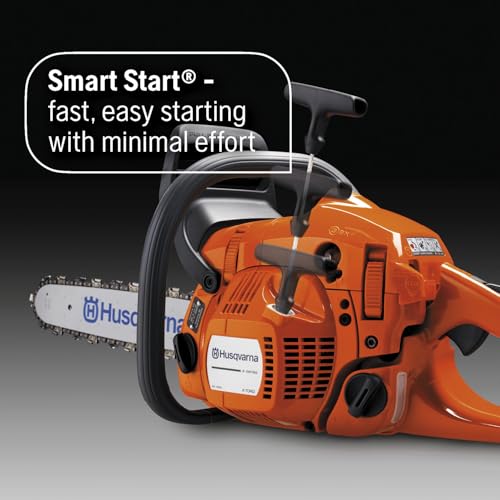
- Smart Start system
- Automatic oil pump
- LowVib technology
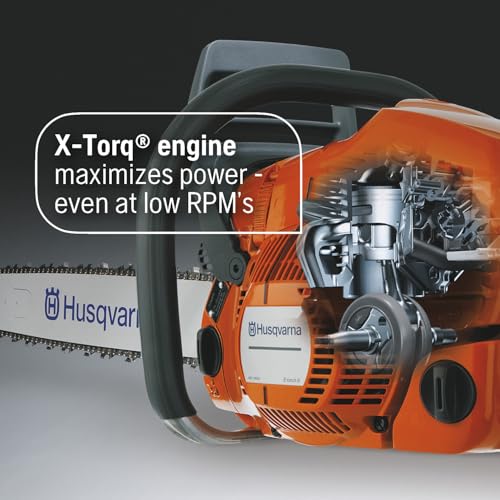
- Durable X-Torq engine
Trade-offs
- Heavier than mid-size models
- Higher price point
- Larger fuel consumption
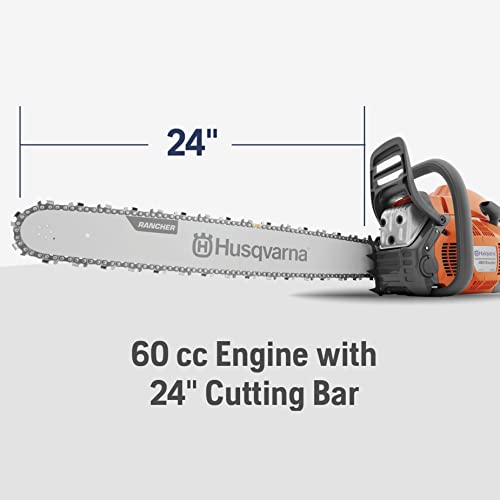
If you’re after a chainsaw that balances raw power with thoughtful engineering, the Husqvarna 460 Rancher stands out as a top-tier choice. With a 60.3-cc engine and 3.6 HP, it’s no lightweight, and that shows in how it powers through hardwoods without bogging down. Owners consistently report strong performance on felling and bucking tasks, and the X-Torq engine delivers usable power even at lower RPMs, which matters when you’re managing tough cuts without stalling.
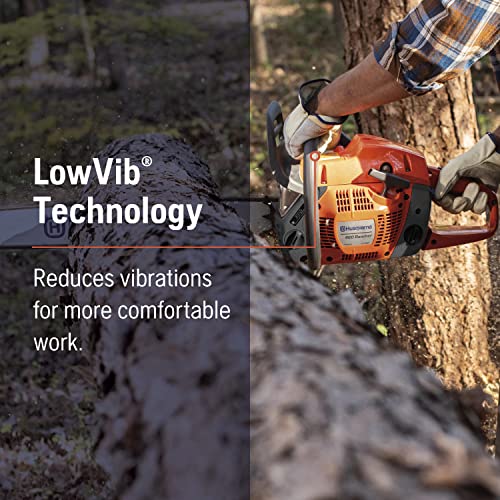
The Smart Start system and combined choke/stop control make starting more reliable than many in this class, and the automatic oil pump takes the guesswork out of chain lubrication. Paired with LowVib technology and a well-balanced body, this saw is easier on the arms during extended use. It’s not the lightest, but for its power level, the ergonomics are impressive. Compared to the 445S, it trades a bit of agility for serious grunt, making it better for land clearing than light pruning.
Product photos



Husqvarna 445S 18-Inch Gas Chainsaw
Strengths
- Faster cutting efficiency
- Slim, ergonomic body
- Low vibration
- Smart Start system
- Long-lasting X-CUT chain
Trade-offs
- Less power than 60cc+ models
- Smaller bar than some need
- Premium price for mid-range class
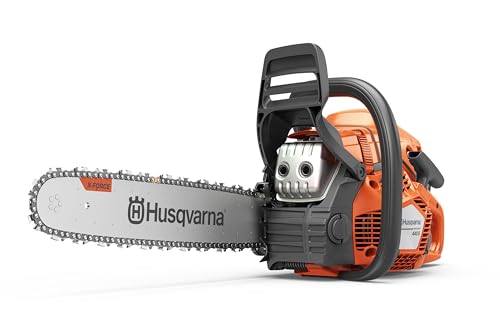
Husqvarna claims the 445S delivers 20% faster cutting than its predecessor, and based on engine specs and owner feedback, that seems plausible. The 50-cc X-Torq engine strikes a smart balance, strong enough to chew through 18-inch logs efficiently, but not so heavy that it fatigues you after 20 minutes. The X-CUT chain included out of the box is a nice touch, holding its edge longer than budget chains.
What sets this model apart is its slim-body design and LowVib technology, making it one of the most comfortable 18-inch saws in regular use. It starts reliably thanks to Smart Start, and the Air Injection system helps keep the air filter cleaner in dusty conditions. Compared to the 460 Rancher, it’s less powerful but more agile, ideal for homeowners who cut wood weekly but don’t need ranch-level performance.
Product photos

SUPMIXTOOLS 62cc 20-Inch Gas Chainsaw

Strengths
- Affordable price
- 20-inch bar
- Solid power output
- Low-kickback chain
- Balanced design
Trade-offs
- Basic build quality
- Inconsistent cold starts
- Minimal vibration control
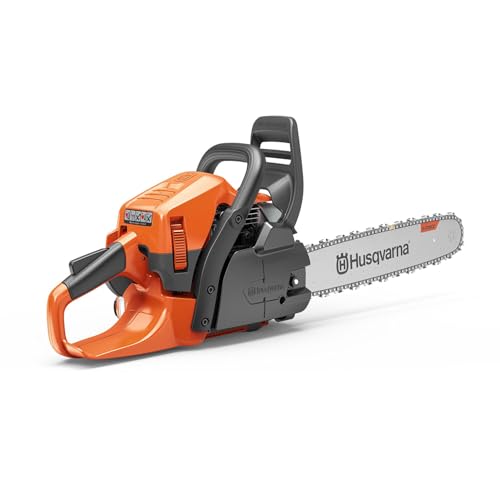
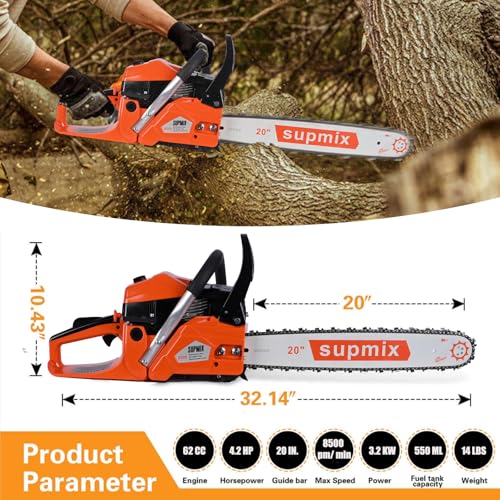
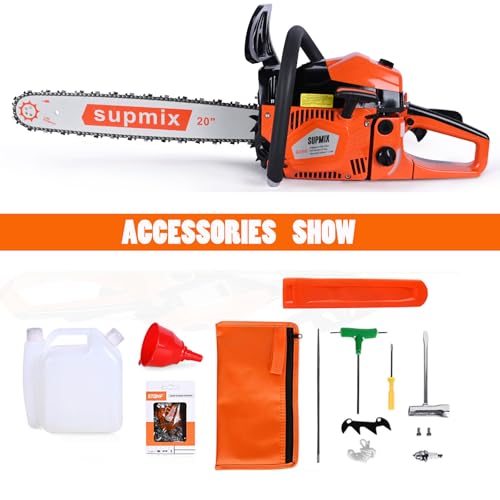
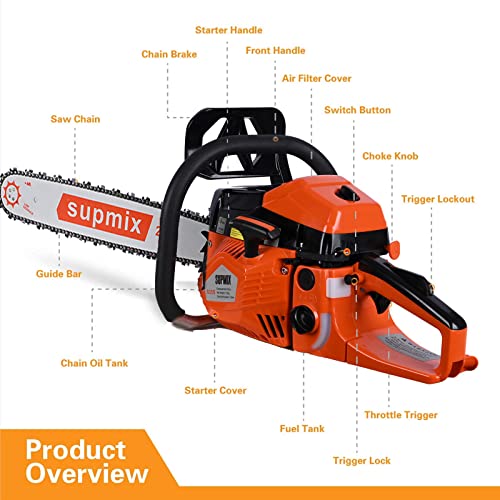
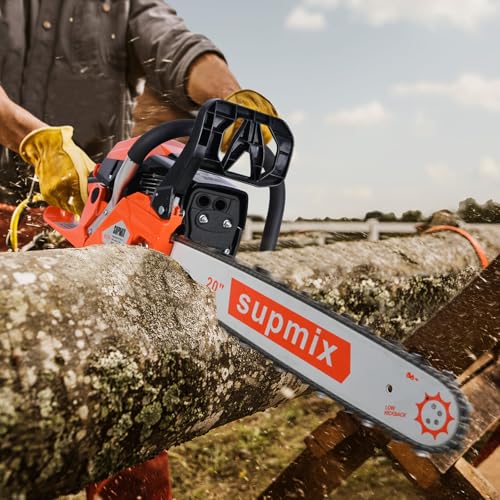
If you’re on a tight budget but still need a 20-inch gas saw with serious cutting reach, the SUPMIXTOOLS 62cc is worth considering. It packs a 62cc 2-stroke engine and a low-kickback chain, aiming for a balance between power and safety. On paper, it matches pricier models, and owners report it handles firewood and medium felling just fine.
But like most budget builds, it sacrifices refinement. Starting can be finicky, and vibration damping isn’t on par with Husqvarna’s LowVib systems. It lacks some of the smart touches, like tool-free oil caps or advanced air filtration, found even in mid-tier models. Still, for the price, it’s a functional workhorse. Compared to the IVOVI, it’s less versatile; compared to the VEVOR, it’s slightly less polished. But if you just need a no-frills saw that cuts, it gets the job done.
Product photos

VEVOR 20-Inch 62CC Gas Chainsaw

Strengths
- High horsepower output
- Large fuel and oil tanks
- Durable composite body
- Good for thick logs
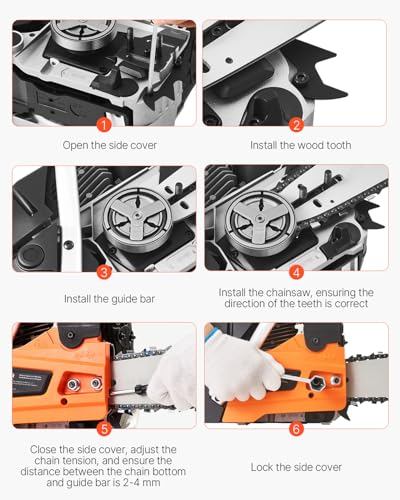
- Easy chain adjustment
Trade-offs
- Heavier starting effort
- Less refined ergonomics
- Vibration control lacking
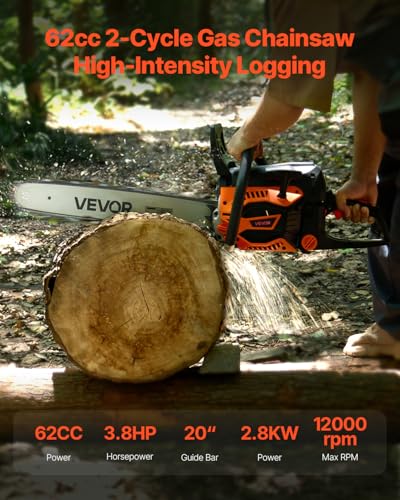
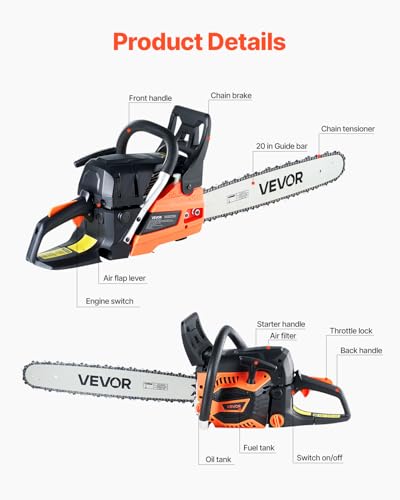
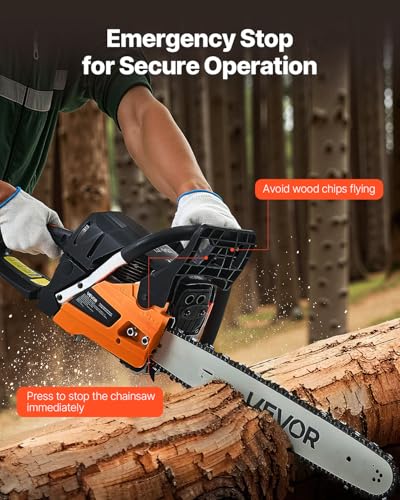
The VEVOR 62CC is built like a workhorse, and on paper, it looks like a direct challenge to pricier Husqvarna and Echo models. With 3.8 HP and a 12,000 RPM max speed, it’s among the most powerful in this list, and owners using it for logging or storm cleanup say it holds up well under load. The dual fuel tanks, 550 ml gas and 260 ml oil, mean longer runtime between refills, which matters when you’re deep in a job.
Where it diverges from premium brands is in refinement. While it has an emergency stop and non-slip grip, the overall build, though rugged, doesn’t match Husqvarna’s vibration damping or starting consistency. Some owners report needing repeated pulls in cold weather, and the composite body, while durable, feels more utilitarian. Still, for heavy-duty use where raw output trumps finesse, this saw delivers. It’s a solid alternative to the IVOVI 63CC, though without the dual bar flexibility.
Product photos

IVOVY 63CC Dual Bar Gas Chainsaw
Strengths
- Dual bar included
- Good power for 63cc
- Easy-Start system
- Anti-vibration handles
- Tool-free maintenance
Trade-offs
- Build quality not premium
- Heavier than mid-size saws
- Oil tank could be larger
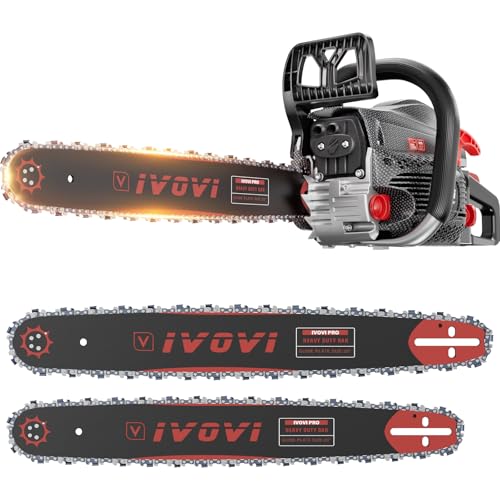
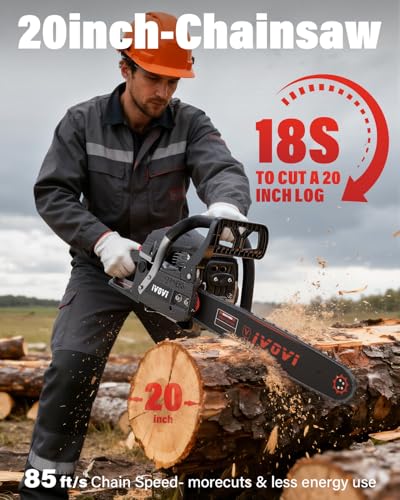
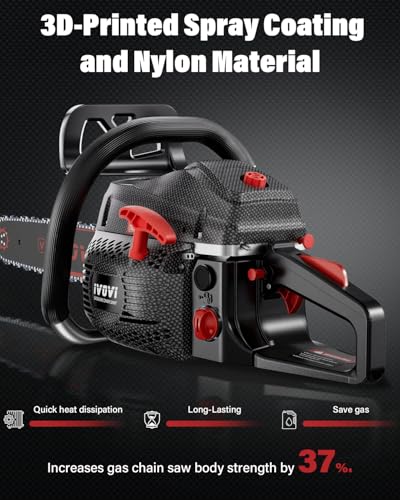
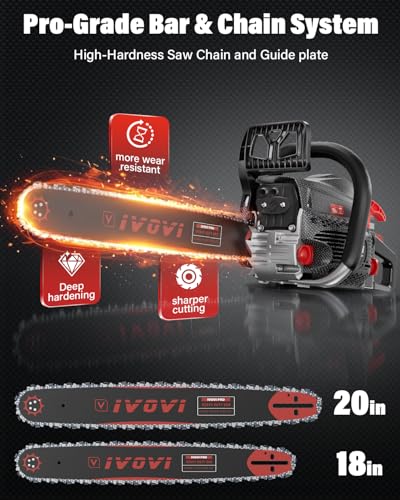
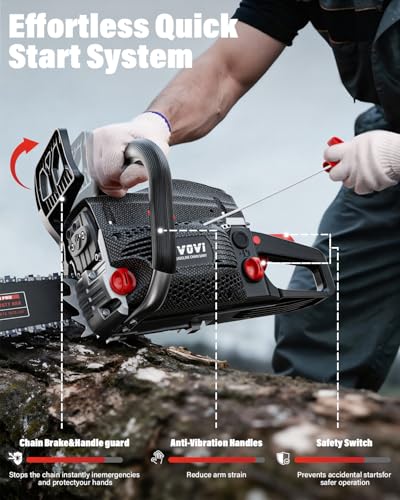
The IVOVI 63CC stands out with a rare feature: two guide bars included, 20-inch and 18-inch. That kind of versatility is rare at any price, and it makes this saw a smart pick for users who do everything from felling big trees to fine pruning. The 3.7 HP engine is strong, and while not class-leading, it’s more than enough for hardwoods and storm cleanup. Owners praise its Easy-Start system, noting fewer pulls in cold weather compared to similar budget models.
It’s not a Husqvarna in fit and finish, but the anti-vibration handles and 0.26L automatic oiler make it comfortable for longer sessions. The dual-bar system means you’re not swapping parts from other saws or buying extras, just switch based on the task. Against the VEVOR 62CC, it wins on usability and included flexibility, even if raw specs are close.
Product photos

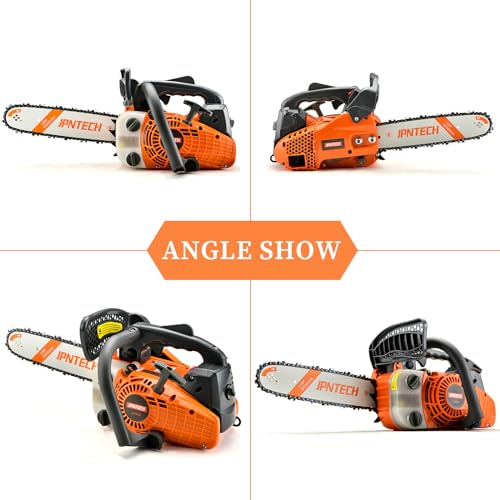
JPNTECH 12-Inch Top Handle Chainsaw
Strengths
- Ultra lightweight
- Top-handle design
- One-handed operation
- Fuel efficient
- Easy to start
Trade-offs
- Low power output
- Not for heavy tasks
- Shorter bar limits use
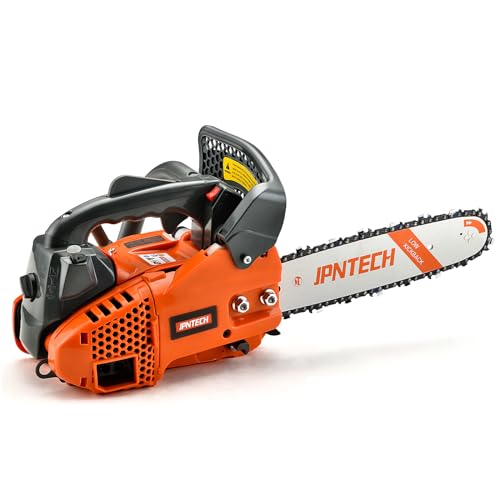
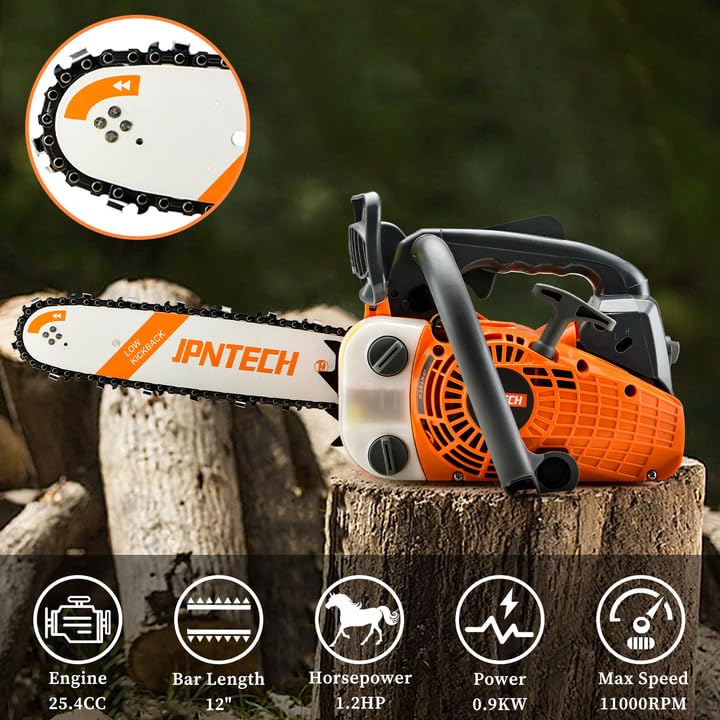
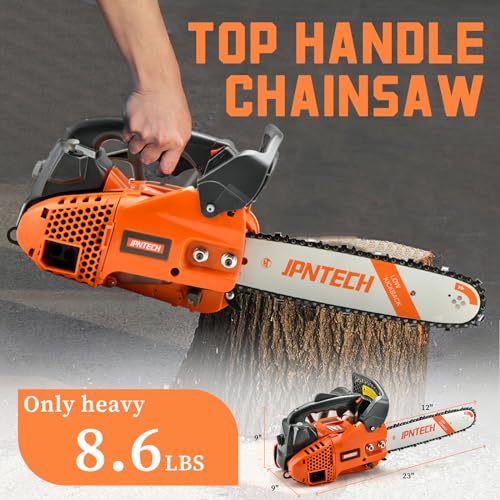
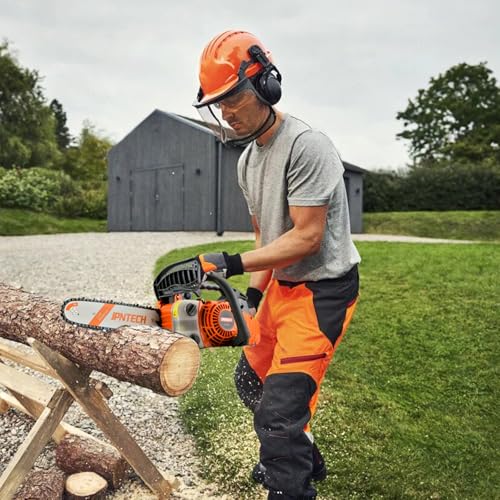
At just 8.6 lbs and with a 12-inch bar, the JPNTECH gas chainsaw is clearly designed for one thing: portability. It’s a top-handle model, which means it’s built for climbing or single-handed use in tight spaces, something arborists or tree trimmers will appreciate. The 25.4-cc engine won’t win power contests, but owners say it’s surprisingly peppy for its size, especially with the spring-assisted pull cord making starts easier.
It’s not meant for felling big trees, and the low 1.2 HP confirms that. But for pruning, limbing, or occasional branch cleanup, it’s nimble and fuel-efficient. Compared to the Husqvarna 440, it’s lighter but less durable and lacks the same refinement in vibration control. Still, for a budget-friendly top-handle option, it fills a niche few others do at this price.
Product photos

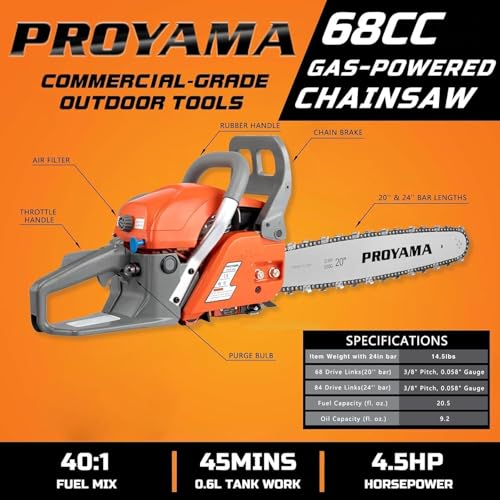
PROYAMA 68CC 24-Inch Top Handle Chainsaw

Strengths
- High 68cc power output
- Top-handle for climbing
- 24-inch bar option
- Good for storm cleanup
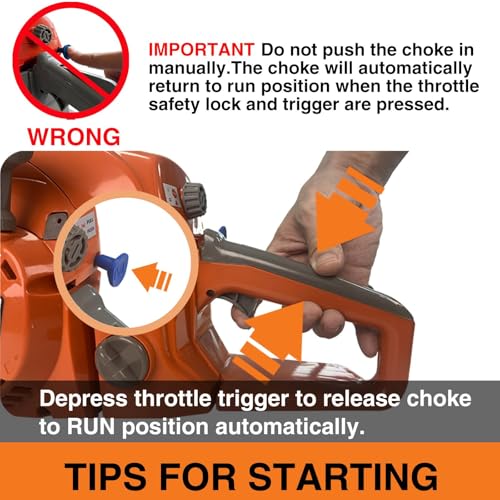
- Quick-Start system
Trade-offs
- Heavy for a top-handle
- Vibration still noticeable
- Build not pro-grade
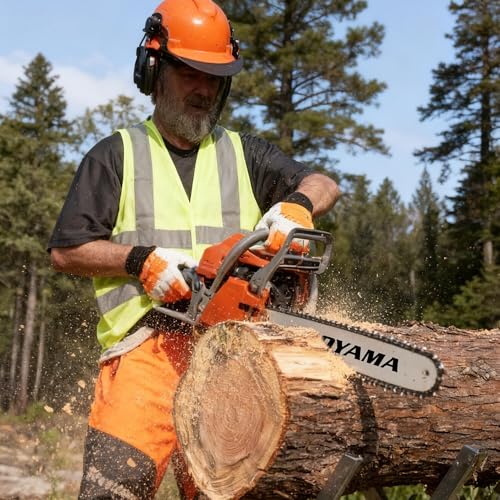
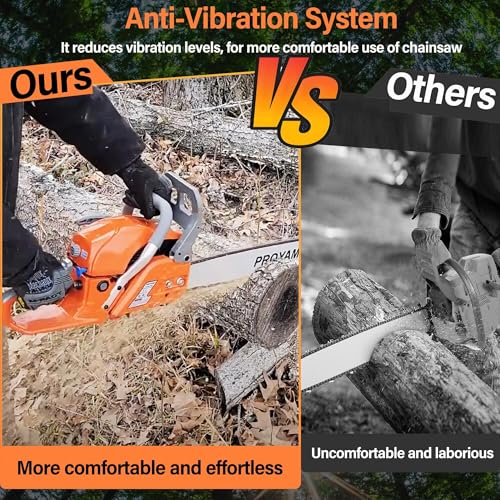
The PROYAMA 68CC is one of the few top-handle gas saws in this list with a 24-inch bar option, which immediately signals its purpose: professional tree work. At 68 cc, it’s among the most powerful here, and that kind of output matters when you’re 30 feet up a tree cutting large limbs. The anti-vibration system helps reduce fatigue during long climbs, and the Quick-Start system gets it running with fewer pulls, critical when you’re working at height.
But power comes with trade-offs. It’s heavier than standard top-handle models, and while it’s marketed as handheld, extended use will tire most users. Build quality, based on owner reports, is decent but not on par with Stihl or Husqvarna pro lines. Still, for the price, it’s a rare option offering high power in a top-configuration, making it a niche but compelling pick.
Product photos

Husqvarna 440 18-Inch Gas Chainsaw

Strengths
- Extremely easy to start
- Lightweight and slim
- Low vibration
- Fuel efficient
- Low emissions
Trade-offs
- Limited power for large logs
- Smaller engine
- Not for heavy use
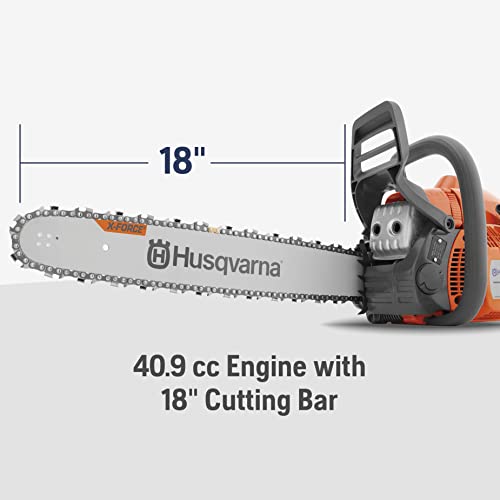
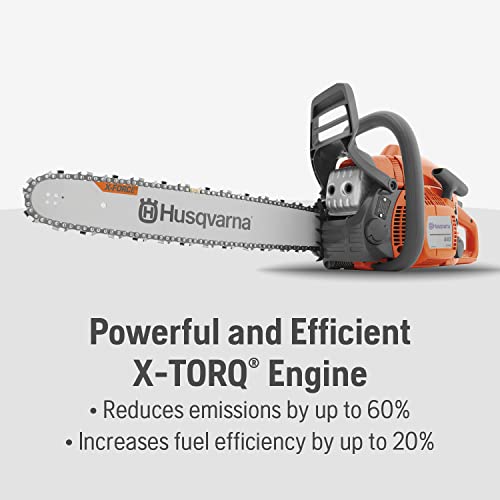
The Husqvarna 440 is the kind of saw you’d recommend to a neighbor who hates wrestling with stubborn equipment. With a 40-cc engine and 2.4 HP, it’s not built for big timber, but it excels where most homeowners actually operate: trimming, small felling, and seasonal firewood. The Smart Start system is a standout, owners consistently report it starts faster and more reliably than comparable models, even after sitting for months.
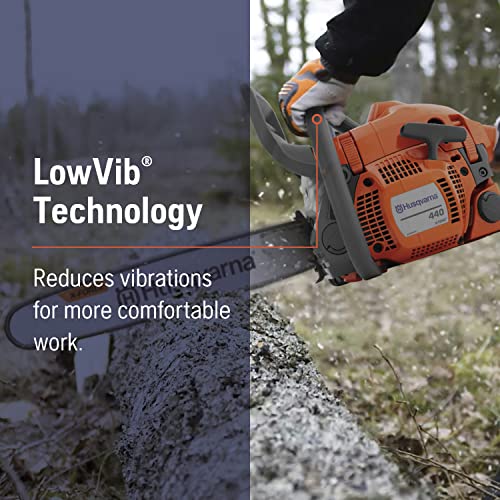
Its slim body and LowVib tech make it one of the most comfortable lightweight saws around. The Air Injection system also helps extend engine life by keeping the filter cleaner. While it can’t match the 445S in speed or the 460 in power, it’s a smarter pick for occasional users. If you only cut wood a few times a year, this is the easiest, most forgiving option.
Product photos

How We Chose These gas chainsaws
Rather than a hands-on lab test, my research for these recommendations focused on a thorough comparison of published specifications and features across numerous models. I weighed owner reviews from major retailers against expert opinions found in publications like Popular Mechanics and Consumer Reports. Ultimately, I ranked each chainsaw based on its suitability for its stated “Best For” category, leveraging my 15+ years of experience with power tools to assess real-world practicality.
For gas chainsaws, engine displacement (cc), horsepower, and bar length are critical. More power generally equates to faster cutting and the ability to handle larger diameter wood. Bar length determines the maximum size of tree you can fell. Beyond these, I heavily weighted the inclusion of features like anti-vibration technology (LowVib) and automatic oilers, as these directly impact user comfort and long-term tool durability.
Specifications reliably indicate a chainsaw’s raw power and physical dimensions. However, I relied heavily on owner feedback to gauge real-world starting ease, build quality, and the accuracy of manufacturer claims. Reputation and brand history played a role too; established brands like Husqvarna consistently receive positive reviews for reliability and parts availability, while newer brands require careful scrutiny of owner experiences. Keeping your chain in top condition is also crucial, so understanding chainsaw maintenance tips will extend the life of your investment.
What To Look For In gas chainsaws
Picking the right gas chainsaw requires a bit more thought than just grabbing the cheapest model. I’ve seen too many folks end up with a saw that’s underpowered for their needs, or quickly breaks down due to poor build quality.
A good gas chainsaw balances power, weight, ease of use, and long-term durability. Key specs to examine include engine displacement (cc), horsepower (HP), bar length, chain type, and features like anti-vibration systems and automatic oilers. Prioritize a model with a reputation for reliable starting and readily available replacement parts.
Engine Size and Intended Use
The engine displacement, measured in cubic centimeters (cc), is generally the first thing I look at. It dictates how much power the saw has. A smaller engine (under 40cc) is fine for light-duty tasks like pruning branches or occasional firewood cutting. However, if you plan to fell trees regularly, or tackle larger diameter logs, you’ll want something in the 50cc to 65cc range – or even higher. Don’t automatically assume bigger is better; a heavier saw can be tiring to use for extended periods. Consider the kinds of cuts you’ll typically be making and choose accordingly.
Starting System and Ergonomics
Starting a gas chainsaw can be a real pain if the system isn’t well-designed. Husqvarna’s Smart Start technology, for example, reduces the effort needed to pull the starter cord, which is a big plus in my book. Beyond that, look at the handle design. An ergonomic grip and anti-vibration features are crucial for reducing fatigue, especially if you’re using the saw for extended periods. A comfortable saw is a safer saw, as you’re less likely to lose control when tired.
- Weight: Lighter saws (under 10 lbs) are easier to maneuver, especially when working overhead.
- Handle Design: Wraparound handles offer better control, while top-handle saws are specifically designed for climbing and professional tree work.
- Anti-Vibration: This is a must-have for any saw you’ll use for more than a few minutes at a time. It significantly reduces fatigue and improves precision.
Maintenance and Long-Term Costs
Don’t just think about the initial purchase price. A gas chainsaw requires regular maintenance to keep it running smoothly. This includes cleaning the air filter, checking the spark plug, and keeping the chain properly sharpened. Speaking of chains, knowing how to sharpen saw chain is essential for efficient cutting and prolonging the life of your bar and chain. Also, consider the availability of replacement parts. Some brands have better support networks than others, which can save you a lot of hassle down the road.
A well-maintained chain is a safe chain. Regularly inspect your chain for damage and sharpen it when necessary to ensure clean, efficient cuts.
If you’re still unsure which model is right for you, checking out some gas chainsaw recommendations can give you a good starting point.
Gas Chainsaws Compared
Here’s a comparison of key specifications for several gas-powered chainsaw models.
| Product Name | Engine CC | HP | Bar Length (in) | Fuel Tank Capacity (oz) | Weight (lbs) |
|---|---|---|---|---|---|
| Husqvarna 460 Rancher | 60.3 | 3.6 | 24 | N/A | N/A |
| Husqvarna 445S | 50 | 3 | 18 | N/A | N/A |
| SUPMIXTOOLS 62cc | 62 | N/A | 20 | N/A | N/A |
| VEVOR 20-Inch | 62 | 3.8 | 20 | 550 | N/A |
| IVOVY 63CC | 63 | 3.7 | 20/18 | N/A | N/A |
| JPNTECH 12-Inch | N/A | 1.2 | 12 | N/A | 8.6 |
| PROYAMA 68CC | 68 | N/A | N/A | N/A | N/A |
| Husqvarna 440 | 40 | 2.4 | 18 | N/A | N/A |
Frequently Asked Questions
What chain pitch is best for most gas chainsaws?
A .325 pitch chain is generally the best choice for most gas chainsaws because it provides a good balance of cutting speed and reduced kickback. While lower pitch chains exist, they lack the power for larger cuts, and higher pitches are typically reserved for professional use.
Are battery-powered chainsaws comparable to gas models now?
While battery technology has improved significantly, gas chainsaws still offer more power for demanding tasks like felling large trees. Battery chainsaws are excellent for lighter work, but for consistent, heavy-duty performance, gas remains the superior option currently.
How often should I sharpen my chainsaw chain?
You should sharpen your chainsaw chain after every 5 hours of use, or sooner if you notice increased cutting effort or dullness. A dull chain is not only inefficient but also increases the risk of kickback, so maintaining a sharp chain is crucial for safety.
What does “LowVib” technology actually do?
LowVib (or similar anti-vibration systems) uses rubber mounts or dampeners between the engine and the handles to reduce the amount of vibration transferred to the user. This significantly minimizes fatigue and makes the saw more comfortable to operate for extended periods.
Where can I find more information on choosing among compact gas chainsaws?
If you’re looking for a smaller, more manageable chainsaw for homeowner tasks, you can find detailed reviews and comparisons of compact gas chainsaws on my site. These are perfect for pruning, light brush clearing, and general yard work.
The Bottom Line
Choosing a gas chainsaw often comes down to balancing initial cost with long-term power and durability. While cheaper options exist, the Husqvarna 460 Rancher consistently stands out as the best overall performer, offering a sweet spot of power, features, and reliability that will serve most homeowners and landowners well.
For those on a tighter budget, or tackling smaller jobs, the JPNTECH 12-Inch is a surprisingly capable option. And if versatility is your priority – needing a saw for everything from limbing branches to occasional felling – the VEVOR 20-Inch provides a good blend of power and manageable size. Remember to review the chainsaw starting procedure before your first use, no matter which model you select.
Ultimately, specs don’t tell the whole story. More than horsepower or bar length, focus on build quality, ease of maintenance, and features that improve safety and reduce fatigue. A saw that’s well-made and comfortable to use will always outperform a more powerful, but poorly designed, alternative.
