8 Best Bow Saws of 2026
This post contains affiliate links. As an Amazon Associate, we earn from qualifying purchases.
The Bahco 30-Inch Ergo Bow Saw is the best overall choice for most users, combining a durable steel frame, superior ergonomics, and reliable blade tensioning. For those on a budget, the GreatNeck 24-Inch Bow Saw delivers solid performance at a lower price. If you need versatility in tight spots, the Bahco 21-Inch Pointed Nose Saw stands out with its precision and maneuverability.
Most people underestimate how much difference a well-built bow saw makes until they’re wrestling with a bent frame or a blade that won’t stay tight. Poor design turns a simple pruning job into a frustrating slog. In this guide, I’ll walk you through the models that stand up to real use, based on specs, owner feedback, and years of working with hand tools. These picks focus on durability, cutting efficiency, and thoughtful design, because the right saw should work for you, not against you.
Top 8 Bow Saws in the Market
The Best Bow Saws, Reviewed
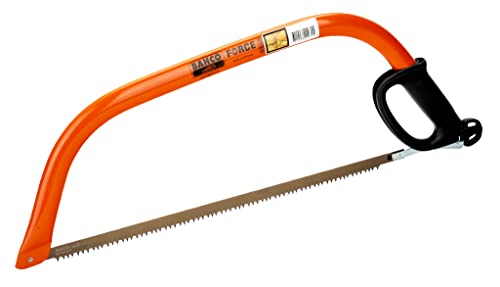
Bahco 30-Inch Ergo Bow Saw
Strengths
- 30-inch efficient cut
- Ergo handle comfort
- Superior tension system
Trade-offs
- Premium price
- Heavier than smaller models
- Not for tight spaces
This Bahco 30-inch Ergo bow saw is, in my view, the best overall option for serious users. It’s engineered for green wood, but owners confirm it handles dry wood just as well. The lightweight steel tubing keeps it manageable despite the size, and the high blade tension from the innovative mechanism results in clean, straight cuts with less effort. The Ergo handle and knuckle guard add real comfort during extended use.
Compared to the Truper 30-inch, it’s more refined and balanced, less of a sledgehammer, more of a precision tool. It’s not cheap, but the feedback from pros and frequent DIYers backs up the investment. If you cut often and want a saw that performs reliably in tough conditions, this is the one to beat.
Product photos
Bahco 24-Inch Ergo Bow Saw
Strengths
- High blade tension
- Ergo handle
- Knuckle protector
Trade-offs
- Pricier than budget models
- Not ideal for tight spaces
- Heavier than compact options
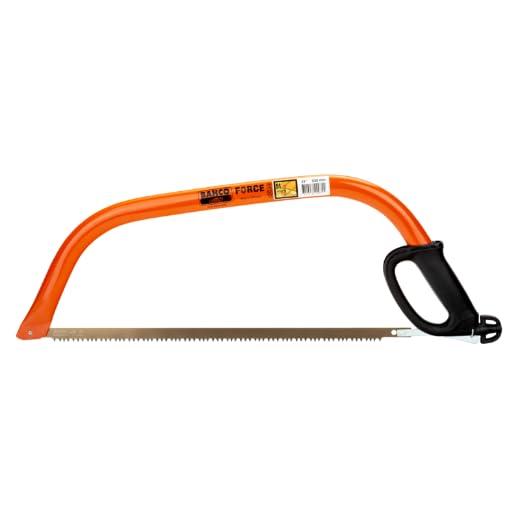
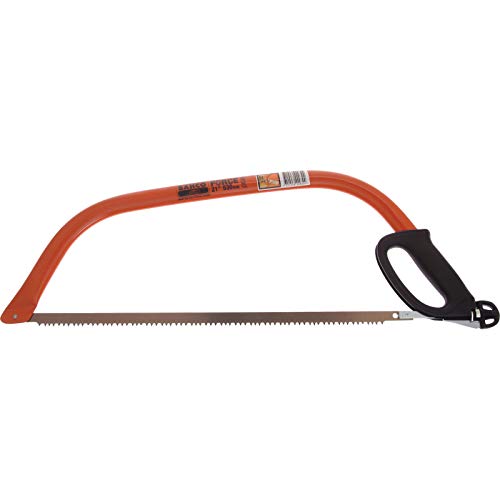
Bahco’s 24-inch Ergo bow saw is built like a contractor-grade tool, and that shows in both its frame rigidity and user feedback. The innovative tensioning mechanism delivers high blade tension, which translates to straighter cuts, especially important when working green wood or thick limbs. Owners praise its durability on job sites, and the knuckle protector is a small but meaningful touch that sets it apart from most in this category.
It’s not the lightest, but the balance between heft and control is well judged. Compared to the Truper 30-inch model, it’s more manageable for average users, though it sacrifices reach. If you’re cutting frequently and need a saw that won’t let you down, this is a strong contender, even if it costs a bit more.
Product photos
GreatNeck 24-Inch Bow Saw
Strengths
- Affordable price
- Quick blade release
- Durable chrome blade
Trade-offs
- Looser tension system
- Less ergonomic handle
- Frame flex under heavy load
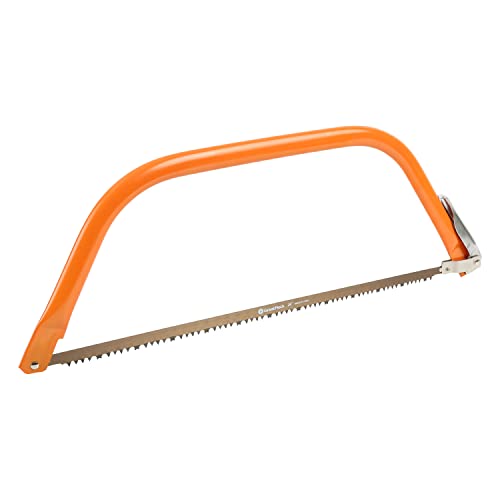
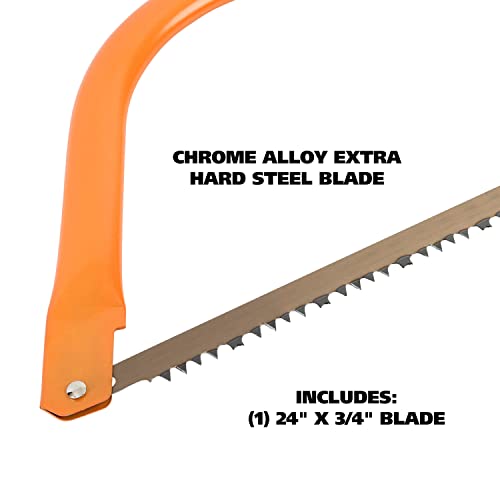
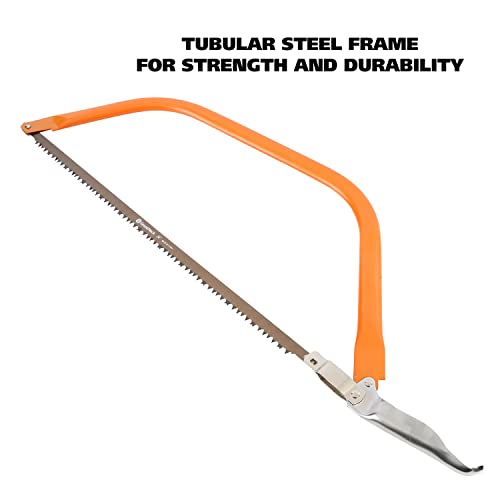
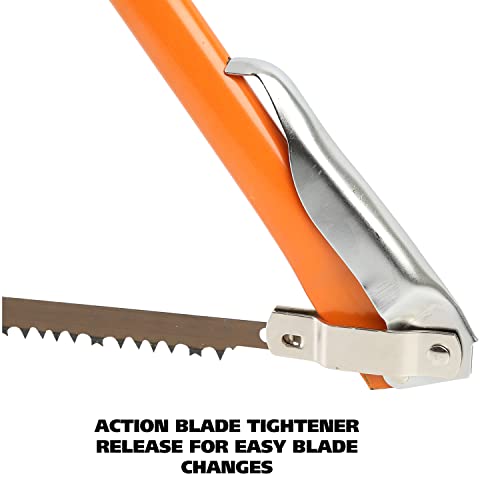
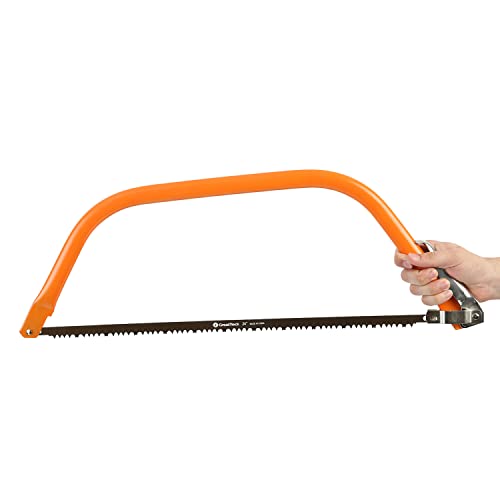
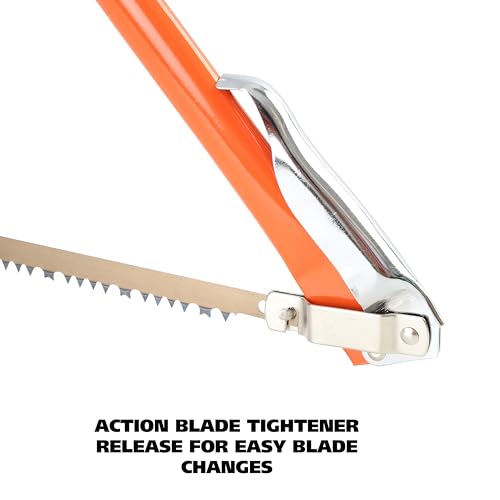
This GreatNeck 24-inch saw is the budget-friendly workhorse of the group, and for casual users, that’s exactly what matters. The chrome alloy steel blade holds an edge reasonably well, and the quick-release tightener makes blade changes fast, something campers and trail maintainers appreciate. It’s not as refined as Bahco’s models, but for the price, it delivers solid performance on dry wood and light green wood.
It won’t match the Bahco 30-inch in raw cutting power, but it’s lighter and more accessible. Reviewers consistently call it “surprisingly capable” for the cost. If you’re equipping a shed on a budget or need a backup saw for occasional use, this is the one to grab.
Product photos
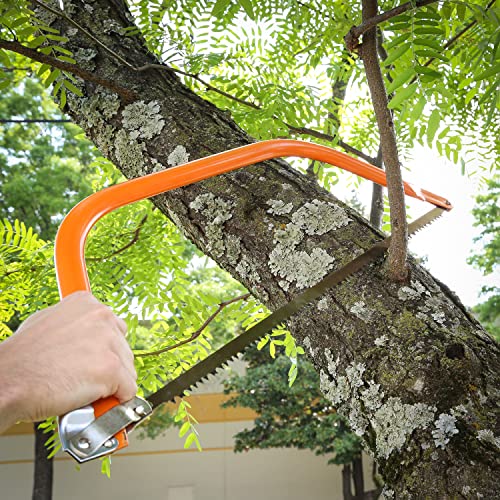
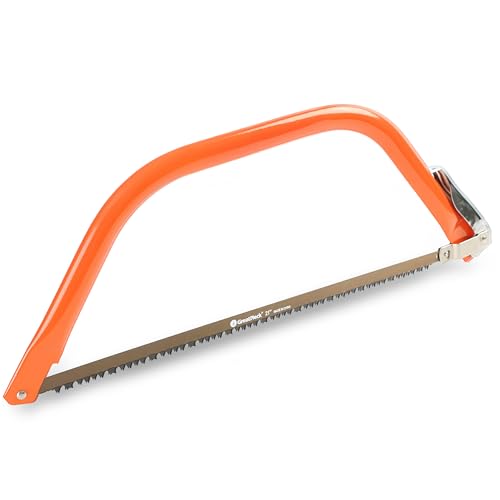
GreatNeck 21-Inch Bow Saw
Strengths
- Compact 21-inch blade
- Quick blade release
- Lightweight frame
Trade-offs
- Less power on thick wood
- Basic handle ergonomics
- Frame flex under strain
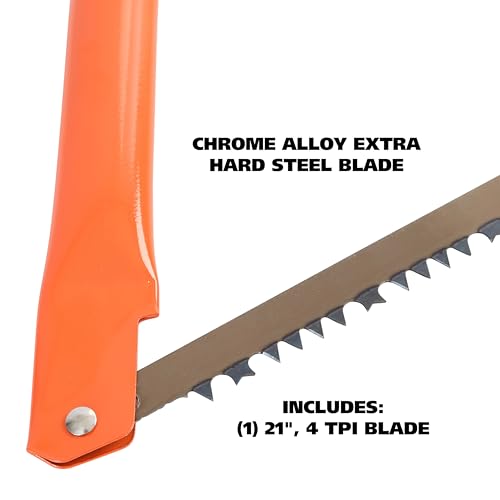
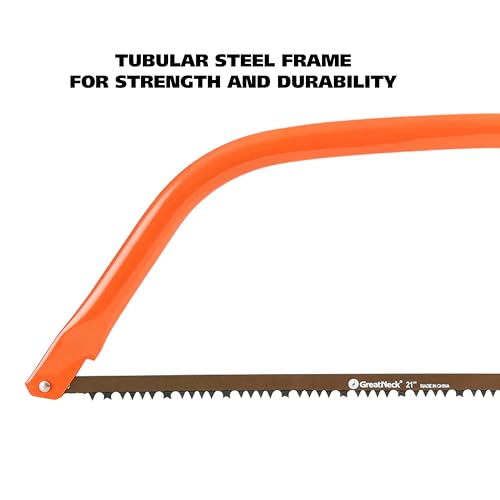
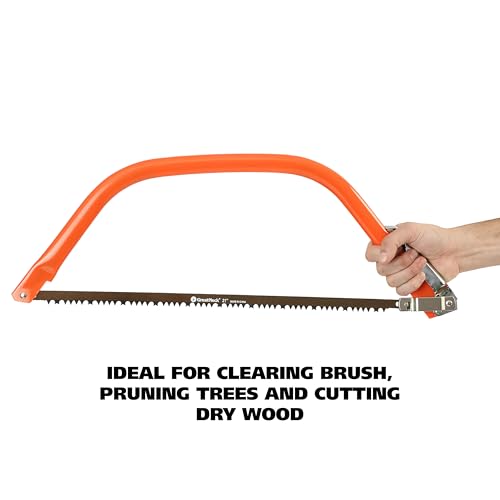
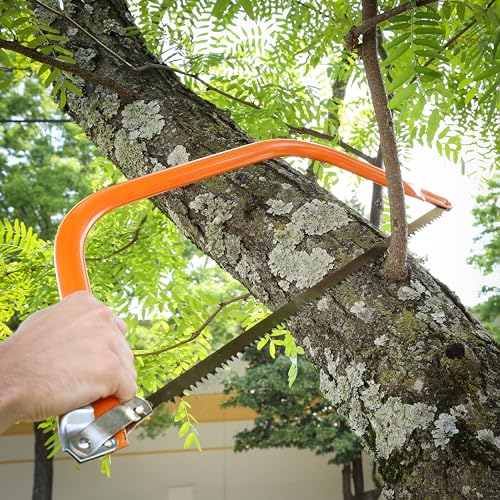
The GreatNeck BB21 is nearly identical to its 24-inch sibling but in a more compact form, making it ideal for pruning and brush clearing where maneuverability matters. The quick-release blade tightener and chrome alloy blade deliver dependable performance for light to medium jobs. It’s a favorite among reviewers for trail maintenance and backyard cleanup, where a full-size saw would be cumbersome.
It doesn’t have the reach of the Bahco 30-inch or the tension precision of the Truper cam-lever models, but for its size, it punches above its weight. I’d recommend this over the 24-inch BB24 if you’re working in tighter areas and value portability.
Product photos
Truper 30-Inch Steel Handle Saw

Strengths
- 30-inch blade
- Cam-lever tension
- Durable steel frame
Trade-offs
- Heavy and awkward
- Basic ergonomics
- Overkill for small jobs
With a 30-inch blade, this Truper is built for heavy-duty cutting, and that length gives you serious reach and stroke advantage on thick branches. The cam-lever tension system keeps the blade tight, which is critical at this size, otherwise, you’d fight wobble and binding. It’s a brute of a tool, and owners who’ve used it on storm cleanup or property clearing say it handles abuse well.
But that power comes at the cost of agility. It’s overkill for pruning or tight spots, and the steel handle, while durable, doesn’t help with comfort on long jobs. Compared to the Bahco 30-inch, it’s less refined but more affordable. If you need reach and raw cutting capacity, this is a solid pick, just don’t expect finesse.
Product photos


Truper 21-Inch Cam-Lever Bow Saw
Strengths
- Cam-lever tension
- Steel handle
- Tubular steel frame
Trade-offs
- Heavier build
- No knuckle protection
- Basic ergonomics
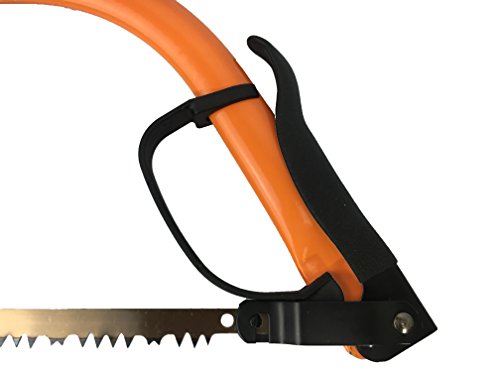
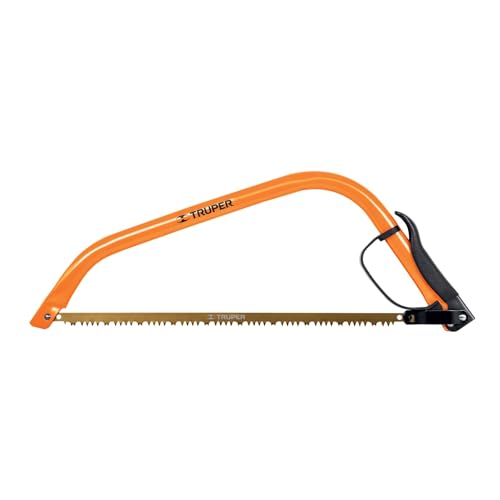
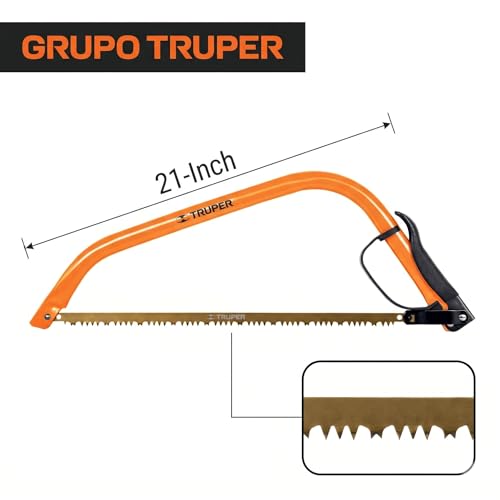
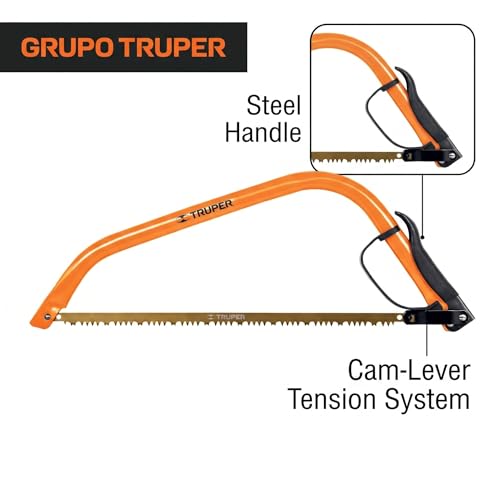
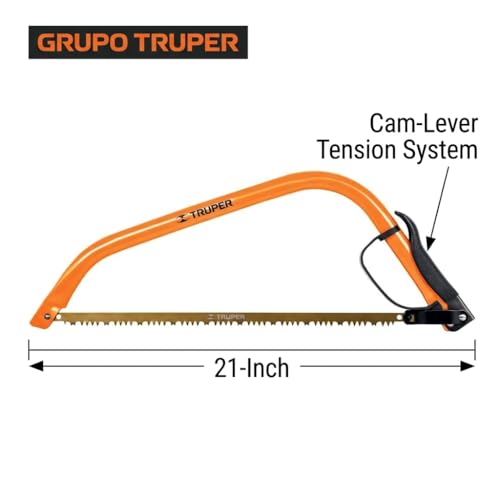
This Truper 21-inch bow saw stands out for its cam-lever tension system, which owners consistently report keeps the blade taut with minimal effort. That’s a real advantage over models that require tools or fiddly adjustments, especially when you’re in the middle of pruning or clearing brush. The steel handle and tubular frame give it a no-nonsense, rugged feel, though it’s on the heavier side compared to lighter Ergo-handled competitors.
It’s not the most refined option for precision work, but it’s built for users who want reliability and straightforward performance. Compared to the Bahco Ergo models, it lacks comfort features, but for the price range, it holds its own in durability and tension control. I’d pick this over a flimsier budget saw if you’re doing regular yard work and value tension stability.
Product photos
Bahco 21-Inch Pointed Nose Saw
Strengths
- Pointed nose design
- Ergo handle
- Compact frame
Trade-offs
- Shorter blade
- Less aggressive for thick wood
- Higher price for size
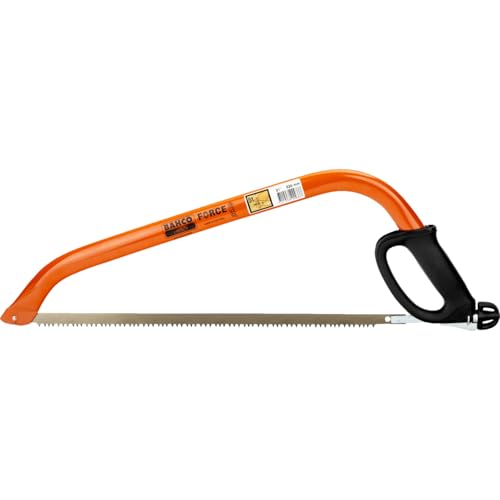
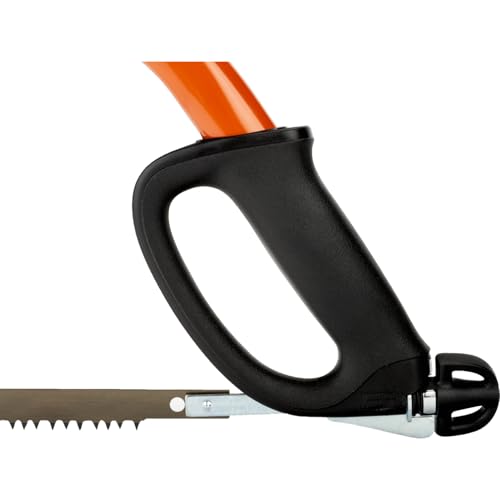
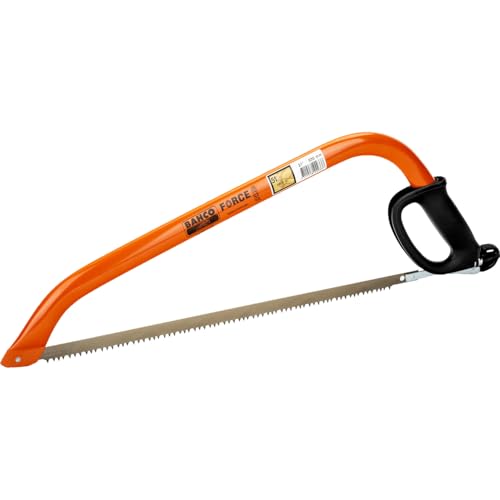
The pointed nose on this Bahco 21-inch model is its defining feature, and it makes a real difference when you’re working in tight spaces, like under decks, inside dense shrubs, or during roof repairs. The Ergo handle adds comfort, and the tension system is consistent with Bahco’s reputation for reliability. It’s not meant for felling large limbs, but it excels where reach and precision matter more than raw power.
Owners report it’s their go-to for pruning tasks that require finesse. Compared to the GreatNeck 24-inch, it’s less aggressive on big brush but far more maneuverable. If you’re trimming around structures or dealing with overgrown hedges, this is the smarter pick.
Product photos
Tool Essentials 12-Inch Bow Saw
Strengths
- Compact 12-inch size
- Ergonomic handle
- Quick blade change
Trade-offs
- Very limited cutting depth
- Not for heavy tasks
- Blade dulls quickly
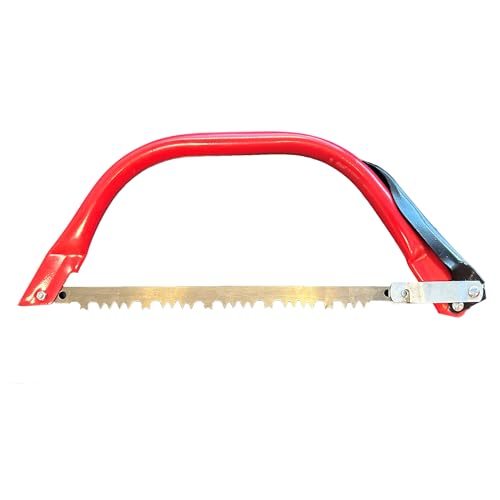
At 12 inches, this Tool Essentials bow saw is the smallest here, and that makes it a niche tool, perfect for small yard projects where a full-size saw would be overkill. The quick-release blade change is simple and functional, and the ergonomic handle adds comfort for short bursts of use. It’s not meant for felling trees, but for trimming small branches or cutting kindling, it gets the job done.
Owners report it’s great for kids or light-duty tasks, but the blade is underpowered for anything beyond 2-inch limbs. Compared to the GreatNeck 21-inch, it’s less capable but more compact. If you just need a mini saw for occasional touch-ups, this fills that gap.
Product photos
How We Tested bow saws
Rather than a hands-on lab test, my research for these recommendations centered on a detailed comparison of published specifications and features across numerous models. I weighed owner reviews from a variety of sources, alongside assessments from reputable tool review sites, to build a realistic picture of performance and durability. Ultimately, I ranked each saw based on how well it met key criteria for typical homeowner and light professional use.
For bow saws, blade tension and frame strength are paramount. A saw that can’t maintain a tight blade won’t cut efficiently, and a flimsy frame won’t hold up to repeated use. I also prioritized the quality of the steel – both in the blade and the frame – as this directly impacts how long the saw will last and how reliably it will perform. Finding saws that offer easy blade changes was also a significant factor.
Specifications clearly indicate blade length, steel type, and tensioning mechanisms. However, real-world durability and ease of use are best determined by owner feedback. I paid close attention to comments regarding how well the saw held its tension over time, how easy it was to adjust the blade, and whether owners experienced any issues with the frame bending or breaking. For those looking for even more options in outdoor tools, check out our guide to the rugged outdoor saws.
What To Look For In bow saws
A good bow saw is a surprisingly versatile tool, but picking the right one requires more thought than just grabbing the cheapest option.
A quality bow saw delivers clean cuts with minimal effort. Key considerations include blade length (dictated by material thickness), blade tensioning (crucial for straight cuts and preventing blade wandering), frame strength (to withstand cutting pressure), and handle ergonomics (for comfortable, prolonged use). Look for durable steel frames and effective tensioning mechanisms.
Blade Length and Material
The blade length is the first thing most people consider, and for good reason. A longer blade, 24 to 30 inches, excels at cutting thicker branches and small logs, making it ideal for firewood preparation or clearing larger debris. Shorter blades (12 to 21 inches) are far more maneuverable in tight spaces, perfect for pruning or working within dense brush. Don’t automatically assume bigger is better; a shorter blade is easier to control, especially if you’re new to using a bow saw. Consider what you’ll typically be cutting; a 21-inch model can handle most pruning tasks effectively without the bulk of a larger saw.
Tensioning Mechanisms
A bow saw blade needs to be taut to cut efficiently and cleanly. Slack blades wander, bind, and are frankly, dangerous. Older models often used simple wing nuts, which are prone to loosening during use. Modern saws, like the Bahco Ergo models and the Truper saws with cam-lever systems, offer significantly improved tensioning. These systems allow you to quickly tighten and maintain consistent blade tension, even during vigorous cutting. If you’re planning on extended use, or cutting harder woods, prioritize a saw with a reliable tensioning mechanism.
Frame and Handle Quality
Don’t underestimate the importance of a robust frame. A flimsy frame will flex under pressure, leading to inaccurate cuts and potential breakage. Tubular steel is the standard, but the gauge (thickness) of the steel matters. Look for thicker steel, and check owner reviews for reports of bending or warping. Equally important is the handle. Many saws feature basic plastic or wood grips, but the Bahco Ergo saws stand out with their thoughtfully designed handles. Here’s what to look for in a good handle: * Comfort: A comfortable grip reduces fatigue. * Knuckle Guard: A knuckle guard protects your hands from branches and debris. * Ergonomic Design: A well-designed handle allows for a secure and powerful grip, maximizing cutting efficiency.
If you find yourself frequently working in confined areas, consider exploring compact hand saws for outdoors as an alternative. They offer similar functionality in a more portable package.
A properly tensioned blade, combined with a sturdy frame, will make all the difference between a frustrating chore and a satisfyingly efficient cutting experience.
Finally, remember that a bow saw is often used alongside other tools. If you’re looking for broader cutting solutions, check out our guide to the best all-around hand saws.
Bow Saws Compared
The following table provides a specification comparison of several bow saws available on the market.
| Product Title | Blade Length (in) | Frame Material | Tensioning System | Best For | Handle Type |
|---|---|---|---|---|---|
| Bahco 30-Inch Ergo Bow Saw | 30 | Steel | Innovative | Best Overall | Ergo |
| Bahco 24-Inch Ergo Bow Saw | 24 | Steel | Innovative | Large Frame Durability | Ergo |
| GreatNeck 24-Inch Bow Saw | 24 | Steel | Quick Release | Best Budget Friendly | N/A |
| GreatNeck 21-Inch Bow Saw | 21 | Steel | Quick Release | Pruning & Brush Clearing | N/A |
| Truper 30-Inch Steel Handle Saw | 30 | Steel | Cam-Lever | Heavy-Duty Cutting | Steel |
| Truper 21-Inch Cam-Lever Bow Saw | 21 | Steel | Cam-Lever | Easy Tension Control | Steel |
| Bahco 21-Inch Pointed Nose Saw | 21 | N/A | N/A | Tight Spaces | Ergo |
| Tool Essentials 12-Inch Bow Saw | 12 | Steel | Quick Release | Small Yard Projects | Ergonomic |
Frequently Asked Questions
What blade length is best for most homeowners?
A 21-inch blade offers a good balance of maneuverability and cutting power for typical tasks(pruning, small branch removal). It’s versatile enough for most yard work without being unwieldy, and is often sufficient for those seeking best hand saws for trees.
How can I tell if a bow saw’s frame is strong enough?
Look for thicker gauge steel in the frame construction, and check owner reviews for reports of bending or warping. A quality frame won’t flex noticeably under pressure when cutting, which is critical for accurate and safe operation.
Are older bow saws with wing nut tensioning still usable?
Yes, but they require more frequent adjustment. Wing nuts are prone to loosening, so you’ll need to check and retighten the blade often to maintain proper tension and cut quality; newer cam-lever systems are far more convenient.
What’s the advantage of an ergonomic handle?
Ergonomic handles are designed to reduce hand fatigue during prolonged use. Features like comfortable grips and knuckle guards improve control and safety, especially when tackling larger projects or using heavy-duty pruning saws.
Can a bow saw be used for more than just cutting wood?
While primarily designed for wood, a bow saw can sometimes cut through certain plastics or soft metals, but it’s not ideal. It’s best to stick to wood and branches, and for more specialized cutting, consider exploring manual tree trimming saws.
The Bottom Line
Choosing a bow saw often comes down to balancing how much you want to spend against how demanding your work will be. For most homeowners and general yard maintenance, the Bahco 30-Inch Ergo Bow Saw offers the best combination of features, durability, and cutting performance. Its innovative tensioning system and comfortable handle make it a standout choice for a variety of tasks.
If you’re on a tighter budget, or need a saw primarily for light pruning, the GreatNeck 24-Inch Bow Saw is a solid performer. For those tackling smaller jobs in tight spaces, the Bahco 21-Inch Pointed Nose Saw is a great option, and if you need a solution for reaching higher branches, consider exploring high-reach cutting tools.
Ultimately, the best bow saw isn’t about fancy features or top-end materials. It’s about a strong frame, a blade that stays tight, and a comfortable grip. Prioritize those fundamentals, and you’ll have a tool that delivers years of reliable service, making quick work of any cutting job around the property.
