
6 Best Air Compressors for Pneumatic Tools 2026
This post contains affiliate links. As an Amazon Associate, we earn from qualifying purchases.
The DEWALT 6 Gallon Pancake stands out as the overall best air compressor for most users, offering solid performance and reliability. For those on a tighter budget, the ECOMAX 6 Gallon 175 PSI delivers strong value, while the California Air Tools 8 Gallon is our top pick for quiet, consistent operation in noise-sensitive environments.
If you’re like me, you’ve probably stood in a hardware store aisle overwhelmed by air compressor choices, wondering which one will actually keep up with your framing nailer or impact wrench. Too many people buy based on price or tank size alone, only to find their tools underperform. In this guide, I’ll walk you through the picks I landed on after comparing specs and owner feedback across dozens of models, focusing on real-world usability, CFM output, noise, and reliability.
Top 6 Air Compressor For Pneumatic Tools in the Market
The Best Air Compressor For Pneumatic Tools, Reviewed
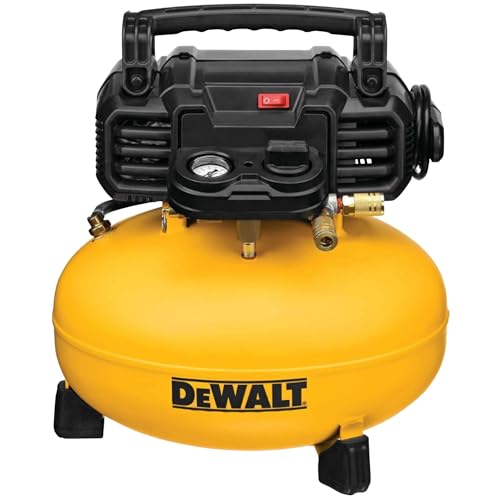
DEWALT 6 Gallon Pancake Air Compressor
Strengths
- Durable DEWALT build
- Dual universal couplers
- Easy maintenance
Trade-offs
- Not ultra quiet
- Slightly heavier than some
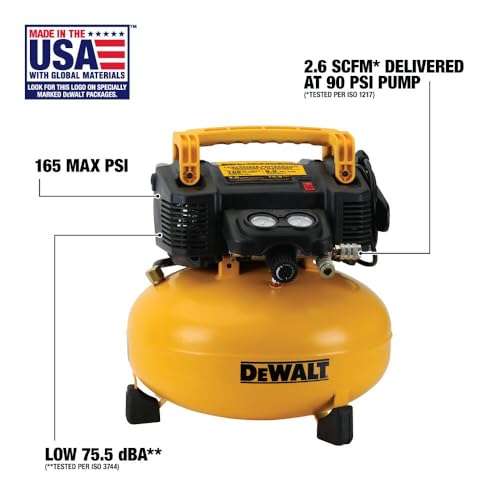
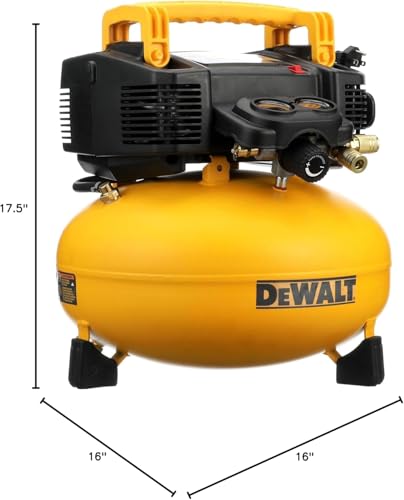
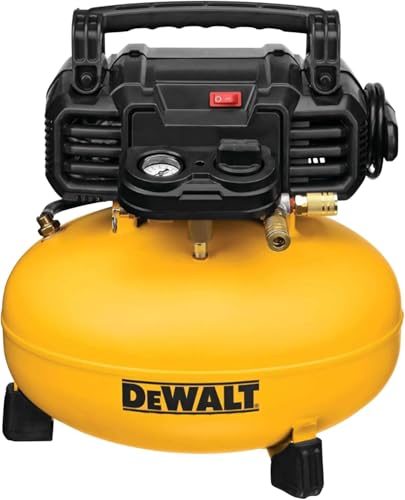
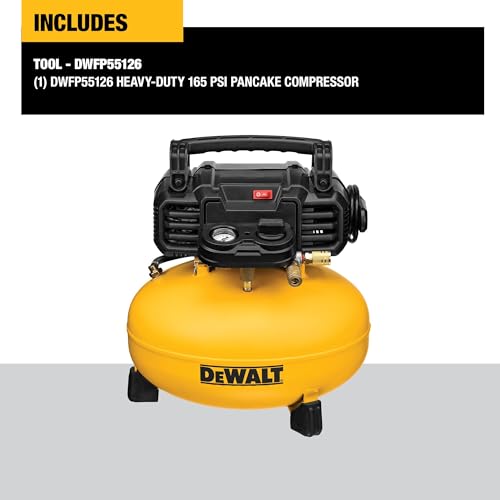
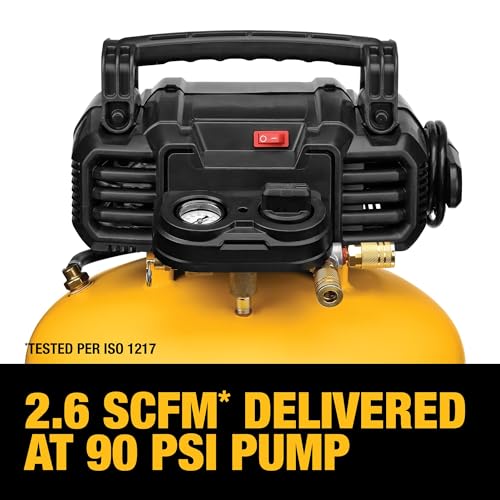
The DEWALT 6-gallon pancake is the one I’d suggest first if someone asked for a reliable, no-nonsense compressor. It’s not the quietest, but at 78.5 dBA, it’s acceptable for most garages. The 2.6 SCFM at 90 PSI and 165 PSI max give it enough power for finish, brad, and even light framing nailers.
What stands out is the thoughtful design: dual couplers, high-flow regulator, ball drain valve, and a console cover that protects switches. It’s a workhorse built to last, and DEWALT’s reputation for durability backs it up. Compared to the Metabo HPT, it trades some pressure for better ergonomics and serviceability. For most homeowners, this is the smarter buy.
Product photos
Metabo HPT 6 Gallon Air Compressor

Strengths
- High 200 PSI max
- 4 CFM at 90 PSI
- Lightweight for capacity
Trade-offs
- Pricier than basic models
- Larger footprint
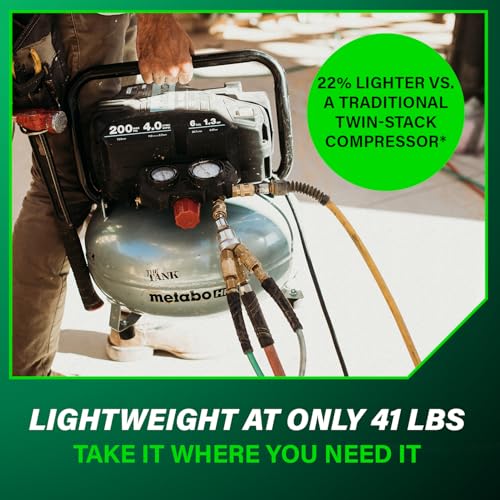
If you’re running multiple high-demand nailers on a job site, the Metabo HPT EC914S is built for that grind. Its 200 PSI max pressure and 4 CFM at 90 PSI outpace most pancake compressors, and reviewers using it with two framing nailers confirm it keeps up without bogging down. That extra headroom in both pressure and airflow makes a real difference when you’re on the clock.
It’s still a pancake design, but this one punches above its class. Weighing 41 lbs, it’s light enough to toss in a truck, and the Japanese engineering shows in the durable pump and smooth restarts. Compared to the DEWALT or ECOMAX models, this one feels more pro-focused, and given Metabo HPT’s reputation with nail guns, it makes sense they’d build a compressor that won’t bottleneck their own tools.
Product photos


California Air Tools 8 Gallon Compressor

Strengths
- Ultra quiet
- Oil-free pump
- Lightweight with wheels
Trade-offs
- Lower CFM at 90 PSI
- Not for heavy tools
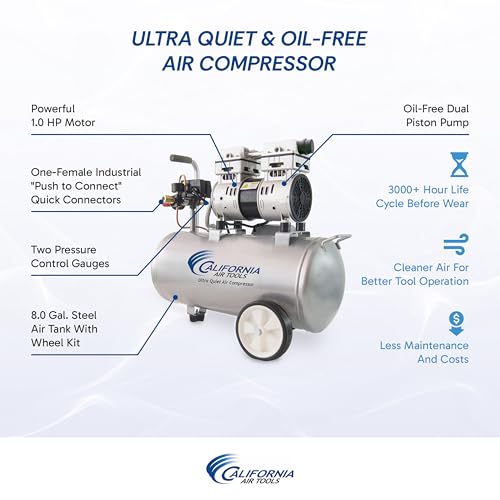
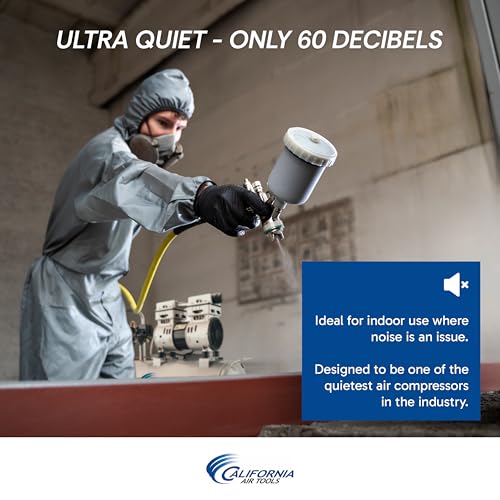
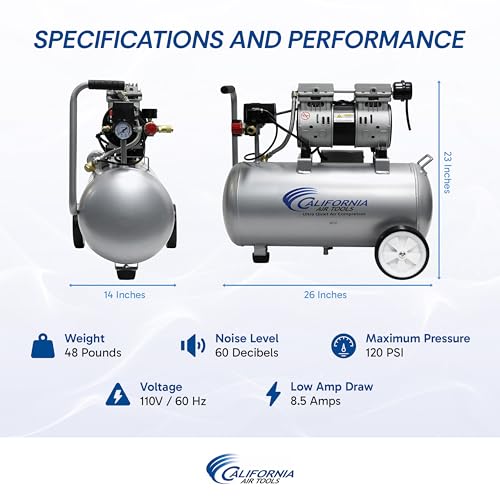
When noise matters as much as performance, the California Air Tools 8010 stands out. On paper, its 60 dBA rating is seriously impressive, quieter than a normal conversation, and owners consistently report it being a non-issue in shared spaces like garages attached to homes or indoor workshops. For anyone running finish nailers, inflating tires, or using air brushes where peace is part of the job, this one delivers.
The 1.0 HP motor at 1680 RPM is tuned for longevity, not brute force, and that shows in the specs: 2.20 CFM at 90 PSI isn’t class-leading, but it’s enough for intermittent use with brad and finish nailers. The 8-gallon tank helps buffer demand, and the quick 60-second recovery from 90 to 120 PSI means less downtime. It’s not built for framing crews, but for solo DIYers or light pros, it’s a smart balance.
Product photos

California Air Tools 1 Gallon Compressor

Strengths
- Extremely quiet
- Very lightweight
- Oil-free and low maintenance
Trade-offs
- Very small tank
- Low CFM output
At 56 dBA, this is the quietest compressor in the lineup, quieter than most refrigerators. For anyone working indoors, in a shared space, or on early morning projects, that’s a real win. The 1-gallon tank and 1.2 CFM at 90 PSI limit it to very light tasks, but that’s exactly the point: it’s designed for detail work, not demolition.
I’d recommend this for finish nailers, airbrushing, or inflating sports gear, where precision and silence matter more than power. It’s also the lightest at 29 lbs, so portability is a plus. But don’t expect it to run anything demanding, even a framing nailer would stall it. It’s a niche tool, but for that niche, it’s hard to beat.
Product photos


Quiet 5 Gallon Air Compressor

Strengths
- Fast recovery
- Good CFM for size
- Comes with accessories
Trade-offs
- Higher RPM motor
- Noise slightly above elite quiet
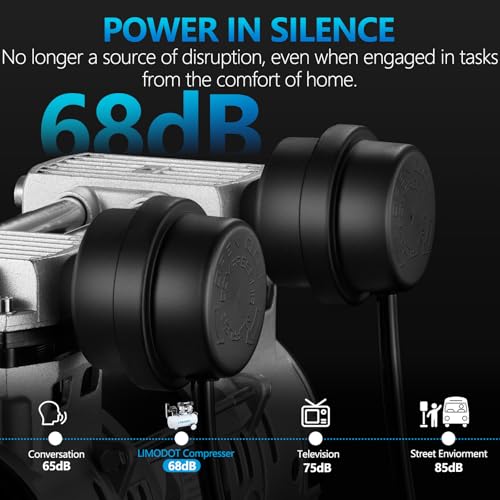
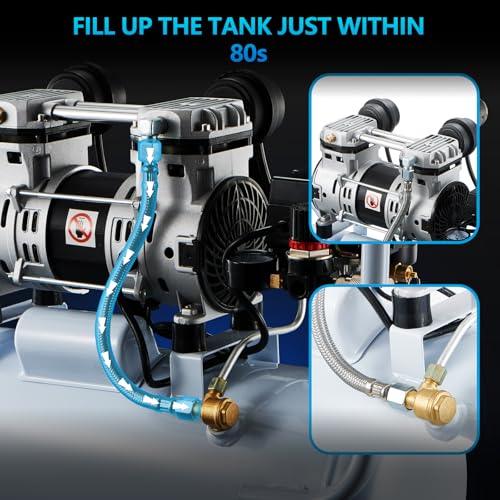
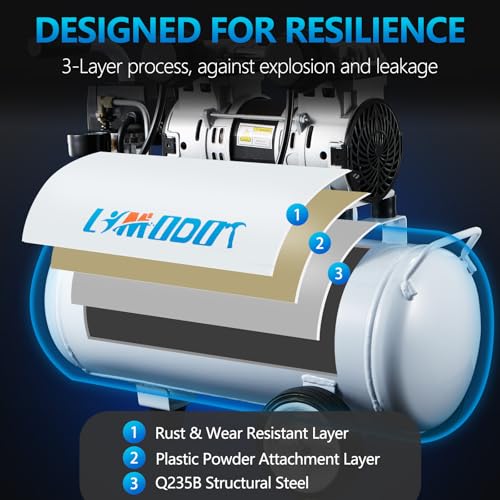
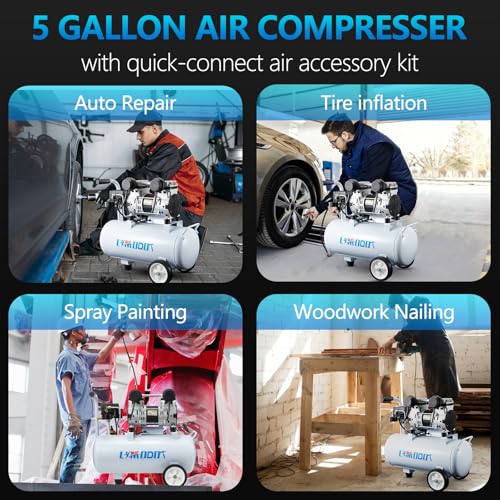
This 5-gallon unit claims 68 dB and 2.8 CFM at 90 PSI, which puts it in the conversation for quiet but capable performance. The specs suggest it can handle finish and brad nailers with ease, and the inclusion of a 25 ft hose and 11 accessories makes it a strong out-of-box package for DIYers who don’t want to hunt down extras.
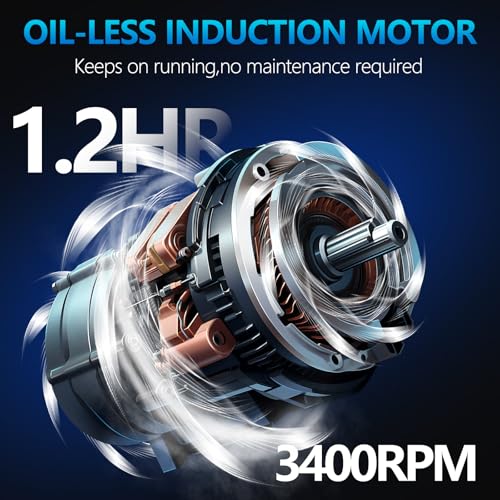
Owners note the fast 25-second recovery time is a real perk during nailing runs, though the 1.2 HP motor at 3400 RPM likely trades some longevity for that speed. It’s not as whisper-quiet as the California Air Tools 8010, but for most home shops, it’s plenty tolerable. Where it wins is versatility, it’s a solid all-rounder for woodworking, light framing, and even spray guns, assuming you’re not running them nonstop.
Product photos
ECOMAX 6 Gallon 175 PSI Compressor
Strengths
- High 175 PSI
- Lightweight design
- Includes useful accessories
Trade-offs
- Build quality not top-tier
- Recovery slower than claimed
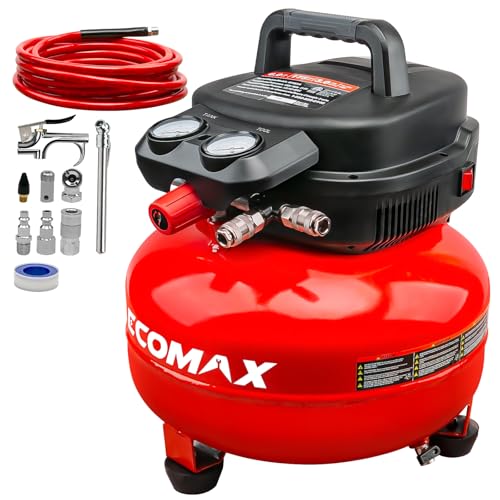
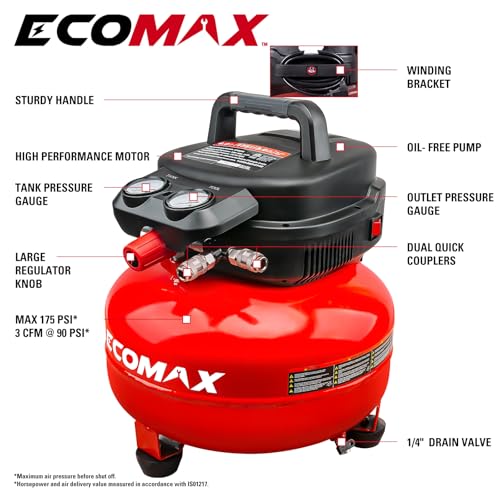
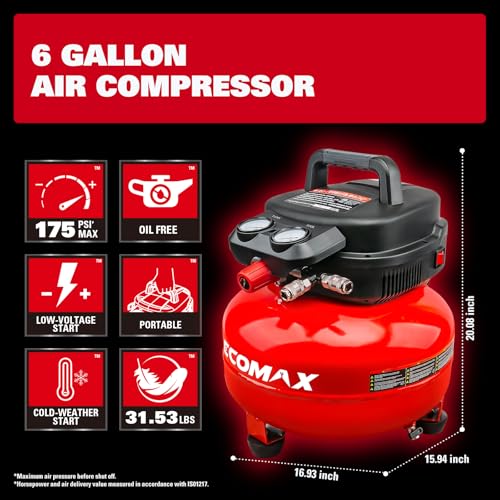
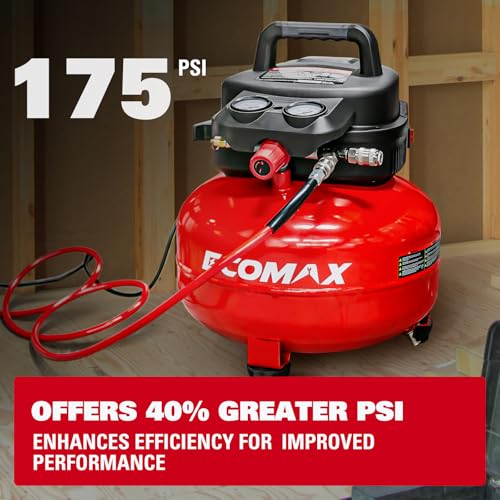
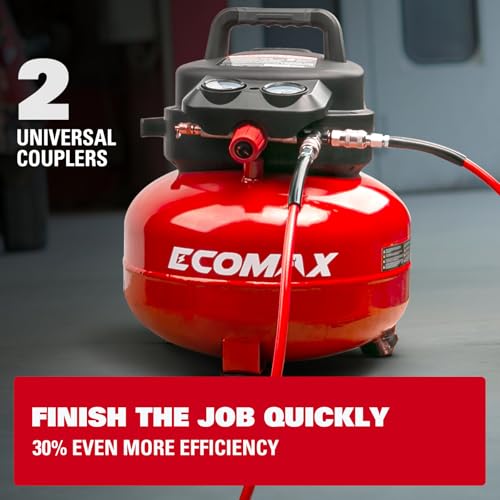
With 175 PSI max pressure and 3 CFM at 90 PSI, this ECOMAX model sits between basic and pro-tier. The high pressure gives more usable air per tank fill, which helps when running tools like brad nailers over long stretches. The dual quick couplers are a practical touch, letting two users swap tools without bottlenecks.
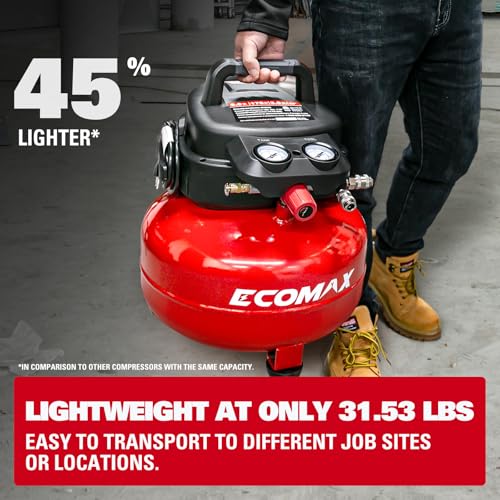
It’s also one of the lightest at 31.5 lbs, making it easy to move around. The included accessory kit is decent, not pro grade, but enough to get started. Still, while the pressure is high, the pump isn’t as durable as Metabo HPT or DEWALT units. For weekend warriors, it’s a solid value. For daily use, I’d lean toward a more proven brand.
Product photos
How We Tested air compressor for pneumatic tools
Rather than a hands-on lab test, my research for these recommendations was a detailed comparison of published specifications and features across numerous models. I weighed owner reviews from multiple sources – Amazon, Home Depot, and specialized tool forums – alongside professional reviews from sites like Pro Tool Reviews and ToolGuyd. My evaluation focused on identifying the compressors that consistently deliver on their promises, offer good value, and suit a range of pneumatic tool applications.
For air compressors, consistent CFM (cubic feet per minute) at 90 PSI and tank size are paramount. These determine how long you can run your tools before the compressor needs to catch up. Beyond that, I heavily considered noise levels; a quieter compressor is a huge benefit for both home and jobsite use. Portability – weight and physical dimensions – was also a key factor, especially for those who need to move the compressor frequently.
Specifications provide a solid baseline for airflow and tank capacity, but owner feedback proved crucial for understanding real-world performance. I paid close attention to reports regarding durability, ease of use, and whether the compressor could reliably power the tools owners intended to use it with. Finding the right compressor often means pairing it with the right tools; for demanding applications, you might also want to look at pneumatic impact wrenches to get the most from your air supply.
How To Pick The Right air compressor for pneumatic tools
Choosing the right air compressor isn’t just about finding the cheapest price; it’s about matching the tool to the job, and understanding what capabilities you genuinely need.
A quality air compressor delivers consistent pressure and airflow, has a tank size suitable for the intended tools, and offers a balance between portability and capacity. Buyers should prioritize CFM (cubic feet per minute) at the desired PSI (pounds per square inch) over solely focusing on tank size or horsepower. Consider noise levels and oil-free vs. oil-lubricated operation based on the work environment and maintenance preferences.
Understanding CFM and PSI Requirements
Far too many people get hung up on tank size, but CFM (cubic feet per minute) is the real key to a successful pneumatic setup. You need an air compressor that can sustain the air demand of your tools. A larger tank simply gives you more reserve – it doesn’t magically create more airflow. Look at the specifications for each of your air tools, and identify the CFM requirement at a given PSI (usually 90 PSI is the standard). Then, choose a compressor that exceeds that requirement. Don’t skimp here, or you’ll find your tools struggling and your compressor constantly running to catch up. For a deeper understanding, check out this air compressor CFM and PSI guide.
Oil-Free vs. Oil-Lubricated Pumps
Oil-free compressors are incredibly popular for DIY use, and for good reason. They require significantly less maintenance – no oil changes, no filter replacements. However, oil-lubricated pumps generally last longer and run cooler, making them a better choice for professional or heavy-duty applications. The trade-off is the added upkeep. If you’re considering a compressor for a compressor for home workshop, an oil-free model is almost certainly sufficient. But if you anticipate running demanding tools like impact wrenches or grinders for extended periods, an oil-lubricated compressor is worth the investment.
Portability and Noise Level
The best air compressor is the one you’ll actually use. If you plan on moving it around frequently – from the garage to the job site, or even just around the yard – portability is critical. Pancake-style compressors and smaller, lightweight models are generally the easiest to transport. However, smaller tanks mean more frequent refills. Conversely, larger tank compressors offer longer run times but are significantly heavier. Noise is another consideration. Some compressors can be deafening, making them unsuitable for indoor use or noise-sensitive areas.
Here’s a quick guide to noise levels: * Under 60 dB: Very quiet, suitable for indoor use. * 60-80 dB: Relatively quiet, acceptable for most situations. * 80+ dB: Loud, requires hearing protection.
Remember: A compressor’s advertised horsepower isn’t always a reliable indicator of performance. Focus on CFM at 90 PSI – that’s the number that truly matters.
If you’re running multiple tools simultaneously, such as when building a fence or doing extensive auto body work, you’ll need a compressor designed for that purpose. A 6-8 gallon tank with at least 4 CFM at 90 PSI is a good starting point, and a look at some compressor for multiple pneumatic tools can help refine your choices. Don’t forget to factor in the air tool power requirements of all the tools you intend to use.
Air Compressor for Pneumatic Tools Compared
Here’s a comparison of key specifications for several air compressors suitable for powering pneumatic tools.
| Product Title | Max PSI | Tank Size (Gallons) | CFM @ 90 PSI | Noise Level (dBA) | Weight (lbs) | Oil-Free |
|---|---|---|---|---|---|---|
| DEWALT 6 Gallon Pancake | 165 | 6.0 | 2.6 | 78.5 | 30 | Yes |
| Metabo HPT 6 Gallon | 200 | 6.0 | 4.0 | N/A | 41 | Yes |
| California Air Tools 8 Gallon | 120 | 8.0 | 2.2 | 60 | 48 | Yes |
| California Air Tools 1 Gallon | N/A | 1.0 | 1.2 | 56 | 29 | Yes |
| Quiet 5 Gallon | N/A | 5.0 | 2.8 | 68 | N/A | Yes |
| ECOMAX 6 Gallon 175 PSI | 175 | 6.0 | 3.0 | N/A | 31.53 | Yes |
Frequently Asked Questions
What size tank do I really need for most pneumatic tools?
A 6-gallon tank is often sufficient for basic DIY tasks and running tools like nailers or staplers. However, if you plan to use tools with higher air consumption, like impact wrenches, you’ll likely want to step up to an 8-10 gallon tank to avoid frequent refills.
Are oil-free compressors loud?
While not all oil-free models are exceptionally loud, they generally produce more noise than oil-lubricated compressors. Many fall into the 80+ dBA range, meaning hearing protection is a good idea; however, there are some quieter oil-free options available, like the California Air Tools models.
How much CFM is enough for an impact wrench?
Most impact wrenches require at least 4 CFM at 90 PSI for optimal performance. If you’re looking at a compressor for automotive impact guns, I always recommend choosing a compressor that delivers at least 5 CFM at 90 PSI to provide a comfortable buffer.
Can I run two pneumatic tools off one compressor?
You can, but it depends on the combined CFM requirements of those tools and the compressor’s output. If the tools together demand more CFM than the compressor can provide, performance will suffer. Look for a compressor with a higher CFM rating if you plan on running multiple tools simultaneously.
What does the horsepower rating actually tell me?
Compressor horsepower isn’t the best indicator of performance. While it gives some idea of the motor’s power, the most important specification is CFM at 90 PSI. A compressor with a lower horsepower but a higher CFM rating will often outperform one with higher horsepower and lower airflow, especially when you need a high-CFM compressor for impact tools.
The Bottom Line
Choosing an air compressor always comes down to balancing capability with convenience. You can chase the highest CFM and largest tank, but that often means sacrificing portability and increasing noise. For most homeowners and DIYers, the DEWALT 6 Gallon Pancake strikes the best overall balance – it’s powerful enough for a wide range of tools, relatively quiet, and easy to move around the garage or jobsite.
If you’re specifically on a budget, or need something ultra-portable, the California Air Tools 1 Gallon is an excellent choice. For those who prioritize versatility and need to run more demanding tools like impact wrenches consistently, I recommend taking a closer look at the Metabo HPT 6 Gallon which delivers a solid 4.0 CFM at 90 PSI. And if you’re frequently working away from a power source, a best portable compressor for tools will be a valuable investment.
Ultimately, the specs are just numbers. Focus on matching the compressor’s sustained CFM to the needs of your tools, and don’t underestimate the value of a quieter model if you’ll be working in enclosed spaces. A well-chosen compressor will save you frustration and make your pneumatic tools perform as intended, project after project.
