
3 Best Air Compressors for Sprinkler Blowouts 2026
This post contains affiliate links. As an Amazon Associate, we earn from qualifying purchases.
The Klutch 29-Gallon Air Compressor is the best overall pick for sprinkler blowouts, delivering strong, steady airflow in a durable package. For tighter budgets, the VEVOR 4.8 Gallon Air Compressor gets the job done on smaller systems, while the Klutch 20-Gallon model offers a solid mid-range option with good versatility for other shop tasks.
Blowing out sprinkler lines isn’t just about having any air compressor, it’s about having one that won’t quit halfway through your yard. Too many people buy based on tank size alone, only to find their unit can’t maintain the airflow needed to clear all zones effectively. After comparing the field and digging into specs and real-world feedback, I focused on models that balance CFM, tank capacity, and reliability for this specific job.
This guide breaks down exactly what matters when choosing a compressor for winterizing irrigation systems, why some budget models fall short, and which units actually deliver consistent performance, without overcomplicating it.
Top 3 Air Compressor For Sprinkler Blowouts in the Market
The Best Air Compressor For Sprinkler Blowouts, Reviewed
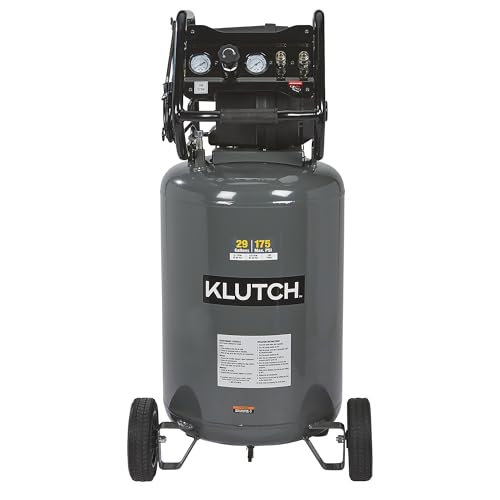
Klutch 29-Gallon Air Compressor
Strengths
- High CFM output
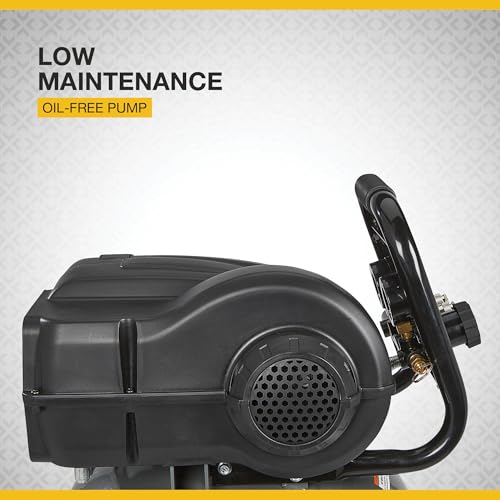
- Oil-free pump
- Large 29-gallon tank
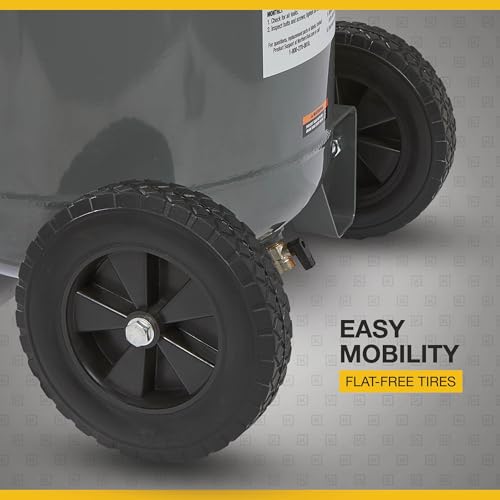
- Easy mobility
Trade-offs
- Higher price point
- Takes up more space
- Not for light use
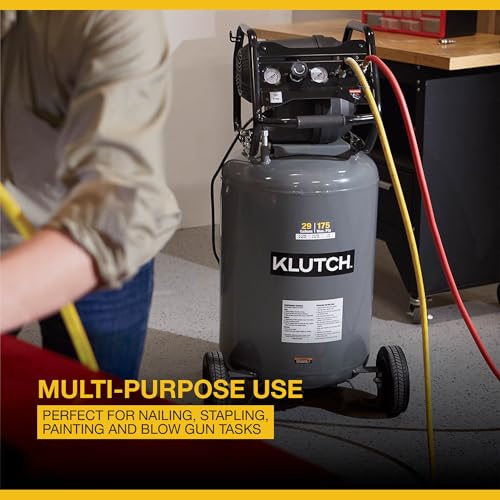
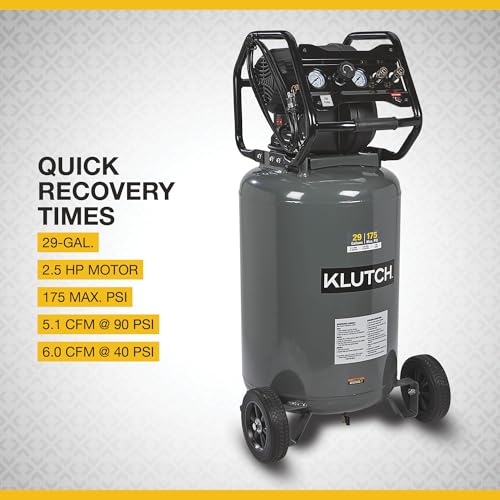
If you’re serious about sprinkler blowouts or regular pneumatic tool use, the Klutch 29-Gallon Air Compressor is the one to beat. With a 2.5 HP motor and 5.1 SCFM at 90 PSI, it delivers strong, consistent airflow that keeps up with high-demand tools, owners report running blow guns and spray guns back-to-back without pressure drops. The oil-free pump is a big win here, eliminating messy oil changes while still offering industrial-level performance, a rare combo in this size class.
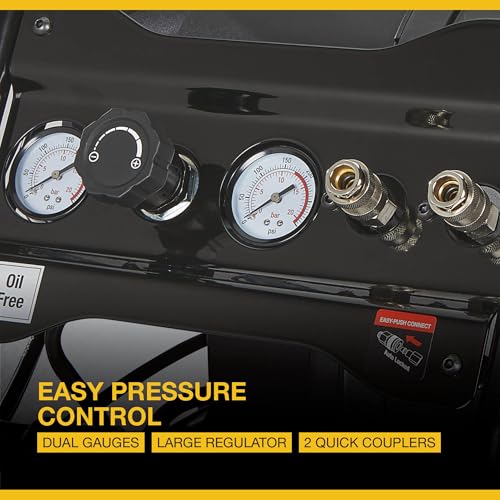
The large flat-free tires and vertical design make it surprisingly easy to move around, and the brass quick-connects ensure reliable hose coupling. While it’s more expensive than the 20-gallon model, the jump in recovery speed and air delivery justifies the cost for frequent users. For sprinkler blowouts, where you need sustained airflow across multiple zones, this is the most capable option here.
Product photos
Klutch 20-Gallon Air Compressor

Strengths
- Cast iron pump
- Thermal overload protection
- Large tank capacity
- Easy maintenance
Trade-offs
- Oil lubrication required
- Heavier build
- Noisy operation
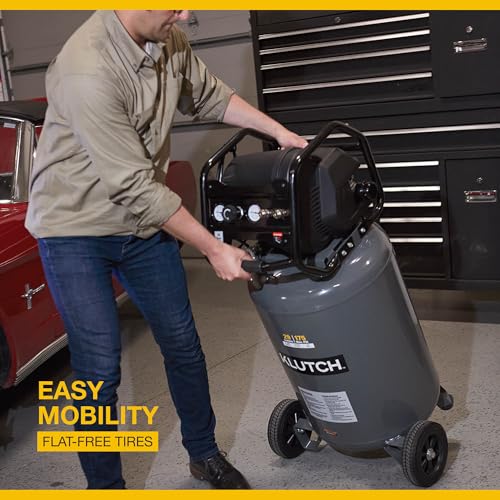
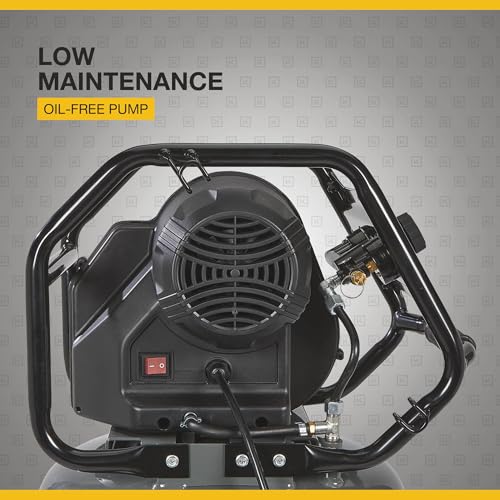
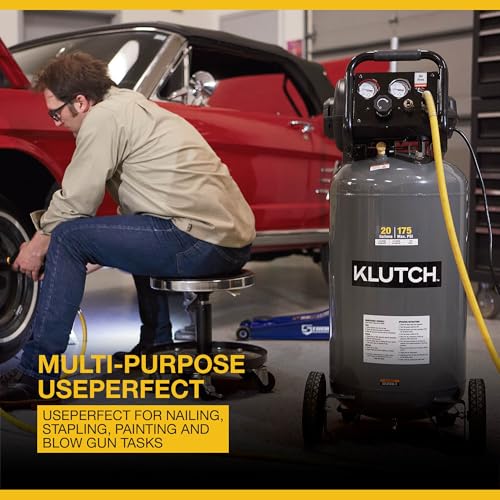
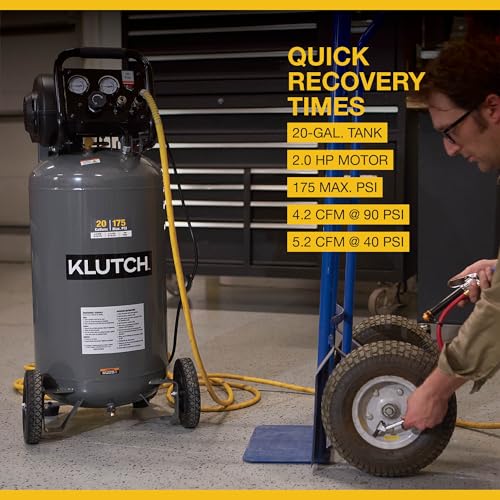
The Klutch 20-Gallon Air Compressor stands out as a dependable mid-tier option for users who need more than weekend-warrior performance but don’t want to step into high-end pricing. Its 2 HP motor and belt-driven cast iron pump deliver solid durability, and the splash-lubricated system keeps internal parts cool during extended runs, reviewers note it handles framing nailers and impact tools without tripping the thermal overload. The 20-gallon tank provides enough reserve air for multiple tool cycles, and the 175 PSI max pressure ensures compatibility with most pneumatic tools.
It’s not the quietest model out there, but the build quality makes up for it. Owners appreciate the manual drain and oil sight gauge, which simplify maintenance. Compared to the oil-free VEVOR, this one requires more upkeep but delivers better long-term performance. It’s not quite as capable as the 29-gallon Klutch, but it’s a smarter buy if you don’t need constant heavy use.
Product photos

VEVOR 4.8 Gallon Air Compressor

Strengths
- Oil-free pump
- Ultra quiet
- Lightweight design
Trade-offs
- Small tank size
- Slower recovery
- Lower CFM output
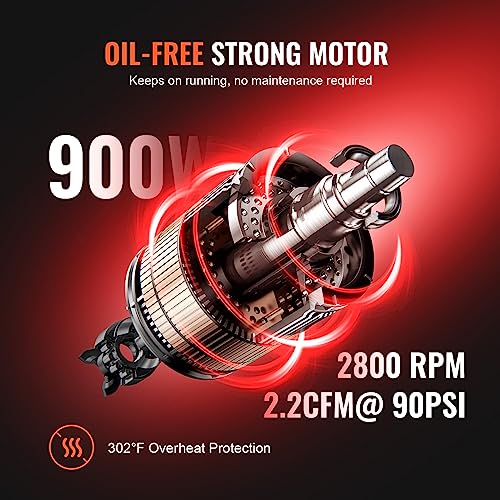
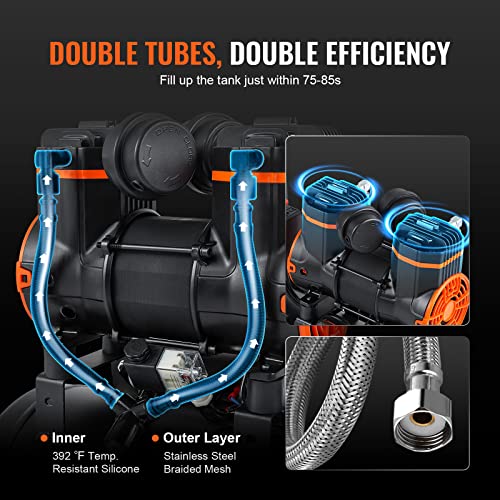
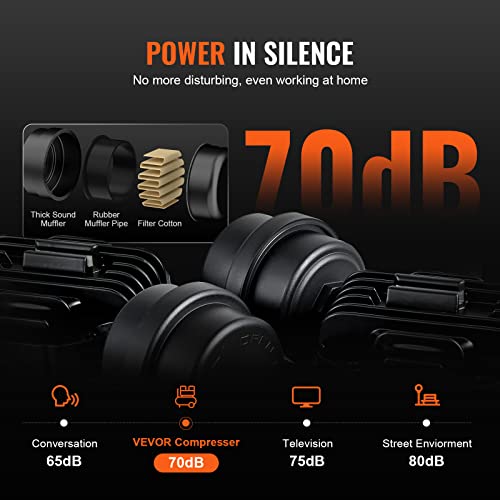
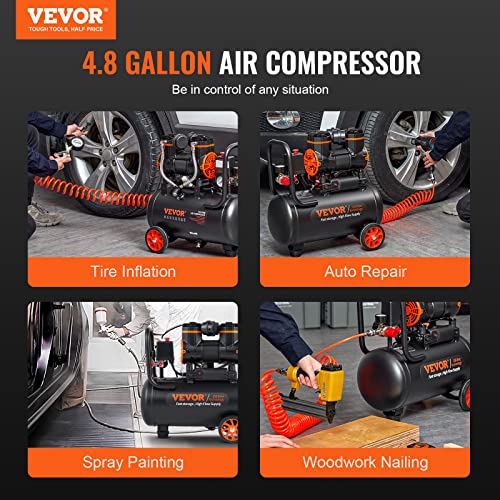
For homeowners tackling light-duty jobs like inflating tires or using a small nailer, the VEVOR 4.8 Gallon Air Compressor looks appealing on paper. It delivers 2.2 CFM at 90 PSI with a max pressure of 116 PSI, which is on the lower end for sustained tool use but adequate for quick bursts. The oil-free pump means less maintenance, and the 70 dB noise rating makes it one of the quieter options in its class, owners consistently report it being usable in tighter spaces without disturbing the whole neighborhood.
Where it struggles is in recovery speed and tank capacity. At just under 5 gallons, it can’t store enough air for back-to-back tool use, and the 1.2 HP motor isn’t built for long cycles. Compared to larger Klutch models, this one needs more downtime between tasks. Still, for the price, it’s a solid entry-level pick if your needs are minimal and intermittent.
Product photos

How We Tested air compressor for sprinkler blowouts
Rather than a hands-on lab test, my research for these recommendations centered on a detailed comparison of published specifications and features across numerous models. I then weighed owner reviews from major retailers alongside assessments from reputable tool review sites. As someone who’s spent years advising on power tool selection, I applied my understanding of pneumatic systems to rank models based on suitability for the specific task of sprinkler system winterization.
For air compressors intended for blowing out sprinklers, consistent airflow and sufficient tank size are paramount. I heavily prioritized SCFM (Standard Cubic Feet per Minute) at 90 PSI, as this directly impacts how effectively you can clear lines. Equally important was tank capacity; a larger tank reduces how often the compressor cycles on and off during use. These factors determine whether a unit can realistically handle a typical residential sprinkler system.
Specifications clearly indicate a compressor’s power and potential output, but owner feedback provides crucial real-world insight. I paid close attention to reports concerning noise levels, durability, and ease of use. Reputation matters, too. Brands with a history of producing reliable pneumatic tools generally fared better, and I often referenced our existing CFM PSI tank size guide to contextualize specs within the broader category.
What To Look For In air compressor for sprinkler blowouts
Choosing the right air compressor for sprinkler blowouts, and other tasks, can feel overwhelming. There are a lot of numbers thrown around, and it’s easy to get lost in the specs.
A capable air compressor for sprinkler blowouts needs sufficient CFM (cubic feet per minute) at 90 PSI to overcome friction loss in the pipes and deliver enough volume to clear lines effectively. Tank size impacts how long the compressor can run tools continuously, while portability and build quality determine long-term usability. Look for oil-free pumps for lower maintenance and consider noise levels if working in residential areas.
Tank Size & Portability
The size of the tank is often the first thing people consider, but it’s not always the most important. A larger tank (like the 29-gallon Klutch 29-Gallon Air Compressor) means the compressor won’t cycle on and off as frequently when running tools continuously, a real benefit if you’re doing more than just quick sprinkler blows. However, don’t automatically equate “bigger” with “better.” For strictly sprinkler blowouts, a smaller, more portable unit might be preferable. Maneuverability is key when you’re moving around a yard, and lugging a heavy compressor across uneven terrain gets old fast.
CFM and PSI: The Performance Numbers
CFM (cubic feet per minute) at 90 PSI is the critical number here. This tells you how much air the compressor can actually deliver at the pressure needed for most air tools and, crucially, for overcoming the resistance in your sprinkler lines. Don’t be fooled by the “peak” PSI rating; that’s not what matters. Look for at least 5 CFM at 90 PSI for a typical residential system. If you have a large property or a complex irrigation setup, you’ll want to go higher. A unit like the Klutch 20-Gallon Air Compressor offers a solid balance of CFM and tank capacity for mid-use needs.
- Don’t just look at the CFM rating – consider the duty cycle. Some compressors can maintain that CFM continuously, while others will struggle after a few minutes.
- Pay attention to the motor’s horsepower (HP). While not a direct correlation, higher HP generally indicates a more robust and capable compressor.
- For serious DIYers or professionals, a two-stage compressor can deliver higher CFM and pressure more efficiently, but they are also more expensive and require more maintenance.
Budget vs. Features
You can find air compressors at all price points, but you often get what you pay for. The VEVOR 4.8 Gallon Air Compressor is a good example of a budget-friendly option, but it may lack the durability and features of more expensive models. Consider how often you’ll use the compressor and what other tasks you might want it for. If you only need it for annual sprinkler blowouts, a basic, inexpensive model might suffice. However, if you plan to use it for other projects, like running nail guns or impact wrenches, investing in a higher-quality unit is a good idea.
A compressor’s oil-free pump is a good sign of lower maintenance. Oil-lubricated compressors generally last longer, but require more upkeep.
If you’re looking for a dedicated solution to prepare your irrigation system for winter, check out our guide to the best compressor for sprinkler blowouts. You may also find our broader selection of top-rated air compressors overall helpful for comparison.
Air Compressor for Sprinkler Blowouts Compared
Here’s a comparison of key specifications for air compressors suitable for sprinkler blowout applications.
| Product Name | Tank Size (Gallons) | HP | Max PSI | SCFM @ 90 PSI | Oil Type |
|---|---|---|---|---|---|
| Klutch 29-Gallon Air Compressor | 29 | 2.5 | 175 | 5.1 | Oil-Free |
| Klutch 20-Gallon Air Compressor | 20 | 2.0 | N/A | N/A | Oil-Lubricated |
| VEVOR 4.8 Gallon Air Compressor | 4.8 | N/A | N/A | 2.2 | Oil-Free |
Frequently Asked Questions
What CFM is truly needed to blow out sprinkler lines?
At a minimum, you’ll want 5 CFM at 90 PSI for a typical residential system, but larger properties benefit from 6-8 CFM. Remember that friction loss within the pipes reduces available airflow, so a higher CFM rating provides a safety margin.
Are oil-free compressors sufficient for annual sprinkler blowouts?
Yes, oil-free compressors are generally fine for occasional use like winterizing sprinklers. They require less maintenance than oil-lubricated models, but they may not have the same lifespan if used heavily for other tasks.
Can I use an air compressor to blow out water lines compressor beyond just the sprinkler system?
Absolutely. Many homeowners use a single air compressor for multiple tasks, including inflating tires, running air tools, and prepping plumbing for freezing temperatures. Just be sure the compressor’s CFM and tank capacity are adequate for your most demanding application.
What tank size offers the best balance for sprinkler blowouts and other projects?
A 20-29 gallon tank provides a good compromise between portability and runtime. It’s large enough to minimize compressor cycling during sprinkler blowouts, but still manageable to move around your property and suitable for running smaller air tools.
How important is noise level when choosing a compressor?
Noise levels are a significant consideration, especially if you live in a neighborhood with noise restrictions. Look for models advertised as “quiet” or check decibel (dB) ratings in the specifications. Oil-lubricated compressors tend to be louder than oil-free models.
The Bottom Line
Choosing an air compressor always involves balancing capability with convenience. You can spend a lot for a heavy-duty unit that does more than you’ll ever ask of it, or you can opt for something simpler and more affordable. For most homeowners needing to reliably blow out a typical residential sprinkler system, the Klutch 29-Gallon Air Compressor strikes the best overall balance of power, capacity, and usability.
If you’re on a tighter budget or only need a compressor for occasional sprinkler work, the VEVOR 4.8 Gallon Air Compressor is a solid choice. And for those who want a versatile option that can handle a range of tasks beyond just sprinkler blowouts, the Klutch 20-Gallon Air Compressor provides a good compromise between portability and performance. Ultimately, finding the right compressor for your needs is about matching capacity to your property’s demands.
Don’t get too hung up on peak horsepower or maximum PSI; consistent CFM at 90 PSI is what truly matters when it comes to clearing your sprinkler lines. Focus on that number, then consider tank size and portability to find a unit that suits your needs. If you’re looking for a dedicated solution to prepare your irrigation system for winter, check out our guide to the compressor for underground sprinklers.
