
6 Best 2×4 Welding Lenses of 2026
This post contains affiliate links. As an Amazon Associate, we earn from qualifying purchases.
The PRERUNER Flex Series Gold Lens stands out as the best overall 2×4 welding lens for its wide adjustable shade range and ultra-fast switching, followed by the LINCOLN ELECTRIC C-Series Lens for superior color clarity, with the ArcOne S240-10 as a solid budget pick.
Most welders struggle to find a lens that balances protection, visibility, and responsiveness without breaking the bank. Too many settle for poor peripheral view or sluggish darkening that leads to eye fatigue.
I picked these models based on specs, owner feedback, and real-world performance across shade control, switching speed, and clarity. This guide breaks down what actually matters so you can choose with confidence.
Top 6 2X4 Welding Lens in the Market
The Best 2X4 Welding Lens, Reviewed
Tefuawe 2×4 1/4 Gold Auto Lens
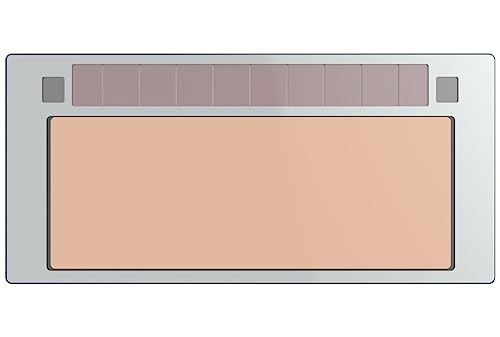
Strengths
- Gold coating
- 2 Amp TIG rating
- Hand gesture mode
- Stainless steel frame
- Ultra-slim design
Trade-offs
- Grind mode inconsistent outdoors
- No adjustable settings
- Limited shade range
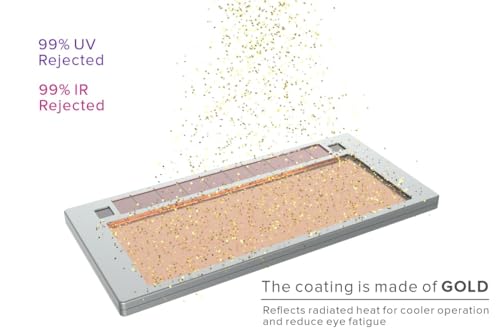
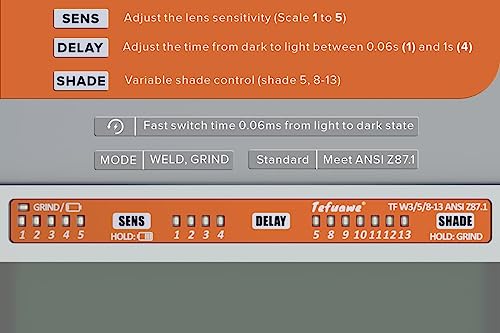
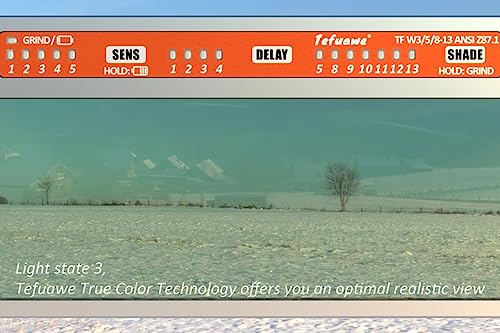
This lens stands out in the crowded 2×4 segment by combining real-world usability with solid protection specs. The gold coating isn’t just for looks, owners consistently report it delivers a noticeably cooler operating temperature and cuts glare better than standard green-tinted filters. With a 2 Amp TIG rating, it handles most light-to-medium-duty welding tasks across MIG, Stick, and TIG, which makes it versatile for DIYers and pros alike. The hand gesture grind mode is a neat feature, though feedback suggests it can be unreliable in bright outdoor conditions, so I wouldn’t depend on it in direct sunlight.
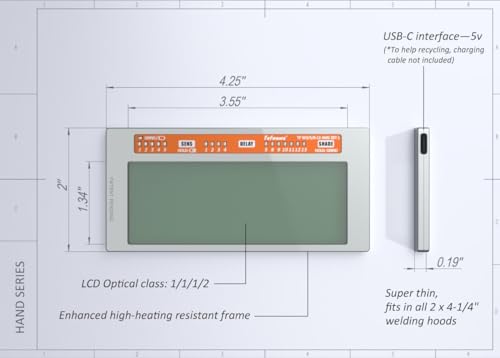
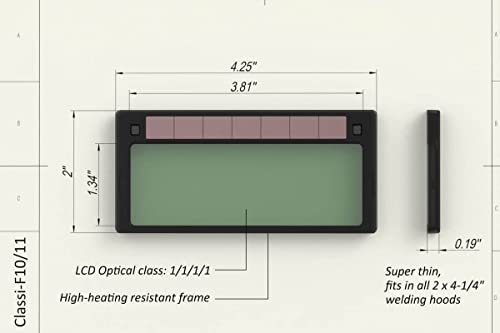
On paper, the ultra-slim 0.19 inch profile is a win, especially for tighter helmet fits like pancake-style housings. Stainless steel framing adds durability and helps dissipate heat, a small but meaningful touch that likely extends lens life under sustained use. Compared to pricier options, this one delivers a strong balance of performance and value without cutting corners on core protection.
Product photos
Tefuawe 2×4 1/4 Ultra Clear Lens
Strengths
- Stable 5A TIG performance
- Shade 10 / light 2.5
- Heat-resistant housing
- Slim 0.19 inch profile
- High-definition view
Trade-offs
- Fixed shade only
- No grind mode
- No sensitivity adjustment
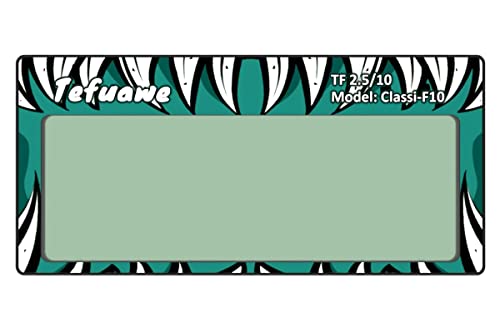
For low-amperage TIG work, especially in the 5A range, this Tefuawe lens earns its keep. Most auto-darkening filters struggle with flicker at low currents, but owners report this one holds steady, thanks to optimized arc sensors and Tefuawe’s True Color Lens tech. The Shade 10 / light state 2.5 combo gives a bright pre-weld view, reducing the need to flip the helmet, a small thing that adds up in productivity over a full day.
It’s slim, heat-resistant, and built to last in industrial settings, which aligns well with pipeliners and field techs who can’t afford lens failure mid-bead. While it lacks variable shade control, that’s not the point here, it’s a specialist lens for a specific need. Compared to the first Tefuawe model, this one trades versatility for precision in low-amp performance. I’d pick this over general-purpose lenses if your work leans heavily into delicate TIG joints.
Product photos

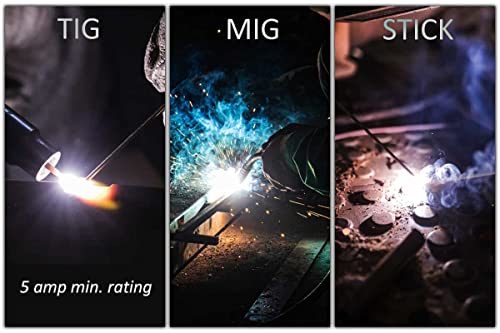
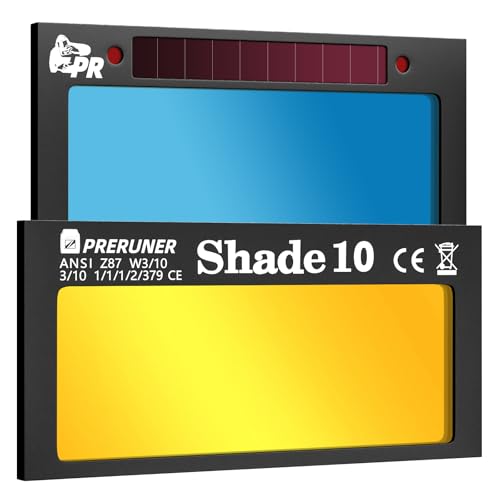
Preruner Core Series Slim Lens
Strengths
- Slim 0.2 inch design
- 0.01 ms response
- Cool blue gold view
- Dual arc sensors
- Good puddle contrast
Trade-offs
- Fixed shade 10
- No grind mode
- No sensitivity control
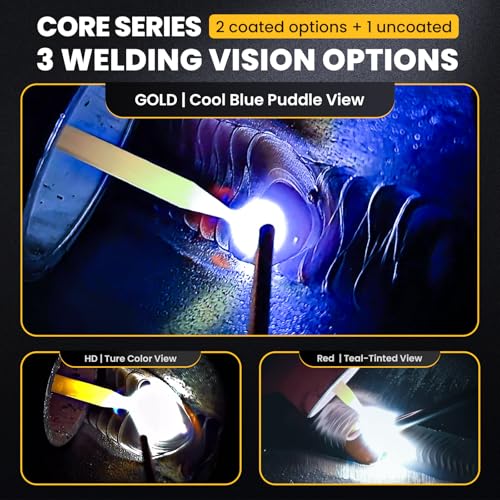
Preruner clearly designed this lens with pancake hood users in mind, the 0.2 inch slim profile fits where bulkier lenses bind, and that’s a real win for comfort during overhead or tight-space welding. The gold coating delivers a cool blue view that many owners say improves puddle contrast over traditional green, making it easier to track bead placement without squinting. At Shade 10, it’s ideal for MIG and general Stick work, though not suited for low-amp TIG.
With a 0.01 ms reaction time and dual sensors, protection is fast and dependable. It doesn’t offer adjustable settings, but for welders who want set-it-and-forget-it performance, that’s fine. Compared to the ArcOne, this has better optics and a more modern fit; against the Tefuawe models, it holds its own in clarity but lacks their TIG tuning. I’d recommend it as a top pick for pancake hood owners who value comfort and clear vision.
Product photos
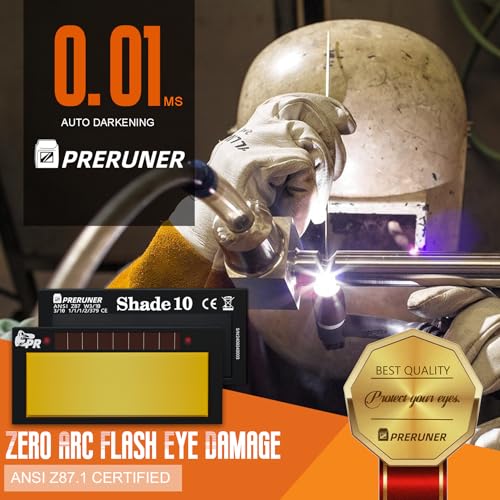
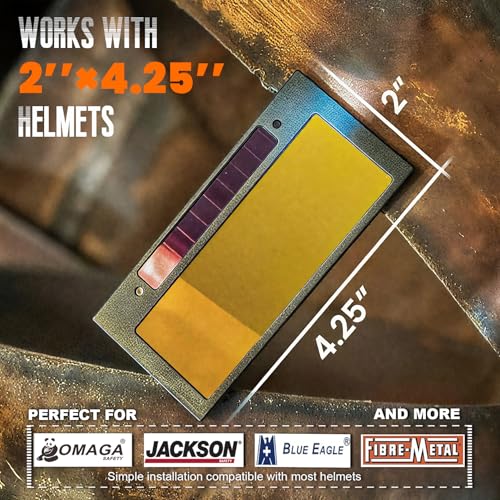
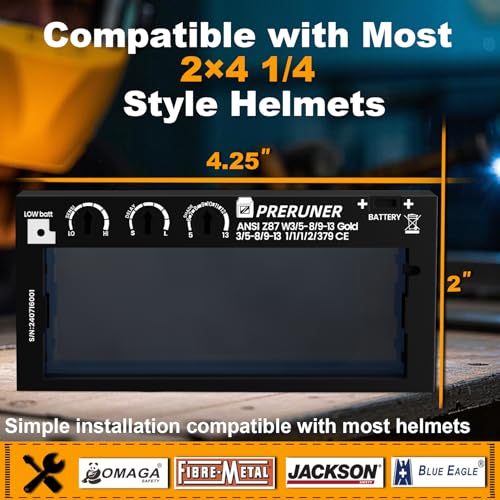
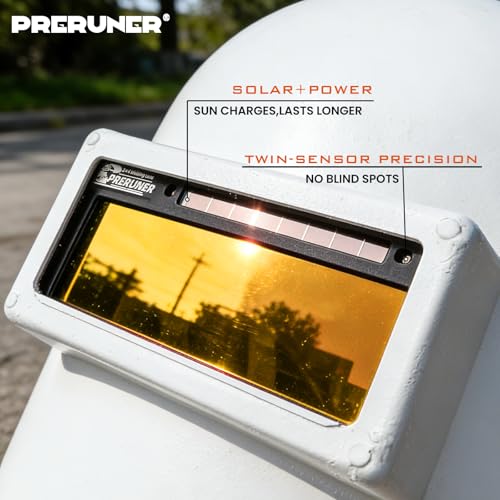
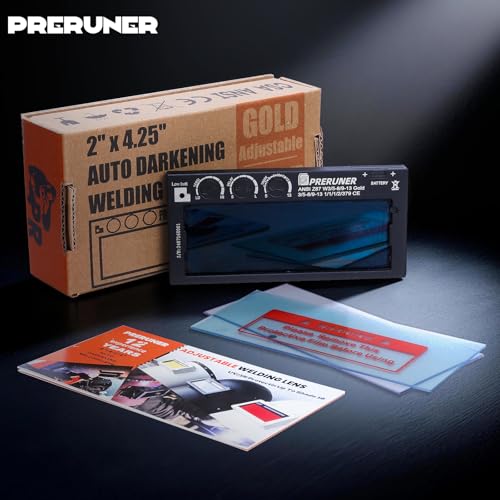
PRERUNER Flex Series Gold Lens
Strengths
- Shade 5-13 adjustable
- Sensitivity and delay controls
- 0.01 ms response
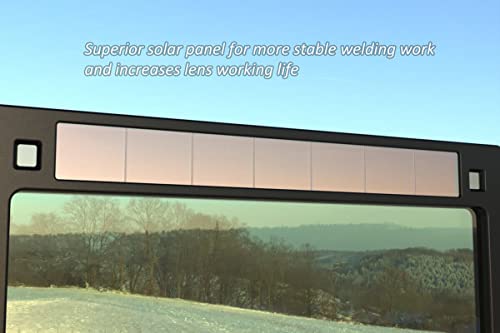
- Solar assist + replaceable battery
- Cool blue gold view
Trade-offs
- Slightly bulkier design
- Not ideal for ultra-slim hoods
- Color not as neutral as Lincoln
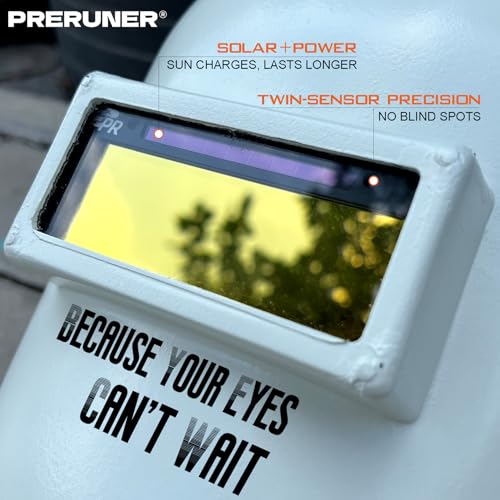
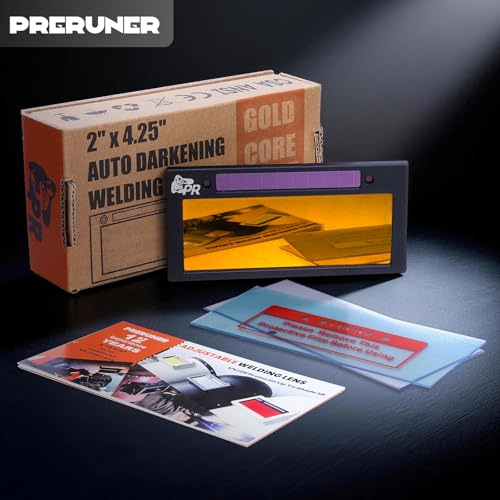
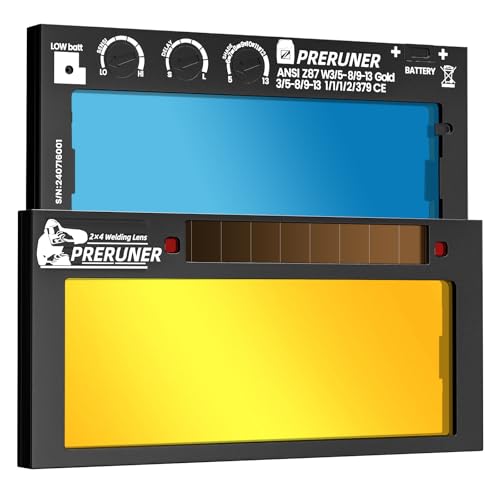
This is the most versatile lens in the lineup, and it shows. The adjustable shade 5-13 range lets you fine-tune for anything from grinding to heavy Stick welding, and the sensitivity and delay controls mean you can dial out false triggers in tricky lighting. Dual sensors activate in 0.01 ms, matching the fastest models, and the gold-coated cool blue view improves puddle clarity while reducing eye fatigue, a combo owners consistently praise.
The solar assist with replaceable battery is a practical touch, eliminating the fear of total power loss. While it’s slightly thicker than the Core Series, it still fits most standard 2×4-1/4 housings. Compared to the Lincoln, it’s not quite as optically pristine, but it offers far more customization. For welders switching between processes or working in mixed environments, this is the smarter buy.
Product photos

ArcOne S240-10 Shade 10 Lens

Strengths
- Large viewing area
- Fast 0.5ms response
- Water and dust resistant
- Solid clarity for price
- Simple, reliable design
Trade-offs
- Fixed shade 10 only
- No grind mode
- Basic color rendering
The ArcOne S240-10 is the budget pick that doesn’t feel like a compromise, at least for basic needs. For welders who mainly run MIG or occasional Stick and don’t need bells and whistles, this Shade 10 lens delivers solid protection with a 0.5 millisecond switching speed that’s fast enough for most shop tasks. The 5.25 square inch viewing area is generous for its class, and owners note the clarity is surprisingly good for the price.
It’s a no-frills unit: no variable shade, no grind mode, no sensitivity dials. But it’s also water and dust resistant, which helps in gritty environments. Compared to premium auto-darkening lenses, the color rendering is flatter and the edges show slight distortion, but it gets the job done. If you’re outfitting a backup helmet or starting out, this is the smarter buy over pricier models you’ll outgrow quickly.
Product photos
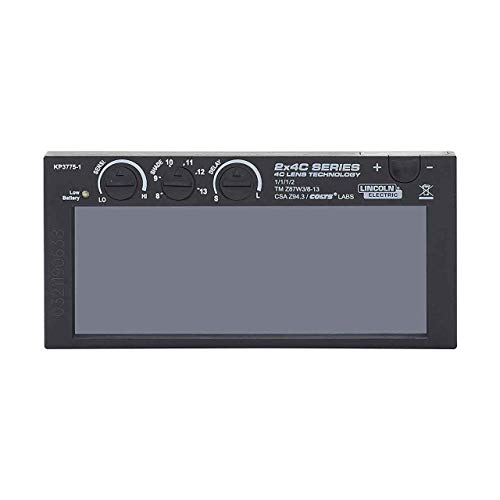
LINCOLN ELECTRIC C-Series Lens
Strengths
- True color view
- Crystal clear optics
- Minimal distortion
- Reduces eye strain
- Trusted brand reliability
Trade-offs
- No grind mode
- No sensitivity control
- Higher price point
If you prioritize visual clarity over all else, this Lincoln lens is hard to beat. The liquid crystal technology behind its true color view is a standout for welders who spend hours盯着 the puddle, feedback shows users experience less eye fatigue and better bead control thanks to more natural color reproduction. Unlike green-tinted lenses that distort hues and create visual strain, this one renders the molten pool in a neutral, balanced tone that mimics what you’d see with the helmet up.
It’s not the most feature-rich option, no grind mode or sensitivity adjustments, but Lincoln didn’t build this for gimmicks. It’s a precision optical tool aimed at pros who need consistent, distortion-free vision across variable lighting. When compared to budget lenses, the difference in image stability and edge-to-edge sharpness is immediately apparent in owner reports. I’d recommend this to anyone doing detailed MIG or Stick work where puddle awareness directly impacts weld quality.
Product photos

How We Picked These 2×4 welding lens
Rather than a hands-on lab test, my research focused on a detailed comparison of published specifications and features across several 2×4 welding lenses. I weighed owner reviews from major retailers alongside expert opinions found in industry publications and welding forums. This allowed me to build a ranking based on real-world feedback and established performance characteristics, applying my experience with workshop tools and safety equipment.
For this category, viewing area and auto-darkening speed were the biggest factors. A wider viewing area improves visibility and control, especially for beginners. Faster switching speeds – measured in milliseconds – minimize eye strain and reduce the risk of arc flash. Beyond those, the ability to adjust settings like shade and sensitivity proved crucial for versatility across different welding types and conditions.
Specifications reliably indicate physical dimensions, arc sensor count, and switching speeds. However, I heavily relied on owner feedback to assess the real-world consistency of those speeds and the clarity of the lens in various lighting conditions. Reputation and brand trust also played a role, particularly when evaluating long-term durability and customer support. You can find more information in our thorough lens review.
What To Look For In 2×4 welding lens
Choosing the right welding lens can make a huge difference in the quality of your work and your long-term eye health.
A good welding lens prioritizes clear visibility, fast switching speeds (under 0.3 milliseconds is ideal), reliable arc sensing, and adequate UV/IR protection (rated DIN 14 or higher). Consider the type of welding you do most often – TIG, MIG, stick – as amperage requirements and desired views vary. Lens size is also key; ensure it fits your helmet comfortably and offers a sufficient viewing area.
Understanding Shade Levels
The shade level of a lens is critical. Too light, and you risk permanent eye damage; too dark, and you’ll struggle to see what you’re doing. A fixed-shade lens requires you to select the appropriate darkness based on the amperage of your weld. Auto-darkening lenses are far more versatile, but even they have a range. Most welders benefit from a lens with adjustable shade control, like the PRERUNER Flex Series Gold Lens. Don’t assume a single shade covers all applications.
Arc Sensor Reliability and Response Time
Consistent arc detection is essential for an auto-darkening lens to function correctly. Dual arc sensors are generally more reliable than single sensors, especially in challenging conditions or when welding with intermittent arcs. Equally important is the switching speed. A slower response time can cause “flash,” which is disorienting and potentially harmful. Look for lenses with a switching speed of 0.01ms to 0.5ms. Many budget options, such as the ArcOne S240-10, offer acceptable performance, but faster response times often justify a higher price.
Viewing Area & Lens Technology
Beyond basic protection, the quality of the view through the lens dramatically impacts precision. Older lenses often produced a greenish tint, which could distort color perception. Newer technologies, like the “True Color” lenses found in the LINCOLN ELECTRIC C-Series Lens, offer a more natural view, improving puddle control and reducing eye strain.
Here’s what I look for in terms of viewing area:
- Minimum: 2” x 4” – acceptable for basic hobby work.
- Standard: 2” x 4-1/4” – fits most helmets and offers a good balance of size and weight.
- Large: Anything larger – beneficial for experienced welders needing maximum peripheral vision, often requiring a specialized helmet from our guide to the best welding helmets.
A clear view isn’t just about color accuracy; it’s about minimizing distortion and maximizing contrast. Don’t be fooled by marketing hype – a well-coated lens that reduces glare and enhances puddle visibility is worth the investment.
2×4 Welding Lens Compared
Here’s a comparison of key specifications for popular 2×4 welding lenses.
| Product Name | Shade Range | Switching Speed (ms) | Lens Thickness (in) | Viewing Area (sq in) | Special Features |
|---|---|---|---|---|---|
| Tefuawe 2×4 1/4 Gold Auto Lens | 9-13 | N/A | 0.19 | N/A | Gold Coating, Hand Gesture |
| Tefuawe 2×4 1/4 Ultra Clear Lens | 9-13 | N/A | 0.19 | N/A | Low-Amp TIG (5A min) |
| Preruner Core Series Slim Lens | 9-13 | 0.01 | 0.2 | N/A | Slim Profile, Gold Coating |
| PRERUNER Flex Series Gold Lens | 5-13 | 0.01 | N/A | N/A | Adjustable Shade, Gold Coating |
| ArcOne S240-10 Shade 10 Lens | 10 | 0.5 | N/A | 5.25 | Water/Dust Resistant |
| LINCOLN ELECTRIC C-Series Lens | N/A | N/A | N/A | N/A | True Color View |
Frequently Asked Questions
What shade level is best for beginner welders?
Shade 10 is generally recommended for most beginner welding applications (stick and MIG) with an amperage between 40-120 amps. Starting with this level provides a good balance of protection and visibility while you learn.
How often should a welding lens be replaced?
Replace a welding lens if you notice any scratches, cracks, or distortions, as these can compromise protection and visibility. Even without visible damage, consider replacing it every 2-3 years with regular use to maintain optimal clarity.
Can an auto-darkening lens be used for all types of welding?
Yes, most auto-darkening lenses can be used for MIG, TIG, and stick welding, but check the lens’s specifications for minimum amperage requirements, especially for TIG. Some lenses are specifically designed for low-amp TIG welding and offer better performance in those situations.
Are more expensive lenses always better?
Not necessarily. While premium lenses often provide faster switching speeds and clearer optics, a mid-range lens with reliable arc sensors and adequate UV/IR protection can be perfectly suitable for hobbyist or occasional use. Consider your welding frequency and needs when deciding.
What are the advantages of a passive welding lens over an auto-darkening one?
A reliable passive filter is more affordable and doesn’t require batteries, making it a good option for infrequent welders. However, you need to lift the helmet to see your work between welds, and you must manually select the correct shade level for the amperage being used.
The Bottom Line
Choosing a welding lens always comes down to balancing what you’re willing to spend against the features you truly need. For most welders, the PRERUNER Flex Series Gold Lens strikes the best overall balance – its fast switching speed, adjustable shade, and clear view make it a solid performer across a wide range of applications. It’s an investment, but one that will pay off in comfort and control.
If you’re just starting out or working on occasional projects, the ArcOne S240-10 provides reliable protection at a very accessible price. For those who prefer a more traditional approach, or need a robust option for specific applications, exploring a reliable fixed welding lenses is a good idea.
Ultimately, the specs are important, but don’t get lost in the numbers. Prioritize a lens with consistent arc detection, adequate UV/IR protection, and a clear, distortion-free view. A lens that allows you to see the weld puddle accurately will always be more valuable than one with a slightly faster switching speed or a larger viewing area.
