8 Best 12-Inch Sliding Compound Miter Saws of 2026
This post contains affiliate links. As an Amazon Associate, we earn from qualifying purchases.
The DEWALT DWS779 stands out as the best overall 12 inch sliding compound miter saw for most users, combining reliable power, solid cutting capacity, and strong owner feedback. If you’re watching your budget, the WEN MM1213T delivers decent performance at a much lower price. For those who prioritize smooth operation and superior dust collection, the BOSCH GCM12SD is a top-tier choice.
Choosing the right 12-inch sliding compound miter saw isn’t just about raw power, it’s about consistency, accuracy, and how well the saw holds up over time. Too many people buy based on specs alone, only to end up with a saw that’s out of alignment after a few jobs or struggles with basic crown molding cuts.
This guide cuts through the noise. I focused on models that consistently earn praise for durability and precision, using verified specs and real-world owner experiences to identify the ones worth your money. You’ll get clear insights into what separates a dependable performer from a garage regret.
Top 8 12 Inch Sliding Compound Miter Saws in the Market
The Best 12 Inch Sliding Compound Miter Saws, Reviewed
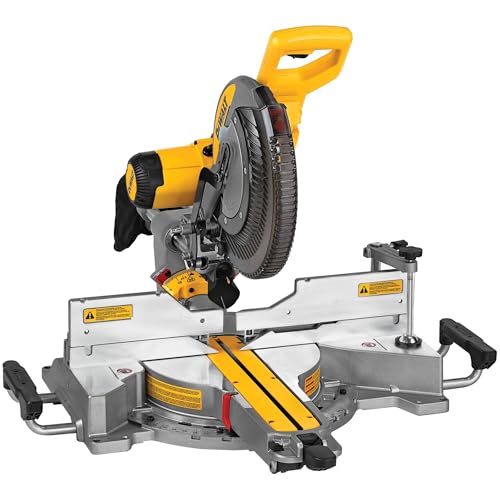
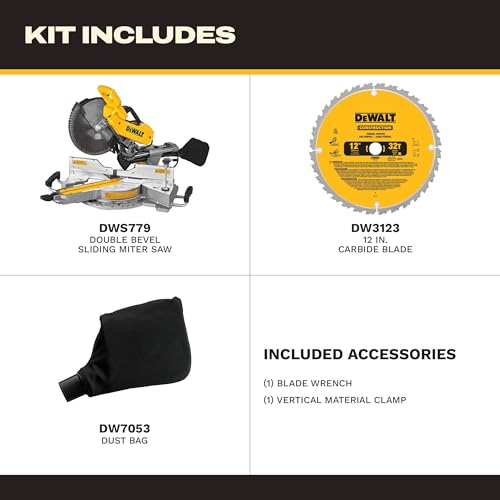
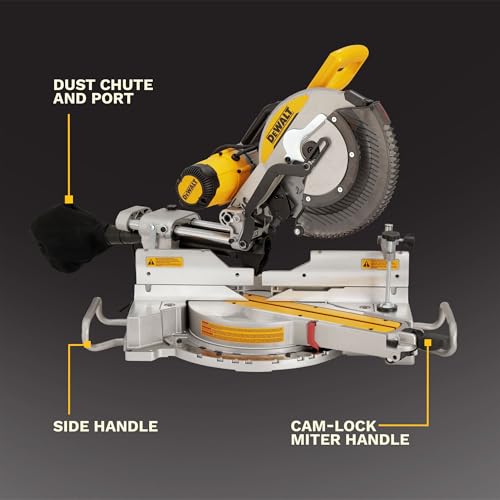
DEWALT DWS779 12-Inch Double Bevel Miter Saw
Strengths
- 3,800 rpm motor
- Over 75% dust capture
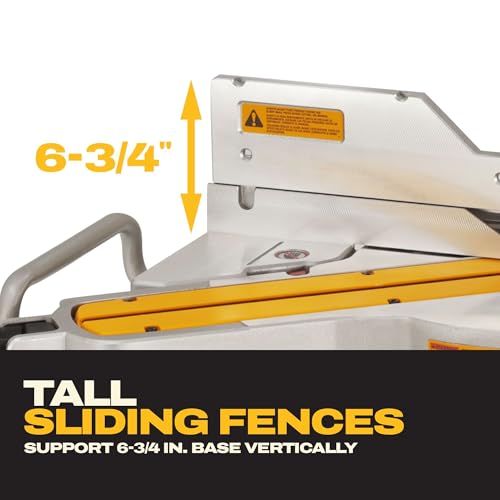
- Tall sliding fences
- 10 positive miter stops
- Durable steel rails
Trade-offs
- No XPS or laser
- Slightly heavier
- Basic cutline visibility
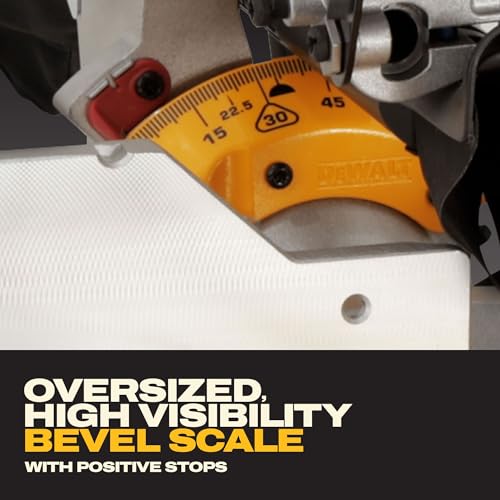
If you’re looking for the best overall balance of power, precision, and reliability in a 12-inch sliding miter saw, the DEWALT DWS779 is hard to beat. It shares the same rugged dual-rail system, 3,800 rpm motor, and tall sliding fences as the DWS780, but skips the XPS shadow light, instead relying on traditional sight lines. That keeps the price lower while still delivering DEWALT’s signature durability. Owners report years of trouble-free use, even on job sites, and the detent system is praised for snapping into common angles with confidence.
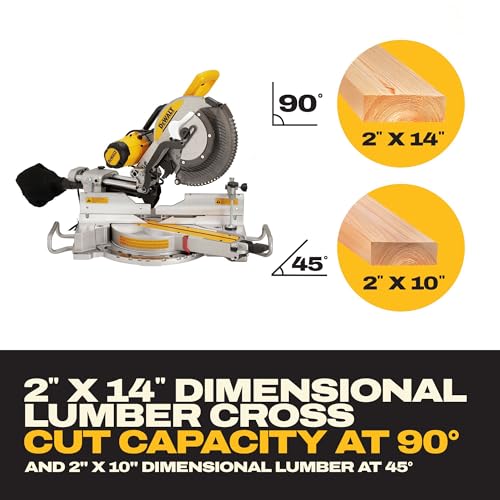
It handles 2×14 at 90° and 2×10 at 45°, which covers nearly all framing and trim needs. The dust collection is strong, capturing over 75% with a vacuum. Compared to the DWS780, this model is the smarter buy if you don’t need the shadow light, you save money without sacrificing core performance. For most serious DIYers and pros, this is the sweet spot in DEWALT’s lineup.
Product photos
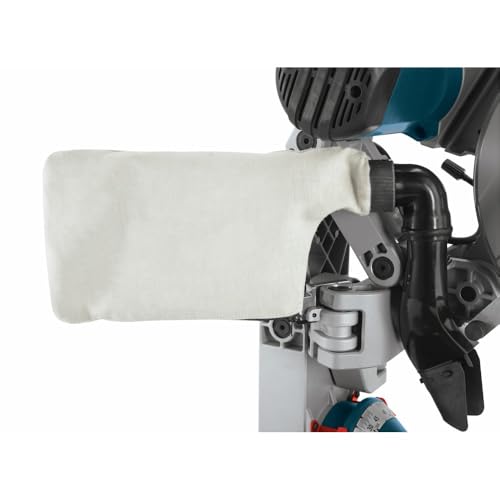
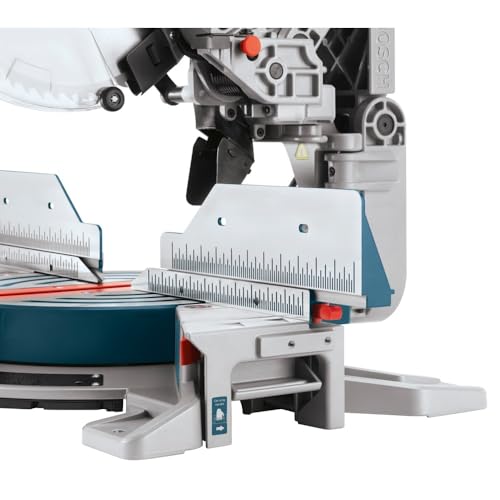
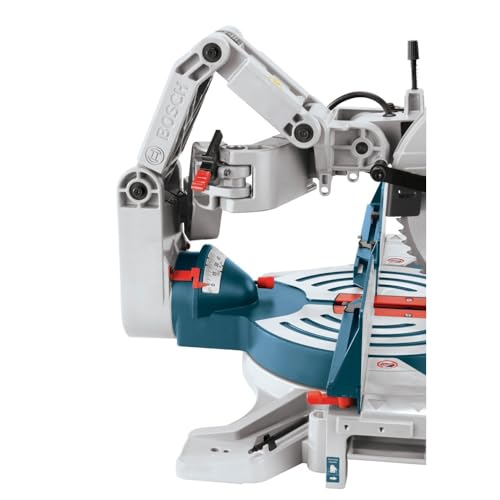
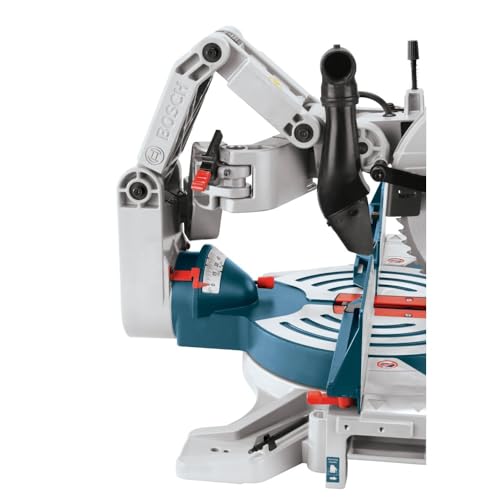
BOSCH GCM12SD 12-Inch Dual-Bevel Glide Miter Saw
Strengths
- 90% dust collection
- Axial-Glide system
- Expanding base extensions
- Stainless steel scales
- Front bevel lock
Trade-offs
- Higher price point
- Slightly bulkier
- No XPS alternative
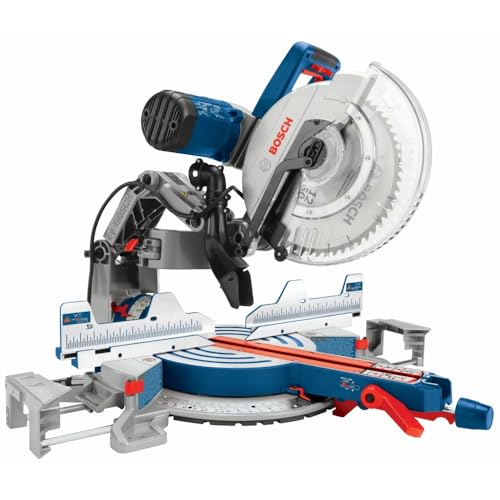
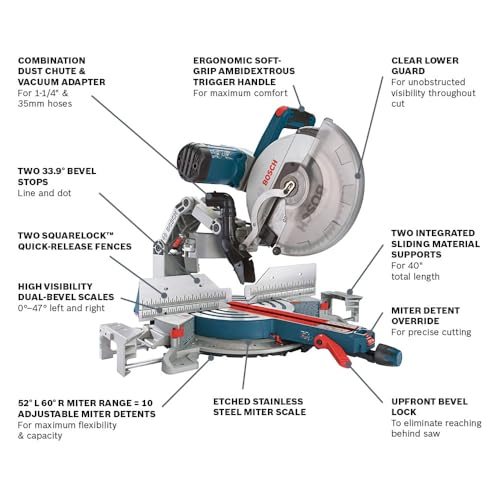
The Bosch GCM12SD is a precision-focused workhorse that excels in dust control and material support, two things most saws in this class overlook. Its Axial-Glide system allows for a full 12-inch crosscut with a smooth, low-resistance slide, and the expanding base extensions offer 60% more support than many competitors, which is a standout when cutting large panels or sheets. The laser isn’t flashy, but the stainless steel miter scale and detents at common angles are easy to read and hold calibration well over time.
What really sets it apart is the dust collection, 90% capture rate with a vacuum is best-in-class and a huge win for indoor work. Owners love how clean their shops stay. Compared to the DWS779, it’s pricier but more refined, especially for finish carpentry. If you hate cleanup and need dead-on accuracy, this is the saw to beat.
Product photos
DEWALT DWS780 with XPS LED Shadow Light

Strengths
- XPS shadow light
- 3,800 rpm motor
- Tall sliding fences
- Dual steel rails
- Over 75% dust capture
Trade-offs
- Heavier than some
- No laser option
- Slight learning curve
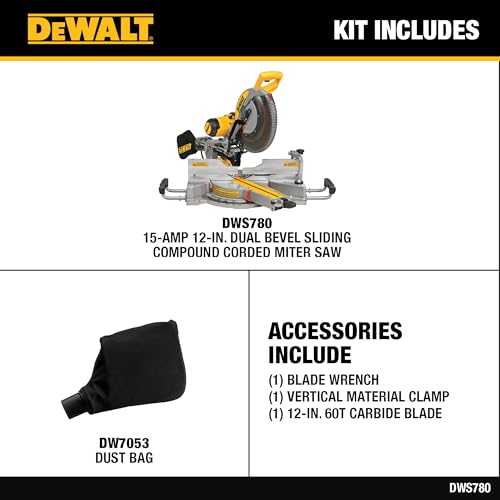
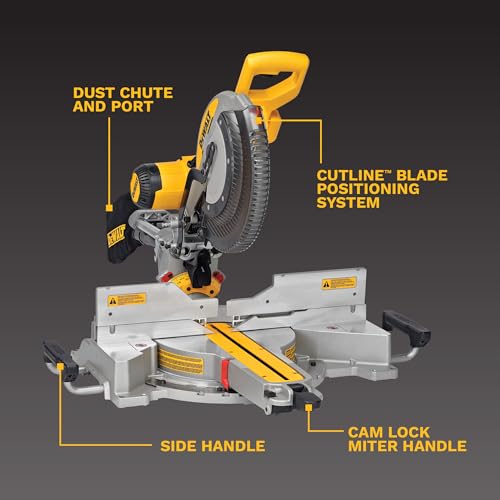
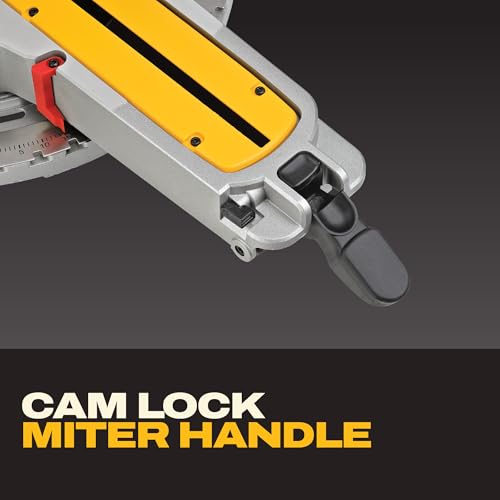
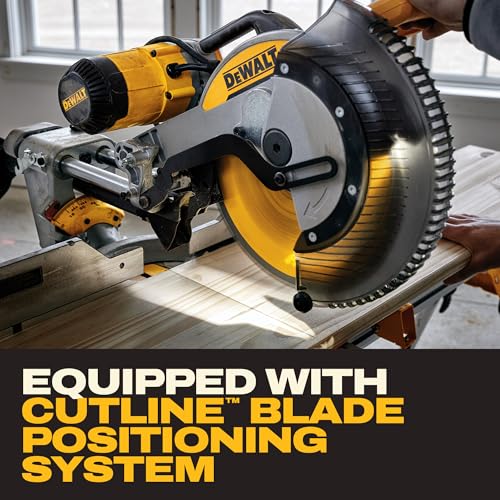
The DEWALT DWS780 stands out in the 12-inch sliding miter saw class for its XPS LED shadow line system, which owners consistently praise for delivering crisp, reliable cutline visibility without relying on a laser. This is a big win for accuracy, especially in bright workshop lighting where lasers can wash out. On paper, it’s built like a tank, the dual steel rails, linear ball bearings, and compact gearbox design contribute to smooth, stable sliding action and impressive vertical capacity, handling 2×14 at 90° with ease.
It’s not the lightest in its class at 58 lbs, but its ergonomic balance and compact footprint make it a solid choice for contractors and serious DIYers who move it between jobsites. The dust collection system, rated to capture over 75% of dust, performs well when paired with a shop vac. Compared to the DWS779, this model brings the XPS advantage, making it the better pick if cutline precision is a top priority.
Product photos

Makita LS1219L 12″ Dual-Bevel Miter Saw

Strengths
- 15-inch crosscut capacity
- 2-steel rail glide
- Direct drive motor
- Dual dust ports
- Flush wall operation
Trade-offs
- No LED or laser guide
- Heavier footprint
- Fewer miter detents
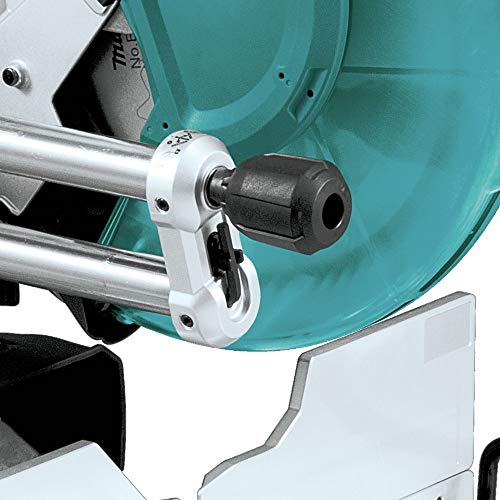
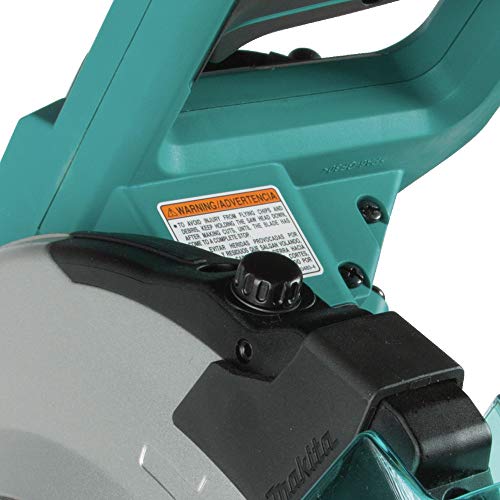
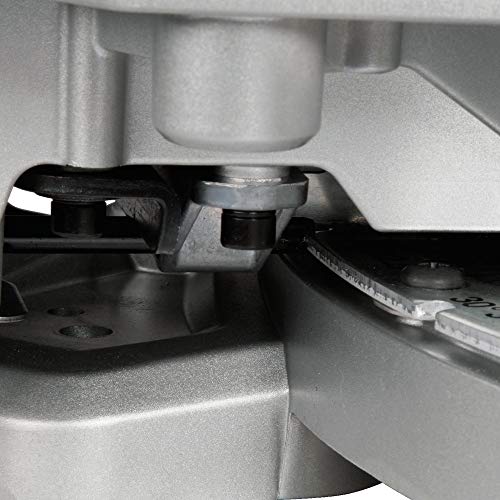
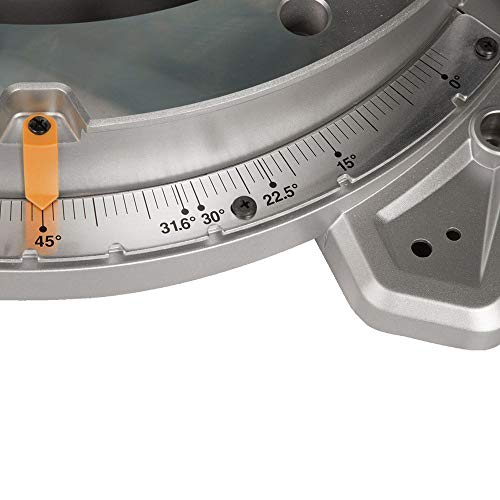
Makita’s LS1219L punches above its weight in cutting capacity and build quality, offering one of the largest crosscut capacities in this group, up to 15 inches at 90°. That makes it a standout for cutting wide tabletops or large dimensional lumber without flipping the board. The 2-steel rail sliding system is buttery smooth and allows the saw to sit flush against a wall, a huge perk in tight workshops. Owners consistently report excellent rigidity and long-term accuracy, thanks to the direct drive motor and robust guard system.
It doesn’t have a shadow light or XPS, but the dual dust ports are a win, connect a vacuum and you’ll see real dust extraction performance. Compared to the Bosch GCM12SD, it trades some precision detents for raw capacity and ease of use. If you regularly work with wide stock or need a saw that holds calibration for years, this is one of the best-built options here.
Product photos

WEN MM1213T 12-Inch Dual-Bevel Miter Saw

Strengths
- Affordable price
- Onboard laser
- 48-tooth blade included
- Two-year warranty
- Lightweight design
Trade-offs
- Basic detent system
- Lower fence stability
- Mediocre dust port
The WEN MM1213T is the clear budget champion in this lineup, a no-frills, functional dual-bevel sliding miter saw that doesn’t pretend to be more than it is. With a 15-amp motor, 4.1-inch vertical cut capacity, and a basic onboard laser, it handles standard trim, framing, and deck work just fine. The inclusion of a 48-tooth carbide blade and two-year warranty adds real value, especially at this price tier.
But let’s be real: the miter detents are minimal (just 5 stops), and the fence system isn’t as rigid as DEWALT or Bosch. It’s best suited for occasional use, not production work. Compared to the DOVAMAN, it has fewer features but better reported build consistency. If you’re a beginner building a shop or need a backup saw, this gets the job done without breaking the bank.
Product photos


DOVAMAN 12-Inch Dual-Bevel Miter Saw

Strengths
- Laser guide included
- 9 positive miter stops
- Thorough accessory kit
- Solid cutting capacity
- Ambidextrous operation
Trade-offs
- May need alignment
- Lower build refinement
- Laser visibility issues
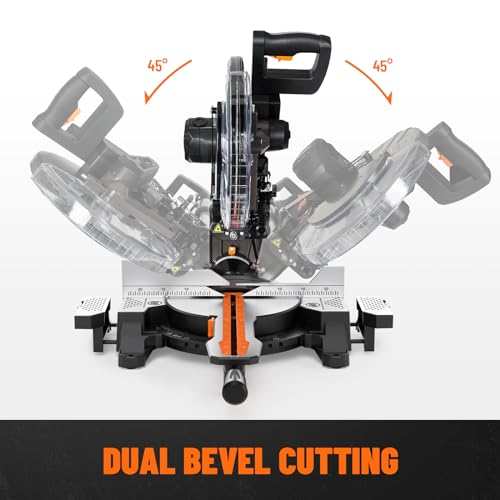
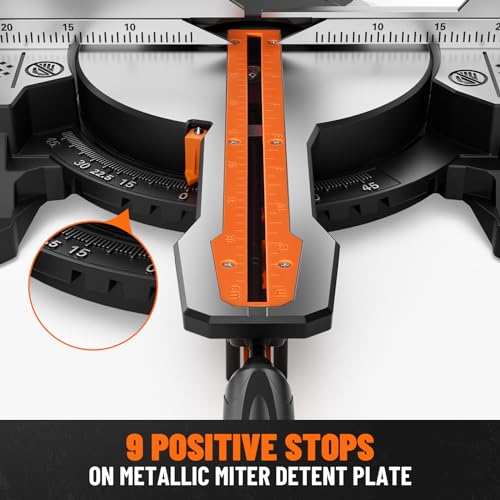
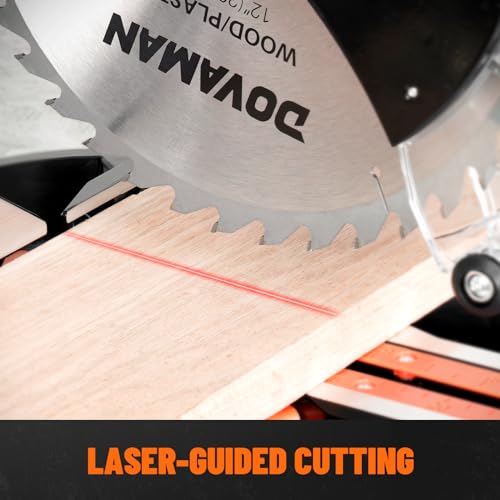
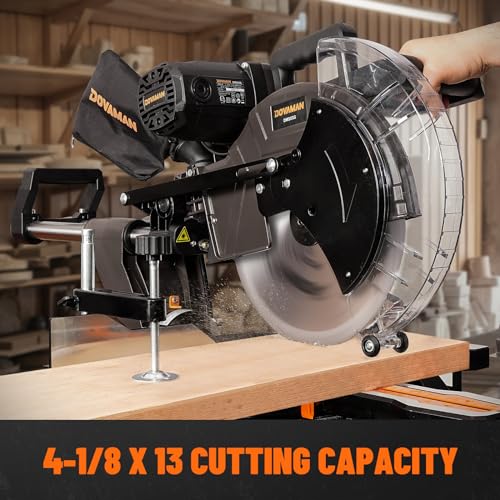
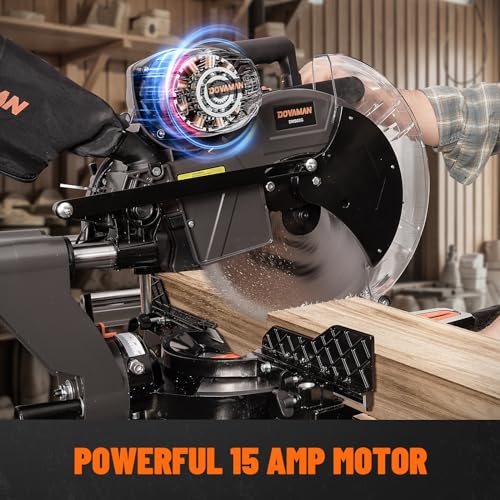
The DOVAMAN 12-inch miter saw is clearly targeting buyers who want laser guidance and solid specs at a lower price point. With a 3800 RPM motor, 9 positive stops, and a laser guide, it covers the basics well for trim work and basic framing. The inclusion of a pre-installed 40T blade, dust bag, clamp, and spare carbon brushes makes it one of the most complete entry-level packages here.
But owner feedback highlights a common issue: factory alignment can be off, requiring setup time before first use. The laser is helpful but not as bright or precise as Bosch’s or DEWALT’s systems. Build quality feels a step below the major brands, it’s functional, but not something I’d trust for daily professional use. Still, for a beginner or casual user, it offers a lot of features for the cost. Compared to the WEN MM1213T, it has more stops and a sturdier base, making it the better value pick if you want a laser.
Product photos
VEVOR 12-Inch Double Bevel Sliding Miter Saw
Strengths
- 5000 RPM speed
- Lightweight aluminum base
- LED alignment
- Dual bevel capability
- Good for hardwood
Trade-offs
- Unproven long-term durability
- Mediocre dust collection
- Looser fit and finish
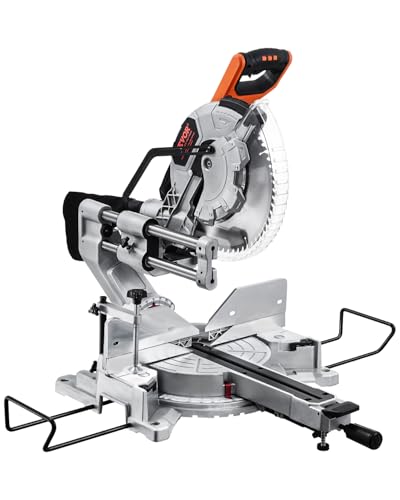
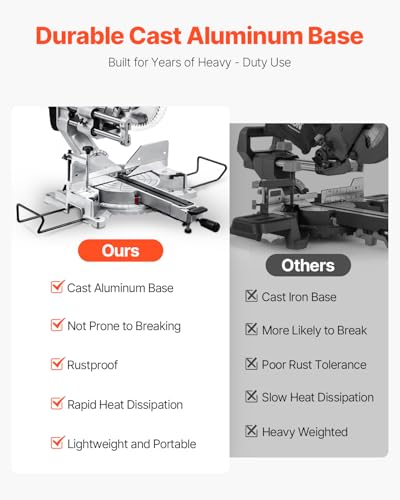
Let’s be honest, VEVOR isn’t a name you typically see on a pro’s truck, but this saw brings serious specs on paper: a 5000 RPM motor and 3000W bevel cutting power are eye-catching, especially for hardwood and dense composites. The LED precision alignment system gets positive nods in owner feedback for helping line up fine cuts, though some note it’s not as crisp as DEWALT’s XPS. The axial sliding system works smoothly, and the aluminum base does make it lighter and easier to move than cast iron competitors.
But here’s the catch, while it feels capable for hobbyists and weekend builders, long-term durability is still an open question. It lacks the refined detents, dust control, and build precision of Bosch or Makita. I’d consider it for occasional use, but not as a primary saw for production work. Against the DWS779 or Bosch GCM12SD, it’s outgunned in refinement, even if it matches them on raw speed.
Product photos

Prostormer 12-Inch Dual Bevel Miter Saw
Strengths
- Very lightweight
- 5000 RPM motor
- LED cutline guide
- Compact wall-friendly design
- Easy setup
Trade-offs
- Lower cutting capacity
- Basic dust control
- Less rigid fence system
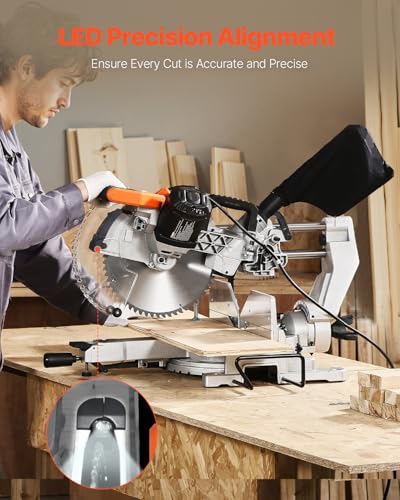
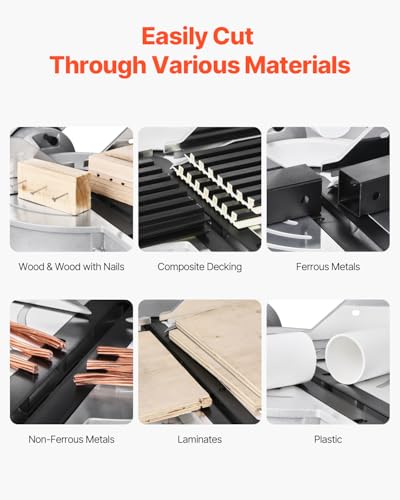
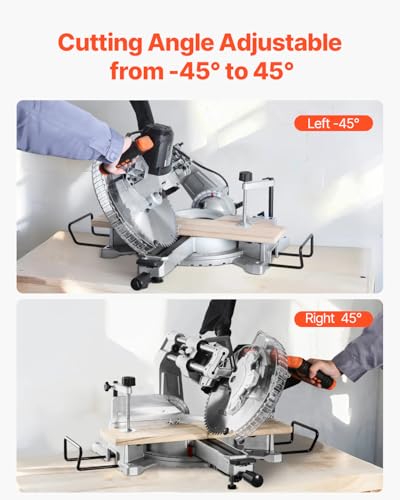
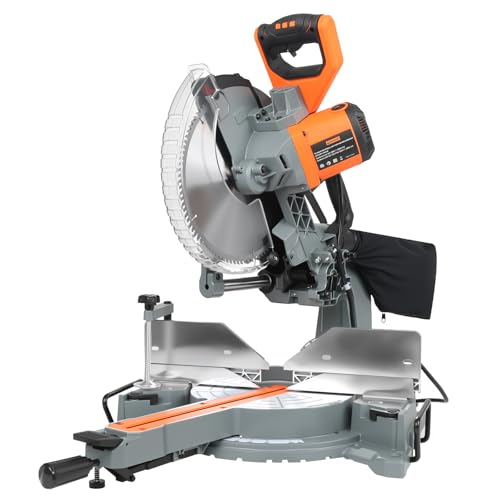
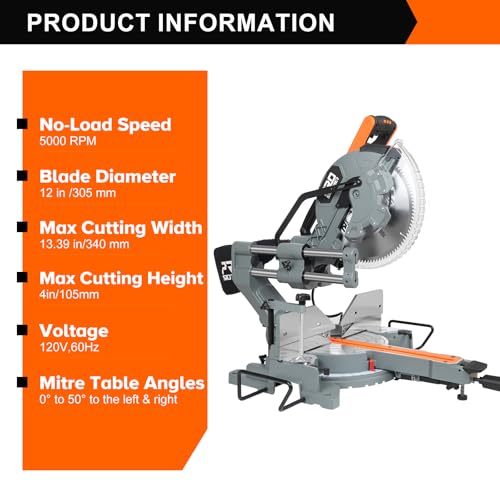
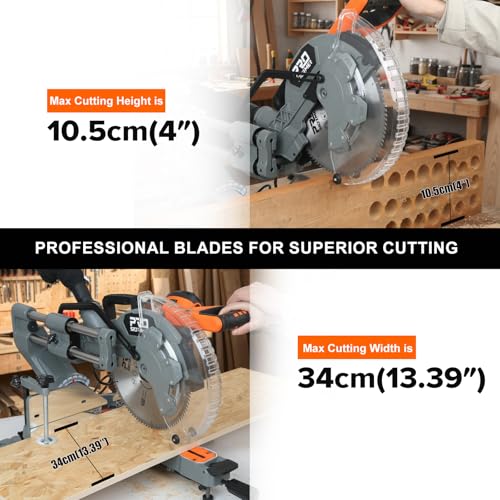
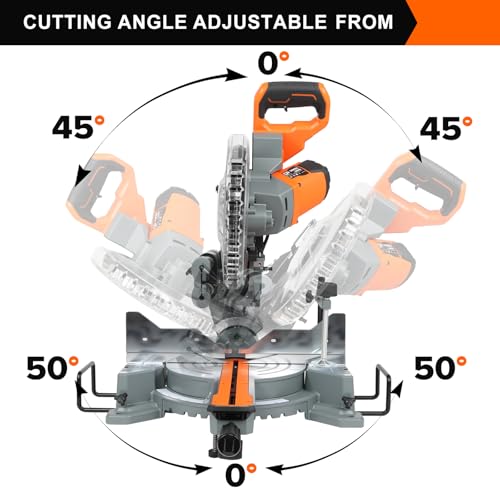
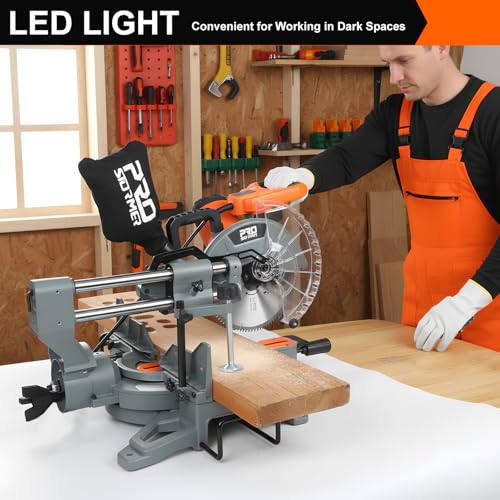
The Prostormer 12-inch miter saw leans hard into lightweight portability and clean LED guidance, making it a contender for users who value ease of transport and space-saving design. With a 5000 RPM motor and aluminum base, it mirrors the VEVOR in performance claims, but real-world feedback suggests it’s better tuned for smooth operation than raw power. The LED guide system works well in low-light conditions, though it doesn’t project as sharply as DEWALT’s XPS or Bosch’s laser setups.
Where it stands out is weight, it’s among the lightest in this group, which matters if you’re lugging it up ladders or storing it in a cramped garage. But that comes at a cost: the cutting capacity is less than DEWALT or Makita, and the dust collection is basic. For a second saw in a home shop or for deck-building on the go, it’s a smart compromise. But for crown molding or fine trim, I’d still reach for something more precise.
Product photos

How We Chose These 12 inch sliding compound miter saws
Rather than a hands-on lab test, my research for these recommendations involved a detailed comparison of published specifications and features across numerous models. I then weighed owner reviews from major retailers alongside expert opinions found in woodworking publications and online forums. My aim was to identify patterns in reported performance, reliability, and ease of use, applying my experience with power tools to assess the relative strengths of each saw.
For 12-inch sliding compound miter saws, cutting capacity and accuracy are paramount. I prioritized models with robust motors – generally 15 amps or higher – and features like adjustable detents and clear scales. Dust collection also factored heavily, as a clean worksite improves visibility and reduces health risks. Beyond that, the quality of the sliding mechanism significantly impacts smooth, accurate cuts.
Specifications reliably indicate motor power, maximum cut dimensions, and bevel/miter ranges. However, owner feedback proved crucial for assessing real-world accuracy, particularly regarding how well the saws maintain calibration over time. Reputation also played a role; brands consistently praised for build quality and customer service received higher consideration. You can learn more about the core functionality of these tools in our guide to how sliding compound miter saws work.
What To Look For In 12 inch sliding compound miter saws
Choosing the right sliding compound miter saw can dramatically improve the quality and efficiency of your woodworking projects.
A quality sliding compound miter saw blends power with precision. Key considerations include motor amperage, blade quality, the type of sliding mechanism (radial arm vs. glide), dust collection effectiveness, and the accuracy of miter and bevel adjustments. Look for features like positive stops, adjustable detents, and clear scales for consistently repeatable cuts.
Motor Power and Cutting Capacity
Don’t automatically assume “more watts” equals better. While a 15-amp motor is fairly standard and will handle most tasks, consider the type of wood you’ll be cutting most often. Softer woods like pine require less power than hardwoods like oak or maple. More importantly, focus on the saw’s capacity – the maximum width and depth it can cut at various angles. If you consistently work with large timbers, prioritize a model with a higher cutting capacity, like the Makita LS1219L.
Sliding System: Glide vs. Radial Arm
The sliding mechanism is a major differentiator. Traditional radial arm saws use a pivoting arm, which can sometimes feel less stable. Glide systems, like the one found in the BOSCH GCM12SD, use a linear bearing system that feels smoother and often allows the saw to be placed closer to a wall. I’ve seen many users praise the increased accuracy and reduced vibration of glide systems, especially for detailed work. For those looking for a detailed overview, you can find more information on a dual bevel miter saw.
Features and Value
Beyond the core mechanics, consider the features that enhance usability and accuracy. Laser guides, while not essential, can be extremely helpful for visualizing the cutline, particularly for beginners. Integrated dust collection is another big plus; a saw like the DEWALT DWS779 with its efficient dust collection will keep your workspace cleaner and improve visibility.
Here’s what I look for when balancing features with price:
- A basic laser guide is okay, but don’t pay a huge premium for it.
- Positive stops at common angles (0, 22.5, 45, 90 degrees) are essential for accurate repeatable cuts.
- A well-lit blade area, like the XPS LED shadow light on the DEWALT DWS780, is a worthwhile investment, as it significantly improves cutline visibility and reduces errors.
A good rule of thumb: spend a little more upfront for a saw with solid build quality and accurate adjustments. You’ll save yourself frustration, and potentially wasted wood, in the long run.
If you’re still researching, reading 12-inch sliding miter saw reviews of the top 12-inch sliding models can help narrow down your options. Ultimately, the best saw for you depends on your specific needs and budget, but prioritizing accuracy, power, and a smooth sliding system will set you up for success. If you’re on a tighter budget, you can still find good value in saws like the WEN MM1213T or the DOVAMAN, but be realistic about the trade-offs in terms of build quality and features. For those seeking premium 12-inch sliding saws, the Bosch and Makita models represent the upper end of the market.
12 Inch Sliding Compound Miter Saws Compared
Here’s a comparison of key specifications for popular 12 inch sliding compound miter saws.
| Product Name | Motor (Amps) | Max Crosscut (90°) | Bevel Capacity (Left/Right) | Miter Capacity (Left/Right) | Dust Collection (%) | Weight (lbs) |
|---|---|---|---|---|---|---|
| DEWALT DWS779 | 15 | 2 x 14 | 49° / 49° | 60° / 50° | 75+ | N/A |
| BOSCH GCM12SD | N/A | N/A | 47° / 47° | 52° / 60° | 90 | N/A |
| DEWALT DWS780 | 15 | 2 x 14 | 49° / 49° | 60° / 50° | 75+ | 58 |
| Makita LS1219L | N/A | 15″ | N/A | N/A | N/A | N/A |
| WEN MM1213T | 15 | 13″ x 4.1″ | 45° / 45° | N/A | N/A | N/A |
| DOVAMAN 12-Inch | 15 | 4.2″ x 13″ | 45° / 45° | N/A | N/A | N/A |
| VEVOR 12-Inch | 2500W/3000W | N/A | 45° / 45° | N/A | N/A | N/A |
| Prostormer 12-Inch | 15 | N/A | 45° / 45° | N/A | N/A | N/A |
Frequently Asked Questions
What blade size should I use for a 12 inch sliding compound miter saw?
You should always use a 12-inch blade, as that’s what these saws are designed for. Using a different size can create dangerous situations and void your warranty.
Are more expensive saws always more accurate?
Not necessarily, but generally, saws in a higher price range employ tighter manufacturing tolerances and better components. These qualities contribute to greater accuracy and repeatability, though owner reviews are still essential for verification.
What’s the difference between a single bevel and a dual bevel miter saw?
A single bevel saw only bevels in one direction, limiting the angles you can cut. Dual bevel saws, like many of the top compound 12-inch models, bevel in both directions, offering much greater flexibility and making complex cuts easier.
How important is dust collection on a miter saw?
Effective dust collection is very important, as it improves visibility and reduces respiratory hazards. Saws with a 90% or higher dust collection rating, or the ability to connect to a shop vac, will keep your workspace much cleaner.
What is the typical lifespan of a 12 inch sliding compound miter saw?
With proper care and maintenance, a quality 12-inch sliding compound miter saw should last for 5 to 10 years, or even longer. Regular cleaning, lubrication, and calibration are key to maximizing its lifespan, and choosing one of the best 12-inch compound saws to begin with certainly helps.
The Bottom Line
Choosing a 12-inch sliding compound miter saw always comes down to balancing what you need against what you’re willing to spend. While features are nice, the most important thing is a saw that cuts accurately and reliably over the long haul, and for an excellent blend of those qualities, I recommend the DEWALT DWS780. It provides a robust feature set and a reputation for consistent performance that’s hard to beat.
If you’re on a tighter budget or tackling less demanding projects, the WEN MM1213T offers surprisingly good value. For those who prioritize versatility and a smooth cutting action, the BOSCH GCM12SD stands out with its glide system. Understanding your miter saw cutting dimensions is crucial when making this decision.
Ultimately, don’t get too caught up in specs like laser guides or dust collection percentages. Focus on the fundamentals: a solid motor, accurate adjustments, and a smooth sliding mechanism. Those are the qualities that will make the biggest difference in the quality of your work and your overall satisfaction with the saw.
