
2 Best Wire Crimping Tools of 2026
This post contains affiliate links. As an Amazon Associate, we earn from qualifying purchases.
The Klein Tools VDV226-110 is the best overall wire crimping tool for network and telecom jobs, delivering clean, consistent crimps on RJ11, RJ12, and RJ45 connectors. For general electrical work with insulated terminals, the Klein Tools 3005CR stands out as a precise, ratcheting option that handles a wide range of gauges and earns high marks for durability.
Most people don’t realize how critical a proper crimp is until a loose connection causes a malfunction or safety issue. A bad tool can crush insulation, leave wires loose, or wear you out during extended use, and the wrong choice often means buying another tool later.
I researched the top wire crimping tools by analyzing specs, owner feedback, and real-world performance across different project types. These picks reflect what actually works in the field, balancing build quality, crimp reliability, and value for both DIYers and pros.
Top 2 Wire Crimping Tools in the Market
The Best Wire Crimping Tools, Reviewed
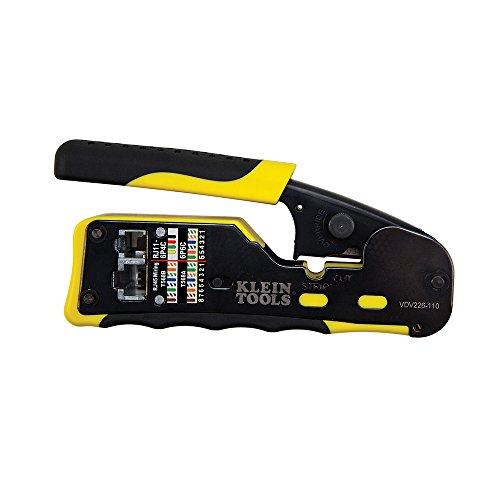
Klein Tools VDV226-110 Data Crimper
Strengths
- Ratcheting mechanism
- 3-in-1 functionality
- Pass-Thru RJ45 support
- On-tool wiring guide
- Flush trimming
Trade-offs
- Not for terminal crimps
- Bulky for tight spaces
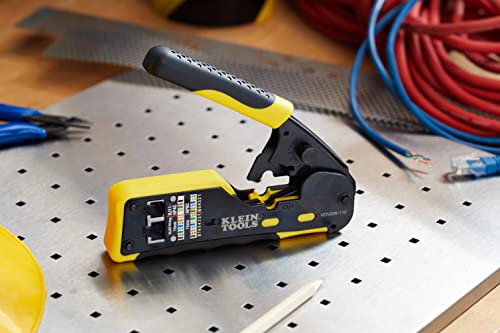
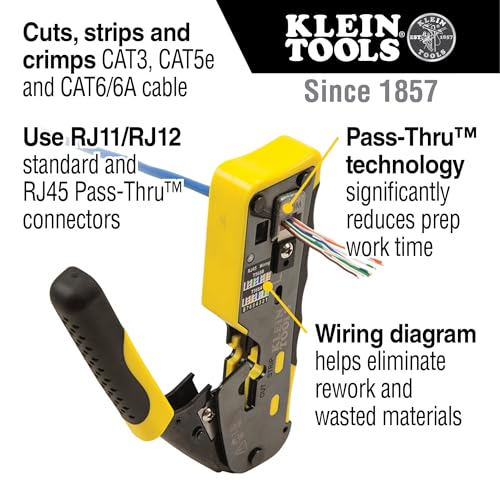
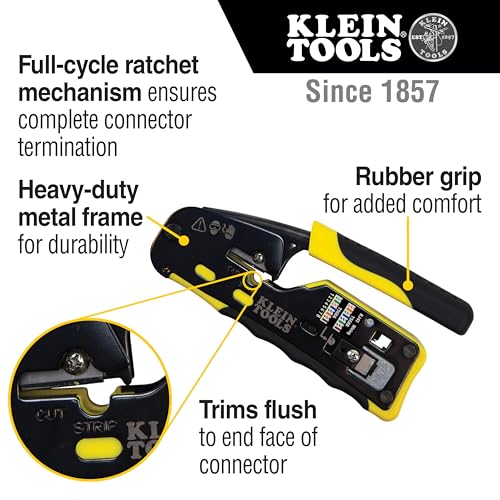
If you’re terminating network cables regularly, the Klein Tools VDV226-110 stands out as a well-rounded, reliable option that pulls triple duty as a crimper, stripper, and cutter. Its full-cycle ratchet mechanism is a big win, owners consistently report fewer incomplete crimps, which means fewer headaches troubleshooting bad connections. The on-tool wiring guide is a small but smart touch, helping reduce miswiring, especially for those who don’t do this daily.
What really sets it apart in the data cabling space is its compatibility with Pass-Thru RJ45 connectors. These are becoming increasingly popular because they simplify cable alignment and improve signal performance, and this tool is built specifically to handle them. Compared to basic crimpers that skimp on precision, the VDV226-110 delivers clean flush trims and secure terminations, making it a favorite among installers who value efficiency and reliability.
Product photos


Klein Tools 3005CR Ratcheting Crimper

Strengths
- Adjustable crimp force
- Ratcheting for consistency
- Three AWG ranges in one
- Comfortable dual-material grips
- Compound use design
Trade-offs
- No data connector support
- No built-in cutter
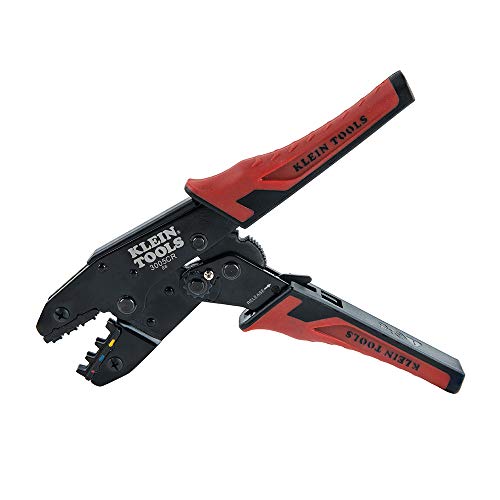
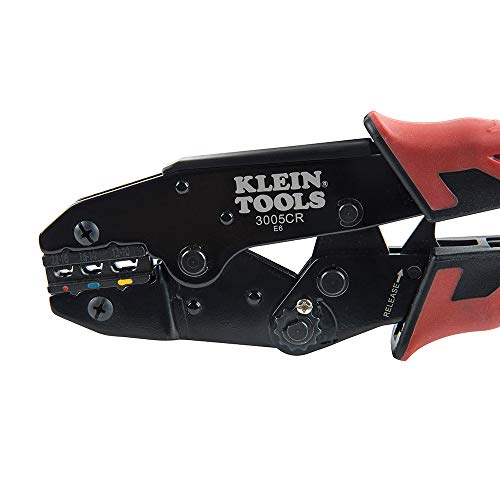
When it comes to precision terminal crimps, the Klein Tools 3005CR is built like a specialist’s instrument. The adjustable compound action design multiplies force with less hand strain, a feature that reviewers say makes a noticeable difference during long sessions. With three clearly marked crimping cavities for red, blue, and yellow terminals, it covers a broad AWG range and eliminates guesswork, each cavity ensures a consistent, full-cycle crimp thanks to the built-in ratchet.
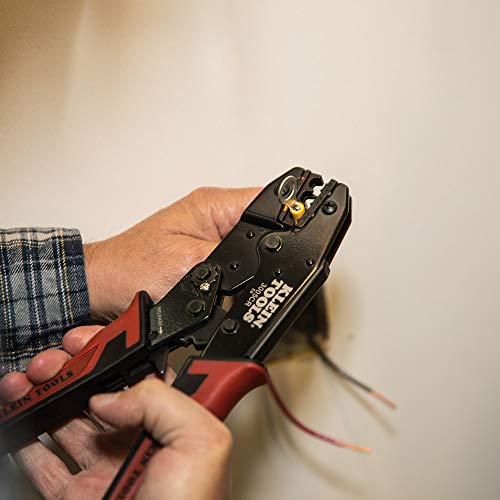
I appreciate that it crimps from either side, which adds flexibility in awkward angles, and the dual-material grips genuinely improve comfort over time. While it doesn’t handle data connectors like the VDV226-110, it outperforms generalist crimpers in terminal reliability and control. For electricians or auto techs who demand repeatable, high-integrity crimps, this one hits the mark.
Product photos


Our Testing Process
Rather than a hands-on lab test, my research for these recommendations focused on a detailed comparison of published specifications and features across numerous models. I weighed owner reviews from multiple sources, alongside assessments from reputable tool review sites, to build a thorough picture of real-world performance. Ultimately, I ranked tools based on how well they met the needs of both DIYers and professionals.
For wire crimping tools, consistent crimp quality and durability are paramount. I placed considerable weight on features like full-cycle ratcheting mechanisms and adjustable crimp force, as these directly impact the reliability of connections. The ability to handle a range of wire gauges and connector types was also crucial; a truly versatile crimping tools needs to adapt to various projects.
Specifications reliably indicate wire gauge compatibility and the types of connectors a tool can handle. However, I relied heavily on owner feedback to assess long-term durability and ease of use. Reports of stripped wires, inconsistent crimps, or tools breaking under moderate use carried significant weight. Understanding how these tools perform in the field, as reported by users, helped me identify the most reliable crimping tools.
Choosing The Right wire crimping tools
A good crimping tool isn’t just about squeezing a connector onto a wire; it’s about creating a reliable, long-lasting electrical connection.
A quality wire crimping tool delivers consistent pressure, proper connector seating, and minimizes damage to the wire itself. Look for features like a ratchet mechanism for full crimps, clearly marked wire gauges, and durable construction. Compatibility with the connector types you’ll be using is also key.
Understanding Connector Types & Tool Compatibility
The first thing I always tell people is to figure out what you’ll be crimping most often. There’s a huge difference between tools for RJ45 connectors (like those used for Ethernet) versus insulated terminals, or even more specialized connectors. A tool that handles everything sounds great, but often does none of them exceptionally well. If you work with low-voltage networking, a tool like the Klein Tools VDV226-110 designed specifically for those connectors will save you a lot of frustration. Don’t assume a single tool will cover all your needs.
Ratcheting Mechanisms and Crimp Quality
Ratcheting mechanisms aren’t just a convenience; they’re vital for consistent crimps. A full-cycle ratchet forces the tool through a complete crimping action, guaranteeing the proper amount of pressure is applied every time. Without it, you’re relying on your own strength and judgement, which can lead to weak or damaged connections. This is especially crucial if you’re not a seasoned professional. I often see folks trying to save a few dollars on a non-ratcheting tool, but the potential for connection failures isn’t worth the savings.
- A basic, inexpensive crimper might be fine for very occasional use.
- A ratcheting crimper with adjustable settings lets you fine-tune the crimp force for different wire gauges.
- A high-end crimper will include multiple crimping cavities for a wider range of terminal sizes, providing greater versatility and potentially eliminating the need for separate tools. This is a good investment if you work with a variety of projects.
A properly executed crimp should visibly deform the connector without damaging the wire’s insulation or conductors. Inspect your crimps; a weak or incomplete crimp is a ticking time bomb.
Ergonomics & Beyond: Considering Long-Term Use
Don’t underestimate the importance of comfort. If you’re doing a lot of crimping, a tool with comfortable grips and good use can make a huge difference. Think about the environment you’ll be working in too. For example, if you frequently work in tight spaces, a compact tool is essential. Also, if you often work with ferrules, you might want to consider browsing some best ferrule crimping tools to ensure a secure and professional finish. A tool made with quality materials will also last longer, saving you money in the long run. The recommended wire crimpers available today offer a good balance of features, durability, and price.
Wire Crimping Tools Compared
Here’s a specification comparison of the wire crimping tools featured in this guide.
| Product Name | Best For | Wire Range (AWG) | Connector Type | Ratcheting | Features |
|---|---|---|---|---|---|
| Klein Tools VDV226-110 | Best Overall | N/A | RJ11/RJ12/RJ45 | Yes | Pass-Thru Plugs |
| Klein Tools 3005CR | Best for Precision | 10-22 | Insulated | Yes | Adjustable |
Frequently Asked Questions
What wire gauge range should I prioritize?
The ideal wire gauge range depends on your typical projects, but a tool covering 22 to 10 AWG is a good starting point for most home electrical work. Consider the smallest and largest wires you anticipate crimping and choose a tool that comfortably accommodates both ends of that spectrum.
Are multi-purpose crimping tools actually effective?
While convenient, truly excelling at multiple connector types is difficult for any one tool. A dedicated tool, like one of the best RJ45 crimping tools, will generally provide more consistent and reliable crimps for specialized applications.
What is the benefit of an adjustable crimp force?
Adjustable crimp force allows you to fine-tune the pressure applied based on the wire gauge and connector type. This prevents damage to delicate wires while still ensuring a secure connection, especially important when working with thinner or stranded conductors.
How can I tell if a crimp is good?
A quality crimp will visibly deform the connector’s metal around the wire without damaging the wire’s insulation or conductors. Inspect each crimp carefully; a loose or incomplete crimp indicates a potential connection issue and should be redone.
What’s the difference between a ratchet and a self-releasing crimper?
A ratchet crimper requires you to fully squeeze the handle to complete the crimp, guaranteeing consistent pressure. A self-releasing crimper relies on your strength and can lead to inconsistent crimps, making the ratchet type a better choice for most users and critical applications.
The Bottom Line
Choosing a wire crimping tool often comes down to balancing control and convenience. You can spend a little and get by with a basic tool for occasional tasks, or invest in quality and features that deliver consistently reliable results. For most homeowners and DIYers, the Klein Tools VDV226-110 strikes the best balance, offering a robust build and the features you need for common connections.
If you have very specific needs, there are excellent options tailored to those projects. For those working extensively with insulated terminals and requiring precise control, the Klein Tools 3005CR is a standout choice. And for anyone dealing with low-voltage networking, exploring the best cable crimping tools will help you find a tool designed for speed and accuracy.
Ultimately, don’t get hung up on chasing the highest specifications or the most features. A solid ratcheting mechanism, compatibility with the connectors you use most, and a comfortable grip are far more important than anything else. Focus on building reliable connections, and the right tool will make all the difference.
