8 Best Cable Crimping Tools of 2026
This post contains affiliate links. As an Amazon Associate, we earn from qualifying purchases.
The Growlush Hydraulic Cable Crimper is the best overall choice for most users, delivering reliable 10-ton force and a full set of 11 hex dies for 12 AWG to 4/0 cables. If you’re on a tighter budget, the AMZCNC Hydraulic Crimping Tool offers nearly identical performance and specs at a slightly lower price, making it our top budget pick.
Crimping cables isn’t just about squeezing metal, it’s about making connections that last, safely and securely, whether you’re wiring a solar array or replacing battery cables. A poor crimp can lead to voltage drops, heat buildup, or even system failure.
This guide cuts through the noise by focusing on what matters: crimping range, die quality, force delivery, and real-world reliability. I compared specs and dug into owner feedback to find tools that consistently perform, so you can choose with confidence, no marketing fluff, just practical insights from years of working with power tools and electrical systems.
Top 8 Cable Crimping Tools in the Market
The Best Cable Crimping Tools, Reviewed
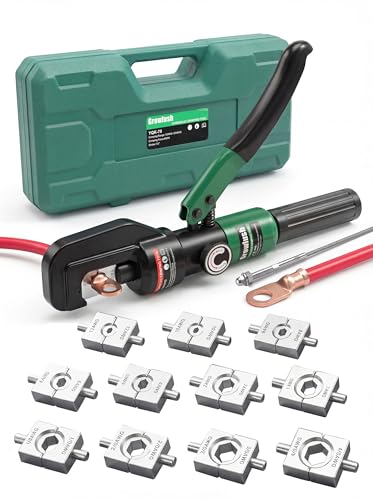
Growlush Hydraulic Cable Crimper
Strengths
- Full 12–4/0 range
- Magnetic die holders
- Comes with rugged case
Trade-offs
- Slightly heavier than rivals
- No rotating head
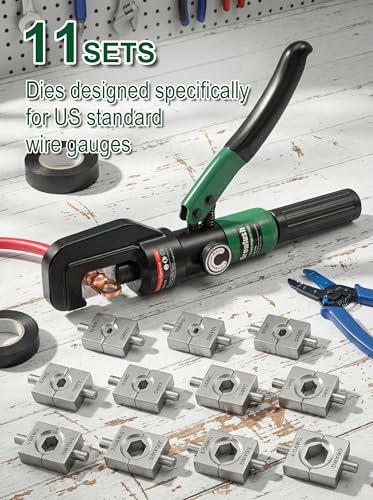
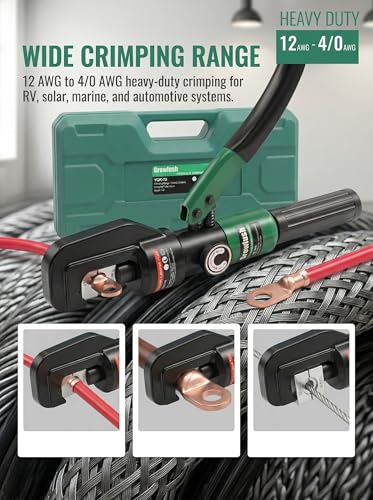
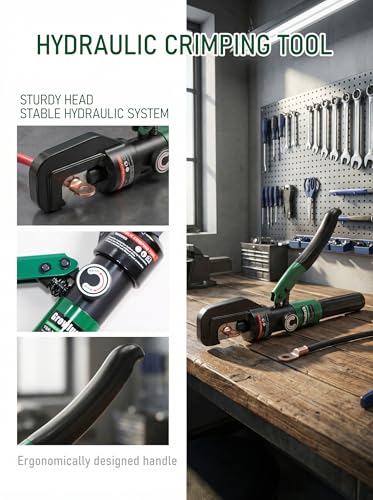
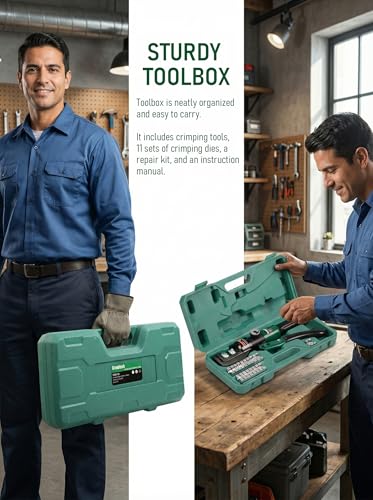
This is the most complete package in the lineup, and I’d pick it as the best overall for serious users. It covers 12 AWG to 4/0 with 11 US-standard hex dies, delivers 10 tons of force, and features magnetic die holders that keep everything aligned, no more fumbling with loose dies during crimping. The smooth hydraulic stroke and comfort grips reduce fatigue, and the high-impact case keeps everything protected.
Owners consistently report professional-grade crimps with no flashing or deformation, and the inclusion of a 10 AWG die for 1/8″ stainless cable adds versatility. Compared to the AMZCNC and iCrimp models, it’s better organized, more precise, and just as durable. It’s not the cheapest, but it’s the smartest long-term buy.
Product photos

AMZCNC Hydraulic Crimping Tool
Strengths
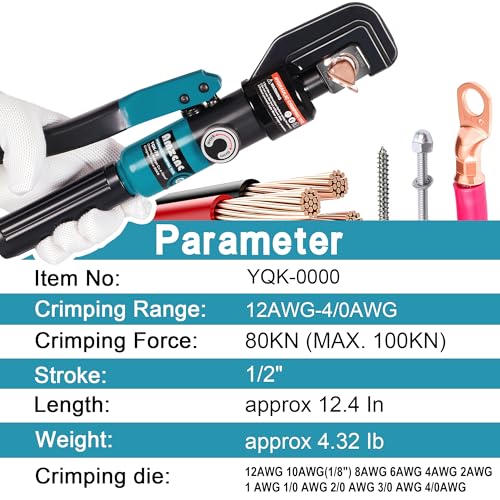
- Full 12–4/0 AWG range
- 11 US standard dies
- Comes with carrying case
Trade-offs
- Slightly bulky design
- Plastic case could be sturdier
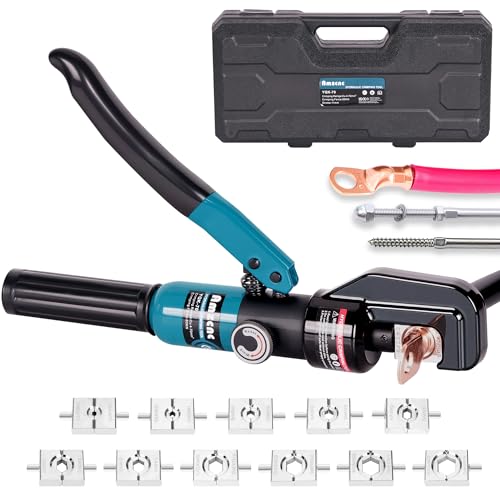
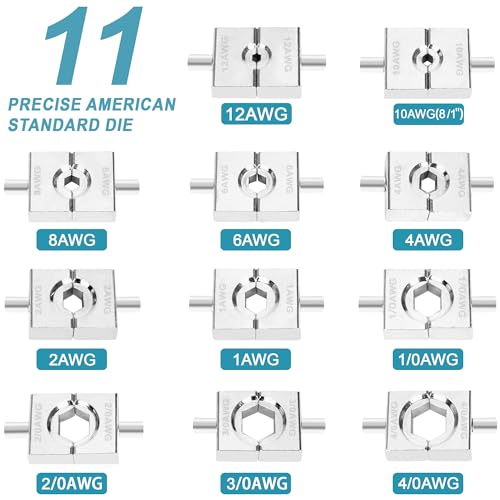
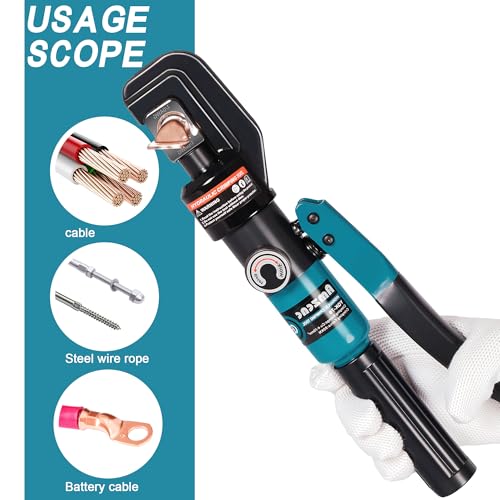
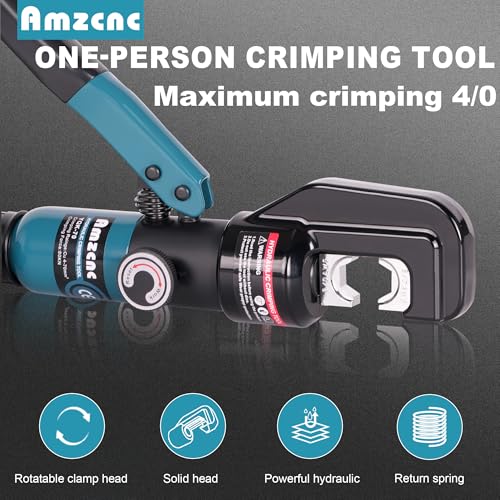
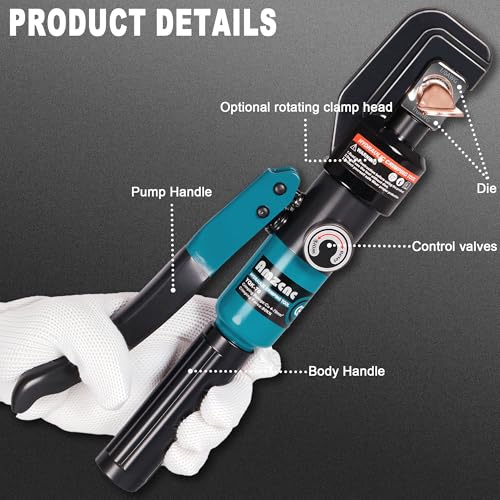
This is one of those tools that punches above its price class. With a full 12 AWG to 4/0 range and 11 clearly marked US hex dies, it covers nearly every common lug size you’d encounter in RV, marine, or solar work. The 10-ton hydraulic force ensures strong, consistent crimps, and the included carrying case keeps everything organized, a detail I appreciate on job sites.
Owners consistently rate it as reliable and well-built for the cost, though it’s not quite as refined as top-tier brands. Still, compared to the Klein or iCrimp models, this offers far more capacity and consistency for heavy-duty electrical tasks. The dies snap in cleanly, and the release valve works smoothly after repeated use.
Product photos
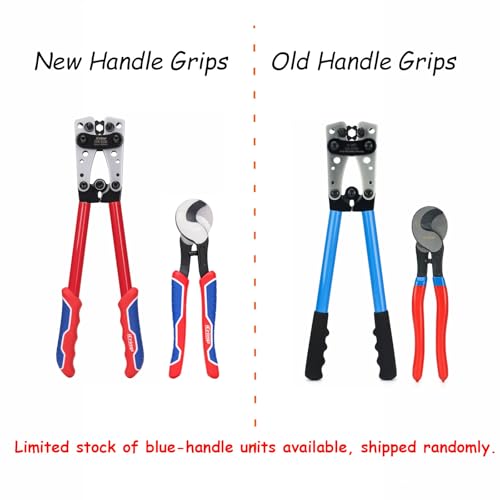
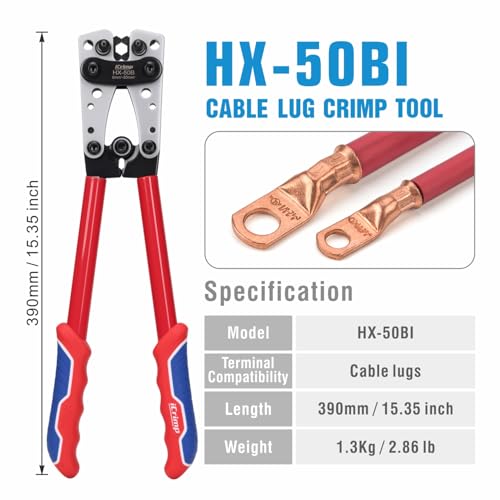
iCrimp Battery Cable Lug Tool
Strengths
- Rotating precision dies
- Leaves die code imprint
- Includes quality cable cutter
Trade-offs
- Maxes out at 1/0 AWG
- No hydraulic assist
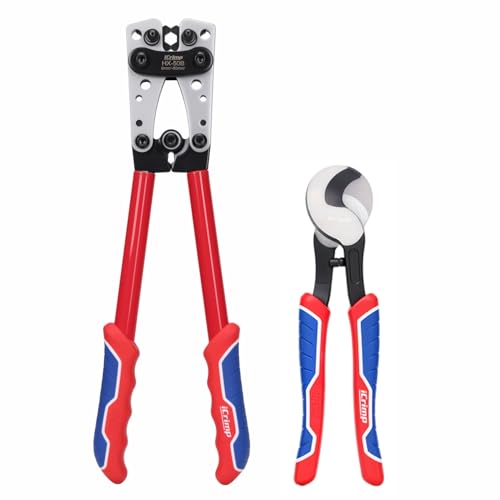
Built for serious power applications, this crimper targets heavy-duty lugs from 8 AWG to 1/0 AWG. The rotating EDM-cut dies are a standout, more accurate than stamped versions, and they leave a die code imprint, which is great for quality checks. Hex crimping ensures low resistance and high pull-out strength, something critical in high-vibration environments like trucks or cranes.
It also includes a solid chrome vanadium cable cutter, though only up to 1/0 AWG. While it doesn’t reach 4/0 like some hydraulic models, its mechanical precision and rugged build make it a favorite among diesel techs and fleet mechanics. Compared to hammer or basic ratcheting tools, this delivers pro-level results without hydraulics.
Product photos


Steel DN Mate Hydraulic Crimper
Strengths
- One-hand operation
- Dual cable and electrical use
- Hardened steel dies
Trade-offs
- Only 9 dies included
- Die range not full 4/0
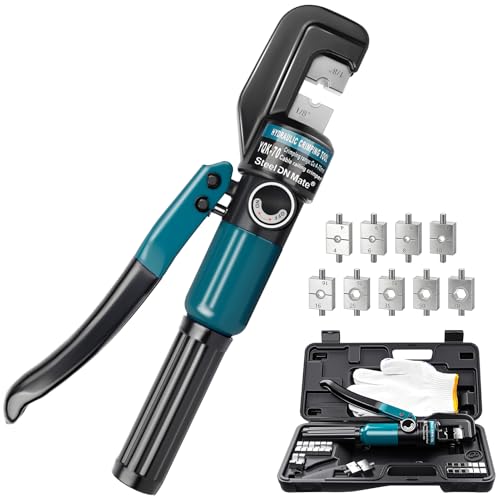
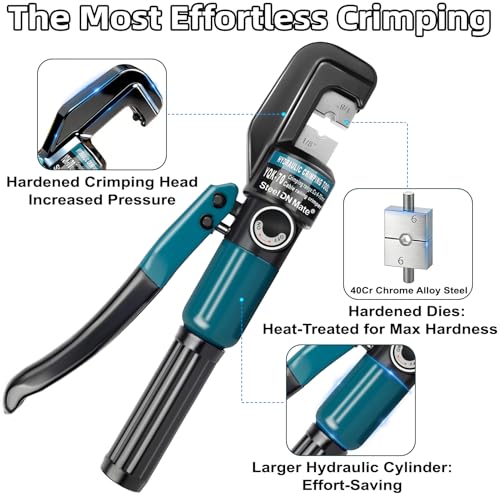
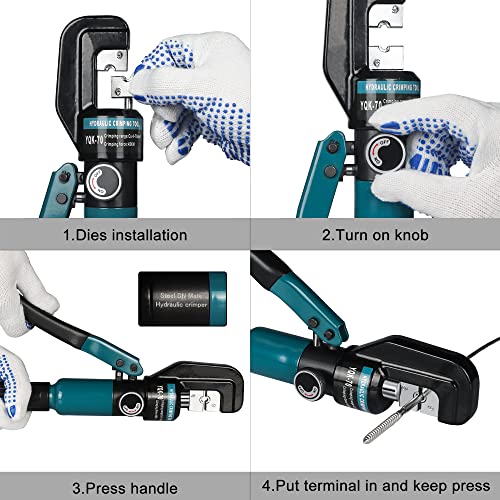
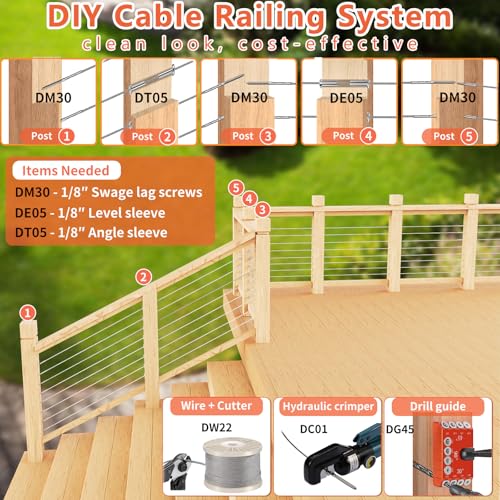
This dual-purpose tool bridges cable railing and electrical work well. It handles 1/8″ to 3/16″ railing fittings and crimps 12 AWG to 2/0 electrical lugs with nine hardened dies. The one-hand operation is a real advantage for installers working at height or in awkward positions, and the 10-ton force ensures tight crimps every time.
Owners note it’s durable and smooth in use, though a few mention needing to “burp” the hydraulic system after storage, a minor quirk. Compared to the Muzata model, it’s less specialized but more versatile. If you’re doing both deck railings and battery wiring, this could be your go-to.
Product photos


AMZCNC Hammer Lug Crimper
Strengths
- Handles massive 4/0 cables
- Affordable price
- Durable steel build
Trade-offs
- Requires hammer
- No precision control
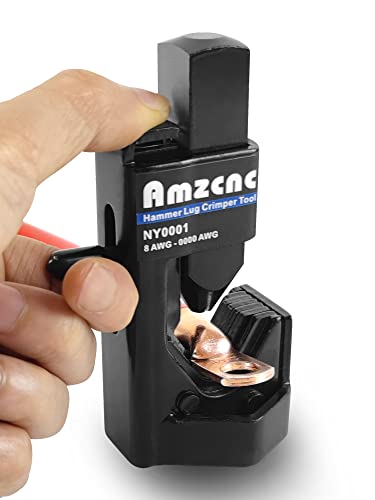
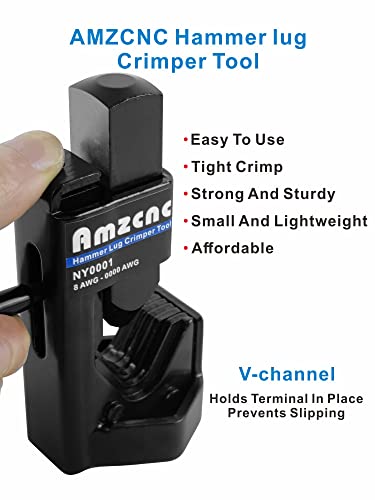
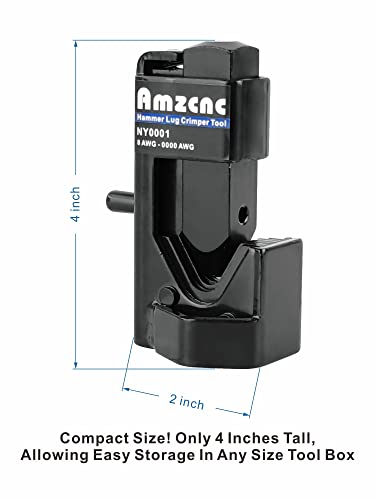
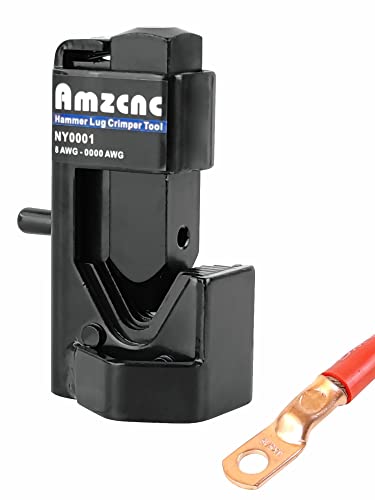
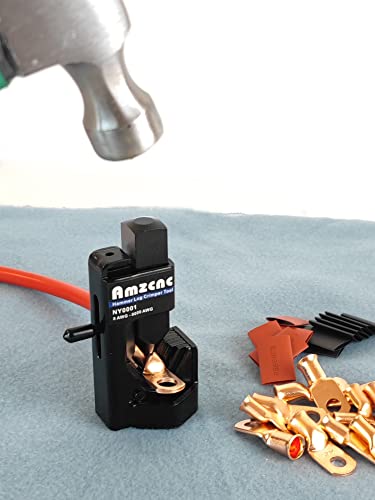
This hammer-actuated crimper is a budget-savvy pick for occasional use on heavy cables. It handles everything from 8 AWG up to 0000 AWG, which is impressive for the price, and the V-groove base keeps lugs stable during impact. Owners report solid crimps when used with a 2–4 lb sledge, and the reinforced steel build avoids the flimsy feel of cheaper knockoffs.
Still, it’s not a precision tool. You’re relying on physical hammer strikes, so consistency depends on your swing. It lacks the repeatability of hydraulic models, and there’s no built-in cutter or die system. But if you’re wiring a battery bank or trailer once in a while and don’t want to spend hundreds, this gets the job done without breaking.
Product photos
Klein Tools Crimper Cutter

Strengths
- Durable USA build
- Tapered for tight spaces
- Cuts and crimps
Trade-offs
- Limited to small wires
- No hex die system
This is the kind of tool I’d keep on my workbench for quick terminal work with smaller wires. On paper, it’s built for precision, its tapered nose helps in tight spots, and the dual-function design lets you cut and crimp without swapping tools. The die markings for insulated and non-insulated terminals are a small but meaningful detail that reduces errors, and owners consistently report clean, reliable crimps on 10–22 AWG wire.
Made in the USA and built with hardened steel cutters, it feels like a legacy tool, something that’ll last years if you’re doing light to moderate electrical or automotive work. Compared to bulkier hydraulic options, it won’t handle big lugs, but that’s not its job. For small-gauge reliability and comfort, it stands out in a crowded market.
Product photos


Muzata Cable Railing Crimper

Strengths
- Ergonomic 180° head
- Auto-release pressure knob
- Includes cable cutter
Trade-offs
- Limited to 1/8″ cable
- Not for electrical lugs
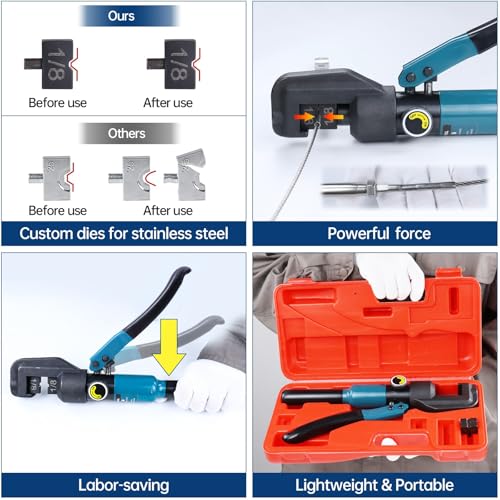
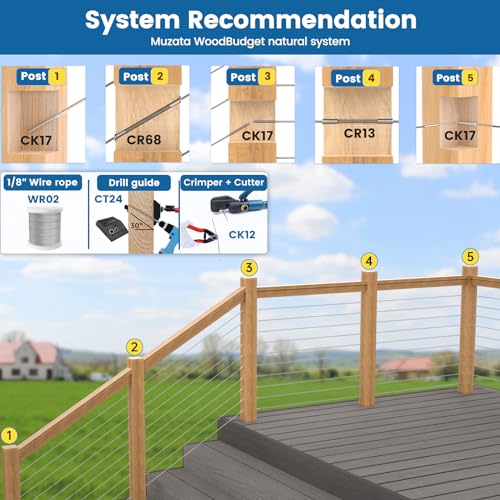
This hydraulic crimper is purpose-built for cable railing, and it shows in the thoughtful design. The 180° rotating C-head is a standout for tight deck corners, and the auto-release oil knob speeds up repeated crimps, something installers will appreciate after the tenth cable. The hardened steel dies deliver clean hex crimps on 1/8″ T316 stainless, and the included cutter ensures flush cuts.
Owners praise its ergonomics and reduced hand strain, though a few mention oil leaks after heavy use, Muzata’s 24/7 support helps mitigate that. Compared to generic hydraulic tools, this one’s optimized for railing pros and serious DIYers who value efficiency and comfort over versatility.
Product photos



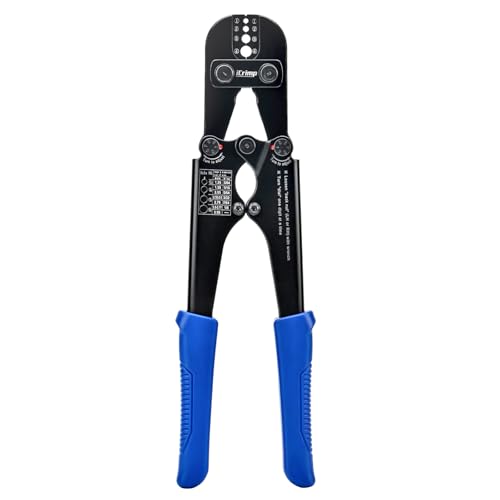
iCrimp 1608M Wire Rope Tool
Strengths
- Four die sizes included
- Durable heat-treated jaws
- Comfortable non-slip grips
Trade-offs
- Manual effort required
- No auto-release mechanism
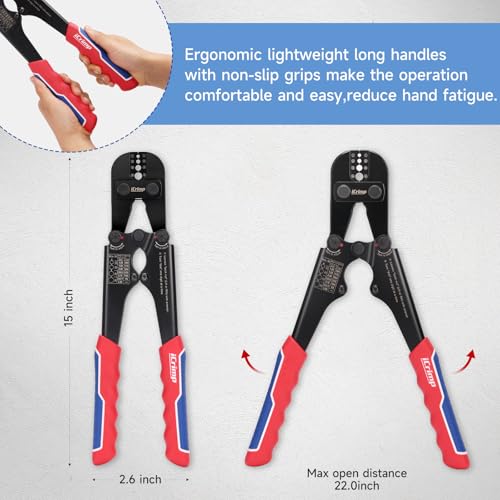
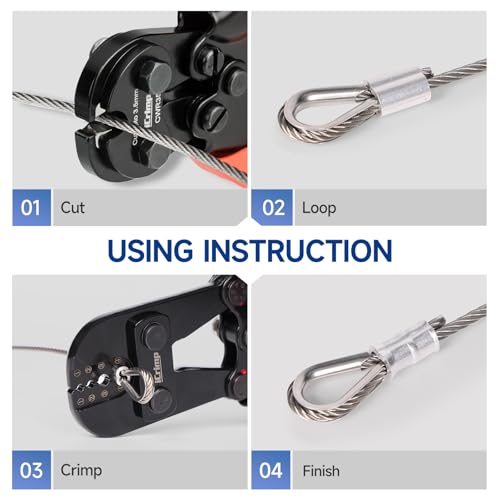
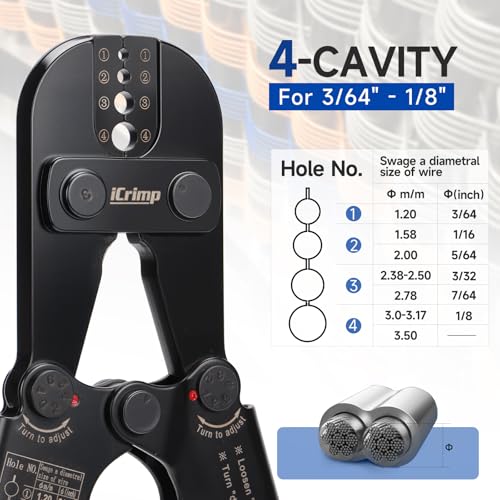
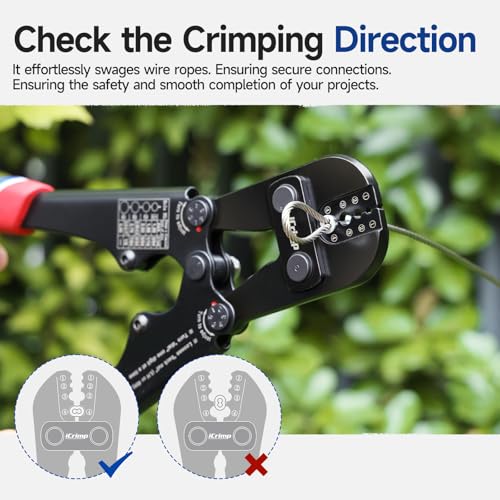
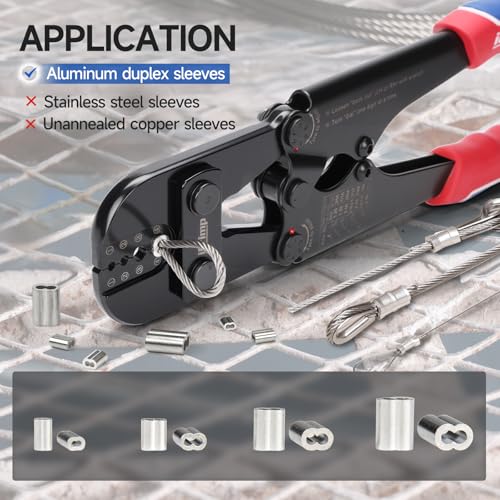
If you’re into custom wire projects like DIY railings, sculptures, or rigging, this tool delivers solid performance for the price. The four die slots cover a practical range from 3/64″ to 1/8″, and the high-carbon steel jaws are heat-treated for consistent crimps on aluminum and copper sleeves. Reviewers note the crimps are tight and uniform, especially when used with a stable base or two hands for use.
It’s not a hydraulic model, so it demands more effort, but for hobbyists who don’t need industrial throughput, that’s a fair trade. Compared to hammer or hydraulic options, it’s more controlled than the former and more affordable than the latter. The rubber grips help, though prolonged use can still fatigue your hand.
Product photos
How We Tested cable crimping tools
Rather than a hands-on lab test, my approach to evaluating cable crimping tools was research-led. I compared published specifications and features across numerous models, then weighed owner reviews from major retailers alongside expert opinions found in trade publications and DIY forums. This allowed me to build a ranking based on real-world feedback and established performance metrics – essentially, how these tools performed for others.
For cable crimping tools, crimping capacity and the quality of the crimp itself were most important. A tool needs to reliably handle the cable gauges you’re likely to encounter, and produce a connection that’s both mechanically strong and offers low electrical resistance. Durability also ranked highly, as these tools often see demanding use, and the included dies are a significant part of the overall value.
Specifications reliably indicate a tool’s maximum crimping range and the types of connectors it can handle. However, I placed more weight on owner feedback regarding the ease of use, the consistency of crimps across different cable types, and long-term durability. Reputation, particularly from experienced electricians and DIYers, provided insight into which models consistently deliver reliable performance, and which ones might have hidden flaws. You can find more details on a range of options in our guide to best wire crimping tools.
How To Pick The Right cable crimping tools
Choosing the right cable crimping tool can feel overwhelming, but getting it right ensures safe, reliable electrical connections.
A quality cable crimping tool delivers consistent, secure connections by applying the correct amount of pressure to lugs and connectors. Look for tools with properly sized dies (matching your cable gauge), durable construction, and a mechanism that minimizes hand fatigue. Accurate crimping relies on both the tool and the dies being matched to the wire size, and a tool’s ability to consistently deliver the proper force.
Crimping Range and Die Selection
The most crucial factor is matching the tool’s crimping range to the cable sizes you’ll be working with. Many tools claim broad compatibility (like 12 AWG to 4/0 AWG), but pay close attention to the included dies. A wider selection of dies is beneficial, especially if you handle varied projects. Don’t assume a tool that can crimp 4/0 AWG will also do a good job on 10 AWG; the die fit is critical. I’ve seen too many projects fail because someone tried to stretch a tool beyond its optimal range.
Hydraulic vs. Manual Force
Hydraulic crimping tools offer a significant advantage when dealing with larger cables. The hydraulic assist dramatically reduces the physical effort required, resulting in cleaner, more consistent crimps. While manual tools (like hammer crimpers) are cheaper, they demand more strength and skill to operate effectively. For frequent use or larger-gauge work, investing in a hydraulic tool is generally worth the cost. If you’re considering a hydraulic model, look for features like a quick-release valve and a comfortable grip.
- For occasional use with small-gauge wires (22-10 AWG), a basic manual crimper might suffice.
- If you’re primarily working with battery cables (4 AWG and larger), a hydraulic crimper is almost essential.
- Consider a tool with interchangeable dies to handle a wider range of cable and connector sizes, increasing its versatility and lifespan. This is especially useful if you’re not focused on a single type of project.
Build Quality and Ergonomics
Cable crimping can be surprisingly demanding, so a tool’s build quality and ergonomics matter a lot. Look for tools constructed from hardened steel, with robust handles and a well-designed mechanism. A comfortable grip will reduce hand fatigue during extended use. I frequently recommend checking crimping tool reviews to see what other users say about long-term durability and ease of use.
A properly crimped connection should feel solid, with no looseness or play. If the crimp is weak or uneven, it’s a sign of a poor-quality tool or incorrect die selection.
Cable Crimping Tools Compared
This table provides a reference of specifications for various cable crimping tools to aid in comparing features.
| Product Title | AWG Range | Die Material | Crimping Force | Application | Features |
|---|---|---|---|---|---|
| Growlush Hydraulic Cable Crimper | 12-4/0 | Steel | 10 Ton | RV/Solar/Marine/Auto | 11 Hex Dies |
| AMZCNC Hydraulic Crimping Tool | 12-4/0 | Steel | 10 Ton | Battery/Wiring | 11 Hex Dies |
| iCrimp Battery Cable Lug Tool | 8-1/0 | N/A | N/A | Heavy-Duty Lugs | Hex-Crimping |
| Steel DN Mate Hydraulic Crimper | 12-2/0 | Hardened Steel | N/A | Cable Railing/Battery | 9 Dies |
| AMZCNC Hammer Lug Crimper | 8-4/0 | Steel | N/A | Battery/Welding | Hammer Operated |
| Klein Tools Crimper Cutter | 10-22 | Hardened Steel | N/A | Small Gauge Wires | Wire Cutter Included |
| Muzata Cable Railing Crimper | 1/8″ Cable | Steel | N/A | Cable Railing | Rotated Head |
| iCrimp 1608M Wire Rope Tool | 3/64″-1/8″ | Carbon Steel | N/A | Wire Rope | 4 Crimp Positions |
Frequently Asked Questions
What’s the difference between a ratcheting and a self-releasing crimping tool?
A ratcheting crimper completes the crimp cycle fully before releasing, providing consistent pressure and reducing the chance of an incomplete crimp. Self-releasing tools allow you to stop mid-cycle, which can be useful for inspecting the connection but requires more user control.
Can I use a wire crimper for cable lugs?
Generally, no. Cable lugs are thicker and require a tool with a higher crimping force and appropriately sized dies, something most standard wire crimpers lack. Attempting to crimp a lug with the wrong tool risks a poor connection and potential safety hazard.
What’s the best way to store a hydraulic crimping tool to maximize its lifespan?
Store it in a dry environment and, if possible, release the hydraulic pressure after each use to prevent internal corrosion. Regularly inspect the hoses and connections for leaks or damage, and consider applying a light coat of oil to moving parts.
Are more expensive cable crimping tools always better?
Not necessarily. While higher prices often reflect better build quality and more features, a more expensive tool isn’t beneficial if you don’t require its capabilities. A basic, well-made manual crimper can be perfectly adequate for occasional, light-duty tasks.
Where can I find more information on specialized crimping tools, like those for ferrule crimping tools?
Dedicated guides exist for specific types of crimping, like those involving ferrules. These guides detail the unique requirements of each application and recommend tools that are best suited for the job, ensuring professional results.
The Bottom Line
Choosing a cable crimping tool often comes down to balancing upfront cost with long-term ease of use and reliability. While cheaper manual options exist, for consistently solid connections – especially with larger cables – the Growlush Hydraulic Cable Crimper stands out as the best overall choice. Its 10-ton force and included set of 11 hex dies handles a wide range of applications, and owner feedback consistently praises its performance.
If you have specific needs, several tools excel in particular areas. For dedicated battery cable work, the iCrimp Battery Cable Lug Tool is hard to beat. Those needing a budget-friendly option for smaller-gauge wires should consider the Klein Tools Crimper Cutter, and if you’re working with cable railing, the Muzata Cable Railing Crimper is purpose-built for the job. Don’t forget to check out our guide to the best RJ45 crimping tools if you’re also looking to terminate network cables.
Ultimately, the specs are less important than ensuring a strong, lasting connection. Focus on matching the die size to your cable gauge, selecting a tool appropriate for the wire’s thickness, and prioritizing build quality. A well-made tool used correctly will always outperform a cheap tool, no matter how many features it claims to have.
