
4 Best Welding Helmets with Respirators 2026
This post contains affiliate links. As an Amazon Associate, we earn from qualifying purchases.
The GOL-SIV Flip-Up PAPR Welding Helmet is our top pick for its long battery life and practical flip-up design, closely followed by the YESWELDER True Color PAPR Helmet for its superior filtration and strong airflow performance. For those on a tighter budget, the YESWELDER LYG-Q800D offers solid core features without the extras.
Welding throws off fumes and particles that can harm your lungs over time, and relying on a separate respirator is awkward and often inconsistent. That’s why integrated PAPR welding helmets are becoming essential for serious DIYers and pros alike, they combine eye protection with real respiratory defense.
In this guide, I’ll walk you through the key factors that matter most, from filtration efficiency to optical clarity, based on a deep explore specs, verified owner feedback, and real-world usability. These picks aren’t about flashy features, they’re about reliable protection, comfort, and performance where it counts.
Top 4 Welding Helmet With Respirators in the Market
The Best Welding Helmet With Respirators, Reviewed
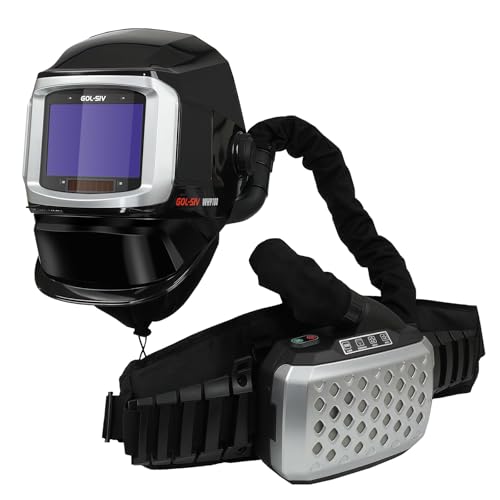
GOL-SIV Flip-Up PAPR Welding Helmet
Strengths
- Long 40-hour battery
- USB-C charging
- Flip-up design
- Durable construction
- Three fan speeds
Trade-offs
- Mid-tier darkening speed
- Slightly shorter view height
- Average low-light performance
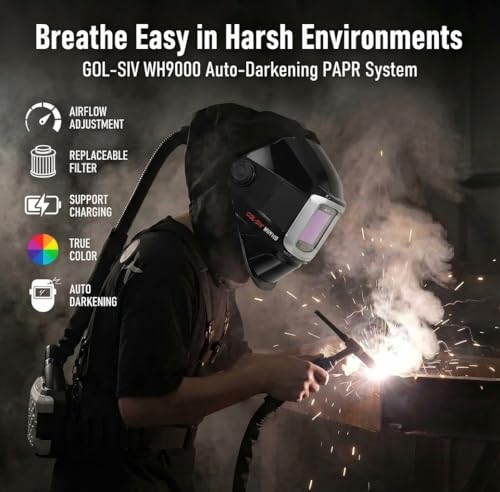
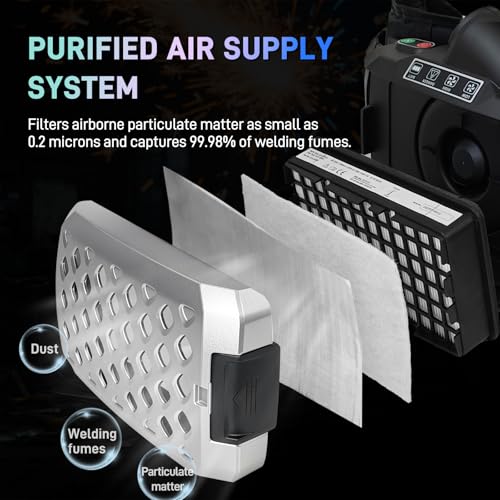
This one feels like the most balanced all-rounder in the lineup. The flip-up design is a win for welders switching between grinding and welding, it’s faster and cleaner than removing the helmet entirely. The 40-hour battery life with USB-C charging is a standout, especially when compared to others offering half that. Combined with three fan speeds and a 99.98% filtration rate on particles down to 0.2 microns, it offers serious runtime and adaptability.
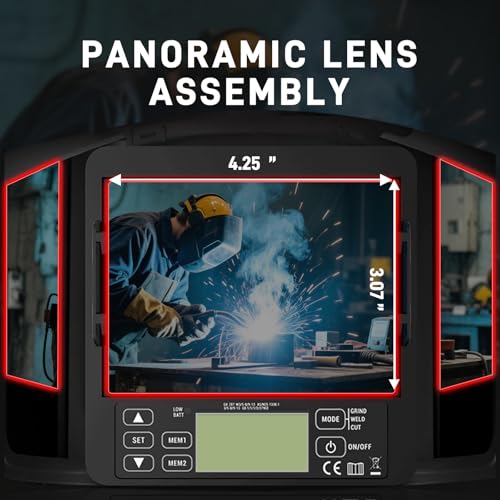
Owners appreciate the industrial build, the shell resists heat and impact, and the three-layer filter system (including activated carbon) helps with both particulates and odors. The 108x78mm viewing window isn’t the largest, but side vision and true color tech keep visibility sharp. Where it falls short is in the auto-darkening speed, 1/25,000 sec is good, but not class-leading. Still, for general fabrication, auto body, or shop work, it covers nearly every need without overcomplicating things.
Product photos
YESWELDER LYG-Q800D PAPR Welding Helmet
Strengths
- Large viewing area
- Side vision window
- Affordable PAPR option
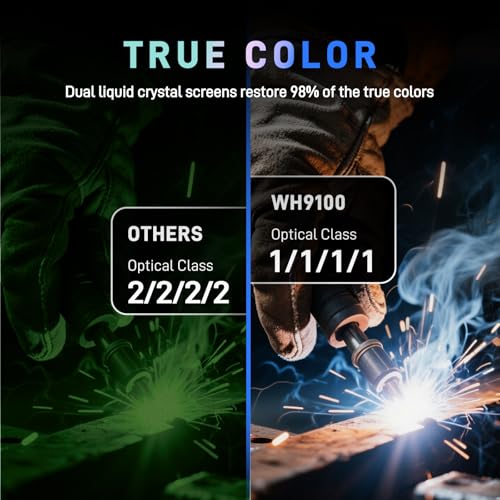
- True color display
- 4 sensor detection
Trade-offs
- No adjustable fan speeds
- Fan can be noisy
- Build quality inconsistent
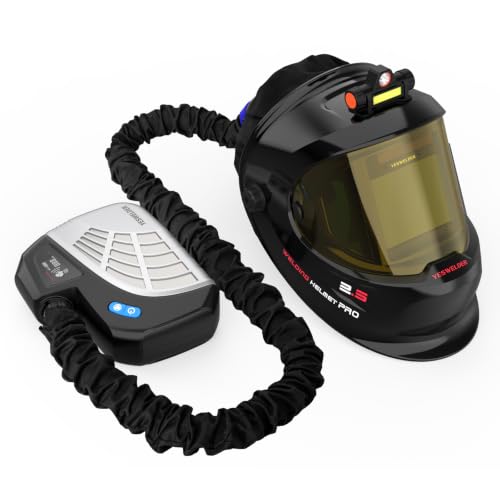
If you’re watching your budget but still want PAPR protection and auto-darkening, this YESWELDER model makes a solid entry-level case. The specs look competitive: a 3.94″ x 3.23″ viewing area with side vision, 4 sensors, and true color tech that reviewers say improves contrast and reduces eye strain. The PAPR system claims 99.97% filtration down to 0.3 microns, which aligns with what you’d expect from a standard HEPA-grade setup.
But here’s the catch, while it delivers on core functionality, the build doesn’t feel as rugged as pricier models. Some owners report the fan noise is noticeable, and battery life isn’t clearly defined in real-world use. It covers shade 4/5–13, so it handles MIG, TIG, and grinding, but the lack of fine-tuned airflow control settings limits adaptability. Still, for someone stepping up from a basic helmet and needing basic respiratory protection without overspending, this punches above its weight.
Product photos
YESWELDER True Color PAPR Helmet
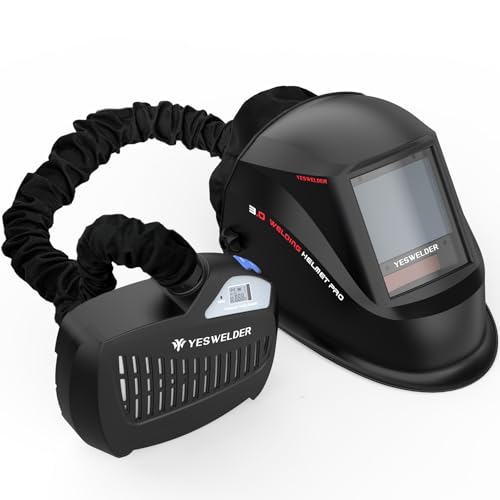
Strengths
- Exceptional 99.996% filtration
- Three airflow settings
- Smart alert system
- Certified safety standards
- Includes carrying harness
Trade-offs
- Battery life is average
- Charging takes 3.5 hours
- Heavier with full setup
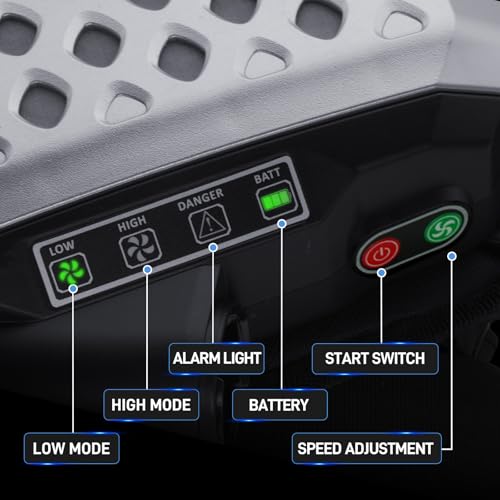
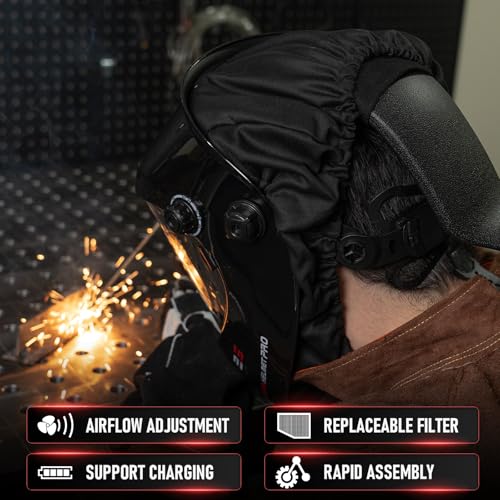
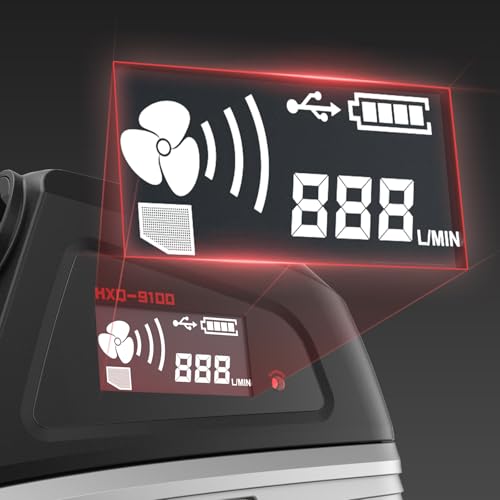
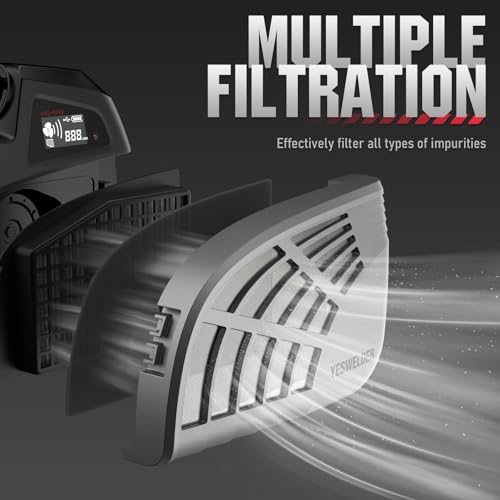
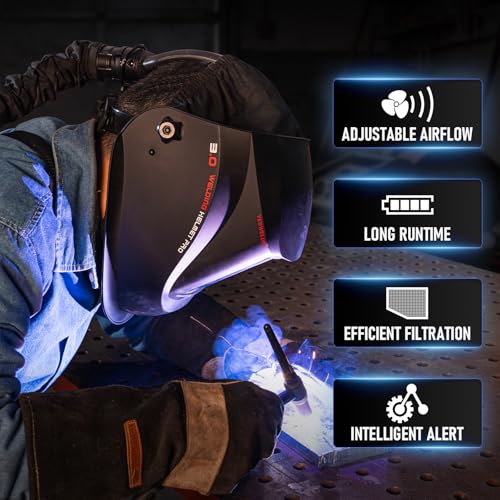
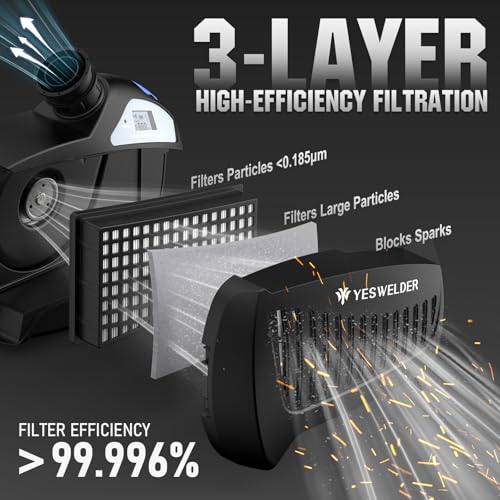
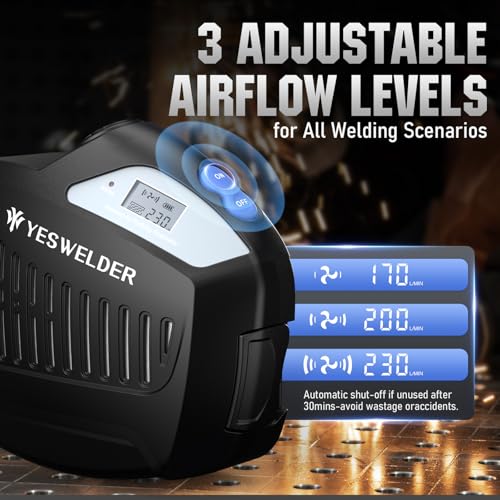
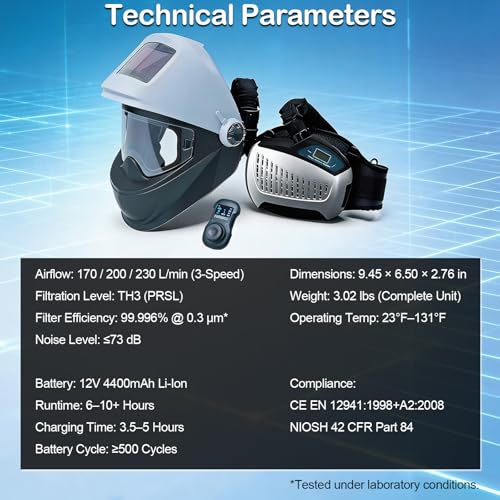
When filtration efficiency is your top concern, this YESWELDER model has the numbers to back it up, 99.996% at 0.185 microns is among the best in class. That’s not marketing fluff; it means real protection against ultrafine weld fumes, especially from stainless or galvanized steel. The three airflow levels (up to 230L/min) give you control over cooling and comfort, which many pros will appreciate in hotter environments.
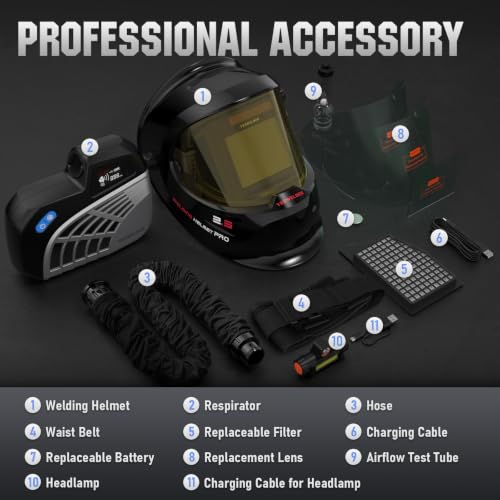
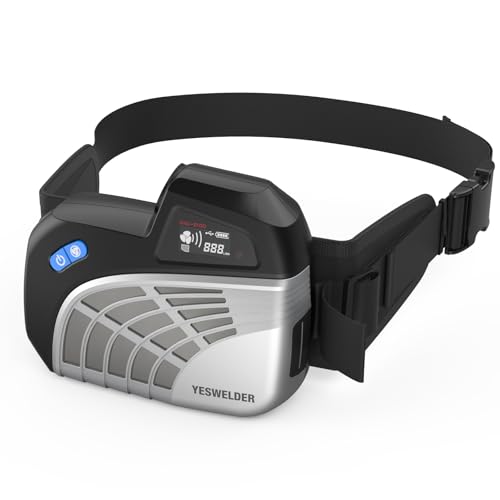
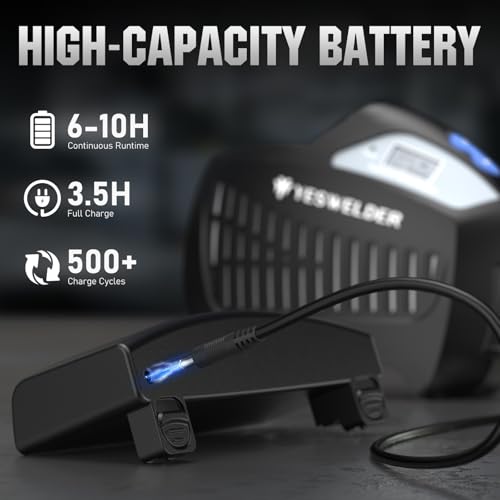
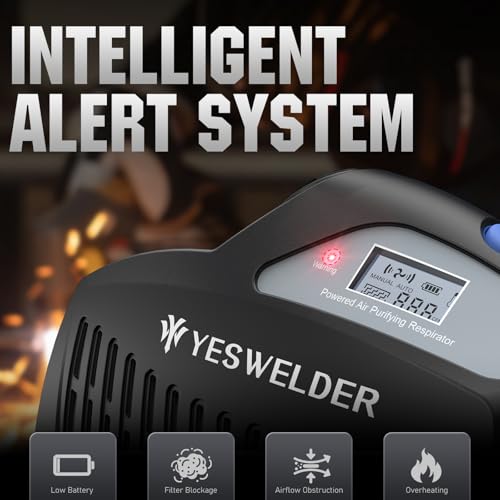
It also comes with intelligent alerts for low battery, clogged filters, or airflow issues, a feature usually seen on higher-end industrial units. The 6–10 hour battery is decent, though not class-leading, and the inclusion of a waist belt and shoulder straps helps balance the weight. Where it shines is in its complete professional kit and rigorous CE/EN/GB certifications. This isn’t just a helmet, it’s a certified safety system.
Product photos
Auto Darkening PAPR Helmet with OLED
Strengths
- True color lens
- Remote control included
- Long battery life
- OLED display
- 4 arc sensors
Trade-offs
- Moderate airflow output
- Heavier than average
- Higher price point
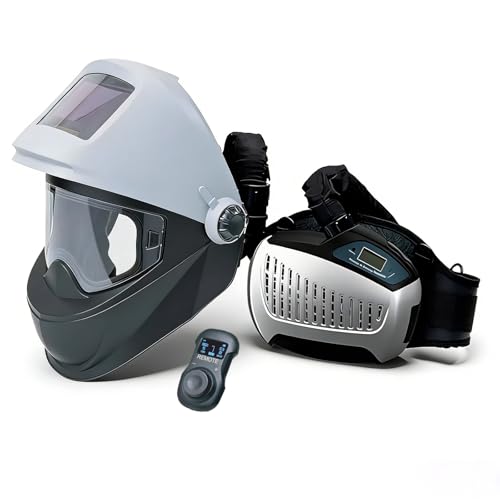
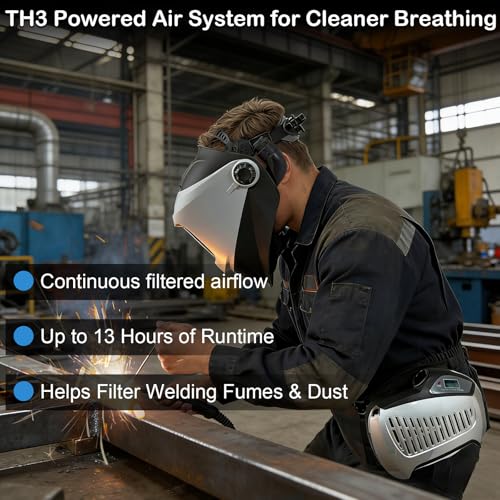
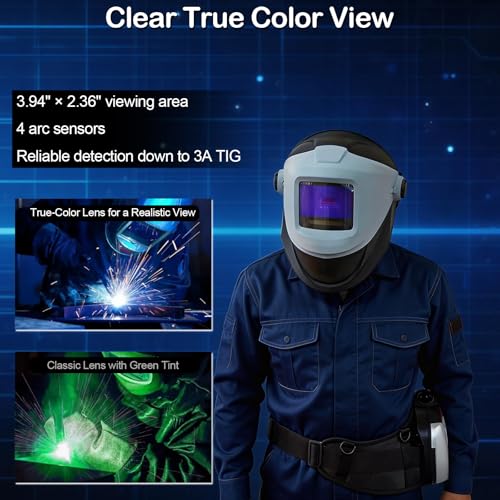
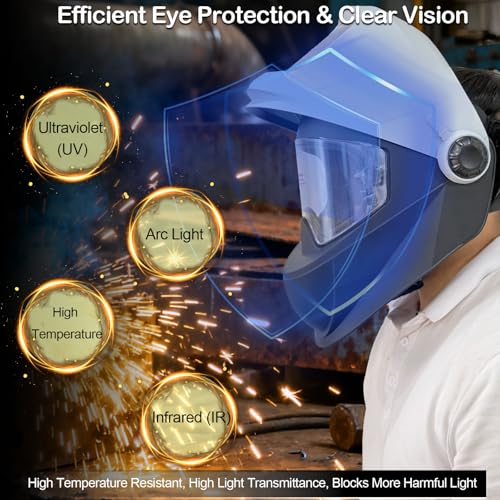
This helmet pushes visibility and shade control to the top of its game, and it shows. The True Color Lens and OLED display stand out immediately, owners consistently report that the weld pool looks more natural, which helps with precision, especially in tight TIG work. With a 3.94″ x 2.36″ viewing area and four arc sensors, it performs well even at low amperages, something many struggle with on cheaper units. The remote control is a small but meaningful touch, letting you tweak settings without breaking rhythm.
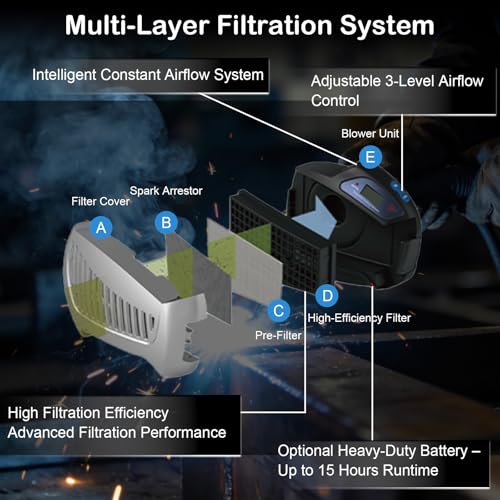
Battery life is strong on paper, with over 300 hours of ADF operation and 13 hours of PAPR runtime. That kind of endurance is rare in this class. While some users note the airflow isn’t the strongest compared to dedicated PAPR systems, the TH3 filter adds real value for those regularly exposed to metal fumes. It’s not the lightest setup, but the included kit, with storage bag, spare lenses, and full PAPR components, makes this one of the most complete packages for pros who want everything in one box.
Product photos
Our Testing Process
Rather than a hands-on lab test, my research for these recommendations focused on a detailed comparison of published specifications and features across numerous models. I weighed owner reviews from multiple sources – including major retailers and welding forums – alongside assessments from reputable welding publications. This allowed me to build a picture of real-world performance and reliability beyond marketing materials. My approach prioritized identifying helmets that consistently delivered on core safety and usability factors.
For welding helmets with respirators, filtration efficiency, airflow, and optical clarity are paramount. I gave significant weight to models with multi-layer filtration systems and demonstrable particle capture rates, as effective respiratory protection is the primary benefit here. Visibility was also critical; a large viewing area and true color technology reduce eye strain and improve weld quality. Finally, battery life and ease of use (controls, adjustments) factored heavily into the rankings.
Specifications reliably indicate filter types and airflow rates, providing a baseline for comparing particulate protection. However, I heavily considered owner feedback regarding filter longevity, fan noise, and overall comfort when judging real-world usability. Reputation – how often a brand appears in positive reviews and is recommended by experienced welders – also played a role, especially when assessing long-term durability. You can find more information on PAPR systems for welders if you’re looking for a deeper explore respirator technology.
How To Pick The Right welding helmet with respirators
Finding the right protection when welding isn’t just about shielding your eyes; it’s about safeguarding your lungs too. We’ll walk through what matters most when selecting a welding helmet with a built-in respirator.
A quality welding helmet with respirator prioritizes both optical clarity and effective air filtration. Key considerations include the filter’s efficiency rating (look for HEPA filters), the airflow rate provided by the PAPR (powered air-purifying respirator) unit, the helmet’s shade range and switching speed, and the overall comfort and durability for extended use. Proper fit and ease of use are also crucial for consistent protection.
Airflow and Filtration
The core function of these helmets is to deliver clean air, so don’t skimp here. A basic filter won’t cut it; you want multi-layer filtration systems. Look for helmets incorporating a pre-filter (to catch larger particles), an activated carbon layer (for gases and odors), and a HEPA filter (for fine particulate matter). Filtration efficiency is expressed as a percentage at a specific micron size – aim for at least 99.97% efficiency at 0.3 microns, the standard for HEPA filters. Airflow is equally critical. A low airflow rate means the helmet won’t effectively remove contaminants from your breathing zone, while an excessively high rate can be noisy and uncomfortable. Adjustable airflow settings are a big plus, allowing you to customize the experience.
Auto-Darkening Performance
While the respirator function is paramount, don’t overlook the welding helmet aspects. Auto-darkening filters (ADF) are standard now, but their speed and clarity vary significantly. A faster switching time (measured in seconds) – ideally 1/25,000th of a second or faster – prevents flash blindness. Optical clarity is another key factor; many newer helmets boast “True Color” technology, which aims to restore natural color perception, reducing eye strain during long welds. Consider the shade range offered. Most welders will need a range of 4/5-9/9-13 to cover different welding processes and amperage levels.
- A wider field of view is beneficial, especially for beginners, as it provides better situational awareness.
- External controls for adjusting the shade are a huge convenience, allowing adjustments without removing gloves.
- Solar-assisted power combined with a rechargeable battery offers the best of both worlds – continuous operation even in low-light conditions and the ability to recharge when needed.
Comfort and Usability
Let’s face it: you’ll be wearing this helmet for hours at a time, so comfort is vital. A well-padded headband and a balanced weight distribution are essential. A flip-up helmet design, like those found in some of the PAPR welding helmets, offers added convenience, allowing quick access to your face without removing the entire helmet.
Don’t underestimate the importance of filter replacement. Regularly inspect and replace filters according to the manufacturer’s recommendations to maintain optimal protection. A clogged filter reduces airflow and compromises the respirator’s effectiveness.
I often recommend users familiarize themselves with the specific safety standards relevant to their work, such as OSHA regulations. Investing in a quality, properly fitted, and well-maintained [respirator-equipped welding helmets] will protect your health for years to come.
Welding Helmet with Respirators Compared
Here is a comparison of the specifications for several welding helmets with integrated respirators.
| Product Title | Filter Efficiency | Airflow (L/min) | Battery Life (Hours) | Shade Range | Lens Size (in) |
|---|---|---|---|---|---|
| GOL-SIV Flip-Up PAPR Welding Helmet | 99.98% | N/A | 40 | 4-13 | 3.5 x 2.75 |
| YESWELDER LYG-Q800D PAPR Welding Helmet | 99.97% | N/A | N/A | 4/5-9/9-13 | 3.94 x 3.23 |
| YESWELDER True Color PAPR Helmet | 99.996% | 170/200/230 | 6-10 | 4-13 | N/A |
| Auto Darkening PAPR Helmet with OLED | N/A | N/A | 300 (ADF) / 13 (PAPR) | 5-9 / 9-13 | 3.94 x 2.36 |
Frequently Asked Questions
What filter lifespan should I expect from a welding helmet with a respirator?
Filter life varies significantly based on welding environment and intensity, but generally, pre-filters need changing every 20-40 hours of use. HEPA and carbon filters typically last 80-160 hours, though heavy particulate exposure will shorten this.
Can I use aftermarket filters in these helmets?
Yes, many helmets accept standard filter cartridges, offering cost savings and flexibility. However, always verify compatibility with the helmet manufacturer to maintain proper filtration and fit – using incorrect filters could compromise protection.
Is a larger lens size always better in a welding helmet with a respirator?
Not necessarily. While a wider field of view is helpful, particularly for beginners, it can add bulk and weight to the helmet. Prioritize optical clarity and auto-darkening performance alongside lens size when selecting a helmet.
How does the airflow rate impact comfort during extended use?
Adjustable airflow is key. Lower settings conserve battery life and reduce noise, but may not be sufficient for heavy-duty welding. Higher settings provide better ventilation but can be fatiguing over long periods, so finding a comfortable balance is crucial.
Are these helmets compliant with OSHA welding safety standards?
Most reputable models meet NIOSH and OSHA requirements for respiratory protection when used and maintained correctly. However, it’s your responsibility to verify compliance with specific regulations applicable to your workplace and to ensure proper fit testing and training. You can find more information on auto-darkening helmet reviews to help you narrow down your choices.
The Bottom Line
Choosing a welding helmet with a respirator is a balance between thorough protection and practical usability. While numerous options exist, the GOL-SIV Flip-Up PAPR Welding Helmet stands out as the strongest overall performer, offering a good combination of filtration, features, and comfort for a wide range of welding tasks. It really delivers on the core needs of most welders.
For those on a tighter budget, the YESWELDER LYG-Q800D PAPR Welding Helmet provides a solid entry point into PAPR technology without sacrificing essential safety features. If you need maximum versatility in airflow, the YESWELDER True Color PAPR Helmet is a great choice, with its adjustable fan speeds accommodating different work environments and welding techniques. Don’t forget that finding the right respiratory protection for welders is about more than just a helmet.
Ultimately, the best welding helmet with a respirator isn’t about the highest specs or the latest features. It’s about a consistent fit, readily available replacement filters, and a commitment to wearing it correctly on every job. Prioritize those fundamentals, and you’ll be well-equipped to tackle any welding project safely and confidently.
