7 Best Welders for Aluminum (2026 Guide)
This post contains affiliate links. As an Amazon Associate, we earn from qualifying purchases.
The best welder for aluminum is the Sunstac 250A AC/DC Aluminum TIG Welder, delivering strong arc performance, precise AC balance control, and excellent owner feedback. For a budget-friendly option, the ARCCAPTAIN 200A AC/DC TIG Welder offers solid features for the price. If you need versatility across metals, the ARCCAPTAIN 200A 6-in-1 MIG Welder stands out with pulse functionality and multi-process capability.
Welding aluminum isn’t like welding steel, it demands a machine that can handle AC TIG with stability and precision. Too many buyers jump into a purchase based on wattage or brand hype, only to struggle with poor arc starts, inconsistent penetration, or overheating on thin gauge material.
This guide cuts through the noise. I compared specs, analyzed owner reviews, and focused on real-world performance factors like AC frequency control, pulse capability, and spool gun compatibility. These are the machines that consistently deliver clean, strong aluminum welds without breaking the bank.
Top 7 Welder For Aluminums in the Market
The Best Welder For Aluminums, Reviewed
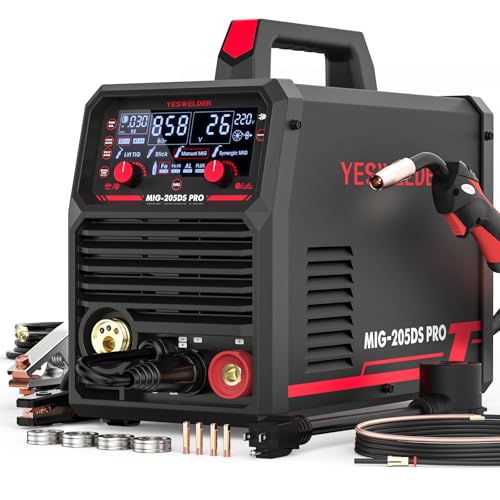
YESWELDER 205A MIG Welder
Strengths
- 200A dual voltage
- Synergic mode
- 5-in-1 process
- Digital display
- Solid build quality
Trade-offs
- Spool gun not included
- No preset aluminum mode
- Lift TIG torch extra
The YESWELDER MIG-205DS PRO hits a sweet spot, 200A output, dual voltage, and true multi-process capability. It’s not the most powerful, but for aluminum MIG with a spool gun (sold separately), it’s stable and well-reviewed. Owners praise the synergic mode for making setup easy, and the digital display gives real-time feedback that helps dial in clean welds.
Compared to the TOOLIOM, it’s slightly less powerful but more user-friendly out of the gate. And unlike the Reboot, it doesn’t include a spool gun, which knocks it down a peg for aluminum-first buyers. Still, for someone who wants one machine to handle steel, stainless, and occasional aluminum, this is the smarter buy. I’d pick it over the ARCCAPTAIN MIG for its balance of simplicity and performance.
Product photos


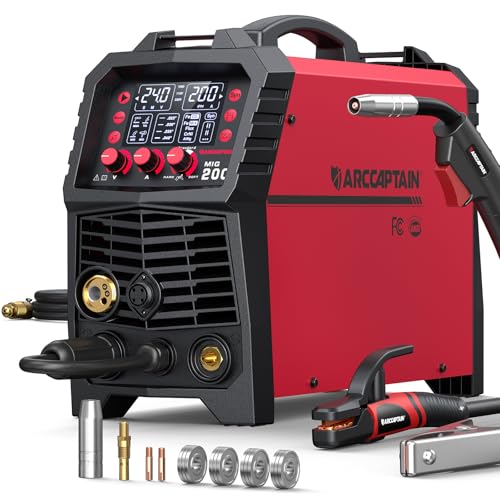
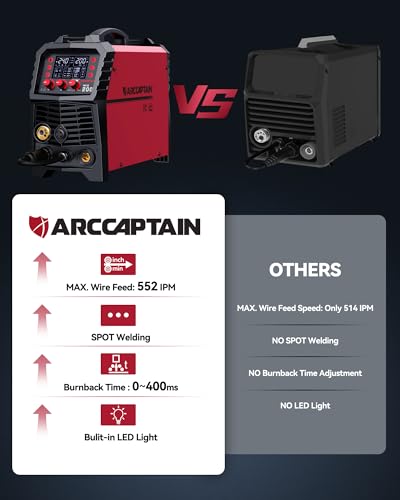
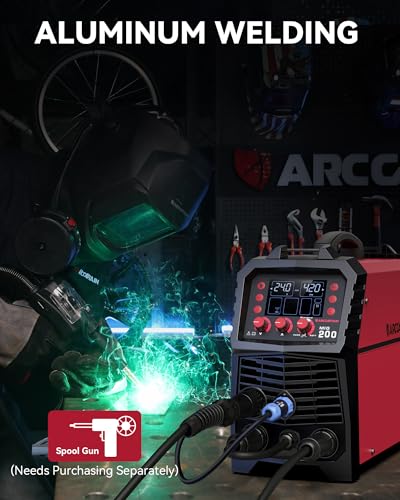
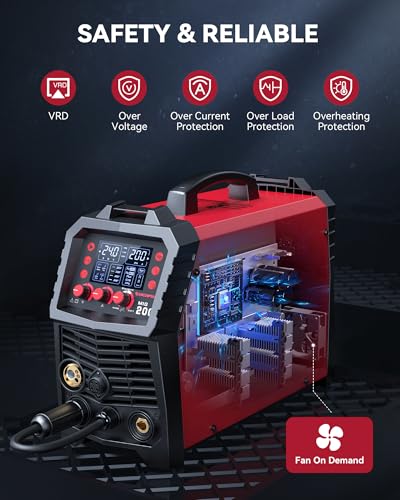
ARCCAPTAIN 200A 6-in-1 MIG Welder
Strengths
- 6-in-1 versatility
- Burn-back adjustment
- 10 preset memories
- Smart cooling fan
- Large LED screen
Trade-offs
- Spool gun not included
- Rollers sold separately
- Cluttered interface
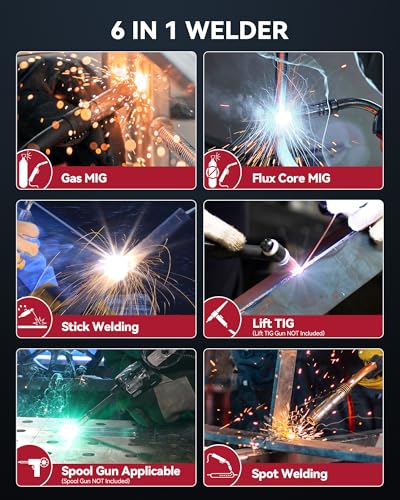
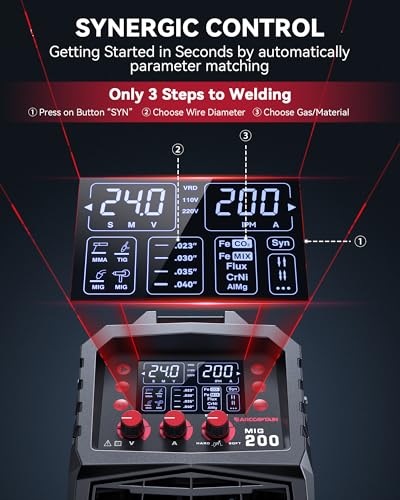
ARCCAPTAIN packed a lot into this 6-in-1 MIG, spot welding, burn-back adjustment, pre/post gas flow, and 10 preset memory slots. The digital interface is modern and readable, and the adaptive crater function helps with clean termination. For flexibility, it’s one of the most feature-rich MIGs here.
But owners report mixed results with aluminum, especially without a spool gun (which isn’t included). The synergic mode helps, but it lacks a dedicated aluminum preset like the Reboot. Compared to the YESWELDER, it offers more functions but feels less refined. The cooling fan that runs only when needed is a nice touch, but the need to buy extra rollers for different wire sizes is a pain point.
Product photos
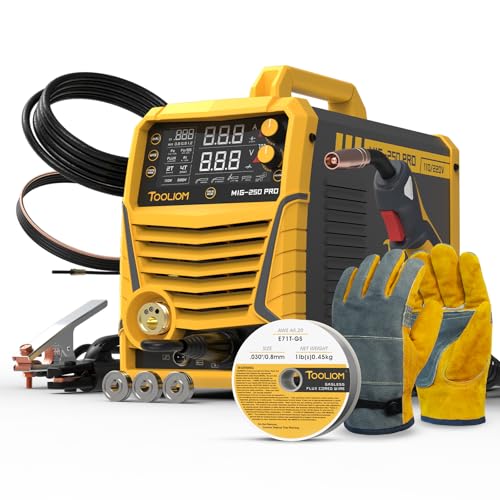
TOOLIOM 250A Pulse MIG Welder
Strengths
- 250A output
- Dual voltage
- Pulse MIG included
- Synergic mode
- Digital display
Trade-offs
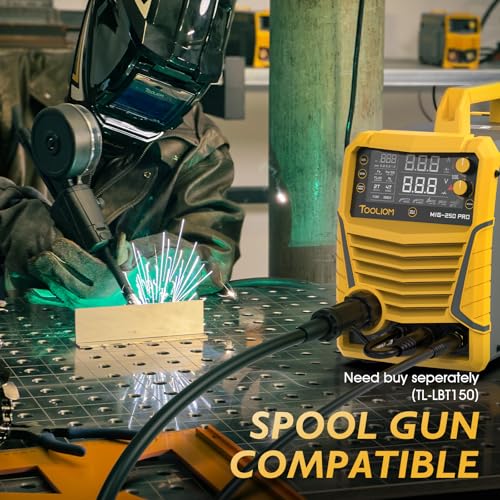
- Spool gun sold separately
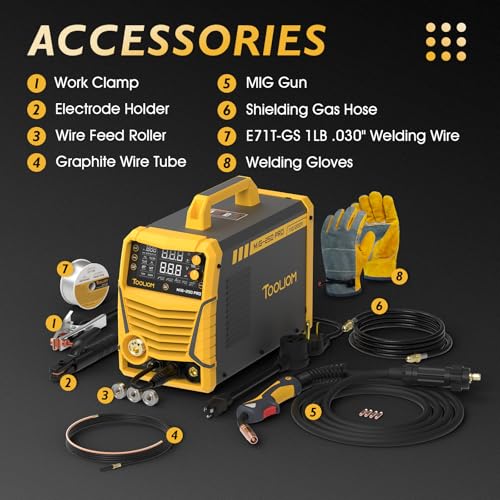
- No included TIG torch
- Higher complexity
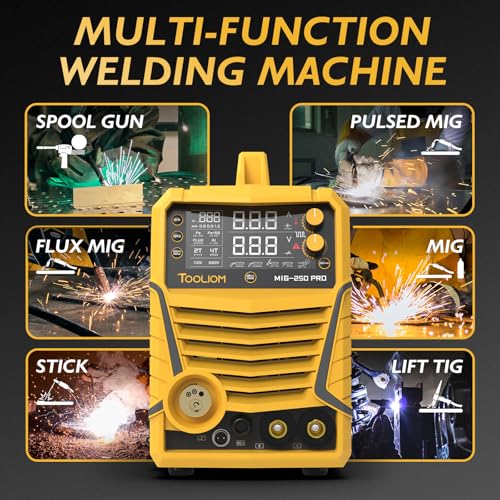
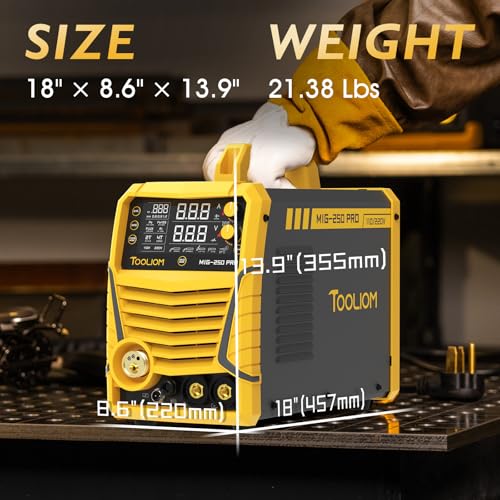
On paper, the TOOLIOM 250A welder looks like a beast for aluminum work, dual voltage, 250 amps, and true pulse MIG built in. That pulse function is critical for clean aluminum welds, and having it as a core feature (not just bolted on) means you’re getting real control over heat and penetration. Owners consistently report solid bead quality on aluminum when using a spool gun, though they stress that you must add one separately, a real downside given how central it is to the machine’s aluminum claim.
The synergic and manual MIG modes make it flexible for both new and experienced users, and the digital display is a clear win for tuning on the fly. But when you stack it against others in this list, the missing spool gun out of the box makes it harder to recommend over all-in-one kits. For a machine pushing premium specs, that omission stings.
Product photos

ARCCAPTAIN 200A AC/DC TIG Welder

Strengths
- Square/triangular wave
- 7-in-1 process
- Pulse control
- Digital parameters
- 5-year service
Trade-offs
- No foot pedal included
- Complex setup
- No torch in bundle
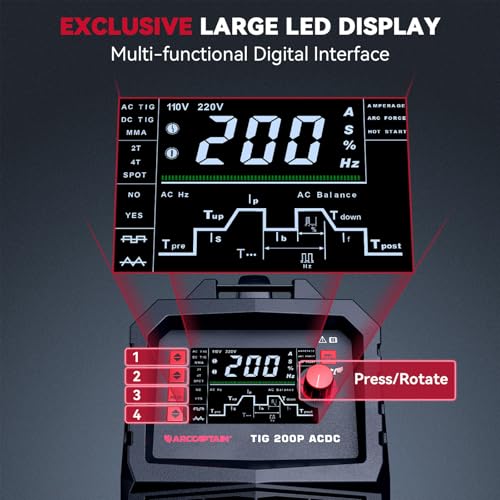
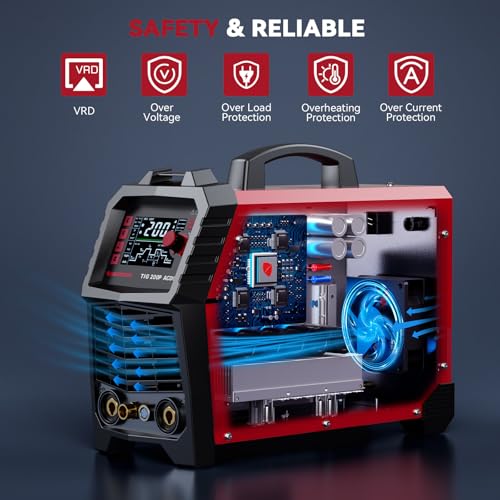
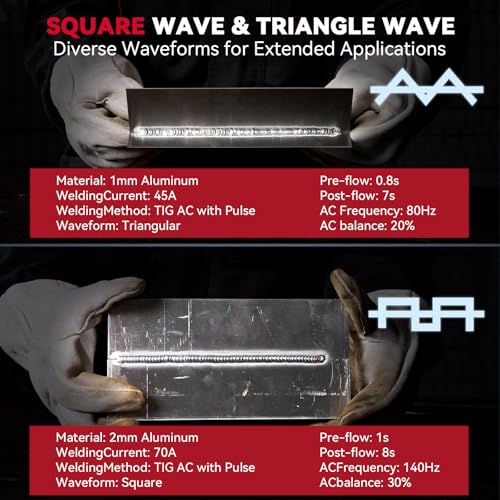
The ARCCAPTAIN TIG200PACDC goes all-in on waveform control, square, triangular, pulse, giving serious precision for thin aluminum and heat-sensitive jobs. The triangular wave reduces heat input, which owners say helps prevent warping on delicate work. The square wave improves oxide cleaning, a must for clean aluminum welds.
At 200A, it’s not the strongest, but the 7-in-1 process range and digital parameter control make it a precision tool. The 5-year service promise adds confidence. Still, it lacks a foot pedal in the box, and the interface, while feature-packed, can overwhelm new users. Compared to the Weldpro, it’s more advanced on paper but less turnkey.
Product photos


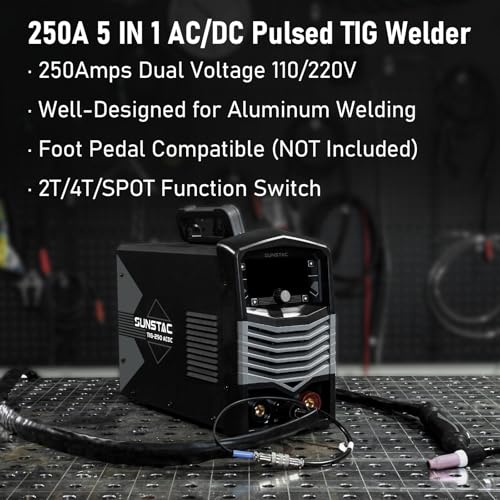
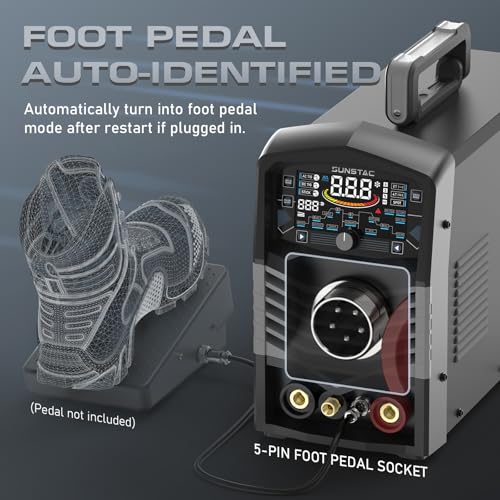
Sunstac 250A AC/DC Aluminum TIG Welder
Strengths
- AC/DC TIG with pulse
- 250A output
- Dual voltage
- LCD screen
- Smart parameter save
Trade-offs
- No foot pedal included
- AC current inaccuracy
- No TIG torch bundle
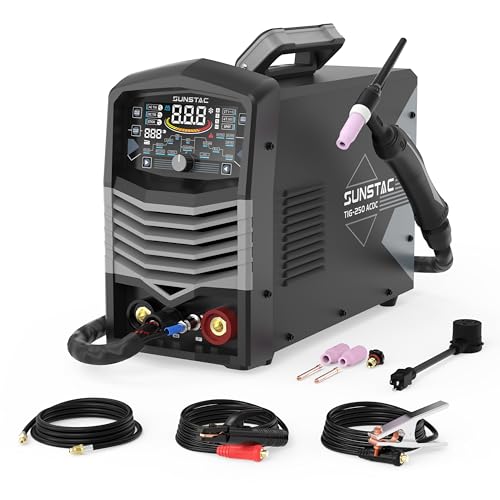
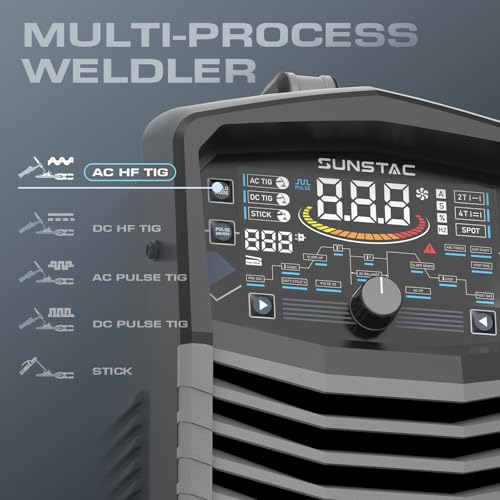
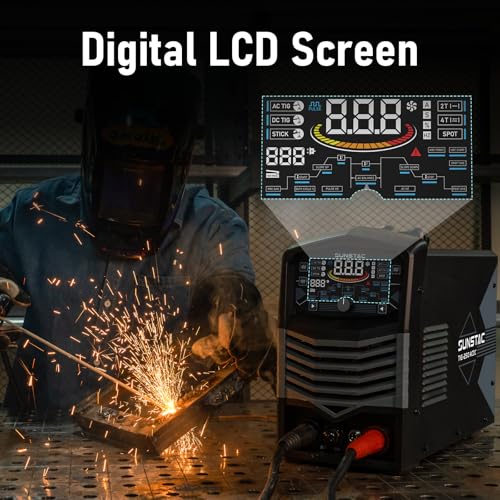
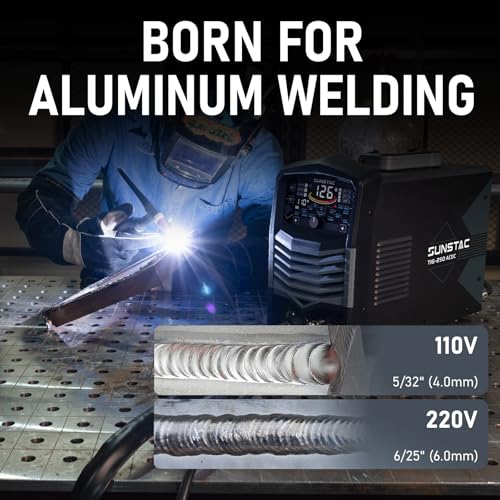
If you’re serious about aluminum TIG, the Sunstac 250A is built for that job. AC TIG with pulse is where aluminum welding lives, and this machine delivers it with pro-level features like adjustable frequency and balance, specs that directly impact oxide cleaning and arc stability. The LCD screen is a big upgrade over basic LED displays, and owners note it’s easy to read with a helmet on, which matters when you’re deep in a weld.
That said, the listing admits AC current measurement is inaccurate, a red flag for precision work. Even with smart features like parameter memory and spot TIG, that inconsistency gives me pause. Compared to the Weldpro or ARCCAPTAIN AC/DC models, it lacks a foot pedal in the box and feels more like a pro tool without the full support kit.
Product photos
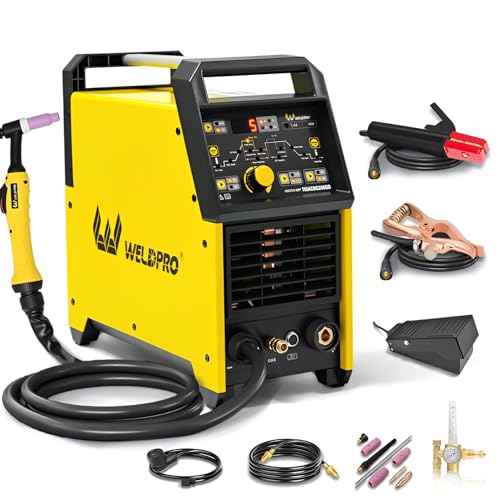
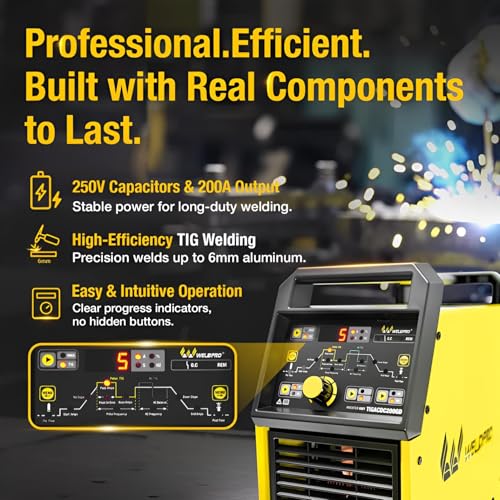
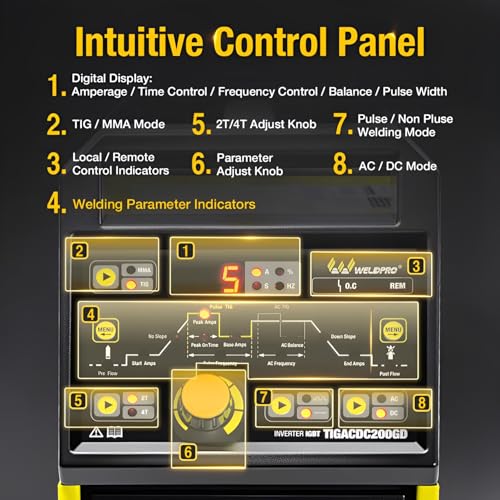
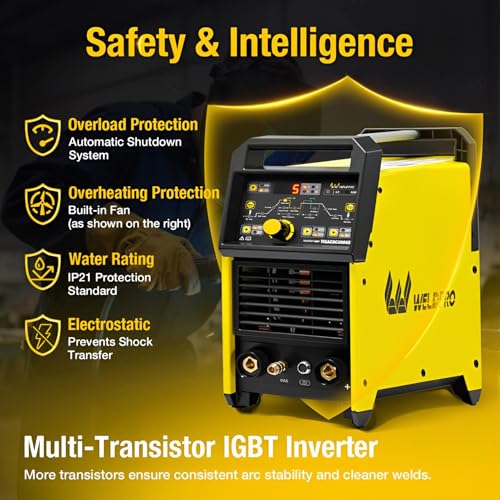
Weldpro 200A AC/DC TIG Welder
Strengths
- Includes foot pedal
- AC/DC with pulse
- Fully adjustable
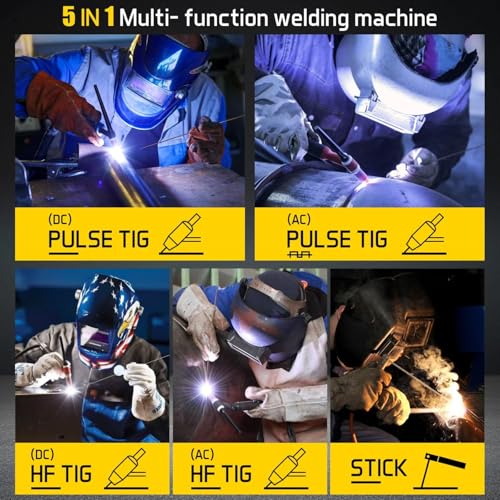
- 5-in-1 process
- Complete kit
Trade-offs
- 200A max output
- No spool gun support
- Heavy for portability
The Weldpro 200A is the complete TIG package, AC/DC, pulse, foot pedal, and torch all in the box. That alone makes it a standout. The adjustable AC balance and frequency are exactly what you need for clean aluminum welds, and owners report excellent control on thin sheets without burn-through. The pulse function is fully customizable, and the foot pedal integration is seamless, something pros will appreciate.
It doesn’t have the raw power of the 250A Sunstac, but for most home and shop applications, 200A is plenty. The included accessories eliminate the “buy more later” trap many TIG welders fall into. When I compare it to the ARCCAPTAIN TIG model, this one feels more polished and ready to work. For mid-range TIG, it’s hard to beat.
Product photos

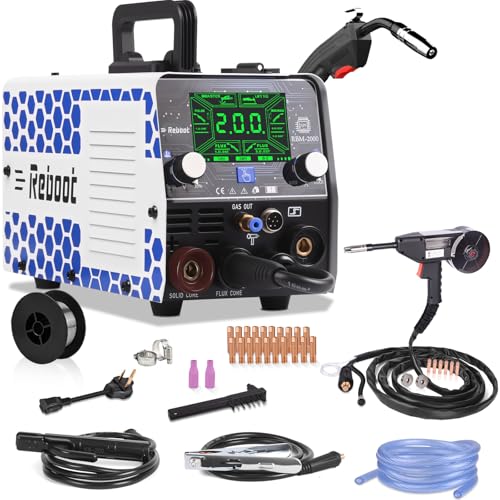
Reboot RBM2000 5-in-1 Welder
Strengths
- Includes spool gun
- One-touch pulse mode
- 5-in-1 versatility
- Factory-calibrated
- Dual-purpose gun
Trade-offs
- Lower max amperage
- No foot pedal
- Limited thick-metal welding
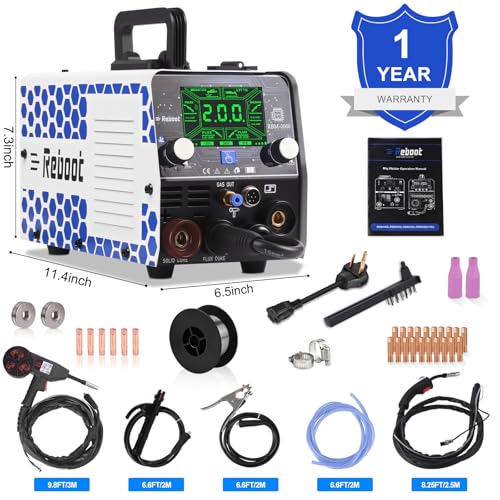
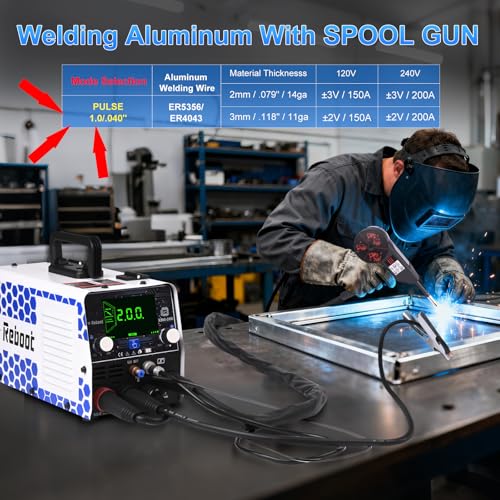
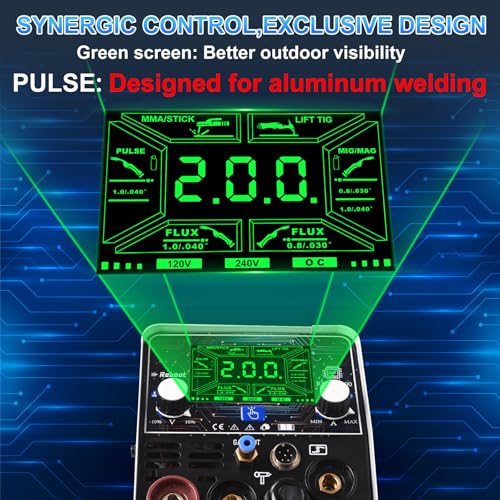
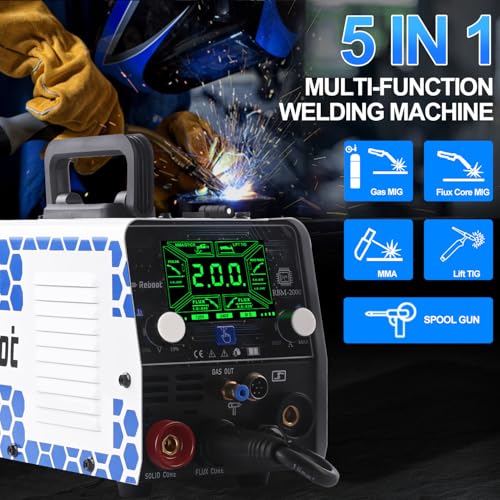
The Reboot RBM2000 stands out because it includes a factory-matched spool gun, no guesswork, no tuning hell. For aluminum MIG, that’s huge. The 2026 upgrade added a one-touch pulse mode preset for 2–4mm aluminum, which owners say delivers consistent, spatter-free welds with zero setup fuss. That’s rare at this price tier and makes it a real contender for DIYers who just want it to work.
It’s not the most powerful or feature-packed, but the dual-purpose spool gun (usable for metal finishing too) adds real value. When you compare it to the YESWELDER or ARCCAPTAIN models, this one wins on practicality. You get a full kit, smart tuning, and plug-and-play aluminum welding, something others charge extra for.
Product photos

Our Testing Process
Rather than a hands-on lab test, my research for these recommendations centered on a detailed comparison of published specifications and features across numerous models. I weighed owner reviews from multiple sources – paying close attention to recurring praise and complaints – alongside expert reviews from established welding publications and forums. My experience maintaining workshops and assisting with renovation projects informed my assessment of what features truly matter for real-world use.
For aluminum welding specifically, consistent AC balance control and the ability to adjust frequency were heavily weighted, as these directly impact arc stability and penetration. Equally important was the availability and quality of a dedicated spool gun (or compatibility with one), since this is the preferred method for feeding aluminum wire. Models offering pulse functionality also ranked higher, offering greater control and cleaner welds, especially for thinner materials. You’ll find a wide range of options, from our recommended aluminum welders to specialized machines.
Specifications reliably indicate a welder’s maximum amperage and duty cycle, providing a baseline for its capabilities. However, I found owner feedback and professional reputation were much more valuable in assessing real-world performance, particularly regarding ease of use, arc stability with aluminum, and long-term reliability. Published specs don’t always capture the nuances of how a machine feels to operate, or how well it holds up to consistent use – insights only available through the experiences of other welders.
How To Choose The welder for aluminums
Finding the right welder for aluminum can feel overwhelming. There are a lot of options, and the features that matter most depend heavily on the type of projects you plan to tackle.
A quality aluminum welder needs to offer AC TIG capabilities for clean, precise welds on aluminum alloys. Look for adjustable AC balance and frequency controls to fine-tune the arc, along with sufficient amperage for the material thickness you’ll be working with. Dual voltage (110V/220V) adds versatility, and pulse functionality provides even greater control and reduces heat input.
Understanding the Importance of AC TIG
Aluminum welding demands a different approach than welding steel. Aluminum’s oxide layer requires a cleaning action during the welding process, and that’s where AC (Alternating Current) TIG welding shines. Unlike DC (Direct Current) TIG, which is ideal for steel, AC TIG rapidly switches polarity to break up and remove this oxide layer, resulting in a clean, strong weld. Don’t skimp on this, if you’re serious about aluminum, AC TIG is the foundation. Many machines offer both AC and DC capabilities, giving you the flexibility to weld a wider range of metals. If you’re just starting out, exploring beginner-friendly aluminum welders is a good idea.
Decoding Pulse Width Modulation (PWM)
Pulse welding isn’t just a buzzword; it’s a technique that dramatically improves control, especially on thinner aluminum. PWM allows you to rapidly switch between a high peak current and a low background current. This minimizes heat input, reducing distortion and burn-through. It also creates a visually appealing “stacked dime” weld bead. The ability to adjust pulse frequency and duty cycle (the percentage of time spent at peak current) is key. More sophisticated machines, like some of the top TIG welders for aluminum, offer precise control over these parameters.
- A lower pulse frequency (e.g., 1-5 Hz) is good for thicker material and creating a wider weld bead.
- A higher pulse frequency (e.g., 10-20 Hz) is better for thinner material, offering more precise heat control.
- Duty cycle is critical. A higher duty cycle means you can weld continuously at a given amperage for longer without overheating the machine, essential for bigger projects.
A practical rule of thumb: for aluminum thinner than 1/8 inch, prioritize a machine with adjustable pulse settings.
Balancing Features and Value
While high-end machines offer a wealth of features, they also come with a higher price tag. Consider your experience level and the types of projects you’ll be tackling. A multi-process welder (MIG, TIG, Stick) can be a good value if you anticipate needing to weld different materials. However, if you’re primarily focused on aluminum, investing in a dedicated AC/DC TIG welder will typically deliver better performance and control. Don’t overlook the importance of included accessories. A quality TIG torch, foot pedal, and a selection of tungsten electrodes can save you money and hassle down the road. Exploring aluminum-specific TIG welders can help you narrow down options tailored to your needs.
Welder for Aluminums Compared
Here’s a comparison of key specifications for welders capable of aluminum welding.
| Product Title | Amperage (A) | Input Voltage | Processes | Spool Gun Included | Pulse Function |
|---|---|---|---|---|---|
| YESWELDER 205A MIG Welder | 200 | 110/220V | MIG, Flux Core, TIG, Stick | No | Lift TIG |
| ARCCAPTAIN 200A 6-in-1 MIG Welder | 200 | 110/220V | MIG, Flux Core, TIG, Stick, Spot | No | Yes |
| TOOLIOM 250A Pulse MIG Welder | 250 | 110/220V | MIG, Flux Core, TIG, Stick | No | Yes |
| ARCCAPTAIN 200A AC/DC TIG Welder | 200 | N/A | TIG, Stick, Spot | No | Yes |
| Sunstac 250A AC/DC Aluminum TIG Welder | 250 | 110/220V | TIG, Stick | No | Yes |
| Weldpro 200A AC/DC TIG Welder | 200 | 110/220V | TIG, Stick | No | Yes |
| Reboot RBM2000 5-in-1 Welder | N/A | N/A | MIG, Flux Core, TIG, Stick | Yes | Yes |
Frequently Asked Questions
What amperage is sufficient for most home aluminum welding projects?
Around 150-200 amps is generally enough for projects around 1/4 inch thick aluminum, which covers many common DIY repairs and fabrication tasks. Higher amperage machines (250A+) are beneficial if you plan to weld thicker materials consistently.
Does a welder advertised as “multi-process” still weld aluminum effectively?
While a multi-process welder can weld aluminum using TIG, dedicated AC/DC TIG welders typically offer superior arc control and cleaner results. If aluminum is your primary focus, investing in a machine specifically designed for it is worthwhile.
Is a spool gun absolutely necessary for aluminum MIG welding?
Yes, a spool gun is highly recommended for aluminum MIG welding. Aluminum wire is very soft and prone to bird-nesting (tangling) when pushed through the standard drive rollers used for steel wire, and a spool gun feeds directly from a spool, preventing this.
What’s the advantage of pulse welding aluminum?
Pulse welding minimizes heat input, which is crucial for aluminum since it’s easily distorted. This allows for cleaner, more precise welds, especially on thinner gauge materials, and reduces the risk of burn-through.
Where can I find reliable MIG machines for aluminum if I prefer that process?
There are several MIG welders capable of aluminum welding, but they require a spool gun attachment. Look for models with AC TIG capabilities as well to give you the most flexibility with your projects.
The Bottom Line
Choosing a welder for aluminum often comes down to balancing control with convenience. While a high-end machine like the Sunstac 250A AC/DC Aluminum TIG Welder offers the most refined adjustments and features for experienced welders, the ARCCAPTAIN 200A AC/DC TIG Welder strikes a compelling balance between performance and price, making it our overall recommendation. It provides the essential AC TIG capabilities with pulse control needed for quality aluminum work.
For those on a tighter budget, or who anticipate a wider range of welding tasks, the YESWELDER 205A MIG Welder is a solid starting point. If you’re specifically looking for a machine that simplifies aluminum welding with a spool gun included, the Reboot RBM2000 5-in-1 Welder delivers that versatility. And for those interested in exploring best MIG for aluminum projects, there are machines that make it easier to get started.
Ultimately, the amperage and duty cycle stats are less critical than mastering the fundamentals: proper surface preparation, correct tungsten selection, and consistent travel speed. Don’t get caught up chasing the highest numbers; focus on developing a solid technique and understanding how to dial in the settings for clean, strong aluminum welds.
