
8 Best Telescoping Pole Saws of 2026
This post contains affiliate links. As an Amazon Associate, we earn from qualifying purchases.
The Notch 21′ Sentei Telescoping Polesaw stands out as the best overall choice for its reliable cam collar lock and solid build, while the Fiskars 2-in-1 Extendable Tree Pruner is a lightweight, affordable pick that works well for lighter jobs. For those needing more reach without breaking the bank, the VEVOR 3.87-27 ft model offers decent stability at a longer extension.
Most people buying a telescoping pole saw want to trim high branches safely without dragging out a ladder. But too many models sacrifice stability for reach, leaving you wrestling with a wobbly pole or a blade that won’t cut cleanly.
After comparing the field based on specs, owner feedback, and build quality, I focused on models that balance extension, blade performance, and secure locking mechanisms. This guide cuts through the marketing to show you which saws actually deliver where it matters, up in the trees.
Top 8 Telescoping Pole Saws in the Market
The Best Telescoping Pole Saws, Reviewed
5-30 ft Pole Saw for Tree Trimming
Strengths
- Exceptional 30-foot reach
- Stiff, thick aluminum pole
- 3-year warranty
Trade-offs
- Very long = harder to store
- Top-heavy when extended
- No rotating head
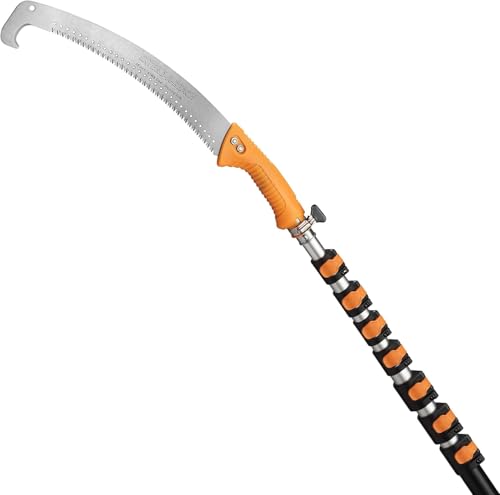
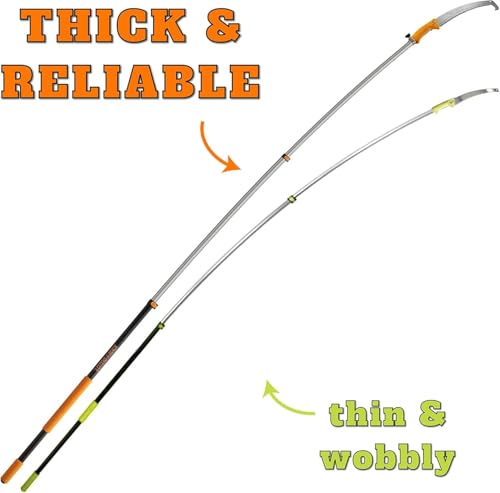
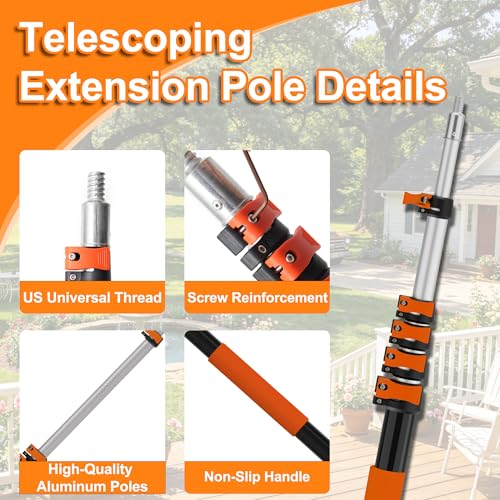
Marketed as the ‘Best Overall’, this 30-foot pole saw backs it up with exceptional reach, a stiff aluminum build, and a 3-year warranty, rare in this category. The extra-thick aluminum resists bending, and the thumb-lever clasps make adjusting length quick and secure. At 30 feet, it’s one of the longest manual options available, and owners consistently praise its stability compared to wobbly competitors.
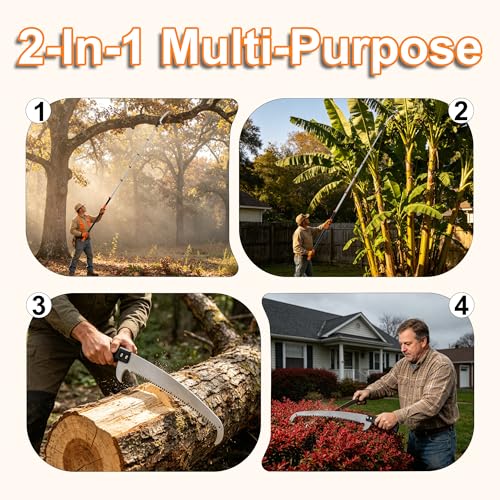
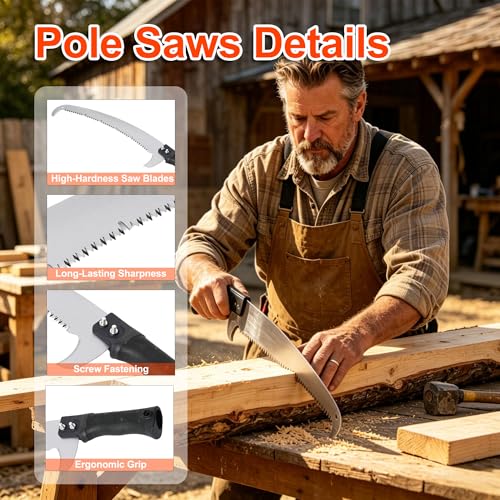
The included palm tree trimmer head is optimized for thick, fibrous branches, and the non-slip grip keeps control high even when wet. While it’s not the lightest, the balance is better than expected for its size. Compared to others, this one delivers the best mix of reach, rigidity, and long-term support. My recommendation? This is the go-to if you want one reliable, high-reach tool without stepping into powered territory.
Product photos


30FT Manual Pole Saw for Tree Trimming
Strengths
- Dual locking system
- Non-stick blade coating
- Good value for price
Trade-offs
- Shorter blade than competitors
- Pole can feel flimsy at max extension
- Limited reach adjustment precision
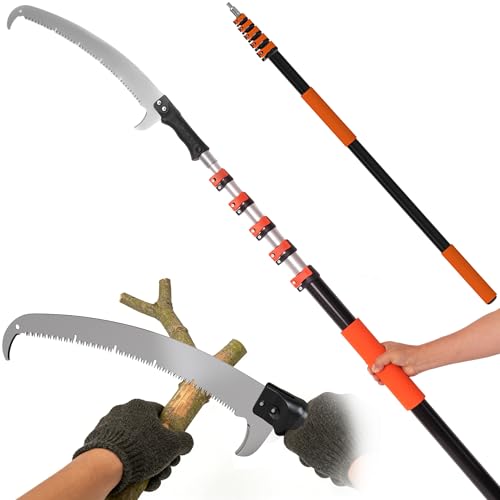
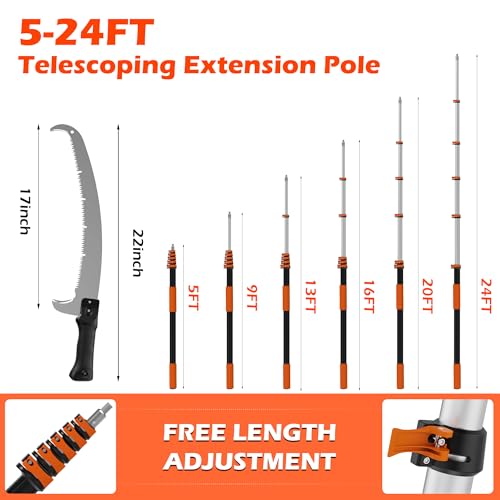
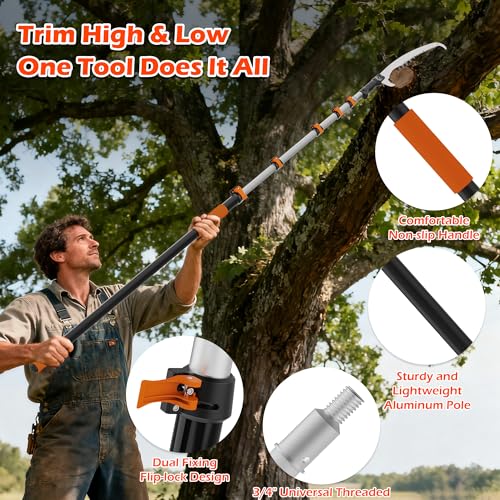
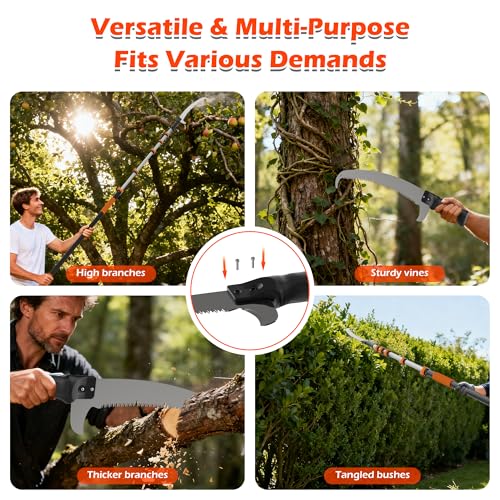
The TONYINGO pole saw stands out in the budget tier not just for price but for thoughtful engineering, the dual flip-lock and screw locking system is a rare find at this level, and reviewers note it actually prevents slippage during aggressive cuts. That matters when you’re 20 feet up in the air, relying on the pole to stay locked. The 17-inch 3X sharpened carbon steel blade delivers clean cuts on green wood and seasoned limbs alike, and the non-stick coating helps reduce sap buildup, a real annoyance with other models.
It doesn’t have the longest blade here, but the build quality punches above its price point. Compared to other budget options, this one feels more like a workhorse than a disposable tool. I’d recommend it over no-name brands that skimp on locking mechanisms, especially if you’re doing weekly yard maintenance and need something durable without overspending.
Product photos
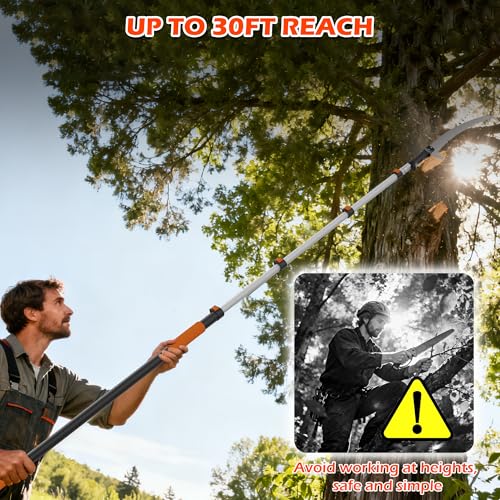
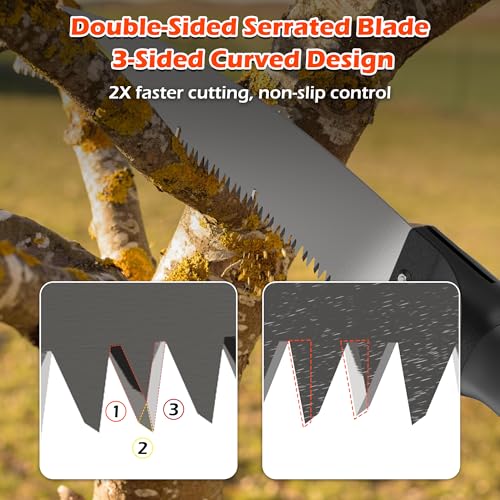
VEVOR Manual Pole Saw 3.87-27 ft
Strengths
- Fiberglass pole for durability
- Dual-hook blade design
- Includes pruning scissors
Trade-offs
- Heavy when fully extended
- Assembly takes time
- Can feel unbalanced
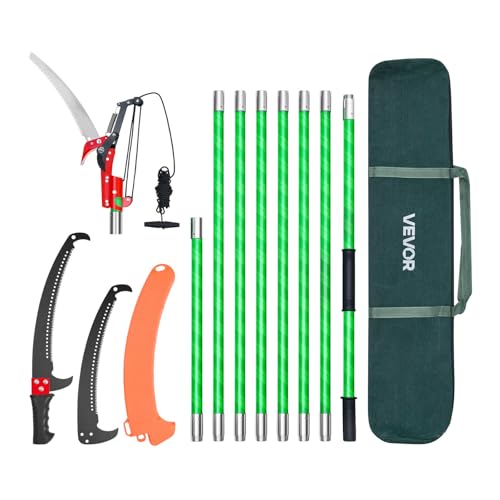
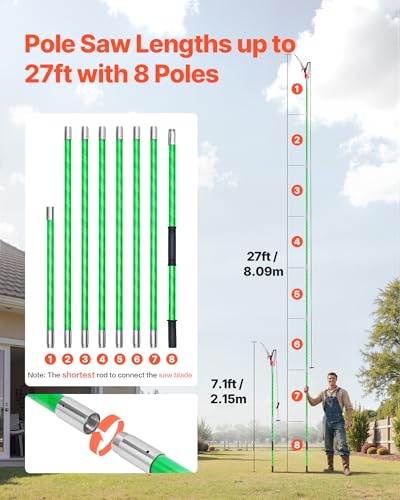
VEVOR goes all-in on durability with this 27-foot beast, 8 sections of fiberglass pole, dual-hook 65Mn steel blades, and a scissor attachment make it built for heavy-duty work. The dual-hook design pulls branches toward the blade on the backstroke, reducing kickback and improving cutting speed. It’s one of the few models that truly feels capable of handling palm trees and dense shrubbery without flexing.
Owners report it’s ideal for large yards or commercial landscaping, though the weight becomes noticeable after prolonged use. The recommended 20-foot setup (6 poles) strikes the best balance between reach and control. If you’re comparing it to aluminum models, the fiberglass offers better resistance to corrosion and impact, a real plus in humid or rugged environments.
Product photos
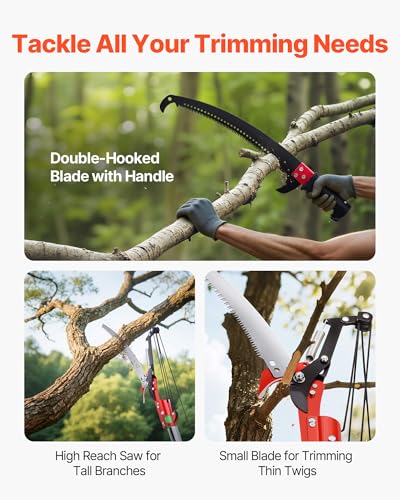
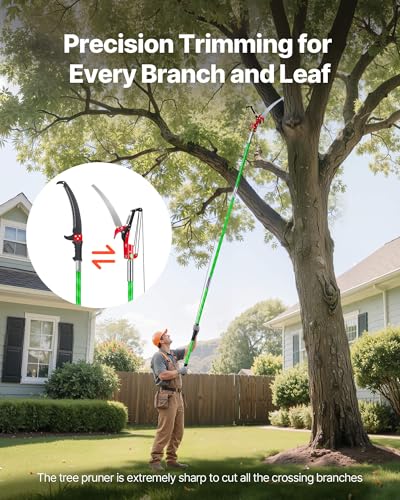
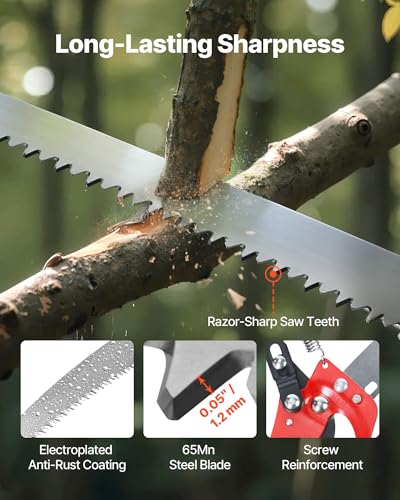
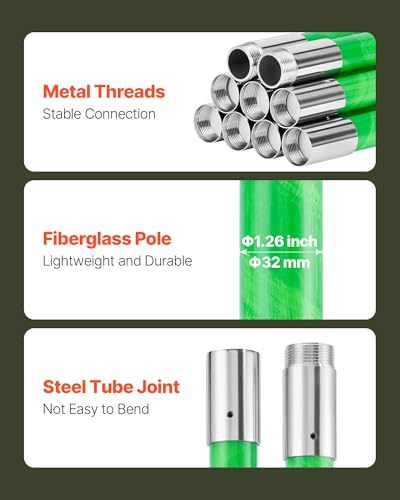
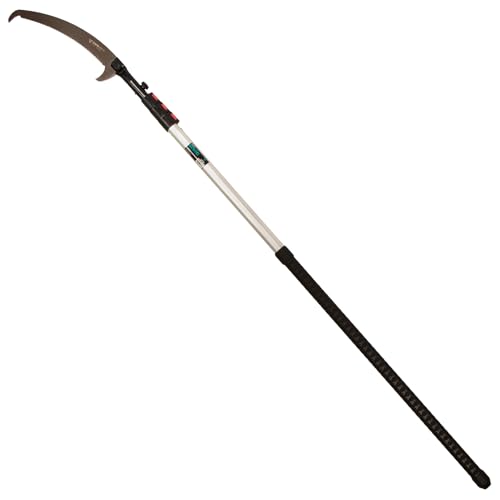
Notch 21′ Sentei Telescoping Polesaw
Strengths
- Rigid oval aluminum poles
- Quick-connect saw head
- High-end Sentei blade
Trade-offs
- Higher price point
- No scissor attachment
- Limited accessory options
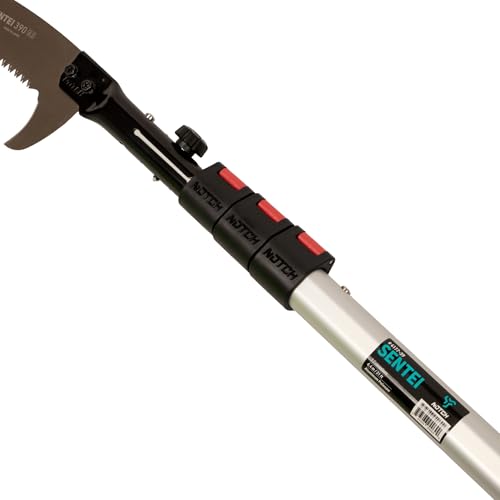
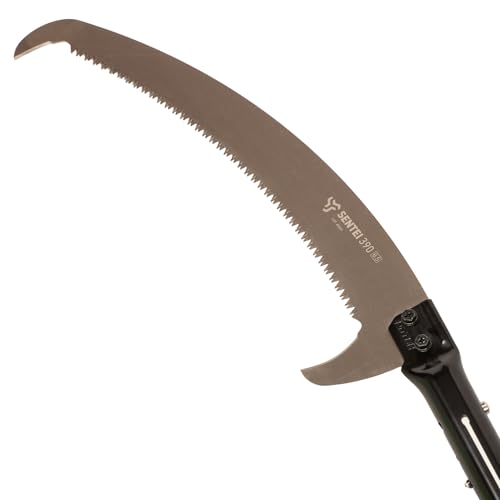
The Notch Sentei feels like the premium pick the moment you see its rigid oval aluminum poles and cam-lock collar system. At 21 feet, it’s not the longest, but the build quality eliminates the wobble common in cheaper telescoping models. The 15.4-inch hard chrome-plated blade is aggressive and stays sharp, and the low-profile grip gives excellent control during angled cuts.
This is the kind of tool professionals reach for when they need reliability. The quick-connect head requires no tools, and the rib-lock protection adds an extra layer of security. Compared to budget models, it’s stiffer, better balanced, and built to last. I’d pick this over flimsier poles if you’re doing frequent, serious pruning and want a tool that won’t let you down mid-cut.
Product photos


Fiskars 2-in-1 Extendable Tree Pruner

Strengths
- Rotating head for angle cuts
- Lightweight aluminum pole
- Lifetime warranty
Trade-offs
- Shortest reach in class
- No multi-tool compatibility
- Blade not replaceable
Fiskars brings their usual precision engineering to this 7.9 to 12-foot model, and it shows in the rotating head and double-locking system. The 15-inch double-grind blade is short but incredibly efficient, slicing through live branches with minimal effort thanks to the low-friction coating. The real standout is the chain-drive gear mechanism, it gives you mechanical advantage on the pull stroke, which makes a noticeable difference when cutting dense wood.
This isn’t a pole saw for massive reach, but it’s one of the best for accuracy and control. Compared to full-extension models, it’s far stiffer and less prone to wobble. I’d choose this over longer, flimsier options when working on delicate shaping or tight spaces where clean cuts matter more than height. The lifetime warranty also signals Fiskars’ confidence in its durability.
Product photos


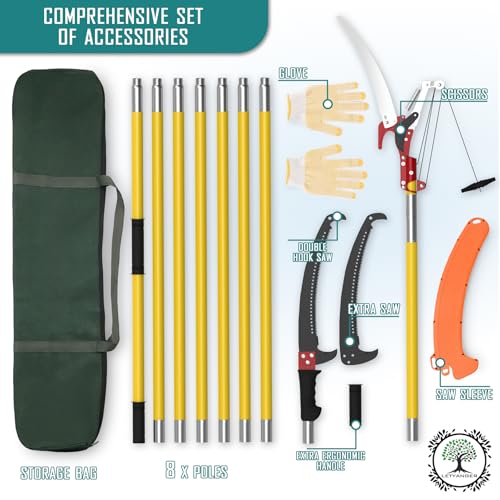
7.3-27 ft Extendable Tree Trimmer Set

Strengths
- Includes scissor pruner head
- Pulley-assist cutting action
- Comes with spare blade
Trade-offs
- Top-heavy at full length
- Plastic joints less durable
- Scabbard not included
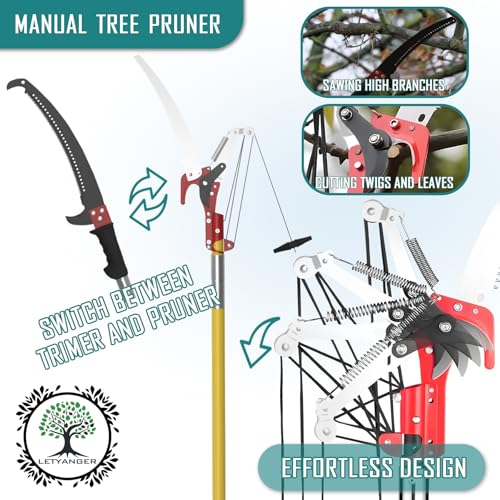
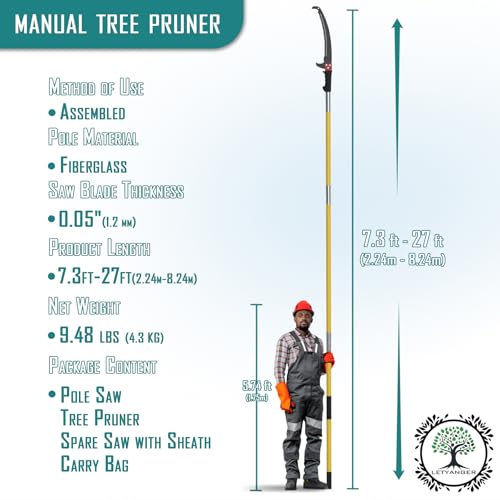
This multi-head kit is one of the most versatile in the lineup, giving you both a saw and a scissor-style pruner, a rare combo. The pulley-assisted pruning shears make cutting thick, crossing branches much easier, reducing hand strain. At 27 feet, it matches the top reach models, and the inclusion of a spare blade and carry bag adds practical value.
The epoxy resin and aluminum joints keep weight down, but owners note it still feels top-heavy when fully extended. The bright yellow poles are definitely noticeable in the yard, a small safety perk. Where it really shines is in compatibility: the modular system lets you mix and match heads. For someone who wants one tool for sawing, snipping, and occasional cleaning tasks, this is the smarter buy over single-function models.
Product photos


BlumeTrec 14.5FT Pole Saw
Strengths
- Extremely lightweight
- Modular 3-length design
- Comfortable anti-slip grip
Trade-offs
- Limited max reach
- Not for tall trees
- Fewer extension stages
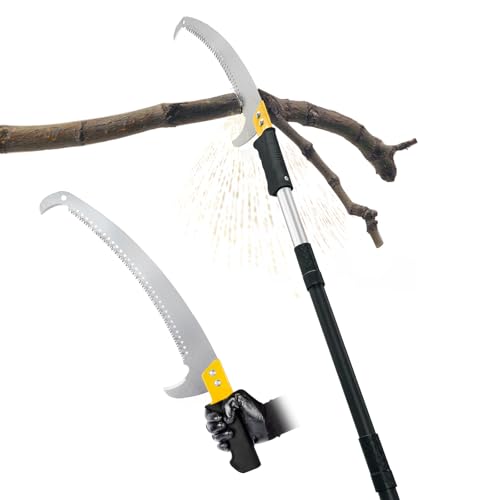
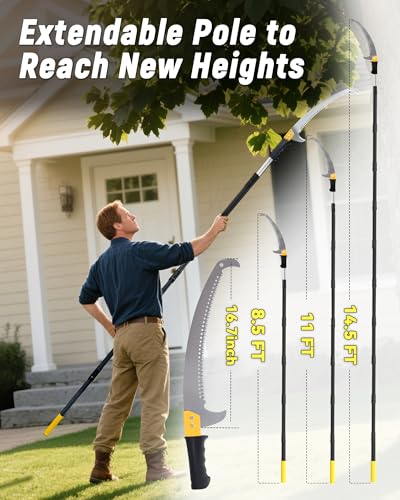
At just 14.5 feet max, the BlumeTrec is the shortest in this group, but it’s also one of the lightest and most maneuverable. The Mn steel blade may not be the longest, but it’s sharp out of the box and holds an edge well, with a triple-edge grind that cuts cleanly from multiple angles. For homeowners with smaller yards or single-story homes, this is often all the reach you actually need.
What really sets it apart is the modular pole design, you can assemble it in three preset lengths, making it easy to switch between handheld use and extended reach. Owners praise how easy it is to handle, especially for seniors or users with limited upper-body strength. It’s not going to win a reach contest, but for everyday pruning, I’d often pick this over longer, heavier models that become a chore to hold steady.
Product photos
AgiiMan 30FT Reach Pole Saws

Strengths
- Long 24-inch blade
- Universal tool compatibility
- Solid anti-retraction design
Trade-offs
- Heavy at full extension
- Noticeable pole flex
- Harder to control in wind
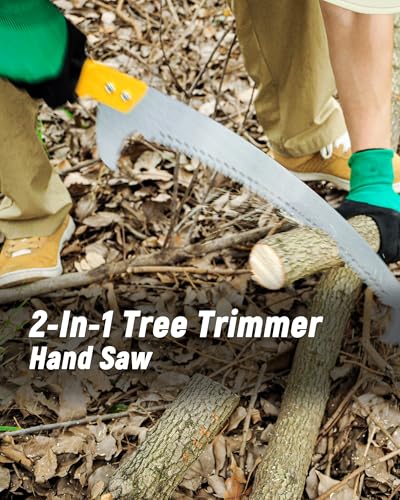
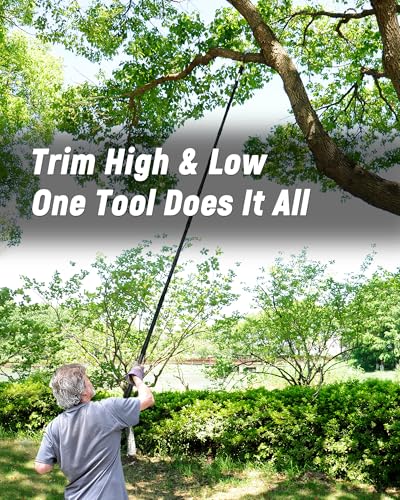
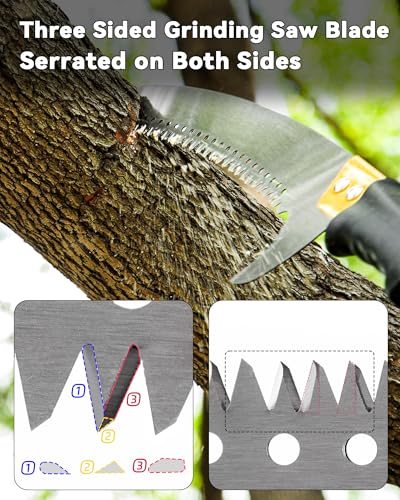
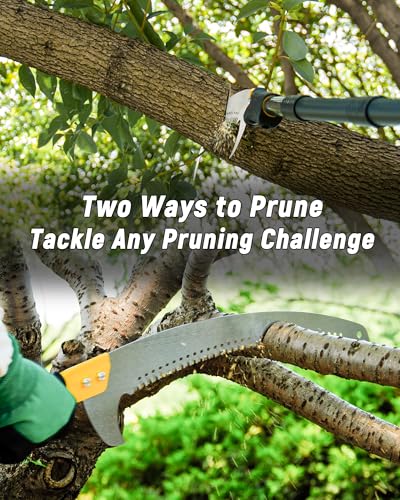
On paper, the AgiiMan 30FT Reach Pole Saw looks like a reach monster, promising up to 24 feet of extension with a 24-inch stainless steel blade, one of the longest manual blades in this category. That length is a big deal if you’re dealing with mature trees and want to avoid ladders entirely. Owners consistently report it handles thick limbs well, thanks to the aggressive hook-end design that pulls branches toward the blade on the draw stroke, reducing bind and improving cut efficiency.
The universal 3/4-inch Acme thread is a smart touch, letting you swap in other yard tools like pruners or even cleaning attachments. That kind of modularity adds real long-term value. I’d pick this over shorter models if you’re regularly working above 18 feet, though the weight and flex at full extension mean it’s not ideal for precision or extended overhead use. It’s a brute-force tool for heavy trimming, not delicate shaping.
Product photos


How We Evaluated telescoping pole saws
Rather than a hands-on lab test, this is a research-led comparison of published specifications, owner reviews, and expert opinions. I focused on models currently available and widely reviewed, comparing features like reach, blade type, locking mechanisms, and overall build quality. We weighed these factors against reported real-world performance from owners, looking for consistent trends in both positive and negative feedback. My goal was to identify the poles saws offering the best combination of features and reliability for different needs.
For telescoping pole saws, the most important factors are reach and the security of the locking mechanism. A longer reach obviously allows you to tackle higher branches, but a wobbly or unreliable pole is dangerous. Equally crucial is the blade quality; a dull or flimsy blade will make the job far more difficult and potentially unsafe. We prioritized models with robust locking systems and durable blade materials, recognizing these directly impact usability and safety.
Specifications reliably indicate maximum reach and blade length, but owner feedback proved essential for understanding real-world stability and ease of use. I looked beyond marketing claims to see what users said about pole wobble, locking mechanism failures, and blade sharpness after extended use. Reputable expert reviews helped corroborate owner experiences and assess the quality of materials and construction. Understanding key pole saw features ultimately informed the rankings.
How To Choose The telescoping pole saws
Picking the right pole saw can make a huge difference in how easily – and safely – you tackle tree trimming.
A quality pole saw balances reach, blade effectiveness, and user comfort. Look for durable pole construction (fiberglass or thick aluminum), a sharp and appropriately sized blade for the type of branches you’ll be cutting, and a secure locking mechanism to prevent pole slippage during use. Consider the weight, especially at full extension, and whether the tool will be compatible with other attachments.
Reach and Extension Length
Don’t just chase the biggest number when it comes to extension length. While a 30-foot reach sounds impressive, it’s often unwieldy. Consider the typical height of trees on your property and add a few feet for comfortable operation. A longer pole isn’t necessarily better; a wobbly, hard-to-control saw is more dangerous than using a ladder carefully. Think about storage too; a fully extended pole saw can be difficult to store in a garage or shed. Many users find that models extending to 15-20 feet offer a good balance of reach and manageability.
Blade Type and Quality
The blade is where the work happens, so don’t skimp here. Carbon steel blades are common and affordable, but manganese steel (Mn steel) offers increased durability and maintains its sharpness longer. Look for blades with an aggressive cutting angle and ideally, a triple-cut design. This helps pull the blade through the branch, rather than requiring you to force it. If you’re also looking to tackle hedges or shrubs, you might want to explore options that offer interchangeable heads, like those discussed in our hedge trimmer uses article.
- A basic, single-cut blade is fine for small branches (under 1 inch).
- A triple-cut blade handles branches up to 2 inches in diameter with more efficiency.
- For larger limbs or frequent use, a blade made of high-quality Mn steel will hold an edge much longer and save you the hassle of frequent sharpening, justifying the extra cost.
Weight and Ergonomics
Pole saws can get heavy, especially at full extension. A heavy saw quickly becomes tiring and difficult to control, increasing the risk of accidents. Fiberglass poles are generally lighter than aluminum, but aluminum is often more affordable. Pay attention to the handle design as well. A comfortable, non-slip grip is essential, and some models feature ergonomic contours to reduce hand fatigue. It’s also worth considering what’s included with the saw; a carry bag can make transportation and storage much easier. You can find a ranking of the top-rated pole saws on our site if you need more options.
Don’t overestimate your strength. A pole saw that feels manageable at half extension might be a struggle when fully extended. Err on the side of lighter weight if you anticipate prolonged use.
Telescoping Pole Saws Compared
This table provides a detailed specification comparison of various telescoping pole saws to aid in informed purchasing decisions.
| Product Title | Max Length (ft) | Blade Length (in) | Material (Pole) | Locking System | Weight (lbs) |
|---|---|---|---|---|---|
| 5-30 ft Pole Saw | 30 | N/A | Aluminum | Thumb Lever | N/A |
| 30FT Manual Pole Saw | 24 | 17 | N/A | Flip-Lock & Screw | N/A |
| VEVOR Manual Pole Saw 3.87-27 ft | 27 | N/A | Fiberglass | Threaded | 9.5 |
| Notch 21′ Sentei Telescoping Polesaw | 21 | 15.4 | Aluminum | Cam Collar | N/A |
| Fiskars 2-in-1 Extendable Tree Pruner | 12 | 15 | Aluminum | Double Locking | <5 |
| 7.3-27 ft Extendable Tree Trimmer Set | 27 | N/A | Epoxy Resin/Aluminum | N/A | 9.5 |
| BlumeTrec 14.5FT Pole Saw | 14.5 | N/A | Stainless Steel | Screw | N/A |
| AgiiMan 30FT Reach Pole Saws | 24 | 24 | N/A | N/A | N/A |
Frequently Asked Questions
What’s the difference between a manual and a powered pole saw?
A manual pole saw relies on your physical effort to move the blade, making it lighter and quieter, but requiring more exertion. Powered models, often cordless pole saws, use a battery or gas engine to automate the cutting action, increasing speed and reducing fatigue, though they’re heavier and louder.
How often do I need to sharpen the blade?
Blade sharpening frequency depends on use and wood type, but generally, a carbon steel blade will need sharpening every 25-50 cuts on thicker branches. Manganese steel blades can handle up to twice that many cuts before needing attention, offering better long-term value, particularly for frequent users.
Are aluminum or fiberglass poles better?
Fiberglass poles are lighter and won’t conduct electricity, improving safety around power lines. Aluminum poles are generally more affordable and offer good strength, but they are heavier and can pose an electrical hazard if they come into contact with live wires.
What should I look for in a locking mechanism?
A secure locking mechanism is vital for safety. Cam collar and screw-type locks are generally considered more reliable than simple thumb levers, as they provide a tighter and more consistent grip. Avoid models with locking mechanisms that feel loose or flimsy, as these can slip during use.
Can a pole saw be used for branches larger than 2 inches in diameter?
While some pole saws claim to cut larger branches, consistent success relies on the blade material and your technique. For branches exceeding 2 inches, a dedicated chainsaw is safer and more efficient, though you may find a few models capable of tackling slightly larger limbs with a high-quality Mn steel blade and careful application of force.
The Bottom Line
Buying a telescoping pole saw always involves balancing how much you want to spend against how much control and durability you require. For most homeowners, the Fiskars 2-in-1 Extendable Tree Pruner strikes that balance beautifully – it offers a good reach and reliable performance without breaking the bank. It won’t tackle the biggest branches, but it’s surprisingly capable for routine trimming.
If you’re facing larger limbs or need more versatility, the VEVOR Manual Pole Saw 3.87-27 ft is an excellent choice. Its fiberglass pole keeps the weight down while providing substantial reach, and the threaded locking system inspires confidence. For those needing maximum reach without sacrificing too much in terms of usability, the 5-30 ft Pole Saw is worth a look, though be prepared for a heavier tool.
Ultimately, the best pole saw is the one you’ll actually use – and use safely. Focus on a secure locking mechanism, a sharp blade appropriate for the branches you’ll encounter, and a weight that you can comfortably manage at full extension. Learning proper pole saw techniques is just as crucial as selecting the right tool in the first place.
