8 Best Table Saw Fences for 2026
This post contains affiliate links. As an Amazon Associate, we earn from qualifying purchases.
The Wixey Professional Table Saw Fence stands out as the best overall, delivering rock-solid accuracy with its digital readout and steel construction. For those on a tighter budget, the Delta 30 in. T3 Fence System offers reliable performance and solid build quality straight from the factory. If you need flexibility, the BOW 46″ XT XTENDER Fence is our top pick for versatility, easily adapting to different saws and setups.
Most people don’t realize how much a poor fence can sabotage their cuts, leading to drift, inaccuracy, and even safety risks. A shaky or poorly aligned fence doesn’t just waste wood, it wastes time and confidence.
This guide cuts through the noise by focusing on real-world performance, based on specs, owner feedback, and years of seeing what actually works in workshops like mine. We looked at build quality, locking systems, and how well each fence handles the demands of daily use, so you can pick one that matches your saw and your projects.
Top 8 Table Saw Fences in the Market
The Best Table Saw Fences, Reviewed
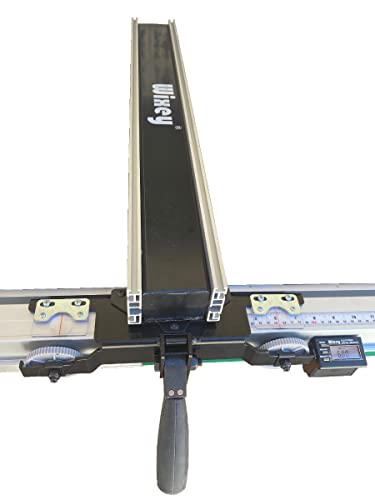
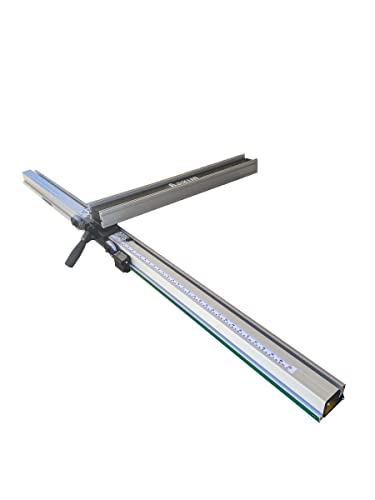
Wixey Professional Table Saw Fence
Strengths
- Digital readout
- Micro-adjustment
- High rigidity
Trade-offs
- Expensive
- Batteries not included
- Heavy setup
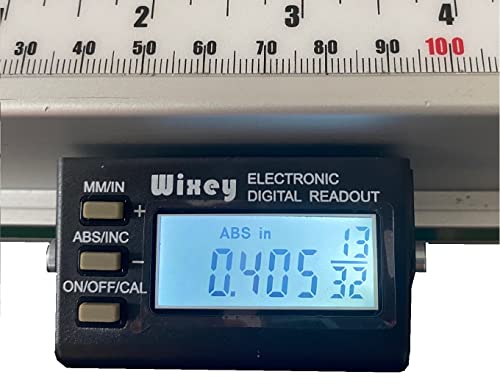
The Wixey WR750 is the kind of upgrade that makes you rethink what a fence should do. Its digital readout, accurate to ±0.002″ per foot, is a standout for repeatable cuts, owners consistently highlight how much time it saves when setting up complex projects. The micro-adjust feature lets you dial in positioning with near-machinist precision, and the roller glide system moves smoothly without slop.
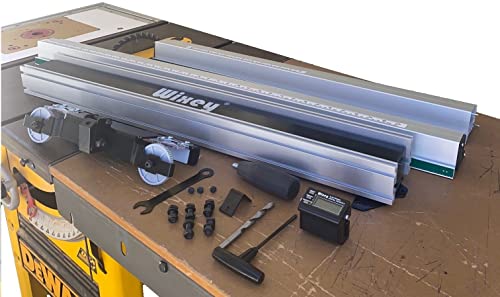
Compared to analog systems, it’s in a different league. The 72″ rail gives ample rip capacity, and the heavy-duty aluminum and steel build inspires confidence. While it’s one of the pricier options, the included drilling jig makes installation straightforward. For serious woodworkers who value accuracy and repeatability, this isn’t just an upgrade, it’s the smart long-term investment.
Product photos
BOW 46″ XT XTENDER Fence

Strengths
- T-track compatibility
- Multiple clamp positions
- Wall-mountable design
Trade-offs
- Requires separate clamps
- Not a full fence system
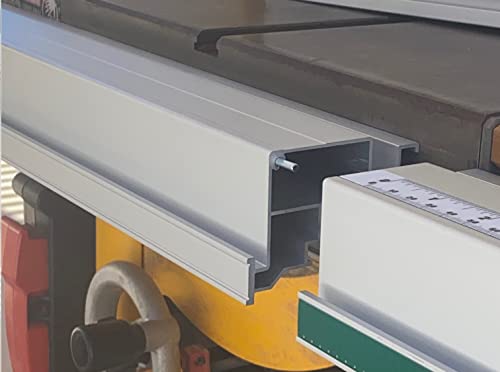
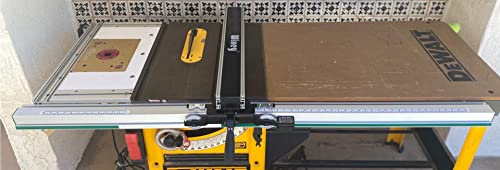
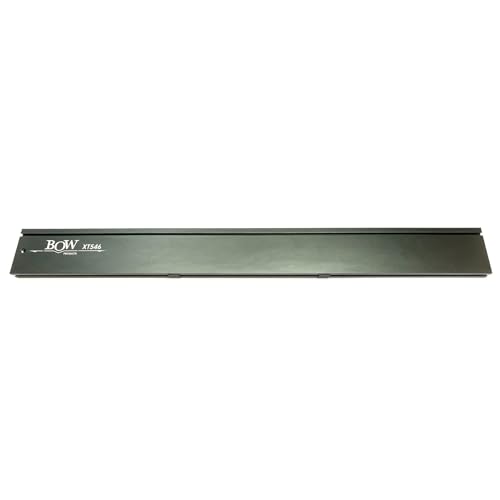
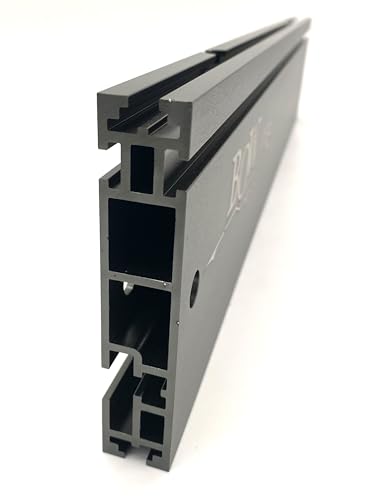
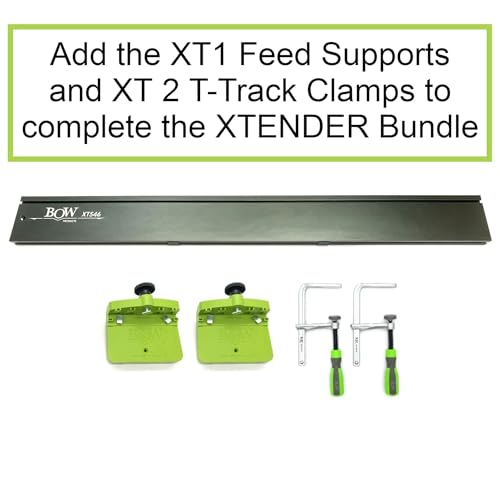
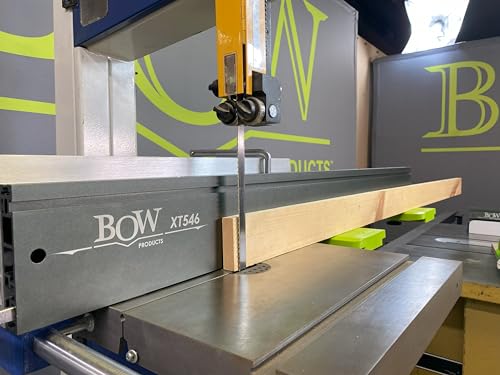
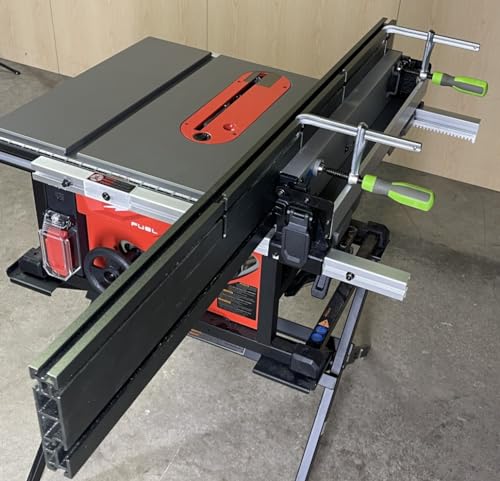
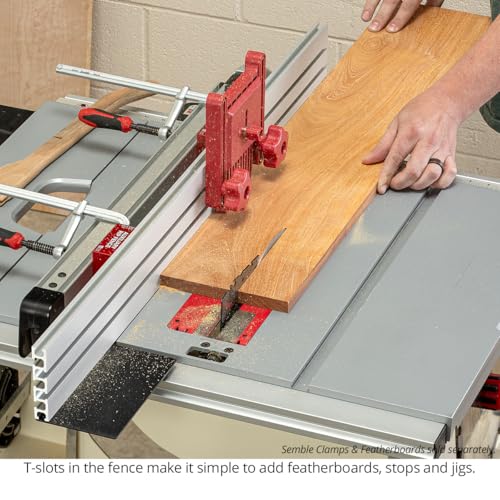
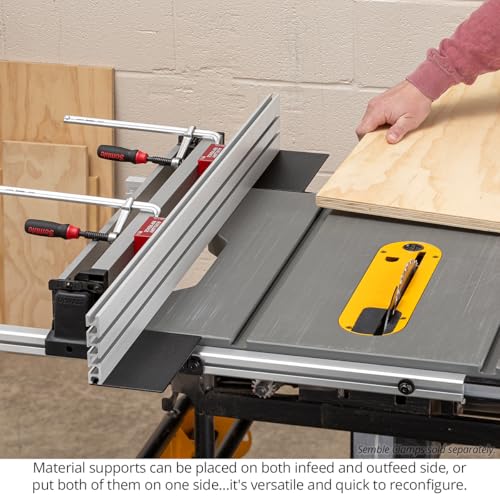
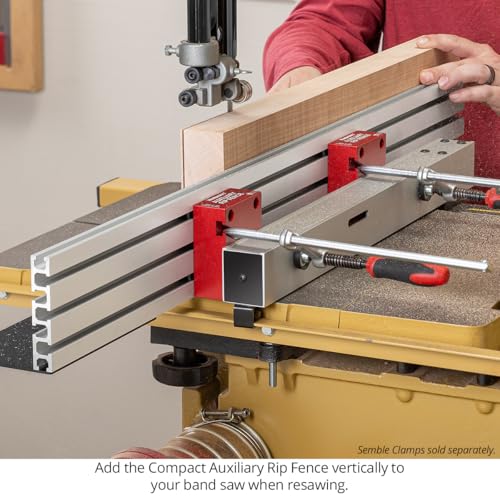
If you’re looking to turn your basic table saw fence into a modular workstation, the BOW XT XTENDER makes a strong case on paper. Its standout feature is the three full-length T-slots, which owners consistently report make attaching featherboards, stops, and feed supports a breeze. The ability to clamp it onto existing fences, including Delta UniFence and Harvey systems, adds serious versatility, especially for users who don’t want to replace their entire setup.
What really sets this apart is how it functions as both a fence extender and a table surface booster when paired with BOW’s optional feed supports. Reviewers note it dramatically improves control when feeding long boards, reducing chatter and misalignment. It’s not a standalone fence, but as an add-on, it delivers where it counts: flexibility and integration.
Product photos
Woodpeckers 48″ Auxiliary Rip Fence
Strengths
- 48″ length
- 12″ support wings
- Three clamp blocks
Trade-offs
- Heavy and bulky
- Needs strong clamps
- Overkill for small saws
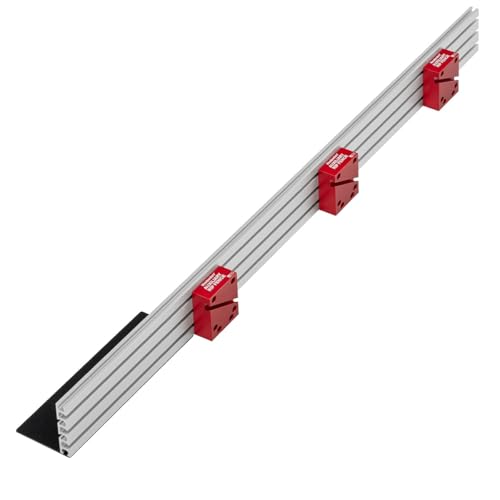
When you’re dealing with full sheets or long panels, the 48″ Woodpeckers ARF-48 is hard to beat. Its length and 12″ support wings provide unmatched stability on the outfeed side, and owners consistently report cleaner, safer cuts with less binding. The three clamping blocks ensure even pressure, and the T-track system allows for quick jig attachment.
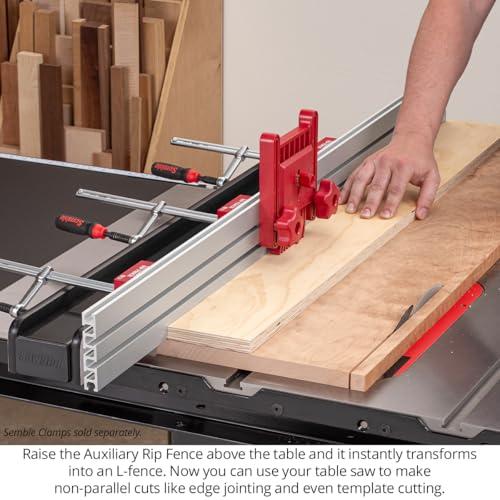
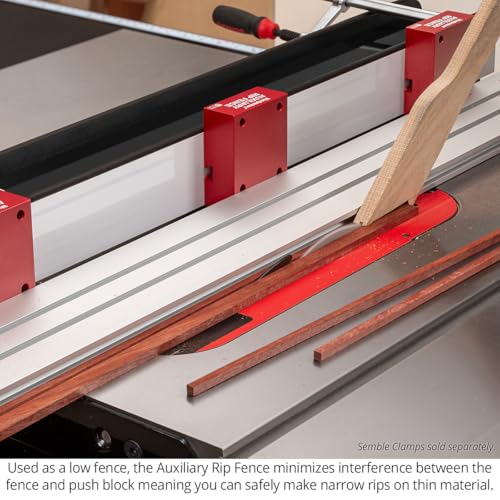
Like its smaller sibling, it’s made in the USA with obsessive attention to detail. The ability to run it in high, low, or L-fence mode adds unexpected versatility. It’s not cheap, but for a shop that regularly handles large stock, the investment pays off in control and accuracy. Compared to DIY plywood extensions, this is infinitely more reliable.
Product photos
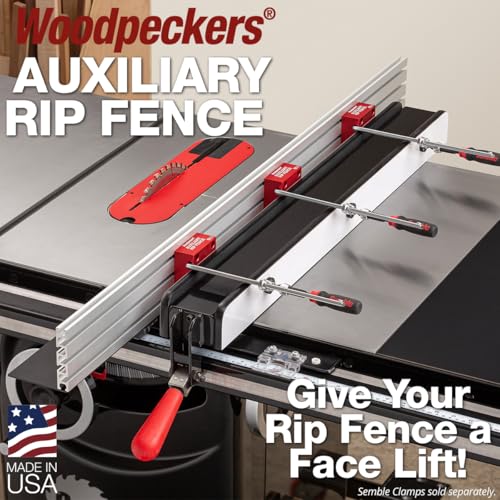
Woodpeckers 36″ Compact Auxiliary Fence
Strengths
- Compact design
- T-track slots
- Quick clamp setup
Trade-offs
- Shorter length
- No micro-adjust
- Supports sold separately
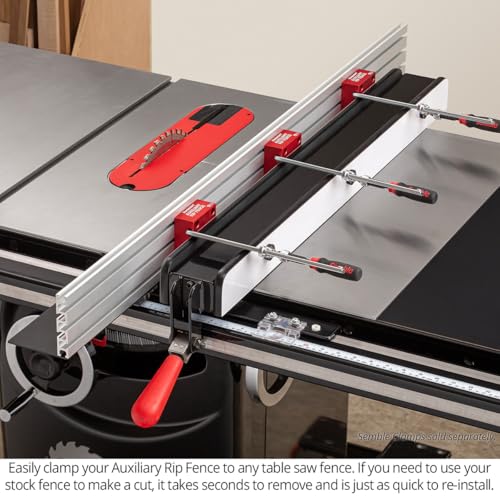
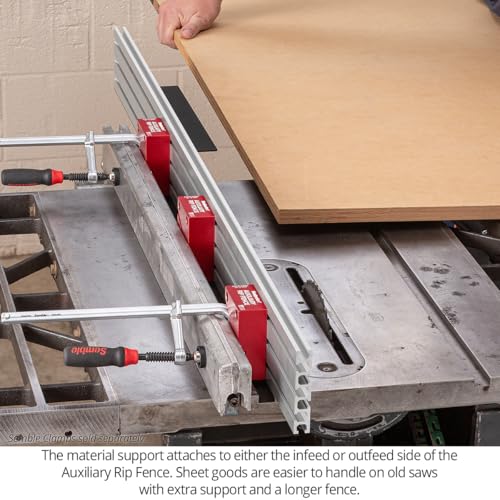
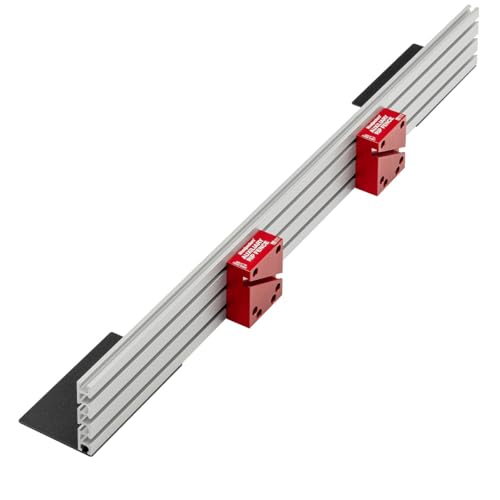
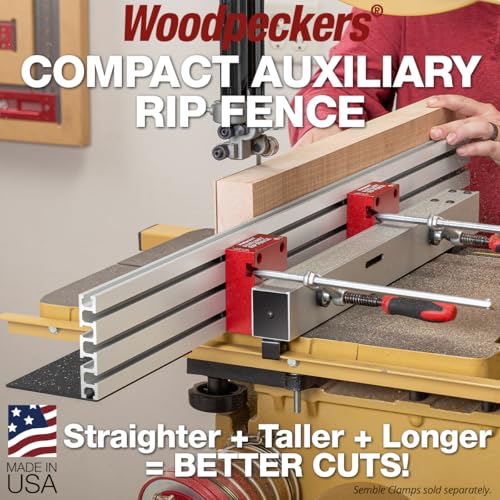
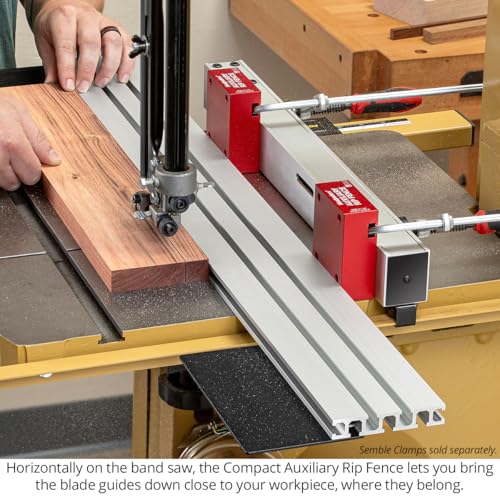
The Woodpeckers ARF-BSCS is built for job site reality, compact, quick to install, and rock-solid when clamped down. At 36″, it’s sized perfectly for portable saws, and the two 7″ support wings help keep sheet goods from tipping during crosscuts. Owners appreciate how fast it installs with standard track clamps and how well it eliminates flex on flimsy stock fences.
It’s not a rip fence replacement, but an infeed/outfeed stabilizer, and in that role, it excels. The built-in T-track lets you add hold-downs, and the 3-1/2″ height matches most standard fences. American-made quality means you’re paying a bit more, but you’re getting precision and durability. For contractors or mobile woodworkers, this is the kind of tool that prevents frustration on-site.
Product photos
36″ Professional Advanced Fence
Strengths
- Dual-mode design
- Dovetail jig slots
- Smooth roller glide
Trade-offs
- No digital display
- Clamp mechanism basic
- Setup takes practice
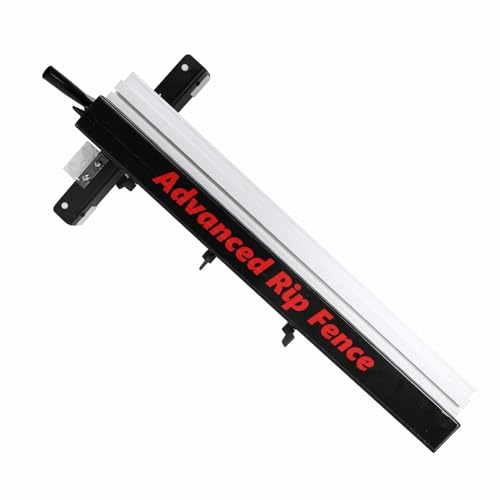
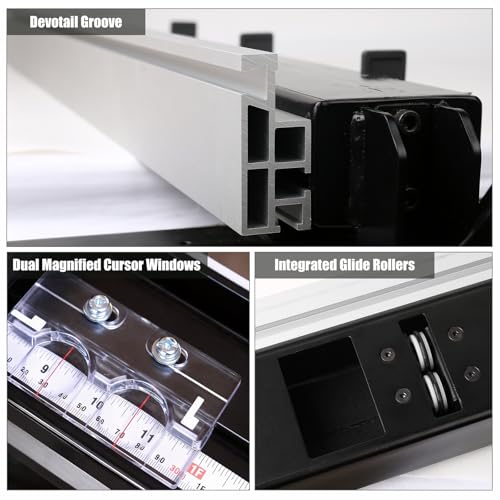
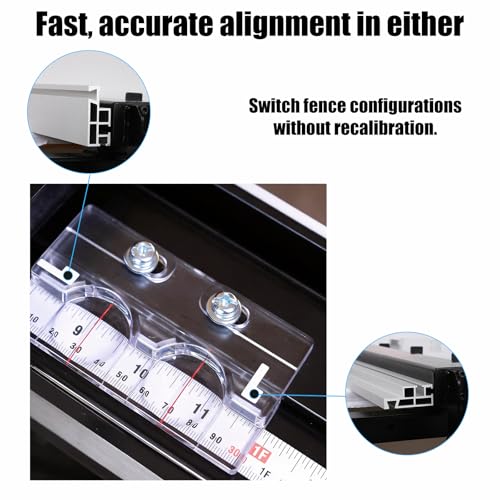
This fence stands out with its clever dual-mode design, flip it for low-profile ripping or L-fence jointing, and you’ve instantly expanded your saw’s capabilities. The T-square locking mechanism gets strong marks in owner reviews for staying parallel without constant tweaking, and the dual magnifying indicators mean you don’t lose calibration when switching modes.
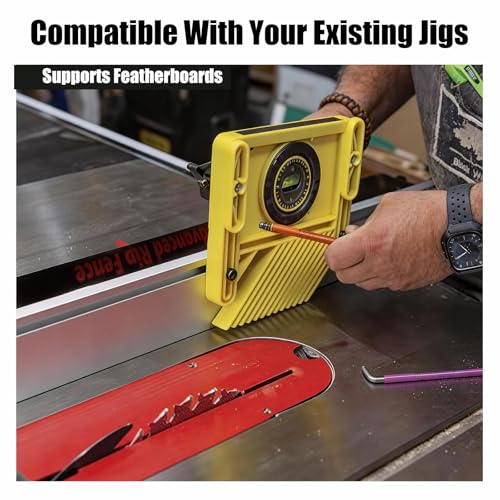
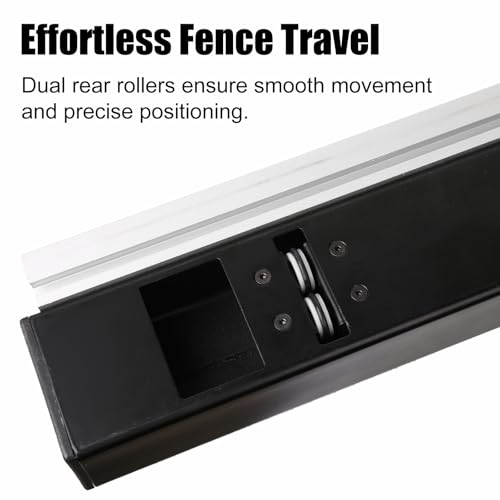
The dovetail grooves are a smart alternative to T-slots, offering secure jig attachment with less play. Rear rollers make movement buttery smooth, and the overall build feels robust. While it lacks a digital readout, its mechanical precision is impressive. Compared to single-mode fences, this one wins on flexibility. I’d pick it for a hybrid shop where versatility matters more than raw speed.
Product photos
Peachtree Uni Style Fence USA

Strengths
- Sacrificial face
- T-slots included
- Made in USA
Trade-offs
- Only for UniFence
- No digital readout
- Requires original base
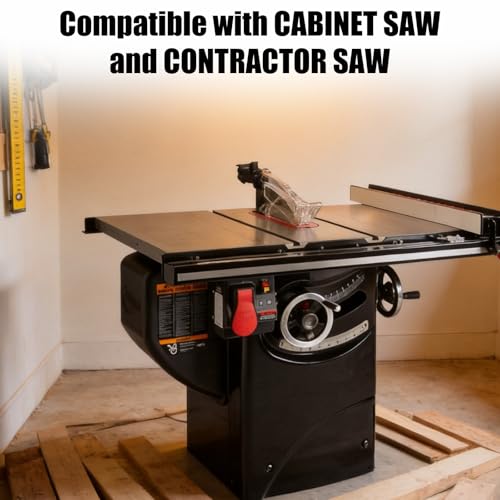
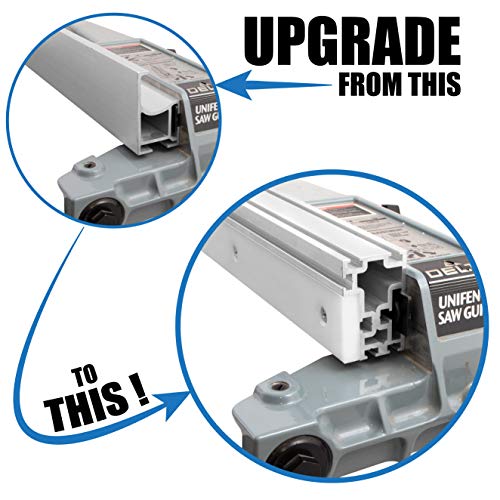
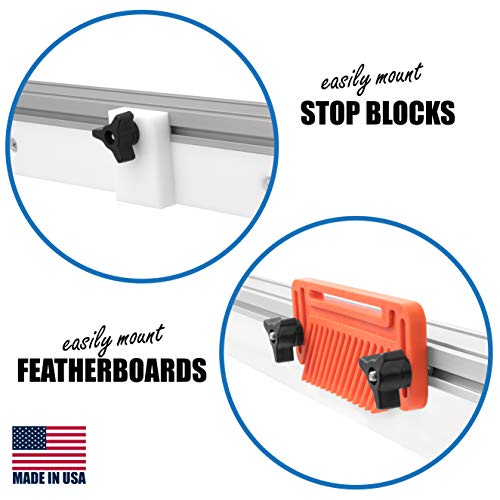
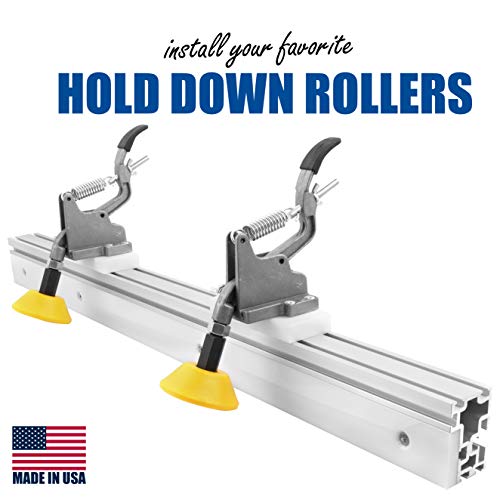
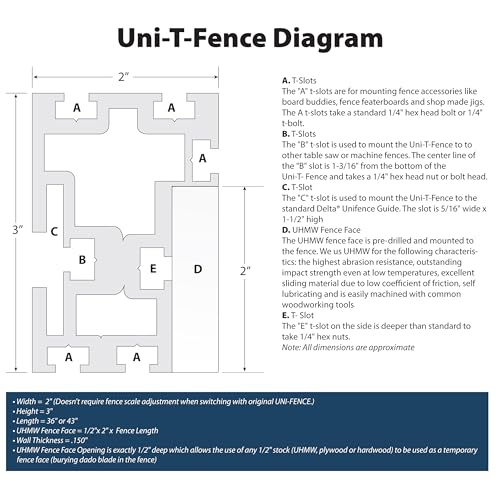
If you own an older Delta UniFence saw and want to modernize it, the Peachtree Uni Style fence is a no-brainer. It retains the original system’s solid feel but adds what the factory fence lacked: T-slots and a sacrificial UHMW face. Owners love being able to mount featherboards and cut rabbets without fear of damaging the main fence.
The UHMW face is replaceable and cuts cleanly, which is a big win for safety and versatility. Made in the USA from extruded aluminum, it feels rugged and stays true over time. While it’s not a full system (you still need the original base), it transforms an aging setup into something that performs like a modern fence. For UniFence owners, this is the upgrade worth making.
Product photos

Delta 30 in. T3 Fence System
Strengths
- OEM-grade fit
- Three-point lock
- Stiff steel rail
Trade-offs
- No accessory slots
- Limited to Delta saws
- Shorter rip capacity
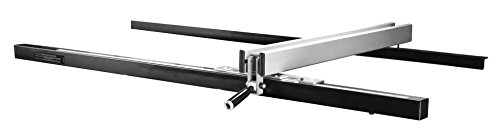
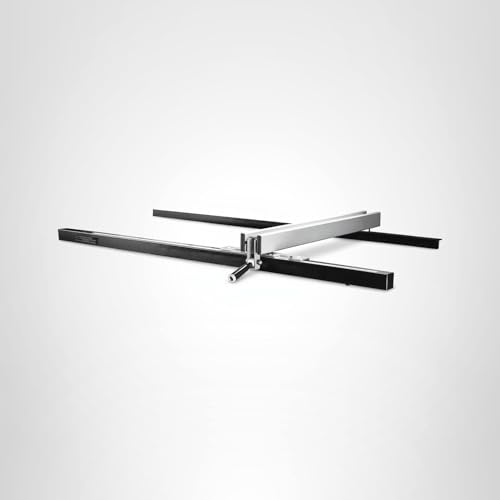
The Delta T3 Fence System feels like the kind of OEM upgrade that makes sense if you’re already in the Delta ecosystem. Its one-piece tubular rail and three-point locking system are engineered for rigidity, and the twin hairline pointers are a thoughtful touch for dialing in precision. On paper, the ±1/64″ accuracy is solid for a factory-style fence, and owner feedback suggests it holds up well under regular shop use.
Compared to aftermarket options, it’s not the most flexible, but it’s dependable. It’s designed specifically for Delta saws, so compatibility is a given if you own one. However, if you’re running a different brand or want T-slots for accessories, you’ll be out of luck. This is a no-frills, functional fence, not flashy, but built to last.
Product photos
O’SKOOL 46″ Rip Fence Extension
Strengths
- 3-mode versatility
- Eight T-slots
- Tool-free clamp
Trade-offs
- Finish feels basic
- No micro-adjust
- Clamps can loosen
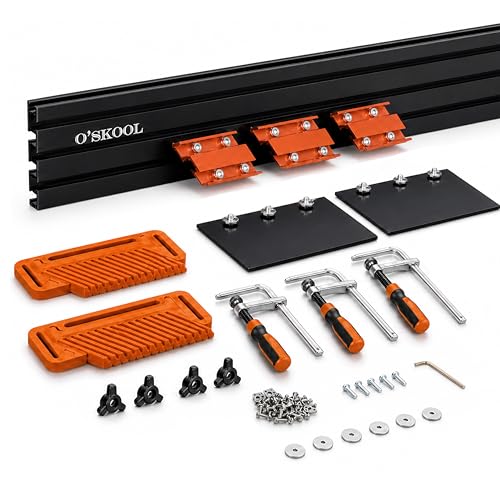
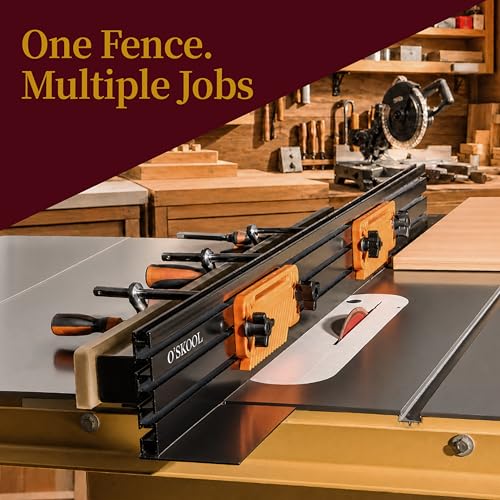
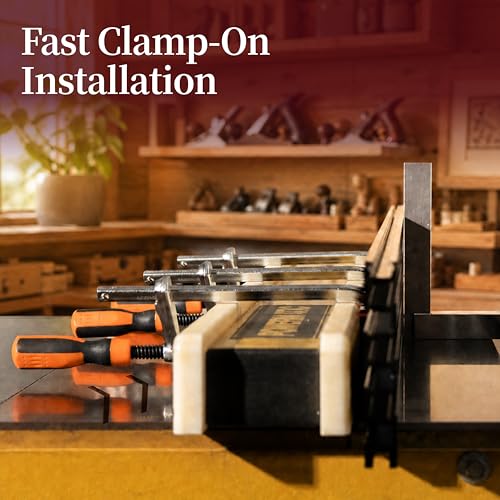
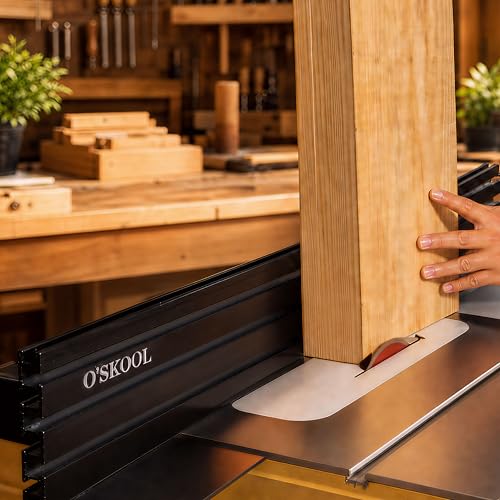
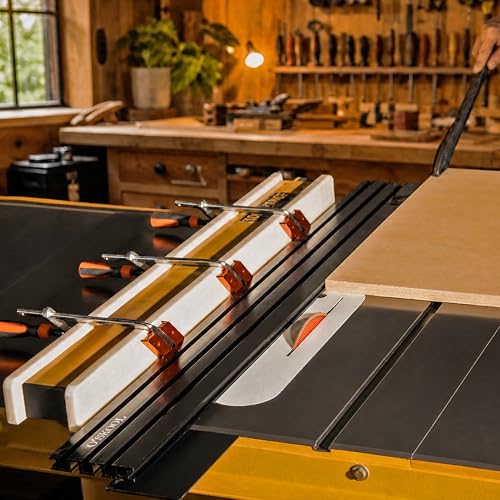
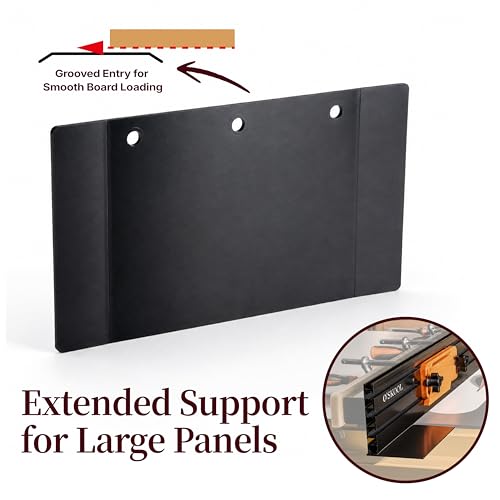
For budget-conscious DIYers, the O’SKOOL 46″ fence extension kit punches above its weight. It’s built from extruded aluminum, and owners frequently praise how straight and rigid it stays over time, a common weak point in cheaper alternatives. The 3-in-1 configuration (High, Low, and L-Fence modes) adds real utility, letting you tackle thin ripping or edge jointing without extra jigs.
The eight built-in T-slots are a major plus, and the drop-in T-bolts mean you’re not wrestling hardware from the ends every time. Setup is tool-free and works with most fences thanks to the 1-1/4″ offset clamp design. While it doesn’t have the refinement of pricier brands, it delivers solid performance for the price. I’d recommend it to beginners or part-time woodworkers who want more capability without overspending.
Product photos
How We Chose These table saw fences
I approached researching table saw fences by first gathering specifications and features from numerous manufacturers and retailers. Then, I weighed those details against owner reviews from major online marketplaces and professional woodworking forums, as well as expert opinions from established woodworking publications. My goal was to rank these fences based on practical considerations, rather than a hands-on lab test; this is a research-led comparison of specs and owner feedback.
For table saw fences, stability and accuracy are paramount. I gave the most weight to build quality – specifically, the materials used and how rigidly the fence mounts to the saw. Beyond that, versatility was a key factor; a fence that can reliably handle both wide panels and narrow rips is more useful overall. The ability to add accessories, and the quality of those accessory options, also heavily influenced the rankings.
Specifications clearly indicate dimensions, materials, and available features like digital readouts or T-track slots. However, owner feedback proved essential for understanding real-world performance. Reports on smoothness of adjustment, long-term accuracy after repeated use, and the effectiveness of clamping mechanisms were particularly valuable. Reputation within the woodworking community, and consistency of positive reviews, also played a significant role in my assessment. Understanding table saw operation basics is crucial to appreciate the value of these features.
What To Look For In table saw fences
Finding the right table saw fence can dramatically improve the accuracy and safety of your cuts. It’s not just about keeping wood aligned; a good fence impacts everything from repeatability to how comfortably you can tackle larger projects.
A quality table saw fence should offer rigidity, precise alignment, and secure locking mechanisms. Look for features like a robust rail system, minimal deflection under pressure, and clear, easy-to-read scales. Material choices (steel vs. aluminum) and locking methods (twin screw, cam lock) significantly affect performance and durability. Consider how well the fence integrates with your existing saw and the types of cuts you’ll be making most often.
Fence Type & Material
The first big decision is whether you need a complete replacement fence or an auxiliary fence. A full replacement, like the Delta 30 in. T3 Fence System, is best if your existing fence is truly inadequate – wobbly, inaccurate, or damaged. Auxiliary fences, such as the Woodpeckers 48” Auxiliary Rip Fence, clamp onto your existing fence, extending its reach and adding support. These are fantastic for larger workpieces, but they depend on the quality of the fence they’re attached to. Material matters too. Aluminum is lightweight and resists corrosion, but steel offers superior stiffness. I’ve seen many DIYers improve their results dramatically simply by upgrading from a plastic or thin metal fence to a robust aluminum extrusion.
Accuracy & Locking Mechanisms
Don’t underestimate the importance of a precise locking system. A fence that shifts during a cut is worse than useless. Look for fences, like the 36″ Professional Advanced Fence, that boast twin screw or cam-lock mechanisms. These provide a more secure and repeatable lock than simpler designs. Pay attention to the scale markings; clear, high-contrast markings are essential for accurate setup. If you’re frequently making fine adjustments, a digital readout, as found in the Wixey Professional Table Saw Fence, can be a huge time-saver and improve precision. Remember that even the best fence needs a solid rail system to function properly.
Versatility & Accessories
Consider your typical projects. If you frequently work with large panels, the ability to add extension fences, like the BOW 46″ XT XTENDER Fence, is crucial. Many fences offer T-slots or dovetail grooves for attaching featherboards, stop blocks, and other accessories. These accessories enhance safety and improve cut quality. If you need to make a lot of precise, repeatable cuts, you might even want to consider investing in precision crosscutting sleds to complement your fence setup.
A fence that can adapt to different cutting situations will save you time and frustration in the long run. Don’t be afraid to invest in a system that grows with your skills and projects.
For those dealing with limited space or jobsite portability, a compact auxiliary fence like the Woodpeckers 36″ Compact Auxiliary Fence, can be a great solution. However, always ensure you understand your table saw rip capacity explained and choose a fence that supports the cuts you need to make.
Table Saw Fences Compared
Here’s a comparison of key specifications for various table saw fences to help you choose the right one for your needs.
| Product Title | Length (in) | Height (in) | Material | T-Track Slots | Special Features |
|---|---|---|---|---|---|
| Wixey Professional Table Saw Fence | 72 | N/A | Steel/Aluminum | N/A | Digital Readout, Micro-Adjustments |
| BOW 46″ XT XTENDER Fence | 46 | 5 | Aluminum | 3 | Versatile Add-On, Delta/Harvey Compat. |
| Woodpeckers 48″ Auxiliary Rip Fence | 48 | 3.5 | Aluminum | Built-In | Material Support, Sliding Clamps |
| Woodpeckers 36″ Compact Auxiliary Fence | 36 | 3.5 | Aluminum | Built-In | Sized for Compact Machines |
| 36″ Professional Advanced Fence | 36 | N/A | N/A | N/A | T-Square Lock, Low/L-Fence Config. |
| Peachtree Uni Style Fence USA | N/A | N/A | Aluminum | Multiple | Delta UniFence Upgrade, Sacrificial Face |
| Delta 30 in. T3 Fence System | 37 | 2.5 | Steel | N/A | OEM Compatible, 3-Point Locking |
| O’SKOOL 46″ Rip Fence Extension | 46 | N/A | Aluminum | 8 | 3-in-1 Config, Featherboard Mounts |
Frequently Asked Questions
What’s the difference between a replacement and an auxiliary fence?
A replacement fence completely swaps out your existing fence, best for severely flawed setups. An auxiliary fence clamps onto your current fence to add support and length, and is ideal for occasional large-panel work or upgrading a functional, but limited, fence.
Will an aluminum fence be sturdy enough for large rips?
Aluminum fences are generally suitable for most ripping tasks, but steel offers greater rigidity, particularly for extremely wide cuts or when working with dense hardwoods. Look for aluminum fences with a robust rail system and secure locking mechanisms to minimize deflection.
How important are T-track slots on a table saw fence?
T-track slots offer significant versatility, allowing you to quickly attach featherboards, stop blocks, and other accessories that enhance accuracy and safety. While not essential for basic ripping, they are extremely valuable for more complex cuts and setups.
What is the best way to check if my fence is perfectly parallel to the blade?
Maintaining perfect alignment is essential. Using table saw alignment gauges is the most accurate method, but you can also use a precision square or carefully measure from the blade to the fence at both the front and back of the table.
Are digital readouts on table saw fences really necessary?
Digital readouts aren’t essential, but they can dramatically improve speed and accuracy, especially when making repetitive cuts or fine adjustments. They eliminate the need to interpret scale markings and reduce the chance of errors.
The Bottom Line
Choosing a table saw fence often comes down to balancing control with convenience. You can spend a lot to get a supremely accurate, feature-rich system, or you can find a solid, reliable fence that gets the job done without breaking the bank. For the best overall combination of precision, versatility, and build quality, I recommend the Wixey Professional Table Saw Fence. Its digital readout and micro-adjustment features take the guesswork out of setup.
If you’re looking for a specific solution, the Woodpeckers 48” Auxiliary Rip Fence is the clear winner for supporting large panels, while the Woodpeckers 36″ Compact Auxiliary Fence is ideal for smaller shops or job sites. And for those wanting to upgrade an existing Delta or Harvey fence, the BOW 46″ XT XTENDER Fence provides a significant boost in functionality. Remember that understanding table saw primary functions will help you determine which features are most important for your work.
Ultimately, the most expensive fence won’t make up for a saw that isn’t properly tuned or a lack of fundamental woodworking skills. Focus on getting a fence that’s stable, locks securely, and allows you to make accurate adjustments. A solid foundation, in both your tools and your technique, is what truly delivers consistent, professional results.
