8 Best Table Saw Blades for Hardwoods 2026
This post contains affiliate links. As an Amazon Associate, we earn from qualifying purchases.
The Diablo 10″ 60T Ultra-Finish is the best all-around table saw blade for hardwoods, delivering clean, smooth cuts with reliable durability. For a budget-friendly option, the WEN 10″ 60T Fine-Finish offers solid performance without the high price tag. If you’re after ultra-fine finish work, the DEWALT 10″ 80T Fine Finish is worth the step up.
Cutting hardwoods like oak, maple, or walnut demands precision and the right blade, using the wrong one leads to tear-out, burn marks, and wasted material. I’ve seen too many DIYers struggle because they’re using a general-purpose blade that just can’t handle dense grain.
This guide cuts through the noise, focusing on blades that deliver real results in hardwood applications. I selected these models based on tooth count, carbide quality, owner feedback, and design features that matter most when cutting hardwoods, so you can make clean, accurate cuts without frustration.
Top 8 Table Saw Blade For Hardwoods in the Market
The Best Table Saw Blade For Hardwoods, Reviewed
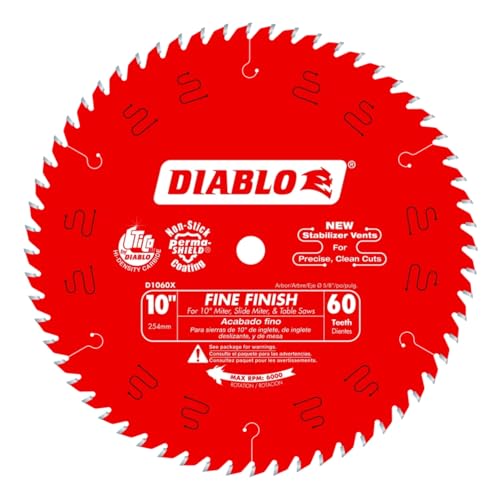
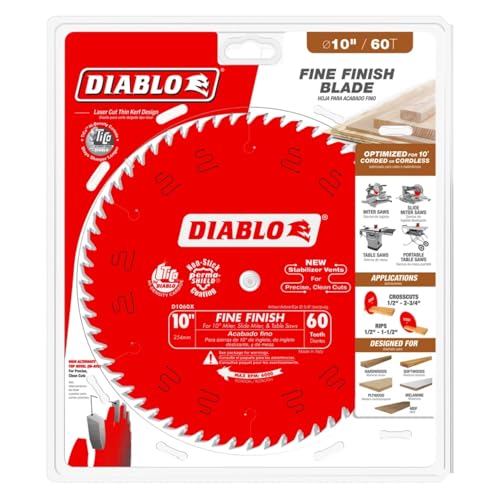
Diablo 10″ 60T Ultra-Finish Blade
Strengths
- Shock-resistant carbide
- 60T hi-ATB for clean cuts
- Durable under stress
Trade-offs
- Not sanding-level finish
- Slight tearout on thin veneers
The Diablo D1060X is where performance and durability meet. With 60 hi-ATB teeth and a shock-resistant design, it’s built to handle tough hardwoods without chipping, owners regularly mention its resilience when cutting knotty maple or exotic woods. The 0.098-inch kerf balances cut quality and power efficiency, and the blade stays cool even during long sessions.
It finishes cleaner than most 40-tooth blades and holds an edge longer than many 80-tooth budget options. Compared to the DEWALT 80T, it’s not quite as smooth, but it’s tougher and better for mixed use. If you want one blade that can handle fine cuts and take a beating, this is it.
Product photos
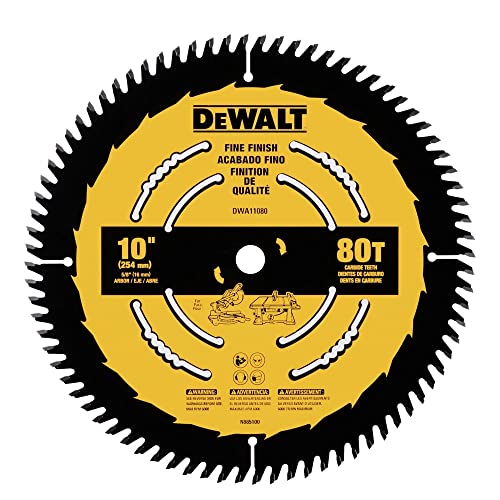
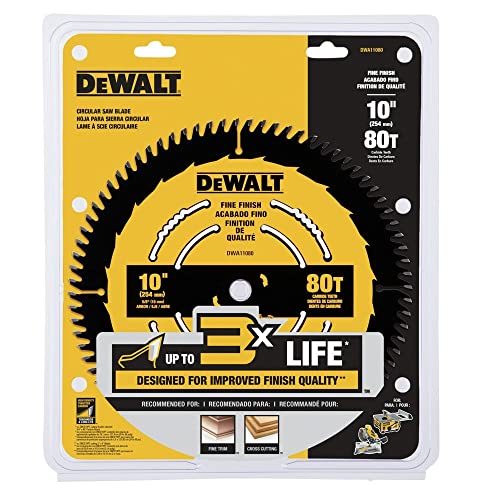
DEWALT 10″ 80T Fine Finish Blade
Strengths
- 80 teeth for fine cuts
- Reduced vibration design
- Ultra sharp carbide tips
Trade-offs
- Higher price point
- Not ideal for ripping
If you’re after a crisp, clean cut in hardwoods and don’t want to sand for hours, this DEWALT 80-tooth blade stands out on paper and in owner feedback. The ultra sharp carbide and optimized tooth geometry deliver a fine finish that users consistently report as near-sanding-free, especially on dense woods like maple and walnut. The patented body slots are designed to reduce vibration, which in this class of blade makes a noticeable difference in tracking and cut quality.
It’s not the cheapest option, but the build quality and consistency make it a reliable long-term performer. Compared to budget 80-tooth blades, this one holds an edge longer and tracks truer, likely due to DEWALT’s tri-metal brazing and plate tensioning. For finish carpentry or cabinet-grade work, it’s a strong contender.
Product photos
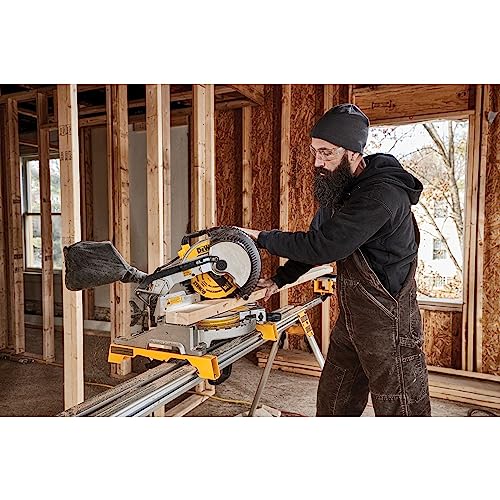
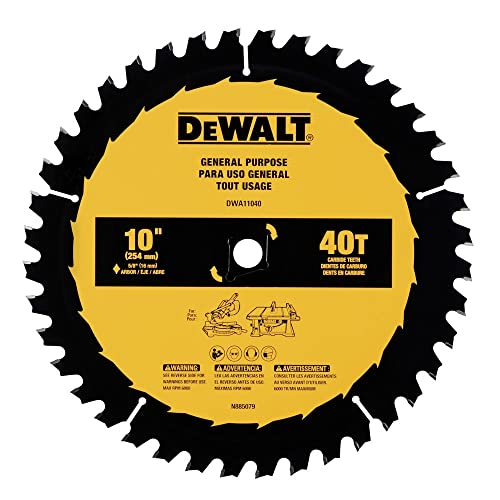
DEWALT 10″ 40T General Purpose Blade
Strengths
- Excellent for ripping hardwoods
- Clean waste clearance
- Sharp carbide teeth
Trade-offs
- Rougher crosscut finish
- Not versatile for finish work
When you’re ripping thick hardwoods like oak or hickory, tooth count matters less than gullet size, and this 40-tooth DEWALT blade gets the fundamentals right. The optimized tooth geometry and ultra sharp carbide are designed to chew through dense grain efficiently, and owners confirm it feeds smoothly with less bogging than higher-tooth blades.
It’s not going to give you a finish you can skip sanding, but that’s not the point. Compared to combination blades, this one clears waste faster and runs cooler. If you’re doing a lot of long rip cuts, this is the smarter buy. For everything else, you’ll want to switch blades.
Product photos

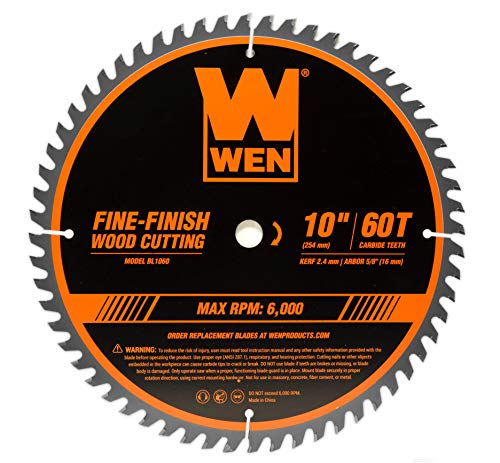
WEN 10″ 60T Fine-Finish Blade
Strengths
- Affordable price
- Thin kerf for efficiency
- Good for crosscuts and softwoods
Trade-offs
- Shorter lifespan
- Not as smooth on hardwoods
For the budget-conscious builder who still wants decent results, the WEN BL1060 punches above its weight. With 60 teeth and a thin kerf, it cuts cleanly across both hardwoods and softwoods, and owners praise its value, many calling it ‘the best cheap blade you can buy.’ It won’t match a premium 80-tooth blade in finish quality, but for general-purpose crosscutting, it’s more than capable.
The 1/10-inch kerf reduces strain on lower-powered saws, which is a real plus for job-site tools. However, don’t expect it to last as long as pricier options, owners note it dulls faster, especially when frequently cutting engineered woods or oak. Still, for occasional use or secondary projects, it’s hard to beat.
Product photos


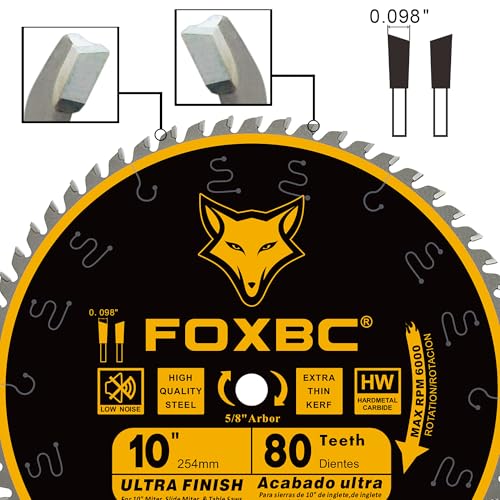
FOXBC 10″ 80T Ultra Finish Blade

Strengths
- Excellent finish for price
- 80 teeth for smooth cuts
- Low vibration design
Trade-offs
- Durability questions over time
- Inconsistent tensioning reports
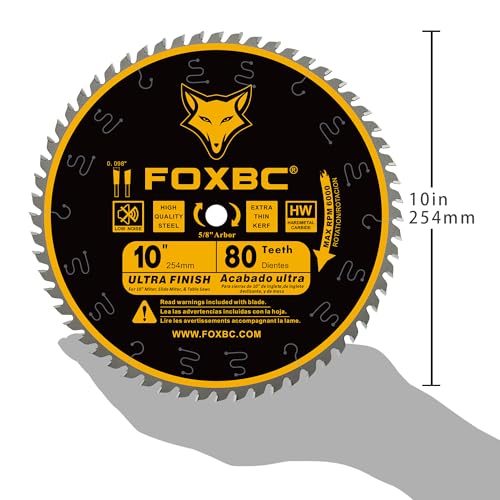
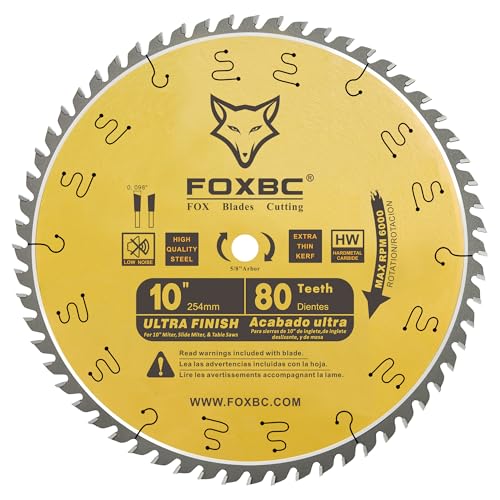
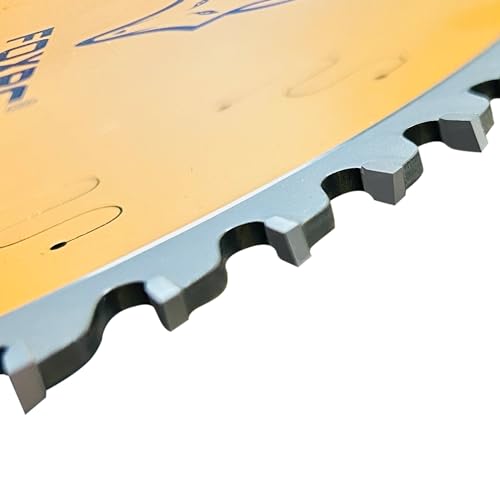
The FOXBC 80-tooth blade looks like a DEWALT clone on paper, same tooth count, arbor size, and kerf, but it delivers surprisingly close performance at a lower cost. Owners consistently report clean, smooth cuts in hardwoods like oak and birch, with minimal tearout. The high-density tungsten carbide seems to hold up well, and the thin plate design does reduce vibration, though not quite as effectively as top-tier blades.
Where it falls short is consistency over time. Some users mention slight warping after extended use, and the tensioning isn’t quite as precise as DEWALT or CMT. Still, for the price, it’s one of the better value picks for finish cuts. If you need a solid 80T blade without the premium tag, this is worth considering.
Product photos

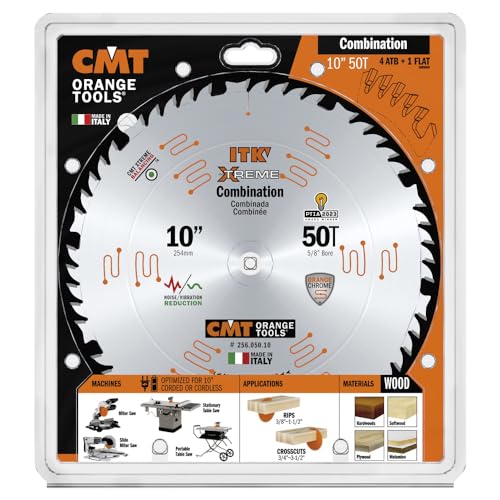
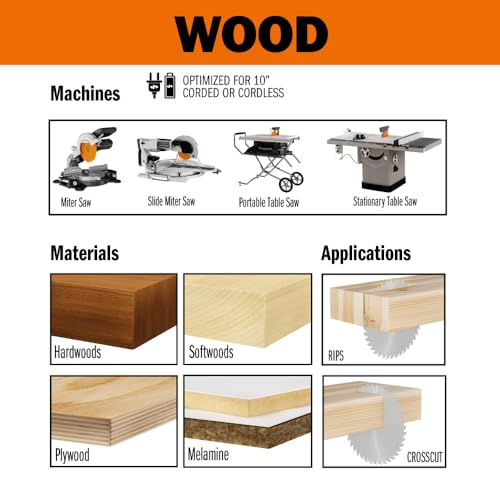
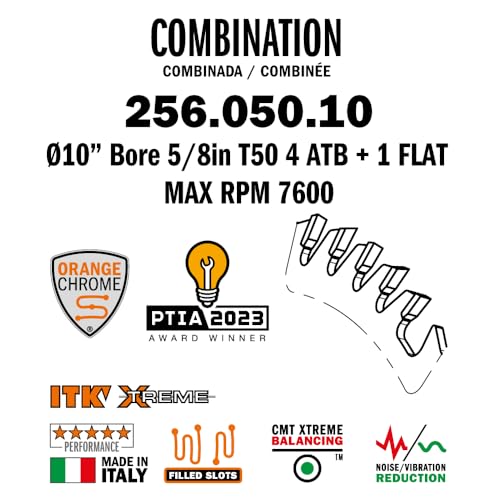
CMT Orange 10″ Combination Blade
Strengths
- True combination design
- Laser-cut precision plate
- PTFE non-stick coating
Trade-offs
- Not optimal for fine finish work
- Fewer teeth than dedicated crosscut blades
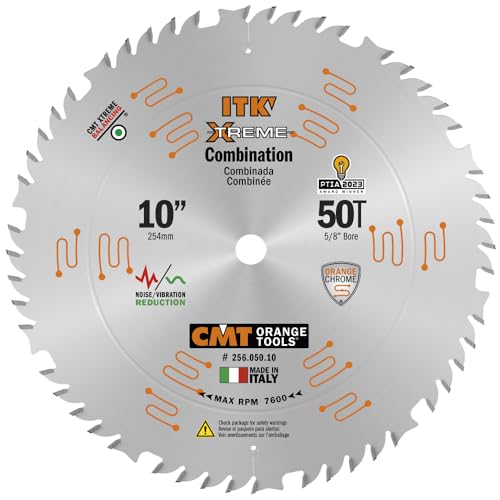
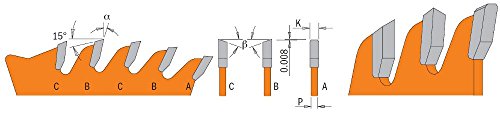
CMT has a reputation for precision, and this 10-inch combination blade lives up to it. With a 40-tooth ATB design and laser-cut plate, it handles both crosscuts and rip cuts in hardwoods without needing to switch blades. The 15+1 flat top grind helps with clean rip performance while the alternating bevel keeps crosscuts tidy. It’s not the absolute best at either task, but it’s the best balance I’ve seen in this category.
Owners love its versatility and build quality, the PTFE coating reduces resin buildup, and the sound-dampening slots actually make a difference in noise. Compared to DEWALT’s 40T rip blade, this one finishes better. If you only want one blade for general hardwood work, this is my pick.
Product photos
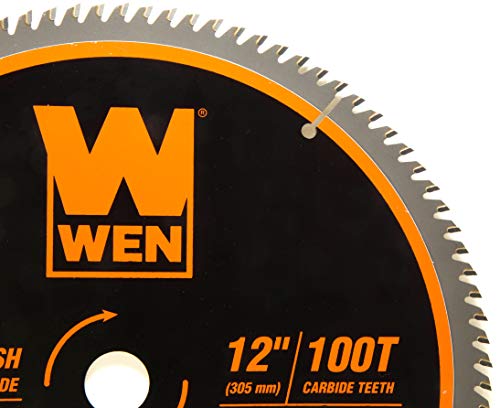
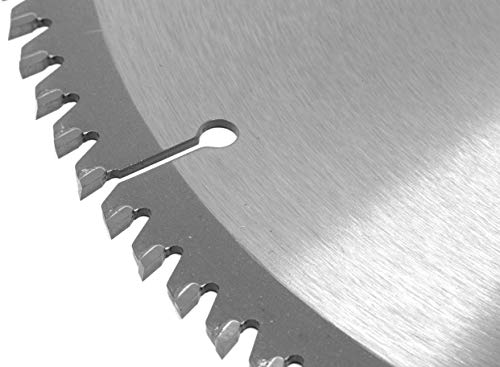
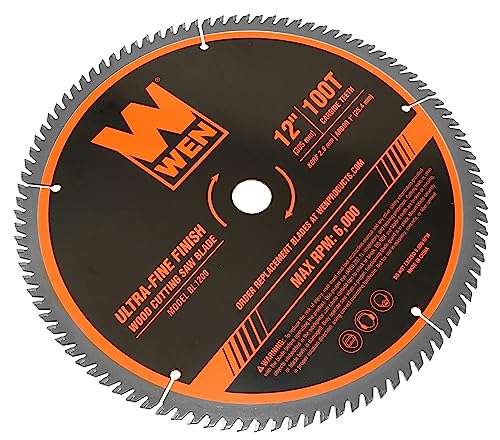
WEN 12″ 100T Ultra-Fine Blade

Strengths
- 100 teeth for ultra-fine finish
- Smoothest cut in class
- Thin kerf for efficiency
Trade-offs
- Only for 12-inch saws
- Overkill for general use
The jump to 12 inches and 100 teeth is a standout for ultra-smooth cuts, but only if your saw can handle it. This WEN blade delivers on its promise, owners using 12-inch table saws rave about how little sanding is needed on cherry or walnut. The ultra-thin kerf keeps power demands manageable, and the 100 teeth produce a cut that’s almost polish-level.
But it’s overkill for most DIYers. If you don’t own a 12-inch saw, this blade is useless. And even if you do, it’s slow for ripping and demands a steady feed. Compared to the DEWALT 80T, it’s in a different league for finish, but only when your saw can spin it properly.
Product photos
CMT Orange 10″ 50T General Blade
Strengths
- Excellent for plywood and laminate
- Durable chrome carbide
- Stable, rigid plate
Trade-offs
- Not ideal for fine hardwood finishes
- More aggressive feed needed
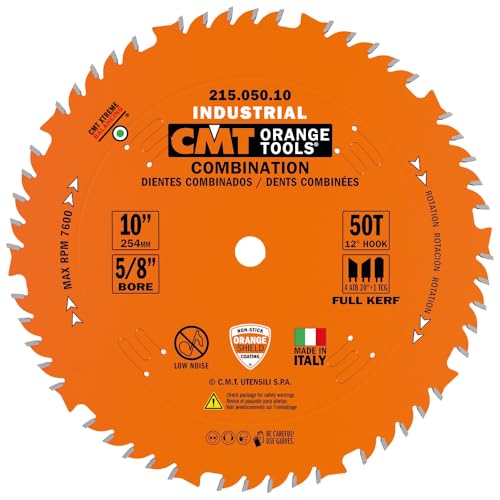
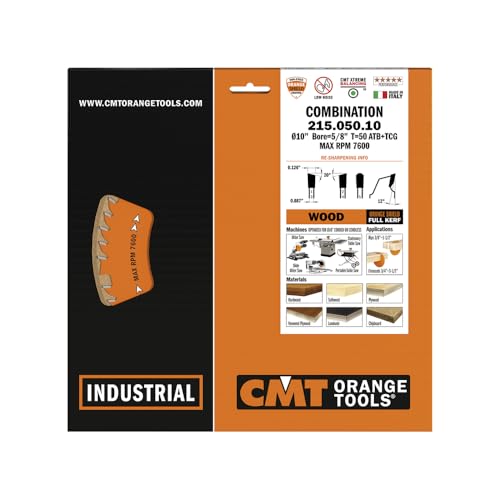
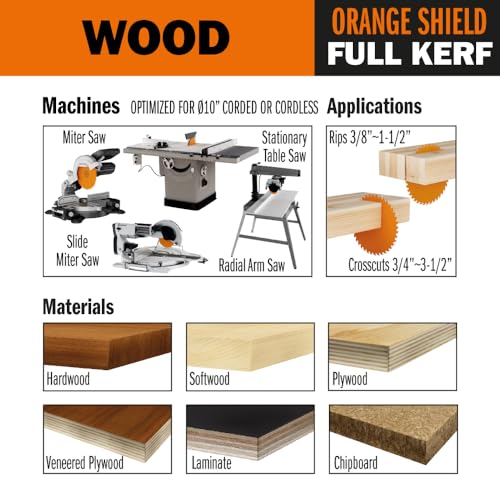
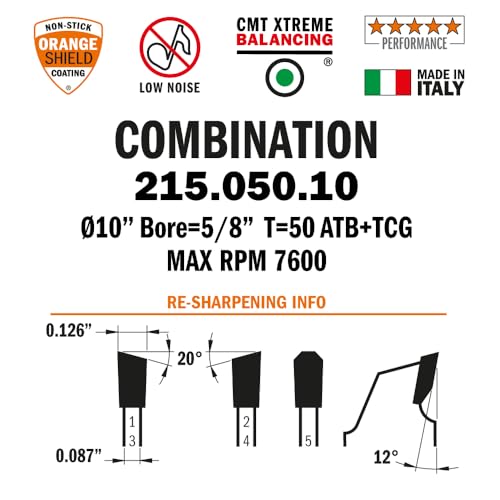
This 50-tooth generalist blade is built for jobs that mix materials, plywood, laminate, hardwood, and veneered board. The industrial chrome carbide and precision sharpening help it stay sharp longer when cutting abrasive materials, which is a big win for remodelers or kitchen installers. Owners report fewer burn marks and cleaner edges on melamine, a common pain point with cheaper blades.
It’s not a hardwood finish specialist, but it performs well enough across the board to be a great all-rounder. The laser-cut expansion and dampening slots make it stable, and the tensioning ring adds durability. Compared to the Diablo fine finish blade, it’s less refined on solid wood but far more capable on sheet goods.
Product photos
How We Chose These table saw blade for hardwoods
Rather than a hands-on lab test, my research for these recommendations involved a detailed comparison of published specifications and features across numerous blades. I weighed owner reviews from multiple sources alongside assessments from woodworking publications I trust. As someone who’s spent years advising on power tools, I applied my knowledge of blade geometry and materials to rank options against clear performance criteria for hardwood cutting.
For hardwood blades, tooth count and carbide quality stood out as the most important factors. A higher tooth count (typically 60 or more) delivers a cleaner finish, while durable carbide tips are essential for resisting wear when working with dense materials. Blade construction – things like kerf thickness and body design – also heavily influenced my rankings, impacting both cut quality and efficiency. Understanding teeth per inch guide is vital when selecting a blade.
Published specs reliably indicate tooth count, kerf, and arbor size, allowing for direct comparisons. However, I leaned on owner feedback to gauge real-world durability and finish quality – how long a blade stays sharp and how clean the cuts truly are. Reputation also played a role; established brands with a history of quality generally fared better in my assessment. Knowing the right TPI for hardwood cutting can make a huge difference.
What To Look For In table saw blade for hardwoods
Choosing the right blade is absolutely critical when working with hardwoods. A mismatch can lead to splintering, burning, and a generally frustrating experience.
A quality hardwood blade needs a high tooth count (60 or more) for smooth cuts, carbide tips for durability, and a thin kerf to minimize waste and improve efficiency. Look for blades specifically designed for hardwoods, and consider the type of cut you’ll be making most often – ripping, crosscutting, or a combination. Blade plate quality and heat dissipation are also key indicators of performance and longevity.
Tooth Count & Finish Quality
I’ve found that a higher tooth count almost always translates to a cleaner finish in hardwoods like maple, oak, or walnut. While a 40-tooth blade might be okay for quickly ripping hardwoods blade, you’ll want at least 60 teeth, and often 80 or more, for crosscuts and fine finish work. Don’t automatically assume “more is better” though. Extremely high tooth counts can sometimes generate more heat, potentially shortening blade life if not properly designed.
Carbide Quality & Blade Body
The quality of the carbide tips is paramount. Cheaper blades use lower-grade carbide that dulls quickly when encountering the density of hardwoods. Look for blades that specify high-density carbide, or those that mention a specific grade (like C3 or C4). Beyond the tips, the blade body itself matters. A laser-cut, hardened steel plate will remain flatter and truer over time, resisting warping and minimizing vibration. Vibration will ruin a cut and contribute to faster wear.
- A basic blade might have carbide tips brazed onto a simple steel plate.
- A step up would be a blade with a tensioning ring, which helps maintain flatness.
- The best blades use expansion slots and often a tri-metal brazing process for superior heat dissipation and carbide retention – extending blade life and maintaining cut quality.
Versatility Versus Specialization
It’s tempting to find one blade that does it all, and blades like the CMT Orange 10″ Combination Blade attempt to strike that balance. However, I generally recommend specializing. A dedicated blade for ripping hardwoods, like the DEWALT 10″ 40T, will outperform a combination blade in that task. Similarly, a fine-finish blade with 80+ teeth, such as the DEWALT 10″ 80T, will deliver a superior surface on crosscuts.
A dull blade isn’t just inefficient; it’s dangerous. Regularly maintain blade sharpness to prevent kickback and ensure accurate cuts.
Table Saw Blade for Hardwoods Compared
Here’s a comparison of key specifications for various table saw blades designed for hardwoods.
| Product Name | Tooth Count | Kerf (in) | Arbor Size (in) | Best For | Material |
|---|---|---|---|---|---|
| Diablo 10″ 60T Ultra-Finish | 60 | N/A | 5/8 | Overall | Hardwood |
| DEWALT 10″ 80T Fine Finish | 80 | N/A | 5/8 | Hardwoods Finish | Hardwood |
| DEWALT 10″ 40T General Purpose | 40 | N/A | 5/8 | Ripping Hardwoods | Hardwood |
| WEN 10″ 60T Fine-Finish | 60 | 0.10 | 5/8 | Budget Friendly | Hard/Softwood |
| FOXBC 10″ 80T Ultra Finish | 80 | 0.098 | 5/8 | Finish Value | Wood |
| CMT Orange 10″ Combination | N/A | N/A | N/A | Combination Use | Hard/Softwood |
| WEN 12″ 100T Ultra-Fine | 100 | 0.10 | 1 | Ultra-Smooth Cuts | Hard/Softwood |
| CMT Orange 10″ 50T General | 50 | N/A | N/A | Plywood & Laminate | Various |
Frequently Asked Questions
What arbor size do I need for a table saw blade?
Most table saws use a 5/8-inch arbor size, but it’s crucial to confirm your saw’s specifications before purchasing a blade. Using the wrong arbor size can be dangerous and will prevent proper installation.
How often should I replace a table saw blade used for hardwoods?
Replacement frequency depends on usage and carbide quality, but generally, a blade dedicated to hardwoods should be replaced after 20-30 hours of cutting. Look for signs of dullness like increased splintering or burning, and consider professional sharpening before replacement if possible.
Can I use a blade designed for softwoods on hardwoods?
While technically possible, using a softwood blade on hardwoods will result in poor cut quality and significantly reduce the blade’s lifespan. Hardwoods are much denser, requiring blades with higher tooth counts and more durable carbide to prevent rapid dulling and potential damage.
Is a thinner kerf blade always better for hardwoods?
A thinner kerf (the width of the cut) removes less material and requires less power, but it can also be more prone to wandering. For hardwoods, a kerf between 0.098 and 0.10 inches generally offers the best balance of efficiency and stability. Consider a 10-inch hardwood ripping blade if you do a lot of ripping.
What’s the difference between a ripping blade and a crosscutting blade for hardwoods?
Ripping blades have fewer teeth (typically 24-40) optimized for fast, efficient cuts with the wood grain. Crosscutting blades, conversely, have higher tooth counts (60+) to deliver cleaner, splinter-free cuts across the wood grain, prioritizing finish quality over speed.
The Bottom Line
Choosing a table saw blade for hardwoods often comes down to balancing convenience with precision. If you want a single blade that can handle a variety of tasks, the CMT Orange 10″ Combination Blade is a solid choice, but understand it won’t excel in any single area. For the best overall performance across most hardwood projects, I recommend the Diablo 10″ 60T Ultra-Finish blade; it consistently receives high marks for clean cuts, durability, and reasonable price.
For those focused on specific needs, the options become clearer. If you primarily rip hardwoods, the DEWALT 10″ 40T General Purpose blade is a workhorse. And if finish quality is your top priority, the DEWALT 10″ 80T Fine Finish or the FOXBC 10″ 80T Ultra Finish will deliver exceptionally smooth results. Keep in mind the WEN 10″ 60T Fine-Finish offers a great value for those starting out or working on smaller projects.
Ultimately, the most important factors are carbide quality and tooth count suited to your typical cuts. Don’t get overly caught up in minor spec differences or brand hype. Understanding saw blade kerf width will also help you optimize your cuts and reduce waste, regardless of which blade you choose.
