2 Best Spoon Carving Tools of 2026
This post contains affiliate links. As an Amazon Associate, we earn from qualifying purchases.
The BeaverCraft S14 is the best overall spoon carving set, with high-carbon steel blades and a comfortable oak handle that deliver reliable performance. For those on a tighter budget, the BeaverCraft S13 offers solid tools and even includes useful extras like a strop and case.
Spoon carving looks simple until you’re fighting a dull blade or a handle that slips in your hand. The wrong tools can turn a relaxing craft into a frustrating workout.
This guide cuts through the noise, focusing on sets that balance quality steel, smart design, and real-world usability. I looked at specs, owner feedback, and years of working with edge tools to find the ones that actually help you carve better spoons with less hassle.
Top 2 Spoon Carving Tools in the Market
The Best Spoon Carving Tools, Reviewed
BeaverCraft S14 Spoon Carving Tools Set

Strengths
- Includes bowl gouge
- Superior ergonomics
- Handcrafted quality
Trade-offs
- Higher price point
- Heavier than entry sets
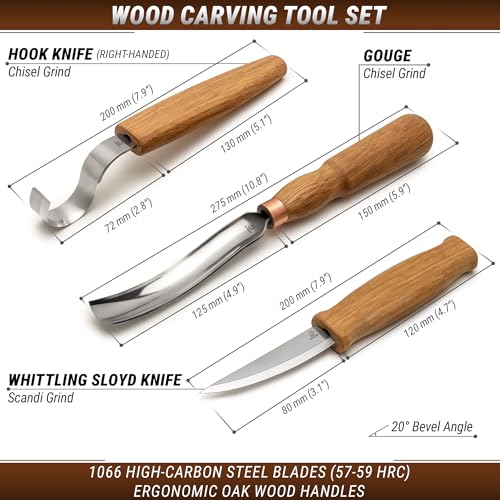
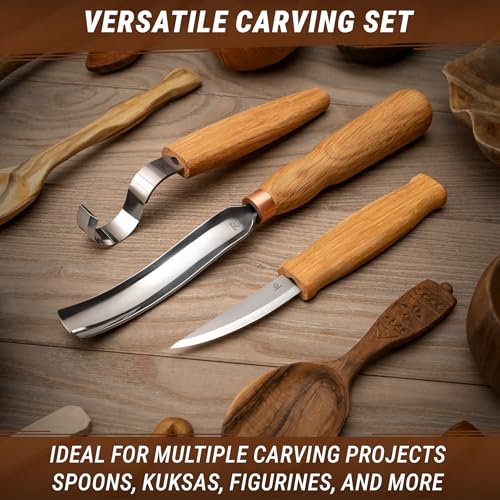
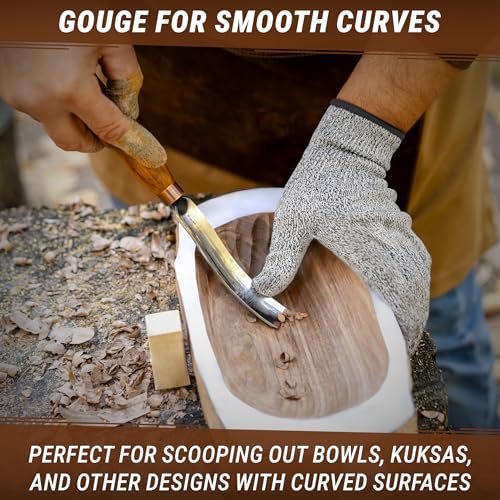
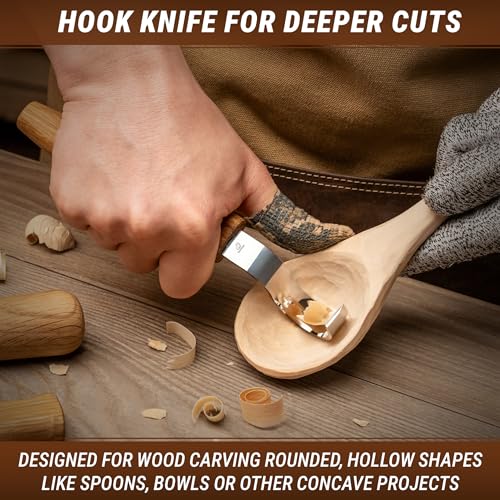
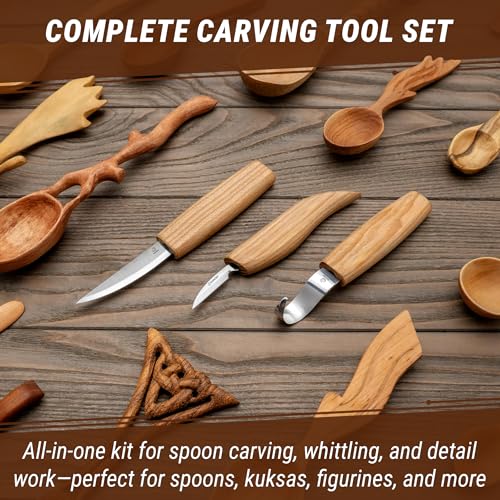
If you’re serious about spoon carving, this is the set I’d pick over the S13. The inclusion of a long-bent bowl gouge makes a real difference, it gives you the reach and angle control needed for clean, deep concave cuts, which spoon makers need. Owners consistently report that the gouge reduces hand fatigue and allows for smoother shaping, especially in harder woods. The spoon knife and whittling knife are similar in spec to the S13 (1066 steel, oil-treated oak handles), but the overall balance and fit feel a step up, likely due to tighter quality control in the hand-finishing process.
What seals the deal is the craftsmanship. These tools are hand-built in Ukraine, and that shows in the attention to detail, something many owners highlight when comparing the S14 to mass-produced sets. While it costs more, the durability and functional design make it the smarter buy for anyone planning to carve regularly.
Product photos
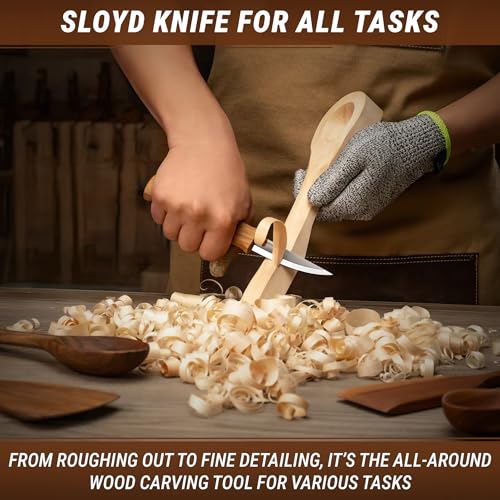
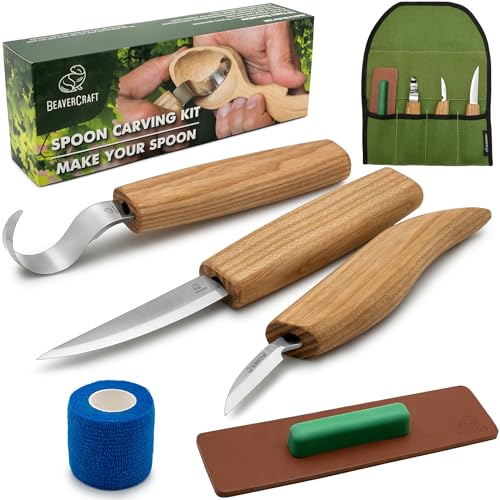
BeaverCraft S13 Wood Carving Tools Set
Strengths
- Complete starter kit
- High-carbon steel blades
- Comes pre-sharpened
Trade-offs
- No bowl gouge
- Hook knife less effective on deep spoons
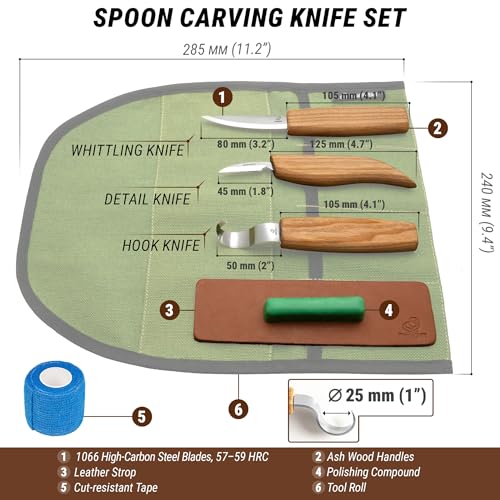
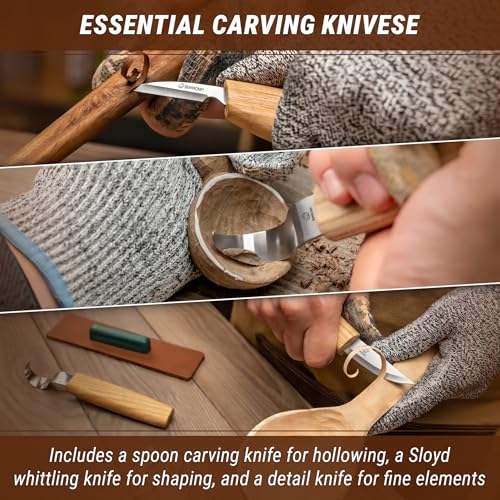
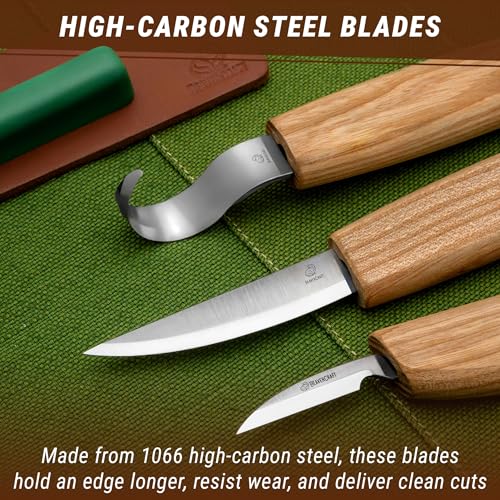
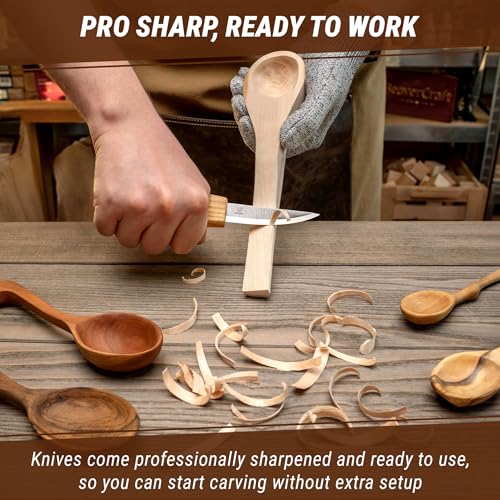
This set delivers a lot of value for beginners who want to explore spoon carving without overspending. On paper, it covers the essentials, three knives (including a hook knife), a strop, polishing compound, and even cut-resistant tape, all tucked into a canvas roll. The 1066 high-carbon steel blades are a solid choice for edge retention, and the ash wood handles feel balanced in hand, based on consistent owner feedback. For someone just starting out, having everything pre-sharpened and ready to carve is a real plus, no immediate need for sharpening tools.
Still, it doesn’t quite match the refinement of the S14. The absence of a bowl gouge limits how deep you can go into concave work, which matters if you’re aiming beyond basic spoons. A few reviewers mentioned the hook knife’s curve isn’t aggressive enough for tighter spoon bowls, making it better suited for shallow scoops. That said, for the price, it’s hard to fault what’s included.
Product photos
How We Evaluated spoon carving tools
Rather than a hands-on lab test, my research for these recommendations focused on comparing published specifications and features across numerous sets. I weighed owner reviews from multiple sources, along with evaluations from woodworking publications I trust. My experience with edge tools and wood shaping informed how I prioritized those specs and feedback. The goal was to identify sets offering the best balance of quality, completeness, and value.
For spoon carving, blade steel quality and handle comfort are paramount. I placed significant weight on sets utilizing high-carbon steel (like 1066) because it holds an edge well and is relatively easy to sharpen. Ergonomic handle designs – particularly those made from stabilized wood or treated for grip – also factored heavily, as extended carving sessions demand comfort.
Specifications reliably indicate steel type and included components. However, I leaned on owner feedback to assess real-world sharpness, durability, and how well a set performs for beginners. Many users also discuss the quality of included sharpening tools or cases, which influenced my rankings. For very detailed work, you might also consider a scroll saw for detailed carving.
How To Pick The Right spoon carving tools
Spoon carving has surged in popularity, and selecting the right tools is crucial for enjoyable and successful projects.
A quality spoon carving set delivers precision, control, and durability. Key considerations include blade steel (high carbon steel is preferred), handle ergonomics for extended use, and the specific curves needed for shaping wood. Look for sets offering a variety of profiles – hook knives, gouges, and straight knives – to handle different parts of the spoon.
Blade Steel and Hardness
The steel is where you’ll really see the difference between a kit that lasts and one that disappoints. 1066 high carbon steel is a common benchmark, but it’s not the only good option. Look beyond the number and consider how well the steel holds an edge. Softer steels are easier to sharpen, but require more frequent attention. Harder steels hold an edge longer, but can be more brittle and trickier to restore when they inevitably dull. Understanding how to maintain carving tool sharpness is essential regardless of the steel.
Handle Ergonomics and Grip
I’ve seen too many people abandon spoon carving because their hands cramped up before they finished a single spoon. Handle shape and material are critical. Oak and ash are common choices, offering a good balance of strength and comfort. The shape should fit your hand, allowing for a secure grip without excessive pressure. A well-fitted handle translates directly into more control and less fatigue.
- A shorter handle (around 3-4 inches) is better for detail work.
- A longer handle (5-6 inches) provides more use for roughing out the shape.
- Consider the finish. Linseed oil is a classic treatment that enhances the wood’s natural feel and provides some protection, but some prefer more robust coatings for durability.
The Variety of Curves & Profiles
Spoon carving isn’t a one-knife job. You’ll need a range of profiles to efficiently tackle different aspects of the carving process. A good starting point is understanding the function of a few key tools. If you’re just starting out, I recommend exploring best wood carving tools to familiarize yourself with the options.
A dull knife is a dangerous knife. Don’t attempt to force a cut; instead, prioritize keeping your tools sharp. Regular honing and occasional sharpening are essential for safe and efficient carving.
Spoon Carving Tools Compared
Here’s a spec-by-spec comparison of the spoon carving tool sets to help you choose the right one.
| Product | Best For | Blades Steel Type | Handle Material | Included Tools | Kit Includes |
|---|---|---|---|---|---|
| BeaverCraft S14 | Best Overall | 1066 High Carbon | Oak | Spoon knife, Whittling knife, Bowl gouge | N/A |
| BeaverCraft S13 | Best Budget Friendly | 1066 High Carbon | Ash | Sloyd knife, Detail knife, Hook knife | Strop, Compound, Tape, Case |
Frequently Asked Questions
What steel hardness is best for spoon carving?
Around 58-60 HRC is a good target for spoon carving steel. This range offers a balance between edge retention and ease of sharpening, preventing the blade from becoming overly brittle while still holding a useful edge for extended periods.
Can I use these tools on hardwoods like maple or oak?
Yes, these tools are generally suitable for hardwoods, but it will require more force and sharper blades. High-carbon steel blades are key for tackling denser woods, and frequent honing is essential to maintain a clean cut and prevent tear-out.
What’s the difference between a hook knife and a sloyd knife?
A hook knife features a curved blade designed for concave surfaces like spoon bowls, while a sloyd knife has a straight blade ideal for shaping the exterior and handle of a spoon. Together, they cover most of the carving process, and understanding when to use each is fundamental.
Are these kits suitable for a complete beginner?
Many sets include resources for beginners, but starting with safe carving tools for newbies is highly recommended. Learning proper knife grips and safety techniques is more important than the tools themselves when you’re first starting.
How often should I sharpen my spoon carving tools?
Sharpening frequency depends on the wood type and how much you carve, but I suggest honing before each carving session. Full sharpening with a whetstone should be done whenever you notice the blade losing its bite, usually every few projects for softer woods and more often for hardwoods.
The Bottom Line
Choosing spoon carving tools always comes down to balancing how much control you want with how much effort you’re willing to put into maintenance and setup. For most folks, I believe the BeaverCraft S14 offers the best overall combination of quality steel, comfortable handles, and useful blade profiles to get started – and to keep going for a long time. It’s a solid choice for anyone serious about learning the craft.
If you’re just dipping your toes into spoon carving or are on a tighter budget, the BeaverCraft S13 is a fantastic option. It includes everything a beginner needs, including sharpening supplies, and still uses good 1066 steel. And for those tackling more intricate designs, or looking to expand capabilities beyond spoon carving, exploring a band saw for wood carving can open up new possibilities.
Ultimately, the “best” tools are the ones you’ll actually use. Don’t get hung up on chasing the highest steel hardness or the most exotic wood for the handles. Prioritize sharp blades, a comfortable grip, and a variety of shapes – those are the fundamentals that will truly make the difference in your carving.
