9 Best Soldering Tools of 2026
This post contains affiliate links. As an Amazon Associate, we earn from qualifying purchases.
The Weller 70W Digital Soldering Station is the best overall for precision and reliability, especially for electronics work. If you’re watching your budget, the YIHUA 926 III 60W Soldering Station delivers solid performance at a lower price. For portability, the Fanttik T1 Max Cordless Soldering Iron stands out with smart features and strong heat control.
Most people shopping for soldering tools aren’t just buying an iron, they’re trying to avoid cold joints, damaged components, and frustration during delicate work. The real challenge is sorting through marketing hype to find a tool that offers real control, consistent heat, and durability.
This guide cuts through the noise. I compared specs, analyzed owner feedback, and evaluated top models based on temperature stability, tip quality, and practical features. These picks suit different needs, whether you’re repairing circuit boards, doing home wiring, or working off the grid.
Top 9 Soldering Tools in the Market
The Best Soldering Tools, Reviewed
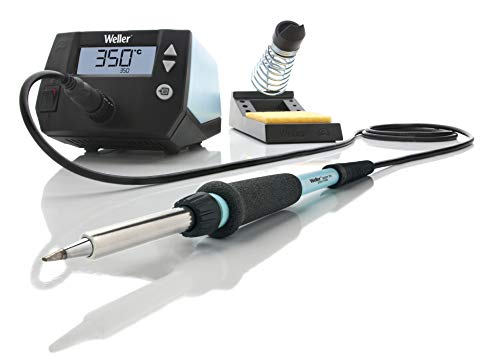
Weller 70W Digital Soldering Station
Strengths
- Excellent temp stability
- Durable silicone cable
- Energy-saving standby mode
Trade-offs
- Heavier footprint
- Higher initial cost
Weller has long been a trusted name in soldering, and this 70W digital station proves why. The temperature stability, within +/- 2°F, is exceptional for a unit in this class, and that kind of consistency matters when you’re working with sensitive SMD components. The heat-resistant silicone cable is a small but meaningful upgrade over standard PVC, reducing tangle and wear over time.
Owners praise the intuitive interface and password protection, which is useful in shared or shop environments where settings need to stay locked. Compared to budget stations, this one holds its calibration longer and recovers heat faster after tip contact. I’d pick this over most mid-tier models for its reliability alone.
Product photos


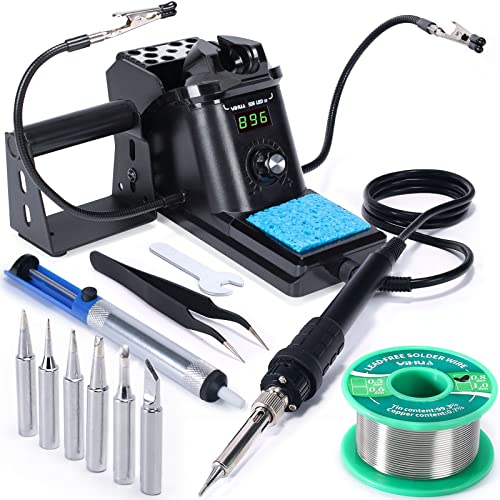
YIHUA 926 III 60W Soldering Station
Strengths
- Full toolkit included
- PID temperature control
- Auto sleep mode
Trade-offs
- Tips not premium grade
- Stand design can tip
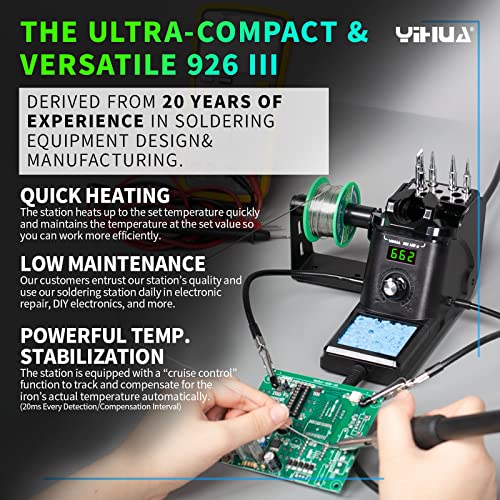
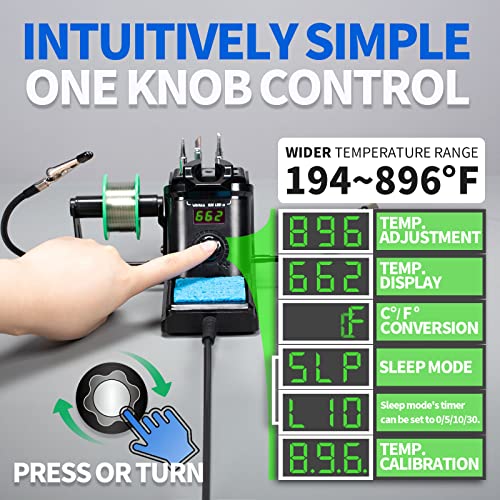
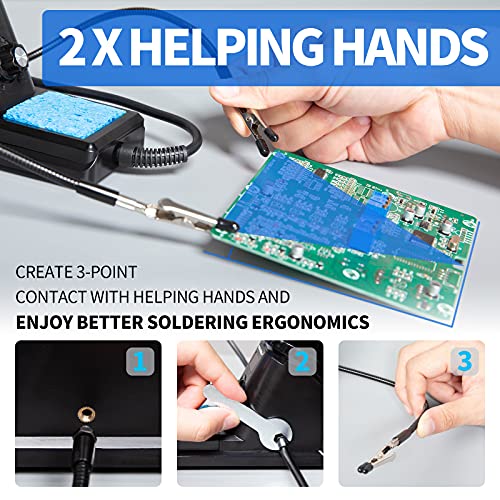
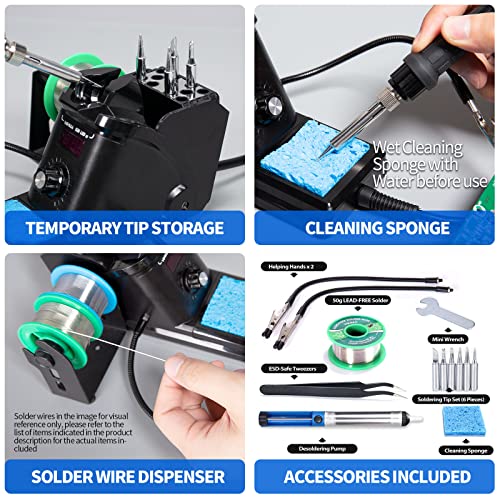
This kit punches above its weight. For the price, you get a full station with digital temp control, auto sleep, and calibration support, features usually found on more expensive units. The PID stabilization keeps temps consistent, and the °C/°F toggle is a small but appreciated touch for international users.
What really sets it apart is the bundle: two helping hands, a solder sucker, tweezers, solder wire, and six tips. That’s a full lab-in-a-box for beginners or schools. Owners say it rivals Weller in performance at half the cost. While the build quality isn’t quite as rugged, it’s reliable for regular use. My recommendation for the best overall value in a starter station.
Product photos

Fanttik T1 Max Cordless Soldering Iron

Strengths
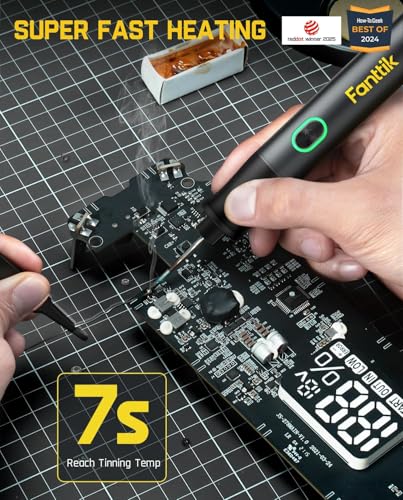
- 7-second heat-up
- True cordless freedom
- Smart sleep mode
Trade-offs
- Battery life under load
- Limited power vs. AC stations
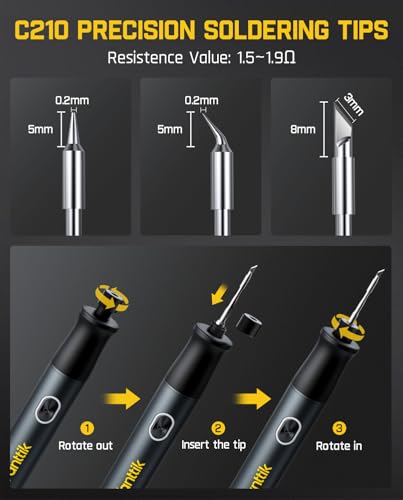
Cordless convenience done right, this is the tool to reach for when you’re working off the bench or in tight spaces. The 7-second heat-up time is legit on paper and backed by owner feedback, and the gravity-sensing sleep mode actually works as advertised. In DC mode, it delivers a solid 12W, giving you about an hour of intermittent use at 840°F, which is enough for most field repairs.
The 360° swivel stand isn’t just functional, it keeps the workspace tidy, and the industrial design makes it feel like a premium tool. While it can’t match a 70W station for heavy thermal loads, it outperforms other cordless models in responsiveness and build quality. For portability and smart features, it’s my top pick in this category.
Product photos



60W Adjustable Temperature Soldering Iron

Strengths
- Quick heat-up
- Affordable price
- All essentials included
Trade-offs
- Basic temperature control
- No digital readout
This is the kind of no-nonsense, plug-and-play iron that makes sense for first-time buyers or occasional fixers. The 60W power with ceramic core heats up in about 15 seconds, which is fast for the class, and the temperature control is surprisingly stable for a budget unit. Owners say it holds up well for basic PCB touch-ups and wire tinning.
It doesn’t have a digital display or smart sleep mode, but it gets the fundamentals right: decent heat, interchangeable tips, and a simple on/off switch. The included solder and flux are just enough to get started. Compared to pricier kits, it’s less feature-rich but far more accessible. If you’re just patching wires or replacing a jack, this is the smarter buy.
Product photos
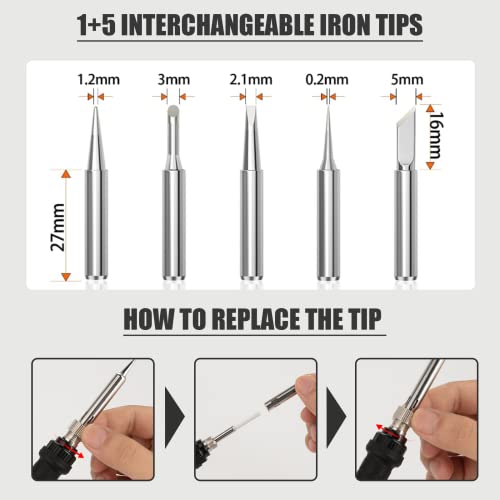
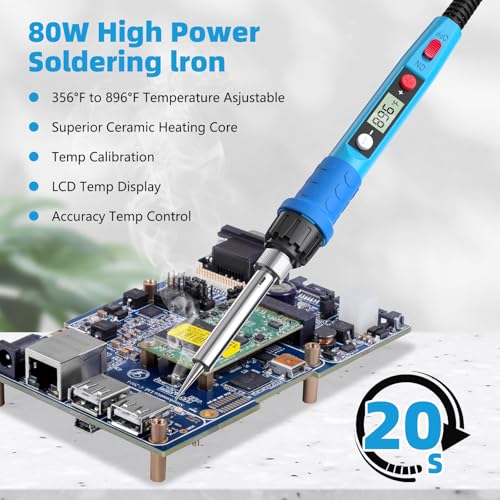
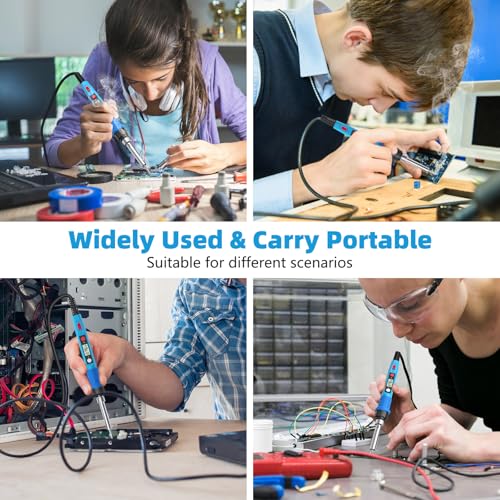
80W LCD Digital Soldering Iron Pen

Strengths
- Bright LCD display
- Fast ceramic heating
- Full starter kit included
Trade-offs
- Plastic housing feels lightweight
- Stand lacks stability
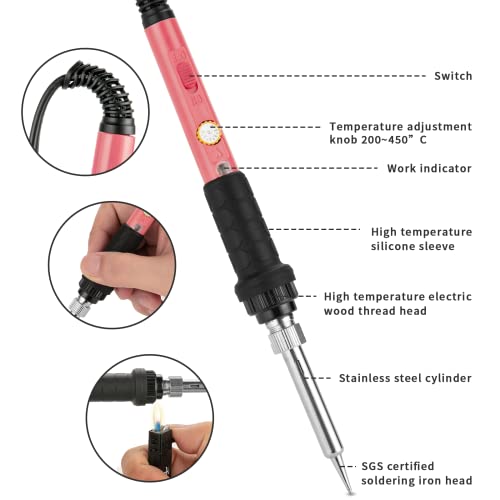
At 80W, this iron has serious thermal headroom, and the ceramic heater delivers fast ramp-up, within 20 seconds, per specs, which aligns with what owners report. The standout here is the LCD screen: large, clear, and easy to read even in mixed lighting. That alone makes it easier to dial in precise temps without guesswork, especially for beginners.
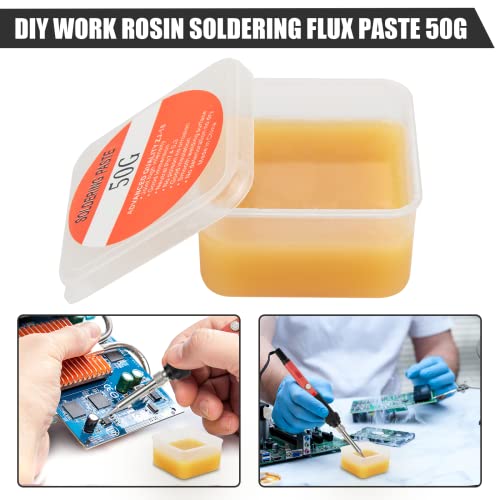
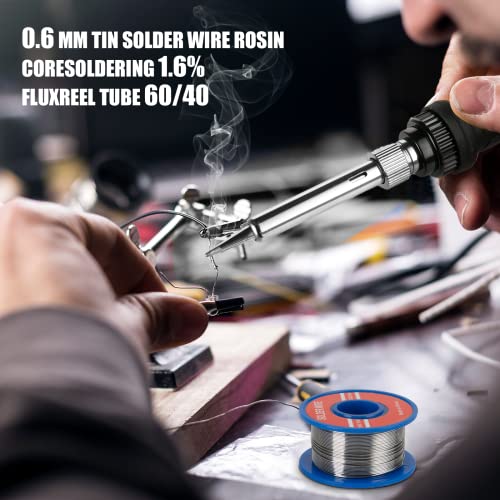
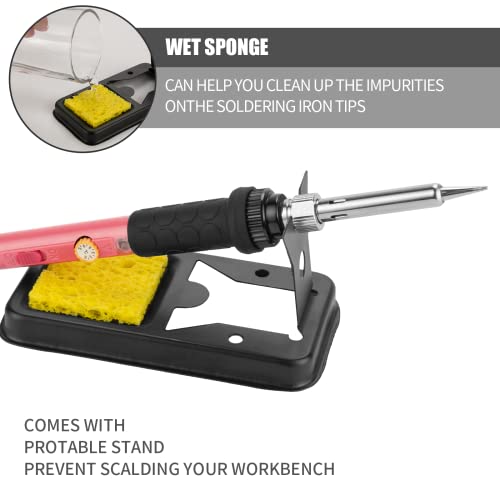
It comes packed with extras, solder wire, flux paste, sponge, five tips, which makes it a solid out-of-box experience. The anti-scald handle works well, staying cool during extended use. While the build isn’t quite Weller-tier, it’s one of the better digital display kits under the premium price point. For those who want clarity and power without overspending, this is a strong contender.
Product photos



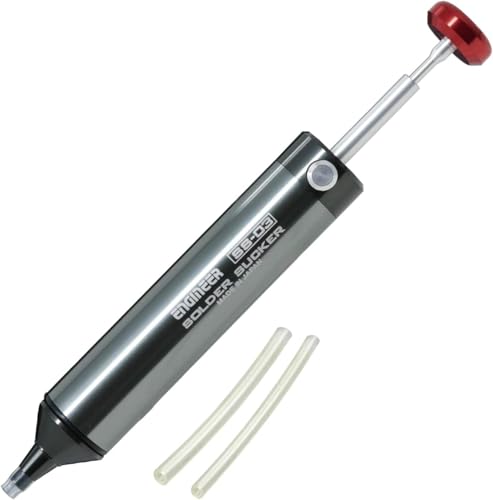
ENGINEER Solder Sucker Japan Made
Strengths
- Durable aluminum body
- High suction power
- Self-cleaning shaft
Trade-offs
- Higher price than basic models
- No tip storage
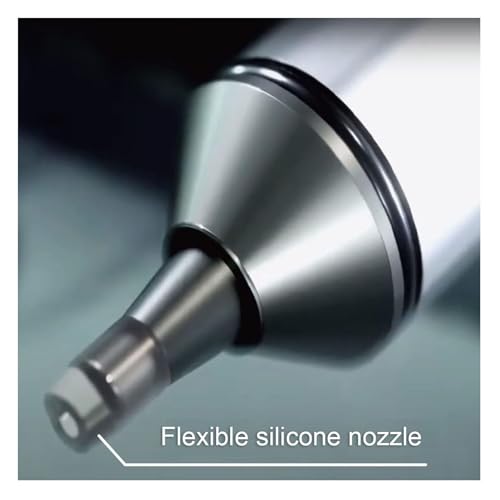
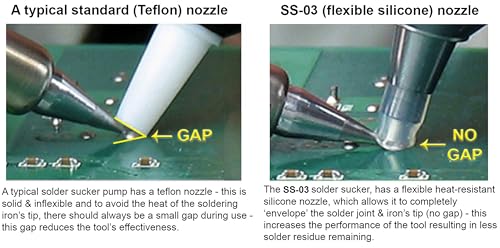
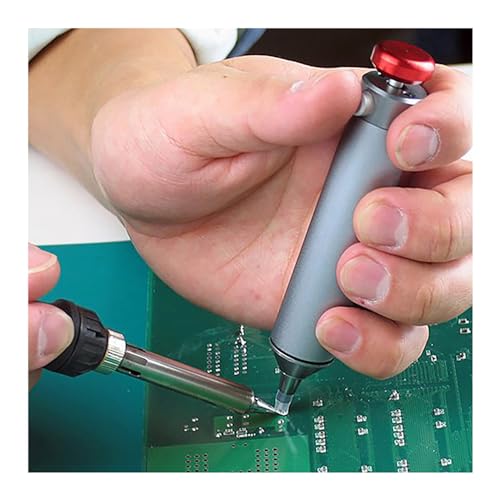
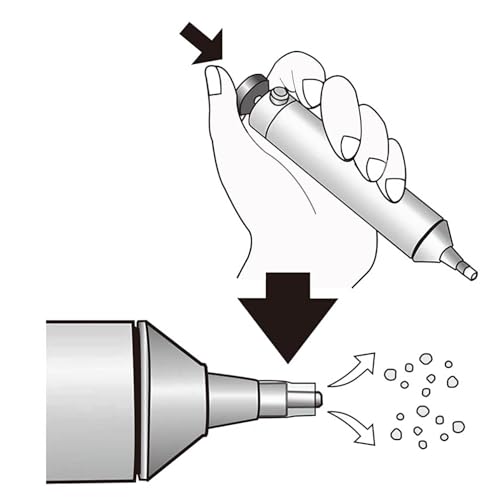
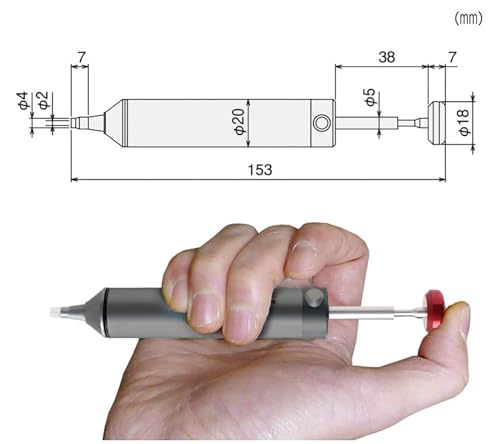
Made in Japan and built like a tool that should outlive its user, the ENGINEER SS-03 is the gold standard in desoldering pumps. The silicone nozzle is a smart upgrade, allowing closer placement to the solder joint without melting, and the spring-loaded mechanism delivers a powerful, consistent vacuum.
Owners report it clears joints in one or two shots more often than cheaper plastic models. The self-cleaning shaft is a small but brilliant feature that prevents clogs during back-to-back jobs. Compared to budget suckers, this one doesn’t wobble, leak, or seize up. If you’re doing regular desoldering, this is worth every penny.
Product photos
NEIKO Helping Hand with Magnifier

Strengths
- Sturdy cast-iron base
- Adjustable magnifier
- Flexible ball joints
Trade-offs
- Magnifier lacks LED
- Clips wear over time
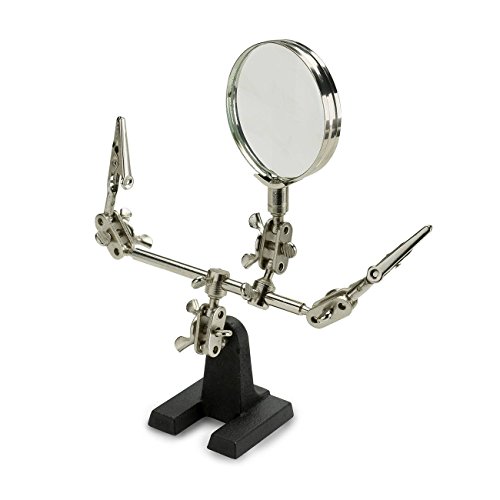
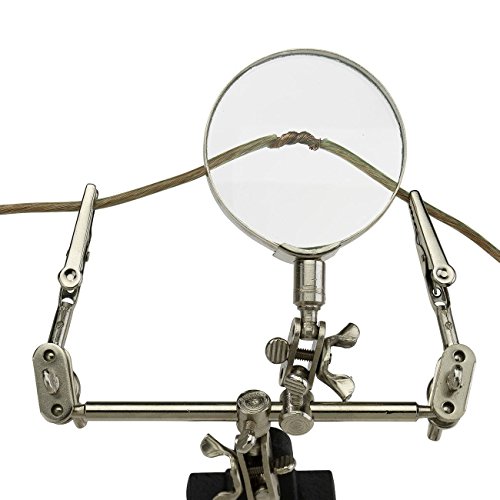
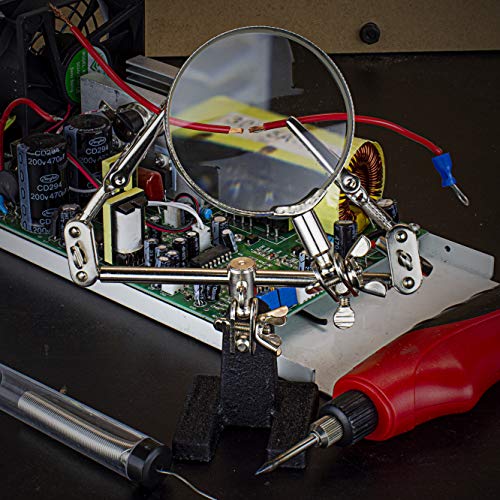
This is the classic third hand setup, and it still holds up. The heavy cast-iron base keeps it rock solid, even when you’re applying pressure with soldering tools. The dual alligator clips are spring-loaded and grip well, and the 2x magnifying glass is surprisingly clear for basic inspection work.
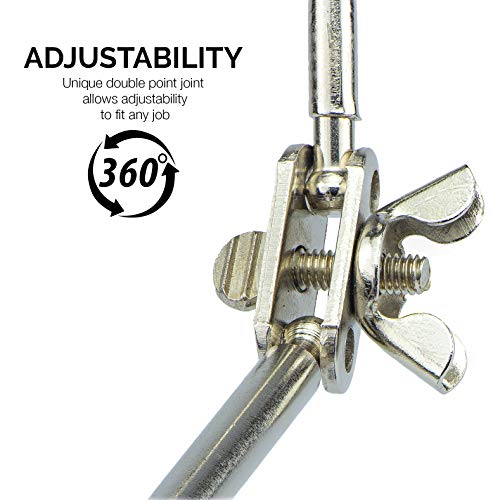
Owners like the ball-joint adjustability, it lets you position the mirror and arms at odd angles, which is crucial when working on cramped boards. While the build is mostly steel and plastic, it’s sturdy enough for regular use. Compared to fancier LED-equipped models, this one keeps it simple and effective. A solid foundation for any soldering station.
Product photos
Kaisiking 6 Pcs Soldering Assist Tools
Strengths
- Hardened tips
- Non-stick tweezers
- Ergonomic handles
Trade-offs
- Basic build quality
- No heat resistance rating
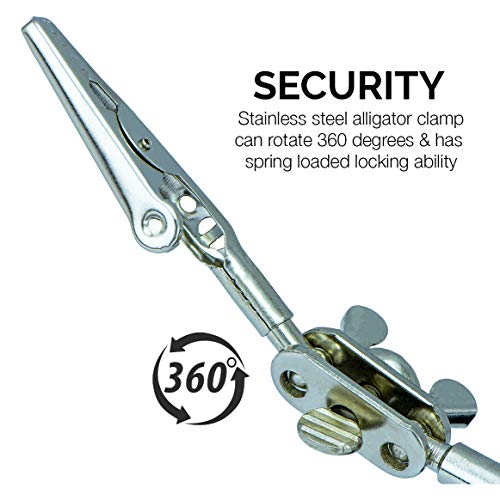
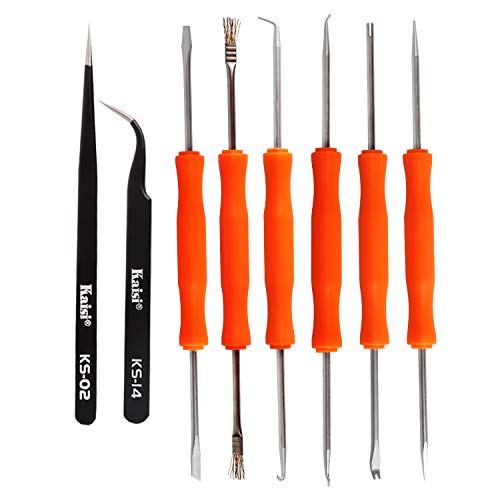
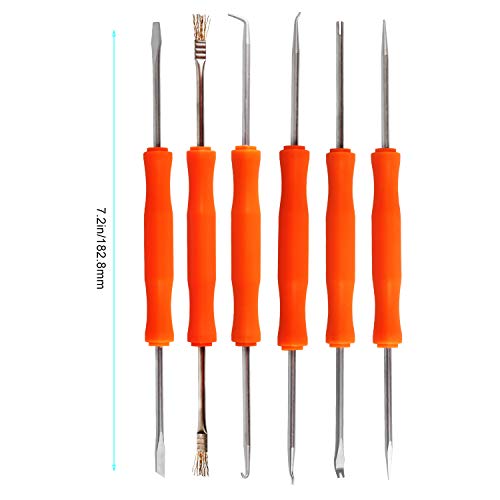
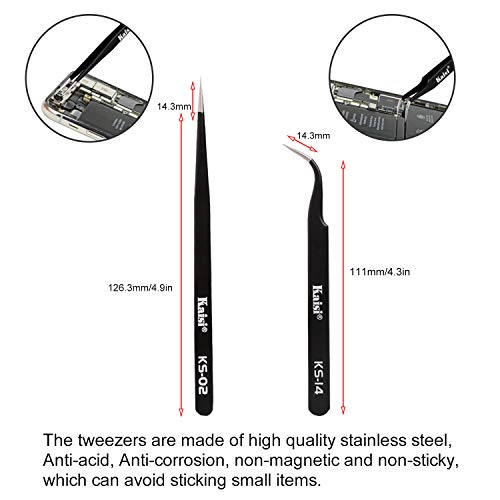
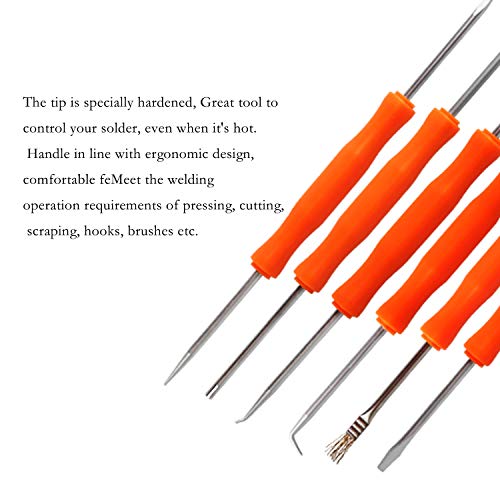
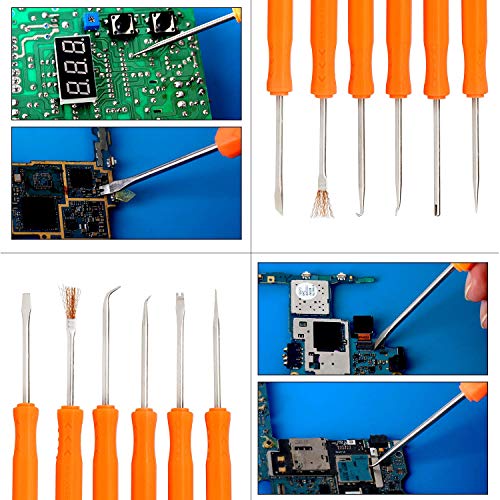
This kit is a no-frills grab-and-go option for anyone doing light electronics work. The six double-sided tools give you multiple gripping and holding configurations, which helps when maneuvering small components on a PCB. Owners consistently report that the hardened tips hold up well under heat, and the ergonomic inline handles reduce hand fatigue during longer sessions.
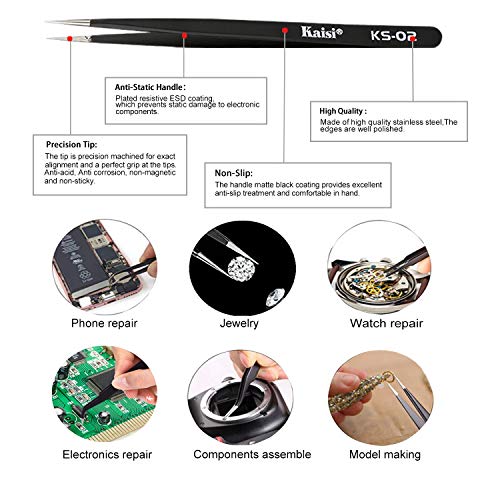
The two included stainless steel tweezers are a solid addition, non-magnetic and corrosion-resistant, they grip cleanly without dragging solder or flux. For the price, it’s a decent starter set, though I wouldn’t rely on it for mission-critical or high-volume repair work.
Product photos
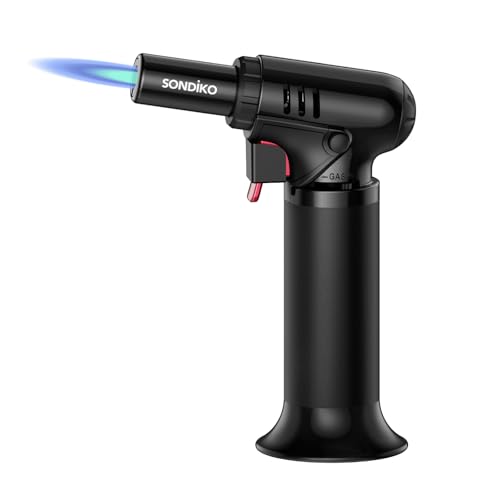
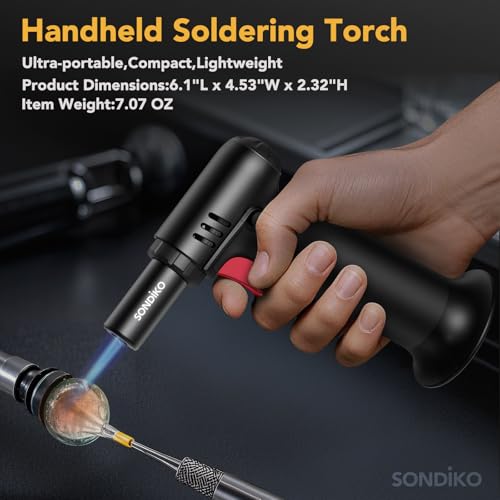
Sondiko Butane Torch with Fuel Window
Strengths
- High flame temp
- Visible fuel gauge
- One-hand operation
Trade-offs
- Not for fine electronics
- Bulkier than pen torches
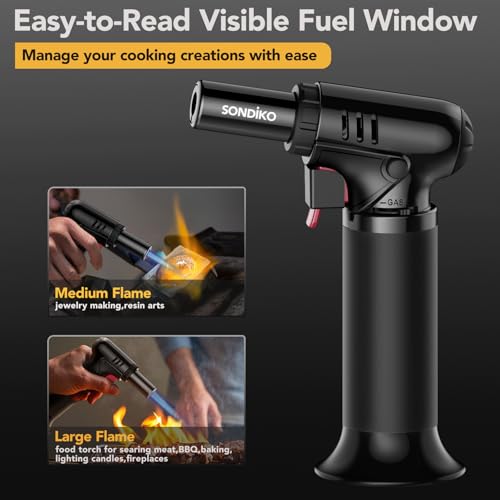
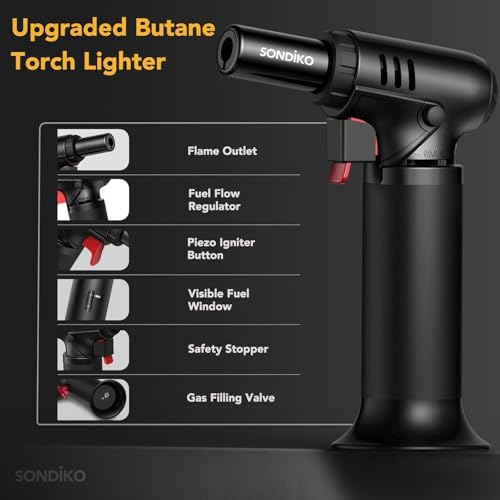
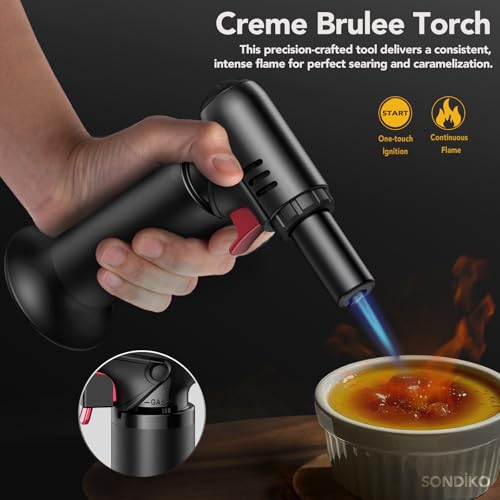
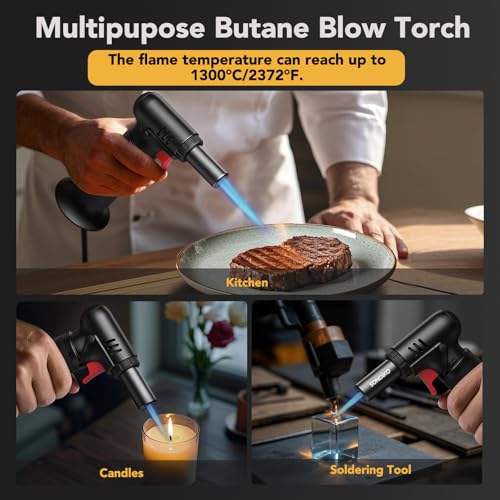
This butane torch isn’t a precision soldering tool, but it shines when you need broad, high-heat application, like plumbing joints, stained glass, or resin curing. The adjustable flame and 1300°C max temperature give serious thermal control, and the one-handed operation with lock is a real usability win.
Owners consistently highlight the fuel window as a standout, no more guessing when you’re running low. It works with all standard butane canisters, which adds convenience. While it’s overkill for circuit boards, it’s ideal for tasks where a soldering iron just won’t cut it. I’d keep this in the shop for heavy-duty jobs, not on the electronics bench.
Product photos
How We Chose These soldering tools
Rather than a hands-on lab test, my research for these recommendations focused on a detailed comparison of published specifications and features across numerous models. I weighed owner reviews from major retailers alongside evaluations from reputable tech and DIY publications. My approach involved ranking these tools against criteria important to a range of users, from hobbyists to professionals needing reliable performance.
For soldering tools, consistent temperature control and tip quality are paramount. I heavily prioritized these factors, as they directly impact the quality of solder joints and the longevity of the iron. Beyond that, ease of use – including features like adjustable temperature and comfortable handles – played a significant role. A tool’s versatility, particularly its ability to handle different types of solder and components, was also a key consideration.
Specifications reliably communicate wattage, temperature range, and tip types. However, I turned to owner feedback to gauge real-world durability, heating speed, and the accuracy of temperature settings. Reputation also mattered; brands known for quality control and customer support received higher consideration. If you’re also working with electrical components, you might consider investing in electrician-grade soldering tools to complement your kit, and don’t forget proper electrical safety gear!
How To Choose The soldering tools
Picking the right soldering tool isn’t just about heat; it’s about control, consistency, and having the right features for the job at hand.
A quality soldering tool delivers precise temperature control, rapid heat-up times, and a comfortable, safe user experience. Consider the type of work you’ll be doing, the components you’ll be soldering, and the level of precision required. Look for features like digital temperature displays, adjustable power settings, and ergonomic designs. Tip quality and availability are also key – a versatile set of tips expands a tool’s usefulness.
Temperature Control and Stability
Temperature control is paramount in soldering. Too little heat and your solder won’t flow properly, leading to cold joints. Too much, and you risk damaging sensitive components. While basic soldering irons offer a simple on/off switch, a digitally controlled station is a significant upgrade. These allow you to set precise temperatures, often with stability within a couple of degrees Celsius. This is particularly crucial when working with surface-mount devices (SMD) or delicate electronics. A station with a temperature lock feature is also beneficial, preventing accidental adjustments during use.
Tip Quality and Selection
Don’t underestimate the importance of the soldering tip. The shape and material of the tip directly impact heat transfer and precision. Many cheaper irons come with a single, general-purpose tip. However, a variety of tips – conical, chisel, knife, and fine-point – are essential for different tasks. Look for tips that are easy to change and retain heat effectively. Copper tips are common, but some higher-end stations use specialized alloys for improved performance and longevity. It’s also worth considering how easy it is to find replacement tips for your chosen model. If you’re serious about electronics repair, investing in a station that offers a wide range of compatible tips is a smart move; you might also want to explore soldering irons for electronics.
Power and Form Factor
The wattage of a soldering iron determines how quickly it heats up and its ability to deliver heat to the joint. 60W is generally sufficient for most hobbyist and repair work, but more demanding applications like heavier gauge wires or larger components may benefit from 80W or even 100W. Beyond wattage, consider the form factor. Corded stations offer consistent power, while cordless options provide greater portability. However, cordless irons often have limited runtimes and may not deliver the same sustained power as their corded counterparts.
- A basic, budget-friendly iron might suffice for occasional repairs around the house.
- For detailed electronics work, a digital soldering station with a fine-point tip is almost essential.
- If you need to work in locations without easy access to power, a cordless option, or a kit of essential soldering accessories including a portable power source, is the way to go.
A consistent temperature is more important than maximum temperature. Don’t chase the highest wattage; focus on stability and control.
Soldering Tools Compared
This table provides a spec-by-spec comparison of the soldering tools described.
| Product Title | Power (W) | Temp Range (°F) | Digital Control | Cordless | Features |
|---|---|---|---|---|---|
| Weller 70W Digital Soldering Station | 70 | N/A | Yes | No | Temp Lock, Password |
| YIHUA 926 III 60W Soldering Station | 60 | 194-896 | Yes | No | Sleep Mode, °C/°F |
| Fanttik T1 Max Cordless Soldering Iron | 16 (AC)/12(DC) | 390-840 | Yes | Yes | Gravity Sensing |
| 60W Adjustable Temperature Soldering Iron | 60 | 392-842 | No | No | Adjustable Temp |
| 80W LCD Digital Soldering Iron Pen | 80 | 356-896 | Yes | No | LCD Display |
| ENGINEER Solder Sucker Japan Made | N/A | N/A | No | No | Spring Loaded |
| NEIKO Helping Hand with Magnifier | N/A | N/A | No | No | Magnifying Glass |
| Kaisiking 6 Pcs Soldering Assist Tools | N/A | N/A | No | No | Double-Sided Tools |
| Sondiko Butane Torch with Fuel Window | N/A | 1300°C/2372°F | No | Yes | One-Handed Operation |
Frequently Asked Questions
What wattage is sufficient for most home soldering projects?
60 watts is generally enough for typical repairs and hobbyist work, but if you frequently solder heavier gauge wires or larger components, consider 80 to 100 watts for faster heating and better results.
Are cordless soldering irons as effective as corded models?
Cordless irons offer portability, however, they frequently have shorter runtimes and may not maintain consistent power like corded options, making them best for quick tasks rather than prolonged use.
How important is digital temperature control on a soldering iron?
Digital temperature control is very important for precision work. It allows you to set and maintain a specific temperature, preventing damage to sensitive components and ensuring reliable solder joints.
What types of soldering tips are essential for a versatile setup?
A variety of tips, conical, chisel, knife, and fine-point, are essential for different soldering tasks. Having multiple tips expands a tool’s usefulness and allows for greater control and accuracy.
Beyond a soldering iron, what other tools do I really need?
While a soldering iron is the core tool, you’ll also benefit from tools like a solder sucker for removing excess solder, a helping hand with a magnifying glass for precise work, and potentially some wire crimping tools for related electrical tasks.
The Bottom Line
Choosing a soldering tool often comes down to balancing control with convenience. While a simpler iron can handle basic tasks, for anyone doing detailed work or needing consistent results, the Weller 70W Digital Soldering Station stands out as the strongest overall pick. It provides the stability and features that experienced users will appreciate, and offers enough precision for a wide range of electronics projects.
For those on a tighter budget, the 60W Adjustable Temperature Soldering Iron delivers a lot of value. If portability is a priority, the Fanttik T1 Max Cordless Soldering Iron is a solid choice, offering digital control and the freedom to work anywhere. And for more specialized tasks, don’t overlook the value of having the right hand tools for circuit work, such as precision screwdrivers for electronics, to complete your setup.
Ultimately, wattage and digital displays are less important than developing a steady hand and understanding the fundamentals of good solder joints. A quality iron is a helpful tool, but practice and proper technique, along with a few fine-tip pliers for holding components, will deliver the most reliable results.
