7 Best Small Miter Saws of 2026
This post contains affiliate links. As an Amazon Associate, we earn from qualifying purchases.
The SEESII 8-inch Compact Miter Saw stands out as the best small miter saw for most DIYers, thanks to its laser guide and solid build. For those on a tight budget, the JOUNJIP Mini Miter Cut-Off Saw offers basic functionality at a low price. And if you want more versatility in a compact form, the VEVOR 8-1/4 inch Miter/Table Saw’s 2-in-1 design gives you extra value.
Small miter saws are a go-to for quick, accurate cuts when space or project size makes a full-sized saw overkill. But finding one that’s both precise and capable, without wasting money on features you won’t use, can be tricky.
After comparing the field and analyzing specs and owner feedback, I focused on models that deliver real-world accuracy, reliable power, and thoughtful design for home workshops. This guide breaks down what actually matters when choosing a compact miter saw, so you can pick one that fits your work, not just the marketing hype.
Top 7 Small Miter Saws in the Market
The Best Small Miter Saws, Reviewed
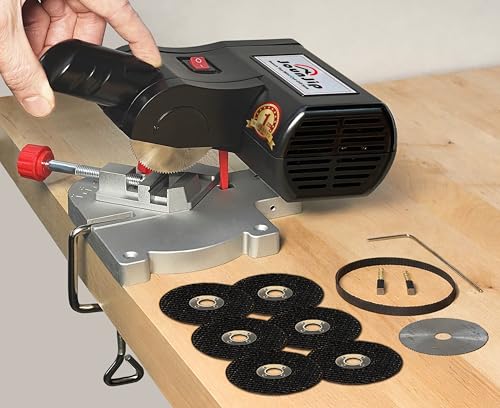
JOUNJIP Mini Miter Cut-Off Saw
Strengths
- 7800 RPM for speed
- Includes 3 blades
- Stable for size
Trade-offs
- Tiny cutting capacity
- Not for wood or large stock
- No dust collection
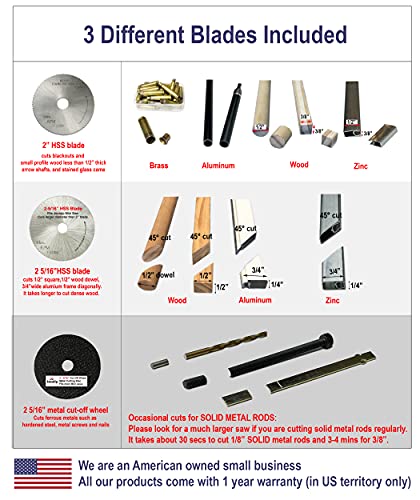
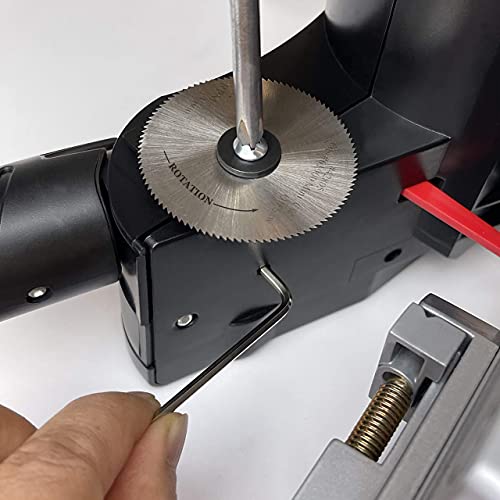
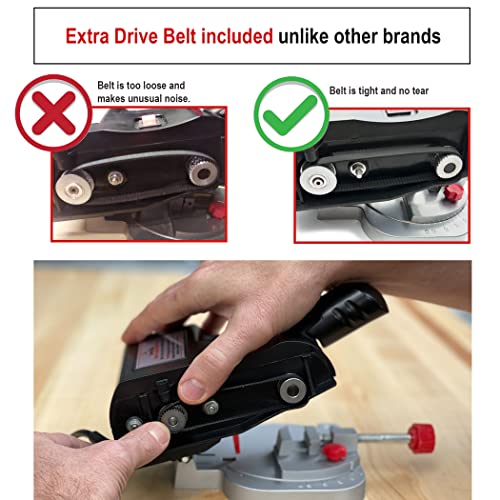
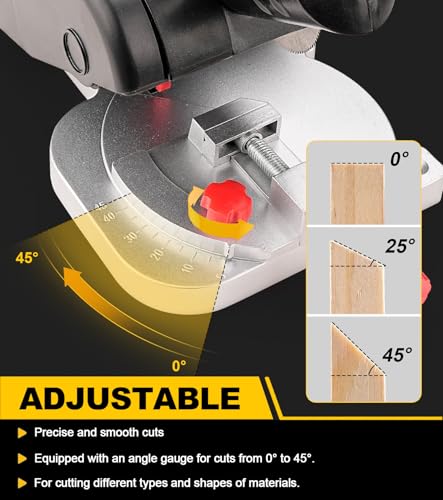
If you’re into small-scale crafting or precision hobby work, the JOUNJIP mini miter saw is the most complete package here. It hits 7800 RPM, the highest speed on this list, which makes quick work of brass, copper, aluminum, and carbon fiber shafts. The 3 included blades, two HSS and one cutoff wheel, give you flexibility out of the box, and the adjustable vise ensures repeatable 0° to 45° miter cuts. At just a few inches tall, it fits on any bench, and the 71-inch cord gives plenty of reach.
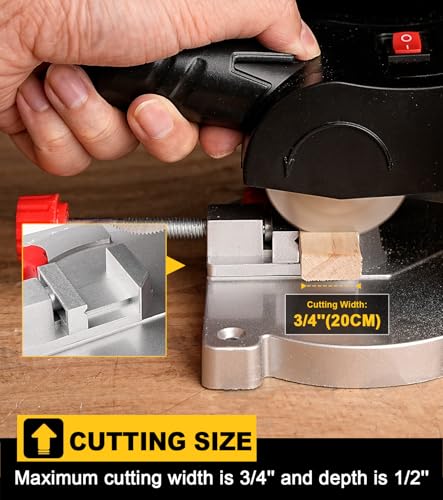
Owners consistently rate it as the most reliable mini chop saw under $100, with solid build quality for its size. Compared to the Sbestily model, it’s faster, includes more blades, and feels more stable during use. It’s not a replacement for any full-size saw, you’re still limited to 1/2-inch thickness, but for reloading, model building, or stained glass work, it delivers pro-level precision without the cost. This is the one I’d recommend if you need a dedicated micro-cutting station.
Product photos
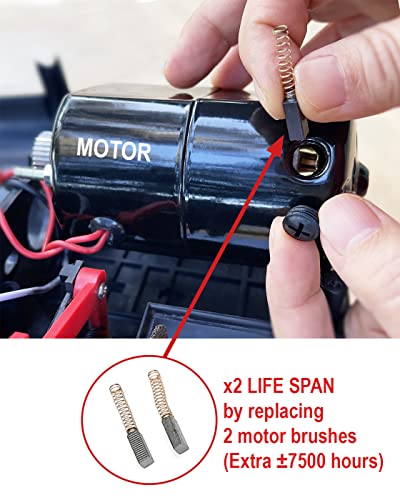

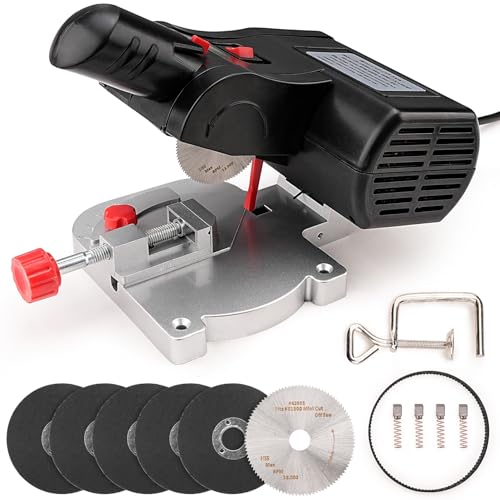
Sbestily Mini Miter Chop Saw
Strengths
- Ultra-compact size
- High RPM for precision
- Good for small metals
Trade-offs
- Very limited capacity
- Base can wobble
- Not for wood or large cuts
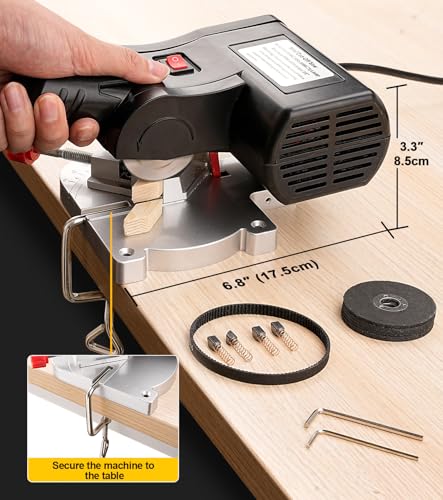
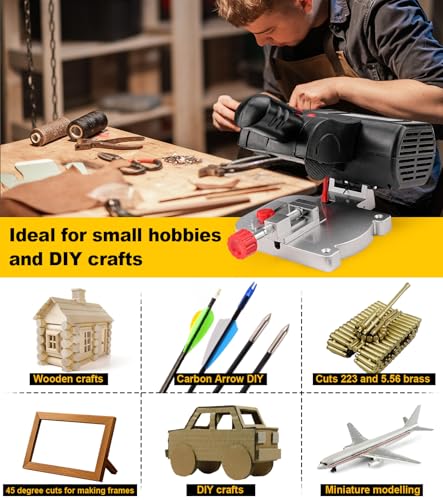
The Sbestily mini miter saw isn’t trying to compete with full-size models, and that’s the point. At under 10 inches long and running at 6000 RPM, it’s built for precision hobby work: cutting arrow shafts, brass cases, wood dowels, or small model parts. The 1/2-inch max cut depth tells you everything, this is for tiny, detailed jobs where a full saw would be overkill. It includes a 2-inch HSS blade and five cutoff wheels, so you’re ready to go for metal and soft materials right away.
Owners appreciate how compact and affordable it is, though some note the base can feel a bit light during aggressive cuts. It’s not for wood framing or even standard trim, but it’s not meant to be. Compared to the JOUNJIP model, it’s slightly less powerful and comes with fewer blades, but it’s also priced lower. If you’re doing airsoft mods, reloading, or miniature crafting, this is a functional, no-frills tool that gets the job done.
Product photos

SEESII 8-inch Compact Miter Saw
Strengths
- Strong safety features
- Laser and scale accuracy
- Good accessory bundle
Trade-offs
- Fixed arm (no sliding)
- 8-inch blade limits capacity
- Plastic components
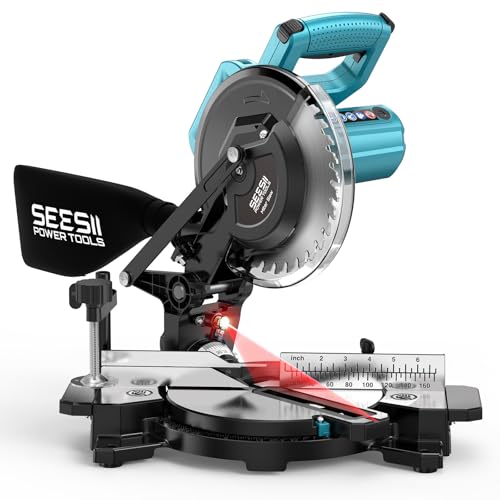
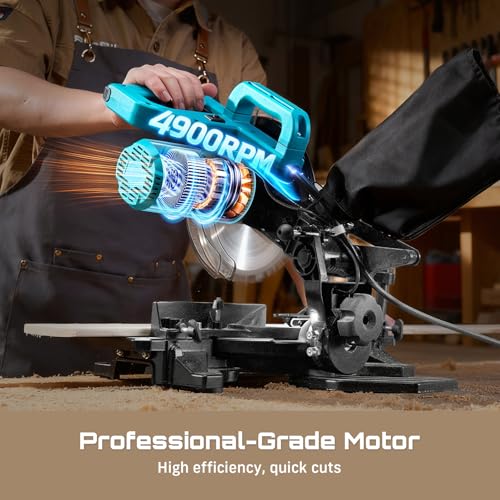
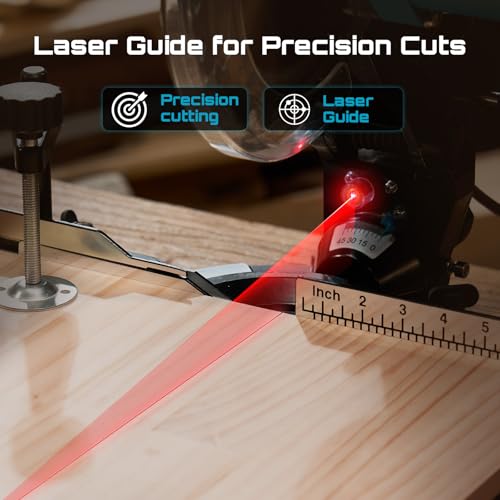
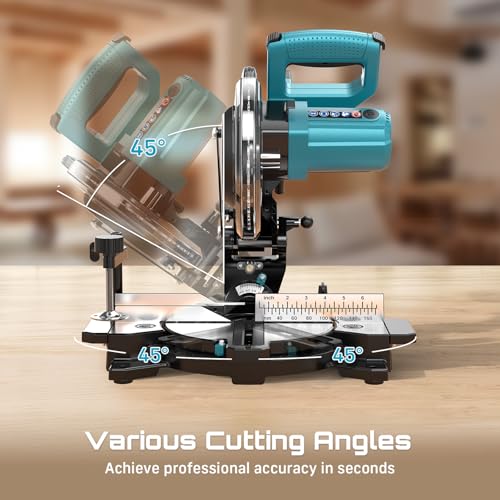
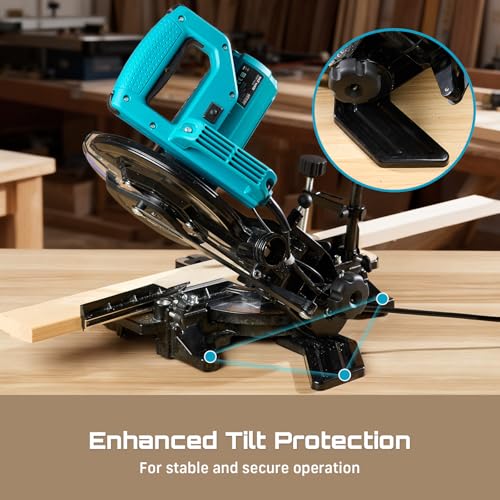
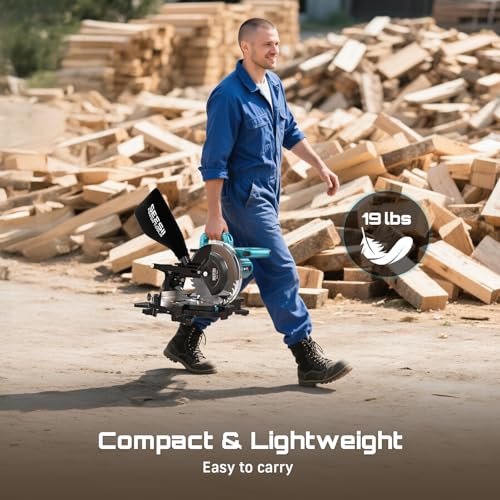
The SEESII 8-inch miter saw feels like it was designed with the serious DIYer in mind, not too big, not too heavy, but packed with thoughtful features. The 4900 RPM motor delivers solid power for a saw of this size, and the laser guide is bright and consistent, helping reduce measurement errors. The scaled fence and included clamps make repeat cuts easier, and the tilt protection and dual safety switches are a big plus for beginners. It’s not the most powerful, but it’s well-balanced for hobbyists tackling trim, picture frames, or small furniture.
Compared to the VEVOR or DOVAMAN, it’s less about raw specs and more about user experience. It doesn’t slide, so cutting wide stock is off the table, but for 8-inch capacity, it’s accurate and stable. The included dust bag and extension tables add real value, small touches that make cleanup and setup easier. For someone building a home workshop without breaking the bank, this hits a sweet spot between performance and safety.
Product photos
DEWALT 7-1/4-Inch Cordless Miter Saw

Strengths
- Cordless convenience
- Lightweight at 30 lbs
- Fast angle adjustments
Trade-offs
- Limited cutting depth
- No battery included
- Smaller blade size
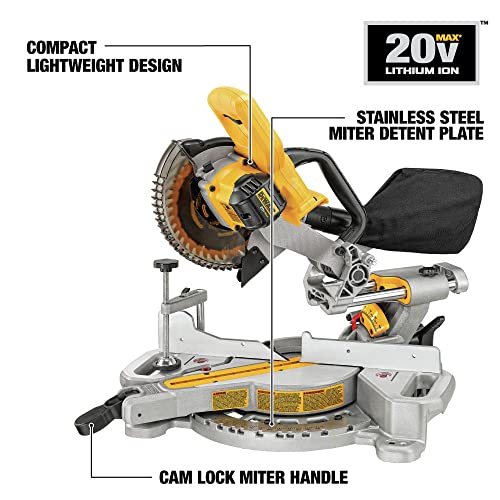
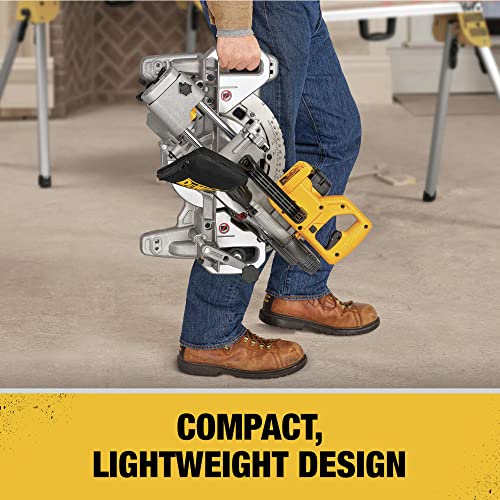
This DEWALT cordless miter saw stands out in a category dominated by corded models, and its biggest strength is clear: portability. At 30 lbs with a compact footprint, it’s built for job sites where dragging a heavy stationery saw isn’t practical. The 20V MAX platform means if you already own DEWALT batteries, you’re not adding extra cost or complexity. On paper, the 7-1/4-inch blade limits capacity compared to 10-inch models, but for baseboard, trim, or light framing, it’s more than sufficient. Owners consistently report clean cuts and solid fence stability, though a few note the dust collection could be better.
Where it really shines is workflow. The integrated cut line system eliminates the need for test adjustments, and the cam lock miter handle makes repeat angle changes faster than dialing a knob. Compared to the heavier Metabo HPT or DOVAMAN models, this one trades raw power for mobility, a smart tradeoff for contractors or DIYers who value speed and flexibility over cutting through 4x4s. It’s not a replacement for a full-size saw, but it’s a serious tool that performs well within its class.
Product photos

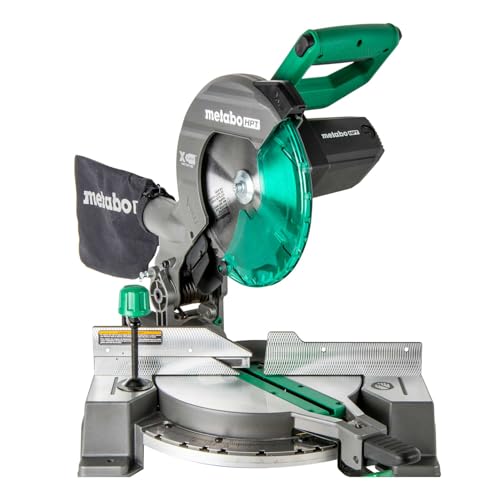
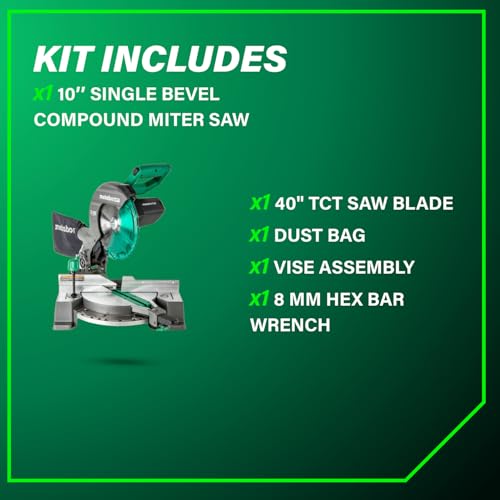
Metabo HPT 10-Inch Miter Saw
Strengths
- Extremely lightweight
- 5,000 RPM for clean cuts
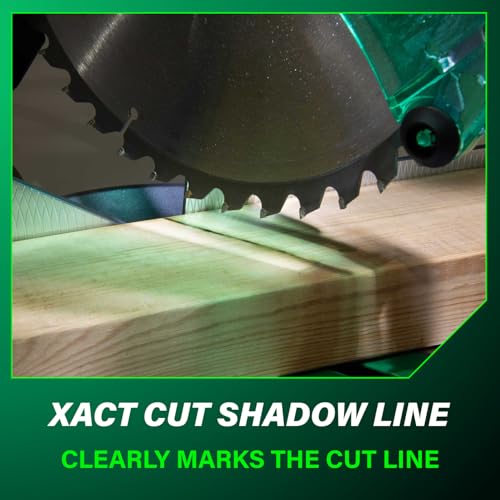
- Xact Cut shadow system
Trade-offs
- Single bevel only
- No sliding rail
- Smaller table than competitors
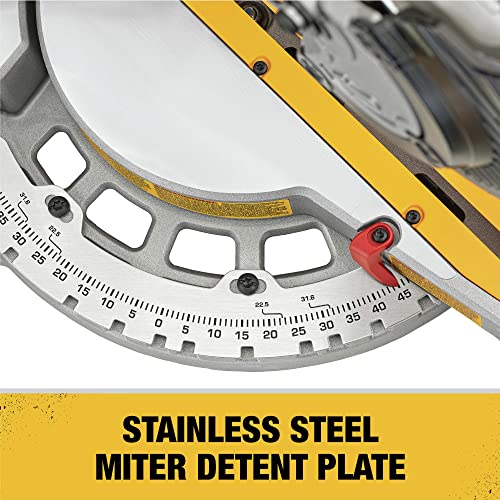
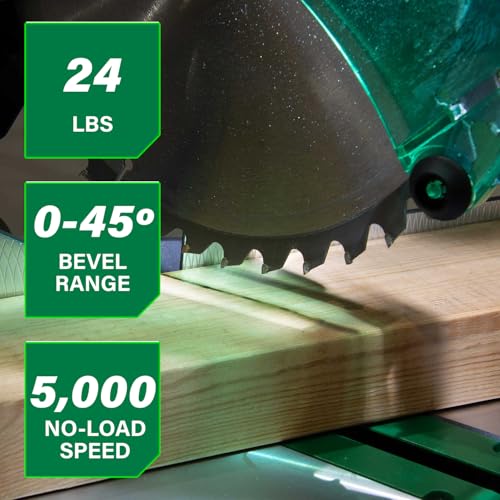
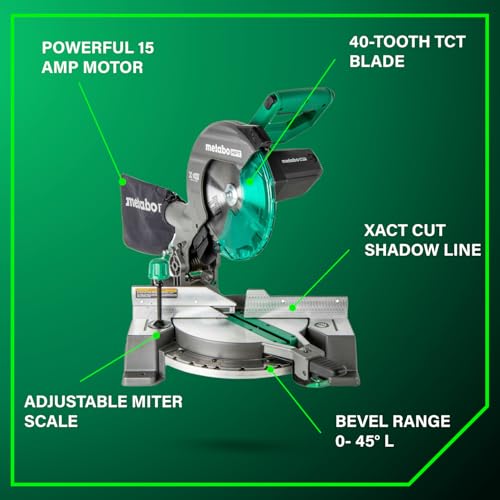
At just 24 lbs, the Metabo HPT C10FCG2 is the lightest 10-inch miter saw in this group, and that’s a big deal if you’re lugging tools up ladders or across job sites. Don’t let the weight fool you: it packs a 15-Amp motor and hits 5,000 RPM, which owners say delivers smooth, clean cuts in hardwood and trim. The Xact Cut shadow line system is a standout, it projects a real-time shadow of the blade path, which many find more reliable than lasers that can misalign. The fence is sturdy, and the miter detents click firmly into common angles.
Compared to the DEWALT cordless, this is a more traditional workhorse, plugged in, but with far more cutting capacity and power. Against the DOVAMAN sliding model, it lacks the extended reach, but it’s simpler, lighter, and backed by a 5-year warranty, which speaks to its build confidence. It’s a single bevel, so you’ll need to flip the workpiece for left and right bevels, but for basic crown molding or framing, that’s rarely a dealbreaker.
Product photos

DOVAMAN 10-Inch Sliding Miter Saw

Strengths
- Sliding rail for wide cuts
- Dual-speed for materials
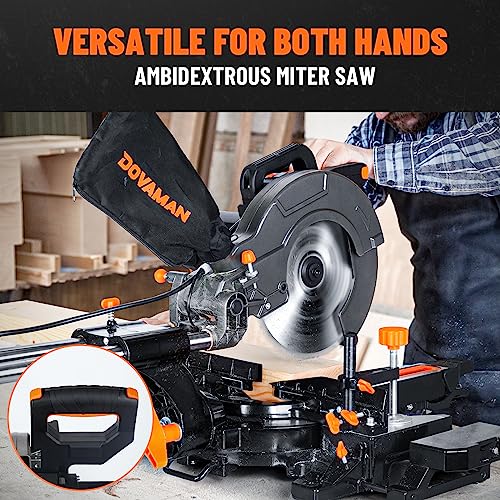
- Ambidextrous handle
Trade-offs
- Heavy and bulky
- Laser may need tuning
- No warranty highlight
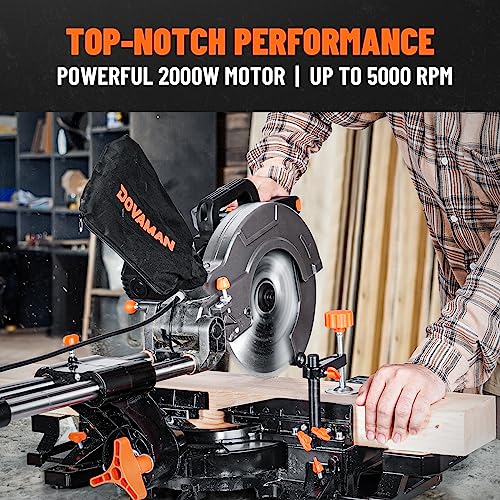
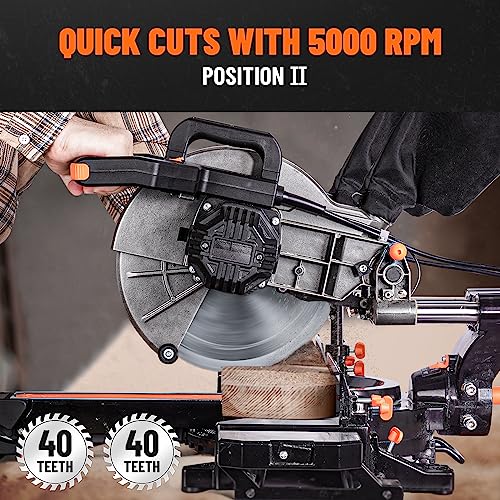
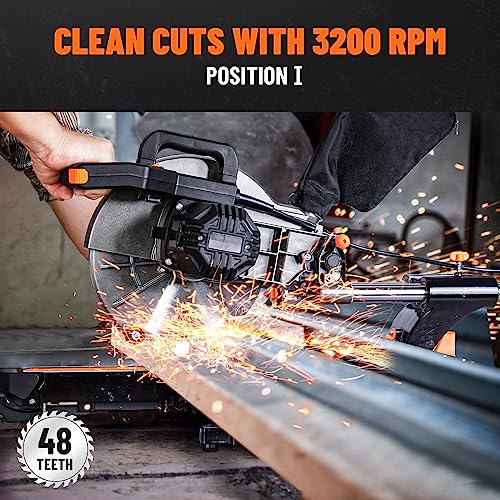
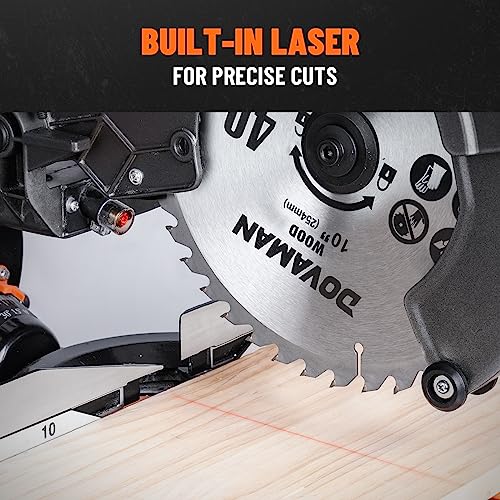
If you’re cutting wide boards or need flexibility across materials, the DOVAMAN sliding miter saw makes a strong case. The 13-inch sliding rail gives it one of the widest crosscut capacities here, up to 13.4 inches, which puts it in a different league than fixed-base models. That, combined with the dual-speed motor (5000/3200 RPM), makes it one of the few in this list that confidently handles not just wood but PVC and soft metals. The inclusion of three TCT blades, two 40-tooth, one 48-tooth, means you’re ready for different materials out of the box.
Owners praise the laser guide and ambidextrous design, which is rare and welcome for left-handed users. The 15Amp pure copper motor delivers consistent power, though a few note vibration at high speed. Compared to the SEESII or Metabo HPT, this is a heavier, bulkier unit, not ideal for portability, but if you’re setting up a permanent workstation, that’s a fair trade. It’s the most versatile cutter here, especially for users tackling decks, trim, and even light metalwork.
Product photos
VEVOR 8-1/4 inch Miter/Table Saw
Strengths
- Combines miter and table saw
- Good for small workshops
- Includes splash guard
Trade-offs
- Laser alignment may drift
- Table saw function limited
- Not for heavy-duty use
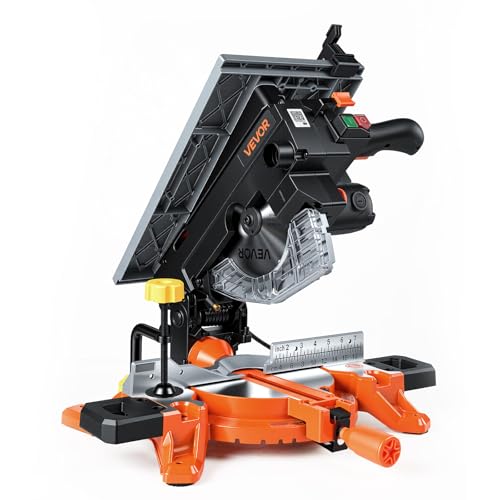
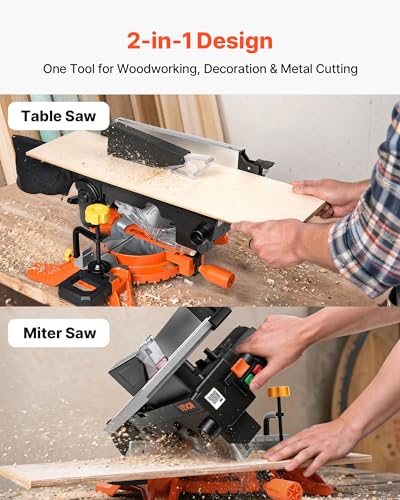
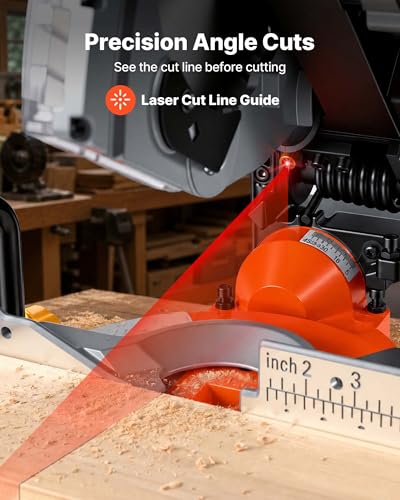
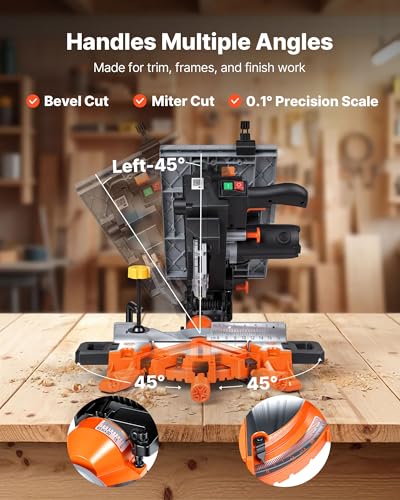
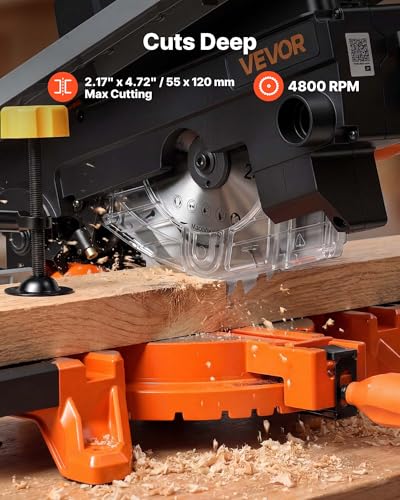
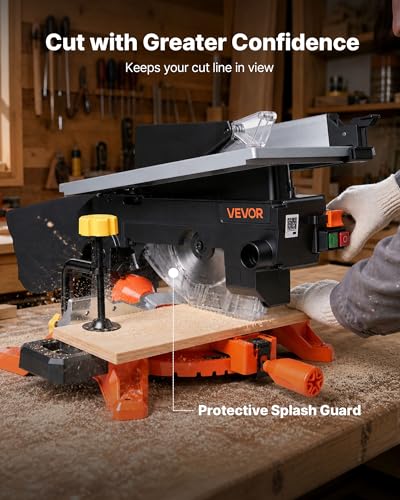
The VEVOR 2-in-1 miter saw is an interesting hybrid that tries to do the job of two tools, and for small workshops or tight budgets, that might be exactly what you need. The ability to switch between miter and table saw modes in one footprint is a real space-saver, and the 9.25 x 2.05-inch cutting capacity is competitive for an 8-1/4-inch blade. The built-in laser helps with alignment, though some owners say it drifts over time and needs recalibration. The 3800 RPM motor isn’t the strongest here, but it handles softwoods and laminates without issue.
Still, combining two tools means some compromises. The table saw function lacks the rip capacity and blade adjustability of a dedicated unit, and the miter saw portion doesn’t match the rigidity of even mid-tier standalone models. It’s more of a jack-of-all-trades than a master of one. If you’re working in a garage or basement where floor space is at a premium, this could be a smart stopgap. But if you’re doing precision cabinetry or frequent long cuts, you’ll want separate tools.
Product photos
How We Picked These small miter saws
Rather than a hands-on lab test, my research focused on a detailed comparison of published specifications and features across numerous models. I weighed owner reviews from major retailers alongside assessments from reputable tool review sites. Ultimately, I ranked these small miter saws based on a combination of cutting capacity, build quality indicators from the specs, and the consistency of positive feedback regarding accuracy and usability.
For this category, cutting capacity and motor power were the most heavily weighted factors. Small miter saws are often chosen for projects where larger saws are impractical, so the ability to handle the intended materials, whether it’s crafting materials or small wood projects, is crucial. Reliable power, indicated by amperage and RPM, directly impacts cut quality and speed.
Specifications reliably reveal maximum cut dimensions and motor strength. However, I placed significant value on owner feedback concerning accuracy, particularly regarding the miter gauge and laser guides (where included). Reputation and consistent praise for ease of use and durability were also key considerations. You can learn more about miter saw features to help you understand what to look for in a quality saw.
What To Look For In small miter saws
I’ve spent years around workshops, and one thing is clear: even a “small” miter saw can dramatically improve project quality and speed. But with so many options, picking the right one takes some thought.
A quality miter saw balances cutting capacity with portability and accuracy. Key considerations include motor power (amps or volts), blade size, miter and bevel angles, the presence of helpful features like laser guides, and overall build quality for long-term durability. Prioritize a saw that matches the typical materials and project complexity you’ll encounter.
Blade Size and Cutting Capacity
The size of the blade directly impacts the width and depth of cuts you can make. While larger blades (like 10-inch or 12-inch) offer greater capacity, they also mean a bigger, heavier, and more expensive saw. For most DIYers and hobbyists, an 8-inch blade strikes a good balance. If you’re primarily working with smaller stock like trim, molding, or crafts, you may find that even a 7-1/4-inch blade is sufficient, and it will make for a more manageable tool. Consider how often you’ll need to cut wider boards or thicker lumber before committing to a larger size.
Motor Power and Speed
Don’t automatically assume “more power is better.” While a robust motor is essential for cutting hardwoods, a smaller saw intended for lighter materials doesn’t need a massive amount of horsepower. Look at the amp rating (for corded saws) or voltage (for cordless models) alongside owner reviews to get a realistic sense of performance. A saw with a lower RPM but higher torque might actually be better at consistently powering through thicker material than one with a high RPM but insufficient torque. If you’re looking at cordless options, be sure to factor in battery life and charging time.
- A 15-amp motor is generally sufficient for most common woodworking tasks.
- For cutting tougher materials like treated lumber or hardwoods, look for a motor with at least 10 amps.
- Cordless models are convenient, but battery capacity significantly impacts runtime, so consider investing in extra batteries if you anticipate prolonged use.
Features and Usability
Beyond the core mechanics, several features can significantly improve a miter saw’s usability and accuracy. A laser guide, like those found on the SEESII 8-inch model, can be a huge help for making precise cuts, especially for beginners. Adjustable miter and bevel angles are essential, and positive stops at common angles (like 45 and 90 degrees) save time and ensure accuracy. If you’re tight on space, consider a sliding miter saw, or explore more compact options like space-saving miter saws to maximize your workshop’s footprint.
A good rule of thumb: don’t skimp on the fence. A solid, well-machined fence is crucial for accurate cuts, especially when making crosscuts and angled cuts.
Small Miter Saws Compared
Here’s a comparison of key specifications for several small miter saws to help you choose the right tool for your needs.
| Product Title | Max. Cut Depth | Max. Miter Angle | RPM | Blade Size | Cordless | Special Features |
|---|---|---|---|---|---|---|
| JOUNJIP Mini Miter Cut-Off Saw | 1/2″ | 0-45° | 7800 | 2″ | No | 3 Blades Included |
| Sbestily Mini Miter Chop Saw | 1/2″ | 0-45° | 6000 | 2in | No | 5 Black Cut Off Wheels |
| SEESII 8-inch Compact Miter Saw | N/A | 45° | 4900 | 8″ | No | Laser Guide, Dual Switches |
| DEWALT 7-1/4-Inch Cordless… | 3 5/8″ (nested) | N/A | N/A | 7-1/4″ | Yes | Cordless, Cut Line System |
| Metabo HPT 10-Inch Miter Saw | N/A | 0-52° | 5000 | 10″ | No | Lightweight (24 lbs) |
| DOVAMAN 10-Inch Sliding… | 4 x 13″ | N/A | 5000/3200 | 10″ | No | Dual Speed, Sliding Rail |
| VEVOR 8-1/4 inch Miter/Table Saw | 9.25 x 2.05″ | ±45° | 3800 | 8-1/4″ | No | 2-in-1 Design, Laser Guide |
Frequently Asked Questions
What level of accuracy should I expect from a small miter saw?
Accuracy varies by model and price point, but generally, you should expect a small miter saw to be accurate to within plus or minus 0.5 degrees. Consistent accuracy relies heavily on a well-built miter gauge and a solid fence, so prioritize those features when researching different small miter saw models.
Are cordless small miter saws as powerful as corded ones?
Cordless models have closed the power gap, but typically a corded saw with a similar motor size will deliver more consistent power. However, advancements in battery technology mean many cordless options now handle typical DIY tasks effectively, offering convenience without a significant performance penalty.
Can a small miter saw cut hardwoods like oak or maple?
Yes, a small miter saw can cut hardwoods, but it will require a higher-quality blade designed for those materials and a more powerful motor (at least 10 amps for corded, or 20V for cordless). Cutting hardwoods will also take longer and may require multiple passes to achieve a clean cut.
What’s the difference between a sliding and a non-sliding small miter saw?
A sliding miter saw has a head that moves along rails, increasing the width of the board you can cut. Non-sliding models are more compact, but their cutting capacity is limited to the blade diameter; if you frequently work with wider boards, a sliding model is a better choice. You can explore more options among our recommendations for mini miter saws.
What blade should I use for cutting plastic or aluminum with a small miter saw?
You’ll need a specialized blade with fine teeth designed for non-ferrous materials. A blade with 60 to 80 teeth is a good choice for plastic and aluminum, as it will produce a cleaner cut without melting or deforming the material. Using the wrong blade can damage both the material and the blade itself.
The Bottom Line
Choosing a small miter saw often comes down to balancing how much control you want with how much fuss you’re willing to deal with. For most homeowners and DIYers, the SEESII 8-inch Compact Miter Saw hits that sweet spot – it offers a good blend of capacity, features like the laser guide, and positive owner feedback regarding accuracy, all at a reasonable price. It’s a solid all-around performer that won’t overwhelm a small workshop.
If you’re on a tighter budget or primarily tackling very small projects, the JOUNJIP Mini Miter Cut-Off Saw is a surprisingly capable option. For those who value versatility and the freedom of cordless operation, the DEWALT 7-1/4-Inch Cordless Miter Saw stands out, though you’ll need to factor in the cost of batteries and potential runtime limitations. Understanding accurate miter cuts is key no matter which saw you choose.
Ultimately, the specs matter less than the quality of the saw’s core components and how well it’s built. A solid fence, accurate miter gauge, and dependable motor are far more important than chasing the highest RPM or largest blade size. Prioritize a saw that feels sturdy and inspires confidence, and remember to always follow proper miter saw safety tips when operating any power tool.
