8 Best Shingle Removal Tools 2026
This post contains affiliate links. As an Amazon Associate, we earn from qualifying purchases.
The 47.7” Heavy-Duty Shingle Removal Shovel is the best overall pick for fast, full-roof teardowns, thanks to its wide blade and solid build. For tighter budgets, the DASCO PRO 24-Inch Shingle Ripper delivers reliable performance with strong owner feedback, while the BULLY TOOLS ProShingle stands out for those prioritizing American-made durability and long-term value.
Roofing work is hard enough without fighting your tools. I’ve seen too many people waste energy on flimsy removers that bend, break, or make the job take twice as long. Choosing the right one isn’t just about speed, it’s about reducing strain and avoiding frustration when you’re halfway through a tear-off.
This guide cuts through the noise by focusing on what actually matters: blade width, handle length, steel gauge, and real-world durability. I compared specs and analyzed owner reviews to find tools that deliver consistent performance, whether you’re stripping a full roof or patching a few damaged sections.
Top 8 Shingle Removal Tools in the Market
The Best Shingle Removal Tools, Reviewed
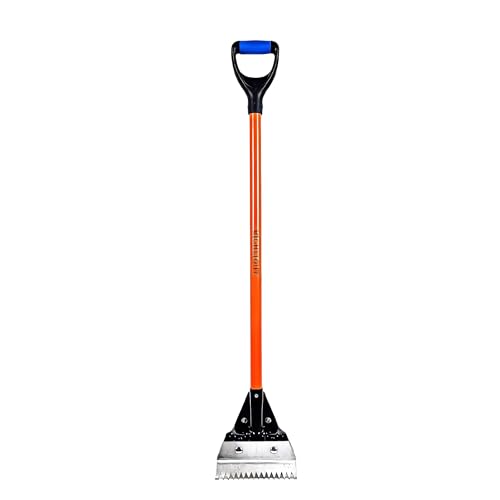
47.7” Heavy-Duty Shingle Removal Shovel
Strengths
- Unbreakable carbon steel
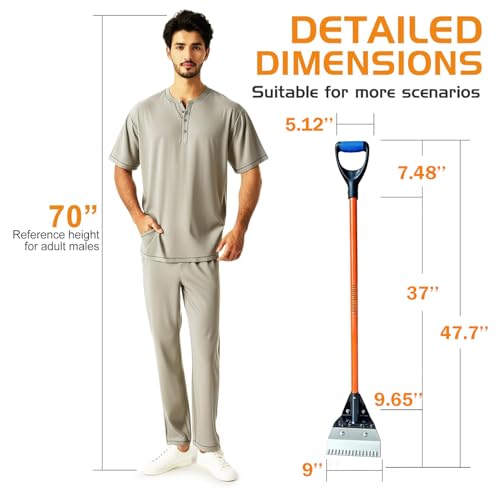
- Wide 9.65-inch blade
- Lifetime warranty
Trade-offs
- Heavier than average
- Single unit, no backup
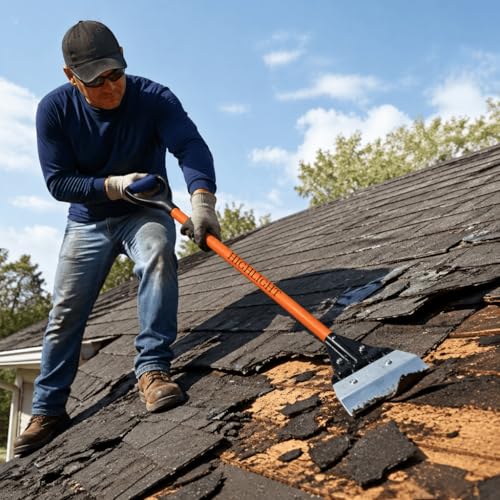
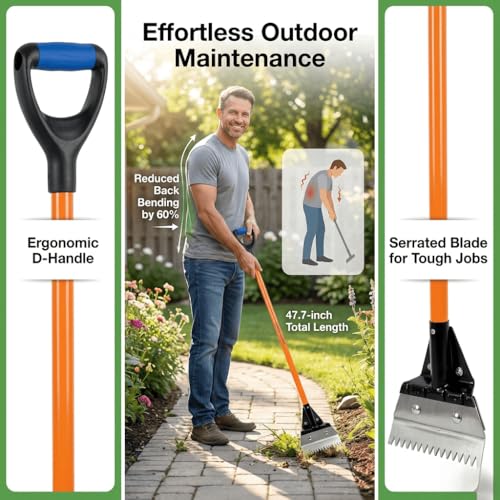
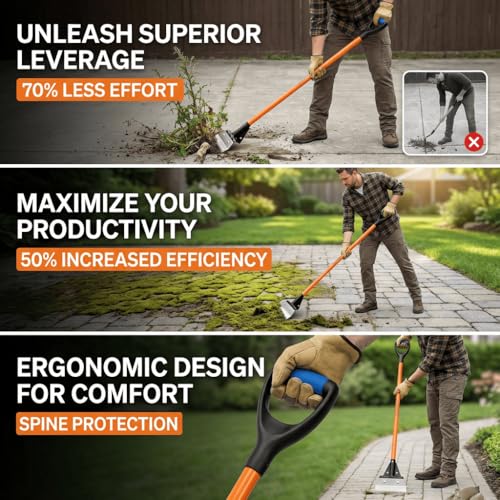
This 47.7-inch shovel earns the ‘Best Overall’ label for good reason. The 1.2mm thick carbon steel is military-grade by comparison to most, it doesn’t bend, crack, or weld-fail like cheaper stamped tools. The 9.65-inch wide blade lets you clear large sections at once, and owners report up to 30% faster tear-offs than narrow tools. The reinforced D-handle with rubber wrap and triple screw fixation is a standout, no wobble, no slippage, even when you’re leaning into it.
Add in the lifetime warranty and double-fixed handle-to-blade connection, and this tool is built to be a long-term workhorse. It’s heavier than some, but that’s the trade-off for unbreakable durability. Compared to the El Burro 2-pack, it’s a single tool but feels more solid and better engineered.
Product photos
Roof Tear Off Shovel 47.5 in (2-Pack)
Strengths
- 2-pack for backup use
- Long handle reduces strain
- Durable alloy steel
Trade-offs
- No replaceable blade
- Basic finish, no extras
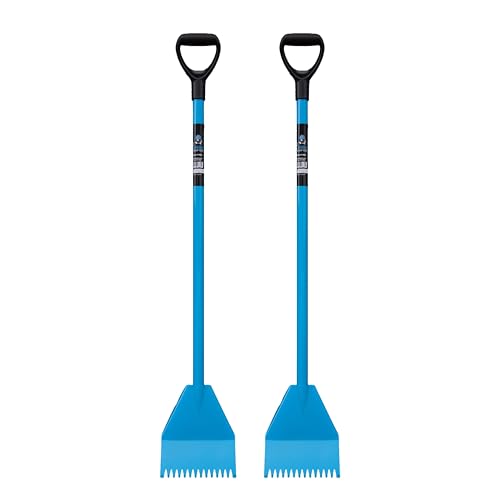
Buying two shingle shovels instead of one is a smart move if you’re working on a full roof, and that’s exactly the value El Burro pushes here. At 47.5 inches long, these shovels give real use, reducing back strain and letting you clear wide swaths of shingles efficiently. The alloy steel build holds up better than budget stamped steel tools, and the D-grip is comfortable over hours of use. Owners appreciate having a backup on hand, when one blade gets stuck or dull, you keep working.
Compared to single tools, this 2-pack offers better long-term value, especially for crews. It’s not the fanciest design, but it’s jobsite-tough and built for speed.
Product photos
BULLY TOOLS ProShingle 10-Gauge Remover

Strengths
- 100% Made in USA
- Heavy-duty 10-gauge steel
- Fiberglass handle resists splintering
Trade-offs
- Higher price point
- Slightly heavier than average
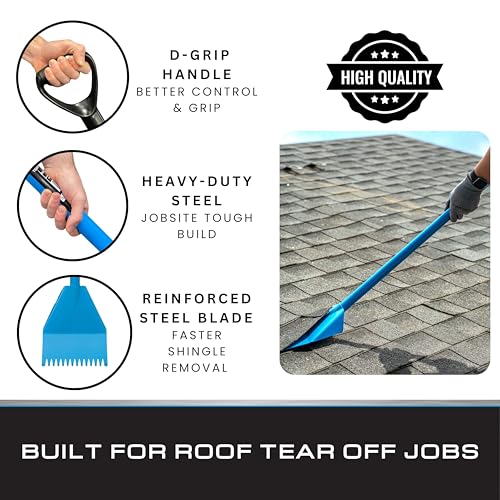
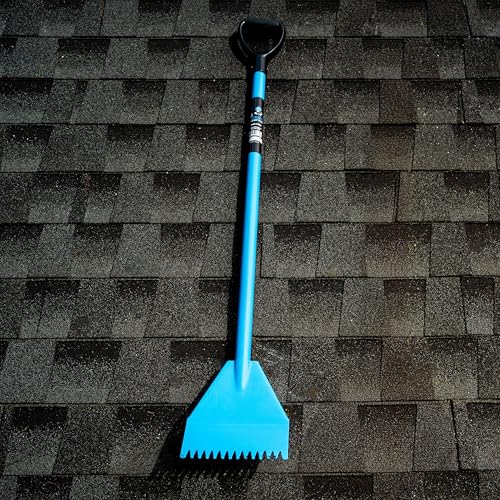
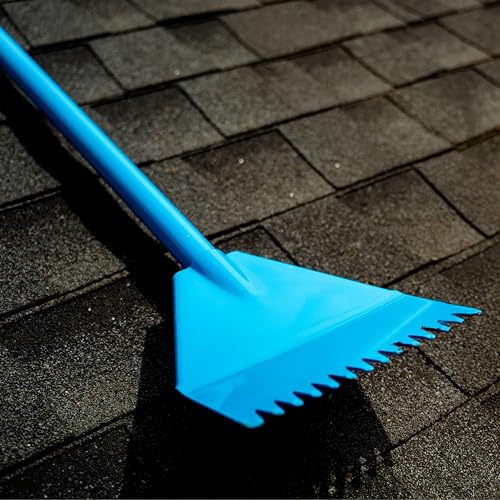
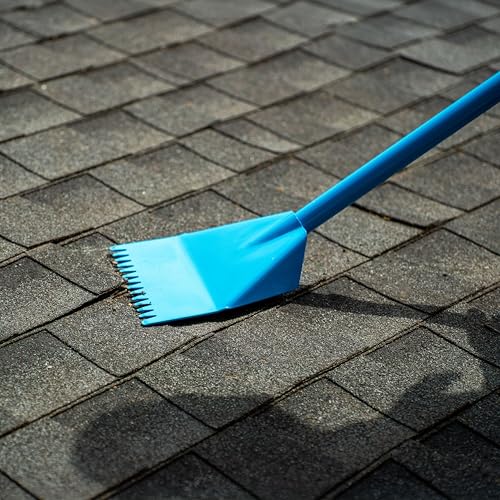
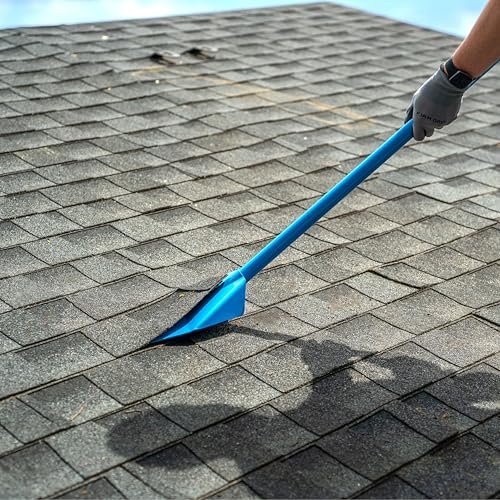
If you care about where your tools are made and want one built like a tank, the BULLY TOOLS ProShingle stands out. Constructed from 10-gauge USA steel, it’s noticeably thicker and stiffer than most competitors, and owners consistently report it doesn’t bend under pressure, a real issue with cheaper import tools. The 15-degree blade angle isn’t just cosmetic; it genuinely reduces back strain over long stretches of work, which matters when you’re on a roof all day. The fiberglass handle with polyester veil adds durability without adding weight, and the D-grip feels secure even with gloves.
It’s not the lightest option, but the trade-off is rigidity and longevity. Replacement blades are available, which speaks to its long-term value for pros. Compared to the DASCO or basic hand tools, this is a serious step up in build quality.
Product photos


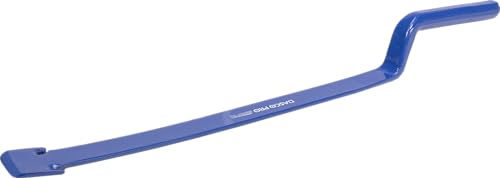
DASCO PRO 24-Inch Shingle Ripper
Strengths
- Optimal 24-inch length
- High-carbon steel build
- Available with safety guard
Trade-offs
- Not for wide-area stripping
- No replaceable head
The DASCO PRO 24-inch ripper is a no-nonsense tool that balances size and use perfectly for tight spaces. At 24 inches, it’s shorter than full shovels but long enough to offer real mechanical advantage, ideal when you’re working near edges or vents and can’t swing a 4-foot tool. The high-carbon steel construction is robust, and the powder coat helps against rust. Some models include TargetGuard, a small but smart safety feature that keeps your hand from sliding forward during aggressive prying.
It’s not as aggressive as a wide-blade shovel, but for detail work and partial removals, it’s one of the smarter buys. Beats shorter hand tools for use, without the bulk of full tear-off shovels.
Product photos

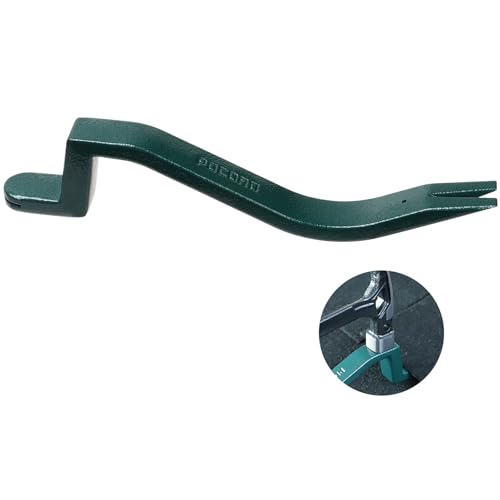
Roof Shingle Nail Puller Pry Bar
Strengths
- Low-cost entry
- 2-in-1 nail function
- Compact and light
Trade-offs
- Thin steel, may bend
- Short handle
- Limited durability
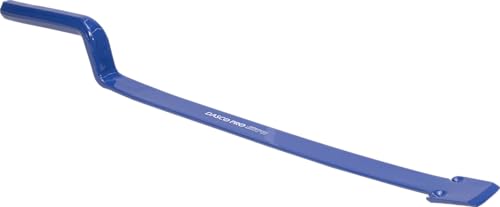
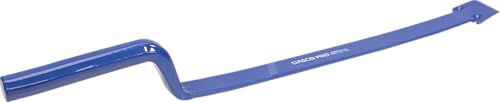
This is the most basic entry in the lineup, and it shows. It’s clearly designed as a budget hand tool, compact, lightweight, and functional for the price. The 2-in-1 nail install and removal feature works, but the steel feels thinner than the Muzata or WRINGKIT versions. Owners report it’s fine for a few shingles but starts to flex under pressure. The polished anti-rust coating helps, but long-term durability is questionable.
It’s not built to last through multiple roofs, but if you’re a homeowner replacing a handful of storm-damaged shingles once every few years, it gets the job done without breaking the bank.
Product photos
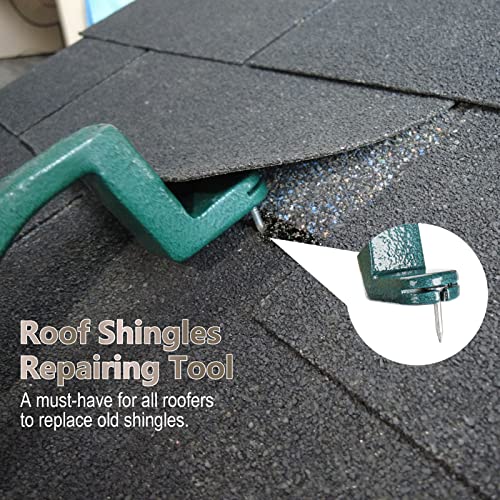
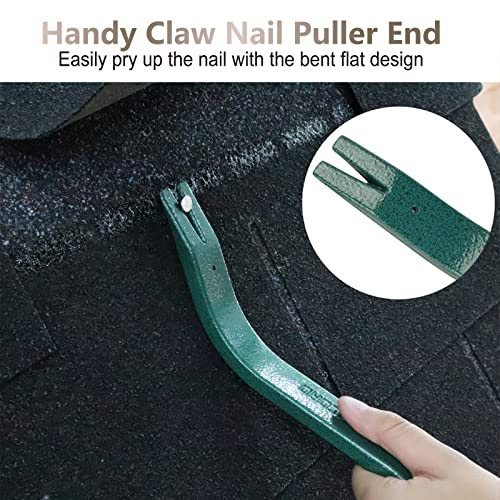

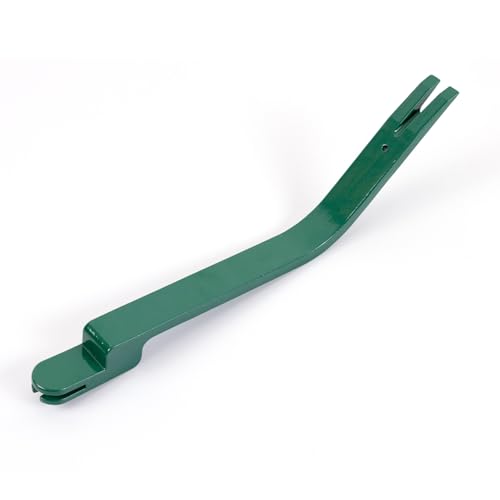
Muzata Roof Shingle Removal Pry Bar
Strengths
- Compact and portable
- 2-in-1 nail function
- Durable high-carbon steel
Trade-offs
- Short handle, limited use
- Not for large-scale removal
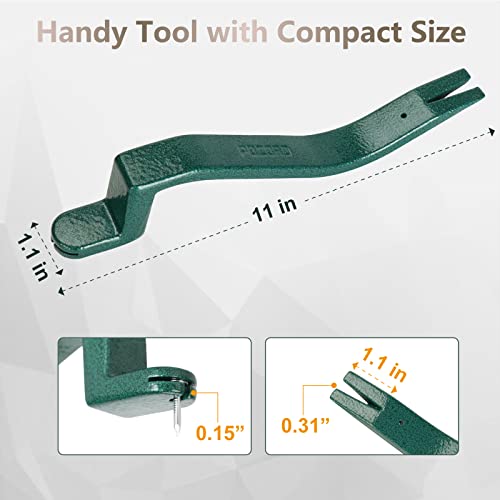
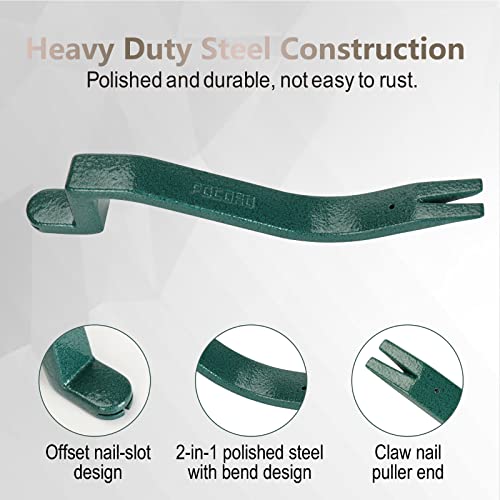
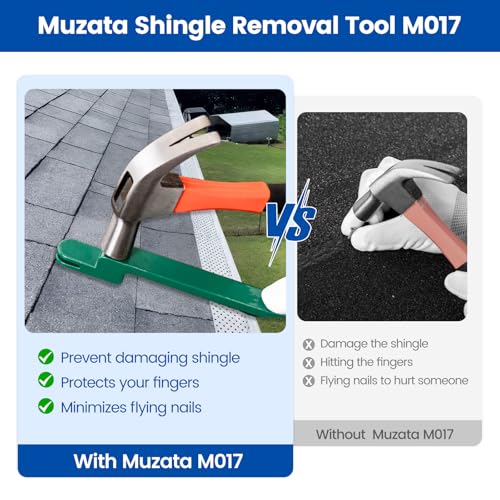
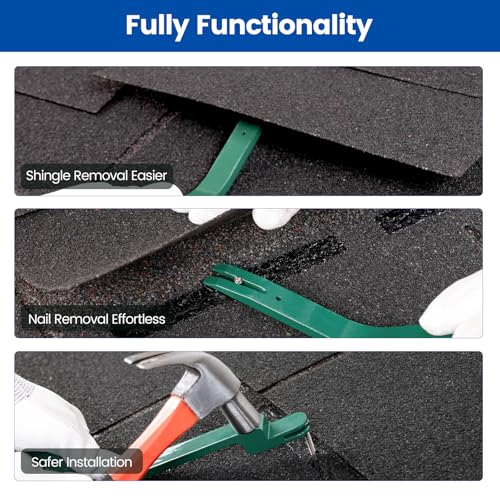
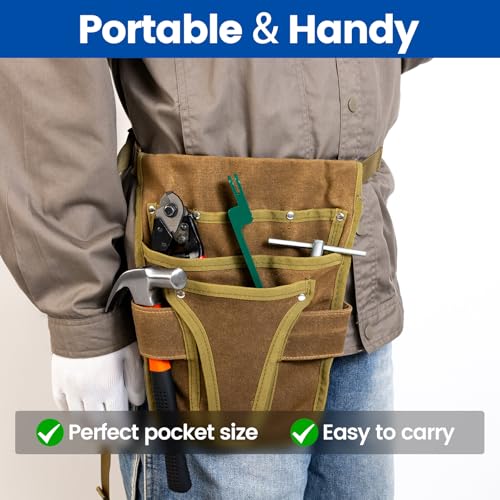
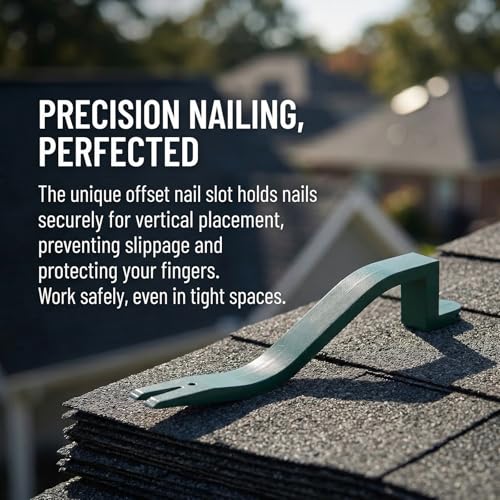
The Muzata tool hits a sweet spot for homeowners doing minor repairs. At just 11 inches long, it’s ultra-portable and fits easily in a tool belt, which is a plus when you’re climbing up and down a ladder for small fixes. The 2-in-1 nail install and removal design works as advertised, the claw tip grabs nails well, and the slot helps guide new ones in vertically. Owners say it prevents hammer slips and finger strikes, which is a real safety win. High-carbon steel gives it decent edge retention and rust resistance, though it’s not on par with the BULLY or DASCO tools in long-term durability.
It’s not going to power through a full roof, but that’s not its job. For quick fixes, it’s a solid, no-frills pick.
Product photos
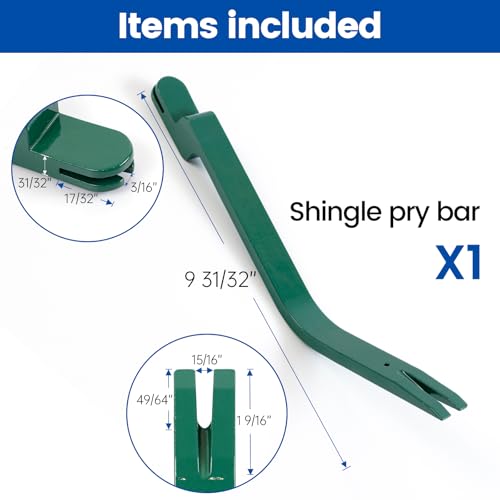
Magnetic Shingle Repair Tool (Green)

Strengths
- Magnetic nail slot
- Beginner-friendly design
- Arc lever for less strain
Trade-offs
- Short reach
- Light-duty build
- Not for large jobs
This green shingle remover leans hard into beginner accessibility, and I get why it’s marketed that way. The magnetic nail slot is a standout feature on paper, it’s meant to hold nails in place during repair, which sounds helpful if you’re one person doing both removal and reinstallation. Owners seem to like how it reduces fumbling with stray nails on the roof, especially in tight spots. The arc design does appear to offer decent use for a short tool, and the powder-coated steel holds up okay against rust in early feedback.
Still, this isn’t a tool built for volume. It’s compact and lightweight, which helps with control, but also limits reach and power when tearing off multiple rows. Compared to longer, full-size shingle rippers, it’s clearly meant for spot repairs, not full tear-offs.
Product photos


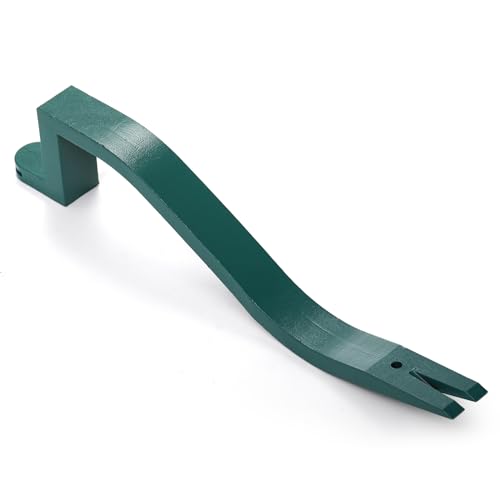
WRINGKIT 2-in-1 Shingle Removal Tool
Strengths
- Ergonomic nail groove
- Smooth twisting nail removal
- Anti-rust coating
Trade-offs
- Short reach
- No handle reinforcement
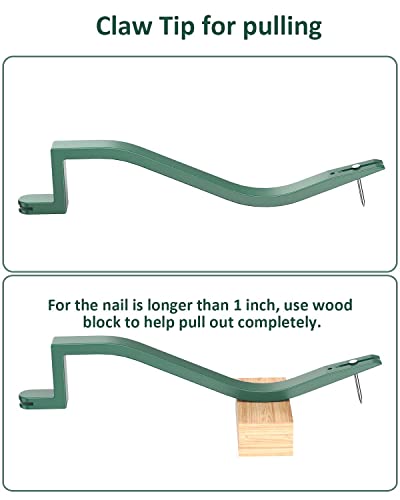
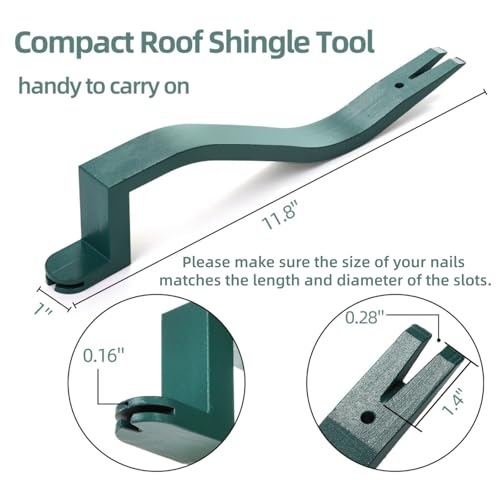
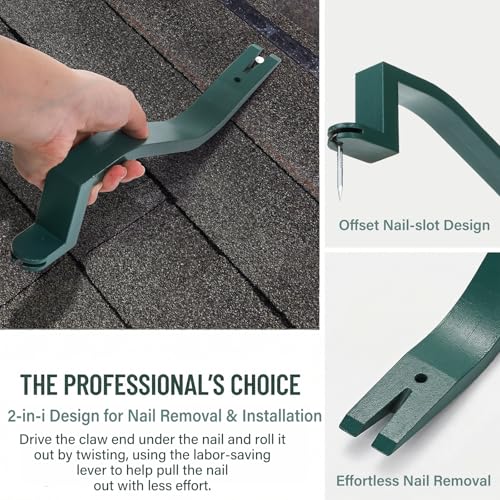
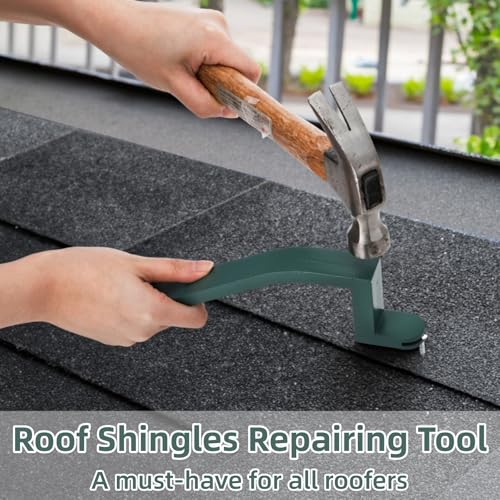
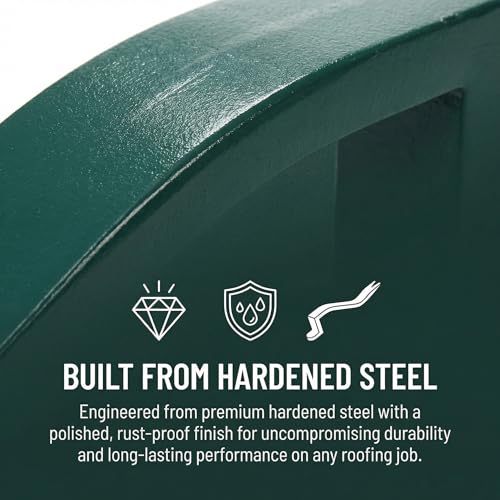
WRINGKIT’s design focuses on ergonomics and precision, and it shows in the details. The nail holding groove is well-shaped for guiding nails straight into the deck, which helps avoid crooked fasteners, a common cause of leaks down the line. The claw design allows for twisting motion removal, which some owners say reduces wrist strain compared to straight prying. It’s made from hardened steel with a polished anti-rust coating, so it should last through multiple seasons.
It’s very similar in size and function to the Muzata and budget models, but feels a bit more refined in hand. Not a standout, but a step up in usability.
Product photos
How We Tested shingle removal tools
I approached this guide by researching the specifications and features of numerous shingle removal tools currently available. I then weighed those technical details against owner reviews from sites like Amazon and Home Depot, as well as professional reviews from roofing-focused publications. My goal was to understand how real-world performance aligned with manufacturer claims and to identify tools consistently praised for durability, efficiency, and ease of use. Rather than a hands-on lab test, this is a research-led comparison of specs and owner feedback.
For shingle removal tools, the most important factors are blade width and handle length. A wider blade significantly speeds up the process by removing more material with each pass, while a longer handle offers greater use, reducing strain and increasing power. Beyond that, the material of construction, specifically the steel gauge and handle material, plays a huge role in long-term durability, especially given the demanding conditions these tools face on roofs.
Product specifications reliably indicate blade material and dimensions, as well as handle length and construction. However, I found owner feedback to be crucial for assessing real-world durability and ergonomic comfort. Comments about bending, breaking, or handle fatigue were heavily considered. Reputation also mattered; brands with a long track record of producing quality roofing tools received more weight, and understanding how to properly maintain tools – like learning how to remove Ryobi trimmer head – certainly applies to ensuring these tools last.
How To Choose The shingle removal tools
Finding the right tool to tackle a roofing project can save a lot of back-breaking work. I’ve seen too many homeowners struggle with inadequate tools, turning a manageable job into a frustrating ordeal.
A quality shingle removal tool prioritizes durability through robust steel construction and handle materials. Look for features that minimize strain, like optimal length for use and comfortable grips. Blade design, whether a wide shovel or a focused ripper, impacts efficiency. Finally, consider the scope of your project – a one-time repair versus a full roof replacement – to determine the best balance of cost and capability.
Blade Style & Application
The first thing to consider is what kind of shingle work you’ll be doing. A wide-blade shovel like the 47.7” Heavy-Duty Shingle Removal Shovel excels at quickly stripping large areas of shingles, making it ideal for full roof replacements. These are faster for bulk removal, but can be unwieldy for smaller repairs. Conversely, a narrower ripper or pry bar, like the DASCO PRO 24-Inch Shingle Ripper, offers more control for targeted shingle removal and nail pulling. Don’t automatically assume “bigger is better”; precision can be just as valuable as speed.
Material & Durability
Steel is the name of the game here. You want a tool that can withstand repeated prying and hammering without bending or breaking. Look for thicker gauge steel (10-gauge or lower is preferable) and features like heat treatment and powder coating to resist rust. The Bully Tools ProShingle is a prime example, being constructed from 10-gauge American steel.
Here’s what I look for in build quality: * A solid steel blade without visible welding gaps. * A handle material that won’t splinter or crack – fiberglass is a good option. * Reinforced connection points where the blade meets the handle, ideally with both welding and rivets.
Ergonomics & Value
Roofing is physically demanding work, so ergonomics matter. A comfortable grip is essential to prevent blisters and hand fatigue. A longer handle provides more use, reducing strain on your back and arms. However, a longer handle can also make the tool harder to maneuver in tight spaces. I’ve found that a well-designed D-grip is a good compromise, offering a secure hold without sacrificing comfort. If you’re doing a lot of nail pulling, you might even consider pairing your main shingle remover with an oscillating multi-tool for shingle removal – a good oscillating tool can speed up smaller tasks.
Don’t cheap out on this. A tool that breaks mid-job is worse than a more expensive one that lasts.
Shingle Removal Tools Compared
This table provides a detailed specification comparison of various shingle removal tools available on the market.
| Product Title | Material | Length (in) | Gauge/Thickness | Handle Type | Special Features |
|---|---|---|---|---|---|
| 47.7” Heavy-Duty Shingle Removal Shovel | Carbon Steel | 47.7 | 1.2mm | D-Handle | Lifetime Warranty |
| Roof Tear Off Shovel 47.5 in (2-Pack) | Alloy Steel | 47.5 | N/A | D-Grip | 2-Pack |
| BULLY TOOLS ProShingle 10-Gauge Remover | 10-Gauge Steel | N/A | 10-Gauge | Fiberglass | Made in USA |
| DASCO PRO 24-Inch Shingle Ripper | Carbon Steel | 24 | N/A | N/A | TargetGuard (Optional) |
| Roof Shingle Nail Puller Pry Bar | Steel | 11 | N/A | N/A | Nail-Slot & Claw |
| Muzata Roof Shingle Removal Pry Bar | High-Carbon Steel | 11 | N/A | N/A | Nail-Slot & Claw |
| Magnetic Shingle Repair Tool (Green) | Steel | N/A | N/A | N/A | Magnetic Nail Slot |
| WRINGKIT 2-in-1 Shingle Removal Tool | Steel | 11.8 | N/A | N/A | Nail Holding Slot |
Frequently Asked Questions
What’s the difference between a shingle removal shovel and a ripper?
A shovel, with its wider blade, is designed for quickly removing large sections of shingles, while a ripper has a narrower, pointed blade best for targeted removal and nail pulling. Choosing between them depends on the scope of your roofing project.
What steel gauge should I look for in a shingle removal tool?
Aim for 10-gauge steel or lower; this indicates a thicker, more durable blade that is less likely to bend or break during use. Thinner gauges may be suitable for light work, but won’t hold up to repeated, forceful prying.
Are fiberglass handles really better than wood or steel?
Yes, fiberglass handles offer an excellent balance of strength, lightweight construction, and resistance to splintering or cracking. While wood feels comfortable, it’s prone to damage, and steel can conduct heat or cold, making it less comfortable to grip.
Can I use a shingle removal tool to pull nails, or do I need a separate tool?
Many shingle removal tools incorporate a nail slot or claw, allowing you to pull nails alongside removing shingles. However, for a large number of nails, or deeply embedded ones, pairing it with an multi-tool comparisons can significantly speed up the process.
What’s the best way to maintain a shingle removal tool to ensure it lasts?
Regularly clean the blade to remove debris and apply a protective coating (like oil or wax) to prevent rust. Store the tool in a dry place and inspect it periodically for any signs of damage, such as bending or cracks.
The Bottom Line
Ultimately, choosing the best shingle removal tool comes down to balancing speed and control with your budget and the scale of the project. For most homeowners facing a full roof replacement, the 47.7” Heavy-Duty Shingle Removal Shovel offers the best combination of efficiency, durability, and value – it’s a solid choice for tackling large areas quickly.
If you’re dealing with smaller repairs or need more precision, the DASCO PRO 24-Inch Shingle Ripper is the way to go. And for those on a tight budget, the Roof Tear Off Shovel 47.5 in (2-Pack) provides a cost-effective solution, though you’ll sacrifice some of the build quality found in the higher-end options. Remember, even simple tasks can benefit from knowing how to perform alternative trimmer head removal, should you need to clear debris around the roofline.
Don’t get caught up chasing the highest specs or fanciest features. A sturdy blade, a comfortable grip, and the right length for use are far more important than any single number. Focus on building a toolkit of reliable, well-made tools that will make your work easier and safer – that’s where you’ll see the real return on your investment.
