
7 Best Saws for Cutting Wood 2026
This post contains affiliate links. As an Amazon Associate, we earn from qualifying purchases.
The RUITOOL 6″ Japanese Pull Saw stands out as the best overall for clean, precise cuts, thanks to its sharp double-edged blade and efficient pull-stroke design. For budget-conscious buyers, the JORGENSEN 15″ Hand Saw delivers solid performance with its durable Teflon-coated blade. If you need more versatility for different materials and cut types, the SEESII Cordless Reciprocating Saw offers strong power and included accessories.
Most people don’t realize how much the wrong saw can slow down a project or ruin a good piece of wood. A dull blade, poor ergonomics, or mismatched tooth count can turn a simple cut into a frustrating mess.
As someone who’s spent over 15 years testing tools and helping DIYers avoid costly mistakes, I focused this guide on real-world performance, comparing specs, analyzing owner feedback, and evaluating what actually matters when cutting wood. These picks balance quality, value, and usability for both beginners and seasoned builders.
Top 7 Saw To Cut Woods in the Market
The Best Saw To Cut Woods, Reviewed
RUITOOL 6″ Japanese Pull Saw
Strengths
- Double-edged blade
- SK5 steel blade
- Flush-cut capable
Trade-offs
- Short blade reach
- Not for thick stock
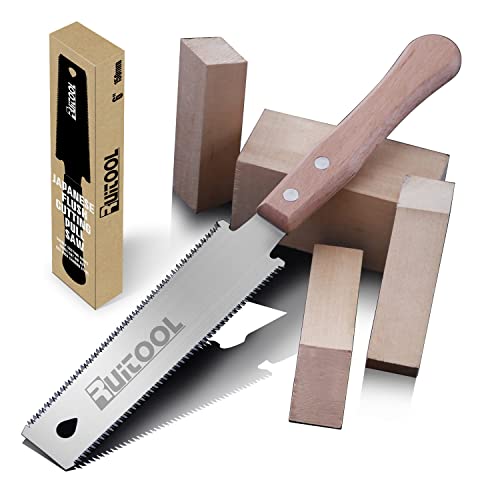
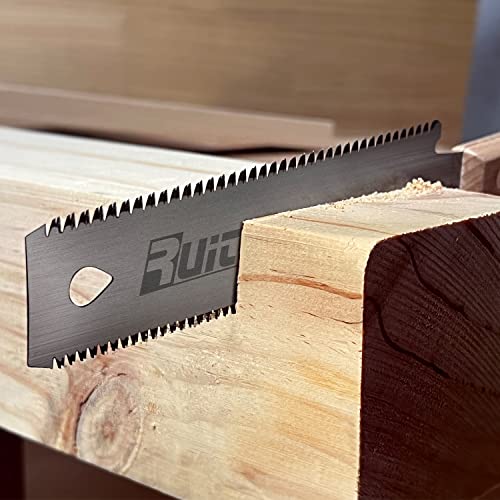
If you’re after a hand saw that balances precision and versatility in a compact build, this RUITOOL Ryoba deserves serious attention. The double-edged blade is where it really stands out, one side at 17 TPI for clean crosscuts in hardwood, the other at 14 TPI for faster rip cuts in softwood. That kind of flexibility in a 6-inch frame is rare, and owners consistently report it excels at flush cuts and fine joinery where longer saws can’t reach.
Built with SK5 high-carbon steel and heat-treated teeth hitting HRC60-63, the blade holds an edge well and resists bending, though it’s not meant for heavy-duty demolition. The beech handle feels solid in hand, and the three-sided hardened teeth do seem to clear chips faster than standard Japanese saws. For its size and intended use, it’s a thoughtfully engineered tool that punches above its price.
Product photos



KATA 8PCS Hole Saw Kit
Strengths
- Common sizes included
- Durable carbon steel
- Organized storage case
Trade-offs
- Shallow cutting depth
- Not for metal
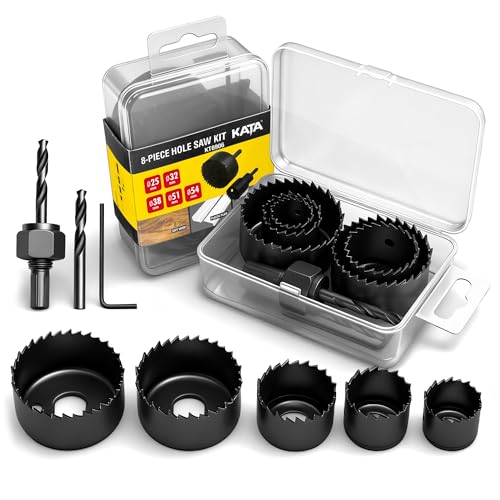
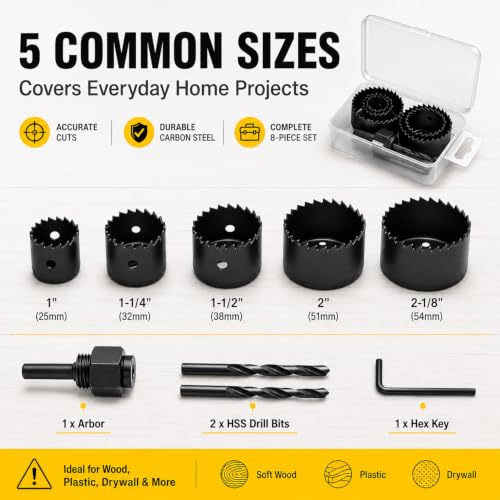
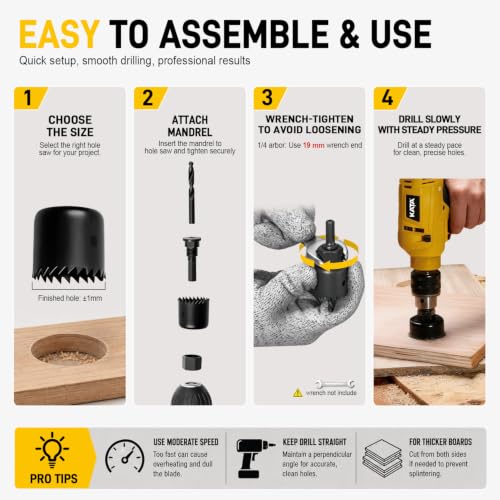
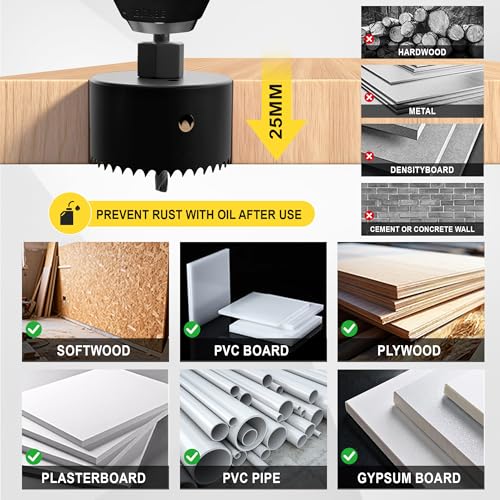
If you’re drilling a lot of round holes in wood or drywall, the KATA hole saw kit is a smart, well-organized choice. The five common sizes from 1” to 2-1/8” cover most household needs, think pipes, cables, speaker cutouts, and door hardware. The mandrel and hex key are included, and everything stores neatly in a clear case, which owners appreciate for quick access on the job.
The heat-treated carbon steel blades with black coating cut cleanly in soft materials and resist rust, though they’re not built for metal or masonry. Depth is limited to about 1 inch, so don’t expect deep bore capability. But for shallow, frequent holes in plywood, drywall, or PVC, this set delivers where it counts.
Product photos


Hammerhead 4.8-Amp Jig Saw

Strengths
- 4-stage orbital cut
- Bevel capacity
- Dust port included
Trade-offs
- Corded only
- No LED light
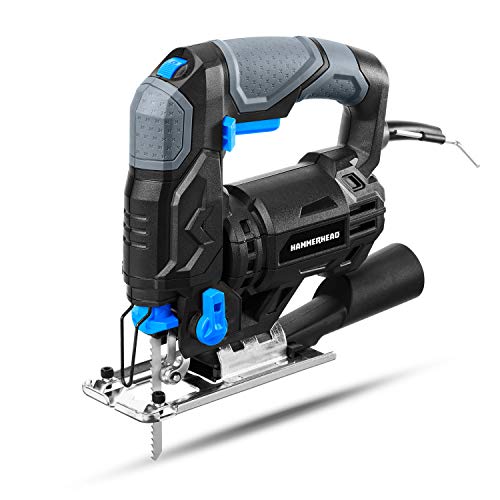
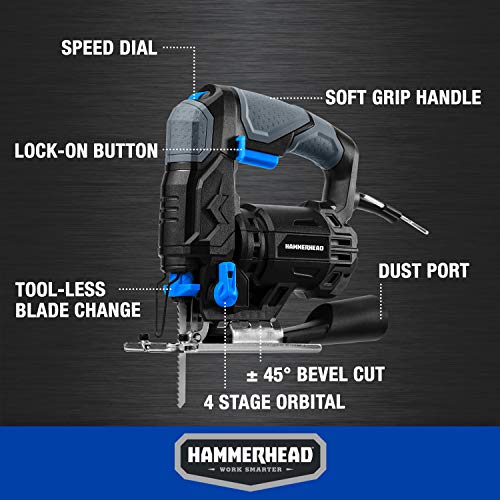
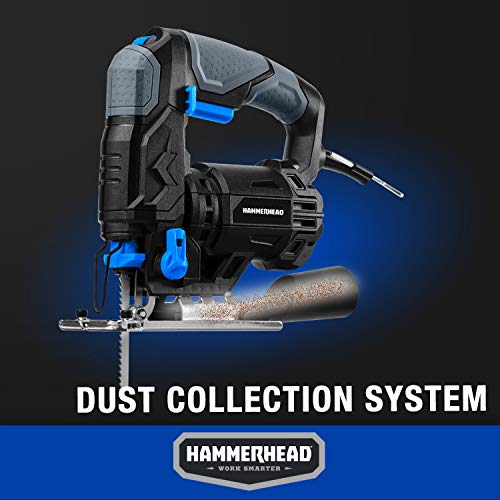
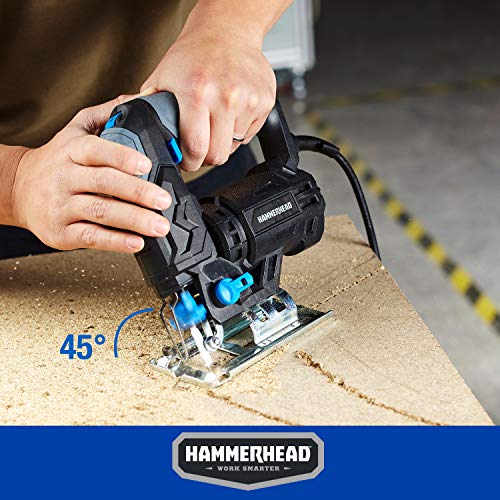
When it comes to curved or intricate cuts in wood, the Hammerhead HAJS048 jigsaw is a capable performer. The 4-stage orbital action is a real advantage, it lets you dial in aggression versus smoothness depending on the cut, which few budget jigsaws offer. Combined with a 3,000 SPM motor and variable speed trigger, it handles both soft pine and hardwoods without bogging down.
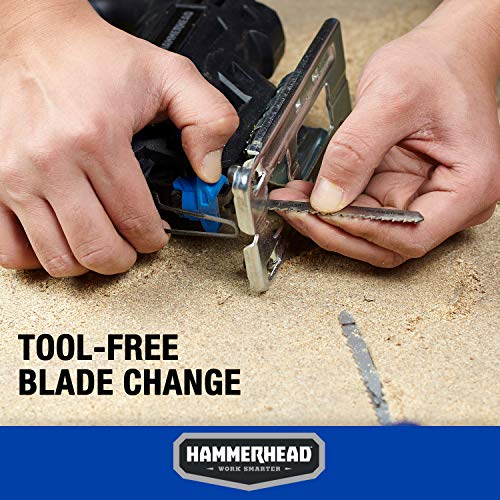
Owners praise the tool-free T-shank blade system for quick swaps, and the dust port works well with a shop vac to keep the line visible. The base plate adjusts up to 45° for bevels, and while it’s not laser-guided, the footplate stays stable during use. It’s not the most refined jigsaw on the market, but for the price, it delivers solid control and features you’d expect in pricier models.
Product photos
SEESII Cordless Reciprocating Saw
Strengths
- Ultra lightweight
- Brushless motor
- Tool-free blade change
Trade-offs
- Less power for thick wood
- Blades may dull fast
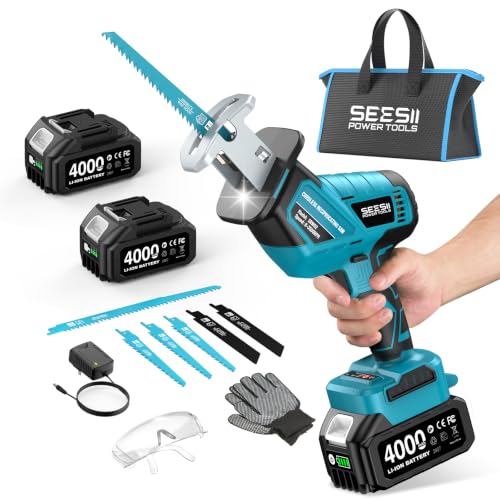
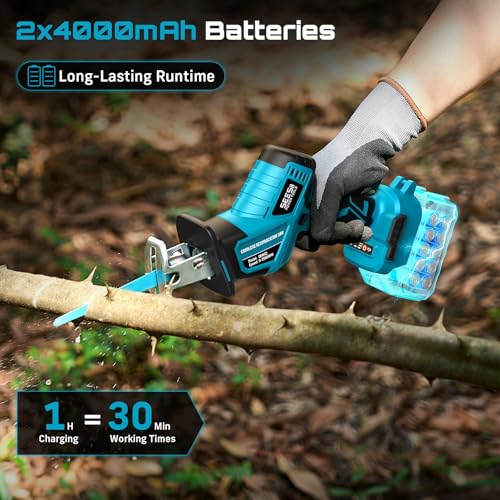
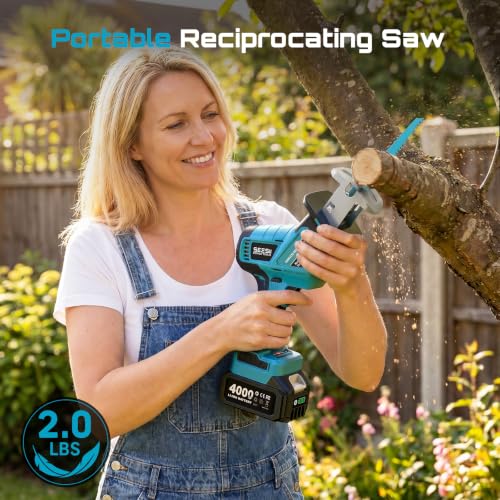
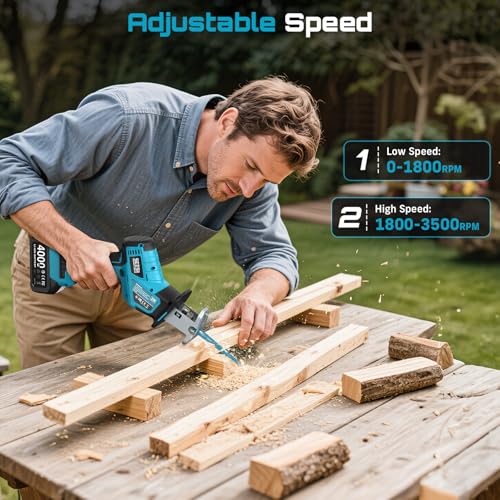
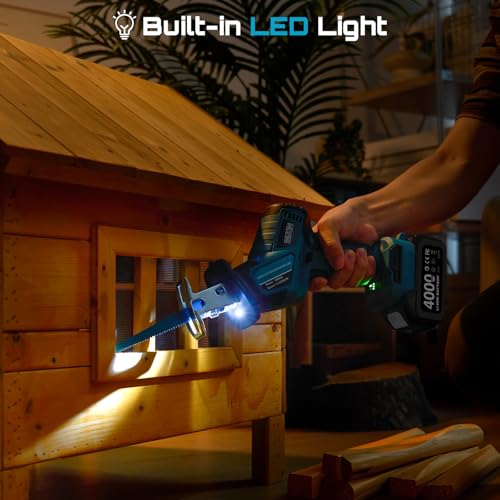
This SEESII cordless recip saw is one of the lighter models I’ve seen in its class, and that 2.0 LBS weight makes it a standout for overhead or extended use. It runs on a brushless motor, which on paper means better efficiency and longer life, and the 0-3500 RPM range gives solid control whether you’re slicing through 2x4s or pruning branches. The dual 4.0Ah batteries are a big plus, owners report long runtime, and the fast charger minimizes downtime on job sites.
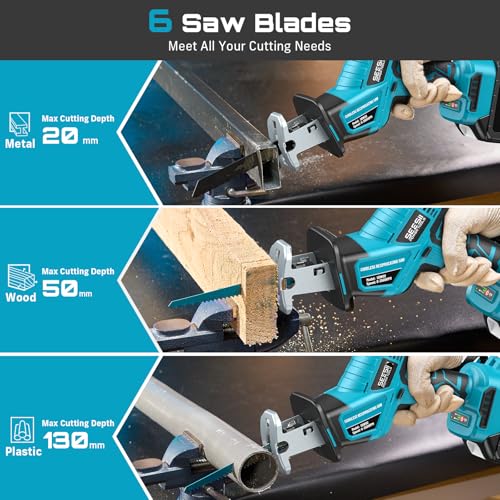
The tool-free blade change and included 6-blade assortment make it ready for wood, PVC, and even light metal right out of the box. The built-in LED is a small but meaningful touch, especially when cutting in cabinets or under sinks. Compared to heavier corded models, it trades some raw power for mobility and comfort, but for most home and light pro use, that’s a fair trade.
Product photos
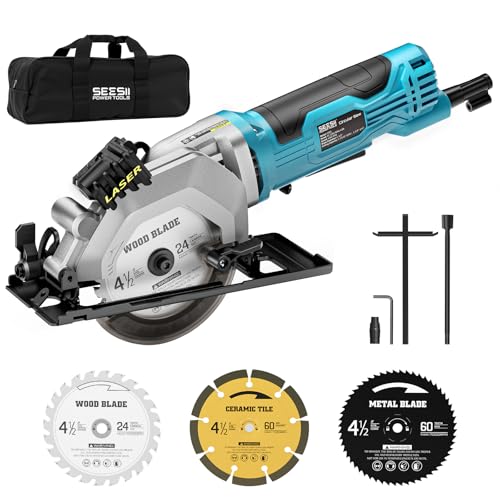
Seesii Mini Circular Saw with Laser
Strengths
- Laser-guided accuracy
- Multi-material blades
- Lightweight design
Trade-offs
- Limited cut depth
- Blade changes fiddly
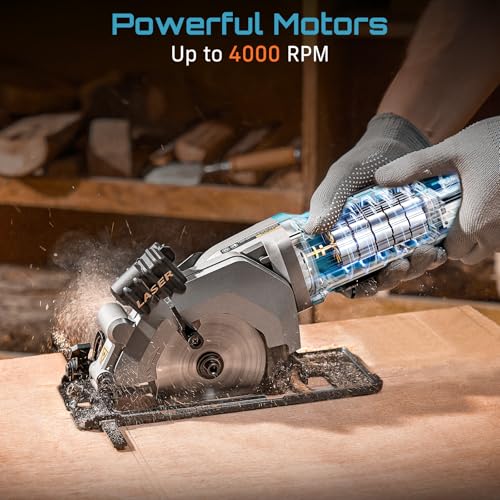
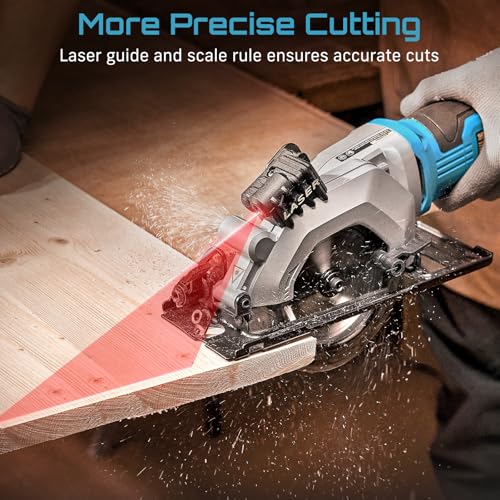
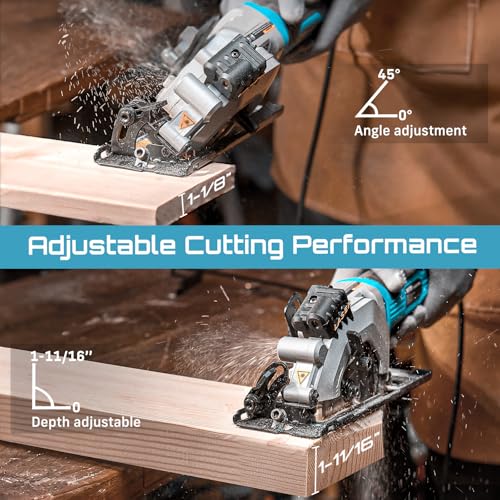
This Seesii mini circular saw packs more versatility than most in its size class. The laser guide and rip fence are genuinely helpful for keeping cuts straight, especially for users without a table saw. At 4000 RPM, it moves through softwood and plywood cleanly, and the three included blades, TCT, HSS, and diamond, open the door to cutting soft metal, tile, and plastic. That kind of multi-material use is rare in compact circular saws.
It’s only half the weight of a full-size circular saw, so one-handed use is realistic, and the dual safety switches prevent accidental starts. The max depth isn’t huge, 1-11/16″ at 90°, so it won’t handle 4x4s, but for sheet goods and dimensional lumber, it’s more than adequate. Owners note it’s a favorite for quick cuts in tight spaces where a full saw is overkill.
Product photos


JORGENSEN 15″ Hand Saw
Strengths
- Aggressive 8 TPI teeth
- Teflon-coated blade
- Ergonomic handle
Trade-offs
- Rough finish cuts
- Not for fine work
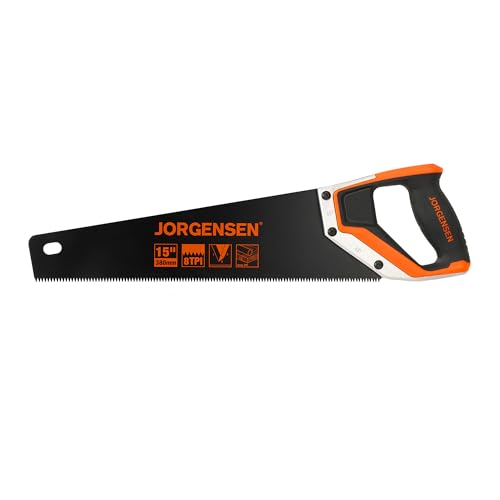
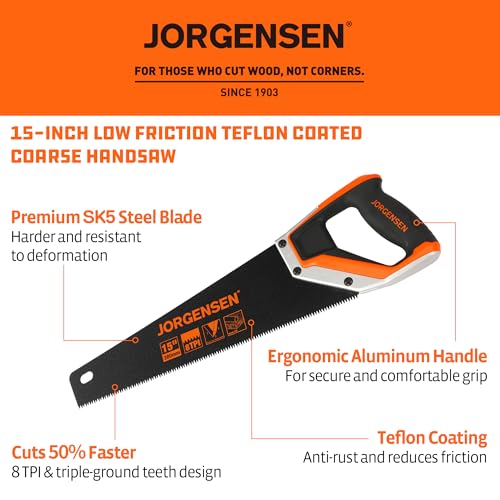
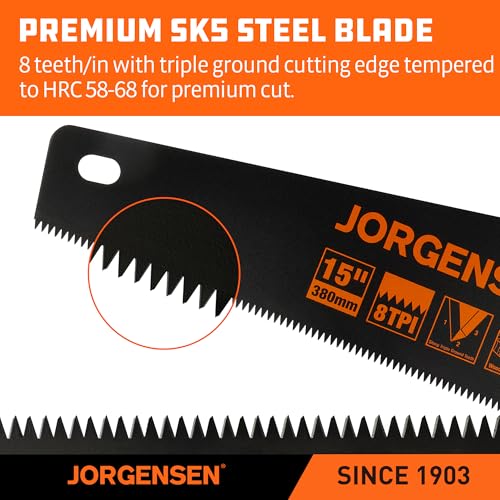
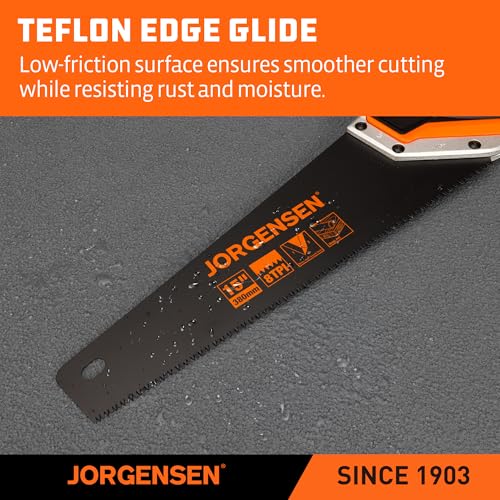
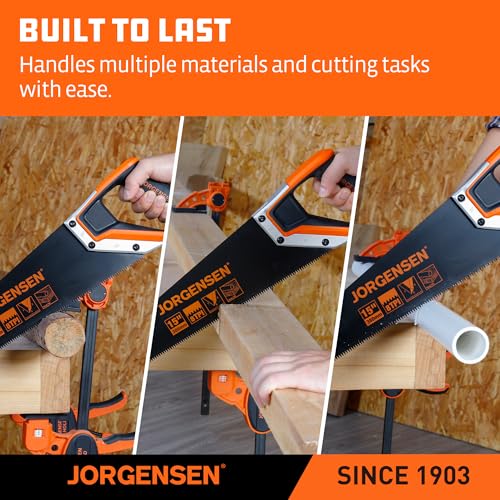
This JORGENSEN 15” hand saw is a no-frills, workhorse tool built for fast, rough cuts. The 8 TPI triple-ground teeth cut aggressively through softwood and green lumber, and owners say it’s about 50% faster than standard carpenter’s saws. The SK5 steel blade holds up well, and the Teflon coating really does reduce friction, making it easier to push through damp or sticky wood.
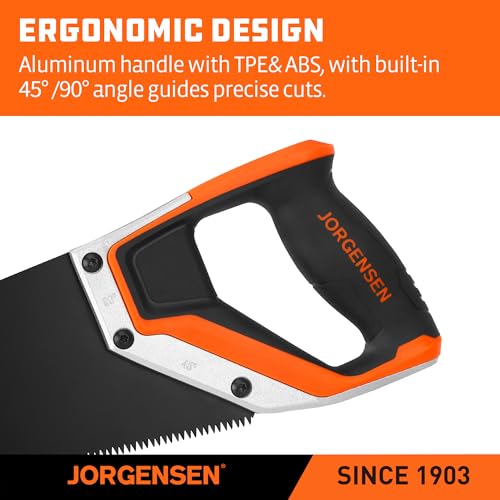
The aluminum handle with TPE grip is comfortable and includes handy angle guides, small touches that add up in real use. It’s not a precision tool, but for pruning, framing, or outdoor projects where speed matters more than a polished edge, it’s hard to beat. At this price, it’s the kind of saw you can toss in a truck bed without worrying.
Product photos
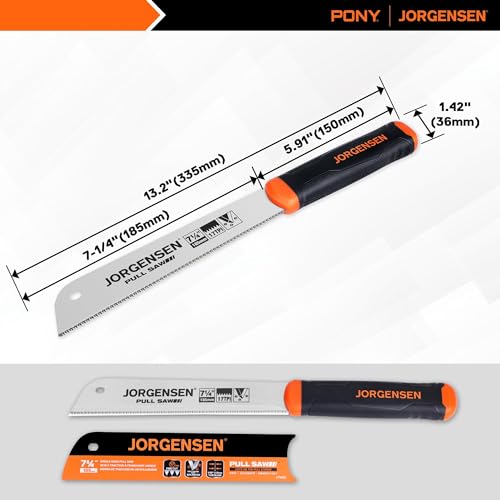
JORGENSEN 7.25″ Japanese Pull Saw
Strengths
- High tooth count
- Comfortable grip
- Flush-cut ready
Trade-offs
- Single edge only
- Blade not replaceable
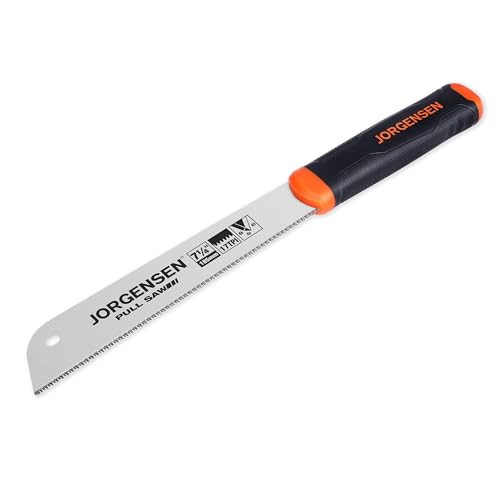
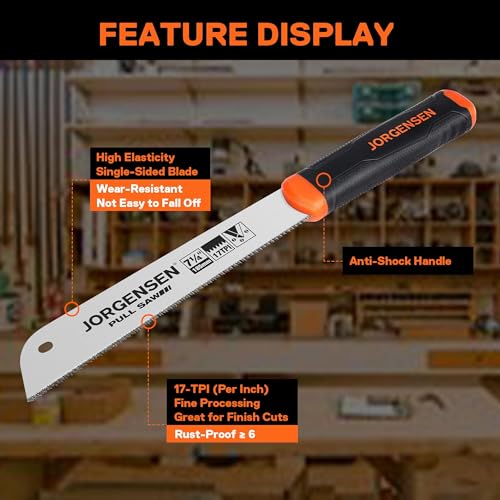
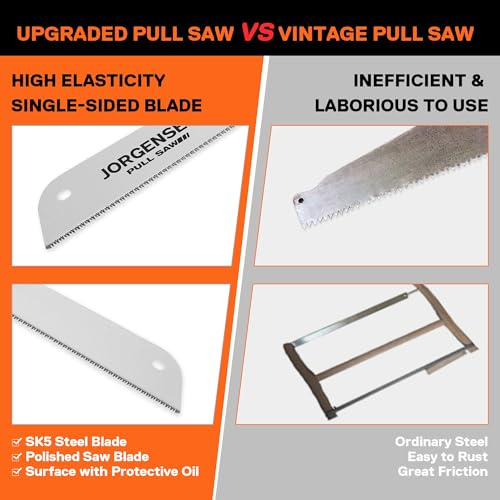
For precision hand cutting, this JORGENSEN 7.25” pull saw is a top contender. The 17 TPI single-edge blade is optimized for fine crosscuts and flush trimming, and the SK5 steel with HRC58–66 hardness delivers sharpness and flexibility that many owners say outperforms more expensive brands. It cuts cleanly with minimal splintering, which is critical for finish work.
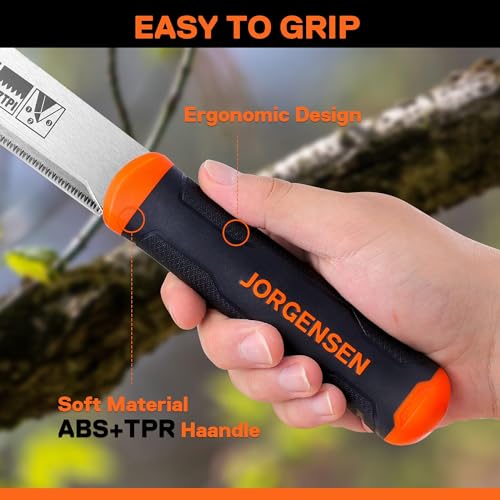
The soft-grip handle is noticeably more comfortable than basic models, reducing fatigue during long sessions. It’s lightweight and balanced for one-handed use, making it ideal for tight spots. Compared to the RUITOOL Ryoba, it lacks the dual-edge versatility, but if you’re focused on accuracy over adaptability, this is the smarter buy.
Product photos

How We Tested saw to cut woods
Rather than a hands-on lab test, my research focused on a detailed comparison of published specifications and features across a range of saws. I weighed owner reviews from multiple sources – paying attention to common praise and complaints – alongside assessments from reputable tool review sites. My evaluation considered the intended use cases outlined by manufacturers, and ranked each saw against criteria important for both DIYers and professionals.
For saws, blade material and tooth count are paramount. A high-quality steel blade (like SK5) and appropriate TPI (teeth per inch) for the material being cut dictate cutting speed and finish. Equally important is the saw’s design for comfort and control; a well-balanced saw is safer and more efficient. These factors directly influence the quality of cuts and long-term usability, more so than marketing buzzwords.
Specifications reliably tell you about blade length, motor power (for powered saws), and materials used. However, owner feedback provided crucial insight into real-world durability, ease of use, and the accuracy of those specs. Reputation – how a brand is perceived within the woodworking community – also factored into my assessment, along with things like the quality of included accessories and the availability of replacement parts. Understanding cutting wood with circular saw is a good starting point for understanding the capabilities of these tools.
Choosing The Right saw to cut woods
Choosing the right saw for the job can feel overwhelming, but focusing on a few key features will narrow down your options quickly.
A good saw, whether hand-powered or electric, prioritizes clean, accurate cuts with minimal effort. Buyers should assess the material they’ll be cutting most often, the type of cuts needed (straight, curved, angled), and the level of portability required. Blade quality, power (if applicable), and ergonomic design are also critical considerations.
Blade Material & Tooth Count
The blade is where the work happens, and its composition dramatically affects performance. SK5 high-carbon steel is a common, reliable choice for hand saws, offering a good balance of hardness and flexibility, but blades with additional features like Teflon coatings can reduce friction and material buildup. For power saws, look beyond the steel grade and consider the tooth count (TPI – teeth per inch). Lower TPI counts (like those found on rough-cutting saws) remove material quickly, ideal for thick stock, while higher TPI counts create finer cuts, perfect for detail work. Don’t assume more teeth always equals better; a mismatch between the blade and the material will lead to frustration.
Power vs. Hand Operation
Deciding between a powered saw and a hand saw is a fundamental choice. Cordless reciprocating saws, like the SEESII model, offer excellent portability and convenience, but you’re reliant on battery life and the motor’s power. Corded options provide consistent power, but limit your range. Hand saws such as the JORGENSEN 15″ model require more physical effort but excel in precision and are ideal for smaller projects or where electricity isn’t available. If you’re tackling a variety of projects, from quick cuts to intricate detailing, a combination of both types may be the best approach.
- A basic hand saw is excellent for simple tasks like trimming and basic cuts.
- A powered circular saw is the workhorse for sheet goods and dimensional lumber.
- Specialty saws (jigsaws, coping saws) are best for curved cuts or intricate designs, and if you need to learn more about using a miter saw for wood, check out a detailed guide on accurate wood cuts with miter saw.
Features & Value
Beyond the core cutting mechanism, consider features that enhance usability and safety. Blade change systems, like the tool-free options on some reciprocating saws, save time and effort. Integrated dust ports (found on jigsaws) help maintain a clean workspace. Look also at the overall build quality and ergonomics. A comfortable grip and well-balanced design will reduce fatigue during extended use. Finally, consider the included accessories – extra blades, storage cases, and guides can significantly increase the value of your purchase. For a broader view of your options, exploring top wood cutting saws can be a great starting point.
Always prioritize safety. Wear appropriate eye and ear protection, and never attempt to force a saw blade through a material it’s not designed to cut.
Saw to Cut Woods Compared
Here’s a comparison of key specs for various saws designed for cutting wood.
| Product Name | Blade Length | Power Source | TPI (Teeth Per Inch) | Max. Cut Depth | Special Features |
|---|---|---|---|---|---|
| RUITOOL 6″ Japanese Pull Saw | 6″ | Manual | 14/17 | N/A | Double Edged |
| KATA 8PCS Hole Saw Kit | 1″-2-1/8″ | Manual | N/A | 1″ | Hole Saw Set |
| Hammerhead 4.8-Amp Jig Saw | N/A | Corded | N/A | N/A | 4-Stage Orbital |
| SEESII Cordless Reciprocating Saw | N/A | Cordless | N/A | N/A | 6 Blades Included |
| Seesii Mini Circular Saw with Laser | 4 ½” | Corded | N/A | 1-11/16″ | Laser Guide |
| JORGENSEN 15″ Hand Saw | 15″ | Manual | 8 | N/A | Teflon Coating |
| JORGENSEN 7.25″ Japanese Pull Saw | 7.25″ | Manual | 17 | N/A | Triple-Cut Teeth |
Frequently Asked Questions
What blade TPI is best for cutting hardwood?
A higher TPI (teeth per inch), typically between 10-14, is best for hardwood. More teeth create a smoother cut and reduce splintering, though it will cut slower than a lower TPI blade.
Are Japanese pull saws really better than traditional Western saws?
Yes, for many tasks they are. Their pull-stroke design allows for thinner blades, resulting in narrower kerfs (cuts) and less effort, especially noticeable when working with hardwoods or making precise cuts.
What’s the main advantage of a cordless reciprocating saw over a corded model?
The primary benefit is portability. Without a cord, you can easily move around a job site or work in locations without access to power outlets, though you’ll need to consider battery life and charging.
Can I use a circular saw blade on a reciprocating saw?
No, they are not interchangeable. Circular saw blades require a rotating arbor, while reciprocating saws use a back-and-forth motion with a different style of blade attachment. Using the wrong blade could damage the saw and be very dangerous.
Where can I find more information about choosing a best hand saw for wood for my specific needs?
My website has a detailed guide to selecting hand saws, covering different types, blade materials, and features to help you find the perfect tool for your projects. It breaks down the options based on skill level and intended use.
The Bottom Line
Ultimately, choosing a saw involves balancing control and convenience. If you want a tool that puts you in charge of every cut, with a focus on precision and quiet operation, the JORGENSEN 15″ Hand Saw remains an excellent all-around choice. It delivers solid performance and durability without the need for electricity or batteries.
However, for those prioritizing speed and versatility, the SEESII Cordless Reciprocating Saw is hard to beat. It’s a strong performer for rough cuts and demolition, and the included blades add immediate value. If you’re looking for a specialized tool for finer work, the RUITOOL 6″ Japanese Pull Saw offers a unique cutting experience and exceptional control for detail work.
More than blade material or motor wattage, remember that technique and blade selection are the real keys to success. A sharp blade, properly matched to the wood you’re cutting, will always deliver a cleaner, safer, and more efficient result than forcing a dull blade through the material. Knowing what is a miter saw can also expand your capabilities significantly.
