6 Best Saw Blades for Table Saws 2026
This post contains affiliate links. As an Amazon Associate, we earn from qualifying purchases.
The DEWALT 10-Inch 80-Tooth Blade stands out as the best overall choice for clean, precise crosscuts, especially in sheet goods, while the WEN BL1060 60-Tooth Blade offers solid performance at a price that won’t strain your budget. For dedicated ripping tasks, the FOXBC 10-Inch 24-Tooth Rip Blade delivers strong value with its thin-kerf design.
Most DIYers and weekend builders struggle to find a blade that actually matches their saw and the materials they work with. Too often, a one-size-fits-all approach leads to splintered edges, excessive tearout, or unnecessary strain on the motor.
I built this guide to cut through the confusion. After comparing the field and evaluating specs alongside real owner feedback, I focused on tooth count, kerf width, and carbide quality to identify the blades that deliver reliable performance where it matters most. This isn’t about flashy features, it’s about which blades actually perform in real shop conditions.
Top 6 Saw Blade For Table Saws in the Market
The Best Saw Blade For Table Saws, Reviewed
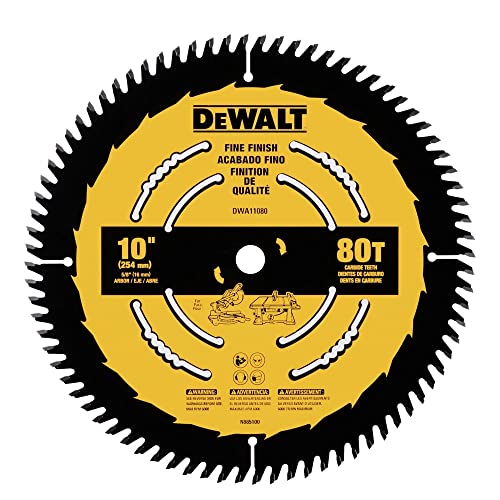
DEWALT 10-Inch 80-Tooth Blade
Strengths
- Low vibration design
- Sharp, long-lasting carbide
- High accuracy
Trade-offs
- Higher price point
- Not for ripping
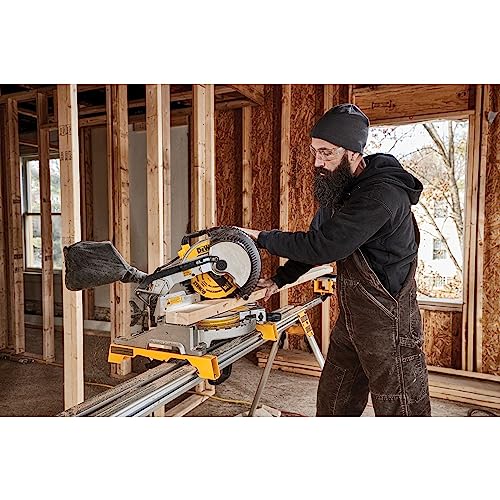
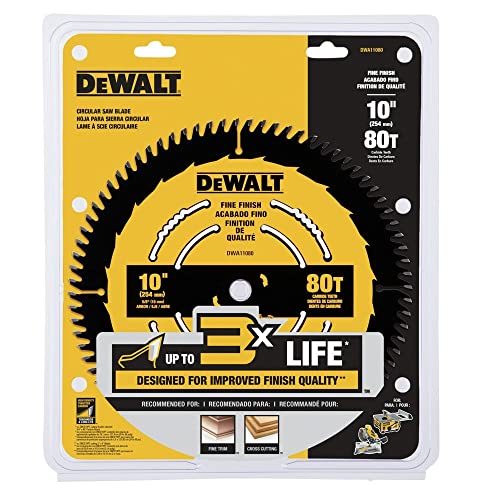
DEWALT’s DWA11080 is one of those blades that just makes sense as an everyday go-to for serious DIYers and job-site pros. The 80-tooth ATB grind delivers a fine finish, and the patented body slot design isn’t just marketing, it’s a real differentiator in reducing vibration, which owners confirm leads to smoother tracking and less chatter. The ultra-sharp carbide tips stay clean longer, and the optimized tooth geometry does seem to help with accuracy, especially when cutting sheet goods.
Compared to the FOXBC 80-tooth, this one feels more robust thanks to DEWALT’s engineering reputation and tighter quality control. It’s not the cheapest, but it’s the smarter buy if you want reliability and consistency across materials. I’d recommend this as the default fine-cut blade for most table saw owners who do more finish work than ripping.
Product photos
FOXBC 10-Inch 80-Tooth Blade

Strengths
- Excellent finish on crosscuts
- Thin kerf, less waste
- Good for plywood and melamine
Trade-offs
- Not for heavy ripping
- Plate can flex under load
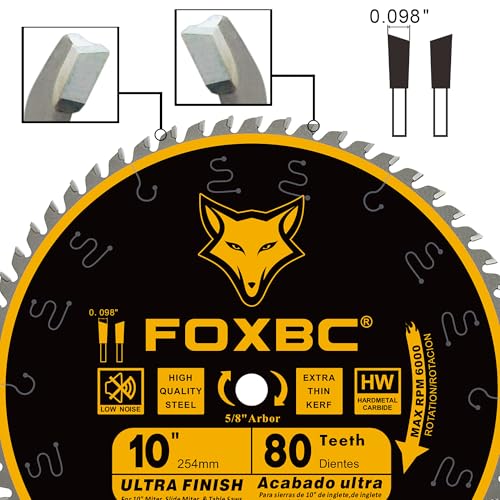
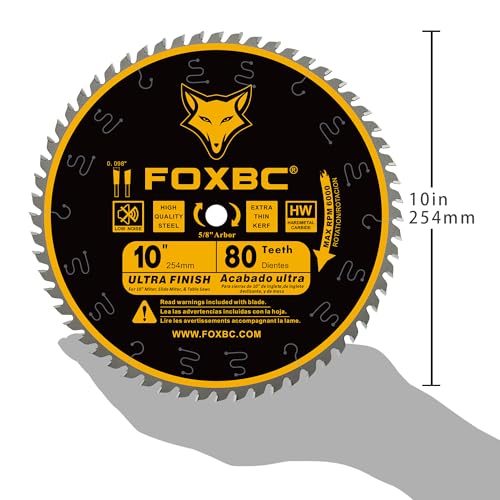
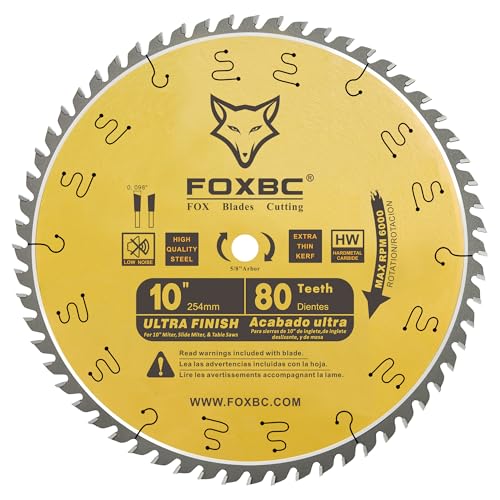
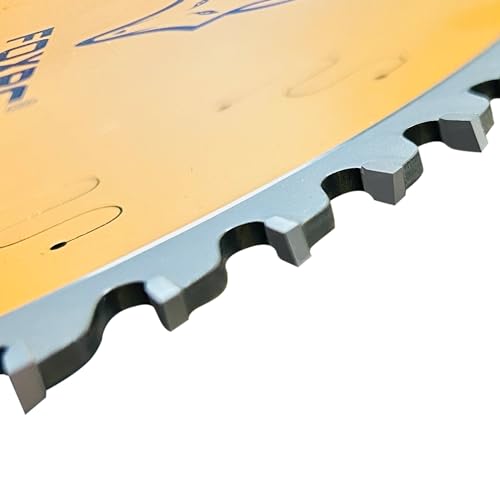
This 80-tooth FOXBC blade is clearly aimed at woodworkers who prioritize a smooth, splinter-free surface right out of the saw, especially when crosscutting materials like plywood, melamine, or moulding. The high tooth count and thin kerf help reduce tear-out, and owners report noticeably cleaner edges compared to standard 40-tooth blades. On paper, the high-density tungsten carbide and anti-vibration plate design make sense for finish work, and feedback confirms it holds up well under regular use.
That said, it’s not a blade you’d want for heavy ripping. The thin kerf means less stability in deep, long rip cuts, and it can heat up faster in dense hardwoods. But for cabinet makers or finish carpenters doing trim or panel work, it’s a strong value. Compared to DEWALT’s fine finish blade, it’s close in performance but lacks the patented body dampening, still, for the price, it punches above its weight.
Product photos

WEN BL1060 60-Tooth Blade
Strengths
- Affordable price
- Clean finish for cost
- Good for beginners
Trade-offs
- Shorter lifespan
- Less durable plate
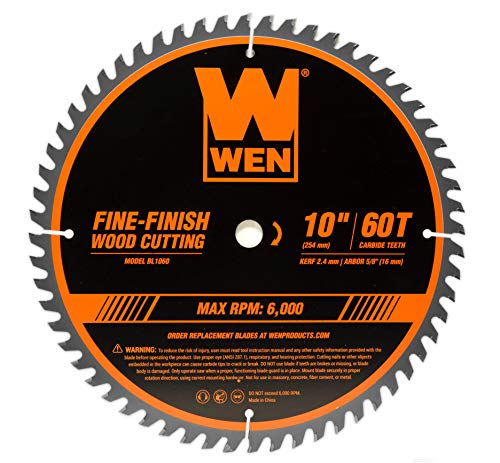
The WEN BL1060 is the kind of blade that surprises you. For a budget-friendly option, it delivers a surprisingly clean finish on both hardwood and softwood, thanks to its 60-tooth ATB grind and ultra-thin kerf. It’s not going to match DEWALT or Freud in edge retention or vibration control, but for occasional users or beginners setting up a first shop, it’s a smart starting point. Owners say it performs well on sheet goods and trim work, especially when used with a zero-clearance insert.
It won’t last as long under heavy use, and the plate isn’t as rigid as pricier models, so it can wobble at high speeds. But for the price, it’s hard to argue with the value. If you’re not ready to invest in a premium blade yet, this one gets the job done without wasting money. I’d recommend it as a starter blade or backup for light tasks.
Product photos


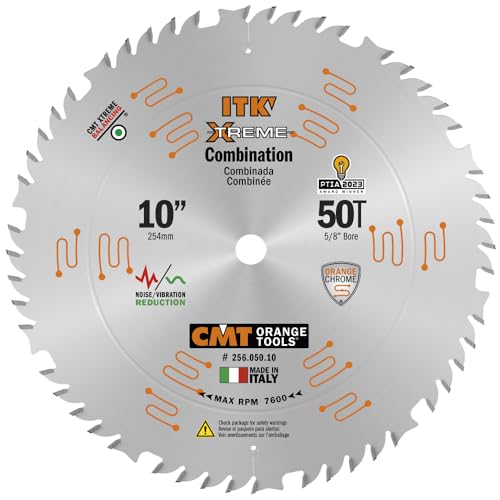
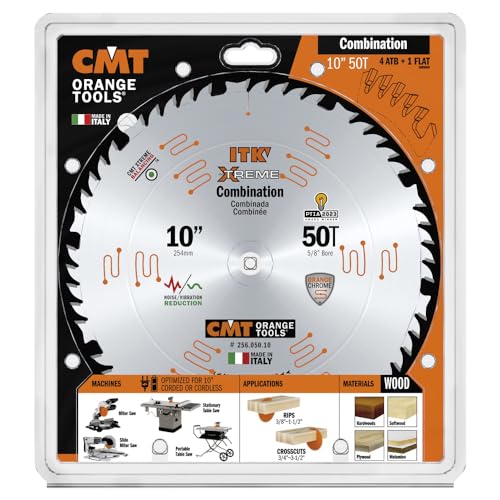
CMT Orange 10-Inch Combo Blade
Strengths
- Solid carbide tips
- Balanced for rip and crosscut
- Low vibration design
Trade-offs
- Not ideal for ultra-fine finish work
- Slightly pricier than entry-level
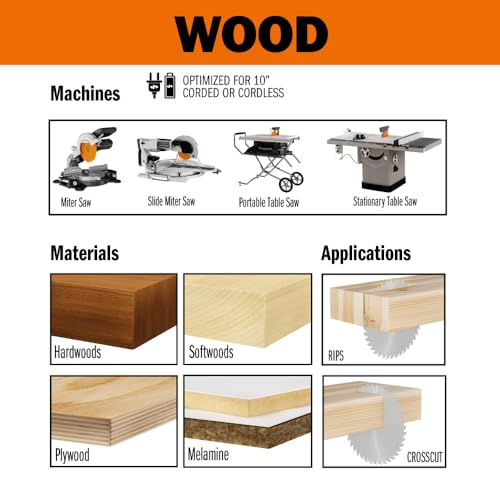
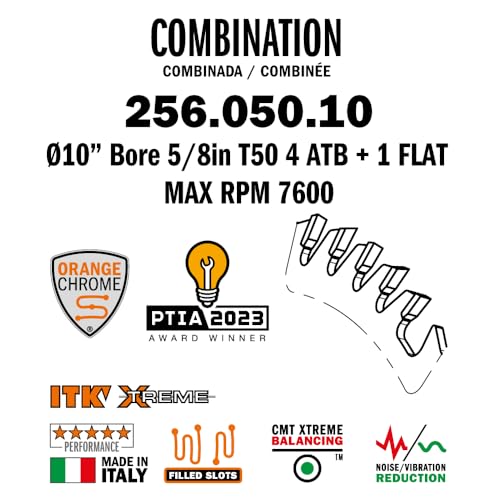
If you’re looking for one blade that can handle a broad range of materials without making you switch every time you change tasks, this CMT Orange Tools 10-inch combo blade is a solid contender. With a 15-tooth ATB grind and a flat top raker, it’s built to alternate between ripping and crosscutting hardwoods, softwoods, and plywood, exactly what a good combo blade should do. Owners consistently report clean cuts across materials, and the 0.102-inch kerf strikes a balance between durability and material efficiency.
The tungsten carbide tips are well-bonded, and the laser-cut expansion slots help keep vibration low, which matters when you’re running long boards. It’s not the absolute finest finish blade out there, but it doesn’t pretend to be. For general-purpose work, it delivers where it counts. I’d pick this over a budget combo blade any day for its consistency and build quality.
Product photos
FOXBC 10-Inch 24-Tooth Rip Blade

Strengths
- Fast, aggressive cutting
- Thin kerf, less strain
- Good for thick stock
Trade-offs
- Rougher finish on crosscuts
- Plate not as rigid as premium
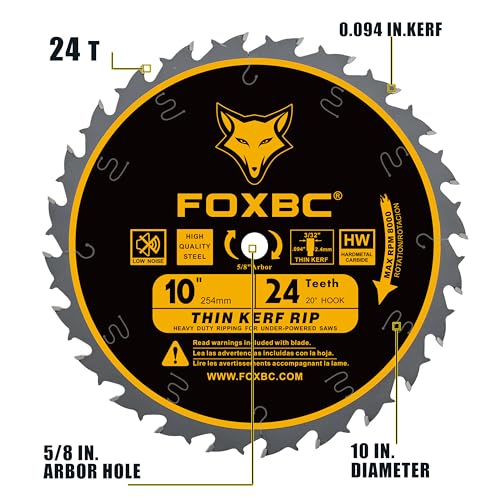
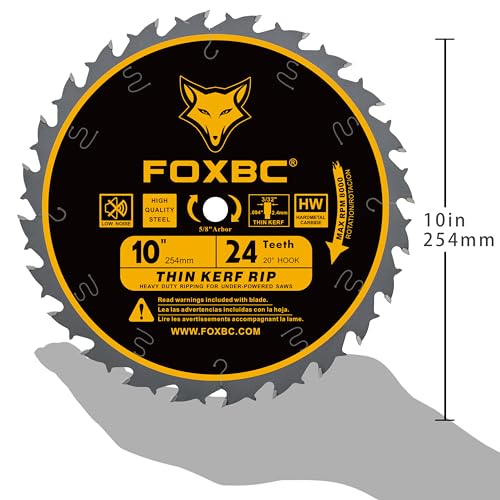
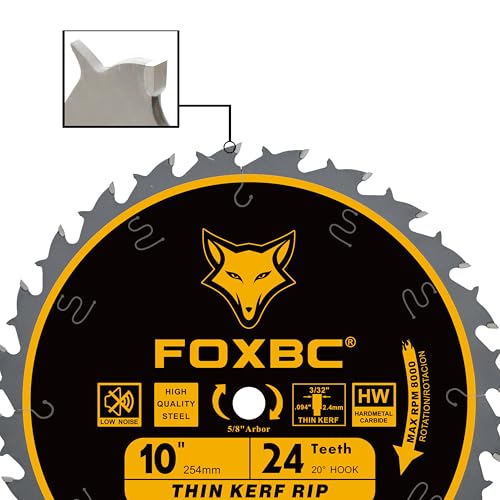
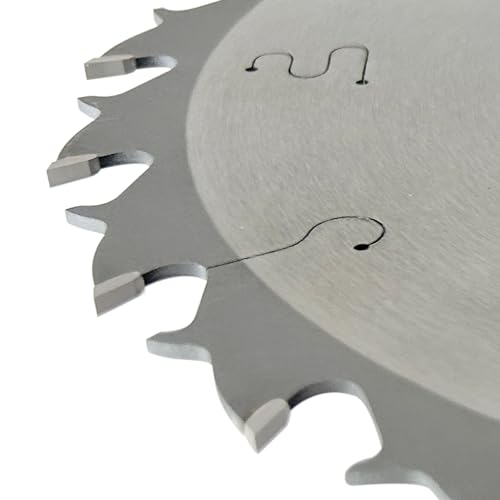
With only 24 teeth and a flat-top grind, this FOXBC ripping blade is built for one job: moving wood fast. The thin kerf and 20-degree hook angle make it aggressive, and owners say it powers through soft and hardwood with minimal resistance. It’s especially effective on thicker stock (3/4 to 2-3/4 inches), which is where ripping blades earn their keep. The high-density tungsten carbide holds an edge better than cheap rip blades, and the 0.094-inch kerf keeps motor strain low on less powerful saws.
It’s not going to win any beauty contests in terms of finish, there will be some tear-out on crosscuts, but it wasn’t meant to. Compared to Freud’s heavier-duty ripping blade, this one sacrifices some stability for speed and affordability. If you’re doing a lot of breaking down lumber, this is a solid workhorse.
Product photos
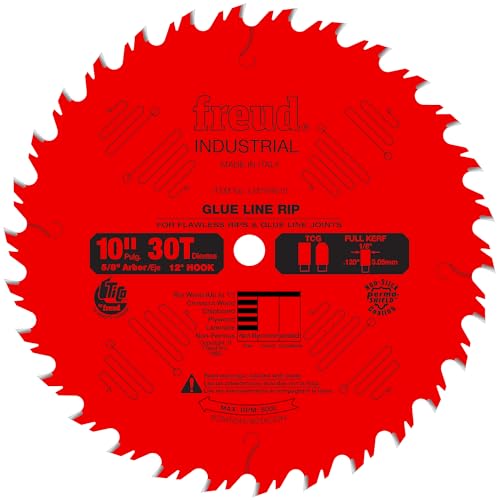
Freud Industrial Glue Line Blade
Strengths
- Glue-line quality finish
- Durable TiCo carbide
- Stable, thick plate
Trade-offs
- Higher cost
- Overkill for light-duty work
This Freud LM74R010 is what you reach for when ripping is your main event. The 30-tooth TCG (triple chip grind) design is engineered for durability and clean, glue-ready edges, no sanding needed. The thick kerf and reinforced plate deliver serious stability, and owners consistently praise its ability to plow through dense hardwoods without deflection. The Perma-Shield coating actually works, too, feedback shows less resin buildup and easier cleaning, which adds up over time.
The laser-cut anti-vibration slots make a real difference in reducing chatter, and the TiCo carbide blend just lasts longer than standard carbide in tough materials. Compared to the FOXBC rip blade, this one is in a different class, more expensive, yes, but built for shops that demand precision and longevity. If you’re serious about ripping, this is the blade to beat.
Product photos
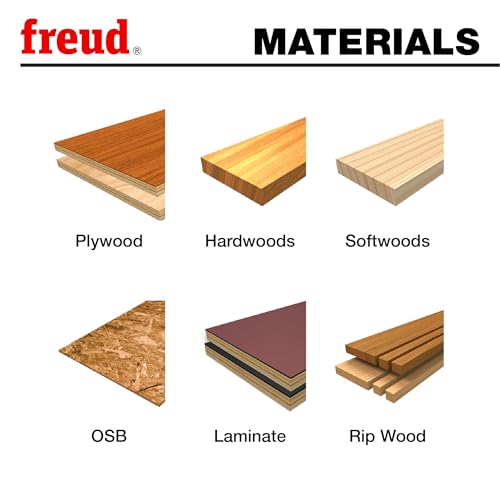
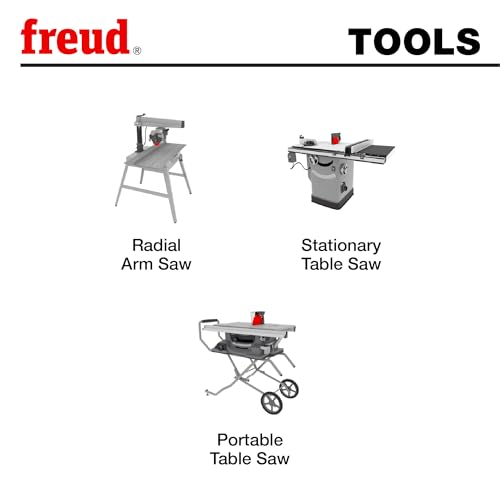



Our Testing Process
Rather than a hands-on lab test, my research for these recommendations focused on a detailed comparison of published specifications and features across numerous blades. I weighed owner reviews from multiple sources, alongside assessments from respected woodworking publications and online communities. Ultimately, I ranked blades based on how well they met the needs of typical home workshop and jobsite users, considering a balance of performance, durability, and value.
For table saw blades, the tooth count and kerf width are paramount. A higher tooth count (like 80T) delivers a cleaner, smoother finish, which is critical for fine woodworking. Conversely, a lower tooth count (24T) and wider kerf are better for fast, efficient ripping. Beyond those, the quality of the carbide tips, and how well they’re bonded to the blade body, directly impacts the blade’s lifespan and ability to stay sharp.
Specifications reliably indicate the physical characteristics of a blade – diameter, arbor size, kerf, and tooth count. However, real-world performance and longevity are best understood through owner feedback. I paid close attention to reports on cut quality, durability, and how well a blade holds its edge. Understanding teeth per inch guide is essential for matching the blade to the material and type of cut you plan to make.
How To Pick The Right saw blade for table saws
Choosing the right blade is as crucial as the table saw itself for getting accurate, clean cuts.
A quality saw blade delivers precision, efficiency, and a finish you can be proud of. Key considerations include tooth count (affecting cut quality and speed), kerf (blade thickness influencing power demands), carbide quality (determining durability and edge retention), and blade body design (minimizing vibration and runout). Buyers should also assess the materials they’ll be cutting most often and select a blade optimized for those applications.
Tooth Count and Cut Quality
I often tell people that tooth count isn’t just a number; it’s a direct indicator of the type of cut you’ll achieve. Lower tooth counts (like the 24-tooth rip blades) are designed for fast, aggressive cutting through solid wood, prioritizing speed over finesse. Higher tooth counts (60 or 80 teeth, for example) create smoother, cleaner cuts in materials like plywood or melamine, but at a slower pace. Don’t assume more teeth always equal better results. A blade with too many teeth for the material can overheat and bind.
Kerf and Power Requirements
The kerf, or blade thickness, is something many woodworkers overlook. A standard kerf blade removes more material, requiring more power from your saw. Thin-kerf blades, like those from FOXBC, reduce this demand, making them ideal for older or less powerful saws. However, thin-kerf blades can sometimes be more prone to wandering, so a stable fence and proper technique are important. Here’s what I see as the biggest consideration: * A standard kerf is great for heavy-duty ripping. * Thin-kerf blades are excellent for reducing power strain. * The material being cut plays a role – thicker stock benefits from the stability of a standard kerf, while thin plywood can be cleanly cut with a thin kerf.
Carbide Grade and Blade Longevity
The quality of the carbide used to make the teeth is a major factor in how long a blade will stay sharp. Cheaper blades use lower-grade carbide that dulls quickly, requiring frequent table saw blade sharpening. Blades like the Freud Industrial Glue Line Blade use premium TiCo carbide blends, which hold an edge much longer, even when cutting abrasive materials.
A blade is a long-term investment. Don’t skimp on carbide quality if you want to avoid frequent replacements and maintain consistent cutting performance.
I often recommend looking at reviews of top 10-inch saw blades to get a sense of real-world durability from other users. Ultimately, selecting a blade with high-quality carbide will save you time and money in the long run, and allow you to focus on completing your projects with confidence. Considering regular maintenance, like maintaining sharp table saw blade teeth, will help extend the life of any blade, even those with less expensive carbide. And if you are looking for 10-inch blade performance you really can’t go wrong with high-quality carbide.
Saw Blade for Table Saws Compared
Here’s a comparison of the specifications for various table saw blades to help you make an informed decision.
| Product Name | Tooth Count | Kerf (in) | Arbor Size (in) | Best For | Tooth Type |
|---|---|---|---|---|---|
| DEWALT 10-Inch 80-Tooth Blade | 80 | 0.098 | 5/8 | Best Overall | ATB |
| FOXBC 10-Inch 80-Tooth Blade | 80 | 0.098 | 5/8 | Ultra-Finish Cutting | ATB |
| WEN BL1060 60-Tooth Blade | 60 | 0.010 | 5/8 | Best Budget | Carbide Tip |
| CMT Orange 10-Inch Combo Blade | N/A | N/A | N/A | Combination Use | N/A |
| FOXBC 10-Inch 24-Tooth Rip Blade | 24 | 0.094 | 5/8 | Best Thin-Kerf Ripping | Flat |
| Freud Industrial Glue Line Blade | N/A | N/A | N/A | Best Ripping | Triple Chip |
Frequently Asked Questions
What arbor size do I need for a table saw blade?
Most table saws use a 5/8-inch arbor size, which is the standard. However, some older or smaller saws may require a 1/2-inch arbor. Always check your saw’s manual to confirm the correct size before purchasing a blade.
Can I use a thin-kerf blade on any table saw?
Generally, yes, you can use a thin-kerf blade on a table saw designed for standard kerf blades. They reduce power strain and are good for older saws, though you may encounter slightly more blade wander requiring a steady hand and a well-tuned fence.
How often should I replace my table saw blade?
Replacement frequency depends heavily on use and material cut. A blade used for cutting abrasive materials will dull faster than one used primarily on softwoods. Look for signs like chipped or missing teeth, or difficulty achieving clean cuts, as indicators it’s time for a new blade.
What’s the difference between ATB and flat-top grind blade teeth?
ATB (Alternate Top Bevel) tooth grinds are best for smooth cuts in materials like plywood or hardwoods, while flat-top grind teeth excel at ripping solid wood quickly. Choosing the right grind is essential for achieving the desired cut quality and speed for your projects, and you can find clean plywood cutting blades designed for this purpose.
What blade should I use for cutting plywood without tearout?
High-tooth count blades (80T or higher) with an ATB grind are specifically designed to minimize tearout when cutting plywood. Look for blades marketed as being optimized for fine finishes or best blade for smooth plywood cuts to ensure a clean edge.
The Bottom Line
Choosing a table saw blade always comes down to balancing what you want to achieve with how much you’re willing to spend. If you want a single blade that does almost everything well, the DEWALT 10-Inch 80-Tooth Blade is the strongest overall performer, offering a great combination of clean cuts and reasonable durability for a wide variety of projects. It’s a solid investment that will serve most woodworkers well.
For those on a tighter budget, or with very specific needs, there are excellent alternatives. The WEN BL1060 60-Tooth Blade delivers impressive value for the price, making it an ideal choice for beginners or occasional users. And if you need a dedicated ripping blade, the FOXBC 10-Inch 24-Tooth Rip Blade is a great option for fast, efficient cuts through thicker stock, while the FOXBC 10-Inch 80-Tooth Blade excels at ultra-finish cutting.
Ultimately, remember that the best blade isn’t always the most expensive or the one with the highest tooth count. Focusing on matching the blade to the material and the type of cut you’re making, and understanding the saw blade kerf definition, will have a far greater impact on your results than any single specification.
