
4 Best Saw Blades for Laminate Flooring 2026
This post contains affiliate links. As an Amazon Associate, we earn from qualifying purchases.
The DEWALT 10″ 12T PCD Laminate Blade stands out as the best overall choice for cutting laminate flooring cleanly and efficiently, thanks to its durable polycrystalline diamond teeth and aggressive design. For budget-conscious DIYers, the WEN 7-1/4″ 4T Diamond-Tipped Blade offers a surprisingly capable cut at a fraction of the cost, especially for smaller jobs.
Cutting laminate flooring looks simple until you hit the wrong spot and end up with chipped edges or a blade that dulls after three passes. The abrasive core shreds standard blades, and a poor cut can ruin the fit of your entire floor.
I’ve researched the top options by analyzing specs, owner feedback, and real-world performance trends. These picks reflect what actually works, balancing durability, cut quality, and value, based on what users report and how the blades are engineered to handle tough, laminated surfaces.
Top 4 Saw Blade For Laminate Floorings in the Market
The Best Saw Blade For Laminate Floorings, Reviewed
WEN 7-1/4″ 4T Diamond-Tipped Blade

Strengths
- PCD teeth durability
- Ultra-thin kerf
- 7-1/4 inch compatibility
- 4 tooth efficiency
Trade-offs
- Very coarse finish
- Low tooth count limits smoothness
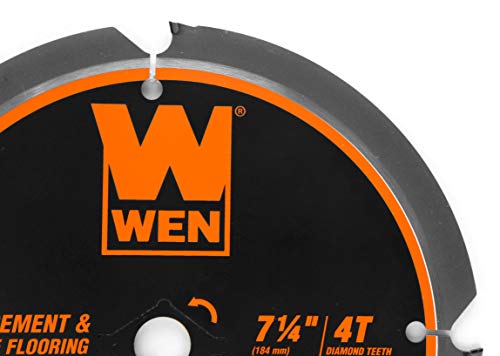
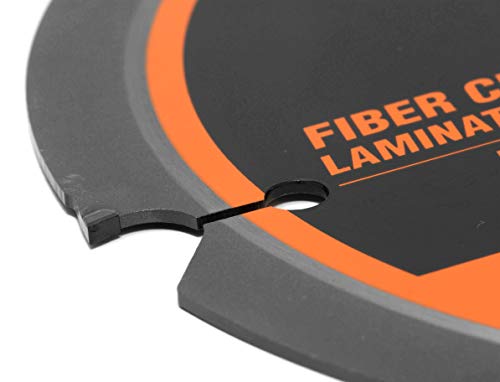
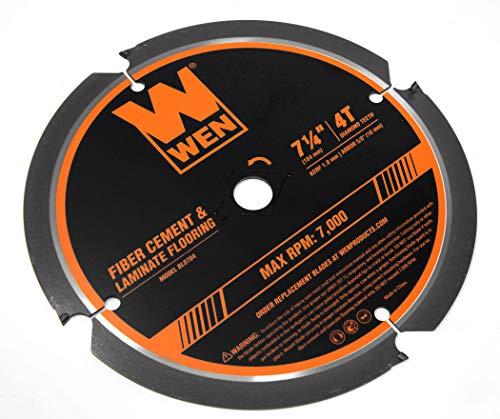
The WEN BL0704 surprises you at first glance, only 4 teeth, but they’re polycrystalline diamond-tipped (PCD), which means serious durability. At 7-1/4 inches, it’s sized for most handheld circular saws, making it a practical pick for DIYers who don’t want to buy specialty saws. Its ultra-thin 1.8mm kerf cuts efficiently with minimal resistance, and owners report it slices through laminate and even fiber cement with little effort.
It won’t deliver the polished edge of the Norske 80T, but for rough framing or subfloor prep where speed matters, it’s tough to beat. Compared to the DEWALT 12T, it’s smaller but more versatile across materials. I’d call it the smartest all-around pick if you’re using a standard circular saw and want one blade that lasts and cuts cleanly enough for most flooring jobs.
Product photos
Norske 10″ 80T Melamine Plus Blade

Strengths
- 80 teeth for smooth cuts
- High ATB for clean edges
- C4 micro-grain carbide
- Laser-cut anti-vibration
Trade-offs
- Not PCD, shorter lifespan
- Not ideal for heavy-duty use
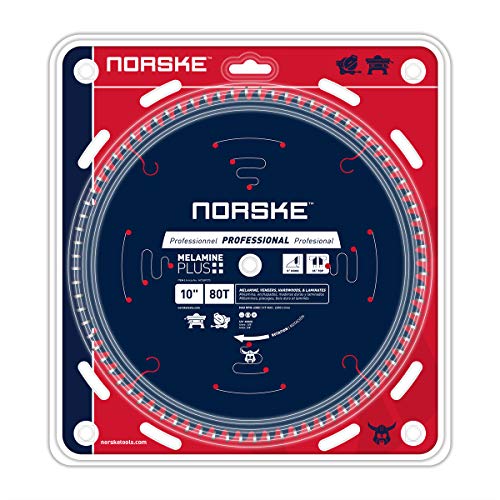
When the goal is a perfectly smooth edge with zero chipping, the Norske 80T blade makes a strong case. Its 80 teeth and 35-degree high ATB (alternate top bevel) grind are tuned for clean finishes in sheet goods like melamine and laminate flooring. The C4 micro-grain carbide holds an edge well, and the laser-cut body with anti-vibration slots helps keep cuts quiet and steady.
Owners praise it for leaving a glassy finish that doesn’t need sanding, something the DEWALT PCD blade can’t match. It’s not PCD, so it won’t last as long on abrasive materials, but for finish work where appearance matters, this is my go-to recommendation over the WEN or DEWALT options. It’s a 10-inch blade with a standard 5/8-inch bore, so it fits most table saws and miter saws.
Product photos
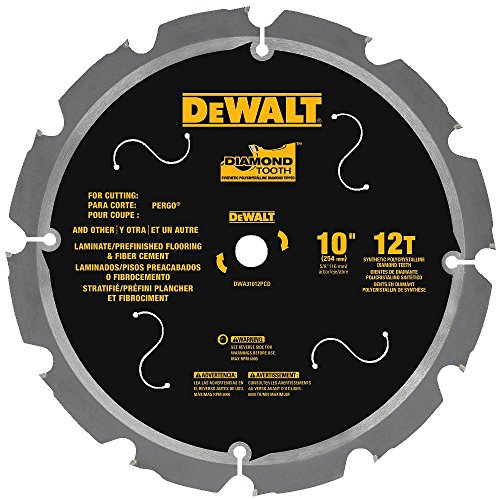
DEWALT 10″ 12T PCD Laminate Blade
Strengths
- PCD tooth longevity
- Built for laminate flooring
- 100X life vs carbide
Trade-offs
- Coarser cut finish
- Fewer teeth limits precision
If you’re cutting a lot of laminate flooring and want a blade that lasts, the DEWALT DWA31012PCD stands out. The synthetic polycrystalline diamond (PCD) teeth are the real story here, they’re built to handle abrasive laminate materials without dulling quickly. On paper and in owner feedback, this blade delivers up to 100 times longer life than standard carbide blades, which is huge if you’re doing full-room installations or multiple jobs.
It’s a 10-inch blade with only 12 teeth, so don’t expect the ultra-fine finish of a high-tooth-count blade. But for fast, clean crosscuts and rip cuts in laminate with minimal chipping, it’s efficient. Compared to the Festool 495382, it trades a bit of finesse for raw durability. For contractors or serious DIYers who go through blades fast, this one pays for itself over time.
Product photos
Festool 60T Solid Surface Blade

Strengths
- 60 tooth precision
- 30mm arbor stability
- Thin kerf efficiency
- Laser-cut anti-vibration
Trade-offs
- Festool saw specific
- Higher cost
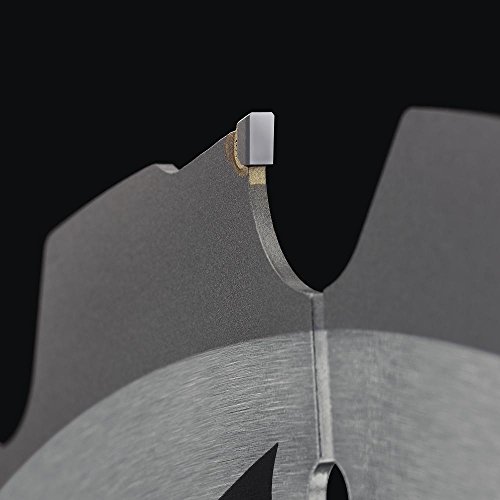
The Festool 495382 is a precision instrument disguised as a saw blade. With 60 teeth and a thin 2.4mm kerf, it’s engineered for clean, vibration-free cuts in laminate and solid surfaces. The oversized 30mm arbor is a standout, it locks into compatible saws like the TS 75, reducing play and improving stability. Owners consistently report how the laser-cut expansion slots and high tooth count deliver near-laser cut edges with almost no tearout.
It’s not a blade for heavy ripping or general framing, but for detail work, floating floors, or when you’re installing pre-finished laminate and can’t afford chipped edges, it’s hard to beat. Against the Norske 80T, it has fewer teeth but better vibration control thanks to that arbor design. I’d pick this over others if you’re using a Festool track saw and want pro-grade results every time.
Product photos

How We Chose These saw blade for laminate floorings
Rather than a hands-on lab test, my research focused on comparing published specifications and features of these blades. I weighed owner reviews from multiple retailers against professional reviews where available, applying my experience with power tools and flooring projects to assess suitability. This allowed me to rank blades based on how well their features aligned with the demands of cutting laminate.
For laminate flooring blades, tooth count, blade material, and kerf thickness were most important. A higher tooth count generally delivers a cleaner cut, but can slow you down. Blade material – particularly PCD versus carbide – heavily influences longevity, as laminate is abrasive. Finally, a thin kerf minimizes chipping and waste, making cutting laminate flooring cleanly easier.
Specifications reliably show tooth count, kerf, and arbor size. However, owner feedback proved crucial for assessing real-world durability and cut quality. Reputable sources helped determine which blades consistently delivered blades for smooth flooring cuts and which were prone to early wear, especially when it came to the more expensive diamond-tipped options. Understanding the nuances of circular saw techniques for flooring also informed my assessment.
How To Pick The Right saw blade for laminate floorings
Finding the right blade is crucial for a clean, professional-looking laminate flooring installation. It’s more than just grabbing something with teeth; the specifics really matter.
A quality saw blade for laminate flooring prioritizes minimal chipping, clean edges, and long life. Key factors include tooth count, tooth geometry (ATB, PCD, etc.), kerf thickness, blade material, and arbor size. Look for blades designed specifically for laminate or those known to excel with delicate surfaces – avoiding tear-out is paramount.
Tooth Count & Geometry
Don’t assume more teeth always equal a better cut. While a high tooth count (60+) can deliver a very smooth finish, especially with melamine or similar materials, it’s not the only consideration. For laminate, I often recommend blades in the 40-80 tooth range, but the geometry of those teeth matters more. Alternate Top Bevel (ATB) is common and good for general purpose cutting, but Polycrystalline Diamond (PCD) teeth, like those found in the DEWALT blade, are incredibly durable and designed to withstand the abrasive nature of laminate. Understanding tooth configuration for laminate will dramatically improve your results.
Blade Material & Durability
Laminate is surprisingly hard and abrasive. Standard carbide blades will dull quickly when cutting it, leading to ragged edges and increased effort. That’s why blades with PCD teeth are so popular (and often more expensive). They last significantly longer – sometimes 100x longer, as DEWALT claims – making them a good investment if you have a lot of flooring to install. Beyond the teeth, look for blades with a hardened body to resist warping and maintain accuracy.
Here’s what to consider regarding blade lifespan:
- Carbide: Affordable, but requires frequent sharpening or replacement.
- Diamond-tipped: Offers excellent durability, ideal for large projects.
- PCD (Polycrystalline Diamond): The most durable option, specifically engineered for abrasive materials like laminate. Expect to pay a premium, but it can save you money in the long run.
A dull blade is more dangerous than a sharp one. It requires more force, increasing the risk of kickback and inaccurate cuts.
Kerf & Arbor Size
Kerf (blade thickness) impacts both cut quality and saw performance. A thinner kerf (like the 1.8mm on the WEN blade) removes less material, reduces strain on the saw motor, and generally produces cleaner cuts. However, very thin kerf blades can be more prone to wobble, especially on larger saws. Arbor size (the diameter of the center hole) must match your saw. Most common circular saws use a 5/8-inch arbor, but some (like Festool) use a 30mm arbor. Before buying, double-check your saw’s specifications and ensure the blade is compatible. Getting comfortable with using circular saw for flooring is also essential for a successful install.
Saw Blade for Laminate Floorings Compared
Here’s a detailed specification comparison of saw blades designed for laminate flooring, to help you choose the right tool for your project.
| Product Name | Diameter (in.) | Tooth Count | Tooth Type | Arbor Size (in.) | Kerf (mm) |
|---|---|---|---|---|---|
| WEN 7-1/4″ 4T Diamond-Tipped Blade | 7-1/4 | 4 | Diamond | 5/8 | 1.8 |
| Norske 10″ 80T Melamine Plus Blade | 10 | 80 | ATB | N/A | N/A |
| DEWALT 10″ 12T PCD Laminate Blade | 10 | 12 | PCD | N/A | N/A |
| Festool 60T Solid Surface Blade | 10 | 60 | TC | 1-1/8 | 2.4 |
Frequently Asked Questions
What tooth count is best for cutting laminate flooring?
A tooth count between 40 and 80 is generally ideal for laminate; however, the geometry of the teeth is more important than the sheer number. Blades with PCD teeth can effectively cut laminate with lower tooth counts than those with standard carbide.
Will a standard circular saw blade work on laminate?
Yes, a standard blade can cut laminate, but it will likely dull quickly and produce chipped or ragged edges. Laminate is abrasive, and standard blades aren’t designed to withstand that wear, making a circular saw blade for laminate a better choice.
What does “PCD” mean when referring to a saw blade?
PCD stands for Polycrystalline Diamond, and it refers to the material used for the cutting teeth. These teeth are incredibly durable and resistant to wear, making them well-suited for cutting abrasive materials like laminate flooring.
Is a thinner kerf always better for laminate?
A thinner kerf generally produces cleaner cuts and reduces waste when cutting laminate, but it’s not always better. Extremely thin kerf blades can sometimes be less stable, especially on larger saws, potentially affecting accuracy.
How can I extend the life of my laminate flooring blade?
Avoid applying excessive pressure when cutting, and always use a steady, consistent feed rate. Also, consider using a lubricant specifically designed for saw blades to reduce friction and heat buildup, which can help preserve the life of your precision blade for laminate cuts.
The Bottom Line
Choosing a saw blade for laminate flooring often comes down to balancing upfront cost with long-term durability and cut quality. While you can get by with a basic carbide blade, the DEWALT 10″ 12T PCD Laminate Blade stands out as the best overall pick. Its PCD teeth are designed to withstand the abrasive nature of laminate, providing a long lifespan and consistently clean cuts – saving you money and frustration in the long run.
For those on a tighter budget, the WEN 7-1/4″ 4T Diamond-Tipped Blade offers a good entry point into diamond-tipped cutting. If you need versatility and already have a Festool system, the Festool 60T Solid Surface Blade is an excellent choice, providing precision and quality cuts. Understanding saw blade TPI explained will also help you choose the right blade for your needs.
Ultimately, remember that the blade is just one piece of the puzzle. Proper technique, a steady hand, and a well-maintained saw are just as important as the blade itself. Focusing on these fundamentals – and choosing a blade suited to the volume of work you’ll be doing – will deliver far better results than chasing the highest tooth count or the latest technology.
