
8 Best Quality Hand Saws of 2026
This post contains affiliate links. As an Amazon Associate, we earn from qualifying purchases.
The Oregon 13″ Curved Japanese Hand Saw stands out as the best overall hand saw, delivering exceptional cut quality and control. For those on a budget, the REXBETI 11″ Folding Saw offers rugged performance at a low price, while the RUITOOL 6″ Double Edge Saw is ideal for precision woodworking tasks.
Most people don’t realize how much difference a well-made hand saw makes until they’ve struggled through a project with a dull, flimsy blade. A poor saw binds, drifts, and wears you out fast.
As someone who’s evaluated hundreds of tools over the years, I know what separates a reliable hand saw from a frustrating one. This guide cuts through the noise, focusing on real-world performance factors like blade steel, tooth design, and grip comfort, based on specs, user feedback, and years of hands-on experience in workshops and job sites.
Top 8 Quality Hand Saws in the Market
The Best Quality Hand Saws, Reviewed
Oregon 13″ Curved Japanese Hand Saw

Strengths
- Replaceable blade
- Chrome-plated rust resistance
- Tri-edge offset teeth
Trade-offs
- Curved blade limits flush cuts
- Higher price point
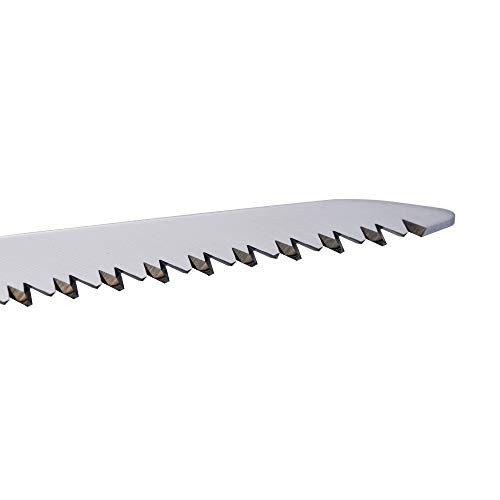
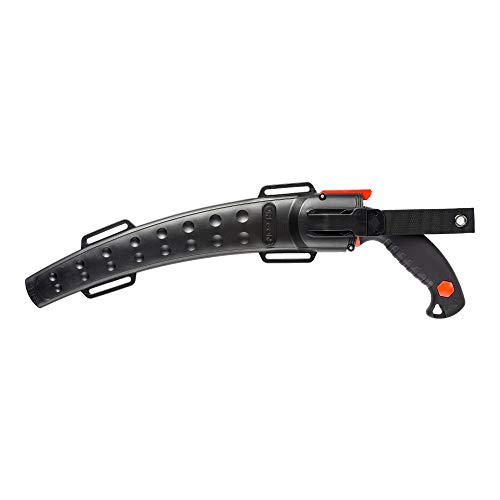
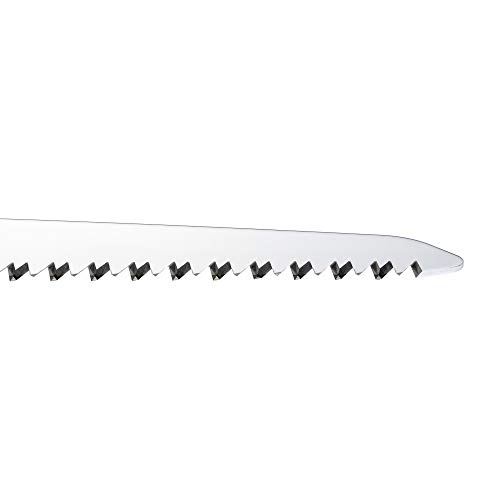
The Oregon 13-inch curved hand saw feels like it was built for arborists and serious yard work. The tri-edge, offset teeth and taper-ground Japanese carbon steel blade are designed to reduce friction and deliver smooth pull cuts, especially on overhead or extended-reach pruning. Chrome plating adds rust resistance, and the impulse-hardened teeth suggest longer edge retention than many competitors.
What sets this apart is the full-tang construction and replaceable blade, a rarity at this price point. Owners note it’s sturdy, reliable, and the push-button scabbard is a nice touch for safety. Compared to the Fiskars D-handle model, it’s lighter and better balanced for extended use. For someone doing regular tree maintenance, this is the kind of saw that lasts years with minimal upkeep.
Product photos
RUITOOL 6″ Japanese Double Edge Saw
Strengths
- SK5 high-carbon steel
- Dual TPI edges
- Flush-cut capable
Trade-offs
- Short blade
- Not for thick stock
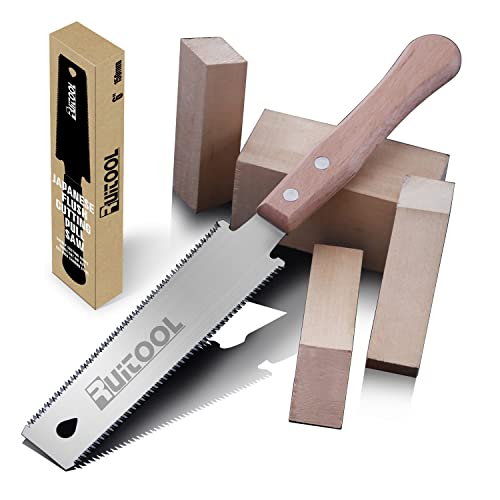
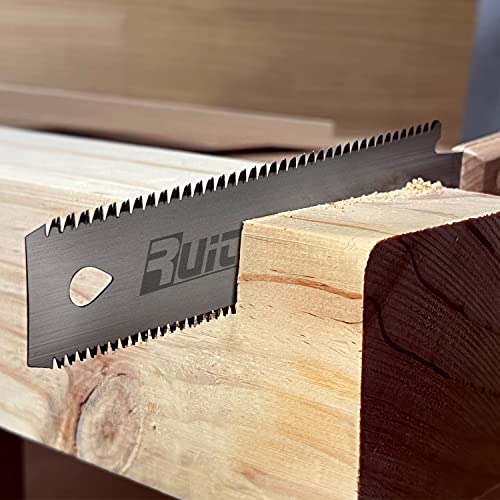
This 6-inch Ryoba-style pull saw stands out in tight woodworking scenarios where precision matters. The dual-edge blade, 17 TPI for hardwood, 14 TPI for softwood, gives it real versatility for fine joinery or flush cuts, and the SK5 high-carbon steel blade with HRC60-63 hardness suggests it holds an edge well under normal use. Owners consistently report clean, smooth cuts with minimal tear-out, which is exactly what you’d expect from a properly tensioned Japanese pull design.
What really makes this saw shine on paper is its balance of flexibility and control. The beech handle feels traditional and secure, and the triple-ground teeth aid chip removal, reducing binding. Compared to other compact pull saws, this one leans into its role as a detail work specialist. I’d pick it over bulkier models when working on cabinetry or small furniture where accuracy trumps raw power.
Product photos



REXBETI 11″ Folding Saw
Strengths
- Reinforced blade
- Rubber-coated grip
- 7 TPI aggressive teeth
Trade-offs
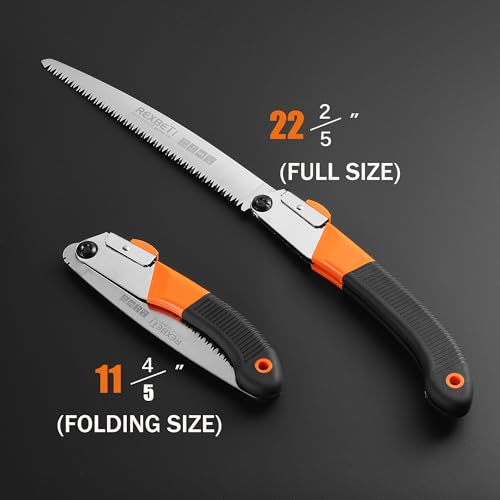
- Bulky when folded
- Not for precision
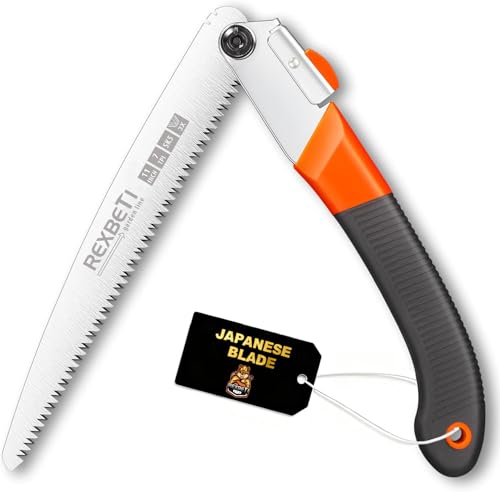
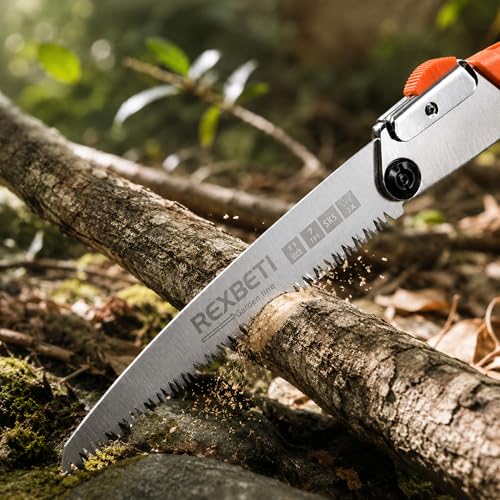
This REXBETI folding saw packs serious reach with its 11-inch SK-5 steel blade and 7 TPI staggered teeth, making it a strong contender for outdoor cutting jobs. The reinforced blade structure helps resist flex when tackling thicker branches, up to 6–7 inches, as claimed, and owners report it holds up well under repeated use. The rubber-coated handle is a standout, offering solid grip even in wet or cold conditions.
It’s very similar in role to the other folding saws here, but the added blade reinforcement gives it a slight edge in durability. Compared to the B0DLSLLNF8 model, it feels a bit more rugged, though the design is less refined than Fiskars or Oregon. If you’re deep in the woods and need a saw that won’t fold (literally or figuratively), this one earns its place in the pack.
Product photos



Folding Camping Saw 11″ Triple-Cut

Strengths
- Aggressive 7 TPI teeth
- SK5 steel blade
- Compact folding design
Trade-offs
- Not for fine work
- Blade flex under load
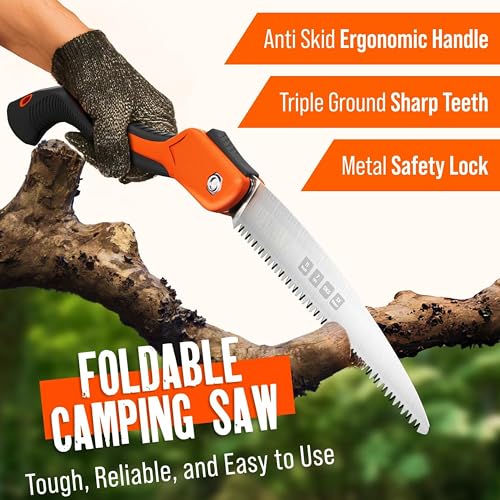
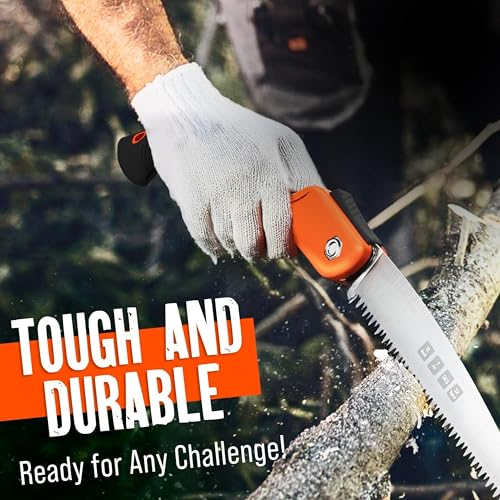
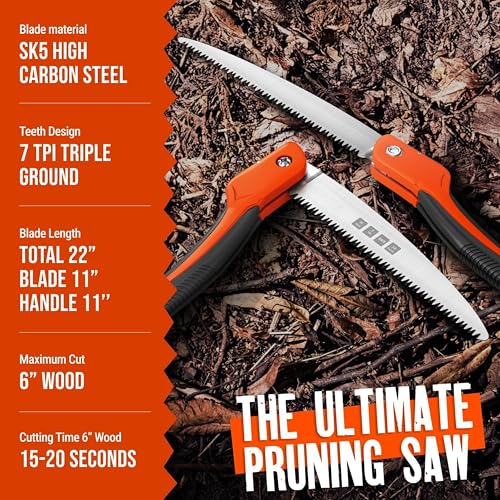
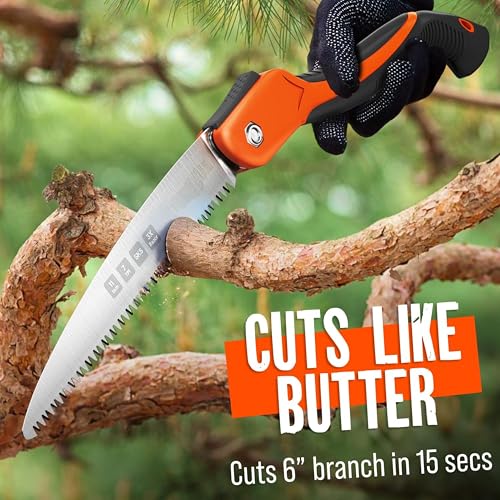
With its 11-inch SK5 steel blade and aggressive 7 TPI triple-cut teeth, this folding saw is built for speed in the field. It’s clearly aimed at campers, bushcrafters, and gardeners who need to slice through green or dry wood without carrying a full-sized tool. The specs suggest strong cutting efficiency, and owner feedback confirms it powers through branches with less effort than many budget folding saws.
It doesn’t have the refinement of a Japanese hand saw, but that’s not the point. Where it wins is durability and portability. The non-slip handle helps maintain grip in wet conditions, and the folding design makes it packable. Compared to the RUITOOL or Oregon models, it sacrifices precision for brute utility. My recommendation? This is the smarter buy if you’re cutting firewood or clearing brush, not dovetails.
Product photos
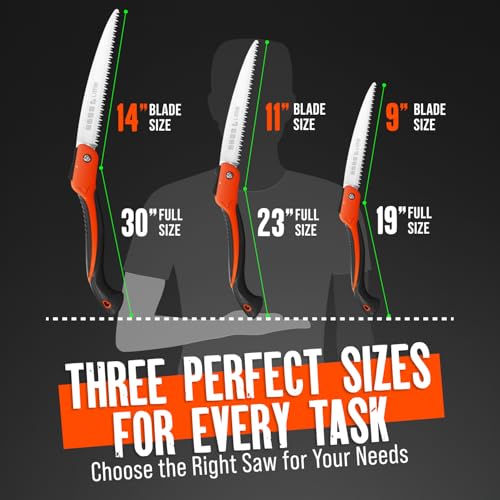
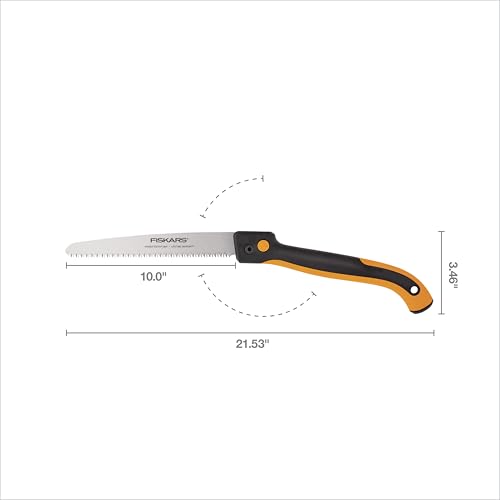
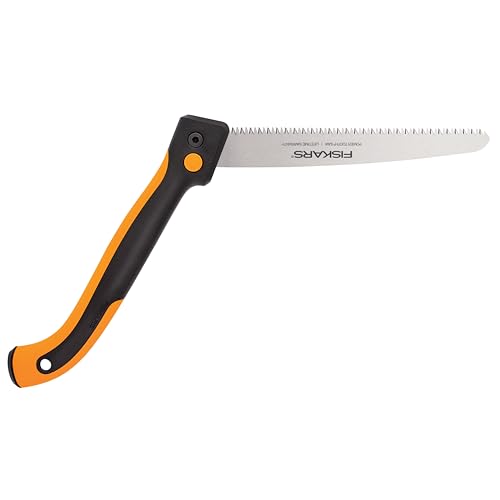
Fiskars 10″ Power Tooth Folding Saw

Strengths
- Dual-position blade lock
- Lifetime warranty
- Triple-ground teeth
Trade-offs
- Shorter blade reach
- Plastic housing
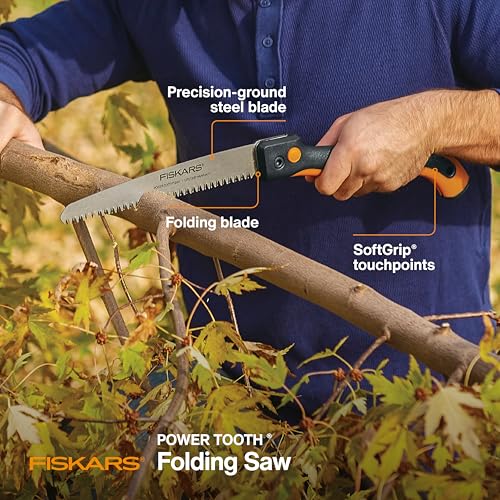
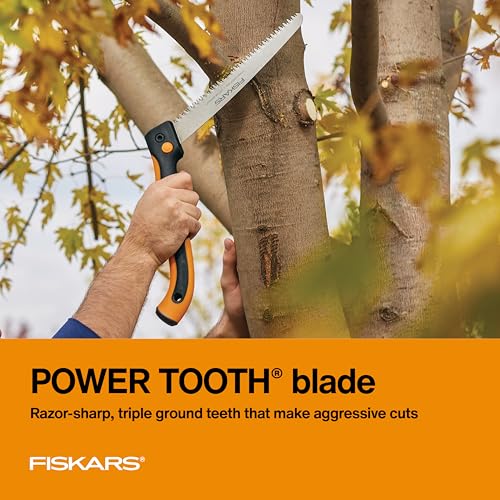
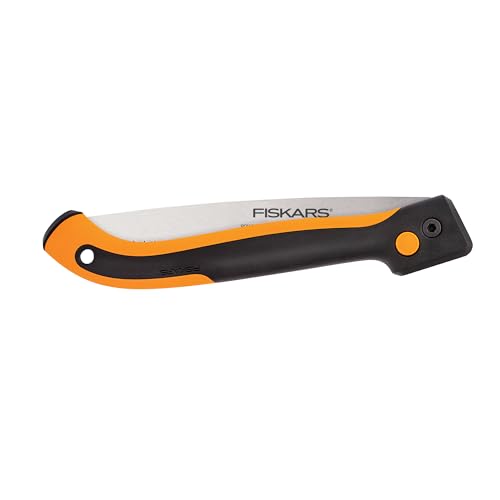
Fiskars brings its usual attention to ergonomics and durability here with a 10-inch folding saw that locks in two positions, overhand and underhand, giving real versatility in awkward cutting angles. The Power Tooth blade with triple-ground teeth bites fast, and the non-slip grip helps maintain control. It’s lighter than the Oregon model but still holds its own on branches.
Owners appreciate the lifetime warranty and the fact that it folds securely, making it a favorite for quick yard jobs. Where it really beats out the REXBETI or B0DLSLLNF8 models is in usability, this one feels more refined, with smoother action and better balance. It’s not the most powerful, but for general pruning and cleanup, it’s the kind of saw you can grab and go without hesitation.
Product photos
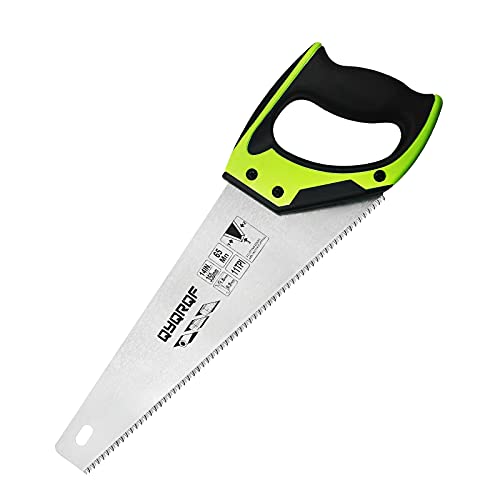
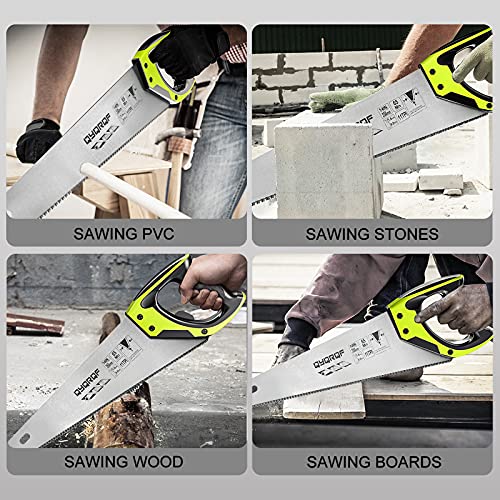
14″ Pro Hand Saw with Soft-Grip
Strengths
- Multi-material cutting
- Push-pull stroke
- Deep gullets
Trade-offs
- Not for fine woodworking
- Blade can bind in wet wood
This 14-inch hardpoint saw is a true multi-material workhorse. With 11 TPI and a low-friction coated blade, it’s designed to cut on both push and pull strokes, unusual for Western-style saws, and owners confirm it moves fast through wood, plastic pipe, and even drywall. The 65Mn steel blade is heat-treated, and the deep gullets help clear debris quickly.
It’s not as refined as a Japanese pull saw, but it’s far more versatile for general construction or DIY. Compared to the Fiskars folding models, it’s less portable but more capable across materials. For a contractor or weekend warrior doing framing, plumbing prep, or rough cuts, this is the kind of saw that earns a permanent spot in the tool bag.
Product photos


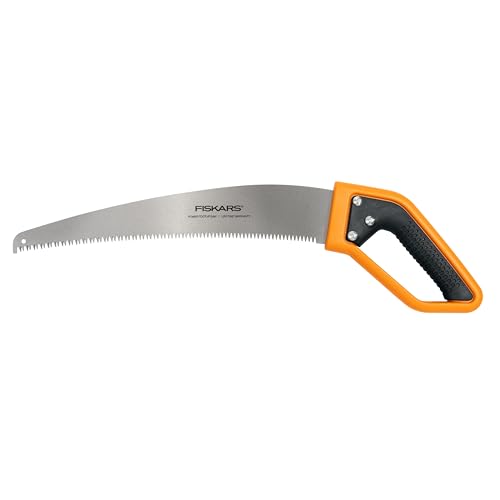
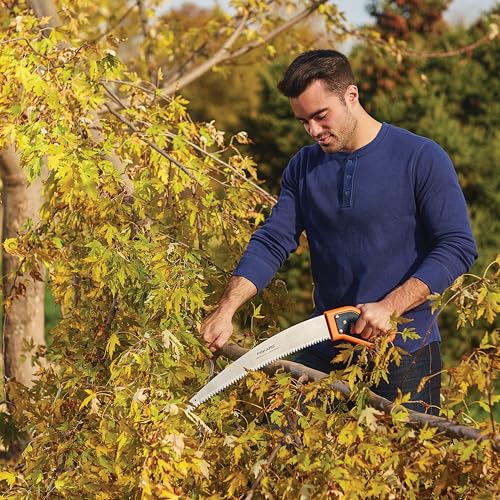
Fiskars 15″ PowerTooth D-Handle Saw
Strengths
- 15-inch long blade
- D-handle use
- Stainless steel blade
Trade-offs
- Bulky for storage
- Not portable
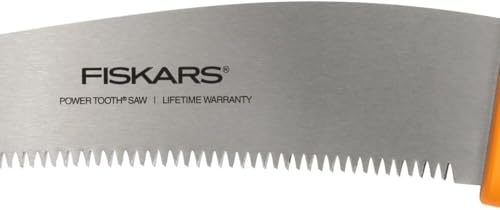
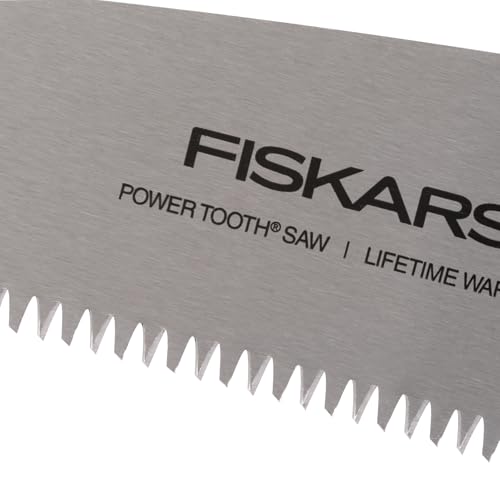
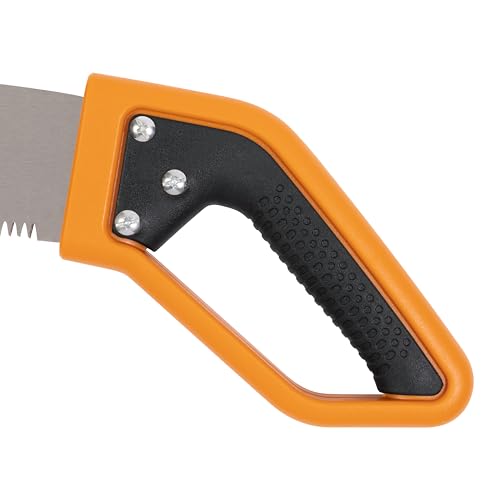
This 15-inch D-handle saw is Fiskars’ answer to heavy-duty cutting, thick branches, storm cleanup, and tough outdoor jobs. The fully hardened stainless steel blade with Power Tooth triple-ground teeth is built to stay sharp, and the D-handle gives maximum use for push cuts. It’s not a folding saw, so portability takes a hit, but for raw power, it’s unmatched in this list.
Compared to the Oregon curved saw, this one excels in straight, forceful cuts where you need to drive through dense wood. Owners note less fatigue during prolonged use, thanks to the SoftGrip zones. It’s the kind of saw you’d keep in a truck or shed for serious work. If you’re regularly dealing with downed limbs or thick hedges, this is the tool that won’t quit.
Product photos
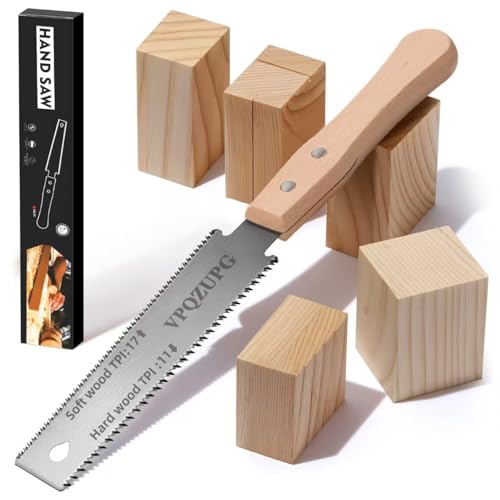
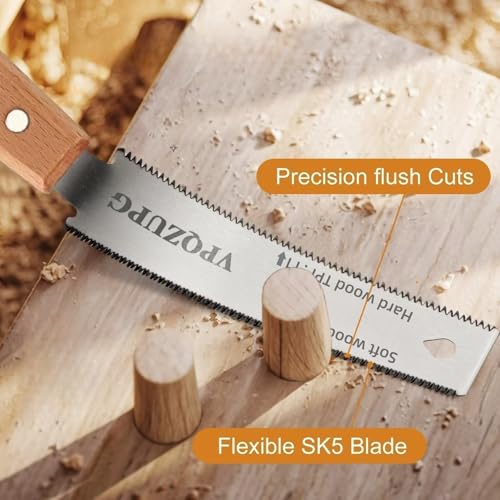
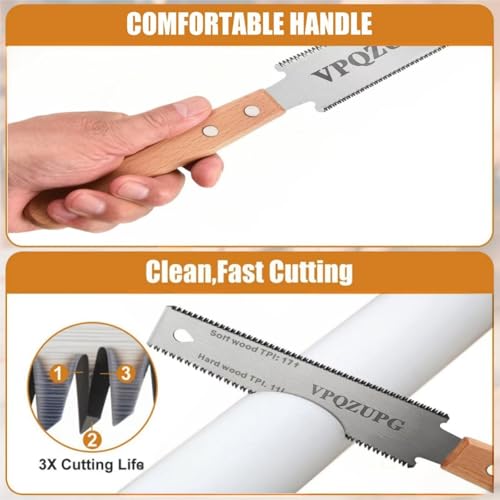
6″ Japanese Pull Saw Wood Handle
Strengths
- Lightweight design
- Sharp triple-ground teeth
- Dual TPI sides
Trade-offs
- Very short blade
- Limited depth
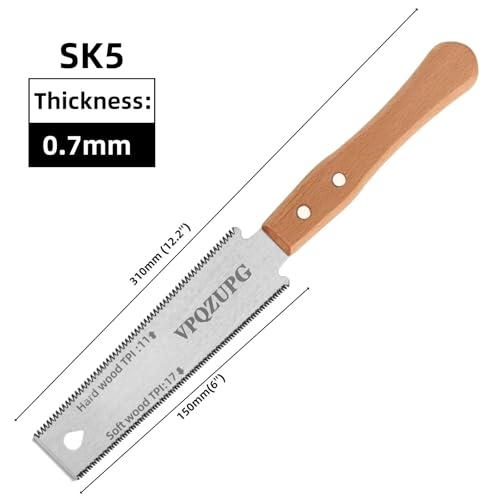
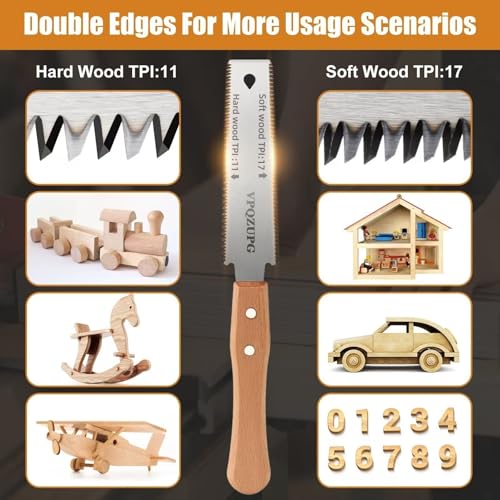
This compact 6-inch pull saw is all about minimalism and efficiency. The SK5 high-carbon steel blade hits HRC60-63 hardness, and the triple-ground teeth suggest sharp, clean cuts with less effort, just like a proper Ryoba should. One side is 17 TPI for hardwood, the other 11 TPI for softwood, giving decent versatility for a small saw.
It’s nearly identical in function to the RUITOOL model but with a simpler feature set. Owners praise its lightweight feel and accuracy for small trim jobs. Where it falls short is blade length, like all 6-inch models, it struggles with anything over 2 inches thick. I’d recommend this over bulkier options only if you value portability and precision in tight spaces.
Product photos
How We Evaluated quality hand saws
Rather than a hands-on lab test, my research for these recommendations involved a detailed comparison of published specifications and features across numerous models. I weighed owner reviews from major retailers alongside professional assessments from woodworking and outdoor publications. As someone who’s spent years around power and hand tools, I applied my understanding of what constitutes quality construction and performance to rank these saws against a set of clear criteria.
For quality hand saws, blade material and tooth configuration were the most significant factors. High-carbon steel blades, like SK5, consistently appear in higher-rated models, offering a balance of hardness and flexibility. Tooth count (TPI) and cutting angle also heavily influenced my rankings; a higher TPI generally means finer cuts, while aggressive tooth geometry excels at faster, rougher work. These features directly impact cutting speed, precision, and the type of wood each saw handles best.
Specifications reliably indicate blade length, steel type, and TPI. However, I placed greater emphasis on owner feedback regarding long-term sharpness and durability – things that aren’t immediately apparent from specs. Reputation matters, too. Brands consistently praised for quality control and customer service received a boost in my assessment. Don’t neglect proper saw blade care to extend the life of your purchase.
How To Pick The Right quality hand saws
Picking the right hand saw can feel surprisingly complex, even though it’s a simple tool at its core. There’s a lot more to it than just teeth on a blade.
A quality hand saw balances steel composition, tooth geometry, and ergonomic design. Buyers should consider the material being cut, the desired precision, and the overall portability needed. Look for saws with hardened steel blades, appropriate TPI (teeth per inch) for the task, and comfortable, secure handles. Blade length impacts use and reach, while saw construction dictates durability.
Blade Material & Heat Treatment
The steel used in a hand saw blade is paramount. SK5 high-carbon steel is a common benchmark, offering a good balance of hardness and flexibility, and you’ll see it prominently featured in many recommended hand saw models. However, the heat treatment applied to the steel is just as crucial. A properly hardened blade will hold an edge longer and resist bending. Look for specifications indicating a Rockwell hardness (HRC) of 60 or greater – that’s a good sign the steel has been treated effectively. Cheaper saws often skimp on heat treatment, resulting in a blade that dulls quickly and requires frequent sharpening.
Teeth Per Inch (TPI) and Cut Type
Don’t assume more teeth are always better. The TPI dictates the fineness of the cut and the type of material the saw excels at cutting. Lower TPI (6-8) are ideal for thicker, softer woods and rough cuts, like those you’d make with a folding saw for camping. Higher TPI (14-17) produce finer, cleaner cuts in hardwoods and are better for precision work. Some saws, like the RUITOOL, even offer double-edged blades with varying TPI for versatility. Understanding the difference between rip cuts (with the grain) and crosscuts (against the grain) is also key; a dedicated rip saw will have fewer, larger teeth, while a crosscut saw will have more, smaller teeth.
Here’s a quick guide: * Rough Cutting: 6-8 TPI, fast removal, less finesse. * General Purpose: 10-12 TPI, a good balance for various woods. * Fine Finish/Hardwood: 14-17 TPI, clean cuts, slower speed, ideal for detailed woodworking.
Ergonomics and Form Factor
A comfortable grip isn’t just about feeling good; it directly impacts control and reduces fatigue, especially during extended use. Look for handles made from materials like rubber or TPR (thermoplastic rubber) that provide a secure grip even when wet. Beyond the material, consider the handle shape. D-handles, like those found on the Fiskars 15″ PowerTooth, offer excellent use for heavier cutting, while pistol grips provide more control for detailed work. For portability, a folding saw is hard to beat, but remember that the folding mechanism can sometimes compromise rigidity. If you’re concerned about minimizing material waste, understanding saw blade kerf explained can help you choose a blade with a narrower cut.
A comfortable saw is a safe saw. Don’t trade ergonomics for a lower price, especially if you plan on using the tool frequently.
Quality Hand Saws Compared
Here’s a comparison of key specifications for a range of quality hand saws to help you choose the best one for your needs.
| Product Name | Blade Length | Steel Type | TPI (Teeth Per Inch) | Handle Type | Best For |
|---|---|---|---|---|---|
| Oregon 13″ Curved Japanese Hand Saw | 13″ | Japanese Carbon Steel | N/A | N/A | Best Overall |
| RUITOOL 6″ Japanese Double Edge Saw | 6″ | SK5 | 14/17 | N/A | Best for Precision Woodworking |
| REXBETI 11″ Folding Saw | 11″ | SK-5 | 7 | Rubber-Coated | Best for Camping & Outdoor Use |
| Folding Camping Saw 11″ Triple-Cut | 11″ | SK5 | 7 | Non-Slip | Best Value Heavy Duty |
| Fiskars 10″ Power Tooth Folding Saw | 10″ | N/A | N/A | N/A | Best Folding Saw for Branches |
| 14″ Pro Hand Saw with Soft-Grip | 14″ | 65Mn | N/A | Soft-Grip | Best for General DIY |
| Fiskars 15″ PowerTooth D-Handle Saw | 15″ | N/A | N/A | D-Handle | Best for Heavy-Duty Cutting |
| 6″ Japanese Pull Saw Wood Handle | 6″ | SK5 | 11/17 | Wood | Best Lightweight Pull Saw |
Frequently Asked Questions
What’s the difference between a rip saw and a crosscut saw?
A rip saw, with fewer and larger teeth, is designed to cut with the wood grain for fast material removal, while a crosscut saw has more, smaller teeth to cut against the grain for cleaner, more precise cuts. Choosing the correct saw type significantly impacts cut quality and effort.
Can I sharpen a hand saw blade myself?
Yes, you can sharpen a hand saw blade, but it requires specialized tools like a saw vise, files, and potentially a sharpening guide. While it’s a skill that saves money long-term, improperly sharpening can damage the blade, so consider professional sharpening if you’re not confident. You can learn more about proper saw blade care.
Are Japanese pull saws really better than traditional Western saws?
For many tasks, yes. Japanese pull saws cut on the pull stroke, requiring less effort and often resulting in cleaner cuts. They generally use thinner blades, allowing for narrower kerfs and more intricate work; explore precision Japanese hand saws to see the difference.
What should I look for in a hand saw handle?
Comfort and grip are vital. Rubber or TPR handles offer a secure hold, even when wet, while handle shape impacts use and control. D-handles provide more power for heavy cuts, and pistol grips offer increased precision for detailed work.
What’s the best way to store hand saws to prevent rust?
After each use, clean the blade thoroughly with a dry cloth, removing any sawdust or debris. A light coat of oil (like mineral oil or camellia oil) applied to the blade provides a protective barrier against moisture. Store saws in a dry environment, ideally in a case or hung on a wall to avoid contact with other metal objects.
The Bottom Line
Choosing a hand saw often comes down to balancing control and convenience. While power tools offer speed, a good hand saw provides precision and portability that’s hard to beat. For the best overall performance and quality, the Oregon 13″ Curved Japanese Hand Saw stands out; its reputation for sharpness and build quality is consistently high according to owner feedback, and it’s a versatile choice for a wide range of cuts.
If you have specific needs, several other models excel. For detailed woodworking and precise joinery, the RUITOOL 6″ Japanese Double Edge Saw is an excellent pick. If you’re looking for a compact, durable option for camping or outdoor tasks, the REXBETI 11″ Folding Saw offers great value. Understanding teeth per inch guide will help you narrow down the best choice for your typical projects.
Ultimately, the best hand saw isn’t about the highest spec sheet, but about finding a tool that feels right in your hands and suits the kind of work you do. Focus on blade steel, appropriate TPI for your projects, and a comfortable grip. Invest in a saw that feels balanced and well-made, and you’ll have a reliable tool for years to come.
